Authors
Noa Ronkin
News Type
News
Date
Paragraphs

Corruption is typically understood as a sign of weak institutions and failed governance. But what if it is a deliberate political technology used to consolidate power, discipline rivals, and reshape political systems?

This is the argument advanced by University of Chicago sociologist Kimberly Kay Hoang in the latest episode of the APARC Briefing series. Drawing on years of ethnographic research across Southeast Asia, including Vietnam, Myanmar, Hong Kong, and Singapore, as well as offshore tax havens, Hoang uses a comparative Asian lens to show how both democratic and authoritarian governments strategically align with private capital, reinforcing elite power. Hoang joined APARC Director Kiyoteru Tsutsui to share core insights from her work.


Image
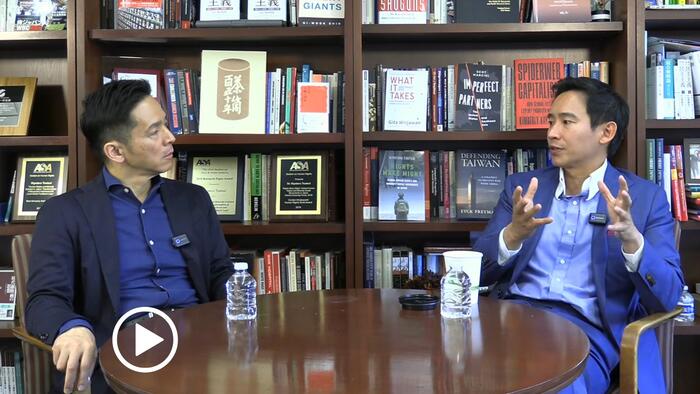
Kimberly Hoang and Kiyoteru Tsutsui seated in an office during a recorded podcast conversation.

Kimberly Kay Hoang speaks on the APARC Briefing series with host Kiyoteru Tsutsui.


Sign up for APARC newsletters to receive our experts' analysis >


She argues that corruption discourse often operates as a political tool, widely seen across Asian political economies and increasingly evident in the United States during the Trump era. This rhetoric, she says, tends not so much to dismantle institutions but to reshape them, concentrating authority in the executive and weakening checks and balances. According to Hoang, these patterns reflect a broader global shift toward more oligarchic forms of governance, where political power is increasingly concentrated among transnational elites.

"We often think of corruption as a failure of governance – that it's a weak state, and weak states can’t govern," Hoang says. "But in Southeast Asia and in other parts of East Asia, it has become an instrument for governance. It's a way of consolidating political power, weaponizing corruption."

From Vietnam's Hostess Bars to Global Finance


Hoang's research journey began in an unexpected place: working 12-hour shifts in Vietnamese hostess bars in 2009-2010, shortly after the global financial crisis. What started as an ethnographic study of the sex industry and human trafficking in Vietnam evolved into something far larger: a story of Asian ascendancy and Western decline playing out in micro-transactions.

"I started to witness local Vietnamese men turning down deals with Western businessmen and taking extraordinary deals from investors from China, parts of Southeast Asia – Hong Kong and Singapore – and Korea, Taiwan," Hoang recalls. When she examined foreign direct investment data, "the numbers lined up to what I was seeing at a micro level."

But when she presented these findings in the United States, the response was skeptical, even hostile. "People would say, 'Okay, yes, the economy is in decline, but America still has the strongest military,' or 'China is really dependent on the American economy, so if the American economy collapses, so will China's,'" she remembers. "It was a huge oversight of American arrogance to just believe that [Asian ascendancy] was impossible."

Her continued research led her to follow not just the money but "the people who move the money" – from Vietnam and Myanmar to Hong Kong and Singapore, and ultimately to offshore tax havens in the British Virgin Islands, Panama, the Seychelles, and the Cayman Islands.

The Architecture of Global Capital


What Hoang uncovered was what she calls an "architecture of global capital" – an invisible financial infrastructure built by "hidden engineers" including specialized wealth managers, lawyers, and financial advisors who coordinate across borders to move elite wealth beyond the reach of any single nation-state.

The scale is staggering: approximately $7.6 trillion in household wealth is hidden offshore globally, with the top 0.01% avoiding about 25% of their tax obligations through legal structures and shell corporations.

"We have to move beyond national boundaries," Hoang argues, "because global oligarchs choose the sovereigns and choose the jurisdictions that govern their financial transactions and activities."

This system creates what Hoang describes in her book, Spiderweb Capitalism: How Global Elites Exploit Frontier Markets (Princeton University Press), as a web of legal and financial gray zones that allow wealth to compound while evading accountability.

If we think of corruption as a tool of governance in authoritarian states and increasingly in democratic countries, [...] it means that we no longer rely on institutions or law branches of government [...] People who have executive authority can just go after their rivals.
Kimberly Kay Hoang

Corruption as Governance Mechanism


Hoang’s work exposes the connections between the rise of global elites, corruption, and the emergence of oligarchic governance. Across both Asia and the United States, she explains, corruption discourse operates as a mechanism for reshaping democratic governance by means of dissolving the boundary between political authority and economic power.

"What does that mean? It means that we no longer rely on institutions," she says. "People who have executive authority can just go after their rivals."

This creates what Hoang calls "anticipatory compliance," a situation in which political and economic elites preemptively align themselves with power centers. The mechanism works through strategic ambiguity: when corruption charges can be selectively deployed, everyone becomes potentially vulnerable, leading to self-regulation through fear.

While this pattern is well-established in countries like China and Vietnam, Hoang sees similar dynamics emerging in the United States. "Under the Trump administration, we've seen charges of corruption being weaponized as a tool of governance," she notes, while emphasizing that elements of this already appeared under the Biden administration.

Democratic Reordering, Not Collapse


When explaining the impacts of corruption discourse on democratic governance, Hoang is careful to distinguish between democratic collapse and what she terms "democratic reordering." Rather than overtly capturing the state, global oligarchs work through existing institutions, gradually redefining their function through moralized narratives, weakened oversight, selective enforcement, and strategic risk management. The outward forms of democracy remain intact, but the independence of courts, election fairness, and accountability mechanisms are steadily eroded. "They increasingly serve concentrated elite interests."

In comparing the United States to China, Hoang notes a crucial difference: "China has a long view. They're playing a 50-year view [...] If we're in this constant [electoral] cycle, and we've delegitimized oversight and political authority, [...] we need to have stronger independent institutions that outlast whoever is in office."

Finding Hope in Resistance


Despite her sobering analysis, Hoang sees reasons for optimism. "What gives me hope is that, if you look carefully, there are a lot of resistance movements," she says. "I think there's a growing battle between the millionaires and billionaires."

She points to resistance not just from grassroots movements but from millionaires who "don't want to live in a billionaire oligarchy world, who feel economically precarious vis-à-vis the extreme inequality."

The challenge, she argues, is that both mainstream and social media highlight extremes while missing the middle-level discourse and resistance movements that are actively organizing.


Kimberly Kay Hoang is Professor of Sociology and the College, and Director of Global Studies at the University of Chicago. In addition to Spiderweb Capitalism, she is the author of Dealing in Desire: Asian Ascendancy, Western Decline, and the Hidden Currencies of Global Sex Work (University of California Press). Her forthcoming work examines U.S.-China power relations in offshore financial centers.

The full APARC Briefing conversation with Hoang is available on APARC’s YouTube channel.

Read More

Supporters of impeached South Korean President Yoon Suk Yeol gather on April 4, 2025 in Seoul, South Korea, with a foucs on a man holding a sign reading "Stop the Steal" and an American flag.
News

Reactionary Politics in South Korea: Understanding Far-Right Ideas and Practices

University of Hawaiʻi at Mānoa sociologist Myungji Yang offers a historical account of South Korea’s far right, arguing that recent reactionary mobilization reflects long-standing Cold War legacies, anti-communism, and conservative political networks. Although South Korea is often viewed as one of Asia’s democratic success stories, Yang suggests that recent political turmoil has revealed how deeply rooted illiberal forces remain.
Reactionary Politics in South Korea: Understanding Far-Right Ideas and Practices
People walk through the flooded streets at Kampung Pulo on January 18, 2014 in Jakarta, Indonesia.
News

APARC Visiting Scholar Sheds Light on the Cold War Roots of Contemporary Urban Politics in Southeast Asia

Gavin Shatkin, a Lee Kong Chian NUS-Stanford fellow on Southeast Asia at APARC, argues that prevailing urban development challenges in Jakarta, Metro Manila, and Bangkok stem from Cold War-era political and institutional structures imposed by U.S.-backed authoritarian, anti-communist regimes.
APARC Visiting Scholar Sheds Light on the Cold War Roots of Contemporary Urban Politics in Southeast Asia
Japan's Prime Minister Sanae Takaichi speaks to the media in front of a board displaying the names of LDP candidates on general election day on February 8, 2026 in Tokyo, Japan.
Commentary

What's Next for Japan After Prime Minister Sanae Takaichi's Historic Election Victory

In a new APARC Briefing explainer, APARC and Japan Program Director Kiyoteru Tsutsui analyzes how Takaichi secured a landmark supermajority in a landslide election win for her party and what this outcome means for Japan's fiscal policy, constitutional change, its relationship with China, and its alliance with the United States.
What's Next for Japan After Prime Minister Sanae Takaichi's Historic Election Victory
Hero Image
All News button
1
Subtitle

Speaking on the APARC Briefing video series, University of Chicago sociologist Kimberly Kay Hoang examines the architecture of global capital and how corruption discourse is transforming governance and political order in Asia and the United States.

Date Label
Display Hero Image Wide (1320px)
Yes
-
Portraits of Gaea Morales and Yasmin Wirjawan.

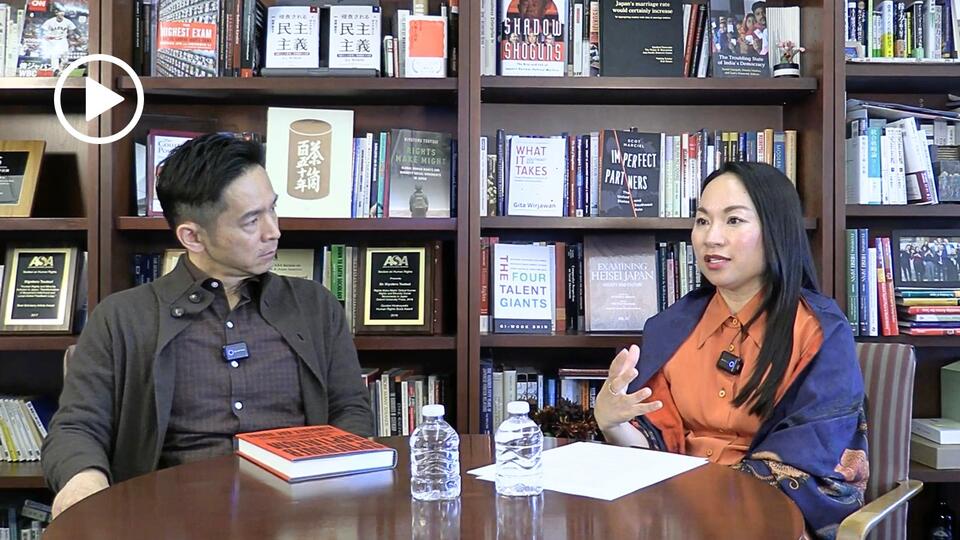
Southeast Asia is one of the most climate change-vulnerable regions in the world. However, compounding the climate crisis are socioeconomic and geopolitical challenges that shape the unequal distribution of ecological burdens across communities. In this seminar, Yasmin Wirjawan and Gaea Morales explore where these intersecting vulnerabilities create opportunities for policy innovation and meaningful change across sectors and levels of governance.

Wirjawan discusses the importance of regional digitalization initiatives in fostering climate resilience, with a focus on addressing gender-based differences in mobile connectivity among youth NEET (not in education, employment, or training). She will also evaluate the strategic implications of the recently published ASEAN Community Vision 2045 within the framework of regional demographic shifts and digital transformation in advancing social inclusion. Meanwhile, Morales provides insights on how local governments in the region are responding to the climate crisis through norm “localization,” drawing on the example of city-level adoption of the United Nation’s Sustainable Development Goals.

By exploring the collaborative nature of these planning practices, the case studies demonstrate how local governments fill resource and technical state capacity gaps, and in doing so develop innovative climate action projects through city-to-city learning and advocacy networks. Together, both presentations highlight the agency of local communities and governments in paving the way for the region’s sustainable future from the bottom up. 
 

Speakers
 

Image
Headshot of visiting scholar Yasmin Wirjawan

Yasmin Wirjawan joins the Walter H. Shorenstein Asia-Pacific Research Center (APARC) as a visiting scholar from 2024 to 2026. Her research focuses on economic participation and climate change resilience among women and youth in Southeast Asia. She has over 20 years of experience serving on corporate and nonprofit boards across diverse industries. She also serves as Independent Commissioner of TBS Energi Utama, Advisor to Ancora Group and Sweef Capital, and leads the Ancora Foundation. Wirjawan holds a Doctor of Education in Leadership and Innovation and a MSc in Management and Systems from New York University. She also earned a MSc in Finance from Brandeis University and BA in International Business from the American University of Paris.

Image
Headshot of Shorenstein postdoctoral fellow Gaea Morales

Gaea Morales is the 2025-26 Shorenstein Postdoctoral Fellow on Contemporary Asia at APARC. Her work studies how global norms translate into local action, with a focus on cities, global environmental governance, and human rights. Her book project explores both the motivations and mechanisms by which cities “localize” (i.e., translate) environmental norms using case studies of Southeast Asia’s coastal capitals. She received her MA and PhD in Political Science and International Relations from the University of Southern California, and her BA in Diplomacy and World Affairs and French Studies from Occidental College. Her work is also informed by past experiences in international and local agencies, including UNDP Philippines and the Los Angeles Mayor’s Office of International Affairs. In Fall 2026, she will join Loyola University Chicago as the Helen Houlahan Rigali Assistant Professor of Political Science.

Gaea Morales
Yasmin Wirjawan
Lectures
Date Label
Authors
Noa Ronkin
News Type
News
Date
Paragraphs

Southeast Asia’s megacities, long viewed as symbols of progress, are facing crises ranging from floods and ecological damage to displacement and widening inequality. Scholars of contemporary urban politics often attribute these predicaments to rapid globalization that originated in the mid-1980s. Yet APARC Visiting Scholar Gavin Shatkin argues they must be understood in the context of the Cold War era, when urban development agendas were molded by authoritarian regimes exerting political and economic control in the name of anti-communism.

Shatkin, an urban planner specializing in the political economy of urbanization and urban policy and planning in Southeast Asia, is a professor of public policy and architecture at Northeastern University. He recently completed his residency at APARC as a Lee Kong Chian National University of Singapore-Stanford fellow on Southeast Asia. Before heading to Singapore for the second part of his fellowship, he presented research from his new book project, which examines how U.S.-supported authoritarian regimes in Indonesia, the Philippines, and Thailand shaped urban politics in three megalopolises —Jakarta, Bangkok, and Metro Manila — during the 1960s and 1970s, with consequences that reverberate today.

Political Violence as Foundation


Shatkin refers to the period from the mid-1960s to the mid-1970s as Southeast Asia's "hot Cold War." During that time, in tandem with the armed conflict in Vietnam, Laos, and Cambodia, political violence spread through Indonesia, the Philippines, and Thailand, as the three countries witnessed the emergence of authoritarian regimes that cemented their rule by manipulating laws and institutions and deploying targeted, often extreme violence justified as necessary to combat communism.

In Indonesia, a U.S.-backed 1965 military coup, directed particularly at the Communist Party of Indonesia, led to the massacre of 500,000 to one million people, heralding General Suharto's 32-year authoritarian rule.

In the Philippines, amid leftist demonstrations and a communist insurgency, President Ferdinand Marcos declared martial law in 1972, marking the beginning of a decade defined by his administration’s widespread human rights violations, throughout which the United States continued to provide foreign aid to the country, considering Marcos a steadfast anti-communist ally.

And in Thailand, the imposition of the 1958 military dictatorship to counter communist threats and the 1976 crackdown by Thai police and right-wing paramilitaries against leftist protesters were pivotal points in establishing a royalist-nationalist model that defined "Thainess" (khwam pen thai) through loyalty to the monarchy, aligned with military power as well as American military aid and counter-insurgency policy guidance.

According to Shatkin, these were not isolated incidents but defining episodes of political violence that cemented authoritative oligarchic control over urban development. The explosive urbanization in Southeast Asian cities that followed in the mid-1980s must be read through the lens of this earlier period, when authoritarian regimes sought to exploit urban transformation to entrench political and economic power.

Urban development takes the form of the linking up of an archipelago of exclusive spaces that reinforces the spatial dichotomy and segregation characterizing these three cities.
Gavin Shatkin

Oligarchic Politics


The Suharto regime's approach to Jakarta as a source of profit exemplifies this dynamic. Shatkin explains how, between 1985 and 1998, Indonesia's National Land Agency distributed land permits for extensive urban development across the Jakarta metropolitan region to a small network of oligarchic conglomerates, such as the Salim Group. These crony corporations, allied with Suharto through family ties and political patronage, came to dominate Indonesia’s economy. Many of these same corporate interests continue to influence development agendas in Jakarta today, owning exclusive rights to purchase and develop permitted land.

The same pattern of successive waves of government expansion of metropolitan regions through infrastructure development and the distribution of land to selected major conglomerates has repeated itself in Manila and Bangkok, creating in-country profit centers for economic interests and what Shatkin calls “an archipelago of exclusive gated elite spaces” that reinforces spatial dichotomy and segregation as each of these megacities also experiences a housing crisis.

For example, Shatkin’s research in Metro Manila during the late 1990s and early 2000s revealed that approximately 40% of the population lived in dense informal settlements. A significant portion of these residents were employed in the nearby container port, yet their wages were insufficient to afford legal housing near their workplace. This discrepancy highlights a structural dilemma where low-wage workers are effectively compelled to occupy land illegally.

Environmental crises in the three urban giants are also entrenched in political and social structures rooted in oligarchic and authoritarian legacies of the Cold War era, argues Shatkin. Thus, increasingly devastating floods in Jakarta, Metro Manila, and Bangkok have less to do with sea level rise and far more with the rapid spread of impervious surfaces and the extraction of groundwater resulting from uncontrolled urban sprawl on converted watershed lands within a relatively weak regulatory environment. Moreover, flooding mitigation solutions, like Indonesia’s Great Garuda seawall project, have perpetuated the same pattern of land giveaways to major developers.

Movements on the ground evoke Cold War legacies in the way that they contest contemporary urban issues.
Gavin Shatkin

Lessons from Urban Social Movements


Crucially, Shatkin's research shows that Southeast Asian urban activists themselves frame their struggles through the lens of Cold War legacies. For example, when Jakarta residents along the Ciliwung River faced eviction for flood mitigation in 2015, they challenged the Jakarta administration and the Ciliwung-Cisadane Flood Control Office in court, arguing the eviction was based on a Cold War-era law drafted during counterinsurgency operations that had no place in democratic Indonesia. They partially won the case.

In a similar vein, Thailand's Red Shirt movement, representing working-class people from the northeast, deliberately protested on land owned by the Crown Property Bureau, using iconography that critiqued the military-monarchy-elite alliance forged during the Cold War.

An example from Manila is the 2001 mass protests by urban, low-income groups in defense of President Joseph Estrada, who was impeached for corruption. Their support can be interpreted as a reaction against “anti-poor” discourse that originated in the Ferdinand Marcos era. For the urban poor, Estrada represented a powerful counterweight to this legacy of elite disdain.

"We need to listen to these protest movements on the ground,” says Shatkin. They do not primarily critique globalization but rather contest entrenched oligarchy and state paternalism forged by Cold War political violence. Thus, an alternative framework for understanding debates in urban politics of Jakarta, Manila, and Bangkok is to view them not merely as capitals shaped by globalization but as Cold War frontline sites.

Beyond Southeast Asia


The implications of Shatkin’s theoretical framework extend beyond Jakarta, Metro Manila, and Bangkok, and even beyond Southeast Asia. It illuminates how periods of political upheaval create enduring social, economic, and environmental inequalities.

Moreover, these three urban giants, which produce outsized shares of their nations' GDP, rank among the world's largest cities. Their futures will not only affect Southeast Asia but also global urban development patterns. Shatkin's work suggests that this future cannot be charted without reckoning with the past.

Read More

Participants gather for a group photo at the 2025 Trans-Pacific Sustainability Dialogue.
News

Envisioning Cities as Sites and Actors for Sustainable Development: Lessons from the 2025 Trans-Pacific Sustainability Dialogue

Held in Manila, Philippines, the fourth annual Trans-Pacific Sustainability Dialogue generated cross-sectoral insights on complex issues faced by cities and human settlements across the region, from housing and mobility to disaster resilience.
Envisioning Cities as Sites and Actors for Sustainable Development: Lessons from the 2025 Trans-Pacific Sustainability Dialogue
Theara Thun
News

Rebuilding Education After Catastrophe: Theara Thun Examines Cambodia’s Post-Conflict Intellectual Landscape

Theara Thun, APARC’s Lee Kong Chian NUS-Stanford Fellow on Southeast Asia, investigates how educational systems emerged in post-Khmer Rouge Cambodia within the broader context of national recovery and development.
Rebuilding Education After Catastrophe: Theara Thun Examines Cambodia’s Post-Conflict Intellectual Landscape
Thai Ambassador Dr. Suriya Chindawongse
News

Crisis at the Border, Competition in the Region: Thai Ambassador to the US Outlines ASEAN’s Four “T's:” Truce, Tariffs, Technology, and Transnational Crime

Speaking just one day after deadly clashes between Thailand and Cambodia reignited along their shared border, Thai Ambassador Dr. Suriya Chindawongse joined APARC’s Southeast Asia Program to explain how a fragile truce, shifting U.S. tariffs, emerging semiconductor opportunities, and a surge in online scam syndicates are shaping ASEAN’s future.
Crisis at the Border, Competition in the Region: Thai Ambassador to the US Outlines ASEAN’s Four “T's:” Truce, Tariffs, Technology, and Transnational Crime
Hero Image
People walk through the flooded streets at Kampung Pulo on January 18, 2014 in Jakarta, Indonesia.
People walk through the flooded streets of Kampung Pulo in January 2014, in Jakarta, Indonesia. Severe flooding caused by heavy rains displaced over 40,000 people in northern Indonesia that year.
Oscar Siagian via Getty Images
All News button
1
Subtitle

Gavin Shatkin, a Lee Kong Chian NUS-Stanford fellow on Southeast Asia at APARC, argues that prevailing urban development challenges in Jakarta, Metro Manila, and Bangkok stem from Cold War-era political and institutional structures imposed by U.S.-backed authoritarian, anti-communist regimes.

Date Label
Paragraphs
3D cover for "Reimagining Aid"

It was long assumed that Western liberal democracy and free-market capitalism held all the answers for development and national progress. Today, in the face of growing inequality and global power imbalances, this post–Cold War narrative has faltered. New players on the international scene, many from South and East Asia, have emerged to vie for influence and offer new models of development. Despite these recent changes, however, prominent international aid organizations still work under the assumption there are one-size-fits-all best practices. In Reimagining Aid, Wilks takes readers to Cambodia, a country at the heart of this transformation. Through a vivid, multi-sited ethnography, the book investigates the intricate interplay between aid donors from Japan and the United States, their competing priorities, and their impact on women's health initiatives in Cambodia. Cambodian development actors emerge not just as recipients of aid, but as key architects in redefining national advancement in hybrid, regional terms that juxtapose "Asia" to the "West." This book is a clarion call for practitioners, policymakers, and scholars to rethink what development means in a multipolar world. A must-read for anyone invested in Southeast Asia's role in global affairs and evolving definitions of gender in development, Reimagining Aid is a powerful reminder that the next chapter of global advancement is being written in unexpected places.


About the Author

Mary-Collier Wilks is currently an assistant professor of sociology at the University of North Carolina Wilmington. She was a 2021–2022 APARC Postdoctoral Fellow in Contemporary Asia at Shorenstein Asia-Pacific Research Center.

Read our interview with Wilks > 


Advance Praise for "Reimagining Aid"

"Reimagining Aid is a groundbreaking and deeply insightful ethnography that reframes how we understand the global development apparatus. Through richly textured fieldwork, Mary-Collier Wilks exposes the tensions between Western and East Asian donor regimes and the ways in which Cambodian practitioners navigate and rework these competing imaginaries. Essential reading for anyone interested in global health, feminist development, and the shifting geopolitics of aid."
—Kimberly Kay Hoang, University of Chicago

"At a time of Asian ascendance and American retreat from foreign aid, Reimagining Aid centers attention on the power of Asian and Western imaginaries in the development field. A must-read for anyone concerned with how development happens, resistance to hegemony in the Global South, and the ways narratives of progress are intimately bound up with ideas about family, gender, and motherhood. A real tour de force!"
—Joseph Harris, Boston University

"This brilliant, beautifully intimate ethnography challenges the image of post-war Western aid hegemony, illustrating the new regionalized global society in which we live. As Cambodian aid workers navigate between Japanese and U.S. aid agencies and between competing 'regional development imaginaries,' they resist what they see as culturally alien, while creatively reconstructing models of aid, and of gender, for their own societies."
—Ann Swidler, University of California, Berkeley
 

All Publications button
1
Publication Type
Books
Publication Date
Subtitle

Foreign Donors, Women’s Health, and New Paths for Development in Cambodia

Authors
Book Publisher
Stanford University Press
Paragraphs
COVID-19 temperature testing in China.

The COVID-19 crisis was a profound stress test for health, economic, and governance systems worldwide, and its lessons remain urgent. The pandemic revealed that unpreparedness carries cascading consequences, including the collapse of health services, the reversal of development gains, and the destabilization of economies. The magnitude of global losses, measured in trillions of dollars and millions of lives, demonstrated that preparedness is not a discretionary expense but a foundation of macroeconomic stability. Countries that invested early in surveillance, resilient systems, and inclusive access managed to contain shocks and recover faster, proving that health security and economic security are inseparable.

For the Asia-Pacific, the path forward lies in transforming vulnerability into long-term resilience. Building pandemic readiness requires embedding preparedness within fiscal and development planning, not as an emergency measure but as a permanent policy function. The region’s diverse economies can draw on collective strengths in manufacturing capacity, technological innovation, and strong regional cooperation to institutionalize the four pillars— globally networked surveillance and research, a resilient national system, an equitable supply of medical countermeasures and tools, and global governance and financing—thereby maximizing pandemic prevention, preparedness, and response. Achieving this will depend on sustained political will and predictable financing, supported by the catalytic role of multilateral development banks and international financial institutions that can align public investment with global standards and private capital.

The coming decade presents a narrow but decisive window to consolidate these gains. Climate change, urbanization, and ecological disruption are intensifying the probability of new zoonotic spillovers. Meeting this challenge demands a shift from episodic response to continuous readiness, from isolated health interventions to integrated systems that link health, the environment, and the economy. Strengthening regional solidarity, transparency, and mutual accountability will be vital in ensuring that no country is left exposed when the next threat emerges.

A pandemic-ready Asia-Pacific is not an aspiration but an imperative. The lessons of COVID-19 call for institutionalized preparedness that transcends political cycles and emergency budgets. By treating health resilience as a global public good, the region can turn its experience of crisis into a model of sustained, inclusive security for the world.

All Publications button
1
Publication Type
Working Papers
Publication Date
Subtitle

Building a Pandemic-Ready Asia-Pacific

Encina Hall, E106
616 Jane Stanford Way
Stanford, CA 94305-6055

0
Einstein-Moos Postdoctoral Fellow, 2025-26
oren_samet.jpg

Oren Samet is the Einstein Moos Postdoctoral Fellow at Stanford’s Center on Democracy, Development and the Rule of Law (2025-26) and will be an Assistant Professor of Political Science at Rice University beginning in 2026.

His research centers on the international dimensions of authoritarian politics and democratization, with a particular emphasis on opposition politics and a regional focus on Southeast Asia. His book project examines the success and strategies of opposition parties, focusing on the international activities of these actors in authoritarian contexts. Other work focuses on opposition competition in authoritarian elections, processes of autocratization, and contemporary challenges of international democracy promotion and governance aid. His academic work has been published in the American Journal of Political Science, Comparative Political Studies, and Political Communication, and his other writing has been published in outlets including Foreign Policy, Slate, and World Politics Review.

Before entering academia, Oren was based in Bangkok, Thailand, where he served as the Research and Advocacy Director of ASEAN Parliamentarians for Human Rights, working with politicians and civil society leaders across Southeast Asia. He previously worked as a Junior Fellow in the Democracy and Rule of Law Program at the Carnegie Endowment for International Peace. He holds a Ph.D. in Political Science from the University of California, Berkeley, and a B.A. from Princeton University’s School of Public and International Affairs.

Date Label
Paragraphs

Since the early 2000s, the world has witnessed a deepening democratic recession, and Asia is no exception. Compromised political freedom, constitutionalism and competitiveness characterise many democratic states across the region, while authoritarian states remain deeply entrenched. Still, there are glimmers of hope, as enduring public support for democratic ideals signals that even seemingly stable autocracies may not be immune to sudden change.

All Publications button
1
Publication Type
Journal Articles
Publication Date
Journal Publisher
East Asia Forum Quarterly
Authors
Larry Diamond
Number
No 2
Authors
Michael Breger
News Type
News
Date
Paragraphs

Donald Trump’s decisive victory in the 2024 U.S. presidential election has reignited debates about the United States' role in a world increasingly defined by geopolitical tensions, economic uncertainty, and democratic recession. The return of Trump to the White House will have profound implications for Asia. To assess the stakes for the region, APARC convened a panel of experts who weighed in on the potential risks and opportunities the second Trump administration’s policies may pose for Asian nations and how regional stakeholders look at their future with the United States. Another panel, organized by APARC’s China Program, focused on what’s ahead for U.S.-China relations.

High Stakes for the Asia-Pacific

APARC’s panel, The 2024 U.S. Presidential Elections: High Stakes for Asia, examined how the return of Trump’s political ideology and the macroeconomic effects of his foreign policy will affect Asia.

“We are witnessing the solidification of Trumpism as an influential political ideology,” stated APARC and Korea Program Director Gi-Wook Shin at the opening of the discussion, “one that has begun to transcend traditional  American conservatism. Trumpism — marked by a blend of economic nationalism, nativism, and a strongman approach to leadership —could have a huge impact not only in American society but also on the liberal global order.”

According to Shin, Trump’s policies, particularly his focus on unilateralism and economic self-interest, could significantly alter the political and economic dynamics of the Asia-Pacific region.

Political scientist Francis Fukuyama, the Olivier Nomellini Senior Fellow at the Freeman Spogli Institute, argued that Trump’s victory was no longer an anomaly but part of a larger trend of working-class voters shifting allegiance from the Democratic to the Republican Party. Fukuyama expressed concerns about Trump’s aggressive economic policies, including imposing broad tariffs on allies and adversaries alike, and warned that such policies could result in inflation, trade tensions, and long-term economic instability. In addition, he asserted that Trump’s reluctance to engage in foreign conflicts could undermine the United States’ commitments to security alliances, particularly in Asia.

APARC Deputy Director and Japan Program Director Kiyoteru Tsutsui emphasized the broader geopolitical implications of Trump’s policies, noting that Trump’s "America First" approach could further erode the international liberal order. He suggested that Japan would face significant challenges navigating the unpredictability of Trump’s foreign policies. According to Tsutsui, “There might be greater pressure to line up with the United States in dealing with China economically, which would  put a great deal of strain on the Japanese economy.” Such an alignment might also muddle Japan’s own diplomatic and security interests.

Gita Wirjawan, a visiting scholar with Stanford's Precourt Institute for Energy and former visiting scholar at APARC, focused on the stakes for Southeast Asia. Wirjawan argued that Trump’s economic policies, such as protectionism and prioritizing economic growth over democratic principles, could embolden right-wing populist movements in Southeast Asia. He suggested that parts of Southeast Asia could be a natural beneficiary of a reallocation of financial capital from the U.S. as companies diversify supply chains by establishing operations outside China in response to Trump’s planned tariffs. Yet, growing economic inequality in Southeast Asia, particularly in urban areas, could fuel the rise of similar nationalist policies, undermining efforts to promote inclusive, democratic development.

Shin highlighted the challenges South Korea might face under a second Trump presidency. Trump will likely demand higher defense payments from South Korea, potentially straining the U.S.-ROK alliance. This could put President Yoon in a tough spot, especially as trilateral U.S.-Japan-Korea cooperation has been progressing well but faces uncertainty. Economically, South Korean firms may struggle if U.S. policies like the Inflation Reduction Act and CHIPS Act are rolled back, as subsidies were crucial for their investments in the U.S. On North Korea, Shin noted that Trump may resume summit diplomacy with Kim Jong Un, leaving South Korea sidelined and potentially sparking an arms race in Northeast Asia. 

The panelists all emphasized that Asia, with its diverse political landscapes, would need to navigate a new era of economic nationalism and geopolitical unpredictability, with potential challenges to economic stability and democratic norms.

A Focus on U.S.-China Relations 

The second panel, "Crossroads of Power: U.S.-China Relations in a New Administration," focused specifically on the evolving dynamics of U.S.-China relations in the wake of the election. Moderated by APARC China Program Director Jean Oi, the discussion featured Shorenstein APARC Fellow Thomas Fingar, and Peking University's Yu Tiejun, the APARC's China Policy Fellow during fall 2024. The panelists analyzed the potential trade, security, and diplomacy shifts between the two global superpowers, particularly in light of Washington's bipartisan consensus on China. 

Central to the discussion was the continuity of U.S. policy toward China under the first Trump administration and the Biden administration. Examples of this continuity included recent tariff increases on Chinese imports, a new U.S. Department of the Treasury program to screen U.S. outbound foreign investments in key sectors, and tighter export controls on critical technologies like quantum computing and advanced semiconductors. The panelists explored the economic and strategic ramifications, noting that these policies could disrupt existing trade patterns. 

Another area of concern was China’s uneven implementation of the 2020 Phase One  trade deal it negotiated with the U.S., in which China had committed to domestic reforms and $200 billion of additional U.S. imports. This failure could buttress the new administration’s plan to increase tariffs, complicating diplomatic efforts between Washington and Beijing. Fingar noted that while China has made efforts to diversify its supply chains, these changes might not be enough to shield it from the effects of U.S. economic policies, which could include escalating tariffs or additional restrictions on Chinese exports. 

The conversation also touched on broader geopolitical considerations, particularly concerning China’s role in the ongoing war in Ukraine. The panelists discussed the potential for cooperation or de-escalation in U.S.-China relations, with China’s positioning on the war serving as both a point of contention and a possible avenue for diplomatic engagement. 

Underscoring the deepening complexities in U.S.-China relations post-election, the panelists highlighted the uncertainty surrounding U.S. foreign policy under a second Trump administration, particularly regarding the role of people-to-people exchanges in fostering mutual understanding.

Both events emphasized the multifaceted consequences of Trump’s return to power for Asia and the global international order. While the discussions highlighted the challenges posed by the rise of economic nationalism, trade tensions, and shifting security priorities, they also pointed to potential areas of cooperation and the evolving dynamics of global diplomacy.


In the Media


From Center Fellow Oriana Skylar Mastro:

What a Second Trump Term Means for the World
OnPoint – WBUR, Nov 12 (interview)

Race to the White House: How the US Election Will Impact Foreign Policy
UBS Circle One, October 23 (interview)

From Visiting Scholar Michael Beeman:

On Korea-U.S. Economic Cooperation in the Era of Walking Out
Yonhap News, Nov 20 (featured)

Trump Looking for Trade 'Reset' with Most Countries: Ex-USTR Official
Nikkei, Nov 16 (interview)

How Southeast Asia Can Weather the Trump Trade Typhoon
The Economist, Nov 14 (quoted)

Read More

Gi-Wook Shin, Evan Medeiros, and Xinru Ma in conversation at the Center for Strategic and International Studies.
News

Stanford Next Asia Policy Lab Engages Washington Stakeholders with Policy-Relevant Research on US-China Relations and Regional Issues in Asia

Lab members recently shared data-driven insights into U.S.-China tensions, public attitudes toward China, and racial dynamics in Asia, urging policy and academic communities in Washington, D.C. to rethink the Cold War analogy applied to China and views of race and racism in Asian nations.
Stanford Next Asia Policy Lab Engages Washington Stakeholders with Policy-Relevant Research on US-China Relations and Regional Issues in Asia
group of people standing on steps of Encina Hall at the 2024 Trans-Pacific Sustainability Dialogue
News

Driving Climate-Resilient Infrastructure and Inclusive Industrialization: Highlights from the Third Annual Trans-Pacific Sustainability Dialogue

Held at Stanford and hosted by the Shorenstein Asia-Pacific Research Center, the third annual Dialogue convened global leaders, academics, industry experts, and emerging experts to share best practices for advancing Sustainable Development Goal 9 in support of economic growth and human well-being.
Driving Climate-Resilient Infrastructure and Inclusive Industrialization: Highlights from the Third Annual Trans-Pacific Sustainability Dialogue
Hero Image
Donald Trump
All News button
1
Subtitle

APARC recently hosted two panels to consider what a second Trump presidency might mean for economic, security, and political dynamics across Asia and U.S. relations with Asian nations.

Date Label
Paragraphs

Shorenstein APARC's annual report for the academic year 2023-24 is now available.

Learn about the research, publications, and events produced by the Center and its programs over the last academic year. Read the feature sections, which look at the historic meeting at Stanford between the leaders of Korea and Japan and the launch of the Center's new Taiwan Program; learn about the research our faculty and postdoctoral fellows engaged in, including a study on China's integration of urban-rural health insurance and the policy work done by the Stanford Next Asia Policy Lab (SNAPL); and catch up on the Center's policy work, education initiatives, publications, and policy outreach. Download your copy or read it online below.

All Publications button
1
Publication Type
Annual Reports
Publication Date
Authors
Paragraphs
A vlogger livestreams using multiple phones on a single rig during Ferdinand “Bongbong” Marcos Jr.’s and his running mate Sara Duterte’s last campaign rally before the election on May 07, 2022, in Paranaque, Metro Manila, Philippines.

Highlights

  • The internet has achieved unprecedented democratization of information access, but rather than promoting democratic ideals and critical thinking, it has often become a tool for undermining them, particularly due to social media platforms, which have been essentially weaponized to spread misinformation and hate speech.
  • Despite high internet penetration rates in Southeast Asia, educational outcomes haven't improved significantly, with most countries scoring below global averages on PISA tests. Information access by itself does not guarantee the learning of critical thinking.
  • Social media platforms' algorithmic amplification of sensationalist content, combined with high daily internet usage in Southeast Asia and inadequate regulatory oversight, has created an environment where misinformation spreads rapidly and unchecked.
  • Most Southeast Asian regulatory bodies struggle with two key challenges: aging parliamentarians who don't understand modern technology platforms, and social media companies' resistance to meaningful algorithm changes or content moderation improvements.
  • The author recommends three solutions: increasing the digital presence of public intellectuals, investing in higher-quality teachers, and developing more effective policy frameworks for content moderation.

Summary

There were early optimistic expectations that the internet, by democratizing equitable access to information, would lead to, at the least, a commensurate democratization of ideas, including among the billions of people in developing countries like those in Southeast Asia. This paper analyzes the paradox of the internet—how a combination of low education achievement levels and the widespread dissemination of misinformation on social media platforms has, contrary to expectations, enabled an environment in which the internet is now being used to subvert fundamental democratic values. The paper proceeds to present a potential path forward, where with improved education and more effective shepherding by both civil society and policy-making bodies, there may be a chance for Southeast Asia to strengthen its capacity to use the democratization of information to preserve and even advance the democratization of ideas. 

All Publications button
1
Publication Type
Working Papers
Publication Date
Subtitle

The Democratization of Information versus the Democratization of Ideas and Economic Capital

Authors
Gita Wirjawan
Subscribe to Southeast Asia