In this lecture, Professor Okimoto discusses how Japan’s geography and geological factors have influenced its economics, society, and culture. In addition, he explores issues pertaining to the March 11, 2011 earthquake and tsunami. 

Daniel I. Okimoto Speaker
Lectures

Walter H. Shorenstein
Asia-Pacific Research Center
616 Serra St., Encina Hall C302-23
Stanford University
Stanford, CA 94305-6055

(650) 723-3368 (650) 723-6530
0
Visiting Professor
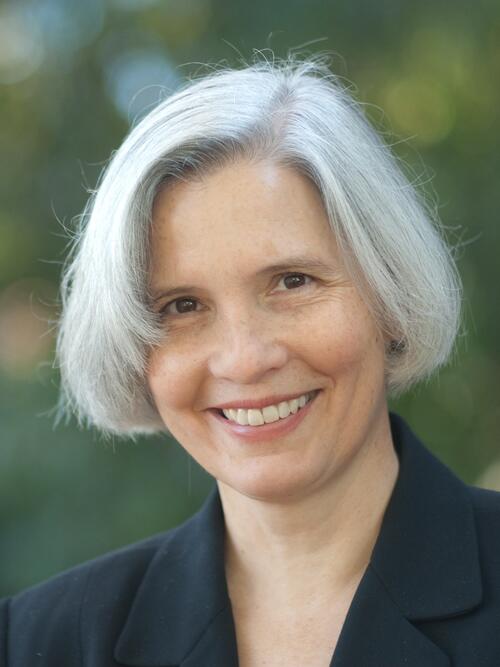
ChengJosephWEB.jpg PhD

Research Interests

Asia-Pacific and global competitiveness; national innovation and technology policies; foreign R&D investment; strategy and organization design for transnational firms.

Professional Biography

Joseph L. C. Cheng joins the Walter H. Shorenstein Asia-Pacific Research Center (Shorenstein APARC) in 2012 from the University of Illinois at Urbana-Champaign where he is currently professor of international business and director of the CIC Center for Advanced Study in International Competitiveness. CIC (Committee on Institutional Cooperation) is the nation’s primer consortium of top-tier research universities in the Midwest, including the Big Ten Conference members and the University of Chicago. 

During his time at Shorenstein APARC, Cheng will conduct research on the international competitiveness of multinational firms from the Asia-Pacific, with a focus on the JACKS countries (Japan, Australia, China, Korea, and Singapore). The project has two main objectives:  (1) to identify the key competitive advantages of the JACKS countries both individually and collectively as a cluster of economies; and (2) to investigate how indigenous firms from the JACKS countries internationalize and leverage home-based advantages to enhance their competitiveness overseas. The research findings will be reported in a forthcoming book that Cheng is currently writing: Asia-Pacific and the JACKS Multinationals: Economics, Culture, and International Competitiveness.

Cheng is a consulting editor for the Journal of International Business Studies and senior editorial consultant to the European Journal of International Management. He is also a guest editor for an upcoming special issue of Long Range Planning on “China Business and International Competitiveness: Economics, Politics, and Technology.” Additionally, he currently serves or has served on the editorial boards of several other journals, including Management International Review, Journal of World Business, Organizational Dynamics, and Journal of Engineering and Technology Management.

Cheng holds a PhD in business administration from the University of Michigan and a BS (with honors) in industrial engineering from the University of Wisconsin-Madison.

Authors
Masahiko Aoki
News Type
News
Date
Paragraphs
As the one-year anniversary of Japan's Great Tohoku Earthquake and Fukushima nuclear disaster approaches, Stanford economist Masahiko Aoki says now is an opportune time to restructure the country's electric power industry.
Hero Image
2012FebPowerLinesImage LOGO
Tokyo Electric Power Company's Tama substation in Tokyo.
Flickr/ykanazawa1999
All News button
1
Paragraphs

Matthew Kroenig's argument for preventive military action to combat Tehran's nuclear program -- "Time to Attack Iran" (January/February 2012) -- suffers from three problems. First, its view of Iranian leaders' risk calculations is self-contradictory. Second, it misreads nuclear history. And third, it underestimates the United States' ability to contain a nuclear Iran. When these problems are addressed, it is clear that, contrary to what Kroenig contends, attacking Iran is not "the least bad option." 

Kroenig's view of the way Iranian leaders are willing to take on risks is deeply incongruous. In his view, a nuclear bomb will push Tehran to block U.S. initiatives in the Middle East, unleash conventional and terrorist aggression on U.S. forces and allies, and possibly engage in a nuclear exchange with Israel. This would mean Iranian leaders are reckless: given the United States' conventional and nuclear superiority, any of these actions would provoke considerable retaliation from Washington. And, of course, a nuclear exchange with Israel would invite annihilation. At the same time, Kroenig suggests that Tehran would remain remarkably timid after a preventive strike from the United States. Presented with clear redlines, Iran would not retaliate against U.S. troops and allies or attempt to close the Strait of Hormuz. Kroenig's inconsistency is clear: If Iranian leaders are as reckless as he seems to believe, a preventive strike would likely escalate to a full-blown war. If they are not, then there is no reason to think that a nuclear Iran would be uncontainable. In short, a preventive attack on Iran can hardly be both limited and necessary.

Kroenig's argument misreads nuclear history at least three times. First, he writes that a targeted preventive strike would likely wipe out the nuclear program in Iran, as strikes against Iraq in 1981 and Syria in 2007 did in those countries. These comparisons are misleading. Recent research based on captured Iraqi documents demonstrates that the 1981 Israeli attack on the Osirak reactor, near Baghdad, actually spurred a covert nuclear weapons program at other sites. Indeed, Iraqi President Saddam Hussein remained determined to revive his nuclear program until he was removed from power in 2003. What prevented him from achieving that goal was the decade-long U.S.-led containment regime put in place after the 1991 Gulf War. The Iraqi case suggests that any attacks that do not depose the Iranian regime, too, would cause it to accelerate its efforts to acquire nuclear weapons. Kroenig's prescription might therefore precipitate the very outcome he is trying to avoid. 

As for Syria, Damascus' nuclear program was just budding. The country boasted only one exploratory facility, which was shattered easily by a single aerial bombing carried out by Israel in September 2007 under the cloak of night. But Iran's nuclear program is much more advanced and is already of industrial proportions. Any attack on Tehran would involve destroying numerous nuclear-program and air-defense targets, making it far more costly and less likely to succeed than the Israeli raid against Syria's Deir ez-Zor reactor. More, Iran's advanced program reflects Tehran's greater resolve to develop nuclear capabilities, so, post-attack, Tehran would be ever more likely to double down on developing a weapon. Furthermore, although Kroenig hopes that a targeted strike would destabilize the Iranian regime, there is no basis for such optimism. Being a civilian, parliamentary, oil-rich theocracy, Iran is relatively stable. Put simply, a preventive strike against Iran can hardly be both limited and effective.

Kroenig misreads history again when he considers a nuclear exchange between Iran and Israel. In his view, they "lack nearly all the safeguards that helped the United States and the Soviet Union avoid a nuclear exchange during the Cold War." Yet the United States and the Soviet Union avoided a nuclear exchange even during the hottest crisis of the Cold War, the Cuban Missile Crisis, at a moment in which Soviet retaliatory capability was still uncertain, there were no clear direct communication channels between the two leaderships, and Soviet experience managing their nuclear arsenal was no longer than five years. Moreover, the historical record shows that even young and unstable nuclear powers have avoided nuclear escalation despite acute crises. Pakistan and India avoided nuclear war in Kargil in 1999, as well as after the terrorist attacks targeting the Indian parliament in 2001 and Mumbai in 2008. When national survival is at stake, even opaque and supposedly "irrational" regimes with nuclear weapons have historically behaved in prudent ways.

Kroenig's final abuse of history comes when he posits a cascade of nuclear proliferation across the Middle East in response to an Iranian bomb. He mentions Saudi Arabia, and implies that Egypt, Iraq, and Turkey might all follow suit. Yet none of these states, which can count on U.S. support against Iran, nuclearized in response to Israel's nuclearization (against which they cannot count on U.S. backing, mind you). And more generally, the United States has a successful record of preventing clients from acquiring nuclear weapons in response to a regional enemy, such as South Korea and Japan in response to North Korean nuclear acquisition. (Washington agreed with Pakistani nuclearization in response to India.) 

Taking the long view, Kroenig's argument reveals an unwarranted skepticism about Washington's ability to contain a nuclear Iran. This skepticism is all the more surprising considering Kroenig's work on the benefits of U.S. nuclear superiority. Existing U.S. security guarantees, based on current capabilities, give allies little incentive to nuclearize. Egypt and Saudi Arabia are among the largest recipients of U.S. military support, and Turkey is a member of NATO. Reinforcing U.S. ties with friends in the region would be easier, cheaper, and less risky than attacking the Iranian nuclear program. 

Instead, the United States should heed the lessons of the North Korean nuclearization. Not so long ago, Washington had to face an aggressive regime in Pyongyang intent on developing nuclear weapons. The United States rejected a preventive strike in 1994 for fear that the outcome would be worse than its target's nuclear acquisition. This was the right decision. After North Korea acquired nuclear weapons, none of the consequences that Kroenig's argument would predict materialized. U.S. security guarantees contained Pyongyang and persuaded South Korea and Japan not to acquire nuclear weapons. Nobody believes that the world is better off with a bomb in North Korea -- but the record shows that it hasn't brought the end of the world, either.

Military action against Iran would be a profound strategic miscalculation. For all the talk of retrenchment, the U.S. military might remains the most powerful in the world, and it can successfully minimize consequences of an Iranian bomb, should one come to pass, by containing Tehran's ambitions, dissuading regional proliferation, and providing security assurances to its allies.

All Publications button
1
Publication Type
Commentary
Publication Date
Journal Publisher
Foreign Affairs
Authors
Paragraphs

The nuclear weapons news of late has been alarming. David Sanger reported in "The New York Times" on January 9 that Iran's top nuclear official had announced his country was near initiating uranium enrichment at a new plant. And the recent leadership change in North Korea means added uncertainty about one of the world's most unpredictable nuclear weapons states. Both developments mean the danger is rising that nuclear weapons or the means to make them will spread in this year.

The ominous news brings to mind a comment that Robert M. Gates made a few years ago while working as President Obama's Secretary of Defense. "If you were to ask most of the leaders of the last administration or the current administration what might keep them awake at night," he told me, "it's the prospect of a [nuclear] weapon or nuclear material falling into the hands of Al Qaeda or some other extremists."

I was interviewing Gates for a book about nuclear threats. The book, "The Partnership: Five Cold Warriors and Their Quest to Ban the Bomb," [Harper, $29.99] examines the acute state of nuclear dangers today, including the spread of nuclear materials and technology to unstable nations like Pakistan, North Korea and Iran. If a terror group like Al Qaeda is ever going to get its hands on a nuclear weapon, or more likely the fissile material needed to make one, the source is likely to be one of those three nations. North Korea and Pakistan have a frightening history of exporting nuclear weapons technology. Iran may be next.

Despite the denials of Iranian leaders, Tehran seems well on the way to building its first nuclear weapon. Iran already has enough enriched uranium to make several warheads once the uranium is raised to a higher level of enrichment. The enrichment process can move very quickly from a low level to high, bomb-grade levels. Some upgrading of known Iranian enrichment facilities are required to get there, and these changes would be visible to the outside world. Still, Iran may well have hidden enrichment programs already cranking out highly enriched uranium. If it does move openly to higher enrichment, Israel and the United States will be tempted to attack Iran's nuclear installations.

A simple but powerful nuclear weapon can be fabricated with just a small amount of highly enriched uranium. The hardest part of making a uranium bomb is producing highly enriched uranium, something that requires advanced, industrial-scale technologies beyond the reach of a terror group. But with just 60 pounds of highly enriched uranium, a small, savvy group of engineers with some basic laboratory equipment could construct a fission bomb in a garage. The bomb mechanism is so straightforward that the United States did not bother to test a uranium weapon before dropping one over Hiroshima in 1945. And it is not wildly improbable to imagine Iran giving highly enriched uranium to a terror group.

The continuation of the Kim dynasty in North Korea - now in its third generation with the recent installation of Kim Jong-un as the new supreme leader - does not augur well for more responsible behavior by North Korea. With its active nuclear weapons program, hunger for hard currency and record of selling nuclear weapons goods to Libya and Syria, North Korea is one of the most dangerous nations on earth.

While North Korea is unlikely to sell a nuclear weapon to a terror group, it could provide the materials and knowhow to make a crude but powerful bomb. The United States, for all its intelligence-gathering hardware like spy satellites, does not know a great deal about the North Korean program. Washington was surprised to learn in 2010 that North Korea had constructed a uranium enrichment plant outfitted with the latest centrifuge technology. News about the existence of the plant came from a group of American scholars who were shown the facility during a visit to the North Korean nuclear complex at Yongbyon.

The plant is not a problem if it is producing low enriched uranium to fuel a small, light water reactor. But the plant could be used to produce highly enriched uranium. The rapid construction of the plant - it was built in just 18 months - suggested that the North Koreans might have honed their techniques at another enrichment facility, as yet undetected by the United States.

I recently asked my Stanford colleague Sig Hecker, one of the scholars who visited the enrichment plant in 2010, to outline what to watch for in the North Korean weapons program in coming weeks to determine if the new leadership is planning any change in nuclear policy and/or operations. Sig served as director of the Los Alamos National Laboratory 1986-1997. He has been a frequent visitor to North Korea, one of the few Americans to get a first-hand look at the North Korean nuclear program.

His response:

I believe that there will be a period of quiet on the diplomatic front, both for mourning and to rethink strategy. Just before Kim Jong-il died, American and North Korean diplomats came close to an agreement of American food aid in return for some concessions on the nuclear program (some reports indicated that Pyongyang would stop enrichment - but I have yet to hear official confirmation from the UnitedStates - and we never may). What to look for is to see when North Korean diplomats are ready to re-engage with Americans in quiet bilateral talks, mostlikely in China.

On the technical front: I would expect "normal operations" at Yongbyon. That means they will continue with the experimental light water reactor construction- although little will be seen from overheads because it is winter time. Much of the interior components will be fabricated in shops. I also expect them to continue with operations of the centrifuge enrichment facility - either to make more low enriched uranium for reactor fuel or to get the facility to operate fully (which it may not have been when we visited). Both of these operations will continue regardless of which way Pyongyang eventually decides to go with the nuclear program. I don't see any reason why they would cut back on these operations now.

As for potential provocative actions - they could prepare for another nuclear test -- but that is highly unlikely, if for no other reason than it is winter. Their tests occurred in October 2006 and May 2009. Nevertheless, the third test tunnel appears to have been dug some time ago (South Korean news reports and overhead imagery) and one should watch closely for activity at the test site (particularly come spring). We should also look for potential missile tests - the new launch site on the west coast should be watched for another potential long-range missile launch. (They have had three attempts from the old launch site in the east: 1998 over Japan, 2006 a complete failure, and 2009 two out of three stagesworked.) They also have not flight-tested the Musudan road-mobile missile."

It would not surprise me if North Korea conducted another nuclear test in 2012. If Kim Jong-un is looking for a way to flex North Korean military power and remind his impoverished people that their nation matters to the rest of the world, detonating a nuclear weapon will do the trick.

Iran's nuclear program will also likely generate news and international anxiety this year. Iranian threats to attack US naval vessels in the Persian Gulf may seem self-defeating, but a military confrontation between Iran and the United States is not out of the question.

There is no greater danger to American and global security than the spread of nuclear weapons and the means to make them.

All Publications button
1
Publication Type
Commentary
Publication Date
Journal Publisher
The Huffington Post
Authors
Philip Taubman
-

Abstract
Two and half years before there was anything called the “Arab Spring,” Wired contributing editor David Wolman traveled to Egypt to research and write about tech-savvy dissidents protesting against the Mubarak regime. Those same activists went on to play a central role in organizing the revolution that began on January 25, 2011. Wolman will share stories about his reporting, both from 2008 and during two trips in 2011, and discuss the role of social media in recent uprisings from Cairo to California.

David Wolman is an author and award-winning journalist. He is a contributing editor for Wired, and he has written for a variety of publications, including Outside, Mother Jones, Newsweek, Discover, Forbes, and Salon. Wolman is a former Fulbright journalism fellow in Japan and a graduate of Stanford University's journalism program. His latest book, The End of Money, will be out in February.

Sloan Mathematics Center

David Wolman Author and Contributing Editor Speaker Wired
Seminars
-

Abstract:

The 2012 Republic of China presidential and legislative elections to be held on January 14th mark the fifth presidential and seventh national legislative direct elections in Taiwan. Incumbent ROC President Ma Ying-jeou of the Kuomintang (KMT) enjoyed a landslide victory in 2008 over Democratic Progressive Party (DPP) candidate Hsieh Chang-ting, winning by over 2.2 million votes. Subsequent revelations of corruption by former President Chen Shui-bian of the DPP and various members of his administration further damaged the DPP's public image and electoral prospects.

In the intervening years, however, current DPP candidate Tsai Ing-wen and other members of the DPP have worked to revitalize their party's image, and as chairperson of the DPP Tsai established a special internal investigative committee to root out corruption in the party. A potentially complicating new factor in the race is the first-ever presidential bid by the People's First Party (PFP), led by candidate James Soong. Polling results to date have indicated the potential for a very close race between Ma and Tsai, with Soong also pulling a substantial portion of the vote that may affect the electoral outcome.

On the legislative side, the KMT won 81 out of 113 total seats in the Legislative Yuan in the 2008 elections, a circumstance that has facilitated the passage of various controversial measures supported by the Ma administration, including in particular the Economic Cooperation Framework Agreement (ECFA) with mainland China, and a significant shift in the composition of this body is likely to have a pronounced impact.

Regardless of the outcome, the results of the 2012 elections promise to offer much insight into the popular attitudes of the Taiwanese people and the prospects for future democratic consolidation and development in Taiwan. Ten days following the elections, Professors Shelly Rigger and Eric Chen-hua Yu will join us for a panel discussion to analyze the outcomes of these elections and discuss their relevance to the US and the world.

Speaker Bios:

Image
Shelley Rigger is the Brown Professor of East Asian Politics and Chair of Political Science at Davidson College in Davidson, North Carolina. She has a PhD in Government from Harvard University and a BA in Public and International Affairs from Princeton University. She has been a visiting researcher at National Chengchi University in Taiwan (2005) and a visiting professor at Fudan University in Shanghai (2006). Rigger is the author of two books on Taiwan’s domestic politics, Politics in Taiwan: Voting for Democracy (Routledge 1999) and From Opposition to Power: Taiwan’s Democratic Progressive Party(Lynne Rienner Publishers 2001). In 2011 she published Why Taiwan Matters: Small Island, Global Powerhouse, a book for general readers. She has published articles on Taiwan’s domestic politics, the national identity issue in Taiwan-China relations and related topics. Her current research studies the effects of cross-strait economic interactions on Taiwan and Mainland China. Her monograph, “Taiwan’s Rising Rationalism: Generations, Politics and ‘Taiwan Nationalism’” was published by the East West Center in Washington in November 2006.

Image

Eric Chen-hua Yu is an assistant research fellow of the Election Study Center and

jointly appointed as an assistant professor of political science at National Chengchi University in Taiwan. Before he returned to Taiwan to serve in his Alma mater in 2009, he has been a research fellow and program manager of Center on Democracy, Development, and the Rule of Law at Stanford’s Freeman Spogli Institute for International Studies since 2006. His research interests include public opinion, electoral politics, quantitative methods, and American politics. He also participates in a number of joint survey projects such as Taiwan Election and Democratization Studies (TEDS) and World Value Survey. Yu recently published academic articles on Taiwan’s domestic politics in
Taiwan Political Science Review, Journal of Electoral Studies, Review of Social Sciences, and Japanese Journal of Electoral Studies. Yu received a MS (2000) in Public Policy Analysis from the University of Rochester, and a Ph.D. in political science (2006) from Columbia University.

CISAC Conference Room

Shelly Rigger Professor of East Asian Politics and Chair of Political Science Speaker Davidson College

616 Serra St.
Encina Hall
Stanford, CA 94305

1
3x4200dpi[2]_self.JPG MS, PhD

Eric Yu was a research fellow and program manager for the Democracy in Taiwan program at CDDRL. His research interests included public opinion, electoral politics, federalism, and quantitative methods. He worked with Election Study Center at National Chengchi University (Taiwan) on a multi-year research project examining the relationship between public opinion and policy output at the local level in Taiwan. This project aimed to explore the extent to which local policy-makings respond to public opinions across a variety of policy dimensions. His recent studies also include the development of Taiwanese public attitudes toward cross-strait relations, the emergence of the third force under the new "single-district, two-ballot" electoral system for Taiwan's legislative elections, and mass policy preferences and their implications for political parties in Taiwan.

Yu received a BA (1995) in Political Science from the National Chengchi University in Taiwan, a MS (2000) in Public Policy Analysis from the University of Rochester, and a Ph.D. (2006) in Political Science from Columbia University.

Research Fellow and Program Manager for the Democracy in Taiwan Program
Eric Chen-hua Yu Assistant Research Fellow and Assistant Professor of Political Science Speaker Election Study Center; National Chengchi University
Panel Discussions
Subscribe to Japan