-


Abstract

Japanese Prime Minister Shinzo Abe called a general election for the lower house of Japan's parliament on December 14, following the decision to postpone a consumption tax hike that was originally scheduled for October 1, 2015, as the economic condition continued to deteriorate following an earlier consumption tax hike. The opposition declared a failure of Abenomics (the comprehensive economic policy package aimed to fight deflation and restore growth in Japan's economy). The Abe administration countered this claim by declaring Abenomics is on the right track and "the only way" forward for the future of Japan. The result was a victory for the Abe administration.  Abe’s Liberal Democratic Party (LDP) and the coalition partner Komeito retained the two-thirds majority of the Lower House.  In his commentary to Project Syndicate, Abe declared “With the powerful mandate of the Japanese people, demonstrated by their overwhelming vote of support in our country’s December 14 election, my government’s ability to act decisively has been strengthened immeasurably. Indeed, we now not only have the authority to act, but a clear and definitive message from the electorate that we must do so.”  Experts in the Japan Program at the Walter H. Shorenstein Asia-Pacific Research Center will discuss the Japan's economic and foreign policies after the election.

Speaker Bios

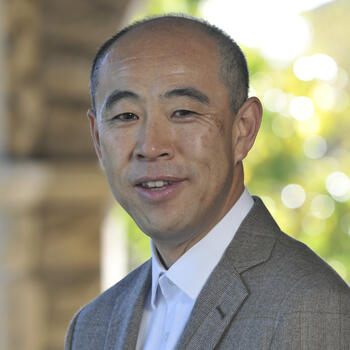
Takeo Hoshi - Henri H. and Tomoye Takahashi Senior Fellow in Japanese Studies at FSI; Professor, by courtesy, of Finance, Graduate School of Business and Director, Japan Program, Shorenstein APARC at Stanford University

Phillip Lipscy - The Thomas Rohlen Center Fellow, Japan Program, Shorenstein APARC and Assistant Professor of Political Science, Stanford University

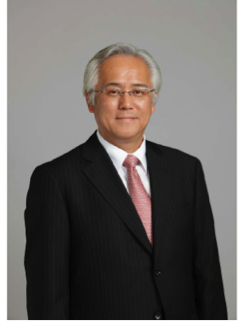
Yukio Okamoto - Robert E. Wilhelm Fellow, MIT and former Special Advisor to two Prime Ministers of Japan

Ryo Sahashi - Visiting Associate Professor, Shorenstein APARC at Stanford University and Associate Professor of International Politics, Faculty of Law at Kanagawa University

Japan after the Abenomics Election
Download pdf

Philippines Conference Room
Encina Hall
616 Serra St, 3rd floor
Stanford University
Stanford, CA 94305
 

0
Former Henri H. and Tomoye Takahashi Senior Fellow in Japanese Studies at the Freeman Spogli Institute for International Studies
Former Professor, by courtesy, of Finance at the Graduate School of Business
takeo_hoshi_2018.jpg PhD

Takeo Hoshi was Henri and Tomoye Takahashi Senior Fellow at the Freeman Spogli Institute for International Studies (FSI), Professor of Finance (by courtesy) at the Graduate School of Business, and Director of the Japan Program at the Shorenstein Asia-Pacific Research Center (APARC), all at Stanford University. He served in these roles until August 2019.

Before he joined Stanford in 2012, he was Pacific Economic Cooperation Professor in International Economic Relations at the Graduate School of International Relations and Pacific Studies (IR/PS) at University of California, San Diego (UCSD), where he conducted research and taught since 1988.

Hoshi is also Visiting Scholar at Federal Reserve Bank of San Francisco, Research Associate at the National Bureau of Economic Research (NBER) and at the Tokyo Center for Economic Research (TCER), and Senior Fellow at the Asian Bureau of Finance and Economic Research (ABFER). His main research interest includes corporate finance, banking, monetary policy and the Japanese economy.

He received 2015 Japanese Bankers Academic Research Promotion Foundation Award, 2011 Reischauer International Education Award of Japan Society of San Diego and Tijuana, 2006 Enjoji Jiro Memorial Prize of Nihon Keizai Shimbun-sha, and 2005 Japan Economic Association-Nakahara Prize.  His book titled Corporate Financing and Governance in Japan: The Road to the Future (MIT Press, 2001) co-authored with Anil Kashyap (Booth School of Business, University of Chicago) received the Nikkei Award for the Best Economics Books in 2002.  Other publications include “Will the U.S. and Europe Avoid a Lost Decade?  Lessons from Japan’s Post Crisis Experience” (Joint with Anil K Kashyap), IMF Economic Review, 2015, “Japan’s Financial Regulatory Responses to the Global Financial Crisis” (Joint with Kimie Harada, Masami Imai, Satoshi Koibuchi, and Ayako Yasuda), Journal of Financial Economic Policy, 2015, “Defying Gravity: Can Japanese sovereign debt continue to increase without a crisis?” (Joint with Takatoshi Ito) Economic Policy, 2014, “Will the U.S. Bank Recapitalization Succeed? Eight Lessons from Japan” (with Anil Kashyap), Journal of Financial Economics, 2010, and “Zombie Lending and Depressed Restructuring in Japan” (Joint with Ricardo Caballero and Anil Kashyap), American Economic Review, December 2008.

Hoshi received his B.A. in Social Sciences from the University of Tokyo in 1983, and a Ph.D. in Economics from the Massachusetts Institute of Technology in 1988.

Former Director of the Japan Program at the Shorenstein Asia-Pacific Research Center
CV
0
Former Thomas Rohlen Center Fellow at the Freeman Spogli Institute for International Studies
Former Assistant Professor of Political Science
phillip_lipscy_2018.jpg PhD

Phillip Y. Lipscy was the Thomas Rohlen Center Fellow at the Freeman Spogli Institute for International Studies and Assistant Professor of Political Science at Stanford University until August 2019. His fields of research include international and comparative political economy, international security, and the politics of East Asia, particularly Japan.

Lipscy’s book from Cambridge University Press, Renegotiating the World Order: Institutional Change in International Relations, examines how countries seek greater international influence by reforming or creating international organizations. His research addresses a wide range of substantive topics such as international cooperation, the politics of energy, the politics of financial crises, the use of secrecy in international policy making, and the effect of domestic politics on trade. He has also published extensively on Japanese politics and foreign policy.

Lipscy obtained his PhD in political science at Harvard University. He received his MA in international policy studies and BA in economics and political science at Stanford University. Lipscy has been affiliated with the Reischauer Institute of Japanese Studies and Weatherhead Center for International Affairs at Harvard University, the Institute of Social Science at the University of Tokyo, the Institute for Global and International Studies at George Washington University, the RAND Corporation, and the Institute for International Policy Studies.

For additional information such as C.V., publications, and working papers, please visit Phillip Lipscy's homepage.


Yukio Okamoto

Walter H. Shorenstein Asia Pacific Research Center
Freeman Spogli Institute for International Studies
Encina Hall, Rm. E313
616 Serra Street
Stanford, CA 94305-6055

(650) 725-5781
0
Visiting Associate Professor
ryo_sahashi.jpg PhD

Ryo Sahashi is a visiting associate professor of the Walter H. Shorenstein Asia-Pacific Research Center (Shorenstein APARC) from April 2014 to March 2015. He joins APARC from Kanagawa University, where he concurrently serves as an associate professor of international politics. He will be writing a book on U.S. strategy toward China, Taiwan, and Northeast Asia since the Cold War.

Sahashi is a specialist on the regional security architecture in East Asia and Japan’s international relations. His articles are published in Chinese, English, and Japanese, including “Security Arrangements in the Asia-Pacific: a Three-Tier Approach,” William T. Tow and Rikki Kerstain (eds.); Bilateral Perspectives on Regional Security: Australia, Japan and the Asia-Pacific Region, New York: Palgrave MacMillan, 2012, pp.214-240; “Security Partnership in Japanese Asia Strategy: Creating Order, Building Capacity, and Sharing Burden,” ifri Policy Papers, February 2013; “The rise of China and the transformation of Asia-Pacific security architecture,” William T. Tow and Brendan Taylor (eds.); Contending Cooperation: Bilateralism, Multilateralism, and Asia-Pacific Security, London and New York: Routledge, 2013, pp.135-156. His newest articles on Japan-Taiwan relations and on Japan’s foreign policy since DPJ era (2009-) will soon be available.

He also serves as Research Fellow at Japan Center for International Exchange. In the past, he was the visiting researcher at the Japanese House of Councilors and German Fund of the United States. His early academic career as faculty started with the University of Tokyo and Australian National University.

He is an active commentator and contributor to international media, including NHK (Asian Voice & Newsline), CCTV, APF, Newsweek, Defense News, Stars and Stripes, Global Times, China Dairy, Asia Pacific Bulletin, and East Asia Forum.

Sahashi is a graduate from International Christian University, spending junior year at University of Illinois at Urbana-Champaign, and earned his LL.M. and Ph.D. from the Graduate Schools for Law and Politics at the University of Tokyo.

Panel Discussions
Paragraphs

The Democratic People’s Republic of Korea (DPRK) remains a potentially destabilizing element of the Korean Peninsula, making it difficult to construct a regional architecture that could help preserve peace and prosperity. “Korean Reunification: An American View” suggests that transformation of the North Korean regime may be a prerequisite for Korean reunification and a key factor in building a sustainable future in Northeast Asia. The United States, the Republic of Korea, Japan and others must find ways to engage the North, without rewarding misbehavior. Two suggested approaches include pushing for Chinese-style reforms and increasing incentives for the DPRK elite.


All Publications button
1
Publication Type
Policy Briefs
Publication Date
Journal Publisher
Walter H. Shorenstein Asia-Pacific Research Center
Authors
Thomas Fingar
-
Image
100611 050 copy

Stanford-Sasakawa Peace Foundation New Channels Dialogue 2015

"Innovation: Silicon Valley and Japan"

January 22, 2015

Bechtel Conference Center, Encina Hall, Stanford University

Sponsored and organized by the Sasakawa Peace Foundation (SPF) and the Shorenstein Asia-Pacific Research Center (APARC) in Association with U.S.-Japan Council 
 

The Japan Program at Shorenstein APARC, Stanford University is continuing the "New Channels" dialogue which started in 2013 with support from the Sasakawa Peace Foundation. The project was launched to create new channels of dialogue between experts and leaders of younger generations from the United States, mostly from the West Coast, and Japan under name of "New Channels: Reinvigorating U.S.-Japan Relations," with the goal of reinvigorating the bilateral relationship through dialogue on 21st century challenges faced by both nations. 

Last year, in its inaugural year, the Stanford-SPF New Channels Dialogue 2014 focused on energy issues. This year's theme is innovation and entrepreneurship, which will take place on January 22 at Stanford University with participants that include business leaders, academia and experts from both the United States and Japan. On January 23, a closed dialogue among participants will be held at Stanford.

Shorenstein APARC will be tweeting about the conference at hashtag, #StanfordSPF. Join the conversation with the handle, @StanfordSAPARC.


Brief Agenda

9:15-9:30 
Welcome: 
Gi-Wook Shin, Director, Shorenstein APARC, Stanford University 
Yuji Takagi, President, Sasakawa Peace Foundation 
 

9:30-10:50 
Panel Discussion I: Current State of Silicon Valley Innovations

Chair: Kazuyuki Motohashi, Sasakawa Peace Fellow, Shorenstein APARC, Stanford University

Panelists: 
Richard Dasher, Director, US-Asia Technology Management Center, Stanford University 
Tak Miyata, General Partner, Scrum Ventures 
Patrick Scaglia, Consultant and Technology Advisor, Startup Ventures and former senior executive, Hewlette Packard 
Norman Winarsky, Vice President, SRI Ventures, SRI International 


11:10-12:30 
Panel Discussion II: Current State of Innovations in Japan

Chair: Kenji Kushida, Research Associate, Japan Program, Shorenstein APARC, Stanford University 

Panelists: 
Yusuke Asakura, Former CEO, mixi 
Takuma Iwasa, CEO, Cerevo 
Yasuo Tanabe, Vice President and Executive Officer, Hitachi Ltd. 
Hiroaki Yasutake, Managing Executive Office and Director, Rakuten


12:30-13:30 
Lunch


13:30-14:50 
Panel Discussion III: Taking Silicon Valley Innovations to Japan

Chair: Richard Dasher, Director, US-Asia Technology Management Center, Stanford University 

Panelists: 
Jeff Char, President, J-Seed Ventures, Inc. and Chief Mentor, Venture Generation 
Akiko Futamura, President and CEO, InfiniteBio 
Allen Miner, Founder, Chairman & CEO, SunBridge Corporation 
John Roos, former U.S. Ambassador to Japan 
 

15:10-16:30 
Panel Discussion IV: The Japanese Innovation Ecosystem and Silicon Valley: Bringing them Together (How Japanese firms can make use of SV?)

Chair: Takeo Hoshi, Director, Japan Program, Shorenstein APARC, Stanford University

Panelists: 
Robert Eberhart, Assistant Professor, Santa Clara University and STVP Fellow, Stanford University 
Gen Isayama, CEO and Co-Founder, WiL (World Innovation Lab) 
Naoyuki Miyabe, Principal, Miyabe & Associates, LLC 
Hideichi Okada, Senior Executive Vice President, NEC Corporation 
 

Innovation: Silicon Valley and Japan
Download pdf

Bechtel Conference Center
Encina Hall
616 Serra St., 1st floor
Stanford University
Stanford, CA 94305

Conferences
Authors
News Type
Q&As
Date
Paragraphs

Though some signs point to Japan falling into recession, Stanford economist Takeo Hoshi disagrees and says it is premature to judge the effectiveness of Japan's new approach to its economy. Not enough time has passed for the reforms to produce results.

Despite a recent slowdown, time will tell if Japan has charted the right economic course after more than 15 years of deflation, says a Stanford economist.

The Stanford News Service recently interviewed economics professor Takeo Hoshi of Stanford's Walter H. Shorenstein Asia-Pacific Research Center about Japan's economy – the third largest in the world.

In the last two years, Japan undertook a new economic direction in adopting fiscal reforms known as "Abenomics," which refers to its principal advocate, Japanese Prime Minister Shinzō Abe. Abenomics consists of monetary policy, fiscal policy and economic growth strategies to encourage private investment. But new data suggest that Japan may have fallen into a recession, which adds to worries about the slowing global economy.

Is Japanese Prime Minister Shinzo Abe’s "Abenomics" working?

It is too early to tell. Abenomics is not failing – yet. It has three pillars or "arrows," as they are often called. The first arrow – monetary expansion – has succeeded. Japan is out of deflation, which had lasted more than 15 years. The inflation rate has not reached the target rate of 2 percent and is recently falling a little bit, but it is away from zero. The postponement of the consumption tax increase that was announced last week was a step back on the efforts to reduce the budget deficits, which is considered to be a part of the second arrow (flexible fiscal policy). However, some people in the government have started to argue that fiscal consolidation has never been a part of the second arrow. 

According to Abe, the government will implement a consumption tax rate hike in April 2017 – it will rise from 8 percent to 10 percent. This time, the law will not include an escape clause, which made the earlier one contingent on economic conditions. It was also announced that the government will develop a real plan to achieve a fiscal surplus by a certain date. These efforts may lead to a credible plan to reach fiscal sustainability. So, it is too early to say if this second arrow of Abenomics has failed.

The third arrow is the growth strategy. The original strategy announced in June 2013 lacked focus, but the revised version enacted in June 2014 offers 10 focus areas, some of which are quite sensible. The government has just begun on some of these economic reforms. It is way too early to tell if these efforts to restore growth in Japan will prove fruitful.

Will the Japanese recession have painful implications for the United States?

I would not say Japan is in recession now. Many people say that Japan is in recession because the first preliminary estimate of the third quarter real GDP growth came out negative. With the negative growth in the second quarter, Japan's economic condition satisfies a standard definition of recession (two consecutive quarters of negative growth). But the negative growth in the second quarter was inevitable because the demand was shifted from the second quarter to the first quarter in anticipation of the consumption tax hike on April 1. People shifted the timing of durable consumption goods purchase from the second quarter to the first quarter. So, the "true" negative growth has been observed only for a quarter. 

Even the negative growth in the third quarter may not really signal a serious trouble. First, the negative growth disappears if we exclude the change in inventory. In other words, the production was down from the second quarter but the demand – or sales – did not fall. Also, many people expect the second preliminary estimate for third quarter growth that will be published on Dec. 8 will be revised higher. 

Will this hurt the global economy?

If Japan was in recession, that would hurt the rest of the world, especially when the economies in Europe are weak and China is slowing down. But I don't think Japan is in recession – yet.

What would have been a better strategy than "Abenomics?"

Abenomics has been better than any other alternatives that have been tried in Japan. The Bank of Japan finally stopped its deflationary policy. Abenomics also showed some early promise in economic reforms, which were tried before only in piecemeal ways.

Assuming the Liberal Democratic Party retains power and Prime Minister Abe returns as the prime minister after the next election – which seems to be a safe assumption – the government will continue Abenomics with a renewed commitment to fiscal reform and growth, I hope.

What is the lesson for countries around the world?

Many people have prematurely declared the "failure" of Abenomics. I don't think their assessment is correct, but the government could have done better by implementing some easier economic reforms in the beginning – and calling attention to its early successes. This could have included, for example, reducing the barriers to start new businesses.

Clifton Parker is a writer for the Stanford News Service.

Hero Image
flickr dickthomasjohnson tokyo stock
An electronic board shows Japan's Nikkei prices and related indexes at the Tokyo Stock Exchange in Tokyo (image crop, brightness applied).
Flickr/Dick Thomas Johnson
All News button
1
Authors
News Type
News
Date
Paragraphs

In March 2011, an earthquake and tsunami hit the eastern coast of Japan and caused one of the worst nuclear meltdowns ever seen. In the lead-up to that week, U.S. officials there were bracing themselves for a media firestorm following a controversial Wikileaks release, Japan’s new foreign minister was ushered into office, and an apology statement was delivered on behalf of the United States in Okinawa, explained the top U.S. diplomat who was posted there at the time.

“And that, was just a microcosm of all kinds of things going on during my tenure there,” said John Roos, who served as the U.S. ambassador to Japan from 2009 to 2013.

Speaking at Stanford, Ambassador Roos offered views on his tenure as ambassador at a seminar led by the Japan Program at the Walter H. Shorenstein Asia-Pacific Research Center (APARC). The diplomatic posting, underpinned by the strong U.S.-Japan alliance, proved an essential role for coordination of U.S. aid when the disaster struck.

Roos spoke in conversation with Ambassador Michael Armacost, his counterpart who served in the same position from 1989 to 1993, who is now a distinguished fellow at Shorenstein APARC.

“By far, [it was] the biggest crisis I had to deal with in my career,” said Roos, who has years of experience in business and law, and is now the CEO of the Roos Group.

Roos said he first took steps to open lines of communication between local staff, and the Japanese and U.S. military commands there. He went with his team on a dozen trips across the country. Fact-finding missions were necessary to assess the situation, as much as they were symbolic in showing a commitment to the people of Japan, he said.

Asked about his background, Roos said his academic training was valuable throughout his career. He is a graduate of Stanford University and Stanford Law School.

Leaders tasked to coordinate response crisis efforts, especially those concerned with nuclear issues, are often across many intergovernmental organizations and in turn, lead to a conflicting set of opinions. He said his ability to navigate tough situations harkens back to his training at Stanford, which emphasized building consensus and thinking critically.

Later, Armacost also underscored the role of people – who’s involved and their individual personalities – and their influence on policy decisions.

“Personal relationships are so important,” Roos said, “they drive everything.”

People-to-people connections were a similar theme mirrored in Roos’ perspectives on the future of the Japanese economy and the country’s relations with neighboring countries. As ambassador, Roos started the Tomodachi Initiative, an educational exchange program linking young leaders from the United States and Japan.

Following the crisis, in 2012, Japan ushered in Prime Minister Shinzo Abe and the Liberal Democratic Party (LDP) became the ruling majority party. One facet of Abe’s vision includes a stimulus package, commonly referred to as ‘Abenomics,’ intended to restore the country’s economy after more than a decade of slow growth.

Roos said most Japanese have a tepid attitude toward Abe’s policy ever since implementation of the final round of policies which are intensely focused on structural reforms. The reforms are necessary to restart growth, he said, but the average citizen will likely feel an impact due to a paring down of resources across public services.

But, entrepreneurism provides a credible direction for the country’s economic revival, and could help carve out a defined role for Japan in the global marketplace.  

In Japan, “there is incredible innovation going on,” he said. Individuals and universities are producing a myriad of cutting-edge technologies, and the ecosystem to support this is growing, but not yet fully adopted.

He said a key driver behind Silicon Valley’s success is the spirit of entrepreneurism widely shared there. People actively take risks, exchange ideas, and most importantly, embrace failure.

Roos said he carried that message with him wherever he went in Japan, often referencing the example of Mr. Abe who came back for a second term as prime minister. “That’s the culture of Silicon Valley, and that’s the culture that we want to promote in Japan.”

Hero Image
John Roos
John Roos (right), former U.S. ambassador to Japan (2009–13), speaks with Michael Armacost, also a former U.S. ambassador to Japan (1989–93), at Stanford University; photo courtesy Meiko Kotani
All News button
1
Date Label
Authors
Gi-Wook Shin
News Type
Commentary
Date
Paragraphs


Two weeks ago, North Korea surprised the world by sending three of its top leaders to the South to attend the closing ceremony of the 17th Asian Games in Incheon. The visit occurred in the midst of growing speculation that North Korea's young leader, Kim Jong Un, was seriously ill, or even that he had been removed from power. That dramatic and unprecedented visit gave renewed hope for improved inter-Korean relations, which have been frozen since the sinking of a South Korean vessel in 2010.

The strategic situation on the Korean Peninsula has continued to worsen over the past several years. To produce material for more nuclear devices, Pyongyang has proceeded with a large-scale uranium enrichment program. The International Atomic Energy Agency recently expressed concern that North Korea may also have reactivated its plutonium production facilities, another means of making fissile material for nuclear bombs. Meanwhile, having rocketed its first satellite into orbit in December 2012, the North is busily developing longer-range missiles to target not only the South but also Japan and the United States.

Unfortunately, there is no initiative on the horizon likely to change this dangerous trajectory. The United States was willing to negotiate with Pyongyang when there was a chance of preventing it from developing nuclear weapons. With that goal now deemed unachievable, Washington is instead intent on containing the threat through increased sanctions and counterproliferation efforts, missile defense, and heightened defense cooperation, with South Korea and Japan. U.S. engagement with North Korea, much less negotiation, is off the table and likely to stay that way.

China's buffer     

Earlier hopes that China would prove to be a deus ex machina have also foundered. While Beijing does not want Pyongyang to have nuclear weapons, it has always been more concerned about preventing instability in the North that might spill across their shared border. More recently, deepening suspicions among Beijing's leaders about U.S. strategic intentions have made North Korea even more important to China as a strategic buffer. China remains by far Pyongyang's most important foreign supporter, as reflected in the burgeoning trade across their border.

That leaves South Korea as the only country that could play a larger and more positive role in tackling the North Korea problem. South Korea is no longer a "shrimp among whales," as it used to think of itself, but a major "middle power." Strategically, Seoul is increasingly important not only to Washington but also to Beijing.

South Korea, however, has been a house divided when it comes to how to deal with the North. Conservative administrations, fearing that a North Korean nuclear arsenal would change the long-term balance of power on the peninsula, have made the North's denuclearization a condition for virtually all engagement with it. Progressive governments, on the other hand, have glossed over the nuclear issue, believing that increased contact will eventually promote change for the better in Pyongyang. The result has been South Korean policies that, whether from the left or the right, have proved unsustainable and ineffective.

"Tailored engagement"     

Based on a yearlong study, my colleagues and I have called for more active South Korean leadership to ameliorate the situation on the Korean Peninsula. We call the concept "tailored engagement." It is based on the conviction that engagement is only one means of dealing with North Korea, but an essential one, and it must be carefully "tailored" or fitted to changing political and security realities on and around the peninsula. It eschews an "appeasement" approach to Pyongyang as well as the notion that inter-Korean engagement under the current circumstances would be tantamount to accepting the North's misbehavior, especially its nuclear weapons program.

Such engagement would not immediately change the nuclear situation, but, if carefully considered and implemented, it need not encourage Pyongyang in that regard, either. Meanwhile, it could help to reduce bilateral tensions, improve the lives of ordinary North Koreans and bring the two societies closer together. It could reduce the risk of conflict now while fostering inter-Korean reconciliation and effecting positive change in the North.

South Koreans must first, however, develop a broader domestic consensus in areas and in ways that do not undermine the international effort to press Pyongyang to give up nuclear weapons. That is possible because many forms of engagement are in fact largely irrelevant to the nuclear program. For example, South Korea could provide much more humanitarian assistance to ordinary North Koreans; it could also engage in more educational and cultural programs, including sports exchanges. Concrete offers of expanded economic exchanges and support for the development of the North's infrastructure could become part of an incentive package in renewed six-party talks on ending the North's nuclear program.

Speculation about the state of Kim Jong Un's health and the North Korean leaders' visit to the South underline the fact that North Korean politics and society are experiencing great flux. For the outside world, this creates uncertainty, but also offers the possibility of positive change. Tailored engagement can at least test, and perhaps also influence, a changing North Korea.

Even a carefully "tailored" engagement strategy is no panacea. It is only one tool for dealing with the North -- military deterrence, counterproliferation and human rights efforts are among the others that are essential -- but why not try all available means when the situation is so worrisome? Japan should support such an approach because its interests, too, are threatened by the increasingly precarious situation on the peninsula.

This article was originally carried by Nikkei Asian Review on Oct. 16 and reposted with permission.

Hero Image
flickr iaea imagebank meeting
The International Atomic Energy Agency (IAEA) regularly convenes a Board of Governors meeting to discuss various issues related to nuclear security, high among them, the application of safeguards in North Korea.
IAEA Imagebank
All News button
1
Paragraphs

Perceptions of security risks in Northeast Asia are increasingly being shaped by the rise of China and Japan's more recent efforts to become a more "normal" nation. The momentum behind both developments is being felt acutely in the relationship between the United States and South Korea. While many argue that the stage is being set for an inevitable conflict, Thomas Fingar, the Oksenberg-Rohlen Distinguished Fellow at the Freeman Spogli Institute for International Studies, argues that what is happening in China and Japan provides an opportunity for greater multilateral cooperation.


All Publications button
1
Publication Type
Journal Articles
Publication Date
Journal Publisher
Global Asia
Authors
Thomas Fingar
Number
9
-

**WE ARE AT FULL CAPACITY - PLEASE ARRIVE EARLY FOR A SEAT**

Japan has long been known as a technology giant, and remains highly entrepreneurial, despite slowed competiveness in the years following the financial crisis of the 1990s. How can Japan continue to reinvigorate its economy? What steps can Japanese and Silicon Valley-based actors take to facilitate long-term, beneficial partnerships?

Ambassador John Roos, who served as U.S. ambassador to Japan from 2009-13, will explore trends of entrepreneurship in Japan, and compare it to those in Silicon Valley. Roos will address the networks, knowledge sharing patterns, and key challenges, such as political and societal barriers to growth, that both Japan and the United States face. During his tenure as ambassador, Roos focused on innovation and trade issues, including Japan’s announcement to join the Trans-Pacific Partnership (TPP). He built many relationships and established constructed dialogue surrounding those issues.

This event will feature Roos in conservation with Ambassador Michael H. Armacost, a Shorenstein Distinguished Fellow, who also served as a U.S. ambassador to Japan (1989-1993).


Image

Ambassador John Victor Roos was the U.S. Ambassador to Japan from August 2009-13, a pivotal period in U.S.-Japan relations. Shortly after presenting his credentials to Japan's emperor, power shifted from the Liberal Democratic Party to the Democratic Party of Japan for essentially the first time in 50 years, and Roos played a key role in managing the U.S.-Japan relationship through the transition. Three and a half years later, power shifted back to the LDP, and once again, Roos was called upon to help manage the relationship through a major shift in government.

During his almost four years in Japan, Roos built relationships and established a rich and active dialogue with government leaders, businesspeople, media, and students over the course of his travels through all 47 of Japan's prefectures. In addition to addressing the security, economic, and global challenges that Japan and the United States faced, Roos put specific focus on innovation and entrepreneurship as well as trade issues, including Japan's announced intent to join the TPP. Roos' work with the business sector resulted in his being recognized, along with his wife Susie, as the 2012 American Chamber of Commerce Japan's Persons of the Year.

Prior to his ambassadorial appointment, Roos served as Chief Executive Officer and Senior Partner at Wilson, Sonsini, Goodrich, & Rosati, a leading law firm in the United States in the representation of technology, life sciences, and emerging growth companies. There he helped lead his firm through multiple waves of innovation in Silicon Valley, from the growth of software and communications, to the Internet Age, to the emergence of biotechnology, clean technology and renewable energy, and to the social media revolution.

Roos is a graduate of Stanford University and Stanford Law School.

Bechtel Conference Center
Encina Hall
616 Serra St., 1st floor
Stanford University
Stanford, CA 94305

Ambassador John Roos Former U.S. Ambassador to Japan
Seminars
News Type
News
Date
Paragraphs

Economic and demographic transition pose major challenges for countries worldwide, particularly in large developing countries like China; however, strengthening social welfare programs can offset negative effects and help promote a sustainable future, according to Karen Eggleston, a scholar of Asia health policy at Stanford University.

“Unprecedented economic growth in China spanning the last three decades has lifted hundreds of millions out of poverty and restored China to the prominence in the world economy that it once enjoyed centuries ago,” said Eggleston, who is a Center Fellow at the Walter H. Shorenstein Asia-Pacific Research Center.

“Demographic change not only shapes the trajectory of [its] development, but interacts with macroeconomic and microeconomic forces” in numerous ways.

Eggleston, who presented “China’s Demographic Change in Comparative Perspective: Implications for Labor Markets and Sustainable Development” at the Jackson Hole 2014 Economic Symposium “Re-evaluating Labor Market Dynamics,” says a combination of societal changes makes China distinctive, and that the country can offer insights in comparative perspective. She joined two other experts for a panel discussion on demographics during the three-day conference led by the Federal Reserve Bank of Kansas City, which draws dozens of central bankers, policymakers, academics, and economists from around the world.

The research stems from a project that Eggleston heads on policy responses to demographic change in Asia. The initiative, which is a part of the Asia Health Policy Program, grew out of a 2009 conference cosponsored by the Global Aging Program at the Stanford Center on Longevity. Its outcomes have included the publication, Aging Asia, a special issue of the Journal of the Economics of Aging focused on China and India co-edited with David Bloom of Harvard University, and two forthcoming books on urbanization and demographic change in Asia.

China in flux

China is the most populous country in the world with more than 1.3 billion people. Its sheer size alone creates heavy demands as demographics change, and the economy continues its shift from a centrally-planned system to a market-based system.

China’s population age 60 and older is projected to increase from one-tenth of the population in year 2000 to a staggering one-third by year 2060. Simultaneously, the population age 14 and under is projected to decrease by one-third between years 2010­ and 2055 (Figure 2).

Eggleston, and others who closely watch the situation, say these demographic changes will bring a myriad of challenges to the labor market and to cultural norms related to intergenerational support, work and retirement.

China’s low birth rates have largely been influenced by family planning campaigns that begun in the early 1970s, and later, the “one child policy,” a population control policy that allowed for the birth of only a single child in many families. Recently, the government has relaxed that policy, and analysts believe the change will eventually help to balance the population age structure and infuse the workforce with new employees, filling the void caused by retiring workers in the coming years.

In the meantime, preparing support structures for the older generations’ departure from the labor market is essential. Social welfare programs, including health insurance and retirement and childcare services, will see significant demand, and require restructuring to handle the influx.

China’s aging population experience is similar to other countries in Asia. Japan, South Korea and India are also projected to see significant increase in median age over the next 30 years (Figure 1). 

Eggleston says China has made positive steps toward restructuring its institutions, including establishing government-subsidized health insurance programs and reforming pension systems. Most notably since 2002, China took a large step towards universal health care by implementing the New Rural Cooperative Medical Scheme for rural residents. Now, nearly all citizens have access to basic medical care, which can support healthy aging as well as mitigate large “precautionary savings” and help those struck by medical conditions requiring significant services.

A pension system for people in China’s rural areas, developed by the government in 2009, also set up a supportive system by providing increased transfers for seniors, and, interestingly, supporting labor markets by easing the worries of adult children who migrate to urban areas for work.

China has been forward thinking with its related public policies, but it certainly can do more, Eggleston says. Integrating technology into its health systems, and making its services more fiscally responsible could improve efficiency, and expand access to care.

The full paper and handout from Eggleston’s presentation at the conference are available on the Federal Reserve of Kansas City website.

Hero Image
flickr see ming lee senior bike dongbei china
An older man sits alongside his bike in Beishan Park, Dongbei, China.
Flickr/See-ming Lee
All News button
1
Subscribe to Japan