Paragraphs
Image of Korean currency with banner "Shorenstein APARC Working Paper"


This paper examines the “Korea discount,” the chronic undervaluation of South Korean stocks compared to other developed markets. Despite Korea ranking 13th globally in market capitalization, its stock market has grown only 25% over the past decade, while the S&P 500 grew 186%. The author attributes this poor performance to weak corporate governance, particularly the dominance of family-controlled conglomerates (chaebols) that prioritize the interests of founding families over those of minority shareholders. An analysis of successful reforms in Japan, Taiwan, and the United States shows that the Korea discount could be successfully resolved by strengthening corporate disclosure requirements, resolving conflicts of interest among institutional investors, and making South Korea’s voluntary stewardship code more enforceable to encourage active shareholder engagement and improve market valuations. 

All Publications button
1
Publication Type
Working Papers
Publication Date
Subtitle

Institutional Investor–Driven Governance Reform and the Resolution of the Korea Discount

Authors
You Jung Lee
-
Sushi Hackathon October 3rd event digital flyer, featuring headshots of Audrey Tang, Gita Wirjawan, and Kiyoteru Tsutsui


**NOTE: Registration is for attending the keynote session and student presentations. Food will not be served at this event**


Agenda


Check-in opens: 12:30 p.m.

Welcome remarks by Kiyoteru Tsutsui: 1:00 p.m.

Keynote by Audrey Tang: 1:05-1:25 p.m.

Fireside Chat with Audrey Tang and Gita Wirjawan: 1:25-2:00 p.m.

Student Presentations: 2:00-6:20 p.m.

Award Ceremony: 6:40 p.m.

Closing Remarks: 6:55 p.m.


The Shorenstein Asia-Pacific Research Center (APARC) Japan Program hosts an interdisciplinary event highlighting the transformative potential of technology for societal benefit. Designed to pair immersive cultural engagement with advanced problem-solving, the program convenes university students who apply computer science and programming skills to urgent social and organizational challenges.

This year’s program explores the intersection of generative artificial intelligence and Japan’s fisheries sector, encouraging innovative solutions that address real-world industry needs while fostering a deeper appreciation of Japanese culture.

The event will feature a keynote address by Audrey Tang, Taiwan’s former Minister of Digital Affairs (2022–2024), on Ethical AI for Societal Good, followed by a fireside conversation with Gita Wirjawan, former Minister of Trade of the Republic of Indonesia. Subsequent sessions will showcase presentations from university student teams unveiling generative AI projects developed specifically to enhance sustainability and efficiency in Japan’s fisheries industry.

This event is hosted by the Shorenstein Asia-Pacific Research Center Japan Program and co-sponsored by GDX Co., Ltd. and SMBC


Speaker:

Headshot photo of Audrey Tang

Audrey Tang, Taiwan’s Cyber Ambassador-at-large and 1st Digital Minister (2016-2024), is celebrated for her pioneering efforts in digital freedom. Named one of TIME’s “100 Most Influential People in AI” in 2023, Tang was instrumental in shaping Taiwan’s internationally acclaimed COVID-19 response and in safeguarding the 2024 presidential and legislative elections from foreign cyber interference.
Tang is now focused on broadening her vision of Plurality — technology for collaborative diversity — to inspire global audiences.


Discussant:

Gita Wirjawan

Gita Wirjawan is a visiting scholar at Stanford's Precourt Institute for Energy and formerly a visiting scholar at Shorenstein APARC (2022-24). Wirjawan is the chairman and founder of Ancora Group and Ancora Foundation, as well as the host of the podcast "Endgame." While at APARC, he researched the directionality of nation-building in Southeast Asia and sustainability and sustainable development in the U.S. and Southeast Asia.


Moderator:

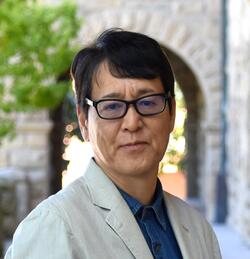
Square portrait photo of Kiyoteru Tsutsui

Kiyoteru Tsutsui is the Henri H. and Tomoye Takahashi Professor, Professor of Sociology, Senior Fellow at the Freeman Spogli Institute for International Studies, and Director of the Walter H. Shorenstein Asia-Pacific Research Center, where he is also Director of the Japan Program and Co-Director of the Southeast Asia Program. Tsutsui’s research interests lie in political/comparative sociology, social movements, globalization, human rights, and Japanese society. His most recent publication, Human Rights and the State: The Power of Ideas and the Realities of International Politics (Iwanami Shinsho, 2022), was awarded the 2022 Ishibashi Tanzan Award and the 44th Suntory Prize for Arts and Sciences.

Kiyoteru Tsutsui

Arrillaga Alumni Center - McCaw Hall
326 Galvez St, Stanford, CA 94305

Gita Wirjawan
Audrey Tang
Date Label
Authors
News Type
News
Date
Paragraphs

Three of SPICE’s online programs for U.S. high school students have begun accepting applications for the spring 2026 academic term. The Reischauer Scholars Program (RSP) and the Sejong Korea Scholars Program (SKSP) welcome applications from high school sophomores, juniors, and seniors in the United States. U.S.–China Co-Lab on Climate Solutions brings together 10th–12th graders from the United States and China in the same program to collaborate on solutions to the global climate crisis.

The RSP engages students in an intensive study of Japan and the U.S.–Japan relationship, facilitating discussions with scholars, diplomats, and other guest speakers with personal and professional expertise in Japanese culture, society, and U.S.–Japan relations. The 2026 RSP course dates are February 1 to June 14. The application deadline is October 17, 2025.

The SKSP provides students an enriching and academically rigorous overview of Korean history and U.S.–Korea relations through online lectures with top scholars and experts and engaging student discussions. The 2026 SKSP course will run February through early June. The application deadline is November 1, 2025.

The U.S.–China Co-Lab program focuses specifically on climate-related issues and U.S.–China cooperation, past and potential, and strategies for global cooperation. High school students from the U.S. and China will get to know each other’s lives and environments and actively work together on projects to develop their expertise on local, bilateral, and global climate action. This is a joint program of SPICE’s Stanford e-China (for students in China) and China Scholars Program (for U.S. students). The spring 2026 Co-Lab course dates are February 27 to May 22. The application deadline for U.S. students is November 1, 2025.

Students who are interested in applying to more than one program may do so and rank their preferences on their applications. Those who are accepted into multiple programs for spring 2026 will be invited to enroll in their highest-preference course.

Applications for all three programs can be found at https://spicestanford.smapply.io/. Deadlines vary:


For more information on a specific online course, please refer to its individual webpage.

To stay informed of SPICE news, join our email list and follow us on Facebook, X, and Instagram.

To learn more about SPICE’s student programs, visit our Student Programs page.

Read More

people gathering outside in front of palm trees
Blogs

Japan Day 2025: Recognizing the Highest Performing Students in Stanford e-Japan and the Reischauer Scholars Program

SPICE instructors Waka Takahashi Brown, Naomi Funahashi, and Meiko Kotani recognize their student honorees.
Japan Day 2025: Recognizing the Highest Performing Students in Stanford e-Japan and the Reischauer Scholars Program
person standing in the street at night
Blogs

The Endurance of History: A Reflection on the Importance of the Sejong Korea Scholars Program

The following reflection is a guest post written by Eloisa Lin, an alumna of the Sejong Scholars Program.
The Endurance of History: A Reflection on the Importance of the Sejong Korea Scholars Program
Hero Image
a fountain and two palm trees in front of a building
Old Union in the evening light
Photo Credit: Andrew Brodhead
All News button
1
Subtitle

Students with a strong interest in East Asia or international relations are encouraged to apply.

Date Label
Authors
Gary Mukai
News Type
Blogs
Date
Paragraphs

Over ten years ago in 2015, SPICE launched Stanford e-Japan, a national online course that enrolls high school students from Japan to engage in an intensive study of U.S. society and culture and U.S.–Japan relations. In 2016, SPICE launched Stanford e-Tottori, SPICE’s first regional program in Japan that enrolls high school students from across Tottori Prefecture. SPICE now enrolls approximately 230 to 240 students from nine regional programs in Japan. Six programs are prefectural programs (Fukuoka, Hiroshima, Oita, Tottori, Wakayama, Yamaguchi), and three are municipal programs (Kagoshima, Kawasaki, and Kobe).

In August 2025, SPICE held four award ceremonies for honorees of the 2024–2025 regional programs in Japan. Two honorees from each program were recognized. Stanford e-Fukuoka is currently in session, and the honorees will be recognized in August 2026.

Image
students holding plaques standing at the staircase


The first ceremony was held at Stanford University on August 8, 2025 for the top students in Stanford e-Kawasaki and Stanford e-Kobe. Inspirational opening comments were delivered by Consul Asami Chikae from the Consulate General of Japan in San Francisco. Chikae’s comments were followed by remarks by Stanford e-Kawasaki instructor Maiko Tamagawa Bacha and Stanford e-Kobe instructor Alison Harsch and the honorees’ presentations. The honorees are:

Stanford e-Kawasaki

Reimi Ito; Tachibana High School

Yuka Nagasawa; Kawasaki High School

Stanford e-Kobe

Karen Ito; Kobe Municipal Fukiai High School

Shoko Urakami; Kobe University Secondary School

Image
students holding plaques standing at the staircase


In the second ceremony, top students from Stanford e-Oita and Stanford e-Tottori were honored on August 20, 2025 at Stanford University. Encouraging opening comments were delivered by Consul Mayu Hagiwara, Director of the Japan Information and Culture Center at the Consulate General of Japan in San Francisco. Hagiwara’s comments were followed by remarks by Stanford e-Oita instructor Kasumi Yamashita and Stanford e-Tottori instructor Jonas Edman and the honorees’ presentations. The honorees are:

Stanford e-Oita

Yuri Kishida; Ajimu High School

Yoka Okuda; Usa High School
 
Stanford e-Tottori

Maiko Koyama; Tottori Nishi High School

Nobuki Tokukura; Seishokaichi High School

Image
students holding plaques standing at the staircase


During the third ceremony, top students from Stanford e-Hiroshima, Stanford e-Kagoshima City, and Stanford e-Yamaguchi were honored on August 22, 2025 at Stanford University. The ceremony began with inspiring comments by Deputy Consul General Takeshi Ishihara from the Consulate General of Japan in San Francisco. Ishihara’s opening comments were followed by remarks by Stanford e-Hiroshima instructor Rylan Sekiguchi, Stanford e-Kagoshima City instructor Amy Cheng, and Stanford e-Yamaguchi instructor Mia Kimura and the honorees’ presentations. The honorees are:

Stanford e-Hiroshima

Haruka Morisako; Kamo High School

Yura Sakamoto; Kure Mitsuta High School

Stanford e-Kagoshima City

Aoi Machida; Kagoshima Gyokuryu High School

Yujiro Matsunaga; Kagoshima Gyokuryu High School

Stanford e-Yamaguchi

Asako Kaya; Iwakuni High School

Miku Kuramura; Shimonoseki Nishi High School

Image
zoom screenshot of students holding plaques


During the fourth ceremony, top students from Stanford e-Wakayama were honored online on August 26, 2025. Yuriko Sugahara, Advisor for Cultural and Educational Affairs at the Consulate General of Japan in San Francisco provided motivating comments. Sugahara’s comments were followed by remarks by Stanford e-Wakayama instructor Dr. Makiko Hirata and the honorees’ presentations. The honorees are:

Stanford e-Wakayama 

Tomoka Kishigami; Kaichi High School

Yuto Nishi; Kushimoto Koza High School

Following each of the three in-person ceremonies, the students enjoyed a luncheon, a campus tour, and a dinner. Many students commented that one of the highlights of their visit to Stanford was having the chance to meet high school students from other regions of Japan. Many guests commented on how impressed they were with the student presentations and the poise that the students exhibited, especially during the question-and-answer periods.

Importantly, SPICE is grateful to the municipal and prefectural representatives who accompanied the students to Stanford or joined the online ceremony for Wakayama. They are Shoko Hirata (Hiroshima); Yuko Yamaguchi and Shingo Ishihara (Kagoshima City); Chika Ueda (Kobe City); Noriko Fujitsuka and Toshiyuki Yamamoto (Oita Prefecture); Natsu Odahara (Tottori Prefecture); Masanori Toda (Wakayama Prefecture); and Akinobu Tomonari (Yamaguchi Prefecture).


SPICE also offers online courses to U.S. high school students on Japan (Reischauer Scholars Program), China (China Scholars Program), Korea (Sejong Korea Scholars Program), and entrepreneurship (Stanford e-Entrepreneurship U.S.), to Chinese high school students on the United States (Stanford e-China), and to Japanese high school students on entrepreneurship (Stanford e-Entrepreneurship Japan).

To stay informed of SPICE news, join our email list and follow us on FacebookX, and Instagram.

Read More

posed group shot of high school students and educators in Tottori, Japan
News

Seeing the world beyond a grain of sand: SPICE's online course for Tottori Prefecture

Seeing the world beyond a grain of sand: SPICE's online course for Tottori Prefecture
aerial view of university campus with a tower in the middle
News

Announcing the Honorees of SPICE’s 2024–25 Regional Programs in Japan

Congratulations to the 16 student honorees from Hiroshima Prefecture, Kagoshima City, Kawasaki City, Kobe City, Oita Prefecture, Tottori Prefecture, Wakayama Prefecture, and Yamaguchi Prefecture.
Announcing the Honorees of SPICE’s 2024–25 Regional Programs in Japan
Hero Image
Stanford University front entrance at the oval
Linda A. Cicero/Stanford News Service
All News button
1
Subtitle

Congratulations are extended to the 2024–2025 student honorees from Hiroshima Prefecture, Kagoshima City, Kawasaki City, Kobe City, Oita Prefecture, Tottori Prefecture, Wakayama Prefecture, and Yamaguchi Prefecture.

Date Label
Authors
Gary Mukai
News Type
Blogs
Date
Paragraphs


Stanford e-Japan enrolls exceptional high school students from Japan to engage in an intensive study of U.S. society and culture. The Reischauer Scholars Program (RSP) enrolls exceptional high school students from the United States to engage in an intensive study of Japanese society and culture. Both courses underscore the importance of U.S.–Japan relations. The Yanai Tadashi Foundation is the current supporter of Stanford e-Japan, and the Japan Fund at the Freeman Spogli Institute for International Studies (FSI) is the current supporter of the RSP.

On August 11, 2025, the 2025 Japan Day award ceremony was held at Stanford University to honor SPICE’s Spring and Fall 2024 Stanford e-Japan student honorees and the 2025 RSP student honorees. The honorees performed at the highest levels of their courses as determined by Stanford e-Japan instructors Waka Takahashi Brown (spring course) and Meiko Kotani (fall course), RSP instructor Naomi Funahashi, and the research paper review committees. The honorees are:

Spring 2024 Stanford e-Japan 
Aoi Furutani, Saitama Municipal Urawa High School, “Comparative Analysis of Surrogacy Policies in the United States and Japan: Proposals for Introducing Surrogacy in Japan”

Komari Machida, Crimson Global Academy, “Futoukou vs. Homeschooling: Exploring Societal Reintegration of Children Outside of Traditional School Systems in Japan and the United States”

Sota Tajima, Seiko Gakuin High School, “Synergy in the Stars: How the U.S. and Japan Can Lead the Next Era of Space”

Honorable Mentions:
Ryu Sato, Soka Senior High School, “Japanese and American Philanthropic Culture in Regard to College Financial Aid”

Sakura Suzuki, Hokkaido Asahikawa Higashi High School, “Designing School Buildings to Encourage Student Creativity: Comparing Historical Changes in School Buildings in Japan and the United States”

Fall 2024 Stanford e-Japan
Ellen Nema, Junior and Senior High School Affiliated to Showa Pharmaceutical University, “Breaking the Chain of Poverty in Okinawa: Educational Approaches and Foundations”

Hirotaka Onishi, Kaisei Gakuen High School, “A Time for Reconsideration: Toward a New International Monetary Order”

Mia Yakushiji, Murasakino Municipal High School, “Dual Citizenship in Japan”

Honorable Mentions:
Lynne Mizushima, Keio Shonan Fujisawa Junior & Senior High School, “The Lack of Female Political Leaders in Japan: A Cultural Glass Ceiling”

Kan Sugimi, Isahaya High School, “Should Bilingual Parents in the U.S. Raise Bilingual Children?”

2025 Reischauer Scholars Program
Bennett Feng, Horace Mann School, “From Economic Rebirth to Structural Stagnation”

Jessica Hu, The Harker School, “Dried-Up Rivers: State-Sponsored Linguistic Oppression and Its Erasure of Ainu Identity”

Ty Tan, Coral Academy of Science Las Vegas, “Recalibrating Japan’s FOIP”

Honorable Mentions:

Jackson Hayward, The Nueva School, “Shikata ga nai: Voter Apathy and Cultural Depoliticization in Modern Japan”

Radoslav Kyselak, Highland Hall Waldorf School, “Norms Through Networks: Japan’s Digital Diplomacy as a Counter to China’s Digital Silk Road in the Global South”

Image
two people holding a plaque in front of a screen


The program began with welcoming comments from the Honorable Yo Osumi, Consul General of Japan in San Francisco. He commented that the Reischauer Scholars Program and Stanford e-Japan are very important for our two nations—given that both engage future leaders in both countries—and extended high praise to the honorees. Consul General Osumi’s tenure ended at the end of August and on behalf of my colleagues at SPICE, I presented him with a plaque from SPICE to acknowledge his unwavering support of SPICE’s Japan programs.

Image
people with plaques are gathered outside in front of palm trees


Image
students with plaques standing outside with palm trees in the back


Following the welcoming and opening comments, Brown, Kotani, and Funahashi gave overviews of their courses and introduced the student honorees. The student honorees made engaging presentations based on their research papers and fielded very thought-provoking questions from the audience. Each honoree received a plaque from their instructor. The photo on the top is of the Stanford e-Japan honorees, and the photo on the bottom is of the RSP honorees; photo credit: Irene Bryant.

The RSP will enter its 23rd year in 2026, and Stanford e-Japan is about to enter its 11th year. Many of the alumni are studying U.S.–Japan relations, engaged in various fields related to U.S.–Japan relations, and continue to give back to both programs by being guest speakers and mentors to the new students.

Following the formal event, the student honorees—most having just met each other in person for the first time—had the chance to enjoy a Stanford campus tour together. It is the hope of Brown, Kotani, and Funahashi that the Japanese and American student honorees will continue to strengthen their budding friendships and ensure that the U.S.–Japan relationship remains strong.

SPICE is grateful to President Tadashi Yanai for his generous support of Stanford e-Japan and to the staff of the Yanai Tadashi Foundation for their regular correspondence and encouragement. SPICE is thankful to the Japan Fund committee at FSI for its generous support of the Reischauer Scholars Program. These courses and the ceremony would not be possible without them. SPICE is also grateful to SPICE Event Coordinator Sabrina Ishimatsu for meticulously planning and implementing the event.

SPICE is currently accepting applications for the 2026 Reischauer Scholars Program. The deadline to apply is October 17, 2025.

The application for the 2026 session of Stanford e-Japan will open on November 15, 2025.

SPICE also offers online courses to U.S. high school students on China (China Scholars Program), Korea (Sejong Korea Scholars Program), and entrepreneurship (Stanford e-Entrepreneurship U.S.), to Chinese high school students on the United States (Stanford e-China), and to Japanese high school students on entrepreneurship (Stanford e-Entrepreneurship Japan).

To stay informed of SPICE news, join our email list and follow us on FacebookX, and Instagram.

Read More

people sitting around a table
Blogs

The Yanai Tadashi Foundation and SPICE/Stanford University

Four Stanford freshmen Yanai Scholars reflect on their experiences.
The Yanai Tadashi Foundation and SPICE/Stanford University
collage of Japanese students
News

Empowering the Next Generation of Japanese Leaders

Yanai Scholars, Stanford e-Japan alumni, and EducationUSA representatives highlight a special session for the Spring 2022 Stanford e-Japan students.
Empowering the Next Generation of Japanese Leaders
Hero Image
people gathering outside in front of palm trees
Front row, left to right: Meiko Kotani, Waka Takahashi Brown, Ty Tan, Sota Tajima, Aoi Furutani, Consul General Yo Osumi, Rado Kyselak, Kan Sugimi, Gary Mukai, Ellen Nema, Naomi Funahashi, Yuriko Sugahara; back row, left to right: Bennett Feng, Jessica Hu, Komari Machida, Jackson Hayward, Hirotaka Onishi
Photo credit: Irene Bryant
All News button
1
Subtitle

SPICE instructors Waka Takahashi Brown, Naomi Funahashi, and Meiko Kotani recognize their student honorees.

Date Label
1
Visiting Scholar at APARC, 2025-2026
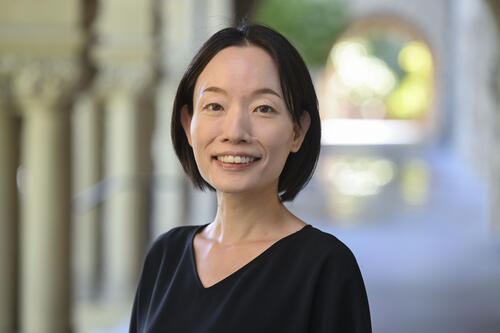
yuko_murase.jpg

Yuko Murase was a Fulbright Visiting Scholar at the Shorenstein Asia-Pacific Research Center (APARC) for the fall and winter quarters of the 2025–2026 academic year. She is a journalist with more than 15 years of experience at The Mainichi Shimbun, one of Japan’s leading national newspapers, which also operates an English-language news site. Murase received the Fulbright Scholar Award in Journalism in 2025, becoming the only Japanese journalist selected that year.

Under the Fulbright program, Murase conducted comparative research at APARC on educational systems and practices in the United States and Japan. Drawing on her reporting on education in Japan, including “Preference for ‘Free Schools’ over Compulsory Education Stirs Controversy in Japan,” she examined diverse educational models in the United States — such as charter schools, homeschooling, and innovative learning initiatives in Silicon Valley — and their implications for expanding educational opportunities in Japan. Her work also aimed to contribute to ongoing conversations about education in both countries.

Murase has written extensively in both English and Japanese, with a focus on education, social issues, and culture. Her reporting includes school nonattendance (futoko), bullying, school consolidation in depopulating regions, and the growing demand for more educational options in Japan. She was among the journalists who reported on the case of a 13-year-old student who died by suicide in Shiga Prefecture, which drew national attention and led to the enactment of Japan’s Anti-Bullying Act (2013). Her investigative series on harassment within a fire department in Shiga Prefecture during and after the COVID-19 pandemic received the 19th Hikita Keiichiro Award (2025) from the Japan Federation of Newspaper Workers’ Unions, which honors journalism that protects human rights and promotes trust in the press.

Having spent many years reporting in Shiga Prefecture near Kyoto, Murase developed a deep appreciation for local journalism and a strong interest in its future in the digital age. Her work reflects a belief that investigating local issues can yield lessons of global relevance.

Murase has also covered major international events, including the historic visit of President Barack Obama to Hiroshima, and interviewed filmmaker Oliver Stone during his first visit to Hiroshima. She has reported on global perspectives on the legacy of the atomic bombings and nuclear weapons.

Her interest in education has been shaped by studying in several countries. After graduating from high school in Australia, she earned a BA in International Relations from Ritsumeikan University in Kyoto. While there, she studied journalism at Rutgers University in the United States and sociology at the University of the Philippines as an exchange student. She was selected for the Japanese University Student Delegation to Korea by the Japan–Korea Cultural Foundation (2004).

Date Label
1
Visiting Scholar at APARC, Japan Program Fellow, 2025-2026
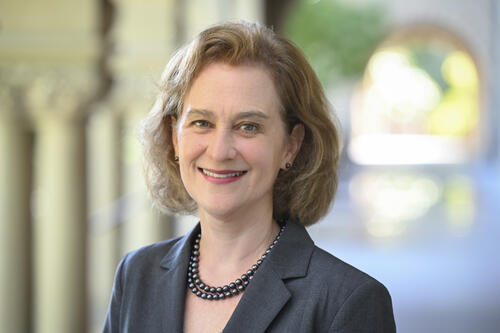
kemy_monahan.jpg

Katherine (Kemy) joined the Walter H. Shorenstein Asia-Pacific Research Center (APARC) as a visiting scholar, Japan Program Fellow, from September 2025 to March 2026. Ms. Monahan has completed 16 assignments on four continents in her 30 years as a Foreign Service Officer with the U.S. Department of State.  She recently returned from Tokyo, where she was Deputy Chief of Mission at the U.S. Embassy in Japan, following roles as Charge d’affaires for Papua New Guinea, Solomon Islands, and Vanuatu, and Deputy Chief of Mission to New Zealand, Samoa, Cook Islands, and Niue.  She was Director for East Asia at the National Security Council from 2022 to 2023.  Previously, she worked for the U.S. Department of Treasury in Tokyo, as Economic, Trade and Labor Counselor in Mexico City, Privatization lead in Warsaw after the fall of the Berlin Wall, Advisor to the World Bank, and Deputy Executive Director of the Secretary of State’s Global Health Initiative, among other roles.  As lead of UNICEF’s International Financial Institutions office, Ms. Monahan negotiated over $1 billion in funding for children. A member of the Bar in California and DC, Ms. Monahan began as an attorney in Los Angeles. 

Date Label
Authors
News Type
News
Date
Paragraphs

Applications are now open for Stanford e-Entrepreneurship Japan (SeEJ), an online course conducted in English to foster Japanese students’ creative thinking and innovative problem-solving skills to address social issues. SeEJ is offered twice a year in the fall and spring through a collaboration between SPICE and the non-profit organization e-Entrepreneurship in Japan. It is open to Japanese-speaking students, in or from Japan, in their first and second years of high school. The fall 2025 course will be taught by Irene Bryant and will run from late October 2025 through February 2026.

The application form is now live at https://forms.gle/52f9U8okGxchtxE8A. The deadline to apply is September 5, 2025 at 23:59 Japan Time.

This program made innovative thinking and design thinking my norm.
Shinnosuke Nakagawa, fall 2024 participant

Stanford e-Entrepreneurship Japan offers students an opportunity to engage with scholars and entrepreneurs from Stanford University and beyond through live virtual classes, which are held twice a month on Sundays. The course will culminate in an individual research paper and final group projects. Students who successfully complete the course will receive a Certificate of Completion from SPICE and NPO e-Entrepreneurship.

Past students have credited SeEJ with not only expanding their knowledge about entrepreneurship, but also shifting their attitudes and mindset in how to look at problems. “What I really loved about this program is that it required constant innovative thinking, relatively free presentation topics, and more independent action,” reflects Shinnosuke Nakagawa, who completed the fall 2024 course. “This program made innovative thinking and design thinking my norm. I think this program helped me to develop thinking habits that will be very useful in the future.”

Fellow alum Shia Han agrees. “Stanford e-Entrepreneurship Japan gave me insight on topics I would otherwise never be able to learn about. From the mechanisms on how to think entrepreneurially to how various companies strive for social change, I gained valuable information on how I can work towards solving issues in the world. Hearing about how the guest lecturers and my peers in this program were actively taking action towards topics they were interested in motivated me to not be held back because of my age or abilities but to work towards contributing to causes I was passionate about.”

For more information about Stanford e-Entrepreneurship Japan, visit the program webpage. Interested high school students should apply online by September 5, 2025.

Stanford e-Entrepreneurship Japan is one of several online courses offered by SPICE.

To stay updated on SPICE news, join our email list or follow us on Facebook, Instagram, and X.

Read More

a person standing in the snow
Blogs

Solving Tough Problems with Teen Ideas

Millie Gan, a current student of Stanford e-Entrepreneurship Japan, launches Teenage Business Contest Japan (TBCJ), a new social entrepreneurship platform for teens.
Solving Tough Problems with Teen Ideas
Hero Image
the arches of the main quad at Stanford University
The arches of the Main Quad
Photo Credit: Andrew Broadhead
All News button
1
Subtitle

Applications are now being accepted for the fall 2025 session. Interested high school students in Japan should apply by September 5, 2025.

Date Label
Authors
Rylan Sekiguchi
News Type
News
Date
Paragraphs

SPICE continues to broaden its impact across Japan, recently launching the new Stanford e-Yamaguchi program. This addition joins the growing network of SPICE’s regional high school programs in Japan, which already includes Stanford e-Hiroshima, Stanford e-Kagoshima City, Stanford e-Kawasaki, Stanford e-Kobe, Stanford e-Oita, Stanford e-Tottori, Stanford e-Wakayama, and Stanford e-Fukuoka*.

These online courses are the result of partnerships between SPICE and local governments and schools in Japan. Designed to challenge students to think critically, the programs focus on global issues related to U.S. society, culture, and U.S.–Japan relations.

With the conclusion of the 2024–2025 academic year, each program has selected two standout students for their overall performance, including exceptional final research projects. These 16 honorees will present their work during several recognition ceremonies to be held at Stanford University in August 2025. Distinguished guests will include members of the Stanford community, the Consulate General of Japan in San Francisco, and representatives from the Japanese community in the Bay Area.

The SPICE staff extends its warmest congratulations to the following student honorees for their remarkable academic performance.

Stanford e-Hiroshima (Instructor Rylan Sekiguchi)

Student Honoree: Haruka Morisako
School: Kamo High School

Student Honoree: Yura Sakamoto
School: Kure Mitsuta High School

Stanford e-Kagoshima City (Instructor Amy Cheng)

Student Honoree: Aoi Machida
School: Kagoshima Gyokuryu High School

Student Honoree: Yujiro Matsunaga
School: Kagoshima Gyokuryu High School

Stanford e-Kawasaki (Instructor Maiko Tamagawa Bacha)

Student Honoree: Yuka Nagasawa
School: Kawasaki High School

Student Honoree: Reimi Ito
School: Tachibana High School

Stanford e-Kobe (Instructor Alison Harsch)

Student Honoree: Karen Ito 
School: Kobe Municipal Fukiai High School

Student Honoree: Shoko Urakami
School: Kobe University Secondary School

Stanford e-Oita (Instructor Kasumi Yamashita)

Student Honoree: Yuri Kishida
School: Ajimu High School

Student Honoree: Yoka Okuda
School: Usa High School

Stanford e-Tottori (Instructor Jonas Edman)

Student Honoree: Maiko Koyama
School: Tottori Nishi High School

Student Honoree: Nobuki Tokukura
School: Seishokaichi High School

Stanford e-Wakayama (Instructor Makiko Hirata)

Student Honoree: Yuto Nishi
School: Kushimoto Koza High School

Student Honoree: Tomoka Kishigami
School: Kaichi High School

Stanford e-Yamaguchi (Instructor Mia Kimura)

Student Honoree: Asako Kaya
School: Iwakuni High School

Student Honoree: Miku Kuramura
School: Shimonoseki Nishi High School

SPICE applauds the curiosity, academic excellence, and global mindset of these students and looks forward to celebrating their achievements next month.

* Stanford e-Fukuoka ends later this summer so its honorees will be announced at a later date.

SPICE also offers online courses to U.S. high school students on Japan (Reischauer Scholars Program), China (China Scholars Program), and Korea (Sejong Korea Scholars Program), and online courses to Chinese high school students on the United States (Stanford e-China) and to Japanese high school students on the United States and U.S.–Japan relations (Stanford e-Japan) and on entrepreneurship (Stanford e-Entrepreneurship Japan).

To stay informed of news about Stanford e-Japan and SPICE’s other programs, join our email list and follow us on FacebookX, and Instagram.

Read More

screenshot of two speakers
Blogs

Top Students in SPICE’s 2023–2024 Regional Programs in Japan Are Recognized

Congratulations to the 2023–2024 student honorees from Fukuoka, Hiroshima, Kagoshima, Kawasaki, Kobe, Oita, Tottori, and Wakayama.
Top Students in SPICE’s 2023–2024 Regional Programs in Japan Are Recognized
Hero Image
aerial view of university campus with a tower in the middle
Aerial view of Stanford campus
Photo Credit: Andrew Broadhead
All News button
1
Subtitle

Congratulations to the 16 student honorees from Hiroshima Prefecture, Kagoshima City, Kawasaki City, Kobe City, Oita Prefecture, Tottori Prefecture, Wakayama Prefecture, and Yamaguchi Prefecture.

Date Label
Authors
News Type
Blogs
Date
Paragraphs

The following is a guest article written by Akiko Mizuno, who traveled to the San Francisco Bay Area with other graduate students from the University of Tokyo—under the leadership of Professor Hideto Fukudome—in January 2025. SPICE/Stanford collaborates closely with the Graduate School of Education at the University of Tokyo and met with the students during their visit to the Bay Area.     

As a student at the University of Tokyo’s Graduate School of Education, I had an opportunity to travel to Stanford University to participate in a SPICE-supported intensive seminar at the end of January this year. What I learned during the week-long program far exceeded my expectations. I would like to share some of the highlights of my experience during my stay at Stanford University, but first I would very much like to express my appreciation to Dr. Hideto Fukudome of the University of Tokyo who led our group, and to Dr. Gary Mukai, Director of SPICE, who guided us throughout the special lecture series. My heartfelt thanks also go to all the lecturers who gave us such a heartwarming welcome and truly inspiring and eye-opening lectures.

There were many great things that impressed me through my participation in the SPICE-supported intensive seminar. One of the experiences that gave me a lasting impression was a morning walk through San Jose Japantown guided by Dr. Mukai. As we walked, he told us about his childhood growing up as a sansei (third-generation Japanese American) in the 1960s. As I kept listening to his stories, I was able to imagine the hardships he and his family must have gone through even though he told his stories without drama or hyperbole.

Image
granite monument


At one street corner in Japantown, there was a long, horizontal granite monument. There, I saw big romaji characters carved in capital letters that read “GAMAN. KODOMO NO TAME NI,” which means, “Endure. For the sake of our children.” It suddenly dawned on me that years upon years of struggles that issei (first-generation Japanese immigrants) and nisei (second-generation Japanese Americans) endured so that their children could have a brighter future were expressed in just those 19 letters etched on the stone bench. To this day, I can still vividly recall those letters because they are now etched on my heart.

Another experience that left me with a strong impression was a lecture on design thinking by SPICE educational researcher Dr. Mariko Yang-Yoshihara. Before we left Japan, she had given us an assignment to watch a video about Dr. Ge Wang, professor in the Center for Computer Research in Music and Acoustics (CCRMA) at Stanford University, and write about our reactions. The video included Dr. Wang’s talk and a demonstration of how he produces novel musical sounds using a computer and a bow-shaped metal. At first, they were so unfamiliar to me that I felt somewhat uncomfortable. “Is this considered music?,” was my initial reaction. However, when he played Bach on the Ocarina iPhone app he had invented, I could even say that it was soothing. Towards the end of the video, Dr. Wang also introduced us to a piece of music performed by the Stanford Laptop Orchestra, which he had founded. As I listened to their unconventional orchestra sound, I became even more relaxed and fascinated by the beautiful harmony they produced. I then realized that the whole point of this assignment was to gain a perspective on how we should not be close-minded and embrace new experiences. In her research, Dr. Yang-Yoshihara has introduced a trilogical mindset—think out of the box, give it a try, and fail forward—highlighting these as common attitudes shared by individuals thriving in STEAM fields (Science, Technology, Engineering, the Arts, and Mathematics) across diverse sectors today. By being introduced to Dr. Ge Wang’s endeavor and experiencing my own shift in how I appreciate music, I now see myself beginning to “think out of the box” and finding new experiences more enjoyable.

Dr. Mukai, a noted educator and compassionate person, was the very personification of his parents’ profound love and perseverance, and I learned from Dr. Yang-Yoshihara the importance of having an open mind to be innovative. Having had these valuable lessons, how could I stay the same as before? I am truly thankful that I can still grow even though I am no longer in my youth.

In March 2025, both Dr. Mukai and Dr. Yang-Yoshihara came to Japan and took some time to visit us at the University of Tokyo’s Graduate School of Education. It was a big bonus for me to be able to see them again. I know I am fortunate to have had this extra opportunity to further exchange ideas and learn from them. I am looking forward to implementing the lessons learned through SPICE in my daily life. It was indeed a wonderful way to start a New Year.

To stay informed of SPICE news, join our email list and follow us on Facebook,  X, and Instagram.  

Read More

group photo of students and professors in a conference room
Blogs

Reflections on Dr. Mariko Yang-Yoshihara’s Lecture on STEAM Education

Ryoya Shinozaki, a doctoral researcher at the University of Tokyo’s Graduate School of Education, reflects on his experience in the SPICE-linked intensive seminar in the San Francisco Bay Area.
Reflections on Dr. Mariko Yang-Yoshihara’s Lecture on STEAM Education
people gathered in a restaurant, holding red paper bags
Blogs

Experiencing Global Education Firsthand: The Profound Value of In-Person Education Reassessed in an Era of Digitalization

Makoto Nagasawa, a doctoral researcher at the University of Tokyo’s Graduate School of Education, reflects on his experience in the SPICE-linked intensive seminar in the San Francisco Bay Area, led by Professor Hideto Fukudome.
Experiencing Global Education Firsthand: The Profound Value of In-Person Education Reassessed in an Era of Digitalization
Hero Image
person standing at the Angel Island
Akiko Mizuno on Angel Island
Photo courtesy Akiko Mizuno
All News button
1
Subtitle

Akiko Mizuno, a graduate student at the University of Tokyo’s Graduate School of Education, reflects on her experience in the SPICE-supported intensive seminar in the San Francisco Bay Area.

Date Label
Subscribe to Japan