Stanford e-Hiroshima: Empowering Youth in Hiroshima
Kouji Yamada (MBA, Harvard), former Visiting Lecturer, Hitotsubashi University Graduate School of International Corporate Strategy, is an advisor to Stanford e-Hiroshima. His parents, Ryuji and Nanako, are supporters of Stanford e-Hiroshima, which is an online course that SPICE offers to high school students in Hiroshima. Taught by Rylan Sekiguchi, Stanford e-Hiroshima was launched in 2019 with the support of the Hiroshima Prefectural Board of Education. SPICE is grateful to Governor Hidehiko Yuzaki for his vision and leadership and Superintendent Rie Hirakawa for her unwavering support.
Ryuji Yamada adjusts the window shades to savor the view that grows elusive to his aging eyes. If you gaze towards Diamond Head from the Yamadas’ condominium, kite surfers glide in and out of your perspective in some random Brownian motion; their paths, pace, and direction seem chaotic. They all share the same wind, waves, and current, but the skill of the rider to look ahead and channel the energies around them sends them on very different and wonderful journeys.
“I was just 14 living in Hiroshima and still a minor when the bomb dropped. My brother was only one year older but considered an adult and was sent on work detail for defense preparations. He had to walk through ground zero to come home. My father had a meeting at City Hall, but the ferry was cancelled. We all survived, but the blast sent us in very different directions.
“They rebuilt the community with their personality, spirit, and bare hands, but I was pushed inward to my studies. I needed to comprehend the natural force that had wrought so much destruction.
“In the sixties, foreign exchange was scarce, and I was one of the first scientists that the Japanese government sponsored to do research abroad. At Cornell, Robert Wilson guided my career and brought me along to establish what became Fermilab in 1967. We built Fermilab as an oasis of fundamental research in the Illinois prairie. We thought that the pursuit of knowledge would unite us. Wilson’s famous defense in April 1969 of Fermilab to Congress seems even more relevant today.
‘Are we good painters, good sculptors, great poets? I mean all the things that we really venerate and honor in our country and are patriotic about. In that sense, this new knowledge has all to do with honor and country, but it has nothing to do directly with defending our country except to help make it worth defending.’”[1]
Nanako Yamada also grew up in Hiroshima, but her greatest challenges were still ahead of her. “In the ’70s, there were few role models for women in building identity outside of the home in middle America. But when it became apparent that our second child was uncontrollable in his adolescent years, I decided to lead by example and went back to school to rekindle my love for learning. At Northern Illinois University, Helen Merritt guided me through a career in art history, and we authored several books together.
“Our specialty was kuchie woodblock prints from the late 19th to early 20th century. They offered a glimpse into a culture in flux. Western influences disrupting Japanese culture after Commodore Perry’s black ships forced the opening of Japan.
“What to accept, what to reject. What to cherish and what to disavow. Even when you think you stand still, you are always changing, and hopefully growing. Captured in the woodblocks is a narrative. Some cautionary, some celebratory, but all are educational if your eye and mind are willing to engage.
“When we heard about the SPICE program for Hiroshima, we were honored to stand by the Hiroshima Board of Education and continue the legacy of exploration and learning. Technology allows the new generation to not only be buffeted by social media but to also make profound connections to community, both near and far. Hopefully the students can find their own Robert Wilsons and Helen Merritts. We were blessed to make these relations, but we would have never found them without exploring and engaging. We didn’t have a grand plan, but we never stopped looking. We look forward to seeing what wonderful things they will find.”
Stanford e-Hiroshima is one of SPICE’s local student programs in Japan.
To stay informed of news about SPICE, join our email list and follow us on Facebook, Twitter, and Instagram
[1] Fermilab; https://history.fnal.gov/historical/people/wilson_testimony.html [access date: February 5, 2022].
Read More
Ryuji and Nanako Yamada share reflections on their lives in Hiroshima and their American mentors.
Energy Innovation in Japan and the Future of Climate Change
This event will offer simultaneous translation between Japanese and English.
当イベントは日本語と英語の同時通訳がついています。
This is a virtual event. Please click here to register and generate a link to the talk.
The link will be unique to you; please save it and do not share with others.
当イベントはZoomウェビナーで行われます。ウェビナーに参加するためには、こちらのリンクをクリックし、事前登録をして下さい。
March 1, 5-6:30 p.m. California time/ March 2, 10-11:30 a.m. Japan time
This event is part of the 2022 Japan Program Winter webinar series, The Future of Social Tech: U.S.-Japan Partnership in Advancing Technology and Innovation with Social Impact
The challenges of climate change require solutions on multiple fronts, one of which is technological innovation. Attempts for innovation for new energy sources have been ongoing in many parts of the world, and Japan has produced a number of new technologies. This session will focus on two of the most promising innovations coming out of Japan, biofuel and hydrogen energy, and assess their promises and challenges, highlighting technological, regulatory, and business aspects of developing new technologies. Where do these technologies fit in the energy portfolio that would address the issues of climate change and what can Japan and the United States do to collaboratively solve the key problems in advancing these technologies further? Three leading experts in the field will discuss these questions that would shape the future of climate change.
Panelists
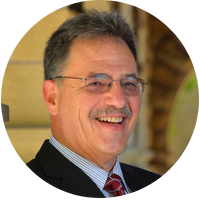
management. In 2005, he established Euglena Co., Ltd. to harness the properties of microalgae
Euglena. Euglena Co., Ltd. became the world’s first biotechnology company that succeeded in the
outdoor mass cultivation of Euglena. Currently, Euglena Co., Ltd upholds “Sustainability First” as
their philosophy and has developed the manufacture and sale of foods and cosmetics as the
healthcare domain, the biofuel business, the bioinformatics business, and the social business in
Bangladesh by leveraging Euglena and other advanced technologies.
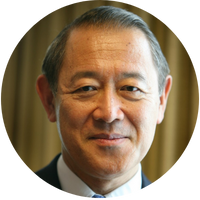
He has also coordinated fuel cell and hydrogen activities with international stakeholders, through International Energy Agency’s Technology Collaboration Program (IEA TCP: Advanced Fuel Cell & Hydrogen), and International Partnership for Hydrogen and Fuel Cells in the Economy (IPHE).
He joined the NEDO in 1992, just after graduation from the Tokyo University of Science. He served as a visiting scholar at the Massachusetts Institute of Technology in 1997-1998.
Moderator
Human Rights and the State: The Power of Ideas and the Reality of International Politics
Winner of the Ishibashi Tanzan Book Award >
Winner of the 44th Suntory Prize for Arts and Sciences >
In this book, Kiyoteru Tsutsui explores the paradox of the global diffusion of universal human rights and the establishment of international human rights institutions against the vested interests of powerful states, and examines how human rights ideas and instruments have changed local politics globally and how Japan has engaged with them.
今や政府・企業・組織・個人のどのレベルでも必要とされるSDGsの要・普遍的人権の理念や制度の誕生と発展をたどり、内政干渉を嫌う国家が自らの権力を制約する人権システムの発展を許した国際政治のパラドックスを解く。冷戦体制崩壊後、今日までの国際人権の実効性を吟味し、日本の人権外交・教育の質を世界標準から問う。
はじめに
第1章 普遍的人権のルーツ(18世紀から20世紀半ばまで)――普遍性原理の発展史
Q.人権理念や制度はいつ生まれたものなのか?
1 他者への共感と人権運動の広がり
2 二つの世界大戦と普遍的人権の理念
第2章 国家の計算違い(1940年代から1980年代まで)――内政干渉肯定の原理の確立
Q.なぜ国家は自らの権力を制約する人権システムの発展を許したのか?
1 国際政治のパラドックス
2 冷戦下の新しい人権運動
第3章 国際人権の実効性(1990年代以降)――理念と現実の距離
Q.国際人権システムは世界中での人権の実践の向上にどの程度貢献したのか?
1 冷戦崩壊後の期待と現実
2 21世紀の国際人権
3 人権実践の漸進的な向上
第4章 国際人権と日本の歩み――人権運動と人権外交
Q.日本は国際人権とどのように関わり合ってきたのか?
1 日本国内の人権運動の歩み
2 同化から覚醒へ
3 日本の人権外交と試される「人権力」
おわりに
Tapping the Untapped Human Resource Potential with Social Tech: Diversity, Globalization, and the Future of Work
This event will offer simultaneous translation between Japanese and English.
当イベントは日本語と英語の同時通訳がついています。
This is a virtual event. Please click here to register and generate a link to the talk.
The link will be unique to you; please save it and do not share with others.
当イベントはZoomウェビナーで行われます。ウェビナーに参加するためには、こちらのリンクをクリックし、事前登録をして下さい。
Febuary 14, 4-5:30 p.m. California time/ February 15, 9-10:30 a.m. Japan time
This event is part of the 2022 Japan Program Winter webinar series, The Future of Social Tech: U.S.-Japan Partnership in Advancing Technology and Innovation with Social Impact
COVID-19 has changed the way we work. While remote work has become the norm, the pandemic has also highlighted the inequity in childcare, elderly care, and household work. Japanese workplaces feel a particularly acute need for adjustment, as lack of digitalization and persistent gender inequality continue to limit productivity gains and diversity in the workforce. Social entrepreneurs in Japan have started offering new technologies that address these problems and transform Japanese work environments, using matching algorithms, innovative apps, and other new technologies. How can these social technologies reshape the workplace? What principles do we need in using these technologies in practice, in order to unlock the keys to untapped human resource potentials and realize a more equitable and inclusive work environment in Japan, the United States, and elsewhere? Fuhito Kojima, a renowned economist specializing in matching theory, will talk about market design from the perspective of regulation design and economics, and Eiko Nakazawa, an influential entrepreneur, will speak about her experiences founding education and childcare startups in the United States and Japan, moderated by Yasumasa Yamamoto, a leading expert on technology and business in Japan and the United States.
Panelists
Moderator
Leveraging University Research into Medical Innovations with Social Impact: Biotechnology Entrepreneurship in Japan's New Startup Ecosystem
This event will offer simultaneous translation between Japanese and English.
当イベントは日本語と英語の同時通訳がついています。
This is a virtual event. Please click here to register and generate a link to the talk.
The link will be unique to you; please save it and do not share with others.
当イベントはZoomウェビナーで行われます。ウェビナーに参加するためには、こちらのリンクをクリックし、事前登録をして下さい。
February 7, 5-6:30 p.m. California time/ February 8, 10-11:30 a.m. Japan time
This event is part of the 2022 Japan Program Winter webinar series, The Future of Social Tech: U.S.-Japan Partnership in Advancing Technology and Innovation with Social Impact
Japan’s startup scene has become more exciting in recent years, but in the medical field, the failure to develop COVID-19 vaccines highlighted the shortcomings of Japan’s medical industry. What should Japan do to foster more impactful biotechnology entrepreneurship that would leverage vibrant medical research carried out at Japanese universities? The panel features two speakers who founded and grew their medical ventures in Japan's rapidly maturing startup ecosystem, both with deep connections to university research.
Tadahisa Kagimoto founded his first company right after finishing his medical degree at Kyushu University, pioneering a pathway of commercializing biotechnology from Japanese university research. His second startup, Healios, founded in 2013 with the goal of becoming a pioneer in regenerative medicine utilizing iPS, was successfully listed on the Tokyo Stock Exchange in 2015 and has been growing since.
Shoko Takahashi was a PhD student in molecular bioscience at the University of Tokyo when she founded her company, Genequest, to offer home DNA testing. The firm was purchased by another biotech startup founded by a University of Tokyo graduate, Euglena, in 2017, and the company has partnered with a variety of pharmaceutical, food and beverage companies, and universities in its research. Their entrepreneurial journeys reveal Japan's changing startup ecosystem that has rapidly matured over the past decade and signal a need for further development in regulatory environments, human resource development, and university-industry collaboration in the biotechnology industry.
Panelists
After founding Healios in 2011, Dr. Kagimoto led the company’s listing on the Tokyo Stock Exchange in 2015 and has built the company to its current scale of more than 140 people across its Japan and US offices. Healios leverages the favorable Japanese regulatory framework for regenerative medicine to efficiently deliver results for patients and its stakeholders. It is currently running two pivotal clinical trials for ischemic stroke and acute respiratory distress syndrome using bone marrow-derived allogeneic multipotent adult progenitor cells. At the same time, Healios is developing best-in-class, next generation pipeline assets in immuno-oncology, ophthalmology, and organ buds utilizing its innovative, proprietary universal donor iPS cell platform.
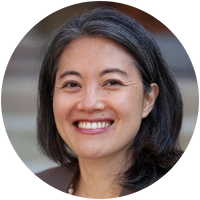
She received the 2018 Young Global Leaders award from the World Economic Forum and was selected for Newsweek's ‘100 respected Japanese in the world’ list.
Moderator
Kushida’s research and projects focused on the following streams : 1) how politics and regulations shape the development and diffusion of Information Technology such as AI; 2) institutional underpinnings of the Silicon Valley ecosystem, 2) Japan's transforming political economy, 3) Japan's startup ecosystem, 4) the role of foreign multinational firms in Japan, 4) Japan's Fukushima nuclear disaster. He spearheaded the Silicon Valley - New Japan project that brought together large Japanese firms and the Silicon Valley ecosystem.
He has published several books and numerous articles in each of these streams, including “The Politics of Commoditization in Global ICT Industries,” “Japan’s Startup Ecosystem,” "How Politics and Market Dynamics Trapped Innovations in Japan’s Domestic 'Galapagos' Telecommunications Sector," “Cloud Computing: From Scarcity to Abundance,” and others. His latest business book in Japanese is “The Algorithmic Revolution’s Disruption: a Silicon Valley Vantage on IoT, Fintech, Cloud, and AI” (Asahi Shimbun Shuppan 2016).
Kenji E. Kushida
He has published several books and numerous articles in each of these streams, including “The Politics of Commoditization in Global ICT Industries,” “Japan’s Startup Ecosystem,” "How Politics and Market Dynamics Trapped Innovations in Japan’s Domestic 'Galapagos' Telecommunications Sector," “Cloud Computing: From Scarcity to Abundance,” and others. His latest business book in Japanese is “The Algorithmic Revolution’s Disruption: a Silicon Valley Vantage on IoT, Fintech, Cloud, and AI” (Asahi Shimbun Shuppan 2016).
Kushida has appeared in media including The New York Times, Washington Post, Nihon Keizai Shimbun, Nikkei Business, Diamond Harvard Business Review, NHK, PBS NewsHour, and NPR. He is also a trustee of the Japan ICU Foundation, alumni of the Trilateral Commission David Rockefeller Fellows, and a member of the Mansfield Foundation Network for the Future. Kushida has written two general audience books in Japanese, entitled Biculturalism and the Japanese: Beyond English Linguistic Capabilities (Chuko Shinsho, 2006) and International Schools, an Introduction (Fusosha, 2008).
Kushida holds a PhD in political science from the University of California, Berkeley. He received his MA in East Asian Studies and BAs in economics and East Asian Studies with Honors, all from Stanford University.
Professor Yujin Yaguchi, University of Tokyo, Offers Lecture on Pearl Harbor for Stanford e-Japan
December 7, 2021 marked the 80th anniversary of the Japanese attack on Pearl Harbor. On the occasion of the anniversary, Professor Yujin Yaguchi, Graduate School of Interdisciplinary Information Studies, University of Tokyo, gave a lecture on Pearl Harbor to high school students enrolled in SPICE’s Stanford e-Japan, which is taught by Instructor Meiko Kotani. Yaguchi has been an advisor to both Stanford e-Japan and SPICE’s Reischauer Scholars Program (RSP), an online course about Japan and U.S.–Japan relations that is offered to high school students in the United States and is taught by Instructor Naomi Funahashi. From 2004 to 2009, I worked with Yaguchi during the “Pearl Harbor: History, Memory, and Memorial” summer institutes for American and Japanese teachers that were hosted by the AsiaPacificEd Program for Schools, East-West Center, Honolulu.
Prior to Yaguchi’s lecture, Kotani compiled questions from her students to share with Yaguchi, and he used them to conceptualize his lecture. The students were also required to view a lecture by Stanford Emeritus Professor Peter Duus on the Japanese attack on Pearl Harbor. Yaguchi informed the students that he would be introducing diverse perspectives on the Pearl Harbor attack and also encouraged students to think about the questions that they had written while he delivered his lecture. He encouraged them to consider two questions that he devised based on the students’ questions: “Why do you ask such questions?” and “What do the questions tell you about how you think of the past and today?” Yaguchi noted, “I am kind of spinning the table around.”
Yaguchi set the context for his talk by giving a brief geographic and historical background of Pearl Harbor. He pointed out that for ancient Hawaiians, the name of the harbor now known as Pearl Harbor was Puʻuloa, regarded as the home of the shark goddess, Kaʻahupāhau. Following the overthrow of the Hawaiian Kingdom, the U.S. Navy established a base on the island in 1899. Over the years, Pearl Harbor, along with the Naval Base San Diego, remained a main base for the U.S. Pacific Fleet after World War II. He also noted that Pearl Harbor is the most popular destination in Hawaii for American visitors.
Yaguchi pointed out that the excellent questions from the students were primarily about the United States and Japan. He posed the question, “But is Pearl Harbor really only about the U.S. and Japan?” and encouraged students to critically consider the following points, which were the five key points of his lecture.
- We need to see history in a longer and wider perspective.
- History is not only about powerful nation states.
- History is not only about (mostly male) politicians and leaders making decisions.
- Pearl Harbor means different things to many people.
- We need to see Pearl Harbor from multiple angles—especially from the perspectives of race and gender (non-white, non-Japanese, non-male)—those who have been making/writing history.
He followed up each point with specific questions. For example, “What does Pearl Harbor mean to the indigenous people of Hawaii or the Native Hawaiians?”; and “Was Pearl Harbor an attack on the United States” or “Was Pearl Harbor an attack on Native Hawaiians as well?” were follow-up questions to point number four. Yaguchi pointed out that he was born and raised in Hokkaido, the northern-most main island of Japan, and to his surprise one of the students mentioned that he lives in Kushiro, a city in Hokkaido that is Yaguchi’s ancestral hometown. Since the Ainu are an indigenous people from the northern region of Japan, particularly Hokkaido, Yaguchi’s questions prompted some students to think about parallels between the Ainu and Native Hawaiians.
The five key points of his lecture led to many questions during the question-and-answer period. One student asked, “Is there anything that you keep in mind when teaching Japanese about American history or specific events such as Pearl Harbor?” Yaguchi replied, “At the University of Tokyo, I really encourage students to think about why you learn history in specific ways. Who decides what you need to study? I also encourage students to be critical of the education that you receive. University years are a time for you to reassess what you learn… We living in Japan or educating in Japan tend to connect Pearl Harbor as the beginning and the atomic bombs as the ending… or the cause and the effect. And this is a very common way of framing history. People in the United States do not necessarily think so.”
While listening to Yaguchi’s lecture, I reflected upon UTokyo Compass, which is the University of Tokyo President Teruo Fujii’s statement of the guiding principles of the University of Tokyo—the ideals to which the university should aspire and the direction it should take, under the title “Into a Sea of Diversity: Creating the Future through Dialogue.” In his lecture, Yaguchi extended the reach of UTokyo Compass to Stanford e-Japan high school students throughout Japan. Kotani and I were most appreciative the ripple effect of UTokyo Compass that he provided through his lecture. Kotani stated, “I am so grateful to Professor Yaguchi for introducing my students to not only diverse perspectives on Pearl Harbor but also for engaging them in questions related to epistemology.”
UTokyo Compass prompted me think about the importance of one’s “moral compass,” or a person’s ability to judge what is right and wrong and to act accordingly. Through Stanford e-Japan and the RSP, Kotani, Funahashi, and I hope to encourage high school students to remember to navigate their academic and professional careers with their own moral compass. In addition, as a compass always follows true north, I think that leaders should follow a set of unwavering personal values, including integrity. The students in Stanford e-Japan and the RSP are among the best and brightest in Japan and the United States and future leaders. I encourage them to singlehandedly change the world, to be changemakers.
Read More
Professor Yujin Yaguchi introduced diverse perspectives on Pearl Harbor to 27 high school students in Stanford e-Japan.
Sparking Joy Across the Pacific: How KonMari Became a Global Success
This event will offer simultaneous translation between Japanese and English.
当イベントは日本語と英語の同時通訳がついています。
This is a virtual event. Please click here to register and generate a link to the talk.
The link will be unique to you; please save it and do not share with others.
当イベントはZoomウェビナーで行われます。ウェビナーに参加するためには、こちらのリンクをクリックし、事前登録をして下さい。
January 27, 4-5:30 p.m. California time/ January 28, 9-10:30 a.m. Japan time
This event is part of the 2022 Japan Program Winter webinar series, The Future of Social Tech: U.S.-Japan Partnership in Advancing Technology and Innovation with Social Impact
A tidying expert who started her consulting business as a 19-year-old college student, Marie Kondo leveraged her success in the Japanese market into global fame with her husband Takumi Kawahara as a key producer. What were the business strategies behind their success and how did they break the cultural barrier in the U.S. that shattered the dreams of many Japanese content makers to produce a New York Times bestseller, a hit Netflix show, and a recognition as Time magazine’s 100 Most Influential People in the World? This session explores their media strategy that used platforms like Netflix and YouTube effectively and lessons that other content makers can learn from their success in bringing content from Japan to the U.S.
Panelists
In her #1 New York Times bestselling book, “The Life-Changing Magic of Tidying Up,” Marie took tidying to a whole new level, teaching that if you properly simplify and organize your home once, you’ll never have to do it again.
Marie has been featured in The New York Times, The Wall Street Journal, The London Times, Vogue, The Late Show With Stephen Colbert, The Ellen Show as well as on more than fifty major Japanese television and radio programs. She has also been named one of Time magazine’s 100 Most Influential People in the World.
After befriending tidying expert, Marie Kondo, in his college years and becoming her trusted advisor, the two were married in 2013. Together, they established KonMari Media, Inc. in 2015, and Takumi assumed the role of CEO, leading the global expansion of the business – including books, media channels and the certified KonMari Consultant program, which is active in over 30 countries.
Takumi is an executive producer of Netflix’s hit show, “Tidying Up With Marie Kondo,” and overseeing product development for the KonMari brand. Takumi currently resides in Los Angeles with his partner, Marie, and their two young daughters.
Moderator
The Missing Fragments of My Japanese Identity
Moving from Tokyo to California in second grade, I knew very little about my home country. I may have looked and spoken Japanese, but the more time I spent in the United States, the more I felt like my identity strayed away from my Japanese cultural roots. For most of my life, I was hesitant to proudly call myself a Japanese American simply due to the lack of knowledge I had about my home country.
That was until I stumbled upon Stanford’s Reischauer Scholars Program (RSP), an online program that introduced Japanese history, society, culture, and the U.S.–Japan relationship. With its focus on deepening cross-cultural knowledge, this was the perfect opportunity to reconnect with my cultural roots.
On the first day of the RSP, I was astounded by the diversity of the students that were present. Students in the program were from all around the country, each showing unique individual interests and strengths that they added to the class. Alongside these friendly and committed students led by our brilliant instructor Ms. Naomi Funahashi, the RSP provided a motivated and collaborative environment to learn about my home country. The activities in our virtual classes included not only the review of insightful readings that we were assigned, but also the once-in-a-lifetime opportunities to meet top scholars and experts in U.S.–Japan relations and ambassadors. Having had the chance to converse with these speakers, we were introduced to significant ideas and insights about the U.S.–Japan relationship that developed my diverse perspective on the topic.
Throughout the course of the program, the inclusive environment of the virtual classrooms allowed us to comfortably share and challenge ideas we would bring up. With each of us from very different backgrounds, we were able to have insightful conversations about the cause of isolationism in Japan, the effect of industrialization on the Japanese economy, and many other concepts about Japanese history and culture.
To me, the most memorable days of the RSP were the joint virtual classrooms with the Stanford e-Japan program. Through these joint classrooms, we had the opportunity to converse with Japanese high school students, where we were able to deepen our mutual cross-cultural understanding. From the bunkasai, to the undokai, to juku, these joint classrooms gave us the opportunity to learn more about the exciting Japanese culture and contemporary society from a primary source. With nearly no opportunity to speak with Japanese students outside of my family during my time in the United States, I was able to take away many valuable insights I keep to this day thanks to the unique opportunity given by the RSP. With each meeting with these students, I was given a clearer image of what it truly meant to be “Japanese.”
Reischauer Scholars Program
Read More
The following reflection is a guest post written by Hikaru Sean Isayama, a 2020 alumnus of the Reischauer Scholars Program.
Stanford e-Japan Online Course Now Accepting Applications for Spring 2022
Applications opened recently for the Spring 2022 session of the Stanford University Scholars Program for Japanese High School Students (also known as “Stanford e-Japan”), which will run from mid-February through the end of June 2022. The deadline to apply is December 31, 2021.
Stanford e-Japan Program for high school students in Japan
Spring 2022 session (February to June 2022)
Application period: November 15 to December 31, 2021
All applications must be submitted at https://spicestanford.smapply.io/prog/stanford_e-japan/ via the SurveyMonkey Apply platform. Applicants and recommenders will need to create a SurveyMonkey Apply account to proceed. Students who are interested in applying to the online course are encouraged to begin their applications early.
Accepted applicants will engage in an intensive study of U.S. society and culture and U.S.–Japan relations. Ambassadors, top scholars, and experts from Stanford University and throughout the United States provide web-based lectures and engage students in live discussion sessions.
“Participating in Stanford e-Japan has been one of the highlights of my high school experience,” reflected Fall 2020 honoree Allison Lin. “Through the course, I gained the opportunity to learn from intelligent and experienced scholars which I wouldn’t have had otherwise and found myself aspiring to be like them in the future.”
Stanford e-Japan is offered by the Stanford Program on International and Cross-Cultural Education (SPICE), Stanford University. The Spring 2022 session of Stanford e-Japan is generously supported by the Yanai Tadashi Foundation, Tokyo, Japan.
For more information about Stanford e-Japan, please visit stanfordejapan.org.
To stay informed of news about Stanford e-Japan and SPICE’s other student programs, join our email list or follow us on Facebook, Instagram, and Twitter.
SPICE offers separate courses for U.S. high school students. For more information, please visit the Reischauer Scholars Program (on Japan), the Sejong Scholars Program (on Korea), and the China Scholars Program (on China).
Read More
Interested students must apply by December 31, 2021.