Authors
News Type
News
Date
Paragraphs

Stanford researchers have introduced a major new study on North Korea policy at a hearing at the South Korean National Assembly. Entitled “Tailored Engagement,” the report concludes that South Korea is the only country today that may be both willing and able to try a new approach toward the worsening North Korea problem.

“There is considerable urgency for Seoul to act,” according to the report released by the Korea Program at the Walter H. Shorenstein Asia-Pacific Research Center (APARC) in the Freeman Spogli Institute for International Studies, which comes in response to increasing tensions and heightened nationalism in Northeast Asia.

“Only the Republic of Korea has both the need and the potential influence to change this dangerous trajectory on the Korean Peninsula.”

Published by Gi-Wook Shin, the director of Shorenstein APARC; David Straub, the associate director of the Korea Program; and Joyce Lee, the research associate for the Korea Program, the report is the culmination of more than a year of intensive research activities at Stanford University, including three international conferences focused on Northeast Asia’s security and political situation.

During the past year, North Korea continued to develop nuclear weapons and North-South Korean relations worsened, while increasing U.S.-China strategic mistrust has made it less likely that those two countries can cooperate to change North Korea's behavior.

Image
national assembly presentation final
On Sept. 15, the authors presented the report at a public hearing of the Special Committee on Inter-Korean Relations, Exchange and Cooperation of the South Korean National Assembly in Seoul. They are also scheduled to discuss the study at the Brookings Institution in Washington D.C. on September 29.

“I was very impressed by the concern that the Korean Congressmen showed about the current situation on the Korean Peninsula and by their interest in our reasoning and recommendations,” Shin said. “Almost all of the Committee’s 18 members attended, and engaged in a lively exchange of views during the three-hour-long hearing.”

In their report, Shin, Straub and Lee propose a process that involves a series of increased exchanges with North Korea. This would be applied in a principled, systematic way, based largely on expanding a domestic consensus in South Korea that treats South Korean engagement of the North as necessary for improving the situation on the peninsula, not as incompatible with maintaining pressure on Pyongyang to abandon its pursuit of nuclear weapons.

The report lays out four main steps that South Korea can implement to reduce the risk of regional conflict, while also creating a foundation for peaceful unification with North Korea.

  • Focus on the pursuit of mutual interests and benefits rather than on symbolism and appeals to national sentiment.
  • Apply market principles and international standards in economic activities.
  • Collaborate with other countries and third-party companies in both economic and people-to-people projects.
  • Be pragmatic and flexible in pursuing engagement at both the state-to-state and grassroots levels in complementary ways. 
    Image
    national assembly room final 2

South Korea is well suited to engage the North because of their shared history, and its status as a major middle-power status has also increased its sway with both China and the United States.

No longer a “shrimp among whales,” South Korea has transformed since democratization, leaving that modest proverb behind and gaining an influential role in the region.

Now the country has an opportunity to begin to bridge the gap with North Korea, but first, it must create an internal structure that supports engagement.

In implementation

The North Korea problem is complex and wrapped in a varied history of engagement efforts by South Korea and other countries. Lessons of success and failure from past administrations provide important insight, the report says.

“The main impediment to South Korea’s assuming a greater international leadership role on the Korean question is not a lack of national power,” the report states, “but a lack of domestic political consensus about how to deal with North Korea and the consequent inconsistency in ROK policy across administrations.”

The South Korean government changes executive leadership every five years, and with it, there has been great inconsistency between conservative and progressive policies. The current administration that assumed office in 2013, led by President Park Geun-hye, pursues a North Korea policy of trustpolitik, wherein the government aims to build trust through a step-by-step process.

According to the report, the tailored engagement approach can inform and build on President Park’s policy. Three main actions can be taken by South Korea’s administration to implement productive engagement, the report states:

  • Reorganize the Korean government itself to facilitate a more coordinated formulation and implementation of North Korea policy.
  • Achieve much more consensus within South Korea on how to deal with North Korea.
  • Seek to win support of the major powers, especially the United States and China for its approach to North Korea.

Developing trust is essential to de-escalate tension between the Koreas. Without progress in confidence-building, the two countries can hardly collaborate on even straightforward projects, such as expanding the existing Kaesong Industrial Complex, a bi-lateral industrial park located just north of the North-South border.

Solving more basic issues and participating in joint initiatives can help pave the way toward inter-Korean reconciliation during President Park’s administration, and the next.

“Reconciliation and convergence would improve many aspects of the situation on the Korean Peninsula, including eventually facilitating North Korea’s abandonment of its nuclear weapons program and the achievement of unification,” the reports says.

Asia Economy Daily wrote an article (in the Korean language) about the research team's presentation. A version of this article was also carried as a news release by the Stanford News Service. NK News, a news oufit focused on North Korea-related news, also wrote an article (in the English language) and can be found on NKNews.org. The Voice of America covered the presentation by Shin and Straub at the Brookings Institution. The article, written in Korean, can be accessed on the Voice of America online.

Hero Image
rtr2nb2o 2
Participants tie ribbons for peace at the Imjingpak pavilion near the demilitarized zone separating the two Koreas in 2011.
Reuters/Jo Yong Hak
All News button
1
Paragraphs

"Tailored Engagement" is a result of research and an earlier report by faculty members and researchers at the Walter H. Shorenstein Asia-Pacific Research Center (APARC) at Stanford University. The authors, Gi-Wook Shin, the director the Shorenstein APARC; David Straub, the associate director of the Korea Program; and Joyce Lee, the research associate for the Korea Program, write that they "hope this study will serve as a useful reference for leaders and citizens of the Republic of Korea as well as contribute to the global discussion about how to ensure peace, security and prosperity in Northeast Asia."


Contents:

  • Introduction

  • Policy Parameters of Major Players

  • President Park's North Korea Policy

  • The Policy Context

  • Toward Tailored Engagement

  • Engaging North Korea


A summary of the report is also available in Korean.

All Publications button
1
Publication Type
Policy Briefs
Publication Date
Authors
Gi-Wook Shin
David Straub
Joyce Lee
-

TERRY LAUTZ, Visiting Professor, Syracuse University, and former Henry Luce Foundation Vice President

As the world has become more interconnected, modern governments have recognized the need for soft power and the value of cultural diplomacy. For these reasons, Japan, South Korea, and Taiwan have established active cultural diplomacy programs to enhance the study of Asia in other countries.  China now provides significant support for Chinese language and cultural studies overseas.  This talk, from an American perspective, will evaluate China’s soft power push and compare the practice of cultural diplomacy in East Asia and the United States. 

Terry Lautz graduated from Harvard College and holds a Ph.D. from Stanford University.  He is a trustee of the Harvard-Yenching Institute, a director of the National Committee on U.S.-China Relations, a member of the Council on Foreign Relations, and has served as trustee and board chair of the Lingnan Foundation and the Yale-China Association. His recent publications deal with U.S.-China educational and cultural relations. 

Stanford Center at Peking University
The Lee Jung Sen Building
Langrun Yuan
Peking University
No.5 Yiheyuan Road
Haidian District
Beijing, P.R.China 100871

Maps/Directions

Terry Lautz Visiting Professor, Syracuse University, and former Henry Luce Foundation Vice President Syracuse University
Lectures
News Type
Commentary
Date
Paragraphs

David Straub, the associate director of the Korea Program at Shorenstein APARC, spoke with the Voice of America about the three American citizens being held as prisoners in North Korea. On 1 Sept. 2014, the detainees called for U.S. help in videotaped interviews released by the North Korean government.

“If I were still in the U.S. government, I would be reluctant to be a party to sending extremely senior Americans to pick up Americans who have been incarcerated. At what point can you continue to do that? At what point does this become a benefit to the North Koreans, allowing them at any point to blackmail the United States?” said Straub.

Straub was part of the 2009 diplomatic mission with former U.S. president Bill Clinton to free two American journalists.


Hero Image
1 straubclintonnorthkorea
In 2009, David Straub (back row 2nd from right), associate director of the Korea Program, pictured with former U.S. president Bill Clinton, met North Korean leader Kim Jong-Il to free two U.S. reporters.
Reuters/KCNA
All News button
1
-

Image

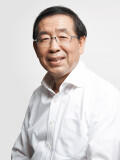
The Honorable Park Won Soon is the 35th mayor of Seoul, South Korea. He was initially elected in Oct. 2011, and recently reelected for another four-year term in June 2014. Park was elected as an indepedent candidate, with the support of the Democratic Party and Democractic Labor Party.

In his keynote speech, Mayor Park will share his philosophy on civic participation and local governance, reflecting on his career in- and outside government. He will explore communication strategies that local government can employ to better engage citizens and motivate collective action, using best practices from Seoul to illustrate his point.

Before assuming office, Park was a human rights lawyer and passionate activist who founded several NGOs. In his early university years at Seoul National University, Park was arrested and expelled for participating in a student rally against the military dictatorship of President Park Chung Hee, and was subsequently imprisoned for four months.

Park passed the state bar exam in 1980, and worked as a public prosecutor in the Daegu District Court in Gyeongsang Province (1982–3), afterward launching a private law practice in Seoul. In 2006, Park founded the Hope Institute, a think tank that aims to apply policy alternatives based on ideas generated by Korea’s citizens.

He also founded the People’s Solidarity for Participatory Democracy in 1994, a nonprofit organization dedicated to promoting justice and human rights in Korean society through civic participation.

In 2000, Park founded the Beautiful Foundation, a nonprofit organization that aims to promote a culture of philanthropy and a just society in Korea, and in 2002, the Beautiful Store, a secondhand store that raises funds for the Foundation’s initiatives.

Park holds a diploma in international law from the London School of Economics and Political Science and a bachelor’s degree in history from Dankook University. In 1993, he was a visiting research fellow in the Human Rights Program at the School of Law at Harvard University and from 2005-6 he was a distinguished practitioner at the Shorenstein Asia-Pacific Research Center, Stanford University.

This event is part of the Asia-Pacific Leaders Forum.

The video of this presentation is located on the Shorenstein APARC YouTube channel.


McCaw Hall

Stanford Alumni Association
Frances C. Arrillaga Alumni Center
326 Galvez Street
Stanford, CA 94305-6105
Parking, Map & Directions.


Park Won Soon Mayor of Seoul
Lectures
0
Former SK Center Fellow at the Freeman Spogli Institute for International Studies
yong_resize2.jpg PhD, MPP

Yong Suk Lee was the SK Center Fellow at the Freeman Spogli Institute for International Studies and Deputy Director of the Korea Program at the Walter H. Shorenstein Asia-Pacific Research Center at Stanford University. He served in these roles until June 2021.

Lee’s main fields of research are labor economics, technology and entrepreneurship, and urban economics. Some of the issues he has studied include technology and labor markets, entrepreneurship and economic growth, entrepreneurship education, and education and inequality. He is also interested in both the North and South Korean economy and has examined how economic sanctions affect economic activity in North Korea, and how management practices and education policy affect inequality in South Korea. His current research focuses on how the new wave of digital technologies, such as robotics and artificial intelligence affect labor, education, entrepreneurship, and productivity.

His research has been published in both economics and management journals including the Journal of Urban Economics, Journal of Economic Geography, Journal of Business Venturing, Journal of Health Economics, and Labour Economics. Lee also regularly contributes to policy reports and opinion pieces on contemporary issues surrounding both North and South Korea.

Prior to joining Stanford, Lee was an assistant professor of economics at Williams College in Massachusetts. He received his Ph.D. in Economics from Brown University, a Master of Public Policy from Duke University, and a Bachelor's degree and master's degree in architecture from Seoul National University. Lee also worked as a real estate development consultant and architecture designer as he transitioned from architecture to economics.

While at APARC, Dr. Lee led and participated in several research projects, including Stanford-Asia Pacific Innovation; Digital Technologies and the Labor Market; Entrepreneurship, Technology, and Economic Development; The Impact of Robotics on Nursing Home Care in Japan; Education and Development in the Digital Economy; and New Media and Political Economy.

Former Deputy Director of the Korea Program at Shorenstein APARC
Paragraphs

The twelfth session of the Korea-U.S. West Coast Strategic Forum, held at Stanford University on June 20, 2014, convened senior South Korean and American policymakers, scholars, and regional experts to discuss North Korea policy and recent developments on the Korean Peninsula. Hosted by the Korea Program at the Walter H. Shorenstein Asia-Pacific Research Center at Stanford University, the Forum is also supported by the Korea National Diplomatic Academy, a top South Korean think tank.

Operating as a closed workshop under the Chatham House Rule of confidentiality, the Forum allows participants to engage in candid, in-depth discussion of current issues of vital national interest to both countries. The final report compiles details from the discussions, including individual participants' policy recommendations. Topics addressed include the future of the U.S.-South Korean alliance and KORUS FTA, and a strategic vision for Northeast Asia.

All Publications button
1
Publication Type
Policy Briefs
Journal Publisher
Shorenstein Asia-Pacific Research Center
News Type
News
Date
Paragraphs

China’s maritime pursuits in the East and South China Seas and President Xi Jinping’s announcement of a new Asian security concept have gathered considerable attention in recent months, leading American analysts to critically examine the strategic value of the U.S.-China alliance. Is the United States in a position where the costs outweigh the gains?

In an article by the Global Times, Thomas Fingar, the Oksenberg-Rohlen Distinguished Fellow at Freeman Spogli Institute for International Studies, responds to questions about U.S. alliance management, discussing the origin and United States’ interests behind its relationship with China.

Over the past few decades, when developing its alliance network, did the United States have a clear and comprehensive mission? Does the United States have any concerns over responsibilities or risks that alliances may generate?

The principal purposes of U.S. alliances are deterrence and collective self-defense, as they were when most were established after World War II and the Korean War. They also contribute to stability and security by requiring transparency and confidence-building among members of the alliances, and to limiting the spread of nuclear weapons by reducing vulnerability to conventional attack and enhancing security through extended deterrence. The United States bears a disproportionate share of the costs associated with its collective security and stability in the global order to justify the costs and risks involved.

Compared to America’s transformation (from upholding isolationism to building a formidable alliance system), how should we evaluate China’s non-aligned strategic partnership policies?

The alliances in which the United States participates are one part of the global system that has contributed to the unprecedented peace and prosperity that we­–the world–have today. Other elements include the United Nations, the World Trade Organization and the Treaty on the Non-Proliferation of Nuclear Weapons (NPT) and other control regimes, and all other institutions in the liberal, open and rule-based system developed by the “Free World” during the Cold War and transformed into a global system in the years since 1991. I would describe the difference between the U.S. vision of relationships among states and China’s non-aligned strategic partnerships as the difference between obligations and expectations within a family and those among colleagues and friends.

The above text is reposted with permission from the Global Times. A version of this text ran as an excerpt written in the Chinese language, which can be accessed here.

Hero Image
14639263533 537876c1cb b
U.S. Secretary of State John Kerry speaks with Chinese President Xi Jinping at the sixth annual Strategic and Economic Dialogue in July 2014.
Flickr/U.S. Department of State
All News button
1
Authors
News Type
News
Date
Paragraphs

Standing upright, then slowly clasping both hands and drawing them up to shoulder height, Kevin Won next kneeled on the floor. Bending forward, he bowed his head toward his silent audience.

Won’s demonstration of the Sebae, a traditional bow performed for elders during South Korea’s lunar new year, may have seemed out of place during a warm, sunny day on Stanford’s campus. But the intricate display was in perfect context during a cross-cultural conference for secondary school teachers from the United States to learn about Korean society, as well as providing a forum to directly engage with Korean teachers and students.

Despite Korea’s growing relevance worldwide, there has been little development of Korean studies below university-level, leaving a vacuum for misunderstanding, including stereotypes, to form at an early age. The conference – now in its third year – aims to shift this reality.

For three days in late July, twenty-four teachers from across America participated in a variety of activities and seminars intended to give them new perspectives and teaching strategies.

Gary Mukai, director of SPICE, welcomes participants.

The conference was co-organized by the Korean Studies Program (KSP) at the Shorenstein Asia-Pacific Research Center (APARC) and the Stanford Program on International and Cross-Cultural Education (SPICE), both in the Freeman Spogli Institute for International Studies. The two groups work together to convert research on Asia into material that is suitable for younger students.

“Our mission is to make Stanford scholarship accessible to all,” said SPICE director Gary Mukai, who has been with SPICE for over 26 years. SPICE and Shorenstein APARC, under the direction of Gi-Wook Shin, a professor of sociology, have coordinated curriculum development for key projects on Korean history and perceptions of wartime history in Northeast Asia. 

A cadre of scholars and practitioners from Stanford and other universities and organizations offered talking points and actionable ideas for instruction. Among them was David Straub, the associate director of KSP, who lived in Korea for eight years as a senior U.S. diplomat. 

The United States and Korea have a very close relationship, but lack equal dialogue, explained Straub. America is still “number one” for Koreans, as such, Koreans know more about the United States than Americans know about Korea. This imbalance can lead to misunderstanding. Straub took the teachers through the recent history of U.S.-Korea relations, which is often narrowed to the context of the Korean War. 

Two teachers work together on a curriculum exercise comparing political cartoons.

Since 1945, South Korea overcame extreme poverty and effectively established a democratic society, a transition that was uncommonly quick and relatively smooth, and one that now supports a global powerhouse of trade and culture.

Throughout the conference, SPICE staff demonstrated ways for educators to bring Korea, and greater Northeast Asia, into their classrooms. They gave the teachers a chance to practice student lessons. In one exercise, the teachers deciphered sets of political cartoons and compared news headlines from Japan, China and Korea, using material from SPICE instructional materials. 

Each activity was carefully prepared to guide teachers to examine their own preconceptions. Greater cultural awareness can come when both teachers and students are “more critical consumers of information,” said Rylan Sekiguchi, a SPICE curriculum specialist, in his presentation.

While curriculum is important, establishing rapport seemed an essential part of the conference. A key component to a successful cross-cultural workshop is creating a community, “and looking around the room, I think we’ve done that here,” said Mukai, in an address to participants at a reception.

Also in attendance was a delegation of 11 Korean teachers and students from Hana Academy Seoul, a private high school in Korea with a unique structure and curriculum. The school’s name comes from the Hana Financial Group, which established the school in 2010, and is also the supporter of the Stanford conference. The Korean students gave presentations that covered a wide range of topics, including an analysis of teenage life and the public education system in Korea.

(Left to right): Students Nayoon Kim, Kevin Won, Seung-hyun Kim and Sarah Chey presented on Korean culture and society.

Six students from Hana Academy Seoul performed Samulnori, one of Korea’s most popular genres of music. The musical group, known as Da-Seu-Reum, showcased their talents while wearing traditional, brightly colored outfits. Afterward, the students became the teachers – when they invited the American teachers to come up and play the instruments. 

Three students were also honored for their research and participation in the Sejong Korean Scholars Program (SKSP), a distance-learning opportunity for 25 high school students across the United States to engage in an intensive study of Korea for a semester. SKSP is dually led by SPICE and Shorenstein APARC, and sponsored by the Korea Foundation.

“I feel very honored to attend, and have learned a lot about U.S.-Korea relations,” said Won, who is from Korea and attends The Taft School in Connecticut. “But mostly, I am just glad my presentation went well.” 

Won, a relative newcomer to public speaking, explained Korean holidays and how to perform a traditional bow. After demonstrating the correct posture and sequence to the audience, he asked for, and easily received, teacher participation. 

Kelly McKee, a teacher from Illinois, tries playing the Buk, a drum used in Samulnori, with direction from a Hana Academy Seoul student.

“From the impeccably credentialed presenters to the wonderful pacing of the presentations, I thoroughly enjoyed my three days here,” said Eladio “Lalo” Martin, a humanities teacher at Cesar Chavez Middle School in Watsonville.

“This conference, by far, is the best I’ve ever attended,” he added. Martin has been teaching for more than 18 years, and says he looks forward to returning to Stanford.

“The speakers have been fantastic,” said Kelly McKee, a social studies teacher. “They’ve shared in-depth expertise on topics like Korea’s special economic zones and North Korea – areas you can’t find in professional development workshops elsewhere.”

McKee, who works at Lake Forest High School in Illinois and is a leader of a student exchange program to Shanghai, says she plans to supplement her Korea unit with what she has learned. As the availability of Asian studies curriculum continues to grow, she says the future certainly looks bright.

Hero Image
Hana Activity Logo
All News button
1
0
erin_baggot_carter_2025.jpg

Erin Baggott Carter (赵雅芬) is an Associate Professor at the Department of Political Science and International Relations at the University of Southern California and a Hoover Fellow at Stanford University's Hoover Institution. She is also a non-resident scholar at the UCSD 21st Century China Center. She has previously held fellowships at Stanford's Center on Democracy, Development and the Rule of Law and the Center for International Security and Cooperation. She received a Ph.D. in Political Science from Harvard University.

Dr. Carter's research focuses on Chinese politics and propaganda. Her first book, Propaganda in Autocracies (Cambridge University Press), explores how political institutions determine propaganda strategies with an original dataset of eight million articles in six languages drawn from state-run newspapers in nearly 70 countries. She is currently working on a book on how domestic politics influence US-China relations. Her other work has appeared in the British Journal of Political ScienceJournal of Conflict ResolutionSecurity Studies, and International Interactions. Her work has been featured by a number of media platforms, including the New York Times and the Little Red Podcast.

Her research has been supported by the Chiang Ching-kuo Foundation, the Smith Richardson Foundation, the Center for International Studies at the University of Southern California, the Weatherhead Center for International Affairs at Harvard University, the Fairbank Center for Chinese Studies at Harvard University, and the Institute for Quantitative Social Science at Harvard University.

Dr. Carter regularly tweets about Chinese politics and propaganda at @baggottcarter. She can be reached via email at baggott [at] usc.edu or ebaggott [at] stanford.edu.

Hoover Fellow
CDDRL Affiliated Scholar
CDDRL Visiting Scholar, 2020-2021
CISAC Affiliate
Date Label
Subscribe to Northeast Asia