Emerging technologies, stemming from the heart of Silicon Valley and extending to Asia and beyond, have pushed the bounds of how stories are told by journalists and the way in which readers interact with them. The Shorenstein Journalism Award, an annual prize given by the Shorenstein Asia-Pacific Research Center (APARC), celebrates 15 years of recognizing distinguished journalists for their innovative and responsible journalism amid social and technological change.
The prize began with “the idea of a media award for a person who has the most significant impact on the relationship with Asia-Pacific nations in the United States,” according to Walter H. Shorenstein, who spoke about his twin interests of Asia and the press in a 2010 oral history project interview and was the benefactor after whom the center is named.
Shorenstein APARC and Harvard’s Shorenstein Center on Media, Politics and Public Policy jointly presented the award for six years. Shorenstein APARC has continued the initiative, and each year, brings the award winner to Stanford to talk with the broader campus community, and since 2011, has alternated between a recipient from the West, who has mainly addressed an American audience, and a recipient from Asia.
The prize seeks to inspire the next generation of U.S. journalists focused on Asia, as well as Asian journalists, who pave the way for press freedom in their countries.
Award winners have explored a multitude of topics over the years, from human rights in North Korea to the rise of democracy in Indonesia and from the U.S.-Japan alliance to gender equality in India. And this year adds an additional view on China; veteran journalist Ian Johnson will address religion and value systems in a panel discussion on May 1 with Xueguang Zhou, Stanford professor of sociology, and Orville Schell, director of the Asia Society's Center on U.S.-China Relations, moderated by Daniel C. Sneider, Shorenstein APARC associate director for research.
To mark the award’s tenure, Shorenstein APARC asked award alumni to answer the question, “What do you think the future holds for journalism in/about Asia?” Their responses are below.
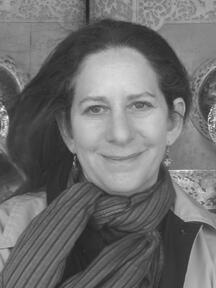
Asia is big, with 60 percent of the world's people and a third of its land. The conditions in which journalists work go to the extremes, from the longstanding establishment press of Japan or India to the blanket repression of it in Laos or China. But if there is one word to describe Asian journalism of the future, it is Youth. Creative, energetic young people, armed with connectivity, pack Internet cafes and journalism classes, where they can find them. Their interests are broad, they are open-minded and well informed. Western reporters will benefit from their guidance as colleagues.
Barbara Crossette is the U.N. correspondent for The Nation and a columnist for India Abroad. She received the Shorenstein Journalism Award in 2010.
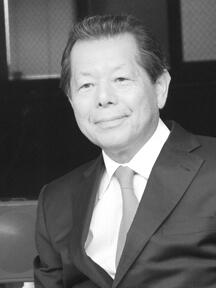
Journalism in Asia has had a long history of covering revolutions and wars. However, peace has reigned over Asia for near on 40 years. Yet, the peace and stability in Asia looks increasingly precarious. Asia too is not immune to populist nationalism. In this climate, Asia could yet again become the battleground for dislocation, revolution and war. Journalism, on top of reacting to potential crises, will be critical for proactively finding ways to prevent and defuse crises in the region.
Yoichi Funabashi is the chairman of the Rebuild Japan Initiative Foundation. He received the Shorenstein Journalism Award in 2015.
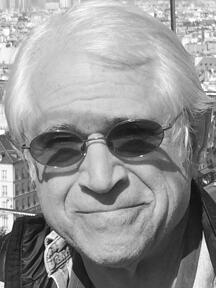
The scope for independent journalism, checking the powers that be, is shrinking everywhere, not least in Asia. China's rise as a major political and commercial power will be a growing challenge to the freedom of the press. The best thing journalists writing about Asian affairs can do, especially those who are lucky enough to work for free and independent media, is to continue to write as honestly as they can, without bowing to political or commercial pressures. This very much includes pressures at home, in countries that still have liberal democratic institutions. Good journalism on Asia, or anywhere else, will continue to be produced as long as the critical spirit remains undaunted.
Ian Buruma is a writer and the Paul W. Williams Professor of Democracy, Human Rights, and Journalism at Bard College. He received the Shorenstein Journalism Award in 2008.
The frontier in the battle for press freedom in Southeast Asia has moved into cyberspace, where independent voices have presented a new challenge to government control of information. In Vietnam, Malaysia, Thailand, Singapore, Indonesia and newly open Myanmar, upstart websites and blogs have proliferated. But it hasn't taken long for those in charge to gain the upper hand, and following the example of China, all have found ways to bring these open forums under varying degrees of control, from censorship to harassment to prison terms. The flamboyant Philippines remains the exception, and the future there too has become uncertain.
Seth Mydans is a contributing writer for the New York Times. He received the Shorenstein Journalism Award in 2009.
The United States tends to export its best and worst fashions elsewhere in the world. An example of the latter is President Trump’s tendency to denounce any media coverage he dislikes as “fake news.” The Chinese Communist Party has picked up on that trick, earlier this month using the “fake news” defense to deny a story that a human rights lawyer was tortured, a practice all too common in China. The implications are chilling for the Chinese domestic press and for foreign correspondents covering China. While our own president is denouncing us as “enemies of the people,” we can hardly expect the U.S. government to stand up for us when the intolerant regime in Beijing tries to muzzle our reporting.
Barbara Demick is the Los Angeles Times’ bureau chief in New York and was formerly bureau chief in Beijing and in Seoul. She is the author of Nothing to Envy: Ordinary Lives in North Korea and Logavina Street: Life and death in a Sarajevo Neighborhood. She received the Shorenstein Journalism Award in 2012.
In some parts of Asia, the space for freedom of expression has shrunk immensely and there are challenges for all of us covering sensitive issues in countries where journalists increasingly face the Computer Crime Act, censorship, tight space, intimidation and threats – moreover, they also continue to face authoritarian rulers’ unjustified clampdown and high-handed attitudes. Asia is complex – in some corners of our region, many diverse ethnic minorities live in conflict zones and in war without peace – for decades journalists travel there to report stories. But it is our job – isn’t it? Journalists here ought to tell stories and unearth many untold news to readers across Asia. While facing prison walls, threats and lawsuits, journalists also face media tycoons and cronies who want them to be a mouthpiece of commercial conglomerates – they must resist them. Commercial media kills independent journalism. Long before journalists in Asia realized that objectivity alone doesn’t work in Asia but courage, independent reporting and searching the truth are more important than ever before. Last but not least, Asia has the fastest growing economies in the world thus an independent media is needed to keep voices from Asia alive.
Aung Zaw is the founder and editor-in-chief of The Irrawaddy. He received the Shorenstein Journalism Award in 2013.
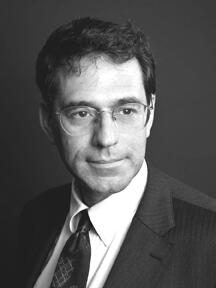
Donald Trump is challenging many long-held, American consensus policies – including those toward Asia. Trade, diplomacy and security relationships between the United States and Asia – and among Asian nations – are now all in flux. The challenge for journalists on both sides of the Pacific will be sorting out the noise, understanding the concrete actions and reactions, and explaining the implications for a global audience. That mission will be made more difficult – and more vital – by the growing hostility toward journalism from many of the leaders unleashing this transformation.
Jacob Schlesinger is a senior Washington correspondent for the Wall Street Journal. He received the Shorenstein Journalism Award in 2014.
I am very pessimistic about the ability of thoughtful and informative journalism to survive anywhere in the world given the gale force winds of state propaganda, commercial market pressure and "fake news" that now buffet it. And no where is such reporting more urgently needed than in regard to Asia where China's different value and political pose a stark challenge. To keep a well-informed public, we may well have to finally recognize here in the United States that good and independent reporting cannot be entirely a purely commercial process any more than are our great universities.
Orville Schell is the Arthur Ross Director of the Center on U.S.-China Relations at the Asia Society in New York, and former dean of the School of Journalism at the University of California, Berkeley. He received the Shorenstein Journalism Award in 2003.
I am very optimistic about the future of journalism in Asia because I am optimistic about the future of Asia writ large. I am especially optimistic about the future of journalism in China. Despite the dark days that my Chinese colleagues face today, there is no shortage of well-trained, hungry reporters in China who will ultimately help push China in a more positive direction. I think this is, to use the Chinese Communist Party's verbiage, "the historical trend." Just think about the scoops to be had when China begins to open the vast archives of the Chinese Communist Party? Obviously, this won't happen tomorrow, but I am confident that this day is less far off than it sometimes seems.
John Pomfret was a foreign correspondent with the Washington Post for many years. He is the author of The Beautiful Country and the Middle Kingdom: America and China from 1776 to the Present. He received the Shorenstein Journalism Award in 2007.



 Kenji E. Kushida is a Japan Program Research Scholar at the Walter H. Shorenstein Asia-Pacific Research Center and an affiliated researcher at the Berkeley Roundtable on the International Economy. Kushida’s research interests are in the fields of comparative politics, political economy, and information technology. He has four streams of academic research and publication: political economy issues surrounding information technology such as Cloud Computing; institutional and governance structures of Japan’s Fukushima nuclear disaster; political strategies of foreign multinational corporations in Japan; and Japan’s political economic transformation since the 1990s. Kushida has written two general audience books in Japanese, entitled Biculturalism and the Japanese: Beyond English Linguistic Capabilities (Chuko Shinsho, 2006) and International Schools, an Introduction (Fusosha, 2008). Kushida holds a PhD in political science from the University of California, Berkeley. His received his MA in East Asian studies and BAs in economics and East Asian studies, all from Stanford University.