-

The 10th Annual Koret Workshop

The aim of this year's workshop is to assess the current situation surrounding North Korea, and to examine all possible options for dealing with North Korea, from military intervention, containment, or sanctions to diplomatic engagement.

The annual Koret Workshop is made possible through the generous support of the Koret Foundation.

Stanford University

Workshops
-

Over the past year North Korean nuclear technology and delivery capabilities have advanced exponentially, until they are now believed to be within striking range of anywhere in the United States. The US administration has sought to counter this threat with a policy of maximum pressure combined with engagement—both options attracting fierce misgivings across the political spectrum. How did we get here? And what is the best way to reduce tension and prevent the spread of nuclear weapons?

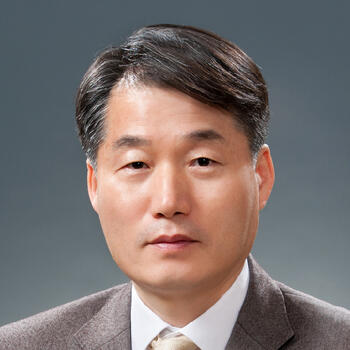
Ambassador Joseph Yun, the recently retired U.S. Special Representative for North Korea Policy, will discuss the diplomatic challenges in dealing with North Korea, focusing on denuclearization, its scope and likelihood.  Yun will also sketch out the current state of US relations in the region and share his views on how the leading regional players—South Korea, Japan, China and Russia—view North Korea.
 
Image
joe photo crop
Ambassador Yun is recognized as one of the nation’s leading experts on relations with North Korea, as well as on broader US-East Asian policy. His 33-year diplomatic career has been marked by his commitment to face-to-face engagement as the best avenue for resolving conflict and advancing cross-border cooperation. As Special Envoy on North Korea from 2016 to 2018, he led the State Department’s efforts to align regional powers behind a united policy to denuclearize North Korea. He was instrumental in reopening the “New York channel,” a direct communication line with officials from Pyongyang, through which he was able to secure the release of the American student, Otto Warmbier, who had been held in captivity for 15 months.
 
From 2013 to 2016 he served as US Ambassador to Malaysia, actively forwarding the administration’s goal of elevating relations with Southeast Asia. During his tenure, Ambassador Yun hosted two visits to Malaysia by President Obama—the first by any US President since 1966—resulting in the signing of the US-Malaysian Comprehensive Partnership Agreement, pledging closer cooperation on security, trade, education, technology, energy, the environment, and people-to-people ties.

As Principal Deputy Assistant Secretary for East Asian and Pacific Affairs (2011-2013), he helped to bring about the diplomatic normalization of American relations with Myanmar, traveling to Rangoon as the first US-based government official to meet with Burmese democracy leader Aung San Suu Kyi following her release from house arrest. He also worked to lay the foundation for official participation by the President of the United States in the annual East Asian Summit, starting from 2011.

Previous assignments include Deputy Assistant Secretary for Southeast Asian Policy, Counselor for Political Affairs in the US Embassy in Seoul, Economic Counselor in the US Embassy in Bangkok, as well as earlier assignments in South Korea, Indonesia, Hong Kong, and France. He has received a Presidential Meritorious Service Award, four Superior Honors Awards, and nine Foreign Service Performance Awards from the US State Department.

Ambassador Yun joined the Foreign Service in 1985. Prior to that he was a senior economist for Data Resources, Inc., in Lexington, Massachusetts.  He holds a M. Phil. degree from the London School of Economics and a BS from the University of Wales.
Joseph Yun <i>former US Special Representative for North Korea Policy</i>
Seminars
Authors
Gary Mukai
News Type
News
Date
Paragraphs

Since the mid-19th century, the United States has had strong—albeit sometimes tense—historic ties with Kanagawa Prefecture. In 1853, U.S. Commodore Matthew C. Perry entered Edo Bay (now Tokyo Bay) just south of Yokohama with the mission of pressuring Japan to open its ports to the United States. This resulted in the signing of the Convention of Kanagawa in 1854, which opened the ports of Shimoda and Hakodate to trade and established the first U.S. consulate office. During World War II, the Yokosuka Naval Arsenal in Kanagawa was attacked by the United States, and since the end of the war in 1945, its facilities have been used by the U.S. Navy. Today, United States Fleet Activities Yokosuka is home port for the U.S. Seventh Fleet.

Students in Kanagawa Prefecture are taught about these historic episodes between their prefecture and the United States. They also live alongside a significant number of American residents today. Following Tokyo and excluding U.S. military personnel in Japan, Kanagawa has the second largest number of American residents in Japan. Because of these historical and contemporary ties with the United States, some of Kanagawa’s teachers have reached out to the Stanford Program on International and Cross-Cultural Education (SPICE) with hopes to more fully introduce their students to U.S. society and culture and U.S.–Japan relations and also to encourage their students to study abroad in the United States. This encouragement was inspired in large part by the Japanese government.

On May 1, 2015, Japanese Prime Minister Shinzo Abe visited Stanford University—a first by a Japanese prime minister—and said that he wants “the best and brightest Japanese talent” to study at places like Stanford and to learn about Silicon Valley. Shortly after Prime Minister Abe’s visit to Stanford, SPICE launched an online course called Stanford e-Japan for high school students in Japan with funding from the United States-Japan Foundation, New York City. Stanford e-Japan, which is taught by Waka Takahashi Brown, introduces topics like Commodore Perry, World War II, and Silicon Valley to students with hopes that they will come to better understand the bilateral relationship and also consider someday studying in the United States.

[[{"fid":"230275","view_mode":"crop_870xauto","fields":{"format":"crop_870xauto","field_file_image_description[und][0][value]":"Rylan Sekiguchi and Naomi Funahashi at Yokosuka Senior High School, Kanagawa Prefecture","field_file_image_alt_text[und][0][value]":"Rylan Sekiguchi and Naomi Funahashi at Yokosuka Senior High School, Kanagawa Prefecture","field_file_image_title_text[und][0][value]":"Rylan Sekiguchi and Naomi Funahashi at Yokosuka Senior High School, Kanagawa Prefecture","field_credit[und][0][value]":"Gentaro Tatsumi","field_caption[und][0][value]":"Rylan Sekiguchi and Naomi Funahashi at Yokosuka Senior High School, Kanagawa Prefecture","thumbnails":"crop_870xauto","alt":"Rylan Sekiguchi and Naomi Funahashi at Yokosuka Senior High School, Kanagawa Prefecture","title":"Rylan Sekiguchi and Naomi Funahashi at Yokosuka Senior High School, Kanagawa Prefecture"},"type":"media","field_deltas":{"2":{"format":"crop_870xauto","field_file_image_description[und][0][value]":"Rylan Sekiguchi and Naomi Funahashi at Yokosuka Senior High School, Kanagawa Prefecture","field_file_image_alt_text[und][0][value]":"Rylan Sekiguchi and Naomi Funahashi at Yokosuka Senior High School, Kanagawa Prefecture","field_file_image_title_text[und][0][value]":"Rylan Sekiguchi and Naomi Funahashi at Yokosuka Senior High School, Kanagawa Prefecture","field_credit[und][0][value]":"Gentaro Tatsumi","field_caption[und][0][value]":"Rylan Sekiguchi and Naomi Funahashi at Yokosuka Senior High School, Kanagawa Prefecture","thumbnails":"crop_870xauto","alt":"Rylan Sekiguchi and Naomi Funahashi at Yokosuka Senior High School, Kanagawa Prefecture","title":"Rylan Sekiguchi and Naomi Funahashi at Yokosuka Senior High School, Kanagawa Prefecture"}},"link_text":null,"attributes":{"alt":"Rylan Sekiguchi and Naomi Funahashi at Yokosuka Senior High School, Kanagawa Prefecture","title":"Rylan Sekiguchi and Naomi Funahashi at Yokosuka Senior High School, Kanagawa Prefecture","style":"height: 244px; width: 349px; border-width: 0px; border-style: solid; margin: 5px; float: right;","class":"media-element file-crop-870xauto","data-delta":"2"}}]]

One of the high schools that has enthusiastically supported and enrolled students in Stanford e-Japan is Yokohama Science Frontier High School (YSFH). Thanks to the initiative of teachers Nobuyo Uchimura and Yukimasa Uekusa, Naomi Funahashi and Rylan Sekiguchi traveled to Kanagawa Prefecture to visit YSFH and a partner school, Yokosuka Senior High School. They met with faculty, chatted with students, and led several classes and after-school sessions to encourage students’ global thinking. Following their school visit, English teacher Gentaro Tatsumi, noted, “Sekiguchi-sensei and Funahashi-sensei gave very impressive lessons to my students. I believe many of them surely had moments to think deeply about war and peace with different perspectives or viewpoints. Also, I was so happy to see that there were several students who showed a big interest in studying abroad following their after-school presentation.”

Four of these students had the occasion to see Funahashi and Sekiguchi again but this time at Stanford University. Three students (Ayaka Nakaminami, Daiichi Soma, and Rin Suzuki) from YFSH and one student (Keisuke Hara) from Yokosuka Senior High School participated in a SPICE-led seminar on January 24, 2018. After engaging in a series of globally themed lessons led by Funahashi and Sekiguchi, the students toured Stanford campus and experienced lunch in a student dining hall. The afternoon portion of the seminar featured a presentation by Tatsumi-sensei on English education in Japan, remarks by Uchimura-sensei and Uekusa-sensei, and four science research-focused presentations that were given by the students to Stanford community members.

One of the audience members was Stanford law student, Yuta Mizuno, an attorney with Nagashima Ohno & Tsunematsu in Tokyo. “I was truly impressed by the students’ preparation and performance with the presentations,” he reflected. “I’m sure that they gained inspiration and confidence from the seminar here at Stanford, and there’s no doubt that they have a promising future on the global stage. I wish I could’ve had such a priceless experience when I was in high school.” In between the student presentations, Mizuno also had the chance to talk with Hara, who aspires to be an attorney.

After their return to Kanagawa Prefecture, Uchimura-sensei commented, “Our visit to Stanford was a precious opportunity. The seminar we had at SPICE was focused on ‘globalization’ and ‘interdependence,’ which are especially important themes today. The four selected students, who are potential global leaders, were lucky enough to have been given the chance to experience studying at a U.S. university early in life. We are convinced that this experience at SPICE has given them a guide into their future.”

SPICE expects that many students from Kanagawa Prefecture will apply to future offerings of Stanford e-Japan, due in large part to the enthusiasm of the teachers and the students who represented their prefecture so well. SPICE’s hope is that the four students will someday return to Stanford or other U.S. universities as students. It is remarkable how the once tense relationship between Kanagawa (and Japan broadly) and the United States has evolved into a close interdependent friendship. We entrust the future of this friendship to students like Nakaminami, Soma, Suzuki, and Hara.


Hero Image
Students and teachers from Kanagawa Prefecture at Stanford University, January 2018
Students and teachers from Kanagawa Prefecture at Stanford University, January 2018 | Rylan Sekiguchi
All News button
1
-

This webinar will take place on the Zoom (video conferencing) platform. Please click on the link at least 5 minutes in advance to allow ample time for setting up your computer or mobile device for Zoom: https://stanford.zoom.us/j/613472625


This webinar will introduce three Stanford-designed online courses for high school students in the United States that leverage digital learning to develop global competence and diverse perspectives. The focus will be driven by the following essential question: how do we cultivate global citizens through digital learning? Our objectives are to introduce teachers and students to innovative online courses—the Reischauer Scholars Program, Sejong Korean Scholars Program, and China Scholars Program—that connect high school students in the United States to content on Japan, Korea, and China, respectively. 

Participants will learn about how the Stanford Program on International and Cross-Cultural Education (SPICE) engages students using synchronous and asynchronous online technologies to enhance the development of cross-cultural knowledge, empathy, and understanding. We will explore the importance of leveraging technology to build an inclusive environment for sharing diverse perspectives and ideas within an online learning community, and teach strategies for actively engaging students in an online classroom. Participants will also learn about building global networks of students with an interest in developing mutual understanding and connections across borders through digital learning.

616 Jane Stanford Way
Encina Hall, E007
Stanford, CA 94305-6060

(650) 724-4396 (650) 723-6784
0
naomi_funahashi.jpg

Naomi Funahashi is the Manager of the Reischauer Scholars Program (RSP) and Teacher Professional Development for the Stanford Program on International and Cross-Cultural Education (SPICE). In addition to her work as the instructor of the RSP, she also develops curricula at SPICE. Prior to joining SPICE in 2005, she was a project coordinator at the Japanese Cultural and Community Center of Northern California and worked in technology publishing in San Francisco.

Naomi's academic interests lie in global education, online education pedagogy, teacher professional development, and curriculum design. She attended high school at the American School in Japan, received her Bachelor of Arts in international relations from Brown University, her teaching credential in social science from San Francisco State University, and her Ed.M. in Global Studies in Education at the University of Illinois, Urbana-Champaign.

She has authored or co-authored the following curriculum units for SPICE: Storytelling of Indigenous Peoples in the United States, Immigration to the United States, Along the Silk Road, Central Asia: Between Peril and Promise, and Sadako's Paper Cranes and Lessons of Peace.

Naomi has presented teacher seminars nationally at Teachers College, Columbia University, the annual Asia Society Partnership for Global Learning Conference, the National Council for Social Studies and California Council for Social Studies annual conferences, and other venues. She has also presented teacher seminars internationally for the East Asia Regional Council of Overseas Schools in Thailand, the Philippines, and Malaysia, and for the European Council of International Schools in France, Portugal, and the Netherlands.

In 2008, the Asia Society in New York awarded the 2007 Goldman Sachs Foundation Media and Technology Prize to the Reischauer Scholars Program. In 2017, the United States–Japan Foundation presented Naomi with the Elgin Heinz Teacher Award, an honor that recognizes pre-college teachers who have made significant contributions to promoting mutual understanding between Americans and Japanese. Naomi has taught over 300 students in the RSP from 35 U.S. states.

Manager, Reischauer Scholars Program and Teacher Professional Development

616 Jane Stanford Way
Encina Hall, C332
Stanford, CA 94305-6060

(650) 725-1480 (650) 723-6784
0
jonas_edman.jpg

Jonas Edman is a Curriculum Writer for the Stanford Program on International and Cross-Cultural Education (SPICE). In addition to writing curriculum, Jonas coordinates SPICE’s National Consortium for Teaching About Asia (NCTA) professional development seminars on East Asia for middle school teachers, and collaborates with FSI and other Stanford colleagues on developing curricula for community college instructors as part of Stanford Human Rights Education Initiative (SHREI). Prior to joining SPICE in 2010, Jonas taught history and geography in Elk Grove, California, and taught Theory of Knowledge at Stockholm International School in Stockholm, Sweden.

Jonas' professional interests lie in curriculum and instruction and teacher professional development, with a special interest in online education development. He received his Single Subject Teaching Credential in Social Science from California State University, Sacramento in 2010, and a bachelor degree in History from Stockholm University in 2008. He graduated high school from the American School in Japan in 1996.

Jonas has presented teacher seminars nationally for the National Consortium for Teaching about Asia in Omaha, Nebraska; the California Council for Social Studies in Anaheim and Burlingame, California; the National Council for the Social Studies in Washington D.C.; the Midwest Conference on Asian Affairs in East Lansing, Michigan; and the National Association for Multicultural Education in Oakland, California. He has also presented teacher seminars internationally for the East Asia Regional Council of Overseas Schools in Kota Kinabalu, Malaysia, and Bangkok, Thailand; and the European Council of International Schools in Nice, France.

Instructor, Stanford e-Tottori
Instructor, Stanford e-Yamaguchi
Instructional Designer
Date Label
Panel Discussions
News Type
News
Date
Paragraphs


—SPICE: Offering teacher institutes since 1973—


In 1973, the roots of the Stanford Program on International and Cross-Cultural Education (SPICE) were established with the creation of the Bay Area China Education Program, which focused on the development of K–12 curriculum materials and teacher professional development. Only a year prior, President Richard Nixon had made his historic trip to China and many American students were able to view contemporary images of China on television for the first time in their lifetimes. Teachers who attended SPICE institutes on China in the 1970s often commented that they were at a loss about how to teach about China.

Forty-four years later, a new generation of educators expressed similar sentiments at a SPICE institute. However, the challenge wasn’t so much about the teaching of China but rather the teaching of North Korea. Thus, when Pulitzer Prize-winning author Adam Johnson spoke about his book, The Orphan Master’s Son, a New York Times bestselling novel about North Korea, teachers were riveted by his comments. Teachers were interested not only in ways that his novel could help them better understand contemporary North Korea but also in ways they could use the book to help their students gain a more balanced view of North Korea. The 22 teacher participants received copies of The Orphan Master’s Son to use in their teaching and were offered two SPICE curriculum units titled Inter-Korean Relations: Rivalry, Reconciliation, and Reunification and Uncovering North Korea.  

Co-sponsored by the National Consortium for Teaching about Asia (NCTA), the SPICE summer institute, July 24–26, 2017, had the objectives of (1) deepening teachers’ understanding of Asia, U.S.–Asian relations, and the Asian-American experience; (2) providing teachers with teaching resources; and (3) creating a community of learners. The institute featured lectures by Stanford faculty (like Johnson), U.C. Berkeley faculty, and other experts on a range of Asia- and Asian-American-related topics closely aligned with the History-Social Science Framework for California Public Schools standards, which were recently revised. Interactive curriculum demonstrations by SPICE staff were also offered.

One such standard focuses on recent economic growth in China. Following a lecture by Thomas Fingar, Shorenstein Asia Pacific Research Center Fellow, on “Recurring Themes in U.S.–China Relations,” a curriculum demonstration on the SPICE curriculum unit, China in Transition: Economic Development, Migration, and Education, was offered by its author, Rylan Sekiguchi of SPICE. One teacher remarked, “I teach about China, and it was so helpful to hear someone with such deep expertise [Fingar] speak about U.S.–Chinese history in a way that enriches my knowledge and understanding to bring back some bigger themes to my teaching. I can’t wait to bring this content back to my students [through the SPICE curriculum].” Other scholarly lectures on Japan and Korea were also followed by curriculum demonstrations by SPICE staff. This coupling of lectures and curriculum demonstrations has been a hallmark of SPICE since its inception.

Updated History-Social Science Framework standards on the Asian-American experience were also addressed at the institute. Dr. Khatharya Um, Associate Professor of Ethnic Studies at the University of California at Berkeley, introduced the diverse cultural and historical backgrounds of the Asian-American student population which often comprises a significant percentage of students in schools in areas like the San Francisco Bay Area and Los Angeles. She emphasized the importance of acknowledging individual circumstances in minority student populations and breaking down commonly cited stereotypes of Asian Americans as being a critical element of effective teaching. One of the topics that she addressed was stereotypes of Japanese Americans that arose following the Japanese attack of Pearl Harbor. Her lecture was coupled with the sharing of first-hand experiences by Dr. Joseph Yasutake, who was interned at the age of nine. Dr. Yasutake’s talk stimulated discussions on civil liberties, race relations, discrimination, and American identity among the teachers. “Hearing history from one who has experienced it as well as studied and taught the history is really wonderful,” said one institute participant. “This combination brings a great amount of authority and well as authenticity to the narrative he [Yasutake] provides.” The SPICE curriculum unit, Civil Rights and Japanese-American Internment, was recommended as a resource for teachers.

The institute brought together both experienced mentor teachers and those new to the field. Naomi Funahashi, who organized and facilitated the institute, remains in communication with many of the teachers and has noticed that a community of learners, who are committed to a long-term exploration of Asian and Asian-American studies, has grown from the institute. She reflected, “One of the unexpected outcomes of the institute was the recommendations that many of the teachers have written in support of their students’ applications to my online class on Japan called the Reischauer Scholar Program. My hope is that some of my students will someday attend SPICE institutes as teachers and that SPICE institutes will continue to serve teachers as they have since 1973 for many decades to come.”

SPICE is currently recruiting teachers to attend its 2018 summer institute for middle school teachers (June 20–22, 2018) and summer institute for high school teachers (July 23–25, 2018).

To stay informed of SPICE-related news, follow SPICE on Facebook and Twitter.

Hero Image
Teacher participants in the 2017 East Asia Summer Institute examine propaganda posters from China's Cultural Revolution.
All News button
1
News Type
News
Date
Paragraphs

The Shorenstein Asia Pacific Research Center (APARC) is pleased to welcome three postdoctoral fellows for the 2018-19 academic year. The cohort includes two Shorenstein Postdoctoral Fellows and one Developing Asia Health Policy Fellow. All three will begin their year of academic study and research at Stanford this fall.

For more than a decade, Shorenstein APARC has sponsored numerous junior scholars to come to the university and work closely with Stanford faculty, develop their dissertations for publication, participate in workshops and seminars, and present their research to the broader community. APARC's Asia Health Policy Program sponsors young scholars who pursue original research on contemporary health or healthcare policy of high relevance to countries in the Asia-Pacific region, especially developing countries.

The 2018-19 fellows carry a broad range of interests including authoritarianism in Southeast Asia, the use of coercion in national security, and community health policy in developing countries. Continue reading to learn about their qualifications and research plans:


Image

Sebastian Dettman

"When are opposition parties and movements successful in challenging entrenched authoritarian regimes?"

Sebastian Dettman is completing his doctorate in the Department of Government at Cornell University. He researches party building, electoral competition, and political representation in newly democratic and authoritarian regimes, with a focus on Southeast Asia.

Seb's dissertation examines the dilemmas faced by Malaysia's opposition parties in expanding electoral support and building coalitions, and the implications for regime liberalization. His research has been supported by grants including the NSEP Boren Fellowship, the USINDO Sumitro Fellowship, and Foreign Language and Area Studies (FLAS) Fellowships. At Shorenstein APARC, Seb will work on developing his dissertation into a book manuscript and make progress on his next project exploring regime-opposition policy interactions in authoritarian regimes.

Prior to his doctorate, Seb received an MA in Southeast Asian Studies from the University of Michigan. He has also worked as a consultant and researcher for organizations including the Asia Foundation, the International Crisis Group, and the Carter Center.


Image

Ketian Vivian Zhang

"What explains the specific foreign policy behavior of rising powers such as China and how might we better manage China's rise?"

Ketian Vivian Zhang is completing her doctorate in the Political Science Department at the Massachusetts Institute of Technology, where she is also an affiliate of the Security Studies Program. Ketian studies coercion, economic sanctions, and maritime territorial disputes in international relations and nationalism in comparative politics, with a regional focus on China and East Asia.

Ketian's dissertation examines when, why, and how China uses coercion when faced with issues of national security, such as territorial disputes in the South and East China Seas, foreign arms sales to Taiwan, and foreign leaders' reception of the Dalai Lama. Ketian has done extensive fieldwork in various cities in China, including conducting interviews with Chinese officials and scholars. Her research has been supported by organizations such as the Institute for Security and Conflict Studies at George Washington University, the Smith Richardson Foundation, the Chiang Ching-kuo Foundation, and the Belfer Center for Science and International Affairs at the Harvard Kennedy School, where she is currently a Predoctoral Research Fellow in the International Security Program

At Shorenstein APARC, Ketian will work on converting her dissertation to a book manuscript and advancing her post-dissertation projects on nationalism and anti-foreign protests. Previously, Ketian was a Predoctoral Fellow at the Institute for Security and Conflict Studies at George Washington University. Ketian earned a B.A. in Political Science and Sociology from the University of Wisconsin-Madison and was a research intern at the Institute for Policy Studies in Washington, D.C., where she was a contributor to its website Foreign Policy in Focus.


Sarita Panday

"How could we better manage and support community health workers to deliver healthcare in resource-poor countries?"

Sarita Panday is a postdoctoral fellow at the Department of Politics at the University of Sheffield (U.K). She is working on the project "Resilience Policy Making in Nepal: Giving Voice to Communities" funded by the Economic and Social Research Council (U.K.). She is currently collecting data using participatory video methods to bring attention to unheard voices from three remote communities in Nepal affected by earthquakes

Sarita completed her Ph.D. at the School of Health and Related Research (ScHARR) at the University of Sheffield. Her dissertation explores the role of female community health volunteers in maternal health service provision in Nepal. While at Stanford as an AHPP Fellow, Sarita plans to undertake research on community health workers and incentives in South Asia.

Sarita has skills in understanding systematic reviews, qualitative research, mixed-method research and the use of participatory video methods. She has worked as a principal investigator and a coinvestigator in different systematic review projects funded by the World Health Organization, the University Grants Commision (Nepal), and the Department for International Development (U.K.). Her major interests are in maternal health, community health workers, and health policy research including resilience policy making in developing countries, with a focus on South Asia and--in particular--Nepal.

Prior to her Ph.D., Sarita earned her combined Masters in Public Health and Health Management from the University of New South Wales under the Australian Leadership Award. She completed her B.Sc. in Nursing from BP Koirala Institute of Health Sciences (Nepal). She is also a recognized Fellow at the Higher Education Academy (U.K.).


Hero Image
encina hall
All News button
1
-

Transferring knowledge and skills through skilled labor has become a critical topic in contemporary migration studies. Countries that are traditionally non-immigrant destinations often turn to their diaspora communities to increase the chances of return flows and knowledge transfer. It has been almost twenty years since South Korea enacted the ‘Overseas Korean Act’ in 1999, which attracted a large number of overseas Koreans back to its shore. Yet there has been very little discussion over the policy implications and what particular ‘skills’ or contributions the returnees have brought to Korean society.

In this seminar, Jane Yeonjae Lee describes some of the research findings from her forthcoming book Quest for home: Transnational return migration of 1.5 generation Korean New Zealanders (Lexington Press, 2018). This book project, which has been based on a life-history and transnational ethnographic research with 49 Korean return migrants, partly investigates the implications for global knowledge transfer through skilled mobilities. Lee will discuss a number of different pathways of returnees’ particular influences on Korean society, and how their certain knowledge and skills can be transferred, hindered, or mutated.

Image
yeonjae lee
Jane Yeonjae Lee is an interdisciplinary qualitative researcher and her research revolves around transnationalism, migrant communities, mobilities, health, and urban environmental politics. In particular, she is interested in understanding the migratory experiences of highly skilled immigrants and how their mobile lives connect and shape the places of migration they move through. Her work has been featured in academic journals such as Health and Place; New Zealand Geographer; and Journal of Ethnic and Migration Studies. She has also contributed to key texts in the field of geography including Elgar Handbook on Medical Tourism and Patient Mobility; Researching the Lifecourse: Critical reflections from the social sciences; and Contemporary Ethnic Geographies in America. Lee holds a PhD in Geography from the University of Auckland. Dr. Lee is currently a visiting scholar at Shorenstein Asia-Pacific Research Center at Stanford University. 

616 Serra StreetEncina Hall E301Stanford, CA94305-6055
(650) 723-6530
0
yeonjae_lee.jpg Ph.D.

Jane Lee joins the Walter H. Shorenstein Asia-Pacific Research Center as a Visiting Scholar during the 2017-18 academic year. Prior to joining Shorenstein APARC, she was a Postdoctoral Research Fellow at Northeastern University working in a global comparative project on exploring sustainable mobilities policies.

Jane is an interdisciplinary qualitative researcher and her research revolves around transnationalism and migration, skilled mobilities, and social policies. In particular, she is interested in understanding the mobile (and marginalized) experiences of migratory groups, and how the particular mobilities of people and ideas may affect the places that are involved. Her work has been featured in academic journals such as Health and Place, and New Zealand Geographer. She has also contributed to key texts in the field of Geography including Elgar Handbook on Medical Tourism and Patient Mobility, Researching the Lifecourse: Critical reflections from the social sciences, and Contemporary Ethnic Geographies in America. During her time at Shorenstein APARC, Jane will participate as a paper author in the Koret Workshop and other center activities.

Jane holds a PhD and BA(Hons) in Geography from the University of Auckland. She also currently serves as an Honorary Research Associate at the University of Auckland. 


Recent Publications:

Lee, J.Y. (2017) ‘Being non-Christian in a Christian community: Experiences of Belonging and Identity among Korean Americans’, Institute of Asian American Studies Publications. 43.

Lee, J.Y., Friesen, W. and Kearns, R. (2015) ‘Return migration of 1.5 generation Korean New Zealanders: Long term and Short term reasons’, NZ Geographer, 71, 34-44.

Lee, J.Y., Kearns, R. and Friesen, W. (2015) ‘Diasporic medical return’, In Lunt, N., Hanefeld, J. and Horsfall, D. (Eds) Elgar Handbook on Medical Tourism and Patient Mobility. London: Elgar, (p.207-216).

Lee, J.Y. (2015) ‘Narratives of the Korean New Zealanders’ return migration: Taking a life history approach’, In Worth, N. and Hardill, I. (Eds) Researching the Lifecourse: Critical reflections from the social sciences. Bristol: Policy Press, (p.183-198). (Invited Contribution)

Lee, J.Y. (2015) ‘Korean Americans: Entrepreneurship and religion’, In Miyares, I. and Airriess, C. (Eds) Contemporary Ethnic Geographies in America (2nd Edition). Rowan & Littlefield Publishing Group, (p.285-302) (Invited Contribution)

Lee, J.Y. (2015) ‘Returning Diasporas: Korean New Zealander returnees’ journeys of searching ‘home’ and identity’ In Christou, A. and Mavroudi, E. (Eds) Dismantling diasporas: rethinking the geographies of diasporic identity, connection and development. London: Ashgate, (p.161-174).

Lee, J.Y. (2011) ‘A trajectory perspective towards return migration and development: The case of young Korean New Zealander returnees’, In Frank, R., Hoare, J., Kollner, P. and Pares, S. (Eds) Korea: Politics, Economy and Society. Danvers: Brill, (p.233-256).

Lee, J.Y., Kearns, R. and Friesen, W. (2010), ‘Seeking affective health care: Korean immigrants’ use of homeland medical services’, Health and Place, 16 (1), 108-115.

Visiting Scholar
<i>Visiting Scholar, APARC, Stanford University</i>
Seminars
News Type
Commentary
Date
Paragraphs

“I don't think [young South Koreans] necessarily want reunification,” APARC director Gi-Wook Shin tells an audience during the World Affairs panel, “Responding to North Korea: South Korea’s Olympic Olive Branch and US Cyber Warfare Options." Joined by Ambassador Kathleen Stephens, the two spoke with World Affars CEO Jane Wales about many of the issues facing the Korean peninsula as it prepares for the start of the Pyeongchang Winter Olympics

The conversation is also available as a downloadable podcast

Hero Image
Wrold Affairs CEO Jane Wales, APARC Director Gi-Wook Shin, and Kathleen Stephens
All News button
1
616 Serra StreetEncina Hall E301Stanford, CA94305-6055
0
hitoshi_sato.jpg Ph.D.
Dr. Hitoshi Sato joins the Walter H. Shorenstein Asia-Pacific Research Center (APARC) for the 2018 year from the Institute of Developing Economies (IDE-JETRO) in Japan, where he serves as Senior Chief Research Fellow.  He will be working on the internationalization of firms, management practices, and development.  Dr. Sato received his Ph.D. from the University of Wisconsin, Madison. 
Visiting Scholar at APARC
News Type
News
Date
Paragraphs

Interventions designed to improve primary care management of diabetes and reduce avoidable hospital admissions show promise for saving healthcare resources without compromising quality of care. These are the findings made by an international research team’s study of four East Asian sites.

With a fourfold increase in global diabetes prevalence over the past thirty-five years (2016 Lancet report), countries are increasingly experiencing the dual health challenges of chronic noncommunicable diseases and aging populations. An estimated 12 percent of global health expenditures in 2015 was for diabetes-related services.

The study, published in the November issue of Health Affairs, examined policy interventions in Japan, Singapore, Hong Kong, and rural and peri-urban Beijing; by increasing access and adherence to effective outpatient management, the interventions potentially improved health outcomes while realizing cost savings from reduced avoidable hospital admissions.

“This article represents the first publication in a series of research collaborations under the Stanford AHPP-led comparative diabetes net value project,” said Karen Eggleston, Asia Health Policy Program Director and one of the article’s authors.  “We are assembling and analyzing rich patient-level datasets, using diabetes as a lens to explore ‘value for money’ in chronic disease management. “

Eggleston also noted that additional research teams have joined since the publication. The authors look forward to contributing evidence for improved health policy in different institutional contexts and for health systems adapting to rapidly aging populations. 

Read the study (may require subscription)

Hero Image
Photo of Stethescope
Photo by Hush Naidoo on Unsplash
All News button
1
Subscribe to Northeast Asia