


Reforming Japanese Criminal Justice: Juries, Victims, and a Robust (?) Adversary System
-
Over the past few years, Japanese criminal justice has undergone major reform. The most highly publicized change has been the introduction of the "jury" system. Less well known, but of great practical importance, are other reforms, including measures designed to strengthen the adversary system; measures recognizing interests of victims; and significant increases in penalties. Professor Foote has been following Japanese criminal justice for over twenty-five years. His talk will examine the roots of the reforms and the ills they were intended to remedy; the forces that led to their enactment and reaction to them; and the impact to date and future prospects.
This event is co-sponsored with the Center for East Asian Studies.
Philippines Conference Room
Daniel H. Foote
Paul I. Terasaki Chair in US-Japan Relations
Speaker
University of California, Los Angeles
Seminars
Democratic Reform in China: Personal Reflections
-
Professor Li Liangdong is currently the Department Head of the Central Party School's Politics and Law Department. He directly advises senior officials in the Chinese Communist Party. Professor Li received his doctorate from the Central Party School in Law. His main research areas are: democratic perspective, Western political thought, and political theory.
Some of his key works include: Contemporary Chinese Studies of Public Opinion (Central Party School Press, 1996), Mao Zedong and Chinese Farmers (China Farmers Press, 1993), Contemporary Chinese Democracy Studies (Contemporary World Press, 2001 edition), and Third Wave and the Chinese Democracy (Central Party School Press, 2001 edition). He has published over 300 articles. Professor Li has hosted discussions on topics including "Public Discussion in China," "Societal Transitions", and "Study of Political Stability"
Co-sponsored by the Center for Deliberative Democracy
CISAC Conference Room
Li Liangdong
Department Head of the Central Party School's Politics and Law Department
Speaker
Seminars
Strategic Stability at Low Numbers
-
Abstract
In order to eliminate nuclear weapons, the world will first have to pass through a regime of "low numbers" in which the US and Russian arsenals contain hundreds of weapons. The conclusion of the New START agreement, along with President Medvedev and President Obama's intention to work on a successor treaty, have brought this prospect forward. Many Western and Russian analysts worry that such a world might be unstable. However, in spite of these fears, the "low numbers problem" has attracted surprisingly little attention in the past (perhaps because the prospect of deep reductions always seemed so remote). In this talk, I will argue that the most likely type of instability is rearmament. I will examine potential drivers of rearmament and discuss steps to ensure that its likelihood can be minimized.
James M. Acton is an associate in the Nuclear Policy Program at the Carnegie Endowment specializing in nonproliferation and disarmament. A physicist by training, Acton’s research focuses on the interface of technical and political issues, with special attention to the civilian nuclear industry, IAEA safeguards, and practical solutions to strengthening the nonproliferation regime.
Before joining the Endowment in October 2008, Acton was a lecturer at the Centre for Science and Security Studies in the Department of War Studies at King’s College London. There he co-authored the Adelphi Paper, Abolishing Nuclear Weapons, with George Perkovich and was a consultant to the Norwegian government on disarmament issues. Prior to that, Acton was the science and technology researcher at the Verification Research, Training and Information Centre (VERTIC), where he was a participant in the UK–Norway dialogue on verifying the dismantlement of warheads.
Acton’s other previous research projects include analyses of IAEA safeguards in Iran, verifying disarmament in North Korea, preventing novel forms of radiological terrorism, and the capability of Middle Eastern states to develop nuclear energy. He has published in Jane’s Intelligence Review, Nonproliferation Review, Bulletin of the Atomic Scientists, Survival, and the New York Times. In the UK, he appeared regularly on TV and radio, including on the BBC programs Newsnight, Horizon, and the Six O’clock News.
Reuben W. Hills Conference Room
James Acton
Associate, Nuclear Policy Program, Carnegie Endowment for International Peace
Speaker
Seminars
The Application of Article 121 of the Law of the Sea Convention to the Disputed Offshore Islands in East Asia
-
Dr. Songs talk will focus on the question concerning interpretation and possible application of Article 121 of the 1982 United Nations Convention on the Law of the Sea (UNCLOS), in particular its third paragraph, to the selected disputed offshore islands or rocks that are situated in the Sea of Japan, the East China Sea, and the South China Sea. A number of recent developments occurred in the East Asian waters that are relevant to or have the potential to give rise to the problem of interpretation and application of the said article will first be cited. Then, a brief summary of the development of the "Regime of Islands" at UNCLOS III will be given, focusing in particular on those proposals made by the participating delegations to amend or delete entirely Article 121(3) of UNCLOS. The views of the law of the sea experts on interpretation and application of Article 121(3) will be examined. Several selected examples of state practices with regard to the application or interpretation of Article 121(3) will then be provided. This is to be followed by discussing the interpretation and possible application of Article 121(3) to the selected disputed offshore islands that are situated in the East Asian waters. Finally, several suggestions for possible amendment to Article 121 or policy measures to help deal with the confusion found in Article 121(3) will be offered.
Yann-huei Song received his undergraduate degree from National Chengchi University, Taipei, Taiwan, a Master's degree in Political Science from Indiana State University, Indiana, USA, a LL.M. degree from the University of California School of Law (Boalt Hall), Berkeley, California, USA, a doctoral degree in International Relations from Kent State University, Kent, Ohio, USA, and a JSD degree from the University of California School of Law (Boalt Hall), Berkeley.
Following graduation from Kent State University, Dr. Song taught at Department of Political Science, Indiana State University as Assistant Professor in 1988. He then returned to his country and taught as an Associate Professor at Institute of Maritime Law, National Taiwan Ocean University, Keelung, Taiwan in 1990. Currently, Dr. Song is a research fellow at the Institute of European and American Studies, Academia Sinica, Nankang, Taipei, Taiwan, and distinguished professor of the Graduate Institute of International Politics at National Ching Hsing University (NCHU), Taichung, Taiwan. He is also dean of the Office of International Affaris at NCHU.
Dr. Song's research interests are in the fields of International Law of the Sea, International Fisheries Law, International Environmental Law, National Ocean Policy Study, Naval Arms Control and Maritime Security. He has published articles in journals such as Political Geography Quarterly, Asian Survey, Marine Policy, Chinese Yearbook of International Law and Affairs, Issues and Studies, The American Asian Review, Ocean Development and International Law, EurAmerica, Ecology Law Review, the International Journal of Coastal and Marine Law, The Indonesian Quarterly and others.
Philippines Conference Room
Yann-huei Song
Shorenstein APARC
Stanford University
Encina Hall, Room E301
Stanford, CA 94305-6055
0
yhsong@gate.sinica.edu.tw
Visiting Scholar
Seminars
REAP Summer "Fresh" Training Course for Migrant School Teachers Opens in Beijing
News Type
News
Date
Paragraphs
The Summer "Fresh" 2009 training course for migrant school teachers opened today at Zhongchu Hotel and Training Center, near Bajiao, with a talk by Brian Sharbono from Stanford University, the Managing Director of the Rural Education Action Project (REAP).
Summer "Fresh" is an English training course sponsored by REAP and offered to English teachers from dozens of migrant schools in Beijing. The three week, six days per week, intensive course will provide the migrant teachers a refresher in English grammar, practice in spoken English, and sessions dedicated to the pedagogy of teaching English.
Sharbono spoke on the importance of the education of migrant children in the context of China's education system and it's importance for China's economic development. Linxiu Zhang, Deputy Director of the Centre for Chinese Agricultural Policy at the Chinese Academy of Sciences and Director of REAP-China also discussed the background and motivation for the training.
The 35 teachers invited to the event were randomly selected by REAP from a subgroup of more than 100. Prior to the training REAP gave a standardized English test to the 35 "selected" teachers, the 65 "not selected" teachers and all of their students. REAP will retest all teachers and students at the end of the fall semester to see whether "training the teachers" makes a lasting difference.
Clear from the first day sessions is that the teachers' morale is high. After the opening talks, the migrant teachers, who will be living together during the three weeks, introduced themselves one by one. Nearly all expressed great appreciation for the invitation to attend.
"I have looked for a long time for an opportunity to improve my English teaching, because I want to better help the children in my classes," explained one participant, drawing enthusiastic applause from the audience. "But training is either very expensive or not available. So, I am very happy to be here and very thankful for this opportunity!"
Three trainers will lead the classes. Lisa Yiu, a PhD student from Stanford University School of Education, is an experienced teacher who researches issues of migrant education. Beijing-based, Diana Diao has more than 25 years of experience teaching English to students at all levels and training English teachers. Adam Ma, is a lecturer in the English Department at Capital Normal University, Beijing, and a PhD student in applied linguistics at Beijing Normal University.
Summer “Fresh” 2009 is a collaborative project of Stanford University, the Chinese Academy of Sciences, the Center for Cultural Development of Migrant Children in Beijing and Renmin University. Volunteers from several universities and institutions are assisting.
Hero Image

All News button
1
Entrepreneurship and Innovation in Japan
This conference will present and discuss new papers aimed at understanding the trends and dynamics of business and innovation in Japan through the lens of entrepreneurial companies, and institutions that affect those companies.
The papers, encompassing disciplines including economics, policital science and law, will be presented on four subject areas:
- New company formation
- Industry specific studies
- Innovation strategies
- Innovation and entrepreneurship in politics and law
Bechtel Conference Center
Conferences
REAP Summer "Fresh" Training Course for Migrant School Teachers Successfully Closes
News Type
News
Date
Paragraphs
Image
To honor their hard work, some were awarded Certificates of Distinction.
Image
Image

Image
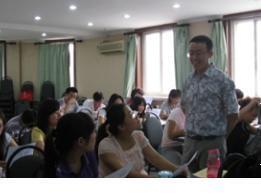
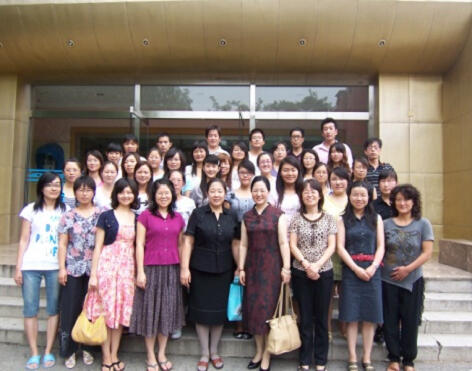
As Summer Fresh ended, the students and teachers and volunteeres all agreed, the goal of improving the English proficiency of the migrant teachers was achieved. In addition, teachers learned invaluable lessons in English teaching skills. But, perhaps most importantly, the entire class made new friends and have acquired a deeper grasp of English knowledge which we hope will make a difference in the lives of their migrant students.
Hero Image

All News button
1
The European Union's Lisbon Treaty : Assessment and Implications for the United States
-
Born in Tunis in 1957, Laurent Cohen-Tanugi is a Paris-based international lawyer, policy adviser and public intellectual.
A member of the Paris and New York Bars, his practice focuses on cross-border mergers and acquisitions, international arbitration, competition law, and policy advisory work. In the fall of 2007, he was appointed by the French government to lead a task force on the future of the European Union's Lisbon Strategy, ahead of the French Presidency of the EU ("Beyond Lisbon: A European Strategy For Globalisation", Peter Lang, 2008, www.euroworld2015.eu).
He was previously a partner of Skadden, Arps, Slate, Meagher & Flom LLP (2005-2007), Senior Vice President and General Counsel of Sanofi-Synthélabo, a European pharmaceutical group (2004), and a partner of Cleary, Gottlieb, Steen & Hamilton (1991-2003). In recent years, he was involved in substantial cross-border mergers such as Vivendi Universal, Sanofi-Aventis and Alcatel-Lucent.
Mr Cohen-Tanugi is an alumnus of the Ecole Normale Supérieure and holds an agrégation in French literature from the University of Paris and a degree from the Institute of Political Studies of Paris. He graduated from the University of Paris Law School in 1981 and received an LL.M. degree from the Harvard Law School in 1982.
He is the author of numerous influential books, including Le Droit sans l'Etat (PUF, 1985), a comparative essay on the French and American legal and political traditions, prefaced by Professor Stanley Hoffmann of Harvard University; La Métamorphose de la Démocratie (Odile Jacob, 1989), on the changes affecting the French and European democratic cultures since the late sixties; L'Europe en danger (Fayard, 1992), anticipating the current crisis of political Europe; Le Choix de l'Europe (Fayard, 1995), on the future of European unification, and Le Nouvel ordre numérique (Odile Jacob, 1999), a multi-disciplinary analysis of the communications and information technology revolution.
His latest English-language works include An Alliance At Risk, The United States And Europe After September 11 (Johns Hopkins University Press, September 2003), exploring the present state and future prospects of transatlantic relations, and The End of Europe? (Foreign Affairs, November/December 2005, Volume 84., No. 6), an analysis of the state of the EU following the French and Dutch rejections of the EU constitutional treaty, and most recently, The Shape of the World to Come, on the geopolitics of globalization (Columbia University Press, 2008), which will also be published in China.
Laurent Cohen-Tanugi is a regular columnist in French newspapers Les Echos and Le Monde, and lectures on a variety of subjects internationally. A director of Notre Europe, a think-tank founded by former EC Commission President Jacques Delors, he is actively involved in European policy-making. He is also a member of the French Academy of Technologies and a director of several think-tanks, including the Fondation pour l'innovation politique. A frequent consultant to the French government, he sat on the Commission on Judicial Reform set up by President Chirac in 1997, and on the Commission on the Intangible Economy set up by the French government in 2006. He is also a member of the Policy Advisory Council of the French-American Foundation.
Mr. Cohen-Tanugi taught a seminar in European affairs at the Ecole Normale Supérieure in Paris from 2005 to 2008 and will be teaching a course on Transatlantic Merger and Acquisitions at the Harvard Law School in the spring of 2009. Laurent Cohen-Tanugi is the advisor to the Polish government in preparation for his upcoming presidency of the EU in 2011.
Rm. 280A
Stanford Law School
Laurent Cohen-Tanugi
International Lawyer; Chair of the French government's "Europe and Globalization" Task Force
Speaker
Lectures
Green Growth Policy in Korea: Its Leading Role in Addressing Climate Change
-
Since President Lee Myung-bak introduced the "Green Growth" policy in 2008, Korea has actively advocated it in every aspect of the society as a new engine of growth. The Presidential Committee on Green Growth was created as a control tower of the policy developments and green industries were identified, and along the same line of efforts, the Basic Law on Green Growth was enacted. Korea, among the developing countries under the United Nations Framework on Climate Change (UNFCCC), was the first to volunteer to reduce emissions by 30 percent of anticipated BAU by 2020. It also initiated the East Asia Climate Partnership through which 200 million USD was pledged to assist developing countries in the region to cope with climate change. The Lee administration has revealed its ambitious plans to launch Global Green Growth Institute (GGGI) next year, which is presumed to play a catalyst role in inducing a low carbon economy. Furthermore, it is expected that Korea, as Chair of the G20 in 2010, will aggressively promote green finance and green technology.
Suh Yong Chung is Associate Professor in the Division of International Studies at Korea University and is an international expert on sustainable development law and policy. His research covers various emerging issues in the environment and sustainable development such as climate change, marine environment, and biodiversity both at global and regional level. His most recent works focus on internationalization of Green Growth policy, post-2010 climate change regime formation, and regional environmental institution building in Northeast Asia. He is a member of the Compliance Committee of the UN Basel Convention, and has participated in various activities of international organizations including the United Nations Industrial Development Organization (UNIDO), UNDP/GEF Yellow Sea Large Marine Ecosystem Project, UNEP’s Northwest Pacific Action Plan (NOWPAP), and United Nations Economic and Social Commission for Asia and Pacific (UNESCAP). He has also advised on international law and policy issues in Korea for the Presidential Committee on Green Growth, Ministry of Foreign Affairs and Trade, Ministry of Knowledge Economy, Ministry of Environment and the Organizing Committee of the 2012 Yeosu EXPO.
Suh Yong Chung holds degrees in law and international relations from Seoul National University, the London School of Economics and Stanford Law School. He was a researcher at Shorenstein APARC and has continuously been involved in its activities as the Secretary General of the Stanford APARC Forum in Korea.
Philippines Conference Room
Suh Yong Chung
Associate Professor, Division of International Studies, Korea University
Speaker
Seminars