-

Abstract: Steve Fetter worked in the White House Office of Science and Technology Policy during the first three and last two years of the Obama administration.  In the first period he played a role in the debates that defined the administration’s nuclear policy; in the latter period he participated in the final push to make progress on what became known as “the Prague agenda.”  He will discuss the key successes and failures in President Obama’s attempt to revise U.S. nuclear weapon policy and lessons that can be learned for a future administration that seeks to reduce nuclear risks. 


Bio: Steve Fetter is Associate Provost, Dean of the Graduate School, and Professor of Public Policy at the University of Maryland.  Service in the U.S. government includes five years at the White House Office of Science and Technology Policy, two years at the Department of Defense, and a year at the State Department.  He has been a visiting fellow at Stanford, Harvard, MIT, and Livermore and is a member of the National Academy of Sciences Committee on International Security and Arms Control.  Fetter holds a Ph.D. in energy and resources from Berkeley and a S.B. in physics from MIT.

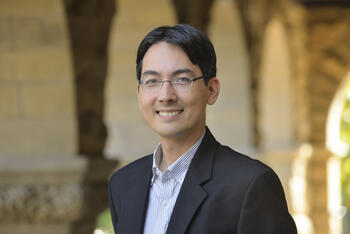
Steve Fetter Associate Provost, Dean of the Graduate School, and Professor of Public Policy University of Maryland
Seminars
-

Abstract: Revenge may not be a necessary condition for deterrence to operate, but it can certainly prove sufficient in many circumstances.  The psychology of revenge is implicitly embedded into the theory and practice of deterrence; it adds an important source of credibility to the threat of retaliatory strike. This discussion provides a deeper theoretical examination of the psychological nature of revenge, its situational triggers, and the implications for deterrence. This approach distinguishes revenge from other forms of retaliation often conflated with revenge, such as negative reciprocity, and highlights the importance of emotional cues such as anger and hatred as motivators.  This allows for greater clarification in understanding the psychological mechanisms that process information, regulate and trigger emotions, and provides a foundation for policymakers to determine the nature of the adversary they confront. We argue that the human psychology of revenge explains why and when policymakers readily commit to the otherwise seemingly ‘irrational’ retaliation that makes deterrence work. Counterintuitively, however, revenge is not motivated by the rational expectation of future deterrence; rather, it is driven by the intrinsic pleasure that one expects to experience upon striking back.  In other words, exacting revenge for perceived transgressions simply feels incredibly satisfying to most people. It is when revenge is sought for its own sake that its prospect can be such an effective deterrent to adversaries, and why it has evolved as such an effective psychological strategy.


Bio: Rose McDermott is the David and Mariana Fisher University Professor of International Relations at Brown University and a Fellow in the American Academy of Arts and Sciences.  She received her Ph.D.(Political Science) and M.A. (Experimental Social Psychology) from Stanford University and has taught at Cornell, UCSB  and Harvard. She has held fellowships at the Radcliffe Institute for Advanced Study, the Olin Institute for Strategic Studies and the Women and Public Policy Program, all at Harvard University. She has been a fellow at the Stanford Center for Advanced Studies in the Behavioral Sciences twice. She is the author of four books, a co-editor of two additional volumes, and author of over two hundred academic articles across a wide variety of disciplines encompassing topics such as experimentation, emotion and decision making, and the biological and genetic bases of political behavior.

Rose McDermott David and Marianna Fisher University Professor of International Relations Brown University
Seminars
-

Abstract:

Existing scholarship attributes various political and economic advantages to democratic governance. These advantages may make more democratic countries prone to financial crises. Democracy is characterized by constraints on executive authority, accountability through free and fair elections, protections for civil liberties, and large winning coalitions. These characteristics bring important benefits, but they can also have unintended consequences that increase the likelihood of financial instability and crises. Using data covering the past two centuries, I demonstrate a strong relationship between democracy and financial crisis onset: on average, democracies are about twice as likely to experience a crisis as autocracies. This is an empirical regularity that is robust across a wide range of model specifications and time periods.


Speaker Bio:

Image
phillip lipscy 3
Phillip Y. Lipscy (Stanford University) is Assistant Professor of Political Science and Thomas Rohlen Center Fellow at the Freeman Spogli Institute for International Studies.  His fields of research include international and comparative political economy, international organizations, and the politics of East Asia, particularly Japan.  Lipscy’s book from Cambridge University Press, Renegotiating the World Order: Institutional Change in International Relations, examines how countries seek greater international influence by reforming or creating international organizations.

Phillip Lispcy Assistant Professor of Political Science and Thomas Rohlen Center Fellow at the Freeman Spogli Institute for International Studies
Seminars
News Type
Q&As
Date
Paragraphs

Nancy Zhang is a Ford Dorsey Master's in International Policy (MIP) at Stanford University in the Class of 2019. She spent this past summer working on public sectore reform in Liberia for the World Bank's Development Impact Evaluation (DIME). Funding is made available to MIP students for 10-week summer internships with organizations that work on international policy issues.

Hero Image
1 k2 qormtymaazqqp3vtlpw
All News button
1
-

Abstract:

Is philanthropy, by its very nature, a threat to today’s democracy? Though we may laud wealthy individuals who give away their money for society’s benefit, Just Giving shows how such generosity not only isn’t the unassailable good we think it to be but might also undermine democratic values and set back aspirations of justice. Big philanthropy is often an exercise of power, the conversion of private assets into public influence. And it is a form of power that is largely unaccountable, often perpetual, and lavishly tax-advantaged. The affluent—and their foundations—reap vast benefits even as they influence policy without accountability. And small philanthropy, or ordinary charitable giving, can be problematic as well. Charity, it turns out, does surprisingly little to provide for those in need and sometimes worsens inequality.


Speaker Bio:

Image
rob reich
Rob Reich is professor of political science and, by courtesy, professor of philosophy and at the Graduate School of Education, at Stanford University. He is the director of the Center for Ethics in Society and faculty co-director of the Center on Philanthropy and Civil Society (publisher of the Stanford Social Innovation Review), both at Stanford University. Most recently, he is the author of the forthcoming book, Just Giving: Why Philanthropy is Failing Democracy and How It Can Do Better (Princeton University Press) and the recent Philanthropy in Democratic Societies (edited with Chiara Cordelli and Lucy Bernholz). His current work focuses on ethics and technology, and he is editing a new volume called Digital Technology and Democratic Theory (with Lucy Bernholz and Helene Landemore). He is the recipient of multiple teaching awards and is a board member of GiveWell.org and the magazine Boston Review.


Rob Reich Professor of Political Science Courtesy Appointments in Philosophy and at the Graduate School of Education
Seminars
-

Abstract:

Why do some dissident groups survive government repression while others get eliminated? This paper argues that a group's ideology conditions its organizational structure and underground organizing capacity, in turn affecting survival. Extreme groups tend to develop a compartmentalized structure and have militants skilled in underground organizing. Compartmentalization and underground organizing decrease the probability of capture, as well as mitigate the downstream effects of captures. Using a novel dataset of individuals on Pinochet's wanted lists and the victims of the dictatorship in Chile, this paper demonstrates that the rate of victimization of ultraleftists is significantly lower than that of more moderate but similarly targeted groups. Archival and interview data show that differences in survival are due to organizational structure and skills, and that these characteristics flow from ideology. In contrast to other research on repression, this study compares the intended-to-repress and repressed populations to better understand the heterogeneous effects of violence.


Speaker Bio:

Image
consuelo amat
Consuelo Amat is a Postdoctoral Research Fellow at the Center on Philanthropy and Civil Society (PACS) at Stanford University. Her research interests include state repression, armed and unarmed resistance, political violence, and the development of civil society in authoritarian regimes, with a focus on Latin America. Consuelo received her Ph.D. in Political Science with distinction from Yale University. She also holds an M.A. in Conflict Resolution from Georgetown University. During the 2017-2018 academic year Consuelo was a United States Institute of Peace Jennings Randolph Peace Scholar. Before starting graduate school she worked at the Brookings Institution, the International Center on Nonviolent Conflict, Peace Action West, and Human Rights Watch.

Consuelo Amat Postdoctoral Research Fellow at the Center on Philanthropy and Civil Society (PACS) at Stanford University.
-

Abstract:

Three years after the Sustainable Development Goals were adopted, it's already clear we will fall short on our current trajectory. Global challenges are getting more complex, and the fast pace of change is disrupting the status quo faster than we can adapt. Bridging this gap will require a fresh mindset. Rather than rigid programs, we need to embrace risk and accelerate learning in order to create more cost-effective and scaleable solutions. It's time to bring the best practices for innovation that have underpinned Silicon Valley's success to global development.


Speaker Bio:

Image
annmei pink square

Ann Mei Chang is a leading expert on social innovation the author of Lean Impact: How to Innovate for Radically Greater Social Good (Wiley, Oct 2018). Previously, she served as the Chief Innovation Officer at both USAID and Mercy Corps. Prior to her pivot to social good, Ann Mei was a seasoned Silicon Valley executive, with more than 20 years experience at such leading companies as Google, Apple, and Intuit, as well as a number of startups.

Ann Mei Chang Author: Lean Impact: How to Innovate for Radically Greater Social Good
Seminars
-

Abstract:

Influential theories indicate concern that campaign donors exert outsized political influence. However, little data documents what donors actually want from government; and existing research largely neglects donors' views on individual issues. We argue there should be significant heterogeneity by party and policy domain in how donors' views diverge from citizens'. We support this argument with the largest survey of U.S. partisan donors to date, including an over sample of the largest donors. We show that Republican donors are much more conservative than Republican citizens on economic issues, whereas their views are similar on social issues. By contrast, Democratic donors are much more liberal than Democratic citizens on social issues, whereas their views are more similar on economic issues. Both parties' donors are more pro-globalism than their citizen counterparts. We replicate these patterns in an independent dataset. These patterns can help inform significant debates about representation, inequality, and populism in American politics.

Speaker Bio:

Image
neil malhorta
Neil Malhotra is the Edith M. Cornell Professor of Political Economy in the Graduate School of Business at Stanford University. He also holds a courtesy appointment in the Department of Political Science. He serves as the Louise and Claude N. Rosenberg, Jr. Co-Director of the Center for Social Innovation at the Stanford GSB.

He has authored over 60 articles on numerous topics including American politics, political behavior, and survey methodology. His research has been published in the American Political Science Review, the American Journal of Political Science, the Journal of Politics, Science, and the Proceedings of the National Academy of Sciences, among other outlets. He currently serves as an Associate Editor of Public Opinion Quarterly and the Journal of Experimental Political Science.

He received his MA and PhD in political science from Stanford University, where he was the Melvin & Joan Lane Stanford Graduate Fellow. He received a BA in economics from Yale University.


Neil Malhotra Professor of Political Economy at the Stanford Graduate School of Business
Seminars
Paragraphs

On November 1-2, 2018, the two-day conference "Future Visions: Opportunities and Challenges of Korean Studies in North America" was convened by Shorenstein APARC's Korea Program to examine the current state of Korean studies and consider the current challenges and opportunities. This report summarizes the discussions of the six panels on history, literature, the social sciences, language education, library collections and services, and the Korean Wave.

All Publications button
1
Publication Date
Authors
Noa Ronkin
News Type
News
Date
Paragraphs

While Americans may be well acquainted with China’s quest for influence through the projection of power in the diplomatic, economic, and military spheres, they are less aware of the various ways in which Beijing has more recently been exerting cultural and informational influence. According to a new report, some of these ways challenge and even undermine our democratic processes, norms, and institutions.

With a growing realization that the ambition of Chinese influence operations requires far greater scrutiny than it has been getting, a group of American scholars and policy practitioners set out to document the extent of China’s influence-seeking activities in American society. The working group, co-chaired by Larry Diamond, senior fellow at the Freeman Spogli Institute for International Studies and at the Hoover Institution, and Orville Schell, Arthur Ross director of the Asia Society’s Center on U.S.-China Relations, just released its findings and recommendations in a report that has drawn much attention, “Chinese Influence and American Interests: Promoting Constructive Vigilance.” On December 4, Diamond and Schell discussed the report’s findings and implications at a special roundtable organized by Shorenstein APARC’s U.S.-Asia Security Initiative (USASI).

Diamond and Schell described the report’s detailing of a range of assertive and opaque “sharp power” activities that China has stepped up within the United States in multiple sectors, including Congress, state and local government, universities, think tanks, media, corporations, technology and research, and the Chinese American community. These activities, they argue, penetrate deeply the social and political fabric of our democratic society and exploit its openness. Unlike legitimate “soft power” efforts within the realm of normal public diplomacy, they constitute improper interference that demands greater awareness and a calibrated response.

“The report was born out of a recognition that things have changed,” said Schell. “Our engagement with China has either failed or is teetering on the brink of failure. The report aims to put the question of our interaction and exchange with China within the context of policy.”

Diamond noted that “The question at least has to be asked whether there is a threat to U.S. national interests.” He emphasized that the members of the working group that produced the report seek a productive relationship between China and the United States. The report therefore advocates for perspective and framework that are built on three principles regarding U.S.-China relations: transparency, institutional integrity, and reciprocity.

Diamond and Schell were joined at the panel by Hwang Ji-Jen, a Taiwanese scholar in the Institute for East Asian Studies at the University of California - Berkeley, who helped situate the forms and effects of Chinese “sharp power” in the United States in comparison to its practice in and toward Taiwan. Karl Eikenberry, director of USASI, chaired the discussion.

The event was co-sponsored by the US-Asia Security Initiative in the Asia-Pacific Research Center, and FSI’s Center on Democracy, Development, and the Rule of Law.

Audio from the event is available for download or streaming:


Hero Image
Larry Diamond, Orville Schell, and Karl Eikenberry speak to audience members during 12/4 panel on China's Sharp Power
(Left to right) Larry Diamond, Orville Schell, and Karl Eikenberry speak to audience members during 12/4 panel on China's Sharp Power | Noa Ronkin, APARC
All News button
1
Subscribe to The Americas