Authors
News Type
Commentary
Date
Paragraphs

The Trump administration’s proposal for trilateral arms control negotiations appears to be gaining little traction in Moscow and Beijing, and the era of traditional nuclear arms control may be coming to an end just as new challenges emerge. This is not to say that arms control should be an end in it itself. It provides a tool that, along with the right combination of deterrence and defense forces and proper doctrine, can enhance U.S. and allied security and promote stability.

Applying that tool will require overcoming a variety of challenges, not just regarding nuclear weapons but related issues, such as missile defense and conventional strike systems. Policymakers face some hard choices.

NUCLEAR ARMS

In August 2019, the United States withdrew from the 1987 Intermediate-range Nuclear Forces (INF) Treaty following Russia’s violation. (More broadly, Moscow’s selective compliance with arms control agreements poses a problem.) The 2010 New Strategic Arms Reduction Treaty (New START) remains as the sole agreement constraining U.S. and Russian nuclear weapons. New START expires in February 2021, but can be extended for up to five years.

For the United States, New START extension should be a no-brainer. Russia is in compliance with the treaty. Extension would continue limits on Russian strategic forces, as well as the flow of information on those forces provided by the treaty’s verification measures, until 2026. Extension would not require that the Pentagon change its strategic modernization plans, as those plans were designed to fit within New START’s limits.

Moscow has offered to extend New START, but the Trump administration has been reluctant. In 2017, U.S. officials said that, before considering the extension issue, they wanted to: 1) see if Russia met the New START limits, which took full effect in February 2018, and 2) complete the nuclear posture review, which was released the same month. Two years later, however, the administration still lacks a position on extension.

Instead, President Trump has set an unachievable objective — a trilateral negotiation with China and Russia covering all their nuclear arms. As I recently wrote in more detail, Chinese officials have repeatedly said no to such a negotiation, citing the large difference in nuclear weapons levels. The Trump administration thus far has offered nothing to entice Beijing to change its position.

Moreover, almost a year after the president set his goal, his administration has yet to offer a proposal — or even an outline — for what such a negotiation would seek to achieve. Neither Washington nor Moscow is ready to agree to have the same number of nuclear weapons as China, but it is unrealistic to think that Beijing would accept unequal limits.

Setting aside China, Russia is not ready to discuss all nuclear arms unless certain conditions are met (more on that below). The Obama administration sought a new negotiation after New START’s conclusion with the goal of including all U.S. and Russian nuclear weapons. That idea never gained traction in Moscow.

If New START expires in 2021, the United States and Russia likely would not launch major new build-ups, as both face real defense budget constraints. But their deployed strategic warhead levels could “creep up” above the number allowed by New START if the sides add warheads to intercontinental ballistic missiles (ICBMs) and/or submarine-launched ballistic missiles (SLBMs) that currently carry fewer warheads than their capacity. With the demise of New START’s verification regime, the sides would have little visibility into the other’s actions regarding adding warheads or total warhead numbers.

Some appear to believe that holding back on agreeing to the extension of New START and/or starting from scratch in a new negotiation might increase U.S. leverage to include all nuclear arms, including non-strategic nuclear weapons. That does not appear to be the case. It is more likely that the end of New START’s constraints on deployed strategic weapons would make bringing non-strategic or non-deployed nuclear weapons under control more difficult.

MISSILE DEFENSE

Russian conditions for discussing a broader agreement focus first on missile defense. Differences over missile defense pose a challenge for arms control.

Current U.S. missile defenses hardly constitute a threat to Russian ICBM and SLBM warhead numbers. Moscow, however, has long seemed to fear the potential of U.S. technology and prospective missile defenses. The United States and Russia came close in spring 2011 to an arrangement on a cooperative missile defense for Europe, but they failed to reach agreement, after which the Russian position on limiting missile defenses hardened. Moscow showed no interest in a 2013 U.S. proposal for an executive agreement on missile defense transparency, under which the sides would have exchanged information each year on their current missile defense numbers and prospective numbers looking out each year for 10 years.

Moscow appears to want legally-binding limits on missile defenses. However, the Trump administration’s 2019 missile defense posture review stressed that there should be no negotiated limits on missile defense. Missile defense has a strong constituency in the U.S. Senate, impeding the chance that a treaty limiting missile defenses would get the necessary two-thirds approval.

The missile defense issue will become more complex in coming years. As part of its ground-based mid-course defense, the U.S. military maintains 44 ground-based interceptors in Alaska and California capable of intercepting strategic ballistic missile warheads, with another 20 interceptors planned. In a separate program, the Pentagon is now developing a new variant of the SM-3 missile interceptor. Whereas current variants (the SM-3 IA and SM-3 IB) can engage intermediate-range ballistic missile warheads, the Pentagon intends to test the new SM-3 IIA variant against an ICBM warhead.

If the SM-3 IIA proves capable of intercepting strategic ballistic missile warheads, that will raise concern in Moscow (and Beijing) about the proliferation of those interceptors on U.S. warships, at Aegis Ashore sites in Romania and Poland, and elsewhere. Russia’s interest in limits on missile defenses would only intensify as would Moscow’s linkage of future nuclear arms reduction negotiations to a negotiation on missile defense.

LONG-RANGE PRECISION-GUIDED CONVENTIONAL STRIKE

Sea-launched cruise missiles (SLCMs) and air-launched cruise missiles (ALCMs) carrying conventional warheads have never been constrained by arms control agreements. As their precision has increased, Russian officials and experts have expressed concern that they could destroy targets that previously would have required a nuclear weapon and that the United States might consider a “conventional strategic” attack on Russia. It is unclear how realistic this concern is; would, for example, a conventionally-armed U.S. SLCM warhead be powerful enough to disable a hardened Russian ICBM silo?

Russian officials in 2011 began linking long-range precision-guided conventional strike systems to the issue of further nuclear arms cuts. The Pentagon has shown little enthusiasm for limits on these conventional systems, which are a key component of U.S. power projection capabilities. Russia may be starting to catch up, having demonstrated conventionally-armed ALCMs and SLCMs in Syria, but the U.S. military holds a significant numerical advantage.

As with missile defense, the situation with conventional strike may become even more complex. With the demise of the INF Treaty, the Pentagon is now developing or planning several conventionally-armed ground-launched missiles that would have been prohibited by the treaty. Two missiles — the Precision Strike Missile with a possible range of 700 kilometers and a ground-launched cruise missile with a range of 1,000 kilometers — almost certainly are being developed with European contingencies in mind. The Pentagon’s planned ballistic missile with a range of 3,000-4,000 kilometers is intended for the Asia-Pacific region, primarily as a counter to the large number of Chinese intermediate-range missiles (most of which are believed to be conventionally-armed).

Developing and deploying these U.S. missiles — along with Russia’s continued deployment of the 9M729 intermediate-range ground-launched cruise missile plus other missiles that Russia may develop and deploy as “counters” to new U.S. missiles — would further complicate the long-range precision-guide conventional strike picture. That, if in turn linked to nuclear arms control, would impede negotiation of a new agreement reducing and limiting nuclear weapons.

HYPERSONIC, CYBER, AND SPACE

Hypersonic weapons pose another complex factor for arms controllers. Both the United States and Russia (as well as China) are developing hypersonic weapons, including hypersonic glide vehicles to mount on ballistic missiles and hypersonic cruise missiles. Russia has deployed a small number of Avangard hypersonic glide vehicles atop ICBMs to enhance their ability to overcome U.S. missile defenses. Those fall under New START’s limits, but future hypersonic weapons, such as Russia’s Kinzhal air-launched ballistic missile, do not.

A negotiation to limit nuclear arms or long-range precision-guided conventional strike systems would have to take account of hypersonic weapons. That could be difficult, as the United States, Russia, and China appear to be focusing on different types of hypersonic systems.

Cyber and space domains can also have important effects on the nuclear arms relationship. Cyber raises concern about the possibility that a side’s nuclear command, control, and communication systems might be compromised in ways that would allow an intruder either to disrupt communications, including an authorized launch order, or to spoof the system with an unauthorized instruction. The cyber domain does not lend itself readily to traditional arms control-type arrangements.

As for space, Moscow has long advanced proposals to ban the weaponization or militarization of space. Washington has resisted those proposals, in part out of concern that they might affect the ability of the U.S. military to operate space-based assets for command and control, early warning, and intelligence, surveillance, and reconnaissance purposes. It is unclear whether more limited proposals, such as a ban on anti-satellite tests that generate orbital debris or a ban on deploying strike weapons in space, might be negotiable.

DIFFICULT TRADE-OFFS

Traditional nuclear arms control is in trouble. If the United States and Russia — and perhaps other countries in the future — wish to continue to use it as a tool to promote a more stable, secure, and transparent nuclear relationship, they will have to deal with challenges that did not arise or that they could agree to set aside during past negotiations.

Washington faces a fundamental choice: Is it prepared to countenance some constraints on missile defense and possibly long-range precision-guided conventional strike systems in order to get Russia to agree to further reduce and limit nuclear arms, including non-strategic nuclear weapons? Moscow faces something of the reverse choice: Will it hold to its insistence on limiting missile defenses and conventional strike systems even if that blocks a future nuclear arms agreement with the United States?

There remains the question of China, and Russia almost certainly would seek to include Britain and France. Would those third countries be willing to consider an approach other than a full negotiation with the United States and Russia, perhaps by offering a degree of transparency regarding their nuclear forces and committing unilaterally not to increase their nuclear weapons numbers so long as U.S. and Russian nuclear forces were reducing?

It would make sense for U.S. and Russian officials to conduct regular, intense bilateral strategic stability talks on the full range of issues — nuclear arms, missile defense, conventional strike systems, hypersonic weapons, third-country nuclear forces, cyber, and space — and their various interactions. Such discussions, if they go beyond mere recital of talking points, might allay some concerns the sides hold about the other while helping U.S. and Russian officials to decide whether specific negotiations might make sense.

None of these questions will be easy, and sorting them out will take time. That bolsters the already strong argument for extending New START. Doing so would give Washington and Moscow five more years to figure out what role, if any, arms control should play in managing their nuclear relationship with one another and, perhaps, with third countries.


Originally for Brookings


Hero Image
screen shot 2020 03 23 at 11 01 19 am
All News button
1
Paragraphs

“Populism” has claimed enormous amounts of popular and press attention, with the Brexit vote of 2016, the election of President Donald J. Trump, and the rise of self-proclaimed populists in Europe and elsewhere. But what exactly is populism? And is populism in Poland the same phenomenon as in the United States? Does populism have the same set of universal causes, or are there many paths to populist resurgence?

“Global Populisms and Their Challenges” finds that established mainstream political parties are the key enablers of populist challenges—and the key solution.

Learn more about the white paper and download it here.

All Publications button
1
Publication Type
White Papers
Publication Date
Authors
Anna Grzymała-Busse
Didi Kuo
Francis Fukuyama
Michael A. McFaul
News Type
Q&As
Date
Paragraphs

This article was originally published in Stanford News 

By Melissa DeWitte

The rise of populism – a political argument that pits ordinary people against a corrupt, government elite – is putting democracy at risk, said Stanford scholars in a new white paper released March 11.

When populist leaders discredit formal institutions and functions, democracy is being undermined and hollowed out, warns Stanford political scientist and paper co-author Anna Grzymala-Busse.

Here, Grzymala-Busse discusses what is at stake for democracies worldwide if populist rhetoric continues to take hold. As Grzymala-Busse points out, populists’ grievances about government failures are not entirely baseless. That’s why Grzymala-Busse and the paper’s co-authors – who include director of the Freeman Spogli Institute for International Studies (FSI) Michael McFaul, a former U.S. ambassador to Russia, and political scientists Francis Fukuyama and Didi Kuo – argue that populism is a political problem that requires political solutions.

Their paper, Global Populisms and Their Challenges, released Mar. 11 through the Freeman Spogli Institute for International Studies (FSI), outlines what mainstream political parties must do to protect democracies from populists, including strategies such as reclaiming the rule of law and upholding democratic norms and values.

Why do some politicians find populist arguments so appealing?

Populism argues that elites are corrupt and the people need better representation, but makes very few policy commitments beyond this criticism. There’s been increasing distrust regarding political parties and politicians, especially given various funding and election scandals. And so people readily believe that these actors are corrupt and not to be trusted.

It is a message that is credible these days. It is also a message that doesn’t tie politicians down to any other ideological or policy commitment.

Why is populism on the rise?

The immediate causes are the failures of mainstream political parties – parties of the center-left and center-right – to meet voter concerns and respond with distinct policies. In both Europe and in the United States, many voters who support populists want a change from politics as usual, which they view as unresponsive and unaccountable, and who fear losing cultural and economic status. They perceive that politicians have failed to respond to immigration, free trade, international cooperation, and technological advances and the threats they pose to many voters.

According to your research, what makes populist rhetoric detrimental to democratic governance?

Populist politicians and governments view the formal institutions of liberal democracy as corrupt creations spawned by crooked establishment elites – and so they systematically hollow out and undermine these institutions, such as the courts, regulatory agencies, intelligence services, the press, and so on. They justify these attacks as replacing discredited and corrupt institutions with ones that serves “the people” – or, in other words, populist parties and politicians. Moreover, precisely because populists claim to represent “the people,” they have to define the people first and that often means excluding vulnerable and marginalized populations, such as religious or ethnic minorities and immigrants.

For example, in Hungary, the governing populist party brought the courts under political control, abolished regulatory agencies, and funneled funding to allied newspapers and media. In Poland, the chair of the governing populist party refers to his opponents as a “worse sort of Poles.”

In the short term, what can be done to counter the effects of populism?

Vote! Vote for politicians and parties who make credible promises, who do not simply want to shut down criticism or who view their opponents as their enemies, and who are committed to the democratic rules of the game. At the same time, we need to understand, not just condemn, why so many voters find populist politicians appealing.

And in the long term?

Mainstream political parties need to credibly differentiate themselves, become far more responsive to their voters and consistently articulate and uphold the democratic rules of the game. Our research finds that where mainstream political parties are strong, populists stand far less of a chance of making inroads. Such parties would also be far more responsive to voter concerns about economic and cultural status, which also motivate populist support.

Some of the paper’s findings are from Global Populisms, a project sponsored by the Hewlett Foundation at FSI’s Center on Democracy, Development and the Rule of Law (CCDRL).

Hero Image
populism getty cropped
Photo: Getty Images
All News button
1
Authors
News Type
News
Date
Paragraphs

Once associated with Latin American and post-communist democracies, populist parties and politicians have now gained support and power in established democracies. Freeman Spogli Institute for International Studies (FSI) experts Anna Grzymala-Busse, Didi Kuo, and Francis Fukuyama — co-authors of a new white paper, “Global Populisms and Their Challenges” — joined FSI Director Michael McFaul on the World Class podcast to discuss how to spot a populist, how populism threatens democracy, and whether the movement can be stopped. 

Populists and populist parties are a threat to liberal democracy, and they generally make two claims: first, that the elites are corrupt and self-serving, and that the will of the people has to be better represented; and second, that those who disagree with the populist representation of “the people” are not the “real” nation, Grzymala-Busse said.

[Read the full report “Global Populisms and Their Challenges”]

“It’s very much a criticism of democracy,” she told McFaul, who is also a co-author of the report. “It doesn’t call for specific sets of solutions for institutions — it can be anti- or pro-democractic, but fundamentally it’s a criticism of how liberal democracy functions.” 

A common practice among right-wing populists is to define the “people” as a dominant ethnic group, and to exclude groups such as ethnic or religious minorities, immigrants, or marginalized economic groups, Fukuyama pointed out, and added that populists on the left tend to not make that kind of distinction. 

Populist leaders have typically used democratic institutions as a means to come to power, Kuo said.

“It’s a two-step process,” Kuo explained. “Once [populist leaders] are in power, they go after the liberal foundations of democracy and potentially the democratic institutions themselves.”

For example, a leader like Russia’s Vladimir Putin — who does not criticize the elite and who is not functioning in a democracy — would not be considered a populist, said Grzymala-Busse. However, people like U.S. President Donald Trump, French politician Marine Le Pen, and Italy’s Matteo Salvini would be.

[Get stories like this delivered to your inbox by signing up for FSI email alerts]

Immigration and globalization have contributed to the rise of populism, said Fukuyama, who pointed to the 2014 Syrian migrant crisis as a trigger in Europe.

“All of a sudden a million non-white, non-European people show up in a part of the world that’s not used to this sort of thing,” Fukuyama said. “It produced what the right calls ‘cultural replacement.’ This is language that you hear in the U.S. from Donald Trump and his supporters — I think it’s something that binds a lot of these groups together.”

While all three experts were not optimistic that the populist wave will be stopped in America in the near future, voters in European countries such as Slovakia and Croatia have been pushing for anti-corruption, anti-populist candidates, they said.

“Parties of the left have to figure out how to capture the symbolism around the nation — people want to belong to a community, and over the last 30 years, the left has fractured into a lot of different, partial identities,” said Fukuyama. “The idea that you have a broader democratic civic identity that all Americans share is important culturally to give people the idea that they’re actually living in the same community.” 

Related: Learn more about FSI’s Global Populisms Project

Hero Image
populisms cropped
FSI experts Anna Grzymala-Busse, Didi Kuo, and Francis Fukuyama joined host Michael McFaul on the World Class podcast to discuss the rise of global populism and its threats to democracy. Photo: Alice Wenner
All News button
1
Authors
News Type
Commentary
Date
Paragraphs

Senior Trump administration officials reportedly will meet the week of March 9 to decide on withdrawing from the 1992 Open Skies Treaty. Doing so would constitute another mistake by an administration that increasingly seems set against arms control.

Originally proposed by President Dwight Eisenhower in 1955—but rejected by the Soviet Union—the Open Skies idea was revived by President George H. W. Bush in 1989 as a confidence-building measure to promote greater transparency regarding military installations, forces and activities. The Open Skies Treaty permits state parties to conduct unarmed observation flights over other state parties. It entered into force in 2002 and currently has thirty-four state parties—the United States, Canada, Russia, Kazakhstan and thirty other countries in Europe. All total, they have conducted more than fifteen hundred observation overflights.

For each state party or group of state parties, the treaty specifies an active quota, the number of observation overflights it may conduct per year, and a passive quota, the number of overflights it must accept. Observation aircraft can carry video and still cameras, infrared line scanners and synthetic aperture radars, though the capabilities of the equipment (e.g., resolution) are limited. When an Open Skies aircraft conducts an overflight, officials of the observed state party get to inspect the aircraft to ensure that it is carrying only permitted equipment and fly onboard.

Criticism of Open Skies

In October 2019, President Donald Trump reportedly signed a memorandum regarding his intention to withdraw from the Open Skies Treaty. The following month, U.S. officials briefed NATO on U.S. concerns and warned that the United States would probably leave the treaty. Treaty critics seem to have three principal concerns.

First, critics note that Russia has violated the treaty. Moscow restricts the distance that observation flights can fly over the exclave of Kaliningrad and bars flights along the Russian border with the Georgian-breakaway regions of South Ossetia and Abkhazia. The treaty limits flights near borders with non-state parties and the Russians argue that South Ossetia and Abkhazia are independent nations, a position few other countries recognize.

In response to the Russian violation, the United States has imposed roughly reciprocal limitations on Russian flights over U.S. territory, restricting, for example, overflights of Hawaii. Russia has violated the treaty, but Washington has responded proportionately within the treaty.

Second, opponents of the Open Skies Treaty argue that, over the past thirty years, commercial satellites have developed capabilities, such as camera resolution, similar to or better than the equipment carried on Open Skies aircraft. They assert that makes observation flights unnecessary and redundant.

Aircraft, however, are more flexible than satellites, which fly in fixed orbits. Moreover, aircraft can fly below cloud cover that can obscure photography taken from space.

Third, critics express concern that the Russians use observation flights to gather information on U.S. infrastructure as well as military facilities and activities. But how much of a threat is this? Critics seem to ignore the fact that, much like the United States, Russia operates imagery satellites whose capabilities are equal to or better than those permitted on Open Skies aircraft.

Advantages of Open Skies

U.S. withdrawal from the Open Skies Treaty would mean forgoing a number of advantages. First, Open Skies imagery and other data can be used in ways that U.S. satellite imagery, which is highly classified, cannot. U.S. officials explained publicly only in November 2018 the basis for their 2014 assessment that Russia had violated the 1987 Intermediate-range Nuclear Forces Treaty by testing a prohibited cruise missile. Satellite imagery almost certainly figured in that assessment, but that imagery remains closely held because the U.S. government wants to protect the capabilities of its satellites. Open Skies data, on the other hand, could readily be used to demonstrate a violation of an agreement or some threatening military activity.

Second, the United States conducts far more overflights of Russia and Belarus (the two are paired as a group of state parties) than vice-versa. According to the Department of State, during the first fifteen years of the treaty’s operation, the United States made 196 observation flights over Russia and Belarus while Russia/Belarus made just seventy-one flights over U.S. territory. Moreover, U.S. allies conducted five hundred other flights over Russia and Belarus.

Third, few countries possess the sophisticated space-based reconnaissance capabilities that the United States and Russia have. The treaty allows other states parties to conduct overflights and directly gather confidence-building data. U.S. allies value Open Skies; a number, including Germany, France and Britain, have urged Washington to remain within the treaty.

Fourth, Open Skies can provide a particularly useful tool in times or regions of crisis. Russian and Russian proxy forces have been in conflict with Ukrainian forces in the Donbas region since spring 2014. The United States has targeted observation flights—sometimes in cooperation with Ukraine—at Donbas and Russian territory bordering Donbas. These overflights not only gather data but send a signal of U.S. political support to Ukraine.

U.S. Withdrawal?

Should Trump unwisely decide to withdraw from the treaty, it could mean the treaty’s end. With Russia no longer having the possibility of flights over the United States, it might also withdraw. That would likely provide the death knell for the treaty; with just NATO members and a few neutral states remaining in the agreement, what would be the point? Alternatively, Moscow could choose to remain in the treaty, which would highlight the U.S. absence (and allow Russian overflights to continue over American military facilities and activities in Europe).

In either case, political blame would fall on the United States. Given allied support for continuing the treaty, a U.S. withdrawal would be seen in Europe as one more instance where Washington ignored the views of its NATO partners.

Withdrawal would constitute yet another blow to arms control inflicted by the Trump administration. It left the Joint Comprehensive Plan of Action regarding Iran. It refused to seek ratification of the Comprehensive Test Ban Treaty (even though it seems to see no reason for nuclear testing). It eschewed political and military steps that would have increased pressure on Russia to return to compliance with the INF Treaty. It so far refuses Moscow’s offer to extend the 2010 New Strategic Arms Reduction Treaty, which expires in eleven months.

Trump over the past year has said that he wants to go big on arms control and negotiate an agreement with Russia and China covering all types of nuclear arms, but his administration has yet to offer a proposal or even an outline for doing so. A decision to withdraw from the Open Skies Treaty would provide the latest evidence that he sees little point in arms control.

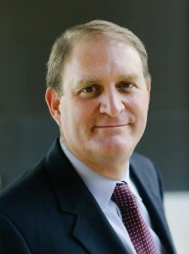
Steven Pifer is a William Perry Research Fellow at Stanford’s Center for International Security and Cooperation. 


Originally for The National Interest

Hero Image
2020 03 03t004549z 1216982861 rc20cf9o2xwq rtrmadp 3 usa election trump jpg
All News button
1
Authors
Michael A. McFaul
News Type
News
Date
Paragraphs

This is part six of six in which Director Michael McFaul talks about his vision for the Freeman Spogli Institute for International Studies, the accomplishments he's most proud of so far, and why he keeps returning to the Farm.

I came here as a 17-year-old kid, and I've ventured off many times, but I always come back. Stanford has been central to every aspect of my life. It's where I live. It's where I met my wife, it's where my kids were born. It's my employment, and my entertainment (I have Stanford season tickets to basketball and football). I see performances at the Bing Center and I'm also the Bing Senior Fellow at the Hoover Institution. I'm deeply intertwined and connected to this place in all kinds of ways.

And it’s for a reason. Yes, I've been offered deanships. I've been offered endowed professorships and other jobs in government that I turned down. Who knows, maybe I'll go do another government job sometime in the future. But I know that Stanford will always be my base, and FSI is a core part of that base.

It will be my base because I enjoy and appreciate being in a place that values science. We don't argue whether two plus two equals four. We are all committed to that cause. That is a good base for me as I venture out into other domains, and policy arenas and places where that's not always the case. I like the fact that I can come back to a place where data, evidence, the scientific method matters all the time, every day of the week.

But the central reason I decided to sign up for another five-year term as director at FSI is because I want to learn. I'm not done learning. It's always been my working hypothesis that leading a diverse place like FSI gives me a wonderful way to diversify my intellectual and policy interests, much more so than if I was solely a professor in political science teaching courses about US-Russia relations. And people respond to my emails. They may not respond to my emails if I wasn’t the director of FSI. I'm joking, of course. But when I say, "Hey, I want to learn more about high tech in China," I usually hear back. It’s a great privilege to be a part of an intellectual community that I want to learn from.

And I don't just mean the faculty here, by the way. I don't have to teach anymore because of my other administrative responsibilities. I always teach at least one course a year because teaching is one of those spaces, especially a seminar, where I'm learning all the time. I almost never teach the same course more than two years in a row. We have some of the smartest students on the planet, wouldn't you want to interact with them to learn? I most certainly learn from them.

Lastly, at this stage in my life, the balance of what I do has shifted in ways that calls on me to be a translator, as being somebody that can find ideas, understand, read, research and then try to communicate those insights to the outside world. Be it in Washington meeting with senior officials, or on television where I'm reaching millions, or Twitter where I'm reaching hundreds of thousands.

I see my role as being somebody who can be a bridge between theory and practice. FSI is committed to that cause. It’s therefore a great platform for me to try to continue to do that with the years, and hopefully decades, I have ahead of me here as a professor at Stanford.

Read part one in this series, Showing Up at Stanford, or return to the Meet the Director page.

Hero Image
Michael McFaul sitting in Memorial Church
Michael McFaul, director of the Freeman Spogli Institute, discusses "What Matters to Me and Why" with Sughra Ahmed, Stanford’s associate dean for religious life. | Alice Wenner
All News button
1
Authors
Michael A. McFaul
News Type
News
Date
Paragraphs

This is part five of six in which Director Michael McFaul talks about his vision for the Freeman Spogli Institute for International Studies, the accomplishments he's most proud of so far, and why he keeps returning to the Farm.

The students we teach today in our two undergraduate honors programs and Master’s in International Policy program will go on to shape policy throughout their careers, in countries across the globe. We’ve already produced real superstars. These students have gone on to become Rhodes Scholars, Marshall, Fulbright and Schwarzman Scholars and serve at the highest levels of government and industry.


Over the last five years we have completely transformed the master’s program. More people applied for the 40 spots than ever before, and we have incredible candidates. The Freeman Spogli Institute for International Studies looks and functions like a school, but it’s actually not a school. While we partner with the school of Humanities and Sciences to offer a Master’s degree, we have taken a leadership position with it, and I believe it’s now the best program out there for studying international policy.

There is already a tremendous need for policy professionals in all sectors of the workforce, not just government jobs, and because of our in-house expertise we are uniquely positioned to train the next generation of policy leaders – through our master’s and honors programs, the dozens of courses taught by FSI faculty each year, and the opportunities for mentored student research and internships in international policy that we offer.

Our master’s students are already enjoying a beautiful new academic space and lounge in Encina Hall. One of my next goals is to ensure every new student in the master’s program is guaranteed two years of financial aid. This is a place where students, both undergraduate and graduate, can find a way to connect to a broad range of global opportunities, while in school and well beyond through our growing alumni network.

Read part six in this series, Stanford in My Future or return to the Meet the Director page.

Hero Image
mip grad 2019   throwing hatsweb
Ford Dorsey Master’s in International Policy students celebrate their graduation on the front steps of Encina Hall June 16, 2019. Photo: Meghan Moura
All News button
1
Authors
Michael A. McFaul
News Type
News
Date
Paragraphs

This is part four of six in which Director Michael McFaul talks about his vision for the Freeman Spogli Institute for International Studies, the accomplishments he's most proud of so far, and why he keeps returning to the Farm.

FSI isn’t the world’s largest policy think tank but we offer a generous home, not just to our community but to some of the foremost experts on international affairs in the world today. I don’t think people realize just how big, and how much intellectual firepower we have. There are over 50 tenured faculty here, 150 researchers, and about $50 million in annual revenue, and all those numbers continue to grow.

My friends in D.C. should know that FSI is a premier policy institute comparable to any of the biggest think tanks in Washington, but we’re actually much more diverse in terms of the topics we tackle – we have people working on global health, cyber policy, food security and the environment, in addition to regional focuses, democracy development and rule of law, and many others. And actively training the policy makers of the future is a core part of our mission.

Of course, when it comes to policy impact it’s about implementation. It's not good enough to have an idea about policy. You've got to find somebody in the policy world that might be interested in listening to you. Then they have to try to implement it in what we recognize is a very complex policy environment.

In the next five years, as I move forward, we’ll pursue a diversified strategy for how we push our ideas into the policy world. There are multiple modalities for doing that. Sometimes it means being on TV, sometime it means joining the government. When FSI people join the government, they take all their intellectual ideas with them when they show up at the Pentagon, or the White House or the State Department.

But in between those two extremes, one being very ephemeral and one being much more concrete, there are all kinds of different ways of trying to shape the policy environment. I want to make sure that we're focused on policy makers, but also societal attitudes more broadly. I think it needs to be both, and we will not achieve progress on our policy goals if we don't have a multi-pronged approach.

There is a benefit to studying policy here at Stanford – it affords us a unique perspective because of the distance from D.C., and allows us to take a longer view on current world affairs. We’re now building the bridges to ensure our research will flow naturally to policy professionals wherever they are in the world.

Read part five in this series, Impact Through Education, or return to the Meet the Director page.

Hero Image
miketestifying cropped
All News button
1
Authors
Michael A. McFaul
News Type
News
Date
Paragraphs

This is part three of six in which Director Michael McFaul talks about his vision for the Freeman Spogli Institute for International Studies, the accomplishments he's most proud of so far, and why he keeps returning to the Farm.

At our core we are a research institute. I never lose sight of that and am always looking to expand our interdisciplinary research. FSI is home to eight centers and a growing number of specialized research programs and initiatives. Since starting as director five years ago, we’ve kicked off initiatives focused on European security as well as Asia, the Middle East and cyber security. We’ve developed research strengths in these regions where we didn’t have them before. And a regional orientation for research will continue to be relevant as the world around us continues to reshape itself.

The rising importance of China certainly calls for our attention. We have a lot of depth on China here at FSI and at the university, but we need more, particularly around the U.S.-China bilateral relationship. I’d like to see us offer more courses on U.S.-China relations and the Chinese economy. These are complicated subjects and the data we have on them are not great. What’s more, they touch on a whole set of topics related to U.S.-China competition in high-tech, including the race to artificial intelligence and the development of cyber weapons.

Of course, my plans are only worth as much as the people we are able to attract. Our research centers each require academic leadership, and making sure we're hiring new people or attracting people from the university to lead the centers is crucial to the future of FSI. That's the highest priority. Thankfully we’re off to a terrific start. We’ve hired an incredibly diverse group of new scholars recently, and their expertise and perspectives are invaluable. I’m thinking of Francis Fukuyama, Anna Grzymala-Busse, Oriana Skylar Mastro and many others.

You really can't do anything at a place like FSI without talented people. You can have all the great ideas you want. If you don't have the warm bodies to actually do them, it doesn't matter. If you don't create the permissive conditions for academics to do the work that they want to do, you can't tell them what to do. That's how my job today is different than my job as the US ambassador.

When I was the ambassador, most people would listen to me and would do what I'd say, because everybody knew I was the boss. They would open the door for me when I would come down into the office. They would all say, "Mr. Ambassador." That's not the way it works at the university. Instead of saying, "Here's my vision, now you guys go do it," you've got to create the vision from what people want to do already. Getting that right is the highest priority for the next five years, especially as we develop leadership for the future.

I’m proud of launching a new research center recently, the Cyber Policy Center. This center brings together the various programs and people throughout the university working on what I think are the core challenges for security, development and governance of our time. The fourth floor of Encina Hall has been transformed to integrate their work here, which will be instrumental in creating the necessary bridges between D.C. and Silicon Valley, and the technology and policy arenas.

Another new initiative that I’m proud of, on global populism, is demonstrating the growth of social polarization around the globe, including right here in America. This trend makes public policy discussions privileged opinion and demotes data and evidence. We need to fight back on that. Policy decisions made with data behind it are better than ones that are made with just intuition or opinion behind it.

Especially in periods of polarization it's incumbent upon places like FSI to be committed to getting their scientific research into the public policy domains. That all said, it's not enough just to do your research and wait for the President of the United States to give you a call to ask you about your research.

We have to be creative, nimble and innovative about how we get our ideas, based on data, evidence and research into the public policy domain. And it’s a two-way street. The public and those in the policy world need to be more willing to listen to data and accept policy reforms based on data.

Read part four in this series, Making a Policy Impact, or return to the Meet the Director page.

Hero Image
soleimani event in bechtel
Panelists Colin Kahl, Abbas Milani, Lisa Blaydes and Brett McGurk shared their perspectives on what the future of U.S.-Iran relations may entail with moderator Michael McFaul (far left) at the Freeman Spogli Institute on January 10, 2020. Photo: Ari Chasnoff
All News button
1
Subscribe to The Americas