Authors
News Type
Commentary
Date
Paragraphs

All eyes are on Ukraine (including ours). Steven Pifer, a William J. Perry Research Fellow at CISAC and former ambassador to Ukraine, joins co-host Tom Collina to discuss Putin’s motivations for Ukraine and more. 


Ploughshares Fund · Will Russia Invade Ukraine?


Hero Image
Man smiling
All News button
1
Subtitle

All eyes are on Ukraine (including ours). Steven Pifer, a William J. Perry Research Fellow at CISAC and former ambassador to Ukraine, joins co-host Tom Collina to discuss Putin’s motivations for Ukraine and more.

Authors
News Type
Commentary
Date
Paragraphs

President Joe Biden will hold a secure video call with Russian President Vladimir Putin December 7 against the backdrop of a menacing Russian military build-up near Ukraine. U.S. intelligence believes the Russians may amass 175,000 troops near its western neighbor early in 2022.

Does Putin intend to invade Ukraine? He could be bluffing. In April, the Russian army deployed a large force near Ukraine but did not act. On the other hand, given the scale of ongoing military preparations and the hostile rhetoric pouring out of Moscow, Putin may mean it this time.

It is also possible that Putin has not yet made a decision. He likes options and might hope the threat of force will secure concessions from Kyiv toward settling the simmering conflict in Donbas in eastern Ukraine on Moscow’s terms. In any case, the Biden-Putin conversation may offer one of the last best chances to affect Kremlin calculations of the costs of an assault on Ukraine.

Biden has said he would make it “very, very difficult” for Putin to attack. He should lay out the potential costs to ensure his Russian counterpart fully understands what would follow a Russian invasion. Those costs are substantial:

  • A West-Russia freeze. Small positive developments in the U.S.-Russia relationship have occurred since Biden and Putin met in June in Geneva, including a broadening of diplomatic contacts and a strategic stability dialogue that both sides report as constructive. Nothing would kill those prospects more quickly than a Russian invasion of its neighbor. The same is true of relations with other Western countries; Putin should anticipate pariah status.
  • New sanctions. Biden should explain that military action would trigger new Western sanctions targeting Russian state-owned enterprises, bans on holding Russian state debt, and visa bans and asset freezes on individuals and their families (let Russian oligarchs explain to their spouses why they cannot make their annual shopping trip to London). Even expulsion from the SWIFT international payment mechanism could be on the table. Biden should add that, if Germany and the European Union do not shut down the Nord Stream 2 pipeline project, he would not waive U.S. sanctions as he did in May, and that he would work with European countries in a concerted effort to expand their access to alternatives to Russian energy.
  • Bolstering NATO’s defenses. Following Russia’s seizure of Crimea in 2014, NATO deployed battlegroups to Poland and each of the Baltic states. Biden should remind Putin that each battlegroup numbers less than 1,500 soldiers and that NATO still abides by its 1997 assurance that it would not permanently deploy substantial combat forces on the territory of new members. However, if the Russian military assaults Ukraine, then the Baltic states, Poland, and others in Central and Eastern Europe will request more NATO military power and infrastructure on their territory — and Biden would consider such requests sympathetically.
  • Military assistance. Biden should note that individual NATO members have exercised restraint in the kinds and amount of assistance and equipment they have provided Ukraine’s military. That could change.
  • A potential military quagmire. Lastly, some in Moscow apparently believe the Russian army would be welcomed in Ukraine. Biden should note that the Ukrainians will fight and, even if losing, would extract a price from Russia. He might recall the experiences of the Soviet Union and United States in Afghanistan: getting in proved relatively easy; the real casualties and costs came later.

Biden should also tell Putin that Washington is prepared to engage more actively on diplomacy. He should offer to join the German and French leaders in the Normandy format process aimed at mediating a resolution between Russia and Ukraine. He should also reaffirm the U.S. position supporting the Minsk agreements.

Biden might offer two qualifiers regarding Minsk. First, all parties must implement the agreements, including Russia. Second, U.S. support does not mean acceptance of Russia’s desired interpretation of undefined Minsk provisions. For example, “special status” for Donbas should not include the right to veto national-level policies.

Questions about Europe’s security architecture and how Ukraine and Russia fit in underlie the Russia-Ukraine conflict. Biden should offer Putin a discussion on those issues, while noting that they cannot solve the questions over the heads of the Europeans. The Ukrainians, in particular, need to be at the table.

Biden can tell Putin there is no enthusiasm within NATO for putting Kyiv on a membership track now. But the alliance will not reverse its “open door” policy. Doing so would require consensus, and not many members — let alone all 30 — would agree to such a reversal. “Not now but not never” for Ukraine would defuse the question by kicking it down the road. If Russia genuinely worked with the United States and NATO members to mitigate the tensions that now divide Europe, its relationship with the alliance could well change.

Biden can also tell Putin that he would be ready to take due account of legitimate Russian security interests. For example, Putin expressed concern about deployment in Ukraine of U.S. missiles that could strike Moscow.  Biden can tell Putin that, in the right context, Washington would assure Moscow that it would not deploy offensive missiles on Ukrainian territory.

The U.S. president should aim to leave Putin with an understanding that military action would have painful costs for Russia but that U.S. diplomacy is prepared to engage more actively to resolve the problems at the root of the crisis. That just might help stop a war.

Originally for Brookings

Hero Image
President Biden and Vladimir Putin Pool/Getty Images
All News button
1
Subtitle

President Joe Biden will hold a secure video call with Russian President Vladimir Putin December 7 against the backdrop of a menacing Russian military build-up near Ukraine. U.S. intelligence believes the Russians may amass 175,000 troops near its western neighbor early in 2022.

-

Image
Sandra González-Bailón seminar flyer

Join us  Tuesday, December 7th from 12 PM - 1 PM PST for “Media Choices, Niche Behavior, and Biases in Online Information” featuring Sandra González-Bailón, Associate Professor at the Annenberg School for Communication at University of Pennsylvania. This seminar series is organized by the Cyber Policy Center’s Program on Democracy and the Internet and the William and Flora Hewlett Foundation’s Cyber Initiative.  

The quality of our democracies relies on the quality of the information that citizens consume but we still know very little about how citizens engage with the news “in the wild”. In this talk, I will discuss two papers that examine that question in different settings. The first paper analyzes the media choices of a representative panel of the U.S. population (N ~ 55,000) as they consume TV, web, and YouTube content over a period of 44 months. Less than 10% of the panelists (N ~ 5,300) view and browse news on the three platforms. This small group of news hyper-consumers is formed predominantly by older male users with higher education. We find no evidence of substitution effects in the time these users spend consuming news on each of the three platforms, but consuming news across the media landscape is a choice that only a small and unrepresentative slice of the population makes. These results help us characterize the digital equivalent of the ‘opinion leaders’ first proposed to understand the effects of mass media. The hyper-consumers we identify in our analyses create the elite of opinion leaders that have a disproportionate influence in how news content is selected, circulated, and (ultimately) algorithmically amplified. That this small group is far from representing the population at large is one of the ways in which online information may perpetuate important biases in the salience of some topics over others. The second paper analyzes news sharing in social media during one of the largest protest mobilizations in U.S. history to examine ideological asymmetries in the posting of news content. We extract the list of URLs shared during the mobilization period and we characterize those web sites in terms of their audience reach and the ideological composition of that audience. We also analyze the reliability of the sites in terms of the credibility and transparency of the information they publish. We show that there is no evidence of unreliable sources having any prominent visibility during the protest period, but we do identify asymmetries in the ideological slant of the sources shared, with a clear bias towards right-leaning domains. Our results suggest that online networks are contested spaces where the activism of progressive movements coexists with the narratives of mainstream media, which gain visibility under the same stream of information but whose reporting is not necessarily aligned with the activists’ goals.

About the speaker:

Sandra González-Bailón is an Associate Professor at the Annenberg School for Communication, and affiliated faculty at the Warren Center for Network and Data Sciences. Her research lies at the intersection of network science, computational tools, and political communication. She is the author of Decoding the Social World (MIT Press, 2017) and co-editor of The Oxford Handbook of Networked Communication (OUP, 2020). More information on her research can be found at https://sandragonzalezbailon.net/
 
Her articles have appeared in journals like PNAS, Nature, Science, Political Communication, The Journal of Communication, and Social Networks, among others. She is the author of the book Decoding the Social World (MIT Press, 2017) and co-editor of The Oxford Handbook of Networked Communication (OUP, 2020). She serves as Associate Editor for the journals Social Networks, EPJ Data Science, and The International Journal of Press/Politics, and she is a member of the Board of Reviewing Editors for Science. She leads the research group DiMeNet (/daɪmnet/) — acronym for Digital Media, Networks, and Political Communication.


Seminars
Authors
News Type
Blogs
Date
Paragraphs

SPICE has been working with the Navajo Nation for ten years. SPICE featured Dr. Harold Begay in a webinar called “Indigenous Voices: Educational Perspectives from Navajo, Native Hawaiian, and Ainu Scholars in the Diaspora” on June 18, 2021. On the occasion of National Native American Heritage Day, November 26, 2021, SPICE invited him to share reflections on his life.


The Journey from a Community Trash Dump Scavenger to U.C. Berkeley

There was a youngster, a scavenger at an early age who had to rummage through the community trash dump for winter firewood and other discarded household items. This youngster from a single-parent home living on a traditional livestock economy on the Navajo Reservation, speaking only his Navajo language, entered school in his elementary school years and was able to attain nationally normed test scores on the Iowa Test of Basic Skills in the upper 80s and 90s. He initially spent his kindergarten and first grade years as a student running away along with other local school kids from a U.S. government boarding school. He was transferred to the local state public school, and beginning in second grade, his homeroom teacher stayed with him grade-to-grade (looping) through his high school years. He dropped out of high school but came back, graduated, and was recommended by an Arizona State Senator, as required for admission, and by his high school teachers, counselors, and principal, to attend the U.S. Air Force Academy in Colorado Springs, Colorado. He instead enrolled at Arizona State University with “Honors at Entrance.” He dropped out of pre-med, enlisted in the U.S. Marine Corps, and spent time in the Vietnam War before being medevacked out of Vietnam during the Tet Offensive in 1968. He spent some four weeks in the Naval Hospital in Guam, another month in the Naval Hospital in San Diego, and was honorably discharged from the U.S. Marine Corps Recruit Depot Casualty Company and is a disabled veteran.

After Vietnam and work in construction as an iron worker, he returned to college, graduated in three years with a B.A. in psychology and earned an M.A. in counseling the following year from Northern Arizona University. He then earned a Ph.D. in school finance and education administration from the University of Arizona.

He began work at the University of Arizona for four years, then moved out to the most disenfranchised under-resourced rural school sites—school sites with the most persistent student academic underachievement state-wide. He began the local community college branch, then Navajo Community College, now Diné College, for his community and surrounding area wherein he taught for a couple years. He worked at the lowest achieving district with the second lowest per pupil wealth in the county. Within the past five years, in concert with Stanford University, his district high school exceeded all the eight school districts’ math achievement in the county, including the school district with the highest per pupil wealth.

He has been appointed as a Visiting Scholar at the University of California, Berkeley. He has published in refereed journals, and contributed chapters to two scholarly books. He has been honored by the Arizona State Department of Education with the “Certificate of Distinction Award” and “Stars of Arizona Education”; by the Arizona Gifted Education Association as “Gifted Administrator of the Year”; and by the North Central Association of Elementary and Secondary Schools with the “National Innovative Award.” He has turned down speaking engagements from several state education departments, school board organizations, and universities in countries including China, England, New Zealand, and Ecuador.

His school district has worked in collaboration with Stanford University for some 20 years and in the process has attained unprecedented academic achievement profiles for the school district. There is much more to this, but who is this person? The person is writing this brief bio for you so that you may get to know him a little better.
~Harold G. Begay, Ph.D.

Read More

SPICE Instructor Kasumi Yamashita speaks with Native and Indigenous educators
Blogs

Indigenous Voices: Educational Perspectives from Navajo, Native Hawaiian, and Ainu Scholars in the Diaspora

This article recaps a June 18, 2021 webinar that featured three Native and Indigenous scholars and includes recommendations for using the webinar recording in classrooms.
Indigenous Voices: Educational Perspectives from Navajo, Native Hawaiian, and Ainu Scholars in the Diaspora
headshots of eight high school students
Blogs

What Does It Mean to Be an American?: Reflections from Students (Part 5)

Reflections of eight students on the website "What Does It Mean to Be an American?"
What Does It Mean to Be an American?: Reflections from Students (Part 5)
sting of indifference
Commentary

The Sting of Indifference

Director Gary Mukai reaffirms SPICE’s commitment to racial and social justice.
The Sting of Indifference
Hero Image
image of professor in his office
Harold Begay; photo courtesy Harold Begay
All News button
1
Subtitle

Dr. Harold Begay, Navajo Nation Superintendent (Select) of Schools, Department of Diné Education, shares reflections on his life.

Authors
News Type
News
Date
Paragraphs

Applications opened recently for the Spring 2022 session of the Stanford University Scholars Program for Japanese High School Students (also known as “Stanford e-Japan”), which will run from mid-February through the end of June 2022. The deadline to apply is December 31, 2021.

Stanford e-Japan Program for high school students in Japan
Spring 2022 session (February to June 2022)
Application period: November 15 to December 31, 2021

All applications must be submitted at https://spicestanford.smapply.io/prog/stanford_e-japan/ via the SurveyMonkey Apply platform. Applicants and recommenders will need to create a SurveyMonkey Apply account to proceed. Students who are interested in applying to the online course are encouraged to begin their applications early.

Accepted applicants will engage in an intensive study of U.S. society and culture and U.S.–Japan relations. Ambassadors, top scholars, and experts from Stanford University and throughout the United States provide web-based lectures and engage students in live discussion sessions.

“Participating in Stanford e-Japan has been one of the highlights of my high school experience,” reflected Fall 2020 honoree Allison Lin. “Through the course, I gained the opportunity to learn from intelligent and experienced scholars which I wouldn’t have had otherwise and found myself aspiring to be like them in the future.”

Stanford e-Japan is offered by the Stanford Program on International and Cross-Cultural Education (SPICE), Stanford University. The Spring 2022 session of Stanford e-Japan is generously supported by the Yanai Tadashi Foundation, Tokyo, Japan.

For more information about Stanford e-Japan, please visit stanfordejapan.org.

To stay informed of news about Stanford e-Japan and SPICE’s other student programs, join our email list or follow us on Facebook, Instagram, and Twitter.


SPICE offers separate courses for U.S. high school students. For more information, please visit the Reischauer Scholars Program (on Japan), the Sejong Scholars Program (on Korea), and the China Scholars Program (on China).

Read More

collage of honoree headshots
News

Winners Announced for the Spring 2021 Stanford e-Japan Award

Congratulations to our newest student honorees.
Winners Announced for the Spring 2021 Stanford e-Japan Award
Japan Day honorees Zoom image
News

Japan Day: Recognizing Top Students in Stanford e-Japan and the Reischauer Scholars Program

Congratulations to the 2020 Stanford e-Japan and 2021 RSP honorees.
Japan Day: Recognizing Top Students in Stanford e-Japan and the Reischauer Scholars Program
female student standing in front of Akamon in Japan
Blogs

Stanford e-Japan: A Turning Point in My Life

The following reflection is a guest post written by Hikaru Suzuki, a 2015 alumna and honoree of the Stanford e-Japan Program, which is currently accepting applications for Spring 2021.
Stanford e-Japan: A Turning Point in My Life
Hero Image
a male student standing in front of red building
Stanford e-Japan alumnus Hugo Ichioka, who is currently studying at Williams College as a Yanai Tadashi Foundation Scholar.
All News button
1
Subtitle

Interested students must apply by December 31, 2021.

Authors
Oriana Skylar Mastro
News Type
Commentary
Date
Paragraphs
Hero Image
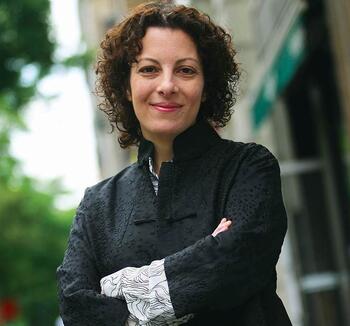
Headshot of Oriana Skylar Mastro Rod Searcey
All News button
1
Subtitle

China’s President Xi Jinping can “100 per cent” be trusted and warned western nations would be making a “big mistake” if they didn’t take the superpower’s threats to forcefully retake Taiwan seriously, says Stanford University’s Oriana Skylar Mastro.

0
benjamin_rubin_headshot.jpg

Benjamin Rubin joined the Freeman Spogli Institute for International Studies as a member of the development team in 2021. Previously, he worked as a financial planner for Foster Klima & Company and as a professor of Roman Archaeology at Williams College in Williamstown, MA. Benjamin received his BA in English and Classics from Macalester College and a PhD from the University of Michigan, Ann Arbor, in Classical Art and Archaeology.

Associate Director of Development
Date Label
Authors
Callista Wells
News Type
News
Date
Paragraphs

On October 6, 2021, the APARC China Program hosted the panel program, "Engaging China: Fifty Years of Sino-American Relations." In honor of her recently released book of the same title, Director of the Grassroots China Initiative Anne Thurston was joined by contributors Mary Bullock, President Emerita of Agnes Scott College; Thomas Fingar, Shorenstein APARC Fellow; and David M. Lampton, Professor Emeritus at Johns Hopkins School of Advanced International Studies (SAIS). Thomas Fingar also moderated the panel.

Recent years have seen the U.S.-China relationship rapidly deteriorate. Engaging China brings together leading China specialists—ranging from academics to NGO leaders to former government officials—to analyze the past, present, and future of U.S.-China relations.

During their panel, Bullock, Fingar, Lampton, and Thurston reflected upon the complex and multifaceted nature of American engagement with China since the waning days of Mao’s rule. What initially motivated U.S.’ rapprochement with China? Until recent years, what logic and processes have underpinned the U.S. foreign policy posture towards China? What were the gains and the missteps made during five decades of America’s engagement policy toward China? What is the significance of our rapidly deteriorating bilateral relations today? Watch now: 

For more information about Engaging China or to purchase a copy, please click here.

Read More

Xi and Biden
Q&As

Biden, Xi Will Want To Diminish Exaggerated Characterizations of Bilateral Friction, Stanford Scholar Says

In this Q&A, Stanford scholar Thomas Fingar discusses what to expect when President Biden meets with Chinese President Xi Jinping.
Biden, Xi Will Want To Diminish Exaggerated Characterizations of Bilateral Friction, Stanford Scholar Says
Taiwan
Commentary

America's Future in Taiwan

Intensifying threats of a military conflict over Taiwan have brought uncertainty to the stability of regional security for Southeast Asia, according to Center Fellow Oriana Skylar Mastro on radio show On Point.
America's Future in Taiwan
USS Key West during during joint Australian-United States military exercises Talisman Sabre 2019 in the Coral Sea.
Commentary

In Defense of AUKUS

This is not only about nuclear-powered submarines; it is about a strengthened US commitment to Australia.
In Defense of AUKUS
Hero Image
"Engaging China: Fifty Years of Sino-American Relations" book cover
All News button
1
Subtitle

Was the strategy of engagement with China worthwhile? Experts Mary Bullock, Thomas Fingar, David M. Lampton, and Anne Thurston discuss their recent release, "Engaging China: Fifty Years of Sino-American Relations."

-

*For fall quarter 2021, CISAC will be hosting hybrid events. Many events will offer limited-capacity in-person attendance for Stanford faculty, staff, fellows, visiting scholars, and students in accordance with Stanford’s health and safety guidelines, and be open to the public online via Zoom. All CISAC events are scheduled using the Pacific Time Zone.


REGISTRATION


Seminar Recording

About the Event: The Afghan government’s collapse in August demonstrated that two decades of donor-driven state-building efforts failed to build a foundation for a stable, democratic, and prosperous Afghanistan. Why did the United States and its allies fail, and what should donors learn for similar state-building efforts in the future, both large and small?

Spanning the U.S. government’s problematic strategies, inappropriate timelines, and poor understanding of the Afghan context, lessons learned reports by the Special Inspector General for Afghanistan Reconstruction (SIGAR) have warned for years that the Afghan government was exceptionally fragile and that many of the gains alleged by the U.S. officials were hollow and unsustainable. This CISAC seminar will detail how and why the U.S. government should reform its own institutions to more effectively stabilize conflict-affected environments around the world. 

Download SIGAR’s 20th anniversary report, What We Need to Learn (2021)

Download SIGAR’s report, Stabilization: Lessons from the U.S. Experience in Afghanistan (2018)


About the Speaker: David H. Young is a supervisory research analyst at the Special Inspector General for Afghanistan Reconstruction and a conflict and governance advisor with experience in six conflict/post-conflict environments: Afghanistan, the Sahel, Israel/Palestine, the Balkans, the Caucasus, and Northern Ireland. At SIGAR, he was the lead author of three comprehensive lessons learned reports: 1) A study of U.S. efforts to stabilize contested Afghan communities, 2) A review of U.S. efforts to build credible and transparent Afghan electoral institutions, and 3) the agency’s 20th anniversary report, What We Need to Learn. He was a civilian advisor to ISAF in Nuristan and Laghman provinces during the Afghanistan surge and subsequently served as a governance advisor to the World Bank, the U.S. Institute of Peace, and Afghanistan's Independent Directorate of Local Governance. His writing and commentary has appeared in the New York Times, the Atlantic, the Christian Science Monitor, Foreign Policy, and the Daily Beast, among others.

Virtual Only. This event will not be held in person.

David Young Special Inspector General for Afghanistan Reconstruction
Seminars
Subscribe to The Americas