-

The Stanford Program on Regions of Innovation and Entrepreneurship (SPRIE) 
with the Center for Social Innovation
invite you to a Stanford salon on Monday, March 11th on

Conscious Capitalism & Social Innovation

with John Montgomery, Jeff Klein & you!

John Montgomery, Silicon Valley Corporate attorney and author of Great from the Start, and Jeff Klein, a director of Conscious Capitalism and producer of Conscious Capitalism 2013, will share their insights and facilitate inquiry and conversation with salon participants.

This salon is designed to provide a taste of the Conscious Capitalism 2013 experience, and to engage participants in a conversation about the emerging Conscious Capitalism movement and Social Innovation.

For more details and to register, please visit the event page on Eventbrite:

http://ccstanford.eventbrite.com/

This event is for Stanford students, alumni, faculty, and staff only.

About the speakers:

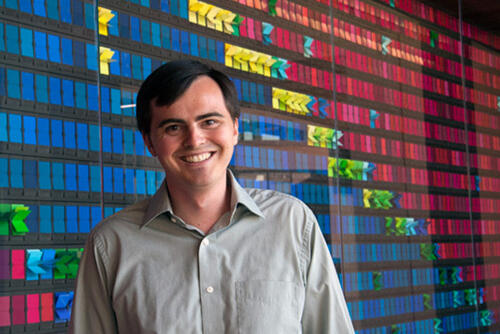
John Montgomery

Image
John Montgomery

John Montgomery is a corporate attorney, entrepreneur, executive coach and writer. He is the founder of Montgomery & Hansen, LLP, a Silicon Valley based corporate law firm. He is also the founder of Startworks, a technology incubator. He works primarily with high-potential entrepreneurial teams to help them translate their visions into successful companies.

John recently received a California Lawyer of the Year award from California Lawyer magazine for his work as a co-chair of the legal working group behind California’s new benefit corporation law. A frequent speaker on venture capital, he has produced professional education programs for the State Bar on benefit corporations and for SmartPros/Cognistar: Understanding the Venture Capital Term Sheet Process and Introduction to Venture Capital Financing Agreements. Prior to founding Montgomery & Hansen in 2003, John was co-chairman of the venture capital practice at Brobeck, Phleger & Harrison, LLP. John is a student of non-dual philosophical systems, neuroscience, developmental theory and organizational development. In 2010, he co-founded Chrysallis, a human development company that aims to change the human development paradigm and support healthy, full, productive lives for billions of people.  His book, Great from the Start: How Conscious Corporations Attract Success, was published in May 2012. Montgomery has a BA (Studio Art) from Stanford University and a JD from Northwestern College of Law.

Jeff Klein

Image
Jeff Klein

As CEO of Working for Good, Jeff Klein activates, produces and facilitates mission-based, Stakeholder Engagement Marketing™ campaigns and Conscious Culture development programs.

Jeff is a trustee and member of the executive team of Conscious Capitalism, Inc. and producer of Conscious Capitalism events. He authored the award-winning book, Working for Good: Making a Difference While Making a Living and hosts a weekly radio program called It's Just Good Business. Jeff serves as Executive Director of BeingHuman.org and producer of Being Human events.  

He loves surfing, Brazilian Jiu-Jitsu, ChiRunning and moving in general. He is an actively engaged father of a teenage daughter, and lives in San Rafael, Calif.

For more information visit workingforgood.com

Room Z-301
Knight Management Center
655 Knight Way
Stanford, CA 94305-7298

Seminars
Paragraphs

Statistical studies of rainfed maize yields in the United States and elsewhere have indicated two clear features: a strong negative yield response to accumulation of temperatures above 30°C (or extreme degree days (EDD)), and a relatively weak response to seasonal rainfall. Here we show that the process-based Agricultural Production Systems Simulator (APSIM) is able to reproduce both of these relationships in the Midwestern United States and provide insight into underlying mechanisms. The predominant effects of EDD in APSIM are associated with increased vapour pressure deficit, which contributes to water stress in two ways: by increasing demand for soil water to sustain a given rate of carbon assimilation, and by reducing future supply of soil water by raising transpiration rates. APSIM computes daily water stress as the ratio of water supply to demand, and during the critical month of July this ratio is three times more responsive to 2°C warming than to a 20% precipitation reduction. The results suggest a relatively minor role for direct heat stress on reproductive organs at present temperatures in this region. Effects of elevated CO2 on transpiration efficiency should reduce yield sensitivity to EDD in the coming decades, but at most by 25%.

All Publications button
1
Publication Type
Journal Articles
Publication Date
Journal Publisher
Nature Climate Change
Authors
David Lobell
Wolfram Schlenker
Number
doi:10.1038/nclimate1832
Paragraphs

Sugarcane area is currently expanding in Brazil, largely in response to domestic and international demand for sugar-based ethanol. To investigate the potential hydroclimatic impacts of future expansion, a regional climate model is used to simulate 5 years of a scenario in which cerrado and cropland areas (~1.1E6 km2) within south-central Brazil are converted to sugarcane. Results indicate a cooling of up to ~1.0°C during the peak of the growing season, mainly as a result of increased albedo of sugarcane relative to the previous landscape. After harvest, warming of similar magnitude occurs from a significant decline in evapotranspiration and a repartitioning toward greater sensible heating. Overall, annual temperature changes from large-scale conversion are expected to be small because of offsetting reductions in net radiation absorption and evapotranspiration. The decline in net water flux from land to the atmosphere implies a reduction in regional precipitation, which is consistent with progressively decreasing simulated average rainfall for the study period, upon conversion to sugarcane. However, rainfall changes were not robust across three ensemble members. The results suggest that sugarcane expansion will not drastically alter the regional energy or water balance, but could result in important local and seasonal effects.

All Publications button
1
Publication Type
Journal Articles
Publication Date
Journal Publisher
Geophysical Research Letters
Authors
Matei Georgescu
David Lobell
Christopher B. Field
-

Abstract:

It has been said that constitutional court judges around the world increasingly participate in a "global judicial dialogue" that causes judges to make increased use of foreign law.  This is a dialogue, however, from which the members of the Taiwanese Constitutional Court are largely excluded.  Taiwan’s precarious diplomatic situation and intense lobbying by China have effectively prevented the members of Taiwan's Constitutional Court from participating in international judicial gatherings and official visits to foreign courts. Nevertheless, the Taiwanese Constitutional Court routinely engages in extensive consideration of foreign law, either expressly or implicitly, when deciding cases.  This fact casts doubt on the notion that "global judicial dialogue" explains judicial use of foreign law.  Comparison of the Taiwanese Constitutional Court and U.S. Supreme Court demonstrates that “global judicial dialogue” plays a much smaller role in shaping a court’s utilization of foreign law than institutional factors such as (a) the rules and practices governing the composition and staffing of the court and (b) the extent to which the structure of legal education and the legal profession incentivizes judges and academics to possess expertise in foreign law.


Speaker Bio:

David Law is Professor of Law and Professor of Political Science at Washington University in St. Louis and Visiting Professor at Georgetown University Law Center. He works in the areas of law and political science, public law, judicial behavior, comparative constitutional law, and comparative judicial politics. Born and raised in Canada, he holds a Ph.D. in political science from Stanford, a B.C.L. in European and Comparative Law from the University of Oxford, and a J.D. from Harvard Law School. He has previously taught at the University of San Diego School of Law and the University of California, San Diego political science department and has been a visiting professor at the National Taiwan University College of Law, Seoul National University School of Law, and Keio University Faculty of Law in Tokyo, and a visiting scholar at the NYU School of Law. His current research focuses on the identification, explanation, and prediction of global patterns in constitutional law, and his recent scholarship on constitutional globalization and the declining influence of the U.S. Constitution has been featured in a variety of domestic and international media.


CISAC Conference Room

David Law Professor of Law and Political Science Speaker Washington University in St. Louis
Seminars
0
KotaniMeiko_WEB.jpg

Meiko Kotani is the instructor for the Stanford e-Japan Program, Stanford e-Bunri, and SPICE/Waseda Intensive Course for the Stanford Program on International and Cross-Cultural Education (SPICE). 

Prior to joining SPICE, she worked as Program Coordinator for the Japan Program at the Shorenstein Asia-Pacific Research Center (APARC) where she managed projects and events related to research and education on contemporary Japanese issues. She also has experience working as a program manager at a Japanese company in Silicon Valley. 

Meiko received a BA in international relations from University of Oregon, and MA in international relations and diplomacy from Schiller International University in Paris. Born in Japan and raised in seven countries, including China, Oman, Pakistan, France, and Russia, and the United States, she has always been strongly conscious of connecting Japan and the world since childhood. She is dedicated to supporting the development of Japan's next generation of leaders and fostering global talent.

Instructor, Stanford e-Japan
Instructor, Stanford e-Bunri
Instructor, SPICE/Waseda Intensive Course
Date Label
-

Francis Fukuyama, has written widely on issues relating to democratization and international political economy.  His most recent book, The Origins of Political Order, was published in April 2011. He is a resident in FSI’s Center on Democracy, Development and the Rule of Law at Stanford University, a senior fellow at the Johns Hopkins SAIS Foreign Policy Institute, and a non-resident fellow at the Carnegie Endowment for International Peace. 

Tu Weiming, has been instrumental in developing discourses on dialogue among civilizations, Cultural China, reflection on the Enlightenment mentality of the modern West, and multiple modernities.  He is currently studying the modern transformation of Confucian humanism in East Asia and tapping its spiritual resources for human flourishing in the global community.  He is a Fellow of the American Academy of Arts and Sciences (AAAS), and a Member of the International Philosophical Society (IIP).     

Sponsored by Stanford Confucius Institute, Beijing Forum, Institute for Advanced Humanistic Studies, Peking University

521 Memorial Way, Knight Building, Room 201

Encina Hall, C148
616 Jane Stanford Way
Stanford, CA 94305

0
Olivier Nomellini Senior Fellow at the Freeman Spogli Institute for International Studies
Director of the Ford Dorsey Master's in International Policy
Research Affiliate at The Europe Center
Professor by Courtesy, Department of Political Science
yff-2021-14290_6500x4500_square.jpg

Francis Fukuyama is the Olivier Nomellini Senior Fellow at Stanford University's Freeman Spogli Institute for International Studies (FSI), and a faculty member of FSI's Center on Democracy, Development and the Rule of Law (CDDRL). He is also Director of Stanford's Ford Dorsey Master's in International Policy, and a professor (by courtesy) of Political Science.

Dr. Fukuyama has written widely on issues in development and international politics. His 1992 book, The End of History and the Last Man, has appeared in over twenty foreign editions. His book In the Realm of the Last Man: A Memoir will be published in fall 2026.

Francis Fukuyama received his B.A. from Cornell University in classics, and his Ph.D. from Harvard in Political Science. He was a member of the Political Science Department of the RAND Corporation, and of the Policy Planning Staff of the US Department of State. From 1996-2000 he was Omer L. and Nancy Hirst Professor of Public Policy at the School of Public Policy at George Mason University, and from 2001-2010 he was Bernard L. Schwartz Professor of International Political Economy at the Paul H. Nitze School of Advanced International Studies, Johns Hopkins University. He served as a member of the President’s Council on Bioethics from 2001-2004. He is editor-in-chief of American Purpose, an online journal.

Dr. Fukuyama holds honorary doctorates from Connecticut College, Doane College, Doshisha University (Japan), Kansai University (Japan), Aarhus University (Denmark), the Pardee Rand Graduate School, and Adam Mickiewicz University (Poland). He is a non-resident fellow at the Carnegie Endowment for International Peace. He is a member of the Board of Trustees of the Rand Corporation, the Board of Trustees of Freedom House, and the Board of the Volcker Alliance. He is a fellow of the National Academy for Public Administration, a member of the American Political Science Association, and of the Council on Foreign Relations. He is married to Laura Holmgren and has three children.

(October 2025)

CV
Date Label
Francis Fukuyama Olivier Nomellini Senior Fellow at CDDR Speaker Stanford University
Tu Weiming Professor Host Harvard University, Peking University
Seminars
-

The United States commercial nuclear industry started just a few years following the conclusion of the second world war with the start of operation of the Shippingport reactor. Over a relatively short period of time, the industry grew to over one hundred reactors all based fundamentally on the same light water reactor technology that served the naval nuclear program well. Since the start of the industry, the nuclear power research and development community has explored a large number of reactor concepts for a variety of conventional and not so conventional applications. Many of these technologies were demonstrated as both test reactors and prototypical demonstration reactors. Despite the promise of many of these concepts, the commercialization cases for many of these technologies have failed to emerge. In this talk I will discuss the barriers reactor vendors currently face in the United States and the inherent challenges between promoting evolutionary versus revolutionary nuclear technologies. I will then discuss the prospects for the development of advanced commercial reactor technology abroad with an emphasis on the Chinese nuclear program. In particular, I will discuss recent developments in their advanced light water reactor program, high temperature gas reactor demonstration, and thorium molten salt reactor program.


About the speaker: Dr. Edward Blandford is an Assistant Professor of Nuclear Engineering at the University of New Mexico. Before coming to UNM, Blandford was a Stanton nuclear security fellow at the Center for International Security and Cooperation (CISAC) at Stanford University. His research focuses on advanced reactor thermal-fluids, best-estimate code validation, reactor safety, and physical protection strategies for critical nuclear infrastructure. Blandford received his PhD in Nuclear Engineering from the University of California, Berkeley in 2010.

CISAC Conference Room

Edward Blandford Assistant Professor of Nuclear Engineering Speaker University of New Mexico
Seminars
Authors
News Type
News
Date
Paragraphs

Program on Poverty and Governance director Beatriz Magaloni, associate professor of political science and FSI senior fellow, post-doctoral fellow Gabriela Calderón and graduate student Gustavo Robles were recently featured in an Inter-American Development Bank (IDB) report for their participation in a research group for the IDB's Citizen Security Research Platform. Their project, entitled "The Economic Consequences of Drug-Trafficking Violence in Mexico," seeks to quantify the local economic impact of Mexico's drug war across the country.

The study uses electricity consumption as a proxy for per-capita gross domestic product to calculate the impact of violence on economic output in Mexico. The research team found that when municipalities become embroiled in high levels of drug violence, local electrical consumption drops. They also examined census employment statistics to measure the impact of violence on the number of people employed or actively seeking employment. Their research has suggested that citizens are increasingly hesitant to launch businesses, and may even choose unemployment over risking the daily walk to work in a highly insecure environment.

The team presented their work for a seminar at the IDB's Washington, D.C., headquarters as part of the project "The Cost of Crime and Violence in Latin America and the Caribbean" on Jan. 23-24, 2013.

Click below for a working draft of the paper available in both Spanish and English. 

Hero Image
Image 2   Version 2
Police patrol a suburban neighborhood in Mexico City.
Jorge Olarte
All News button
1
Subscribe to The Americas