An independent panel of medical experts has updated 20-year-old guidelines for evaluating cost-effectiveness in health and medicine, in an effort to help everyone from policymakers to patients make more informed decisions about tests and treatments.
Released in a special communication in the Journal of the American Medical Association, the panelists spent more than three years building on the work of the 1996 Panel on Cost-Effectiveness in Health and Medicine, originally convened by the U.S. Public Health Service. They developed recommendations by consensus.
The new recommendations are intended to guide decision-makers in using new methods for analyzing evidence, reporting standardized results, incorporating both health-care system and societal perspectives, as well as weighing ethical issues in the use of cost-effectiveness analysis (CEA).
“Some people question the use of economic analyses in health care, but cost-effective analysis is a way to ensure that we are proving high-value care,” said Stanford Health Policy’s Douglas K. Owens, a professor of medicine and senior investigator of the VA Palo Alto Heath Care System, who sat on the panel.
“If we do interventions without understanding their value, we may well spend money on something that may not really be worth it,” said Owens. “Cost effectiveness analysis is one approach to understanding how we can help control health-care costs and provide high-value health care.”
Image
The panel was led by co-chairs Gillian D. Sanders, Professor in the Department of Medicine and a member of both the Duke Clinical Research Institute and the Duke-Margolis Center for Health Policy, and Peter J. Neumann, Director, Center for the Evaluation of Value and Risk in Health at the Institute for Clinical Research and Health Policy Studies at Tufts Medical Center and Professor of Medicine at Tufts University.
Sanders said CEA could help inform decisions about how to apply new or existing medical tests, therapies, and prevention techniques so that decision-makers use health-care resources wisely.
“As health-care costs continue to rise at unsustainable rates, these recommendations provide a framework for comparing the relative value of different health-care interventions, and help decision-makers across the spectrum from policymakers to patients sort through alternatives and decide what tests and treatments make sense,” she said.
Neumann noted that in the 20 years since the original panel’s report, the field of cost-effectiveness analysis has advanced, as has the need to deliver health-care efficiently.
“Updating the guidelines provides an opportunity to reflect on the evolution of cost-effectiveness analysis and to provide guidance for the next generation of practitioners and consumers,” he said.
Primarily funded by grants from the Robert Wood Johnson Foundation and the Bill & Melinda Gates Foundation, the panel recommends several key changes to the guidelines, while confirming other principles from the first panel, including:
Broadening the scope and number of reference cases in a cost analysis, which describe standard methodology that should be followed to ensure quality analysis by creating comparable measurements. The panel is recommending that all CEAs should not report two reference cases: one based on a health-care sector perspective and another based on a societal perspective.
Using an “impact inventory” that lists the health and non-health effects of a health-care intervention to ensure that all consequences are considered, including those to patients, caregivers, social services and others outside the health-care sector. This tool also allows analysts to look at categories of impacts that may be most important to stakeholders.
Measuring health effects in terms of quality adjusted life years, a common measure used by health researchers that includes both the quality and quantity of life lived.
Including both costs reimbursed by third-party payers and those paid for out-of-pocket by patients in health-care sector analyses.
Including a reporting checklist and guidelines for transparency that includes assumptions in any analysis and the disclosure of potential conflicts of interest.
The complete report of the so-called Second Panel will be published in October.
The panelists noted that the field of CEA has emerged dramatically since the last guidelines 20 years ago. For example, the Advisory Committee for Immunization Practices, which establishes national immunization policy recommendations on behalf of the Centers for Disease Control and Prevention, now uses CEA in its calculations.
“The need to deliver health-care efficiently and the importance of using analytic techniques to understand clinical and economic consequences of strategies to improve health, have only increased,” the Second Panel authors wrote in the JAMA paper.
Health-care spending in the United States comprised 13 percent of GDP in 1995; today it approaches 18 percent. And the total national health expenditures have tripled during that period, jumping to more than $3 trillion in 2014, according to the Kaiser Family Foundation.
“The goal of the Second Panel is to promote the continued evolution of CEA and its use to support judicious, efficient, and fair decisions regarding the use of health-care resources,” the experts wrote in the JAMA article.
Imagine there’s a new pill on the market. It promises you a one in 200 chance of avoiding a heart attack, stroke, heart failure or death over the next year — if you take it religiously.
It also promises a one in 60 chance of landing you in the hospital for some serious complication: Maybe you passed out. Maybe the pill affected your kidney function. Maybe you developed a severe electrolyte imbalance.
Would you take it? How would you decide?
This question is confronting some patients with hypertension as well as their health-care providers who, like me, help manage their blood pressure. The “pill” is not a pill per se, but a treatment strategy.
In November of 2015, researchers published results of a large NIH-sponsored trial known as SPRINT, which compared two systolic blood pressure treatment targets for hypertensive adults: a higher, conventional target of 140 mm mercury compared to a more stringent target of 120. Participants in the trial were older, did not have diabetes, and were generally at high risk of developing cardiovascular disease. They were prescribed commonly used blood pressure medications, which were carefully adjusted by investigators to achieve target blood pressures.
The trial demonstrated a large relative benefit: Those in the lower target group had about a 25 percent reduction in the rate of cardiovascular disease or death. The absolute benefit, though, was small, with only about one in 200 patients avoiding cardiovascular disease or death as a result of treatment. The trial also showed that complications in the lower target group were relatively common.
As a physician, I’d love to be able to tell the patient in my exam room whether she will be the lucky one out of 200 who will benefit. That dream is still a few years off. I can, though, answer a related question. If I treat a large group of patients, on the whole, will my patients benefit? Or will the harms of treatment outweigh the benefits? And if the treatment is overall beneficial, what investment will we need to achieve this gain in health?
Image
To answer this question, I teamed up with a group of researchers at Stanford. Our team included experts in cost-effectiveness analysis as well as students developing clinical and analytic expertise in this area. We used data from SPRINT along with other published sources to project the expected benefits, harms and costs from targeting a lower or higher blood pressure over the course of a lifetime.
Results of our study were published this week in JAMA Cardiology. We found that targeting a lower blood pressure results in a substantial net benefit, even after accounting for harms from common, serious adverse events. This net benefit, though, doesn’t come free: An investment of about $23,777 is required for every year of life gained from this strategy.
Is $23,777 “worth it?” It’s a hard question to answer and it depends, in part, on who is paying. But in the spectrum of medical interventions that we routinely use here in the United States, this would be considered a good deal, a bargain even.
So should we go all in? Should we push stringent blood pressure targets for everyone?
No. There are a number of other considerations. SPRINT answered a specific question about hypertension treatment in a specific group of patients. Whether other groups of patients, like those at lower risk of cardiovascular disease, would benefit is unclear. There were also methodological quirks that have left the trial open to criticism.
But if we believe that the findings from SPRINT are generally correct, a lower blood pressure target seems to provide significant health gains for a reasonable cost in patients who are at high risk of developing cardiovascular disease.
Ilana B. Richman, MD, is a VA Health Services Research and Development Fellow at Stanford Health Policy.
Korea Society president Thomas Byrne, retired General Walter "Skip" Sharp, former U.S. commander in Korea, and Kathleen Stephens, former U.S. ambassador to Korea and William J. Perry Distinguished Fellow in the Korea Program at Stanford's Shorenstein APARC, engage in discussion about the new U.S. president and political, economic and security options on Korea and East Asia.
Panelists:
Thomas J. Byrne joined The Korea Society as its president in 2015. He came to the Society from Moody's Investor Services, where he was Senior Vice President, Regional Manager, Spokesperson, and Director of Analysis for the Sovereign Risk Group in the Asia-Pacific and Middle East regions. Before moving to Moody's in 1996, he was the Senior Economist of the Asia Department at the Institute of International Finance in Washington, D.C. Byrne holds a master’s degree in international relations with an emphasis on economics from the Johns Hopkins’ School of Advanced International Studies. Before his graduate work, he served in South Korea for three years as a U.S. Peace Corps volunteer. He teaches a graduate-level course, Sovereign Risk, at Columbia University’s School of International and Public Affairs in Fall 2016.
General Walter “Skip” Sharp was commander of the United Nations Command, ROK-U.S. Combined Forces Command and U.S. Forces in Korea from 2008 to 2011. He also commanded troops in Operations Desert Shield and Desert Storm, Operation Uphold Democracy in Haiti and the Multinational Division (North) of the NATO-led Stabilization Force in Bosnia. He previously had four assignments at the Pentagon on the Joint Staff. He was the deputy director, J5 for Western Hemisphere/Global Transnational Issues; vice director, J8 for Force Structure, Resources, and Assessment; director for Strategic Plans and Policy, J5; and the director of the Joint Staff.
Born in Morgantown, West Virginia, while his father was fighting in the Korean War, General Sharp graduated from West Point in 1974 and was commissioned as an armor officer. He earned a master’s degree in operations research and system analysis from Rensselaer Polytechnic Institute and is a graduate of the Army War College. He is consulting for and on the board of directors of several U.S. and Korean companies and The Korea Society. He is involved in Northeast Asia and especially Korea strategy and policy discussions at several think tanks in the Washington, D.C. area.
Kathleen Stephens, a former U.S. ambassador to the Republic of Korea, is the William J. Perry Distinguished Fellow in the Korea Program at Stanford’s Shorenstein Asia-Pacific Research Center. She has four decades of experience in Korean affairs, first as a Peace Corps volunteer in rural Korea in the 1970s, and in ensuing decades as a diplomat and as U.S. ambassador in Seoul. She came to Stanford previously as the 2013-14 Koret Fellow after 35 years as a foreign service officer in the U.S. Department of State.
Stephens' diplomatic career includes chargé d’affaires to India in 2014; acting under secretary of state for public diplomacy and public affairs in 2012; U.S. ambassador to the Republic of Korea from 2008 to 2011; principal deputy assistant secretary of state for East Asian and Pacific affairs from 2005 to 2007; and deputy assistant secretary of state for European and Eurasian affairs from 2003 to 2005.
Philippines Conference Room Encina Hall, 3rd Floor 616 Serra St. Stanford, CA 94305
China's government alternately appears in western scholarship as an idealized meritocracy or a corrupt cohort of venal officials. Yet empirical attempts to place China's government in comparative perspective are limited. We develop and exploit a new empirical source--survey testimony from political insiders--to measure three Weberian qualities of Chinese bureaucracy: meritocracy, autonomy, and morale. By translating questions from a major survey of U.S. officials, we place the responses of Chinese officials in comparative perspective. In contrast to claims that political connections dominate official promotions in China, Chinese bureaucrats are markedly more likely than U.S. bureaucrats to report that their agencies recruit people with the right skills and promote people based on performance. Responses from municipal governments in China resemble those of high-performing federal bureaucracies in the United States, such as NASA and the Nuclear Regulatory Commission. However, the Chinese advantage shrinks in autonomy and nearly disappears in workplace morale.
Speaker(s) Bio:
Image
Francis Fukuyama is the Olivier Nomellini Senior Fellow at the Freeman Spogli Institute for International Studies (FSI) and the Mosbacher Director of FSI's Center on Democracy, Development, and the Rule of Law (CDDRL). He is also a professor by courtesy in the Department of Political Science. He was previously at the Paul H. Nitze School of Advanced International Studies (SAIS) of Johns Hopkins University, where he was the Bernard L. Schwartz Professor of International Political Economy and director of SAIS' International Development program.
Image
Greg Distelhorst is the Mitsubishi Career Development Professor and an Assistant Professor of Global Economics and Management at the MIT Sloan School of Management. He studies contemporary Chinese politics and public policy, as well as the social impacts of multinational business. He was a CDDRL Predoctoral Fellow in 2012-2013.
Image
Margaret Boittin is Assistant Professor at Osgoode Hall Law School, York University, Canada. She studies Chinese law and politics. She was a predoctoral and postdoctoral fellow at CDDRL (2012-2015).
Encina Hall, C148
616 Jane Stanford Way
Stanford, CA 94305
0
f.fukuyama@stanford.edu
Olivier Nomellini Senior Fellow at the Freeman Spogli Institute for International Studies
Director of the Ford Dorsey Master's in International Policy
Research Affiliate at The Europe Center
Professor by Courtesy, Department of Political Science
yff-2021-14290_6500x4500_square.jpg
Francis Fukuyama is the Olivier Nomellini Senior Fellow at Stanford University's Freeman Spogli Institute for International Studies (FSI), and a faculty member of FSI's Center on Democracy, Development and the Rule of Law (CDDRL). He is also Director of Stanford's Ford Dorsey Master's in International Policy, and a professor (by courtesy) of Political Science.
Dr. Fukuyama has written widely on issues in development and international politics. His 1992 book, The End of History and the Last Man, has appeared in over twenty foreign editions. His book In the Realm of the Last Man: A Memoir will be published in fall 2026.
Francis Fukuyama received his B.A. from Cornell University in classics, and his Ph.D. from Harvard in Political Science. He was a member of the Political Science Department of the RAND Corporation, and of the Policy Planning Staff of the US Department of State. From 1996-2000 he was Omer L. and Nancy Hirst Professor of Public Policy at the School of Public Policy at George Mason University, and from 2001-2010 he was Bernard L. Schwartz Professor of International Political Economy at the Paul H. Nitze School of Advanced International Studies, Johns Hopkins University. He served as a member of the President’s Council on Bioethics from 2001-2004. He is editor-in-chief of American Purpose, an online journal.
Dr. Fukuyama holds honorary doctorates from Connecticut College, Doane College, Doshisha University (Japan), Kansai University (Japan), Aarhus University (Denmark), the Pardee Rand Graduate School, and Adam Mickiewicz University (Poland). He is a non-resident fellow at the Carnegie Endowment for International Peace. He is a member of the Board of Trustees of the Rand Corporation, the Board of Trustees of Freedom House, and the Board of the Volcker Alliance. He is a fellow of the National Academy for Public Administration, a member of the American Political Science Association, and of the Council on Foreign Relations. He is married to Laura Holmgren and has three children.
(October 2025)
Global Populisms
A new project examining the global surge in populist movements and what it means for established democratic rules and institutions.
Encina Hall
616 Serra Street
Stanford, CA 94305-6055
0
gdistel@stanford.edu
Research Affiliate
Distelhorst_HS.jpg
Greg Distelhorst is a Ph.D. candidate in the MIT Department of Political Science and a predoctoral fellow at Stanford University's Center on Democracy, Development, and the Rule of Law. His dissertation addresses public accountability under authoritarian rule, focusing on official responsiveness and citizen activism in contemporary China. This work shows how citizens can marshal negative media coverage to discipline unelected officials, or "publicity-driven accountability." These findings result from two years of fieldwork in mainland China, including a survey experiment on tax and regulatory officials. A forthcoming second study measures the effects of citizen ethnic identity on government responsiveness in a national field experiment. His dissertation research has been funded by the U.S. Fulbright Program, the Boren Fellowship, and the National Science Foundation. A second area of research is labor governance under globalization, where he has examined private initiatives to improve working conditions in the global garment, toy, and electronics supply chains.
Encina Hall
616 Serra Street
Stanford, CA 94305-6055
0
The Governance Project Postdoctoral Fellow, 2013-15
Boittin_HS.jpg
Margaret Boittin has a JD from Stanford, and is completing her PhD in Political Science at UC Berkeley. Her dissertation is on the regulation of prostitution in China. She is also conducting research on criminal law policy and local enforcement in the United States, and human trafficking in Nepal.
The Governance Project Postdoctoral Fellow, 2013-15
The Stanford Program on International and Cross-Cultural Education (SPICE) honored top students of the 2016 Reischauer Scholars Program (RSP) and Stanford e-Japan (Spring Session) at “Japan–U.S. Day”—an event held at Stanford University on August 9, 2016. The RSP honorees were Pierce Lowary (Highland Park High School, Dallas, Texas), Sarah Ohta (Polytechnic High School, Pasadena, California), and Risako Yang (Castilleja School, Palo Alto, California), and the Stanford e-Japan honorees were Miyu Hayashi (Takada High School, Mie Prefecture) and Minoru Takeuchi (Senior High School at Otsuka, University of Tsukuba, Tokyo).
Japan–U.S. Day began with opening remarks by the Honorable Jun Yamada, Consul General of Japan in San Francisco. Praising the honorees and their fellow students for their dedication to the study of U.S.–Japan relations, Consul General Yamada noted, “The U.S.–Japan relationship is the most important bilateral relationship in the world today,” and underscored the importance of programs such as the RSP and Stanford e-Japan in engaging youth in the study of this critical relationship.
Stanford e-Japan Instructor Waka Takahashi Brown and RSP Instructor Naomi Funahashi presented overviews of the two programs to the audience of over 50 people, which included Ambassador Michael Armacost (former U.S. Ambassador to Japan), Consul Akira Ichioka (Director, Japan Information and Cultural Center, Consulate General of Japan in San Francisco), Professor Indra Levy (Stanford University), Professor Emeritus Daniel Okimoto (Stanford University), and Maiko Tamagawa (Advisor for Educational Affairs, Consulate General of Japan in San Francisco).
The students were recognized by Brown and Funahashi for their overall coursework performance, which included research essays. They articulately presented their research that focused on topics ranging from legacies of World War II and security issues to urban planning in Japan, longevity, and non-profit organizations, and they adroitly addressed questions from the audience.
[[{"fid":"223802","view_mode":"crop_870xauto","fields":{"format":"crop_870xauto","field_file_image_description[und][0][value]":"Ambassador Armacost chats with student honoree, Minoru Takeuchi","field_file_image_alt_text[und][0][value]":"","field_file_image_title_text[und][0][value]":"","field_credit[und][0][value]":"Rylan Sekiguchi","field_caption[und][0][value]":"","field_related_image_aspect[und][0][value]":"","thumbnails":"crop_870xauto"},"type":"media","attributes":{"width":"870","style":"padding: 6px; float: left; width: 420px; height: 267px;","class":"media-element file-crop-870xauto"}}]]This year marked the first time that a joint RSP/Stanford e-Japan event was held to honor students. Reflecting on the event, Funahashi commented, “It was a great opportunity to recognize the impressive work of young U.S.–Japan scholars. And seeing them engage in cross-cultural dialogue in person after months of online interaction was a real treat.” Brown agreed, adding, “For my students, having the opportunity to interact with peers from the United States was one of the highlights of the program. To see all the RSP and Stanford e-Japan award winners honored at the same event was extremely rewarding and gave me great hope for the future of U.S.–Japan relations.” The audience seemed to feel similarly. “It was wonderful seeing the American and Japanese students interact with one another,” said Ambassador Armacost. “Their remarks were thoughtful and articulate. It was a model of timely educational exchange.”
SPICE has received numerous grants in support of the RSP (since its inception in 2003) from the United States-Japan Foundation, the Center for Global Partnership (The Japan Foundation), and the Japan Fund, which is administered by the Freeman Spogli Institute for International Studies at Stanford University. Stanford e-Japan (since its inception in 2015) has been supported by a grant from the United States-Japan Foundation.
Hero Image
Student honorees: Pierce Lowary (Highland Park High School, Dallas, Texas), Risako Yang (Castilleja School, Palo Alto, California), Sarah Ohta (Polytechnic High School, Pasadena, California), Miyu Hayashi (Takada High School, Mie Prefecture) and Minoru Takeuchi (Senior High School at Otsuka, University of Tsukuba, Tokyo). | Rylan Sekiguchi
This event has reached capacity. Please join us to watch the live-stream at this link.
The symposium will focus on the key questions that impact health through the year 2020. How could the 2016 election affect health care in the U.S.? How will payment reform affect health systems, physicians and patients? Are the insurance exchanges viable? What challenges pose the biggest threat to global health? Experts from Stanford and beyond address these topics and more as they discuss the future of health policy.
Lloyd Minor, Dean, Stanford University School of Medicine
Image
Minor, MD, is a scientist, surgeon and academic leader. He is the Carl and Elizabeth Naumann Dean of the Stanford University School of Medicine, a position he has held since December 2012. Minor leads more than 1,500 faculty and 1,000 students at the oldest medical school in the West and has made precision health — the prevention of disease before it strikes — a hallmark of research, education and patient care at Stanford Medicine.
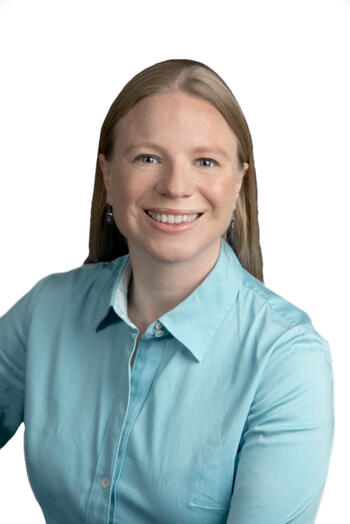
Bob Kocher,a partner at the Silicon Valley venture capital firm, Venrock
Bob Kocher
Kocher, MD, is a partner at Venrock who focuses on healthcare IT and services investments and is a consulting professor at Stanford University School of Medicine. He served in the Obama Administration as special assistant to the president for health care and economic policy and was one of the key shapers of the Affordable Care Act.
David Entwistle, President and CEO, Stanford Health Care
Image
Entwistle joined Stanford Health Care as its President and CEO in July, bringing extensive executive experience at leading academic medical centers. Most recently he served as CEO of the University of Utah Hospitals & Clinics, the only academic medical center in the Intermountain West region. While serving at UUHC, Entwistle received the Modern Healthcare “Up and Comers Award,” for significant contributions in health-care administration, management or policy.
Chris Dawes, President and CEO, Lucile Packard Children’s Hospital
Image
Christopher G. Dawes became President and Chief Executive Officer of Lucile Packard Children’s Hospital Stanford in 1997 after five years of service as Chief Operating Officer. Under his guidance, the hospital, research center and regional medical network has been ranked as one of the best in the nation, as an industry leader in patient safety and innovation in providing a full complement of services for children and expectant mothers.
Panelists:
Marcella Alsan, Assistant Professor of Medicine, Stanford University
Marcella Alsan’s research focuses on the relationship between health and socioeconomic disparities with a focus on infectious disease. Another vein of research focuses on the microfoundations of antibiotic overuse and resistance. She received a BA degree in cognitive neuroscience from Harvard University, a master’s degree in international public health from Harvard School of Public Health, a medical degree from Loyola University, and a PhD in economics from Harvard University. She is board-certified in both internal medicine and infectious disease. She trained at Brigham and Women’s Hospital, completing the Hiatt Global Health Equity Residency Fellowship in internal medicine. She combined her PhD with an Infectious Disease Fellowship at Massachusetts General Hospital. She currently is an infectious disease specialist at the Department of Veterans Affairs, Palo Alto.
Laurence Baker, Chair of Health Research and Policy, Stanford University
Laurence Baker is an economist interested in the organization and economic performance of the U.S. health-care system, and his research has investigated a range of topics including financial incentives in health care, competition in health-care markets, health insurance and managed care and health-care technology adoption. Baker is a past recipient of the ASHE medal from ASHEcon and the Alice Hersch Award from AcademyHealth. He received his BA from Calvin College, and his MA and PhD in economics from Princeton University.
Eran Bendavid, Assistant Professor of Medicine, Stanford University
Eran Bendavid is an infectious diseases physician. His research interests involve understanding the relationship between policies and health outcomes in developing countries. He explores how decisions about foreign assistance for health are made, and how those decisions affect the health of those whom assistance aims to serve. Dr. Bendavid is also a disease modeler, and uses that skill to explore issues of resource allocation in low and middle-income countries with cost-effectiveness analyses. His recent research projects include an impact evaluation of the US assistance program for HIV in Africa, and an exploration of the association between drug prices, aid and health outcomes in countries heavily affected by HIV.
Jay Bhattacharya, Professor of Medicine, Stanford University
Jay Bhattacharya’s research focuses on the constraints that vulnerable populations face in making decisions that affect their health status, as well as the effects of government policies and programs designed to benefit vulnerable populations. He has published empirical economics and health services research on the elderly, adolescents, HIV/AIDS and managed care. Most recently, he has researched the regulation of the viatical-settlements market (a secondary life-insurance market that often targets HIV patients) and summer/winter differences in nutritional outcomes for low-income American families. He is also working on a project examining the labor-market conditions that help determine why some U.S. employers do not provide health insurance.
M. Kate Bundorf, Associate Professor of Medicine, Stanford University
M. Kate Bundorf is a Faculty Research Fellow at the National Bureau of Economic Research. She received her M.B.A. and M.P.H. degrees from The University of California at Berkeley and her Ph.D. from The Wharton School. She was a Fulbright Lecturer and Visiting Professor at Fudan School of Public Health in Shanghai, China in 2009 and 2010. Her research, which focuses on health insurance markets, has been published in leading economics and health policy journals and has received funding from the U.S. National Institutes of Health, the Agency for Health Care Research and Quality and the Robert Wood Johnson Foundation. She received the 13th Annual Health Care Research Award from The National Institute for Health Care Management in 2007.
David Chan, Assistant Professor of Medicine, Stanford University
David Chan is a physician and economist whose research focuses on productivity in US health care. His research draws on insights from labor and organizational economics. He is particularly interested in studying what drives physician behavior, how this explains differences in productivity in health care delivery, and what the implications are for the design of health care. He is the recipient of the 2014 NIH Director’s High-Risk, High-Reward Early Independence Award to study the optimal balance of information in health information technology for patient care. David Chan is also an investigator at the Department of Veterans Affairs and a Faculty Research Fellow at the National Bureau of Economic Research.
Kathryn M. McDonald, Executive Director of the Center for Health Policy and the Center for Primary Care and Outcomes Research, Stanford University
Kathryn McDonald, MM, is the Executive Director of the Center for Health Policy (CHP) and Center for Primary Care and Outcomes Research (PCOR) and a senior scholar at the Centers. She is also Associate Director of the Stanford-UCSF Evidence-based Practice Center (under RAND). Her work focuses on measures and interventions to achieve evidence-based patient-centered healthcare quality and patient safety. Mrs. McDonald has served as a project director and principal investigator on a number of research projects at the Stanford School of Medicine, including the development and ongoing enhancement of the Quality and Patient Safety Indicators for the Agency for Healthcare Research and Quality. She has authored numerous peer reviewed articles and government reports, including several with wide enough followership to merit recent updates: Care Coordination Measures Atlas, Closing the Quality Gap, and Patient Safety Practices.
Michelle Mello, Professor of Law and of Health Research and Policy, Stanford University
Michelle Mello is Professor of Law at Stanford Law School and Professor of Health Research and Policy at Stanford University School of Medicine. She conducts empirical research into issues at the intersection of law, ethics, and health policy. She is the author of more than 150 articles and book chapters on the medical malpractice system, medical errors and patient safety, public health law, research ethics, the obesity epidemic, pharmaceuticals, and other topics. From 2000 to 2014, Dr. Mello was a professor at the Harvard School of Public Health, where she directed the School’s Program in Law and Public Health. In 2013-14 she completed a Lab Fellowship at Harvard University’s Edmond J. Safra Center for Ethics. Dr. Mello teaches courses in torts and public health law. She holds a J.D. from the Yale Law School, a Ph.D. in Health Policy and Administration from the University of North Carolina at Chapel Hill, an M.Phil. from Oxford University, where she was a Marshall Scholar, and a B.A. from Stanford University. In 2013, she was elected to the National Academy of Medicine (formerly known as the Institute of Medicine).
Grant Miller, Associate Professor of Medicine, Stanford University
Grant Miller is Director of the Stanford Center for International Development, an Associate Professor of Medicine at the Stanford University School of Medicine, a Core Faculty Member at the Center for Health Policy/Primary Care and Outcomes Research, a Senior Fellow at the Freeman Spogli Institute for International Studies (FSI) and the Stanford Institute for Economic Policy Research (SIEPR), and a Research Associate at the National Bureau of Economic Research (NBER). His primary interests are health economics, development economics, and economic demography. As a health and development economist based at the Stanford Medical School, Dr. Miller’s overarching focus is research and teaching aimed at developing more effective health improvement strategies for developing countries. His agenda addresses three major interrelated themes. (1) First, what are the major causes of population health improvement around the world and over time? (2) Second, what are the behavioral underpinnings of the major determinants of population health improvement? (3) Third, how can programs and policies use these behavioral insights to improve population health more effectively?
Douglas K. Owens, Director of the Center for Health Policy and the Center for Primary Care and Outcomes Research, Stanford University
Douglas K. Owens, MD, MS, is the Henry J. Kaiser, Jr., Professor at Stanford University, where he is a professor of medicine. He is director of the Center for Health Policy in the Freeman Spogli Institute for International Studies and director of the Center for Primary Care and Outcomes Research (PCOR) in the Department of Medicine. He is a general internist and associate director of the Center for Innovation to Implementation at the Veterans Affairs Palo Alto Health Care System. A past member of the U.S. Preventive Services Task Force, he has helped lead the development of national U.S. guidelines on screening for HIV, hepatitis C, hepatitis B, lung cancer, colorectal cancer, breast cancer, and use of aspirin and statins to prevent cardiovascular disease.
Maria Polyakova, Assistant Professor of Health Research and Policy, Stanford University
Maria Polyakova, PhD, is an Assistant Professor of Health Research and Policy at the Stanford University School of Medicine. Her research investigates questions surrounding the role of government in the design and financing of health insurance systems. She is especially interested in the relationships between public policies and individuals’ decision-making in health care and health insurance, as well as in the risk protection and re-distributive aspects of health insurance systems. She received a BA degree in Economics and Mathematics from Yale University and a PhD in Economics from MIT.
David M. Studdert, Professor of Medicine and of Law, Stanford University
David M. Studdert is a leading expert in the fields of health law and empirical legal research. His scholarship explores how the legal system influences the health and well-being of populations. A prolific scholar, he has authored more than 150 articles and book chapters, and his work appears frequently in leading international medical, law and health policy publications. Professor Studdert has received the Alice S. Hersh New Investigator Award from AcademyHealth, the leading organization for health services and health policy research in the United States. He was awarded a Federation Fellowship (2006) and a Laureate Fellowship (2011) by the Australian Research Council. He holds a law degree from University of Melbourne and a doctoral degree in health policy and public health from the Harvard School of Public Health.
Accurate and timely estimates of population characteristics are a critical input to research and policy, but reliable data is often scarce in developing and conflict-affected regions. In recent work, we have shown how machine learning algorithms can be applied to mobile phone metadata to infer fixed characteristics of individual subscribers, such as wealth and gender. Here, we describe efforts to extend this approach to a non-stationary regime, to detect and measure changes in an individual's welfare over time. For this study, we tracked 1200 Afghan citizens with high-frequency panel surveys, and matched each person's responses to psuedonymized transactions log of mobile phone activity. Preliminary results indicate that it is possible to detect negative shocks (e.g., violence), and positive shocks (e.g., receiving a gift) from the mobile phone records alone. This suggests the possibility of real-time tracking of vulnerability, and new paradigms for program monitoring and impact evaluation.
Speaker Bio:
Image
Joshua Blumenstock is an Assistant Professor at the U.C. Berkeley School of Information. His research develops theory and methods for the analysis of large-scale behavioral data, with a focus on how such data can be used to better understand poverty and economic development. Recent projects combine field experiments with big spatiotemporal network data to model decision-making in poor and conflict-affected regions of the world. Prior to joining UW, Joshua was on the faculty at the University of Washington, where he founded and co-directed the Data Science and Analytics Lab. He has a Ph.D. in Information Science and a M.A. in Economics from U.C. Berkeley, and Bachelor’s degrees in Computer Science and Physics from Wesleyan University. He is a recipient of the Intel Faculty Early Career Honor, a Gates Millennium Grand Challenge award, a Google Faculty Research Award, and a former fellow of the Thomas J. Watson Foundation and the Harvard Institutes of Medicine.
Joshua Blumenstock
Assistant Professor at the U.C. Berkeley School of Information
What will happen when a new US president is sworn in? Michael McFaul, former US ambassador to Russia and director of the Freeman Spogli Institute for International Studies, leads a panel of faculty experts to discuss the imminent foreign policy challenges that the next president must face.
CDDRL
Stanford University
Encina Hall, C147
616 Jane Stanford Way
Stanford, CA 94305-6055
(650) 724-6448
(650) 723-1928
0
ldiamond@stanford.edu
Mosbacher Senior Fellow in Global Democracy at the Freeman Spogli Institute for International Studies
William L. Clayton Senior Fellow at the Hoover Institution
Professor, by courtesy, of Political Science and Sociology
diamond_encina_hall.png
MA, PhD
Larry Diamond is the William L. Clayton Senior Fellow at the Hoover Institution, the Mosbacher Senior Fellow in Global Democracy at the Freeman Spogli Institute for International Studies (FSI), and a Bass University Fellow in Undergraduate Education at Stanford University. He is also professor by courtesy of Political Science and Sociology at Stanford, where he lectures and teaches courses on democracy (including an online course on EdX). At the Hoover Institution, he co-leads the Project on Taiwan in the Indo-Pacific Region and participates in the Project on the U.S., China, and the World. At FSI, he is among the core faculty of the Center on Democracy, Development and the Rule of Law, which he directed for six and a half years. He leads FSI’s Israel Studies Program and is a member of the Program on Arab Reform and Development. He also co-leads the Global Digital Policy Incubator, based at FSI’s Cyber Policy Center. He served for 32 years as founding co-editor of the Journal of Democracy.
Diamond’s research focuses on global trends affecting freedom and democracy and on U.S. and international policies to defend and advance democracy. His book, Ill Winds: Saving Democracy from Russian Rage, Chinese Ambition, and American Complacency, analyzes the challenges confronting liberal democracy in the United States and around the world at this potential “hinge in history,” and offers an agenda for strengthening and defending democracy at home and abroad. A paperback edition with a new preface was released by Penguin in April 2020. His other books include: In Search of Democracy (2016), The Spirit of Democracy (2008), Developing Democracy: Toward Consolidation (1999), Promoting Democracy in the 1990s (1995), and Class, Ethnicity, and Democracy in Nigeria (1989). He has edited or coedited more than fifty books, including China’s Influence and American Interests(2019, with Orville Schell), Silicon Triangle: The United States, China, Taiwan the Global Semiconductor Security (2023, with James O. Ellis Jr. and Orville Schell), and The Troubling State of India’s Democracy(2024, with Sumit Ganguly and Dinsha Mistree).
During 2002–03, Diamond served as a consultant to the US Agency for International Development (USAID) and was a contributing author of its report, Foreign Aid in the National Interest. He has advised and lectured to universities and think tanks around the world, and to the World Bank, the United Nations, the State Department, and other organizations dealing with governance and development. During the first three months of 2004, Diamond served as a senior adviser on governance to the Coalition Provisional Authority in Baghdad. His 2005 book, Squandered Victory: The American Occupation and the Bungled Effort to Bring Democracy to Iraq, was one of the first books to critically analyze America's postwar engagement in Iraq.
Among Diamond’s other edited books are Democracy in Decline?; Democratization and Authoritarianism in the Arab World; Will China Democratize?; and Liberation Technology: Social Media and the Struggle for Democracy, all edited with Marc F. Plattner; and Politics and Culture in Contemporary Iran, with Abbas Milani. With Juan J. Linz and Seymour Martin Lipset, he edited the series, Democracy in Developing Countries, which helped to shape a new generation of comparative study of democratic development.
615 Crothers Way,
Encina Commons, Room 128A
Stanford University
Stanford, CA 94305
(650) 721-4052
0
Research Fellow, Hoover Institution
abbas_milani_photo_by_babak_payami.jpg
PhD
Abbas Milani is the Hamid and Christina Moghadam Director of Iranian Studies at Stanford University and a visiting professor in the department of political science. In addition, Dr. Milani is a research fellow and co-director of the Iran Democracy Project at the Hoover Institution.
Prior to coming to Stanford, Milani was a professor of history and political science and chair of the department at Notre Dame de Namur University and a research fellow at the Institute of International Studies at the University of California at Berkeley. Milani was an assistant professor in the faculty of law and political science at Tehran University and a member of the board of directors of Tehran University's Center for International Studies from 1979 to 1987. He was a research fellow at the Iranian Center for Social Research from 1977 to 1978 and an assistant professor at the National University of Iran from 1975 to 1977.
Dr. Milani is the author of Eminent Persians: Men and Women Who Made Modern Iran, 1941-1979, (Syracuse University Press, Syracuse, NY, 2 volumes, November, 2008); King of Shadows: Essays on Iran's Encounter with Modernity, Persian text published in the U.S. (Ketab Corp., Spring 2005); Lost Wisdom: Rethinking Persian Modernity in Iran, (Mage 2004); The Persian Sphinx: Amir Abbas Hoveyda and the Riddle of the Iranian Revolution (Mage, 2000); Modernity and Its Foes in Iran (Gardon Press, 1998); Tales of Two Cities: A Persian Memoir (Mage 1996); On Democracy and Socialism, a collection of articles coauthored with Faramarz Tabrizi (Pars Press, 1987); and Malraux and the Tragic Vision (Agah Press, 1982). Milani has also translated numerous books and articles into Persian and English.
Milani received his BA in political science and economics from the University of California at Berkeley in 1970 and his PhD in political science from the University of Hawaii in 1974.
Hamid and Christina Moghadam Director of Iranian Studies
CISAC
Stanford University
Encina Hall, E216
Stanford, CA 94305-6165
(650) 725-9754
(650) 723-0089
0
zegart@stanford.edu
Senior Fellow at the Freeman Spogli Institute for International Studies
Morris Arnold and Nona Jean Cox Senior Fellow at the Hoover Institution
Senior Fellow at the Stanford Institute for Human-Centered AI
Professor, by courtesy, of Political Science
amy_zegart_headshot_2026.jpg
PhD
Dr. Amy Zegart is the Morris Arnold and Nona Jean Cox Senior Fellow at the Hoover Institution. The author of five books, she specializes in U.S. intelligence, emerging technologies, and national security. At Hoover, she leads the Technology Policy Accelerator and the Oster National Security Affairs Fellows Program. She also is an associate director and senior fellow at the Stanford Institute for Human-Centered AI; a senior fellow at the Freeman Spogli Institute; and professor of political science by courtesy, teaching 100 students each year about how emerging technologies are transforming espionage.
Her award-winning research includes the leading academic study of intelligence failures before 9/11: Spying Blind: The CIA, the FBI, and the Origins of 9/11 (Princeton, 2007) and the bestseller Spies, Lies, and Algorithms: The History and Future of American Intelligence (Princeton, 2022), which was nominated by Princeton University Press for the Pulitzer Prize. She also coauthored Political Risk: How Businesses and Organizations Can Anticipate Global Insecurity, with Condoleezza Rice (Twelve, 2018). Her op-eds and essays have appeared in Foreign Affairs, Politico, the New York Times, the Washington Post, and the Wall Street Journal.
Zegart has advised senior officials about intelligence and foreign policy for more than two decades. She served on the National Security Council staff and as a presidential campaign foreign policy advisor and has testified before numerous congressional committees. Before her academic career, she spent several years as a McKinsey & Company consultant.
Zegart received an AB in East Asian studies from Harvard and an MA and a PhD in political science from Stanford. She serves on the boards of the Council on Foreign Relations, Kratos Defense & Security Solutions, and the American Funds/Capital Group.
As Japan faces a shrinking and aging population, it must pursue productivity growth to remain a wealthy nation. Women, long underrepresented Japan’s workforce, are receiving renewed attention with the Abe administration’s slogan of Womenomics as part of his Abenomics economic reform package. In the second World Assembly for Women in Tokyo (named WAW!) in late August 2015, Prime Minister Abe even went so far as to say “Abenomics is Womenomics.” At the same time as the WAW! meeting, the National Diet passed a law requiring large companies to analyze their current status of women and set numerical targets in one of several areas. Now that the issue of women in the workplace is being taken more seriously than ever before, it is time to mobilize serious research in the form of policy evaluation, create a new dialogue that can spark innovative ideas by injecting Silicon Valley ideas and people into U.S.-Japan policy discussions, and link entrepreneurs, policymakers, and researchers from both sides to cultivate sustained interpersonal networks.
This conference takes on the issue of women leadership and women’s positions in the Japanese workforce and society, with the objective to bring issues to the table and explore concrete mechanisms by which government policy, business practices, and social factors can be influences to make concrete progress for women's leadership and participation in Japan.
Sponsored by the US-Japan Foundation (USJF), Japan Society for the Promotion of Science (JSPS), and Stanford University's Shorenstein Asia-Pacific Research Center (S-APARC) and Clayman Institute for Gender Research.
*The below program is subject to change.
Conference Program
8:55-9:25 Registration and Breakfast
9:25-9:40 Welcome & Opening Remarks
Takeo Hoshi (Stanford University)
David Janes (US-Japan Foundation)
Toru Tamiya (Japan Society for the Promotion of Science)
9:40-11:00 Panel Discussion I:
Women in the Silicon Valley Ecosystem- Progress and Challenges
Chair: Shelley Correll (Stanford University)
Panelists: Ari Horie (Women's Startup Lab)
Yoky Matsuoka
Emily Murase (San Francisco Department on the Status of Women)
Mana Nakagawa (Facebook)
11:00-11:20 Coffee Break
11:20-12:40 Panel Discussion II:
Women in the Japanese Economy- Progress and Challenges
Chair: Mariko Yoshihara Yang (Stanford University)
Panelists: Mitsue Kurihara (Development Bank of Japan)
Akiko Naka (Wantedly)
Yuko Osaki (Ministry of Internal Affairs and Communications, Japanese Government)
Machiko Osawa (Japan Women's University)
12:40-14:00 Lunchtime
14:00-15:20 Panel Discussion III:
Women's Advancement in the Workplace
Chair: Takeo Hoshi (Stanford University)
Panelists: Keiko Honda (Multilateral Investment Guarantee Agency (MIGA), the World Bank Group)
Chiyo Kobayashi (Washington Core)
Sachiko Kuno (S&R Foundation)
Kazuo Tase (Deloitte Tohmatsu Consulting)
15:20-15:40 Coffee Break
15:40-17:00 Panel Discussion IV:
Work-Life Balance and Womenomics
Chair: Kenji Kushida (Stanford University)
Panelists: Diane Flynn (ReBoot Career Accelerator for Women)
The paper introduces the public sector as a major source of infrastructural state capacity that helps autocrats survive. Education or social services organizations are embedded in everyday life and trusted by the people, which makes them a unique tool in autocrats’ hands. These organizations significantly extend the ability of the state apparatus to implement political decisions on the ground. Using quantitative analysis of seventy-nine Russian regions and qualitative evidence from the media, I demonstrate that Vladimir Putin’s regime used schoolteachers, who were frequently members of local electoral commissions, to implement wide-scale electoral fraud during the 2012 presidential elections in Russia. The school system served as an organizational base for this maneuver, which allowed Putin’s regime to withstand the challenge of decreased popular support. The paper proposes a distinction between the redistributive and infrastructural roles of the public sector.
Speaker Bio:
Image
Natalia Forrat is a Pre-doctoral Fellow at the Center on Democracy, Development, and the Rule of Law. She will receive her PhD in Sociology from Northwestern University in 2017. She studies authoritarianism, state-society relations, state capacity, civil society, and trust with a focus on contemporary Russia. Her work has been published in Post-Soviet Affairs and supported by the Fulbright Program and the Open Society Institute. Before her doctoral studies, she received a master's degree from the University of Michigan and a bachelor's degree from Tomsk State University (Russia). She taught at TSU for a few years, while also working at a Russian NGO.
Natalia Forrat
Pre-doctoral Fellow at CDDRL, Stanford






 Bob Kocher