Authors
Beth Duff-Brown
News Type
News
Date
Paragraphs

The U.S. Preventive Services Task Force now recommends adults ages 40 to 75 with no history of heart disease — but who nevertheless have at least one risk factor and an elevated risk of cardiovascular disease — take a low- to moderate-dose statin.

The independent panel of experts in prevention and evidence-based medicine issued the recommendation in the Nov. 15 issue of JAMA.

An estimated 505,000 adults died of coronary heart and cerebrovascular disease in 2011. The prevalence of heart disease increases with, ranging from about 7 percent in adults ages 45-64 to 20 percent in those 65 and older. It is somewhat higher in men than in women.

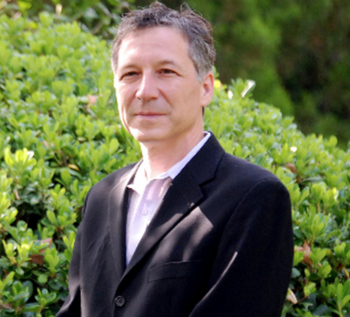
Douglas Owens, MD, was a member of the task force when the guideline was developed. He is a professor of medicine at the School of Medicine and director of the Center for Health Policy and Center for Primary Care and Outcomes Research. The centers are part of Stanford Health Policy. He is also a physician with the Veterans Affairs Palo Alto Health Care System.

We ask Owens some questions about the new guideline:

Q: What prompted this new recommendation by the task force?

Owens: Cardiovascular disease is the leading cause of death in the United States, accounting for 1 in 3 deaths among adults due to heart attack and stroke. And statins can provide an important benefit to people at elevated risk of cardiovascular disease. But in order to know whether statins are going to be beneficial, it’s important to know something about the patient’s cardiovascular risk.

We reviewed the literature comprehensively — including 19 randomized clinical trials involving more than 73,340 patients, as well as additional observational studies — to understand both the benefits and the harms of statins. We concluded that the benefits outweigh the harms in appropriate patients at increased risk of cardiovascular disease. The primary benefit of statins is a reduction in your chance of having a heart attack or stroke.

Q: What are statins and why do they offer such benefit?

Owens: A statin is a drug that reduces the production of cholesterol by the liver. High cholesterol is a significant risk factor for cardiovascular disease and stroke, and statins help prevent the formation of the so-called bad cholesterol. Statin drugs also help lower triglycerides, or blood fats, and raise the so-called good cholesterol, HDL.

While there are some reported side effects from the use of statins, such as muscle and joint aches, most people tolerate statins fairly well. There is mixed evidence about whether statins may result in a modest increase in the chance of diabetes, but the task force assessed the benefits to clearly outweigh harms in patients at increased risk of cardiovascular disease.


Q: Who should be taking low- to moderate-dose statins?

Owens: The task force recommends that clinicians offer statins to adults who are 40 to 75 years old and have at least one existing cardiovascular disease risk, such as diabetes, hypertension, high cholesterol or smoking. They also must have a calculated risk of 10 percent or more that they will experience a heart attack or stroke in the next decade.

The task force recommends clinicians use the American College of Cardiology/American Heart Association risk calculator to estimate cardiovascular risk because it provides gender- and race-specific estimates of heart disease and stroke.

For people with a risk of 7.5 to 10 percent of heart attack or stroke over the next decade, the task force recommends individual decision-making, as the benefits of statins are less in this age group because these people have a lower baseline risk of having a cardiovascular event.

The task force also looked at the initiation of statins in people 75 or older and found there wasn’t enough evidence to determine whether people in this age group who have not previously been on a statin would benefit from starting a statin. So the task force suggests people in this age group consult their physicians about whether a statin may be beneficial.

Q: Do these new statin guidelines override the task force recommendation in 2008 that adults be screened for lipid disorders due to high cholesterol?

Owens: Yes, this recommendation replaces the 2008 recommendation on screening for lipid disorders in adults.

The accumulating evidence on the role of statins in preventing heart disease has now led the task force to reframe its main clinical question from “Who should be screened for dyslipidemia?” to “Which population should be prescribed statin therapy?”

We recommend that physicians go beyond screening for elevated lipid levels and assess the overall cardiovascular risk to identify adults ages 40 to 75 years who will benefit most from statin use.

Q: What does the task force hope to accomplish with the new recommendation?

Owens: We hope this guideline will help both clinicians and patients decide what their cardiovascular risk is and what steps they can take to reduce those risks, which include a healthy lifestyle, a healthy diet and exercise, and for appropriate patients at elevated risk for cardiovascular disease, potentially a statin. 

We also hope to highlight areas that would benefit from additional research. Further research on the long-term harms of statin therapy, and on the balance of benefits and harms of statin use in adults 76 years and older, would be helpful in informing clinicians and patients. 


Hero Image
hearts illustration
All News button
1
-

Tokyo Foundation - Shorenstein APARC Joint Symposium


RSVP required: send name & affiliation with the subject line “TF-APARC Symposium” to info@tkfd.or.jp
 

On November 8, Americans will go to the polls to choose their new president. How will the new administration tackle pressing issues confronting the United States and the world? For clues on the kind of policies the White House is likely to pursue starting next January to power the US economy and address foreign and security priorities, the Tokyo Foundation will host a symposium inviting top US and Japanese experts on November 17--less than 10 days following the election.

Organized jointly with the Shorenstein Asia-Pacific Research Center at Stanford University, the symposium will feature such experts on the Stanford faculty as Edward Lazear, former chairman of the President’s Council of Economic Advisers, and former US Ambassador to Japan Michael Armacost. Japanese panelists will include former World Bank economist and now Waseda University professor Shujiro Urata and Tokyo Foundation director of policy research Bonji Ohara.

To be conducted in English and Japanese (with simultaneous interpretation), the event will examine the direction of US policy, its impact on Japan, and the future of Japan-US relations.
 

Program

9:30     Opening Remarks

Gi-Wook Shin (Director, Shorenstein APARC, Stanford University)
Takeo Hoshi (Chair of the Board, Tokyo Foundation; Director, Japan Program, Shorenstein APARC, Stanford University)

9:40     Keynote Address

Edward Lazear (Professor, Graduate School of Business, and Senior Fellow, Hoover Institution, Stanford University; former Chairman of the President’s Council of Economic Advisers)

10:00   Panel Discussion: “Economic and Trade Policies under the New Administration”

Panelists
Shujiro Urata (Professor, Graduate School of Asia-Pacific Studies, Waseda University)
Edward Lazear
Kathleen Stephens
(Distinguished Fellow, Shorenstein APARC, Stanford University; former US Ambassador to South Korea)
Kenji Kushida (Research Associate, Japan Program, Shorenstein APARC, Stanford University)

Moderator
Takeo Hoshi

10:45   Q&A

11:00   Panel Discussion: “Foreign and Security Policies under the New Administration”

Panelists

Michael Armacost (Distinguished Fellow, Shorenstein APARC, Stanford University; former US Ambassador to Japan)
Karl Eikenberry (Distinguished Fellow, Shorenstein APARC, Stanford University; former US Ambassador to Afghanistan)
Bonji Ohara (Director of Policy Research, Tokyo Foundation)

Moderator
Gi-Wook Shin

11:45   Q&A


Event Link and RSVP


2nd Floor Meeting Room, Nippon Foundation Building (1-2-2 Akasaka, Minato-ku, Tokyo)

Symposiums
Authors
News Type
News
Date
Paragraphs

Stanford students are applying lean start-up techniques to some of the world’s most difficult foreign policy issues.

The fall 2016 quarter class, Hacking for Diplomacy: Tackling Foreign Policy Challenges with the Lean Launchpad, is a first-of-its-kind course for studying statecraft, created as a reflection of the best that Stanford and Silicon Valley offers in the way of pioneering paradigms. Hacking for Diplomacy is co-taught by Joe Felter, a senior researcher at Stanford’s Center for International Security and Cooperation (CISAC). It is based on the Lean LaunchPad methodology, created by course designer Steve Blank, a Stanford lecturer and entrepreneur.

The teaching team also includes Jeremy Weinstein, a political science professor at the Freeman Spogli Institute; Zvika Krieger, the U.S. Department of State's Representative to Silicon Valley; and Steve Weinstein, the CEO of MovieLabs.

'Breaking free'

The class is based on cultivating ideas and imagination, breaking free of the traditional “business plan” approach to rolling out new products and solutions. In the case of diplomacy, the lean start-up method is fast and flexible above all. It has three key principles based on concepts such as "mission model canvas," "beneficiary development," and "agile engineering,” according to Felter, also a research fellow at the Hoover Institution.

“The first principle is accepting that any proposed solution to a problem whether in the commercial world or public sector is initially just a set of untested hypotheses – at best informed guesses – as to what may solve the needs of a customer or beneficiary,” said Felter.

Regarding beneficiary development, he said, experiential learning is central.

“There are no answers to complex challenges ‘inside the building,’ if you will, and students must ‘get out of the building’ to find out –in as intimate detail as possible – the various pains and gains experienced by the various beneficiaries, stakeholders and end users that must be addressed to find viable and deployable solutions to their problems,” Felter said.

The last principle, “agile development,” is based on the view that proposed solutions are generated and constantly updated through a collecting of data and feedback. This in turn, Felter explained, is rapidly tested and new solutions are designed based this iterative process.

Overall, he noted, the core idea is that entrepreneurs are everywhere, and that lean startup principles favor experimentation over elaborate planning, offering a faster way to get a desired product or solution to market.

Real-world instruction

In the class, student teams analyze real-world foreign policy challenges. They then use lean startup principles to find new approaches to seemingly intractable or very complex problems that have bedeviled the foreign policy world. The teams actually work with mentors and officials in the U.S. State Department and other civilian agencies and private companies.

Each week, the teams present their findings (“product”) to a panel of faculty and mentors, who will critique their solutions. The outcomes will range, as they vary from problem to problem. Examples include human rights, food security, refuges and labor recruitment, and mosquito disease threats, among others.

On Oct. 10, U.S. Secretary of State John Kerry visited the class. “Brilliant minds are applying technology to world’s toughest problems. Their perspective will inform,” Kerry tweeted after the class.

Kerry’s State Department gave the students seven challenges to address – human trafficking, avoiding space collisions, tracking nuclear devices, and countering violent extremism. The students will explore and analyze these issues through the rest of the quarter.

One student, Kaya Tilev, later asked Kerry what the students should be striving for to make their “solutions” a reality for national policymakers.

Kerry said, “Well, you’re doing it. You’re in it. You’re in the program. And I have absolute confidence if you come up with a viable solution it is going to be implemented, adopted, and institutionalized.”

Zvika Krieger, the state department official, told the students that Kerry was impressed with them and the class.

“He (Kerry) brought up our class in all of his meetings that day, including at a lunch with the CEOs/founders of Google, Airbnb, and Lyft; in a podcast interview with Wired magazine, and in remarks at the Internet Association's conference,” Krieger wrote in an email to them.

Global flashpoints are proliferating around the globe – the Syrian War, conflict and civil wars across the Middle East and in parts of Africa; the pursuit of weapons of mass destruction by states and non-state groups; the most significant flow of refugees since World War II; North Korea nuclear testing; Russian adventurism on its borders; China’s forays into the South China Sea; and a changing climate.

In other words, there is no shortage of thorny problems for young minds to solve as they embark on their careers.

‘Hungry to apply their energy’

Jeremy Weinstein, the political science professor, described the students as “hungry to apply their energy and talents to real-world problems, and to use hands-on experiences as a way of accelerating their learning.”

The class taps into that motivation by bringing together data scientists, engineers, and social scientist, he noted. In the end, the idea is for students to learn how to “innovate inside government.”

Weinstein is optimistic that this class – and a stronger connection between the State Department and Stanford’s technical and policy expertise – can drive more innovation inside government.

“Technology can play a critical role in addressing many of today’s foreign policy challenges, and this class is one new way for senior U.S. officials to tap into the passion, creativity and talent of Silicon Valley,” he said.

Hacking for defense

Last year, Felter and Blank also led a Hacking for Defense class based on the same lean start-up principles. Hacking for Diplomacy is co-listed as both an International Policy Studies and a Management Science and Engineering course – it counts for international relations and political science majors as well.

Blank, a consulting associate professor in engineering, told the Stanford News Service in a recent story that he seeks to cultivate in students a passion for giving back to society and their world.

“We’re going to create a network of entrepreneurial students who understand the diplomatic, policy and national security problems facing the country and get them engaged in partnership with islands of innovation in the Department of State,” said Blank, who also wrote about the new hacking for Diplomacy course in the Huffington Post.

“Teams must take these products out to the real world and ask potential users for feedback,” he noted.


Hero Image
29612136363 923bc390c7 o
The new Stanford class, "Hacking for Diplomacy," gives students the opportunity to analyze global challenges and apply "lean start-up" methods to solving them. On Oct. 10, U.S. Secretary of State John Kerry visited the class, which is co-taught by CISAC senior research scholar Joe Felter.
Courtesy of Zvika Krieger
All News button
1
News Type
News
Date
Paragraphs

The Japan Program held the fourth annual Stanford Juku on Japanese Political Economy from September 29 – October 1. Over 40 scholars from various parts of the US and Japan participated in the conference, which took place at the Oksenberg Conference Center at Encina Hall. The first portion of the program (9/29 and morning of 9/30) focused on research in political science/political economy and international relations, and the latter portion of the program (afternoon of 9/30 and 10/1) focused on research in economics.

The main goal of the program is to attract young researchers who will go on to become leaders in the study of Japanese politics and Japanese economy in the near future.  Distinctive features of the Juku are the long times allotted to each paper to allow for two in-depth discussants and discussion among participants, as well as ample time for informal discussions and interactions among participants allowing for collaborations and expansion of the network of researchers on Japan in political science and economics. We received a large volume of quality paper submissions this year, which made the selection process very competitive. 

The first day included four papers in political science/political economy and international relations. Daniel Smith from Harvard University presented a paper co-authored by Yusaku Horiuchi (Dartmouth College) and Teppei Yamamoto (Massachusetts Institute Technology) entitled, "Identifying Voter Preferences for Politicians' Personal Attributes: A Conjoint Experiment in Japan," with discussants Ethan Scheiner (University of California, Davis) and Mike Tomz (Stanford University).

Amy Catalinac (New York University) presented a paper co-authored by Frances Rosenbluth (Yale University) and Hikaru Yamagishi (Yale University) entitled "Party Strategies and Foreign Policy in Post-Electoral Reform Japan." The Discussants for the paper were Gary Cox (Stanford) and Teppei Yamamoto (MIT).

Jacques Hymans from University of Southern California presented his paper on “The Limits of Japan's Energy Angst: The Case of Geothermal Power.” Mark Thurber (Stanford) and Steve Vogel (University of California, Berkeley) were the discussants.

The fourth paper was “Democratic Community and Its Consequences: Evidence from Japan” by Jonathan Chu (Stanford), discussed by Christina Davis (Princeton University) and Megumi Naoi (University of California, San Diego).

Christina Davis (Princeton) started off the second day by presenting her paper “Joining the Club: Accession to the GATT/WTO." Discussants were Jonathan Chu (Stanford) and Phillip Lipscy (Stanford).

The political science/political economy section ended with Megumi Naoi (UC, San Diego) presenting a paper co-authored by Chun-Fang Chiang (National Taiwan University), Jason Kuo (Post-doc, Georgetown University), Jing-tan Liu (National Taiwan University) entitled, "What Do Voters Learn from Foreign News? Experimental Evidence on PTA Diffusion in Japan and Taiwan." Discussants were Kenji Kushida (Stanford) and Yuki Takagi (Stanford). 

After lunch, two economics papers were presented.  Wataru Miyamoto (Bank of Canada) presented a paper co-authored by Thuy Lan Ngyuen (Santa Clara University) and Dmitriy Sergeyev (Bocconi University) entitled, "Government Spending Multipliers under the Zero Lower Bound: Evidence from Japan" with discussants Yuriy Gordonichenko (UC, Berkeley) and Johannes Wieland (UC, San Diego).

The second paper was “Government Spending Multipliers under the Zero Lower Bound: Evidence from Japan”, by Robert Dekle (USC), Nobuhiko Kiyotaki (Princeton) and Tsutomu Miyagawa (Gakushuin University).  Huiyu Li (Federal Bank of San Francisco) and Shuichiro Nishioka (West Virgina University) were the discussants.  A group dinner followed the second day.

The final day included four papers in economics.  The first was “Will the Sun Also Rise? Five Growth Strategies for Japan by Yoko Takeda (Mitsubishi Research Insitute).  Discussants were Michael Hutchison (US, Santa Cruz) and Ryo Kambayashi (Hitotsubashi University).

The second paper was "Natural Disaster and Natural Selection" by Hirofumi Uchida (Kobe University), Daisuke Miyakawa (Hitotsubashi), Kaoru Hosono (Gakushuin), Arito Ono (Chuo University), Taisuke Uchino (Daito Bunka University) and Iichiro Uesugi (Hitotsubashi).  Discussants were Nobuhiko Hibara (Waseda University) and Johannes Wieland (UC, San Diego).

Koichiro Ito (University of Chicago) presented a paper co-authored by Takanori Ida (Kyoto University) and Makoto Tanaka (GRIPS) entitled “Information Frictions, Switching Costs, and Selection on Elasticity: A Field Experiment on Electricity Tariff Choice.”  Karen Eggleston (Stanford) and Hitoshi Shigeoka (Simon Fraser University) were the discussants.

The final paper was “Good Jobs and Bad Jobs in Japan: 1982-2007” by Ryo Kambayashi (Hitotsubashi) and Takao Kato (Colegate University), discussed by Takeo Hoshi (Stanford) and David Vera (California State University, Fresno).

Hero Image
photo juku 2016
All News button
1
Authors
News Type
News
Date
Paragraphs

CISAC nuclear scientist Siegfried S. Hecker earlier this year released a book, Doomed to Cooperate, about how American and Russian scientists joined forces to avert some of the greatest post-Cold War nuclear dangers. Physics Today and Arms Control Today recently ran reviews on the work. Below is a Nov. 1 article that Hecker wrote on this subject for Russia Matters:

By Siegfried S. Hecker

Recalling why U.S.-Russian nuclear cooperation was essential during the late 1980s, Russia’s then-First Deputy Minister of Atomic Energy Lev D. Ryabev said: “We arrived in the nuclear century all in one boat—a movement by any one will affect everyone… [Russian and American nuclear scientists] were doomed to work on these things together, which pushed us toward cooperation.”

Russia mattered then and it matters now. Today, like 30 years ago, the size of its nuclear program—namely its nuclear weapons, facilities, materials, experts—and its safety, security and environmental challenges are rivaled only by the United States. They dwarf all others in the world combined.

The dangerous difference between then and now is that the hard-won cooperation that amazingly prevented nuclear weapons, materials and technologies from spilling out of the disintegrating Soviet empire and into the hands of actors bent on deploying them has been replaced with animosity, tension and a freeze on substantive collaboration. Within the past month two U.S.-Russian agreements—on plutonium disposition and on cooperation in nuclear- and energy-related scientific research and development—have been suspended. Another one—on conversion of Russian research reactors—has been terminated altogether. Meanwhile, officials in Europe and the United States have tracked a number of disturbing activities suggesting that the Islamic State and its sympathizers may be pursuing nuclear and radiological terrorism as the group has been pushed on the defensive.

I must add that Russia also matters to me personally: It has been inextricably intertwined with my life. I was born during World War II in Europe. My father, a conscript in the German army, never returned from the Russian front. I grew up in post-war Austria, which until 1955 was under divided Allied and Soviet occupation. In 1956, I immigrated to the United States with my mother and siblings.

For the first 20 years after I received my bachelor’s degree in metallurgy and materials science from Case Institute of Technology in 1965, Russia also mattered because I spent most of that time employed at the Los Alamos National Laboratory. Our job was to deter the Soviet Union, which was in intense ideological, economic and military competition with the United States.

I became director of the laboratory in 1986 shortly after Mikhail Gorbachev took over leadership of the Soviet Union and dramatically changed geopolitics with his outreach to U.S. President Ronald Reagan and the West. At the end of 1991 the Soviet Union dissolved into 15 independent states. Remarkably and unexpectedly, the Cold War was over.

Mutually assured destruction was replaced by an acknowledgement of mutual nuclear interdependency. The West, rather than being threatened by the enormous nuclear might in the hands of Soviet leaders, was now threatened by Russia’s weakness and the potential for its new government to lose control of the nuclear assets it had inherited from the Soviet Union. The safety and security of Russia’s nuclear assets—its tens of thousands of nuclear weapons, over a million kilograms of fissile materials, a huge nuclear infrastructure and some one million employees of the once-powerful Soviet nuclear establishment—posed an unprecedented risk for Russia and the world.

Fortunately, collaboration replaced confrontation 25 years ago. President George H.W. Bush reached across the political divide to lend a helping hand during times of Soviet political and economic chaos to help Moscow manage its huge nuclear complex. Senators Sam Nunn and Richard Lugar pioneered the visionary landmark Cooperative Threat Reduction legislation (appropriately called Nunn-Lugar) to provide rationale and financial support to that helping hand. The nongovernmental community—led by academics at U.S. universities, foundations such as the Carnegie Corporation of New York, groups such as the Federation of American Scientists, the U.S. National Academies and the Natural Resource Defense Council—paved the way by reaching out to courageous Soviet/Russian organizations, such as its Academy of Sciences and other leading thinkers.

The role of the American and Russian nuclear weapons laboratories changed as well. They had become acquainted during the 1988 Joint Verification Experiment, underground nuclear tests conducted at each other’s nuclear test sites with on-site monitoring by the other side to develop confidence in nuclear test verification so as to facilitate ratification of the Threshold Test Ban Treaty, which had lingered unratified since its signing in 1974. That acquaintance and subsequent interactions at the Geneva TTBT negotiations prompted both sides, but led by the Russian nuclear weapons scientists, to push their governments to allow scientific collaboration between former adversaries.

In February 1992, less than two months after the dissolution of the Soviet Union, Washington and Moscow approved exchange visits of the directors of their nuclear weapon design laboratories: Vladimir Belugin, director of the Russian Federal Nuclear Center VNIIEF, and Vladimir Nechai, director of the Russian Federal Nuclear Center VNIITF, visited the Lawrence Livermore and Los Alamos national laboratories; John Nuckolls, director of LLNL, and I, director of LANL, visited the formerly secret cities of Sarov and Snezhinsk, home to VNIIEF and VNIITF, respectively.

Those visits marked the beginning of a remarkable period spanning more than two decades of scientific and technical nuclear cooperation that we called lab-to-lab cooperation—the story told in a book called “Doomed to Cooperate” by dozens of Russian and American scientists, engineers and officials. The book demonstrates how the camaraderie and the interpersonal relationships among the scientists and engineers helped them overcome the radically different views of the nuclear challenges as seen by the two governments.

To the U.S. government, Russia’s nuclear complex was considered an inheritance from hell: the danger of loose nukes, loose nuclear materials, loose nuclear experts and loose nuclear exports. The Russian government considered its nuclear complex part of its salvation in that it would provide a basis to help the country achieve a competitive, modern industrial base and economy. In “Doomed to Cooperate,” we, the scientists and engineers, describe how we confronted the unprecedented safety and security challenges, and how we collaborated to discover new science and help Russia’s vastly oversized nuclear workforce use their talents in civilian and commercial pursuits.

Russia’s nuclear complex has mattered enormously over the past 25 years. It has survived the four nuclear dangers mentioned above to a large extent because of the Russian nuclear community’s dedication, professionalism and patriotism—and their ability to persevere during difficult times. But it also had the benefit of innovative U.S. government programs, collaborations championed by U.S. NGOs and the many hundreds of nuclear lab-to-lab collaborations. These efforts helped the huge Soviet nuclear complex transition those in Russia and several other former Soviet republics in a safe and secure manner.

Unfortunately, whereas a convergence of our governments’ interests immediately following the end of the Cold War allowed for innovative nuclear cooperation, growing political differences during the past 10 to 15 years have done the opposite. The current differences over Crimea, eastern Ukraine and Syria have all but brought meaningful nuclear collaboration to an end.

Yet, Russia continues to matter—and cooperation between Moscow and Washington on common nuclear challenges is essential. They must take steps to reverse what appears to be a return to an arms race and potential nuclear confrontation. They must continue to share experiences and best practices to keep their huge nuclear complexes safe and secure. Although Russia has made enormous improvements in these areas, lessons from the United States nuclear complex demonstrate that this job is never done. Together, Moscow and Washington have a greater stake than anyone in ensuring that the nuclear nonproliferation regime is strengthened rather than crippled. And more than anyone in the world they have a responsibility to join their technical, professional and military talents to help the world avoid nuclear terrorism.

The stakes couldn’t be higher: Russia matters; nuclear cooperation is essential; isolation invites catastrophe.


Hero Image
9937212185 e977270dbd o 2
CISAC nuclear scientist Siegfried S. Hecker, second from the right, says that American and Russian scientists need to work together on averting nuclear dangers – as they have done so in the past.
Courtesy of Siegfried Hecker
All News button
1
News Type
News
Date
Paragraphs

Effective Law Enforcement Institutions and Democratic Accountability: Workshop Focuses on Regional Issues in Law Enforcement

The Stanford Program on Poverty and Governance delivered its five-day training course, “Effective Law Enforcement Institutions and Democratic Accountability,” to law enforcement professionals from the Planning Unit of the Mexican Comision Nacional de Seguridad (CNS). Held in Encina Hall October 11-15, 2016, the workshop was led by Professors Beatriz Magaloni and Alberto Diaz-Cayeros as part of their U.S. State Department-funded research project on police accountability and citizen trust in Mexico. Stanford political scientists and legal scholars participated in the week-long workshop to address a wide range of topics focused on the dynamics between criminal violence, police practices and citizen trust. Highlights of the unique curriculum included:

  • Design of police interventions by Beatriz Magaloni and Alberto Diaz Cayeros, with discussion of drug policy, fighting organized crime, what law enforcement looks like up close, and prevention of violence.
  • How to measure the success of police operations by Edgar Franco, a doctoral student in Political Science.
  • Use of empirical evidence to develop effective public policy by Gustavo Robles, Ph.D candidate in Political Science, with a discussion of methods for gathering and analyzing data and how to develop indicators for performance, results and impact.
  • Regional issues with a focus on Latin America, including anomie and law, by Stanford Law School visiting professor Rogelio Perez-Perdomo.
  • Roundtable moderated by Beatriz Magaloni featuring Francis Fukuyama, Erik Jensen and Stephen Stedman on accountability, anti-corruption practices, trust in public institutions, civil engagement, and the role of international organizations.
  • A lecture by legal scholar Mirte Posterna from the Stanford Law School on human Rights, security and anti-drug policy.

The Mexican delegation took afiled trip to the Stockton Police Department to meet with Chief of Police Eric Jones, an innovator in effective community policing and use of body-worn cameras. They also a visited Stanford's new David Rumsey Map Center, where scholars can work with digital mapping software to manipulate, enlarge, quantify, aggregate, and visualize geo-data in unique ways for research.

The final session of the workshop focused on developing collaborative approaches between scholars and law enforcement practitioners in Mexico on a CNS-sponsored "risk terrain" project currently underway in Acapulco, with an analysis of police patrolling data, the role of schools in mitigating risk for youth violence and gang activity, and the design of federal police surveys.

The workshop and site visits were instrumental in advancing key goals of U.S. State Department-funded research project on project police accountability and citizen trust, which include assessing the efficacy of new law enforcement approaches in coordinating policing between federal, states and municipal agencies, mapping criminal activity and drug trafficking routes in Mexico, and correlating socio-economic characteristics with levels of trust among Mexican citizens.

Hero Image
encina group shot
All News button
1
Authors
News Type
News
Date
Paragraphs

You can now listen to podcast seminars held at the Center for International Security and Cooperation on Stanford's iTunes U site.

With more talks to be added after they occur, the CISAC iTunes page launched this week with the following podcasts from the fall 2016 quarter:

• Margaret Levi's Oct. 13 talk where she discusses the conditions under which individuals act beyond their narrow economic interests in situations where logic suggests that self-interest should triumph. A political science professor, Levi is the director of Stanford's Center for Advanced Study in the Behavioral Sciences.

• Derek Chollet's Oct. 10 seminar on President Obama's foreign policy legacy. Chollet served in senior positions at the White House, State Department, and Pentagon.

• Mark Zoback's Oct. 10 discussion about the opportunities and challenges of the world's natural gas abundance. Zoback is a Stanford geophysics professor and director of the Stanford Natural Gas Initiative.

To access the podcasts, go to itunes.stanford.edu. Then click on the red button, "Launch Stanford on iTunes U," and look for CISAC under the "What's New Button. Check the CISAC homepage for future speaker events that will be eventually added to the center's iTunes site.

Stanford on iTunes U is an archive of audio and video content from schools, departments, and programs across the university on Apple's popular iTunes platform. The site includes Stanford course lectures, faculty presentations, event highlights, music and more. The collection is maintained by Stanford's Office of University Communications.

All of the content from Stanford on iTunes U is free. To access the site, make sure you have the most current version of iTunes installed on your Mac or PC computer. To download the application, visit to www.apple.com/itunes. Next, launch the iTunes application and click on iTunes Store in the source list. Select iTunes U in the top navigation area, and click on Stanford on the resulting page. Alternatively, you can go directly to the university's iTunes U page via the “Launch Stanford on iTunes U” link at itunes.stanford.edu. Stanford launched its iTunes U collection in 2005.


Hero Image
gettyimages 484812177
The Center for International Security and Cooperation (CISAC) officially debuted its Stanford iTunes page this week. See itunes.stanford.edu. Click on the red button, "Launch Stanford on iTunes U," and look for CISAC under the "What's New Button."
arinahabich, Getty Images
All News button
1
Subscribe to The Americas