-

Abstract:

While populism takes different forms in different countries, the success of populist parties and leaders comes from their ability to represent grievances. Current analyses emphasize the personality, background and rhetoric of populist leaders, but, often neglect the intermediary mechanisms that help populists not only address and represent but also generate “the people” from a diverse set of constituencies. By focusing on the authoritarian populist context of Turkey, this paper examines the role of pro- government and government-organized NGOs in helping the ruling Justice and Development Party connect with, represent, and shape the youth public in the aftermath of the uprisings across the wider Middle East. The paper argues that the making of authoritarian Turkey and the resilience of President Erdoğan should be traced as much to the mechanisms of consent-building as to the mechanisms of coercion.


Speaker Bio:

Image
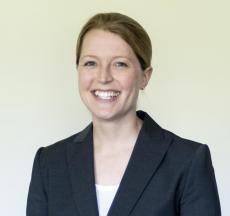
ayca alemdaroglu
Ayça Alemdaroğlu is a research assistant professor of sociology and the associate director of the Keyman Modern Turkish Studies Program at Northwestern University. She previously worked as a postdoctoral researcher in the Department of Anthropology and a teaching fellow in the Thinking Matters Program at Stanford. Her research engages with a broad range of theoretical and ethnographic issues including youth culture and politics, gender and sexuality, constructions of space and place, nationalism, eugenics, and higher education. She has B.Sc. and M.A. in Political Science and Public Administration from the Middle East Technical University and Bilkent University, and Ph.D. in sociology from the University of Cambridge.

Ayça Alemdaroğlu Visiting Scholar, CDDRL
Seminars
(650) 725-4576
0
pena_octavion_10_28_21.jpg

Octavio Peña joined FSI as the facilities manager in December 2017. He brings extensive Stanford facilities experience to FSI. Since joining Stanford in 1992, Octavio has served in a variety of capacities across campus, including as operations center manager, maintenance planner and plant services dispatcher for Land, Buildings, and Real Estate (LBRE), telecom attendant leader for University IT Services, and student manager at Residential & Dining Enterprises (R&DE).

Facilities Manager
Authors
News Type
News
Date
Paragraphs

Political scientist Anna Grzymala-Busse finds that authoritarians face a choice in the face of change: try to cling to power, exit governing or reinvent themselves as democrats. It’s those who reinvent themselves as newly minted democrats who fare the worst in the long run.

In the years since World War II, as the global geopolitical map was drawn and redrawn along ideological lines, the world witnessed ascension of many authoritarians. They often ruled for long stretches, but eventually most faced a political reckoning. The people they governed no longer accepted their authority and demanded change.

The fate of authoritarians in the aftermath of such crises is the subject of a new study in the journal Party Politics written by Stanford political scientist Anna Grzymala-Busse. At such inflection points, she says, authoritarians face a [[{"fid":"229407","view_mode":"crop_870xauto","fields":{"format":"crop_870xauto","field_file_image_description[und][0][value]":"Photograph of Anna Grzymala-Busse.","field_file_image_alt_text[und][0][value]":"Photograph of Anna Grzymala-Busse.","field_file_image_title_text[und][0][value]":"Photograph of Anna Grzymala-Busse.","field_credit[und][0][value]":"","field_caption[und][0][value]":"","thumbnails":"crop_870xauto","alt":"Photograph of Anna Grzymala-Busse.","title":"Photograph of Anna Grzymala-Busse."},"type":"media","field_deltas":{"1":{"format":"crop_870xauto","field_file_image_description[und][0][value]":"Photograph of Anna Grzymala-Busse.","field_file_image_alt_text[und][0][value]":"Photograph of Anna Grzymala-Busse.","field_file_image_title_text[und][0][value]":"Photograph of Anna Grzymala-Busse.","field_credit[und][0][value]":"","field_caption[und][0][value]":"","thumbnails":"crop_870xauto","alt":"Photograph of Anna Grzymala-Busse.","title":"Photograph of Anna Grzymala-Busse."}},"link_text":null,"attributes":{"alt":"Photograph of Anna Grzymala-Busse.","title":"Photograph of Anna Grzymala-Busse.","style":"float: right; height: 350px; width: 200px; margin-top: 10px; margin-left: 15px; margin-bottom: 10px;","class":"media-element file-crop-870xauto","data-delta":"1"}}]]choice:theycan cling to power, albeit by ceding a certain degree of control, or they can exit governing altogether, either by dissolving the party entirely or, more dramatically, by reinventing themselves as democrats.
 

Newly minted democrats

It was these reinventors – the newly minted democrats – that intrigued Grzymala-Busse the most. She found that while many enjoyed initial electoral success, most ended up losing power in the long run.
 
“Paradoxically,” Grzymala-Busse said, “this fate seems to flow precisely from the decision to reinvent their organizations, their political symbols and their state programs to fit the norms of free political competition.”
 
In adopting democratic rhetoric and standards of competence, it seems, the parties find initial success, but then are unable to sustain newfound democratic philosophies and programs. They hoist themselves on their own petards, as she put it in her paper, alluding to Shakespeare’s Hamlet.
 
These reinvented parties often attract new politicians who are more entrepreneurial than their predecessors. Those new faces, however, often prove to be mere opportunists. The resulting scandals destroy party credibility and contribute to an unending downward political spiral.

Ironically, Grzymala-Busse found that the best choice for authoritarians is simply to cling to power “counting on a loyal if unhappy electorate,” even if it means ceding much of their once-monopolistic grip on power to democratic reforms.

81 governments studied

For her study, Grzymala-Busse examined and quantified the resulting political denouements of 81 authoritarian governments spanning the period from 1945 to 2015. Countries studied include the former Soviet Bloc, China, Cuba, several in Southeast Asia, many African nations and Mexico. The governing systems ranged from the communism of the Soviet Bloc and socialism to secular state-building and rule for the sake of national security.

The success of the reinventors can be rapid and remarkable, but so too can be the demise. Grzymala-Busse noted that the Hungarian Socialist Party won 43 percent of the vote and 49 percent of the seats in 2006, only to succumb to allegations of deception, mismanagement and fraud soon afterward. In Poland, the Democratic and Left Alliance (SLD), which won 41 percent of the vote in 2001, watched as its power steeply declined in the subsequent decade until the party dissolved entirely in 2011.

“Those who reinvented shone more brightly for a brief time, but burned out. Those who chose orthodoxy never enjoyed the great success of the reinventors, but they survived,” she said.

And what of those authoritarians who choose neither to remain nor to reinvent? Grzymala said that they simply dissolve back into society where former members often capitalize on their connections to become captains of industry.

“Some become oligarchs,” she said, “retaining power by other means.”

Lessons on change

The takeaway of her study for at-risk authoritarians, Grzymala-Busse said, is that reinvention alone is not enough to carry the party. New parties cannot survive as the remnants of their former selves. They must become entirely new organizations with viable programmatic approaches. Likewise, she said, when newly minted democrats hail competence as a competitive advantage, they must make good on the promise. If they fall short, they face exceptionally harsh outcomes at the polls.

“The irony is, without real change, the parties that built democracy by supporting free elections fall victim to those same democratic forces they championed.”

Anna Grzymala-Busse is the Kevin and Michelle Douglas Professor of International Studies and a senior fellow at the Freeman Spogli Institute for International Studies at Stanford University.

The study was made possible by financial support from the Carnegie Foundation.


All News button
1
Authors
News Type
News
Date
Paragraphs

The Freeman Spogli Institute for International Studies is proud to congratulate Stanford’s 2018 Rhodes and Schwarzman Scholars. In today’s climate, our scholarly work on foreign policy and international issues can feel ominous, so FSI is especially pleased to share the good news that four of the Rhodes and three of the Schwarzman Scholars studied with us.

Among the newly-appointed Rhodes scholars are Jelani Munroe, Alexis Kallen and Qitong “Tom” Cao, all current or former honors students in the Fisher Family Undergraduate Honors Program at FSI’s Center for Democracy, Development, and the Rule of Law (CDDRL). Madeleine Chang, co-president of the FSI-sponsored American Middle Eastern Network for Dialogue at Stanford (AMENDS), joins them as well. The Rhodes Scholarships provide all expenses for study at Oxford University; all four will commence in October 2018.

The Schwarzman Scholarships fund one-year master's degrees in global affairs at Beijing’s distinguished Tsinghua University. Scholars include Claire Colberg and Daniel Kilimnik, alumni of the Center for International Security and Cooperation (CISAC) Honors Program, and Lucienne “Lucy” Oyer, a current Fisher Family honors student at CDDRL. They will begin study in August 2018.

“We are very proud of these terrific students in the FSI family and our exceptional faculty who have mentored them,” said FSI Director Michael McFaul. “These seven have exhibited extraordinary ideas and leadership here at FSI, and we look forward to seeing the great contributions they will make in their fields.”

While working on his honors thesis on the role of the armed forces in German security policy, Daniel Kilimnik relied on an FSI research grant that enabled him to interview legislators, government officials and academics in Berlin. Once he heads to Beijing, Kilimnik will investigate relationships between China, the U.S. and Europe.

“I can't imagine my undergraduate experience without the professors, mentors, friends and peers I got to know through FSI,” he said. “Without support from CISAC and FSI, I would not have been able to write my thesis.”

One CISAC mentor is Donald Emmerson, an emeritus senior fellow at FSI. As honors student Claire Colberg explored Vietnam’s policies toward China, Emmerson advised her to challenge conventional wisdom.

“All I did for Claire was to encourage her to be intellectually less respectful and more creative,” he said. “I would like to believe that merely by giving her free rein, I helped her develop her own voice.”

Madeleine Chang found her voice by embracing creative problem-solving. With help from FSI Student Programs, Chang was able to do the seemingly impossible: work around President Trump’s travel ban to hold a conference with undergraduates from all over the world, including students affected by the ban.

“The irony of being an American-Middle Eastern group unable to meet in America itself spoke to why we needed to meet: to remind ourselves and others of the incredible potential of young people connecting across borders,” Chang told Stanford News.

Unable to bring all students to the United States, Chang looked across the pond and was able to hold the AMENDS conference at Oxford. FSI senior fellow Larry Diamond and academic program manager Gina Gonzales provided support on- and off-the-ground to keep things moving, even outside the Stanford realm.

“It was incredible to see Maddie leverage her connections at Oxford to turn the challenge of overcoming the travel ban into a fantastic opportunity,” said Gonzales.

Diamond believes interactions with international students are particularly valuable to the academic community. He has advised several Rhodes-bound students who grew up outside the United States.

“It is always a particular joy working with foreign students,” he said. “They teach us so much about their countries, the development challenges they face, and how other parts of the world view the United States.

“You know when you are teaching students like Qitong and Jelani that you are engaging, in some way, future leaders in their fields.”

Hero Image
rhodes schwarzman 2017 wide
All News button
1
-

Abstract:

My presentation will not be of an academic paper but of a proposal for a research project. The Balzan Prize for International Relations, which I was recently awarded, provides funding that I intend to use to stimulate the development of a subfield in which political science has lagged: the comparative politics of climate change policy. The project is designed to be comparative in method, simultaneously theoretical and empirical, and deeply collaborative. I also hope that the project will stimulate new thinking in comparative politics and international relations. Causal inference on the basis of observational data is weak in contemporary comparative politics, but new methodological innovations have not consistently been focused on substantively important issues. Perhaps innovating in an understudied field will also facilitate a combination of rigor and relevance. My presentation will be designed to stimulate theoretical, empirical, and methodological suggestions.


Speaker Bio:

Image
robert keohane
Robert O. Keohane (PhD Harvard 1966) is Professor of Public and International Affairs (Emeritus) in the Woodrow Wilson School at Princeton University. He has served as Editor of International Organization and as President of the International Studies Association and the American Political Science Association. He is a member of the American Academy of Arts and Sciences, the American Academy of Political and Social Science, the American Philosophical Society, and the National Academy of Sciences; and he is a Corresponding Fellow of the British Academy. He has been a recipient of the Balzan Prize: International Relations: History Theory, 2016; the James Madison Award, American Political Science Association, 2014, for lifetime achievement; the Centennial Medal, Harvard Graduate School of Arts and Sciences, 2012; the Skytte Prize from the Johan Skytte Foundation, Uppsala Sweden, 2005; the Grawemeyer Award for Ideas Improving World Order, 1989, and two honorary doctorates. His publications include Power and Interdependence (with Joseph S. Nye, Jr., originally published in 1977), After Hegemony: Cooperation and Discord in the World Political Economy (1984), Designing Social Inquiry (with Gary King and Sidney Verba, 1994), and Power and Governance in a Partially Globalized World (2002). His current work focuses on the international and comparative politics of climate change policy.

Robert O Keohane Visiting Fellow at CDDRL
Seminars
-

Abstract:

What are the e ffects of mass media campaigns on the norms and behaviors of police officers as pertains to human tra fficking? Namely, can mass media campaigns be employed to induce shifts in knowledge, attitudes, beliefs and practices (KABP) of law enforcement officers, that might reduce the incidence of modern forms of slavery and assist victims of human traffi cking? Mass media, especially `entertainment education, (e.g. comic books, radio soap operas, and street theater) is frequently used as a tool for social change to convey messages around issues such as public health, gender rights, conflict resolution, or development strategies through stories that are both realistic and entertaining. Yet how can we know the e ffects of such campaigns? Speci fically, do diff erences in message formats and content a ffect the impact of campaigns against human tra fficking? The research presented here shows that mass media entertainment campaigns can e ffectively convey messages around human traffi cking, influencing attitudes, norms and behaviors of law enforcement officers around the issue. It also demonstrates how messages whose content emphasizes victim empowerment appear to be more e ffective than negative, fear-inducing appeals.


Speaker Bio:


Image
boittin margaret
Margaret Boittin is an Assistant Professor of Law at Osgoode Hall Law School (York University, Canada). Her first book, entitled The Whore, the Hostess and the Honey: Policing, Health, Business and the Regulation of Prostitution in China, is under contract with Cambridge University Press.

Margaret Boittin Assistant Professor of Law at Osgoode Hall Law School (York University, Canada)
Seminars
-

Abstract:

Throughout the world, voters lack access to information about politicians, government performance, and public services. Efforts to remedy these informational deficits are numerous. Yet do informational campaigns influence voter behavior and increase democratic accountability? Through the inaugural Metaketa Initiative, sponsored by the Evidence in Governance and Politics (EGAP) research network, we aim to address this substantive question and at the same time introduce a new model for cumulative learning that increases coordination among otherwise independent researcher teams. We present the cumulative results (meta-analysis) from six independently conducted but coordinated field experimental studies, the findings from a related evaluation of whether practitioners utilize this information as expected, and discuss lessons learned from EGAP’s efforts to coordinate field experiments, increase replication of theoretically important questions across contexts, and increase the external validity of field experimental research.


Speaker(s) Bio:

Image
susan hyde
Susan D. Hyde is Professor of Political Science and Avice M. Saint Chair in Public Policy at the University of California, Berkeley. She is the Executive Director of the EGAP (Evidence in Governance and Politics) research network. Her research examines attempts by international actors to change politics or policies within sovereign states, particularly in the developing world. She earned her Ph.D. from the University of California, San Diego in 2006, and has held residential fellowships at the Brookings Institution in Washington, D.C. and Princeton University's Niehaus Center for Globalization and Governance. Her first book, The Pseudo-Democrat's Dilemma: Why Election Observation Became an International Norm, was published by Cornell University Press in 2011, and has received the Chadwick F. Alger Prize for the best book on the subject of international organization and multilateralism, the best book award from the Comparative Democratization section of the American Political Science Association, and Yale’s 2012 Gustav Ranis International Book Prize. Her articles have appeared in the American Journal of Political Science, the ANNALS of the American Academy of Political and Social Sciences, the British Journal of Political Science, Comparative Political Studies, International Organization, The Journal of Politics, Perspectives on Politics, Political Analysis, and World Politics.


Image
thad dunning
Thad Dunning is Robson Professor of Political Science at the University of California, Berkeley and directs the Center on the Politics of Development. He studies comparative politics, political economy, and research methodology. His current work on ethnic and other cleavages draws on field and natural experiments and qualitative fieldwork in Latin America, India, and Africa. Dunning has written on a range of methodological topics, including causal inference, statistical analysis, and multi-method research. He is chairing the inaugural EGAP Metaketa initiative, which aims to achieve greater cumulation of findings from experimental research on international development and political accountability. Dunning is the author of several award-winning books, including Natural Experiments in the Social Sciences: A Design-Based Approach (2012, Cambridge University Press—winner of the Best Book Award from the American Political Science Association’s Experiments Section), and Crude Democracy: Natural Resource Wealth and Political Regimes (2008, Cambridge University Press—winner of the Best Book Award from APSA’s Comparative Democratization Section). He also co-authored Brokers, Voters, and Clientelism: The Puzzle of Distributive Politics (Cambridge University Press, 2013), which won the 2014 Luebbert Prize for best book in comparative politics. Dunning’s articles have appeared in several journals, including the American Political Science Review, Comparative Political Studies, International Organization, Journal of Conflict Resolution, and Political Analysis. He received a Ph.D. in political science and an M.A. in economics from the University of California, Berkeley (2006). Before returning to Berkeley, he was Professor of Political Science at Yale University.

Susan Hyde Professor of Political Science at the University of California, Berkeley
Thad Dunning Professor of Political Science at the University of California, Berkeley
Seminars
-

Abstract:

At their best, decentralizing reforms make government more accountable to citizens and empower local governments to invest in their own development. Yet, successful decentralization requires that local governments raise at least some revenue to finance new service delivery responsibilities, and the capacity of local governments to generate tax revenue varies. This variation is evident in the Philippines, where capacity to tax varies greatly across cities despite uniform tax powers. I argue that business associations contribute to this variation by endorsing tax increases to enable cities to spend on infrastructure, but only if they can sustain distributional consensus and forestall local officials from diverting revenues away from business-friendly projects. I present a controlled comparison of two cities, Iloilo and Batangas, to show that business associations resolve distributional conflict by dispersing benefits across members, and monitor public spending by participating in legislative hearings and jointly managing public projects.


Speaker Bio:

Image
tans
I am a postdoctoral fellow at the Center on Democracy, Development, and the Rule of Law at Stanford University. My research explores the developmental implications of public-private linkages in decentralizing, developing countries, especially in Southeast Asia. I received a PhD in political science at Emory University and an MA in Southeast Asian studies from National University of Singapore.

Postdoctoral fellow at the Center on Democracy, Development, and the Rule of Law
Seminars
-

Abstract:

Societies with deep-seated ethnic or religious divisions pose a challenge for governance: how can a single set of political institutions govern a fragmented population peacefully and effectively? As the institution responsible for implementing and enforcing laws, the police are an especially critical piece of the governance puzzle. I explore the role of sectarian inclusion in the police forces in Iraq and Israel, two countries with legacies of violent conflict along identity lines. I argue that integrating minority groups into the rank-and-file of the police addresses common motives for anti-state violence by shaping citizens' expectations about how they will be treated by the state. I present survey, experimental, and observational evidence showing that citizens interpret police integration as a credible signal that the government does not intend to harm them, which in turn reduces citizens’ willingness to turn to violence.


Speaker Bio:

Image
matthew nanes
Matthew Nanes is a Postdoctoral Fellow at Stanford's Center on Democracy, Development, and the Rule of Law. His research explores the way that political institutions shape the citizen-state relationship, particularly in societies plagued by violent conflict and low state legitimacy. Most of his work is in the Middle East, where he has conducted field work in a number of countries including Jordan, Israel, Egypt, and Oman. He is also involved in ongoing research on policing in the Philippines. Matthew received a Ph.D. in Political Science from the University of California San Diego and holds a B.A. from Rice University.

Postdoctoral Fellow at Stanford's Center on Democracy, Development, and the Rule of Law
Seminars
Subscribe to The Americas