-

This webinar will take place on the Zoom (video conferencing) platform. Please click on the link at least 5 minutes in advance to allow ample time for setting up your computer or mobile device for Zoom: https://stanford.zoom.us/j/613472625


This webinar will introduce three Stanford-designed online courses for high school students in the United States that leverage digital learning to develop global competence and diverse perspectives. The focus will be driven by the following essential question: how do we cultivate global citizens through digital learning? Our objectives are to introduce teachers and students to innovative online courses—the Reischauer Scholars Program, Sejong Korean Scholars Program, and China Scholars Program—that connect high school students in the United States to content on Japan, Korea, and China, respectively. 

Participants will learn about how the Stanford Program on International and Cross-Cultural Education (SPICE) engages students using synchronous and asynchronous online technologies to enhance the development of cross-cultural knowledge, empathy, and understanding. We will explore the importance of leveraging technology to build an inclusive environment for sharing diverse perspectives and ideas within an online learning community, and teach strategies for actively engaging students in an online classroom. Participants will also learn about building global networks of students with an interest in developing mutual understanding and connections across borders through digital learning.

616 Jane Stanford Way
Encina Hall, E007
Stanford, CA 94305-6060

(650) 724-4396 (650) 723-6784
0
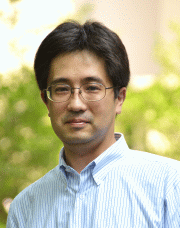
naomi_funahashi.jpg

Naomi Funahashi is the Manager of the Reischauer Scholars Program (RSP) and Teacher Professional Development for the Stanford Program on International and Cross-Cultural Education (SPICE). In addition to her work as the instructor of the RSP, she also develops curricula at SPICE. Prior to joining SPICE in 2005, she was a project coordinator at the Japanese Cultural and Community Center of Northern California and worked in technology publishing in San Francisco.

Naomi's academic interests lie in global education, online education pedagogy, teacher professional development, and curriculum design. She attended high school at the American School in Japan, received her Bachelor of Arts in international relations from Brown University, her teaching credential in social science from San Francisco State University, and her Ed.M. in Global Studies in Education at the University of Illinois, Urbana-Champaign.

She has authored or co-authored the following curriculum units for SPICE: Storytelling of Indigenous Peoples in the United States, Immigration to the United States, Along the Silk Road, Central Asia: Between Peril and Promise, and Sadako's Paper Cranes and Lessons of Peace.

Naomi has presented teacher seminars nationally at Teachers College, Columbia University, the annual Asia Society Partnership for Global Learning Conference, the National Council for Social Studies and California Council for Social Studies annual conferences, and other venues. She has also presented teacher seminars internationally for the East Asia Regional Council of Overseas Schools in Thailand, the Philippines, and Malaysia, and for the European Council of International Schools in France, Portugal, and the Netherlands.

In 2008, the Asia Society in New York awarded the 2007 Goldman Sachs Foundation Media and Technology Prize to the Reischauer Scholars Program. In 2017, the United States–Japan Foundation presented Naomi with the Elgin Heinz Teacher Award, an honor that recognizes pre-college teachers who have made significant contributions to promoting mutual understanding between Americans and Japanese. Naomi has taught over 300 students in the RSP from 35 U.S. states.

Manager, Reischauer Scholars Program and Teacher Professional Development

616 Jane Stanford Way
Encina Hall, C332
Stanford, CA 94305-6060

(650) 725-1480 (650) 723-6784
0
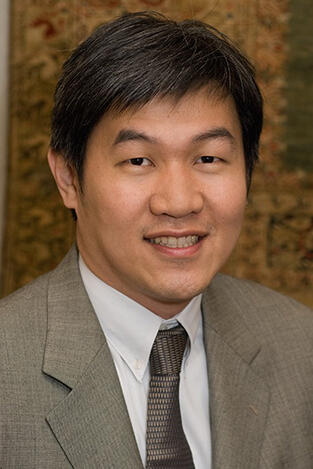
jonas_edman.jpg

Jonas Edman is a Curriculum Writer for the Stanford Program on International and Cross-Cultural Education (SPICE). In addition to writing curriculum, Jonas coordinates SPICE’s National Consortium for Teaching About Asia (NCTA) professional development seminars on East Asia for middle school teachers, and collaborates with FSI and other Stanford colleagues on developing curricula for community college instructors as part of Stanford Human Rights Education Initiative (SHREI). Prior to joining SPICE in 2010, Jonas taught history and geography in Elk Grove, California, and taught Theory of Knowledge at Stockholm International School in Stockholm, Sweden.

Jonas' professional interests lie in curriculum and instruction and teacher professional development, with a special interest in online education development. He received his Single Subject Teaching Credential in Social Science from California State University, Sacramento in 2010, and a bachelor degree in History from Stockholm University in 2008. He graduated high school from the American School in Japan in 1996.

Jonas has presented teacher seminars nationally for the National Consortium for Teaching about Asia in Omaha, Nebraska; the California Council for Social Studies in Anaheim and Burlingame, California; the National Council for the Social Studies in Washington D.C.; the Midwest Conference on Asian Affairs in East Lansing, Michigan; and the National Association for Multicultural Education in Oakland, California. He has also presented teacher seminars internationally for the East Asia Regional Council of Overseas Schools in Kota Kinabalu, Malaysia, and Bangkok, Thailand; and the European Council of International Schools in Nice, France.

Instructor, Stanford e-Tottori
Instructor, Stanford e-Yamaguchi
Instructional Designer
Date Label
Panel Discussions
News Type
News
Date
Paragraphs

"Since 1978, China’s authoritarian political system has been different from virtually all other dictatorships in part because the ruling Communist Party has been subject to rules regarding succession. Term limits for senior leadership have kicked in at regular 10-year intervals three times so far, and the party’s system of cultivating and training new leaders to replace the outgoing ones had allowed it to avoid the stagnation of countries like Egypt, Zimbabwe, Libya or Angola, where presidents ruled for decades. But all of this is out the window now because of Chinese President Xi Jinping’s recent announcement that term limits on the presidency will be abolished. This means that he will likely be China’s ruler for the rest of his life, turning at one stroke an institutionalized autocracy into a personal one. This builds upon the massive cult of personality he has been cultivating, with “Xi Jinping Thought” now canonized in the Constitution alongside Chairman Mao," writes CDDRL Mosbacher Director Francis Fukuyama in Washington Post. Read the article here


Hero Image
china 1872474 1920
All News button
1
News Type
News
Date
Paragraphs


—SPICE: Offering teacher institutes since 1973—


In 1973, the roots of the Stanford Program on International and Cross-Cultural Education (SPICE) were established with the creation of the Bay Area China Education Program, which focused on the development of K–12 curriculum materials and teacher professional development. Only a year prior, President Richard Nixon had made his historic trip to China and many American students were able to view contemporary images of China on television for the first time in their lifetimes. Teachers who attended SPICE institutes on China in the 1970s often commented that they were at a loss about how to teach about China.

Forty-four years later, a new generation of educators expressed similar sentiments at a SPICE institute. However, the challenge wasn’t so much about the teaching of China but rather the teaching of North Korea. Thus, when Pulitzer Prize-winning author Adam Johnson spoke about his book, The Orphan Master’s Son, a New York Times bestselling novel about North Korea, teachers were riveted by his comments. Teachers were interested not only in ways that his novel could help them better understand contemporary North Korea but also in ways they could use the book to help their students gain a more balanced view of North Korea. The 22 teacher participants received copies of The Orphan Master’s Son to use in their teaching and were offered two SPICE curriculum units titled Inter-Korean Relations: Rivalry, Reconciliation, and Reunification and Uncovering North Korea.  

Co-sponsored by the National Consortium for Teaching about Asia (NCTA), the SPICE summer institute, July 24–26, 2017, had the objectives of (1) deepening teachers’ understanding of Asia, U.S.–Asian relations, and the Asian-American experience; (2) providing teachers with teaching resources; and (3) creating a community of learners. The institute featured lectures by Stanford faculty (like Johnson), U.C. Berkeley faculty, and other experts on a range of Asia- and Asian-American-related topics closely aligned with the History-Social Science Framework for California Public Schools standards, which were recently revised. Interactive curriculum demonstrations by SPICE staff were also offered.

One such standard focuses on recent economic growth in China. Following a lecture by Thomas Fingar, Shorenstein Asia Pacific Research Center Fellow, on “Recurring Themes in U.S.–China Relations,” a curriculum demonstration on the SPICE curriculum unit, China in Transition: Economic Development, Migration, and Education, was offered by its author, Rylan Sekiguchi of SPICE. One teacher remarked, “I teach about China, and it was so helpful to hear someone with such deep expertise [Fingar] speak about U.S.–Chinese history in a way that enriches my knowledge and understanding to bring back some bigger themes to my teaching. I can’t wait to bring this content back to my students [through the SPICE curriculum].” Other scholarly lectures on Japan and Korea were also followed by curriculum demonstrations by SPICE staff. This coupling of lectures and curriculum demonstrations has been a hallmark of SPICE since its inception.

Updated History-Social Science Framework standards on the Asian-American experience were also addressed at the institute. Dr. Khatharya Um, Associate Professor of Ethnic Studies at the University of California at Berkeley, introduced the diverse cultural and historical backgrounds of the Asian-American student population which often comprises a significant percentage of students in schools in areas like the San Francisco Bay Area and Los Angeles. She emphasized the importance of acknowledging individual circumstances in minority student populations and breaking down commonly cited stereotypes of Asian Americans as being a critical element of effective teaching. One of the topics that she addressed was stereotypes of Japanese Americans that arose following the Japanese attack of Pearl Harbor. Her lecture was coupled with the sharing of first-hand experiences by Dr. Joseph Yasutake, who was interned at the age of nine. Dr. Yasutake’s talk stimulated discussions on civil liberties, race relations, discrimination, and American identity among the teachers. “Hearing history from one who has experienced it as well as studied and taught the history is really wonderful,” said one institute participant. “This combination brings a great amount of authority and well as authenticity to the narrative he [Yasutake] provides.” The SPICE curriculum unit, Civil Rights and Japanese-American Internment, was recommended as a resource for teachers.

The institute brought together both experienced mentor teachers and those new to the field. Naomi Funahashi, who organized and facilitated the institute, remains in communication with many of the teachers and has noticed that a community of learners, who are committed to a long-term exploration of Asian and Asian-American studies, has grown from the institute. She reflected, “One of the unexpected outcomes of the institute was the recommendations that many of the teachers have written in support of their students’ applications to my online class on Japan called the Reischauer Scholar Program. My hope is that some of my students will someday attend SPICE institutes as teachers and that SPICE institutes will continue to serve teachers as they have since 1973 for many decades to come.”

SPICE is currently recruiting teachers to attend its 2018 summer institute for middle school teachers (June 20–22, 2018) and summer institute for high school teachers (July 23–25, 2018).

To stay informed of SPICE-related news, follow SPICE on Facebook and Twitter.

Hero Image
Teacher participants in the 2017 East Asia Summer Institute examine propaganda posters from China's Cultural Revolution.
All News button
1
Authors
Noa Ronkin
News Type
Q&As
Date
Paragraphs


The migration of highly-skilled professionals from their home countries—a phenomenon known as brain drain—poses pressing challenges for less-developed countries. Some experts even question whether it is wise to invest in higher education in these countries, as the educated students and professionals may permanently leave for better opportunities elsewhere. Could brain drain, however, have a silver lining? What should less-developed countries do to be competitive in the war for global talent?

Professor Gi-Wook Shin, Director of the Shorenstein Asia-Pacific Research Center (APARC) and Senior Fellow at the Freeman Spogli Institute for International Studies, has co-published a working paper, “From Brain Drain to Brain Circulation and Linkage,” that examines these questions, drawing on case studies in Asia. In the following conversation, Shin sits down with Noa Ronkin, APARC’s associate director for communications and external relations, to explain his findings and their policy implications.

Why did you decide to study brain drain and the factors that motivate high-skilled professionals from less-developed countries to return to or engage with their home countries?

My research interest in this subject stems from my own personal experience. I was born, raised, and educated up to college in South Korea. When I left to attend graduate school in the United States, I had every intention to return to South Korea, yet I am still here. Am I a case of brain drain for South Korea? From a conventional perspective, the answer is yes. If, however, we examine the question from a different perspective, in the context of globalization and increasing human mobility, then the answer may not be so clear cut.

The research project that my co-author, Professor Rennie Moon and I discuss in this particular paper started when the Asia Development Bank (ADB) asked me to look at evidence for the development benefit of high-skilled, Asian migrant professionals to their home countries. International development agencies such as ADB are facing challenges to their efforts to build colleges in developing countries from experts who are concerned that such higher education aid may lead to a brain drain and who argue that it is better to invest in K-12 schools. Our study, however, paints a more complex picture of brain drain.

You claim that there is an upside to brain drain: that migration of high-skilled professionals can, in fact, have social and economic benefits for the home countries. Could you explain your argument?

Despite efforts to bring talent back home, some people will choose to remain in the host country after education. In the past, this was considered straightforward brain drain. However, such students and emigrants who gain footing in the host country may engage with their home countries through business visits or even short-term stays, if not returning permanently. We call these types of home-host interactions brain linkage. Engaged, high-skilled migrants who create such bridging between the host and home countries significantly enhance the social and economic fabric of the developing home countries.

In considering brain linkage, we must shift from a view that regards labor primarily as human capital to a new model of labor as social capital. This is a topic I elaborated on in my recent book, Global Talent: Skilled Labor as Social Capital in Korea, that I co-authored with Professor Joon-Nak Choi. When educated professionals permanently leave their home countries, it is true that those countries lose the totality of education, skills, and experience embodied by these individuals. But when they stay engaged with the home countries, these countries gain from the productive capacity embodied in the ties and networks linking many individuals and organizations. Social capital provides less tangible but equally important benefits, such as enhanced trust and cooperation, information sharing, and improved access to innovations. Therefore, in a global market economy, given the importance of transnational social capital, developing countries should focus less on preventing brain drain and more on encouraging brain circulation—that is, permanent return migration of young people sent for education abroad—and brain linkage

What did you find in your research that supports this argument?

We looked at empirical cases and policies in Asia that demonstrate that high-skilled migrant professionals actually make significant contributions to their home countries, beyond monetary remittances.

Taiwan, for example, has experienced significant brain circulation: in the late 1980s, many U.S.-educated Taiwanese engineers began to return home, through active government recruitment and opportunities created by the development of the semiconductor and electronics industries. Returnees became important investors and entrepreneurs, particularly in the design sector. Brain linkages also became important as a growing cohort of highly mobile Taiwan-born, U.S.-educated engineers began to work in the United States and Taiwan, regularly commuting across the Pacific, although they did not return permanently.

Or consider India, which is now the second-largest provider of international students to the United States after China. As in China and Taiwan, strong government development initiatives and waves of liberalization of regulations helped promote brain circulation. The significant role of Indian returnees in building the Indian information technology industry since the 1990s is well documented. India’s highly skilled diaspora also played an especially active role in establishing formal networks that promoted brain linkages.

That is why developing countries must continue to invest in higher education. Unless there is a critical mass of educated professionals in the home country, brain circulation and linkage would not be possible.

What are some of the policy recommendations that you make based on your findings?

Certainly there is a risk of brain drain for developing countries, but the alternative is isolating themselves from the world in an attempt to keep all their talent at home. The key question for developing countries is not how to prevent talented people from leaving for better opportunities, but how to convert a possible brain drain into brain circulation or brain linkage.

Developing countries should not be afraid of risking the loss of their talent; ironically, you have to lose before gaining. Let young people go and get their education and training, but identify the economic and social factors that are important in attracting or motivating migrant high-skilled professionals to return or engage with their home country, then design initiatives to cultivate talent for national development by implementing brain circulation and brain linkage policies. The focus should be on how to attract those people to engage, not how to prevent them from leaving. In our paper, we discuss permanent and temporary return programs, as well as diaspora engagement policies.

We also suggest that future research should include conducting more comprehensive studies that map talent flows in the Asia-Pacific region using a transnational social capital framework. Such research, as in our current study, has broad applications, for, ultimately, whoever wins the war for talent will prevail.

Hero Image
Korean Students Take Crucial College Scholastic Ability Test Chung Sung-Jun/Getty Images
All News button
1
Paragraphs

The development community has increased its focus on higher education over the past two decades, recognizing that education can contribute to building up a country’s capacity for participation in an increasingly knowledge-based world economy and accelerate economic growth. The value added by higher education to economies—job creation, innovation, enhanced entrepreneurship, and research, a core higher education activity—has been highlighted by an important body of literature. 

Yet experts remain concerned that investing in higher education in less-developed countries may lead to a “brain drain”--highly educated students and professionals permanently leaving their home countries. In the 2016 Kauffman report on international science, technology, engineering, and math (STEM) students in the United States, for instance, 48 percent among a randomly sampled survey of 2,322 foreign doctoral students in the United States wished to stay there after graduation, with only 12 percent wanting to leave and 40.5 percent being undecided. In fact, high percentages of foreign students in the United States with doctorates in science and engineering continue to stay in the United States, creating a brain drain problem for the sending countries. 

Because students tend to move from developing to developed countries to study, brain drain is more problematic for developing countries. In addition, given accelerated talent flows around the world and the increasing integration of less-developed countries into global value chains, the negative impact of brain drain could be further amplified. As demonstrated by the studies reviewed in this paper, the migration of high-skilled professionals from developing countries may indeed create brain drain for them, but at the same time can significantly enhance the social and economic development of their home countries, regardless of whether or not they decide to return home, thus complicating what used to be seen as a straightforward case of brain drain. 

From Brain Drain to Brain Circulation and Linkage examines how brain drain can contribute to development for the sending countries through brain circulation and linkage. It provides an overview of the conceptual framework to map out high-skilled labor flows, identifies empirical cases and policies in Asia that demonstrate high-skilled migrant professionals actually make significant contributions to their home countries (beyond monetary remittances), summarizes key social and economic enabling factors that are important in attracting and motivating migrant high-skilled professionals to return or engage with their home countries, and concludes with policy implications and suggestions for further research based on these findings.

All Publications button
1
Publication Type
Working Papers
Publication Date
Authors
Gi-Wook Shin
Rennie Moon
Number
978-1-931368-49-0
News Type
Commentary
Date
Paragraphs

"There is growing consensus that populism constitutes a grave threat to liberal democracy, and to the liberal international order on which peace and prosperity have rested for the past two generations," writes Francis Fukuyama in the World Economic Forum. The fate of the global liberal order could be jeopardized due to rising populist powers and movements. Read the full article here

Hero Image
hands 600497 1280
All News button
1
-

Co-sponsored by the Southeast Asia Program and the Abbasi Program in Islamic Studies

Transnational Islam lacks the centralized leadership and institutions associated with Catholicism. Yet hierarchical and authoritative bodies do make decisions regarding Islam in various contemporary settings, including within the institutional frameworks of states. What happens when Muslim faith and practice are adapted to the terms and procedures of bureaucracy and the modern nation-state?

Dr. Müller will present an original conceptual framework for studying the bureaucratization of Islam. He will apply it to five Southeast Asian cases—Brunei, Indonesia, Malaysia, the Philippines, and Singapore. State bureaucracies in these countries vary widely,
but generally they aim to influence or control trends and meanings in local Islamic discourse. Drawing on current debates in the anthropology of the state, with particular reference to Brunei and Singapore, Müller will offer an original analytic framework to explain similarities and differences in bureaucratized Islam in Southeast Asia. Possible implications beyond the region will also be explored.

Dominik Müller

Image
dominik mueller4x4
heads the Max Planck Institute for Social Anthropology’s Research Group on the Bureaucratization of Islam and Its Socio-Legal Dimensions in Southeast Asia. He is also a non-resident fellow in the Centre for Asian Legal Studies at the National University of Singapore (NUS). Prior positions include visitorships at NUS (2016), the University of Oxford (2015), the University of Brunei Darussalam (2014), and Stanford University (APARC, 2013).  His doctorate in anthropology is from Goethe University Frankfurt (2012).His latest publication is an article on “Hybrid Pathways to Orthodoxy” in Brunei in the April-May 2018 Journal of Current Southeast Asian Affairs, a special issue on bureaucratized Islam that he also guest-edited.


Shorenstein APARC
Stanford University
Encina Hall, Room C331
Stanford, CA 94305-6055

(650) 724-5656 (650) 723-6530
0
Visiting Scholar
MullerDominik.jpg PhD

Dominik Müller joins the Walter H. Shorenstein Asia-Pacific Research Center (Shorenstein APARC) from February until May 2013 from the Department of Anthropology at Goethe-University Frankfurt where he serves as a postdoctoral research associate.

His research interests encompass Islam and popular culture in contemporary Southeast Asia, Malaysian domestic politics, and socio-legal change in the Malay world.

During his time at the Shorenstein APARC, Müller will conduct research on the religious bureaucracy of Malaysia. His research project at Stanford is funded by the German Academic Exchange Service (DAAD).

Müller obtained his PhD summa cum laude in 2012 in cultural anthropology from the Cluster of Excellence the “Formation of Normative Orders” at Frankfurt University. He previously studied anthropology, philosophy, and law in Frankfurt and at Leiden University. His dissertation on Islam, Politics, and Youth in Malaysia received the Frobenius Society’s Research Award 2012 and will be published in 2013.

Visiting Fellow, Islamic Legal Studies Program on Law and Social Change, Harvard University
Seminars
-

Symposium on "History of US-Japan Relations"

March 6, 2018

Philippines Conference Room

Shorenstein Asia Pacific Research Center (Stanford University)


Program

9:00am     Registration and Breakfast
 

9:30am     Welcome Remark
                 Takeo Hoshi (Stanford University)
 

9:40am  Session 1: From Perry to the War with China

Presenter:
Kaoru Iokibe (University of Tokyo)

Discussant:
Peter Duus (Stanford University)
 

10:40am  Break
 

11:00am  Session 2: Pacific War and Occupation

Presenter:
Fumiaki Kubo (University of Tokyo)

Discussant:
Kenji Kushida (Stanford University)


12:00pm  Lunch
 

1:00pm   Session 3: Pax Americana and Japan's Postwar Resurgence

Presenter:
Makoto Iokibe (Prefectural University of Kumamoto and Hyogo)

Discussant:
Tsuneo Akaha (Middlebury Institute of International Studies at Monterey)


2:00pm   Session 4: Neoliberalism and Redefinition of the US-Japan Alliance

Presenter:
Masayuki Tadokoro (Keio University)

Discussant:
Michael Armacost (Stanford University)


3:00pm  Break
 

3:20pm   Session 5: US-Japan Leadership Today

Presenter:
Koji Murata (Doshisha University)

Discussant:
Phillip Lipscy (Stanford University)


4:20pm   Closing Remark
              
Makoto Iokibe (Prefectural University of Kumamoto and Hyogo)


Symposiums
News Type
Commentary
Date
Paragraphs

“I don't think [young South Koreans] necessarily want reunification,” APARC director Gi-Wook Shin tells an audience during the World Affairs panel, “Responding to North Korea: South Korea’s Olympic Olive Branch and US Cyber Warfare Options." Joined by Ambassador Kathleen Stephens, the two spoke with World Affars CEO Jane Wales about many of the issues facing the Korean peninsula as it prepares for the start of the Pyeongchang Winter Olympics

The conversation is also available as a downloadable podcast

Hero Image
Wrold Affairs CEO Jane Wales, APARC Director Gi-Wook Shin, and Kathleen Stephens
All News button
1
Subscribe to Asia-Pacific