Authors
Rylan Sekiguchi
News Type
News
Date
Paragraphs

SPICE is proud to announce a new partnership with Oita Prefecture in Japan to develop an online course for high school students in Oita Prefecture. The new program, called Stanford e-Oita, will launch in the fall of 2019 and will introduce Japanese high school students to U.S. culture and society. The students will also have an opportunity to improve their English language skills, as the course will be conducted entirely in English.

To commemorate the new online course and partnership between Stanford University and Oita Prefecture, SPICE hosted a ceremony on Stanford campus last week with Oita Governor Katsusada Hirose and a large contingent of Japanese businessmen and government workers from Oita Prefecture, including representatives from the Development Bank of Japan and Japan Semiconductor. Also in attendance was Dr. Michael Armacost, former U.S. Ambassador to Japan and an old friend of Governor Hirose.

“I am so honored to be here at the ceremony with my old schoolmate Ambassador Armacost,” commented Governor Hirose during his formal remarks. “I also extend my sincere gratitude to SPICE Director Dr. Mukai for your generous and continued support on this. It is a dream for our students to be able to take classes from Stanford University even in Oita, a regional city in Japan. I hope the agreement this time will be a great opportunity for students of both countries to learn from each other.”

Planning for the Stanford e-Oita online course is still at an early stage, but the main course topics are now being decided. Dr. Mukai moderated a discussion on possible topics for the new course, and several of those in attendance enthusiastically contributed suggestions for consideration. The SPICE staff shared their experiences teaching other online courses such as Stanford e-Japan, Stanford e-Tottori, Stanford e-Hiroshima, and the Reischauer Scholars Program (a course on Japan for U.S. high school students). Oita Prefectural Board of Education’s Keisuke Toyoda, who oversees the Stanford e-Oita online course, also offered his high-priority topics for the program, which includes entrepreneurship, Japan–U.S. relations, region-to-region partnerships, and the UN’s Sustainable Development Goals. Several others offered their suggestions, as well.

Ambassador Armacost also made formal remarks, commenting especially on the strong and natural modern partnership between the United States and Japan, but also how U.S.–Japan relations at the governmental level have evolved over time to become a more balanced relationship.

“Back in my days—in the late ‘80s, early ‘90s—the United States used to approach U.S.–Japan relations with a kind of instructional mindset. ‘How can we teach Japan to be more like us?’ I always disagreed with that approach,” shared Ambassador Armacost. “Nowadays, it seems to be much better—a more reciprocal mindset. ‘What can we learn from each other to build a better future?’”

Fittingly, it is in that same spirit of mutual respect, reciprocity, and hope for the future that SPICE and Oita Prefecture launch our new Stanford–Oita partnership and online course.

“I have a lot of expectations for the future,” commented Governor Hirose. “Thank you so much.”

To stay informed of SPICE-related news, join our email list and follow SPICE on Facebook or Twitter.


Stanford e-Oita is one of several regional online courses that SPICE offers to high school students in other countries. In addition, SPICE offers national online courses to high school students in Japan (Stanford e-Japan) and China (Stanford e-China).


Hero Image
Visitors from Oita Prefecture visit Stanford for the opening ceremony of the Stanford e-Oita online course for high school students.
Visitors from Oita Prefecture visit Stanford for the opening ceremony of the Stanford e-Oita online course for high school students. Governor Katsusada Hirose (center with beige jacket) with Mrs. Hirose and Ambassador Michael Armacost to her right.
All News button
1
Authors
News Type
Commentary
Date
Paragraphs

South Korea's decision to end its military agreement with Japan will damage the prospect of continued close security ties among Seoul, Washington and Tokyo because the pact has been a symbol of smooth trilateral military cooperation between them and regarded as a key deterrent against North Korea.

"It is a big mistake," Shin Gi-wook, a Korea studies expert at Stanford University, said in a recent interview adding Seoul's withdrawal from the General Security of Military Information Agreement (GSOMIA) puts the "trilateral security framework at risk."

"The Japan-South Korea relationship may not have hit rock bottom, but it could further deteriorate in the coming months," Shin said. "This is all the more important with the continuing threat of North Korean WMD and the escalating conflict between the U.S. and China in the region. I am concerned that South Korea could be further isolated in the Northeast Asian region—the Moon administration should see the big picture," the professor said…

Read the full article in The Korea Times.

Hero Image
Abe Jae in Getty Logo im Kyung-Hoon - Pool/Getty Images
All News button
1
Authors
News Type
News
Date
Paragraphs

Democratic institutions worldwide have reached a unique and precarious turning point, said Larry Diamond on a recent episode of the World Class podcast by the Freeman Spogli Institute for International Studies (FSI).


After the Cold War, the world became dominated by liberal values and a prevailing consensus for freedom, democracy and human rights, Diamond told World Class host and FSI Director Michael McFaul. During this time, the percentage of democratic states rose from making up about a quarter to more than half of all of the independent states in the world — which had never happened before in history. However, explained Diamond, who is senior fellow at the Center on Democracy, Development and the Rule of Law, this trend may come to an end soon.

“It’s under severe challenge from Russia, China, Iran and from many other countries that were until recently democracies or are in danger of no longer being democracies soon,” Diamond said. “We are in a new and urgent situation.”

In 2018, Freedom House — a non-governmental organization that conducts research on democracy and political freedom — reported a decline in global freedom for the 13th consecutive year, reversing the post-Cold War trend between 1991 and 2006.
        
“We could be on the cusp of a democratic depression,” said Diamond. In his view, here are the four main causes of this worldwide shift. 

[Sign up for the FSI monthly newsletter to receive stories like this directly to your inbox.]

Incremental Authoritarianism
The first cause, according to Diamond, is what he calls “incremental authoritarianism,” which usually occurs when elected populist rulers — such as Russia’s Vladimir Putin or Turkey’s Tayyip Erdoğan, for example — begin to spread conservative, anti-immigrant or anti-pluralist values in an attempt to “save” the nation from corruption or threatening international illiberal values.

“Of course, the corrupting influences are human rights, accountability, pluralism, the rule of law and anything that would constrain their power and eliminate all potential rivals,” Diamond explained.

Russian Rage
The second cause has to do with Russia’s status as what Diamond describes as a “fallen superpower.”. Russia has begun to intervene in the politics of European democracies, meddle with the politics of the U.S. electoral democracy, spread confusion and promote division — all actions that stem from “Russian rage.”

“I think Putin has become unleashed,” he said. “He’s much more aggressive and ambitious now that he has found a cost-effective way of inflicting damage on democracy through disinformation and the penetration of the electoral space of democracies that we thought was sacred and secure.”

Chinese Ambition
Since coming to power in 1949, the Chinese Communist Party has tried to cultivate ties with “sympathetic actors” abroad — whether it be by sending Chinese citizens to U.S. graduate programs or to think tanks — but this effort has been ramped up and extended under Xi Jinping to a degree that hasn’t been seen before, according to Diamond.

“Chinese influence is extending into universities, corporations, Chinese-language media overseas, and certainly into aggressive — and I’d say illegal — technology practices that are boldly trying to create a new world of Chinese influence and even domination by the People’s Republic of China,” he explained.

American Complacency
Finally, Americans have become complacent about the security of their democracy, and many think that it doesn’t require their attention or participation in order to be upheld, said Diamond. In addition, some Americans have also become comfortable about the slow deterioration of their democracy through the polarization of U.S. politics. 

“People are becoming so intense in their feelings about parties and politicians that they won’t even talk to people from the other side at the Thanksgiving dinner table,” Diamond said. “Some of the statements of our own president are not consistent with democratic values…in which everyone is recognized as having the right to speak and in which violence can never be encouraged.”

Read more about Diamond’s thoughts on the state of global democracy in his new book, “Ill Winds: Saving Democracy from Russian Rage, Chinese Ambition, and American Complacency.”

Hero Image
putin jinping cropped
Russian President Vladimir Putin shakes hands with Chinese President Xi Jinping during a signing ceremony in Beijing's Great Hall of the People on June 25, 2016. (Photo by Greg Baker-Pool/Getty Images).
All News button
1
-

Abstract:

The dynamic game between political and business elites in both democratic and non-democratic countries has received much attention since the rise of the super-rich in global politics. How does the Chinese Communist Party manage its rising super-rich in the private sector in order to prevent state capture and stay in power? Using a mixed-method approach, this research project details how the super-rich have become a particular target of the party-state, which aims to monitor them and channel their involvement in politics in ways that minimize their potentials to capture the state and maximize their willingness to cooperate with the regime. This inquiry proposes a new perspective for understanding how China has maintained regime stability thus far with its rapid economic development, and what processes may lead to destabilization.


Speaker Bio:

Image
zhu zhang photo
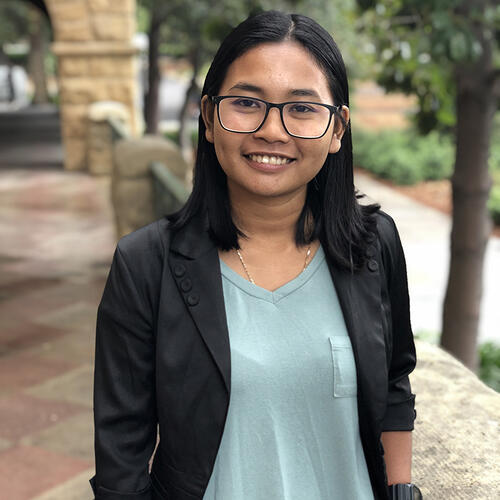
Zhu Zhang is a pre-doctoral fellow at CDDRL and a Ph.D. candidate in Political Science at Tulane University, with a major field in comparative politics. She studies authoritarianism with particular interests in state-business relations and Chinese politics. Her dissertation book project, Wealth without Power: The Rise of Chinese Private Business Elites and Their Relationship to the Communist Party, examines how the party-state embraces its business elites while preventing them from preying on the state in autocracy. Zhu holds an M.A. in International Affairs from the Pennsylvania State University, and a B.A. in History from Shanghai Normal University.

Pre-doctoral fellow at CDDRL
Seminars
0
Xinru Ma Website Headshot.png

Xinru Ma’s research focuses on nationalism, great power politics, and East Asian security with a methodological focus on formal and computational methods. More broadly, Xinru’s research encompasses three main objectives: Substantively, she aims to better theorize and enhance cross-country perspectives on critical phenomena such as nationalism and its impact on international security; Methodologically, she strives to improve measurement and causal inference based on careful methodologies, including formal modeling and computational methods like natural language processing; Empirically, she challenges prevailing assumptions that inflate the perceived risk of militarized conflicts in East Asia, by providing original data and analysis rooted in local knowledge and regional perceptions.

She is the co-author of Beyond Power Transitions: The Lessons of East Asian History and the Future of U.S.-China Relations (Columbia University Press, 2024). Her work has been published in the Journal of East Asian Studies, The Washington Quarterly, the Journal of Global Security Studies, and the Journal of European Public Policy, and in edited volumes via Palgrave. 

At SNAPL, Xinru will lead the research group in collaborative projects that focus on US-Asia relations. One of the projects will contrast the rhetoric and debates in US politics surrounding the historical phenomenon of "Japan bashing" and the current perception of a "China threat.” By applying automated text analysis and qualitative analysis to public opinion data and textual data from various sources, such as congressional hearings and presidential speeches, this project uncovers the similarities, differences, and underlying factors driving the narratives and public discourse surrounding US-Asia relations. She will also provide mentorship to student research assistants and research associates. 

Before joining SNAPL, Xinru was an assistant professor at the School of International Relations and Diplomacy at Beijing Foreign Studies University, where she led the Political Science Research Lab, a lab committed to closing the gender gap in computational methods and political science research by offering big-data methods training and professionalization workshops to students. Before that, Xinru was a postdoctoral fellow at the Center for International Security and Cooperation at Stanford University (2019-2020) and a pre-doctoral fellow at the Department of Political Science at Vanderbilt University (2018-2019). In 2023, Xinru was selected as an International Strategy Forum fellow by Schmidt Futures, an initiative that recognizes the next generation of problem solvers with extraordinary potential in geopolitics, innovation, and public leadership. 

Research Scholar, APARC Stanford Next Asia Policy Lab
Affiliate, CISAC
Date Label
Authors
David M. Lampton
News Type
Commentary
Date
Paragraphs

In the past six weeks, I have been in mainland China, Hong Kong (three times), and Washington. From these trips and recent developments, I have concluded that Hong Kong is a huge tragedy in the making. Proactive and positive moves by all parties to this rapidly deteriorating situation are required.

Though Washington is not a principal party in these developments, it should be a constructive force rather than irrelevant or counterproductive...

The elements of the current crisis are many. In Hong Kong, there is a leaderless movement on the ground. There are rising levels of political and socio-economic frustration among many Hong Kong citizens stemming from mobility and economic considerations, as well as perceptions of political retrogression in the special administrative region.

There is a tone-deaf, neutered local leadership that is prideful and unwilling to admit that it made a huge strategic misstep pushing forward with an ill-conceived extradition bill. And there are local tycoons who curry favour with Beijing rather than protecting the rule of law that is in their own long-term interests...

Read the full article on South China Morning Post.


For more by Okseberg-Rohlen Fellow David M. Lampton, read our recently posted Q&A in which he analyzes the escalating U.S.-China conflict.


Hero Image
Woman shouts at police officers as they advance towards protesters in Hong Kong
HONG KONG, CHINA - JULY 27: A woman shouts at police officers as they advance towards protesters in the district of Yuen Long on July 27, 2019 in Hong Kong, China.
Getty Images/Laurel Chor
All News button
1
Authors
News Type
News
Date
Paragraphs

As a former business executive with IBM and a veteran policymaker, Bonnie Glick is well-equipped to bridge the Silicon Valley — Washington, DC divide.

It was a sunny day in mid-July when Glick, the deputy administrator of the United States Agency for International Development (USAID), and her team touched down in the Bay Area. The group’s goal was to engage Silicon Valley leaders in USAID’s work, including a discussion with scholars from the Freeman Spogli Institute for International Studies (FSI) about threats to democracy from two key sources: authoritarian regimes and the abuse of social media.


I participated in a round table discussion at @Stanford’s Freeman Spogli Institute for International Studies in #California. We discussed how @USAID builds messaging, strategic programming, & donor partnerships to address global challenges posed by China’s authoritarian approach. pic.twitter.com/IJDNRn4Jyd

— Bonnie Glick (@USAIDBGlick) July 25, 2019


In back-to-back roundtable meetings, FSI scholars drew from their research and expertise to discuss with Glick about how USAID could combat these thorny challenges. The scholars also had the opportunity to learn more about USAID’s priorities and programs. Below are highlights from their discussion.

The Authoritarian Threat
Vulnerable democracies are facing increasingly political and economic interference from authoritarian regimes, particularly China and Russia. The One Belt, One Road Initiative — China’s global development strategy comprising infrastructure projects and investments in 152 countries — can lead to excessive debt and undermine sovereignty in borrower countries, for example. Meanwhile, countries like Ukraine struggle with election meddling and information manipulation at the hands of the Kremlin.

Implications of Social Media Abuse
The misuse of social media also poses a threat to democracies. While Russian efforts to spread disinformation and discord in the months leading up to the 2016 U.S. presidential election may be the best known example, social media abuse is now a global problem propagated both by foreign adversaries and domestic foes. The case of social media fanning the flames of violence against the Rohingya in Myanmar is a prime example of domestically driven social media abuse.

Glick and the USAID team appreciated hearing the perspectives of the FSI scholars. “One of the things that’s resonating so clearly is that the Washington, DC beltway bubble is a powerful force of nature,” Glick said following the roundtables. “For us, to get outside of that bubble and to be challenged in our ideas is extremely valuable.”


Hero Image
bonnieglick web
Deputy Administrator of the United States Agency for International Development Bonnie Glick discussed threats to democracy at the Freeman Spogli Institute for International Studies, July 2019. Photo: Kimberly Renk
All News button
1
Authors
News Type
Blogs
Date
Paragraphs

This summer I was very fortunate to be able to spend three weeks at the Stanford Center at Peking University (Běidà) for a short course on rheology. It was a really special opportunity for me to experience student life at my dad’s alma mater and get to know friends from Stanford, Peking, Tsinghua and Beihang University.

As we went out for meals, however, I quickly discovered that I was one of the only people on the trip who can’t handle spicy food! But don’t worry, if you’re like me, there are still plenty of delicious and affordable options to try in Beijing.

Image
wechatimg57

SCPKU Rheology Class of 2019! A big thank you to Prof. Gerry Fuller, our TA Vinny, the SCPKU team, and everyone in the class for a wonderful three weeks in Beijing!

First of all, if you travel there during the summer months, it will be very, very hot. The best way to beat the heat is to eat lots of fruit, mung bean (has cooling properties), and ice cream! The cafeterias at Beida had fresh cut fruit, and we all fell in love with the (~1 USD) red dragonfruit (hóng huǒ lóng guǒ) there. There are also lots of ice cream flavors that are hard to find in the US, like red bean, white peach, durian, taro, honeydew, grape, etc.

Next, Beijing/northern China is known for a lot of flour-based dishes, so be sure to try the dumplings (shuǐ jiǎo), steamed buns (bāo zi), fried dough (yóu tiáo), pancakes (bǐng) and noodles of all sorts (miàn tiáo). Also, if you go to a restaurant specializing in Beijing food, a lot of things on the menu will not be spicy, like Peking Duck (běi jīng kǎo yā) and Zhajiang Noodles (zhá jiàng miàn). A fun place on Beida campus to get a Beijing street food is the jian bing Jiānbing shop, which is essentially a savory crepe with egg, sauce, a crispy interior, plus whatever add-ons you want. (Caution: the sauce is a little bit spicy…)

Fod 1

Beijing also has lots of cuisines from other parts of China, so make sure to try dishes like Shanghai style soup dumplings, Yunnan pineapple rice, and Taiwanese pork rice!

Food 2


There are also lots of foods that you can pretty easily enjoy the non-spicy version of. Either you (or your friendly hosts!) can ask the waiter/waitress for no spice (miǎn là” or “bù yào là):

Food 3


Shredded chicken cold noodle (jī sī liáng miàn) and bean curd noodle with veggies and sauce (liángpí) -- still tasty without the chili oil!

Food 4


Hotpot (huǒ guō) and Grilled fish (kǎo yú) -- the spice is just in the broth, and there are many to choose from

Food 5


And finally, of course, desserts are not spicy! Shaved ice (bào bīng), sago (xī mǐ lù), bubble tea, fluffy pancakes, mooncakes and old Beijing desserts (lǘ dǎgǔn and wāndòu huáng) are some favorites of mine. A newly popular boba place called HeyTea (xǐ chá) also has fully customizable drinks in case it’s too late for caffeine.

Food 7


Overall, even if I couldn’t try all of the spicy foods, sharing meals was a great way to get to know everyone, and we all can’t wait to see our friends again. Who knows, maybe my spice tolerance will have gone up by then...


Hero Image
wechatimg62
All News button
1
Date Label
-

The world is experiencing an unprecedented period of geopolitical change and technological disruption. How should we rethink U.S. national security and defense in an era of intensifying great power competition? What principles should guide US policy and presidents in the future?


Drell Lecture Recording: https://youtu.be/y8a307Sttjc


Drell Lecture Transcript: Click here to view


Speaker's Biography: Michèle Flournoy is Co-Founder and Managing Partner of WestExec Advisors, and former Co- Founder and Chief Executive Officer of the Center for a New American Security (CNAS), where she currently serves on the board.

Michèle served as the Under Secretary of Defense for Policy from February 2009 to February 2012. She was the principal advisor to the Secretary of Defense in the formulation of national security and defense policy, oversight of military plans and operations, and in National Security Council deliberations.

Michèle is a former member of the President’s Intelligence Advisory Board, the CIA Director’s External Advisory Board, and the Defense Policy Board. She’s currently a member of the Council on Foreign Relations and the Aspen Strategy Group, is a Senior Fellow at Harvard’s Belfer Center for Science and International Affairs, and sits on the Honorary Advisory Committee of The Leadership Council for Women in National Security. Michèle serves on the boards of Booz Allen Hamilton, Amida Technology Solutions, The Mission Continues, Spirit of America, CARE, the U.S. Naval Academy Foundation.


Hauck Auditorium, David and Joan Traitel Building of Hoover Institution435 Lasuen Mall, Stanford, CA, 94305
Michèle Flournoy Co-Founder and Managing Partner WestExec Advisors
Subscribe to Asia-Pacific