-

In the eyes of China’s neo-authoritarian reformers, Singapore, despite being a tiny city-state, long exemplified a state of affairs for which the PRC should strive: resilient authoritarianism alongside but unweakened by liberalizing steps conducive to economic growth.  On behalf of Beijing’s effort to learn from Singapore, tens of thousands of officials visited the city-state and thousands of articles and books were written about it. Today, however, Xi Jiinping has derided foreign templates and relegated adopting the “Singapore model” to a path not taken by China’s current hard-line leadership and unavailable for authoritarian reformers to pursue. Although the demotion was triggered by Xi’s anti-reformism and China’s rise, Singapore’s loss of “model” character was also path-dependent. Chinese academics studying Singapore had long misunderstood fundamental institutional differences between the two countries that went back to the city-state’s colonial past and China’s Stalinist-Maoist revolution. Efforts to model reforms on the Singaporean “state-party” ran into the prerogatives of the Chinese party-state. Proposals to strengthen market forces, impose limited legal constraints on the party, and introduce semi-competitive elections were seen as threatening the institutional foundations of the CPC. Moreover, despite a (partial) revival of Confucianism in China that imitated the city-state’s attraction to “Asian values,” Singapore’s neo-liberal “pragmatism” and multi-racialism contradicted the CPC’s self-portrayal as an engine of Marxist socialism embodying the Han-Chinese nation.

Image
mark thompson 0120
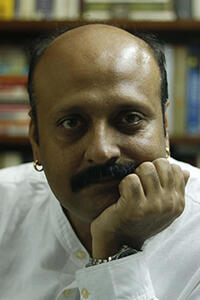
Mark R. Thompson heads the Southeast Asia Research Centre at the City University of Hong Kong. He is president of the Hong Kong Political Science Association (HKPSA) and a former president of the Asian Political and International Studies Association (2013-14). A comparativist specializing in Southeast Asian politics, his publications include China’s “Singapore Model” and Authoritarian Learning, ed. with Stephan Ortmann (forthcoming 2020); Authoritarian Modernism in East Asia (2019); The Routledge Handbook of the Contemporary Philippines, ed. with Eric Batalla (2018); Dynasties and Female Political Leaders in Asia, ed. with Claudia Derichs (2014); Democratic Revolutions: Asia and Eastern Europe (2004); and The Anti-Marcos Struggle (1995).

Shorenstein APARC
Stanford University
Encina Hall E301
Stanford, CA 94305-6055

(650) 725-6459 (650) 723-6530
0
MarkThompson[1].JPG PhD

Professor Thompson builds on Barrington Moore's insight that there are different "paths to the modern" world. Thompson's manuscript explores alternatives to the familiar South Korean-and Taiwan-based model of "late democratization." According to that model, political pluralism follows a formative period of economic growth during which labor is demobilized and big business, religious leaders, and professionals depend upon and are co-opted by the state.

Thompson argues that even when these preconditions are in place, democratization need not follow. Singapore is an illuminating case in point. The autocratic growth model pays insufficient attention to politics, including the sometimes crucial role of student activists in challenging developmental authoritarianism and triggering a democratic transition, as in Indonesia. As political actors, students (rather than a progressive bourgeoisie) may fill the oppositional vacuum created by the preconditions that characterized predemocratic South Korean and Taiwan.

In his critique of Northeast Asian-style, post-authoritarian "late democratization" and its emphasis on economic growth as the driver of political change, Professor Thompson uses evidence drawn from paired comparisons of Vietnam with China, Hong Kong with Singapore, and between South Korea and Taiwan on the one hand and other major Southeast Asian cases on the other.

Mark R. Thompson is a professor of political science at the University of Erlangen-Nuremberg in Germany.  A Chicago native, he took his first degree in religious studies at Brown University followed by postgraduate work at Cambridge University and the University of the Philippines.  Fascinated by Philippine people power, he wrote his dissertation at Yale University on the anti-Marcos struggle (Yale University Press, 1996). After moving to Germany, he witnessed popular uprisings in East Germany and Eastern Europe, inspiring him to conceptualize democratic revolutions in essays later published as a book (Routledge, 2004).  He is in residence at Stanford as Lee Kong Chian Distinguished Fellow in Southeast Asian Studies from February through April 2009.

Lee Kong Chian NUS-Stanford Distinguished Fellow on Southeast Asia
Head and Professor of Politics, Department of Asian and International Studies, City University of Hong Kong
Seminars
-

Abstract: A Supply and Demand Framework for YouTube Politics (with Joseph Phillips)

Youtube is the most used social network in the United States. However, for a combination of sociological and technical reasons, there exist little quantitative social science research on the political content on Youtube, in spite of widespread concern about the growth of extremist YouTube content. An emerging journalistic consensus theorizes the central role played by the video "recommendation engine," but we believe that this is premature. Instead, we propose the "Supply and Demand" framework for analyzing politics on YouTube. We discuss a number of novel technological affordances of YouTube as a platform and as a collection of videos, and how each might drive supply of or demand for extreme content. We then provide large-scale longitudinal descriptive information about the supply of and demand for alternative political content on YouTube. We demonstrate that viewership of far-right videos peaked in 2017.

Image
Kevin Munger
Kevin Munger is Assistant Professor of Political Science and Social Data Analytics, Penn State University. Ph.D., New York University, 2018. His research looks at social media and other contemporary internet technology has changed political communication. He has published research on the subject using a variety of methodologies, including textual analysis, field experiments, longitudinal surveys and qualitative theory. His research has appeared in leading journals like the American Journal of Political Science, Political Behavior, Political Communication, and Political Science Research & Methods. His present interests include cohort conflict in American politics and developing new methods for social science in a rapidly changing world.

Authors
Lisa Lee
News Type
News
Date
Paragraphs

Jointly with partners throughout Asia, the Asia Health Policy Program (AHPP) at Shorenstein APARC has developed comparative research on health care use, medical spending, and clinical outcomes for patients with diabetes in the region and other parts of the world as a lens for understanding the economics of chronic disease management. Karen Eggleston, AHPP director and APARC deputy director, recently traveled to South Korea, where she led three project-related events.

On November 29, a workshop on Net Value Diabetes Management was held at Seoul National University (SNU) School of Medicine. This was the third such workshop convened through the project, following two previous ones held in Beijing at the Stanford Center at Peking University. Another workshop, on diabetes modeling, hosted by the Mt. Hood Diabetes Challenge Network, was held at Chung Ang University on December 1. Finally, on December 5, Eggleston held an information session, titled Comparative Economics Research on Diabetes, during the 2019 International Diabetes Federation (IDF) at BEXCO in Busan. These events were also made available through video conferencing to enable remote participation by collaborators who were unable to travel to Korea.

[Learn more about AHPP’s Net Value in Diabetes Management research project]

Diabetes Net Value Workshop

The workshop brought together team members from multiple health systems — including South Korea, Japan, Taiwan, Hong Kong, Thailand, India, the Netherlands, and the United States — to discuss comparative research on the economics of diabetes control. Eggleston shared the results of a study outlined in a working paper on the net value of diabetes management in Japan, the Netherlands, Taiwan, and Hong Kong. This research is part of a broader series of studies aimed to help address the policy challenge of finding the best strategies to improve health through cost effective prevention and healthcare productivity in chronic disease management.

The key to this research was to measure changes in quality or health outcomes over time by predicting mortality risk using blood pressure, blood sugar, and other factors amenable to patient and provider control and improvement (controlling for age and duration of diabetes diagnosis). The research seeks to understand how we can control cost and eliminate waste without cutting out the things that are valuable and improving people’s quality of life. Further studies probe determinants of relative net value of a pay-for-performance program in Taiwan, adherence to medications and vertical integration in Japan, and net value based on a randomized controlled trial in India.

Image
Two women and three men talking with each other in a conference room

Karen Eggleston (left) with workshop participants.

Young Kyung Do of SNU reported that according to his evaluation project for diabetes care, the quality of care and treatment in South Korea has improved and is similar to Hong Kong and Singapore. The goal of the program is to provide more comprehensive care to diabetes patients.

Talitha Feestra of the Netherlands net value team presented her proposal for joint research to develop new prediction models for specific populations as a core component of health economics decision models in Diabetes. Feestra will take the lead to develop the plan and time frame for the continuation of this research in 2020.

Several additional comparative studies were proposed and discussed. Participants who attended the workshop and contributed to discussion included Junfeng Wang from the Netherlands net value team; Jianchao Quan and Carmen Ng from Hong Kong University; Daejung Kim from the Korea Institute for Health and Social Affairs (KIHASA); Taehoon Lee, Eun Sil Yoon, and Hongsoo Kim from SNU; Piya Hanvoravongchai from Chulalongkorn University; and Gregory Ang from National University of Singapore. Remote participants included Vismanathan Baskar from Madras Diabetes Research Foundation; Wasin Laohavinij from Chulalongkorn University (visiting Stanford University autumn quarter); and Rachel Lu from Chang Gung University.

Mt. Hood Diabetes Challenge Workshop on Diabetes Modeling

Philip Clarke from the Health Economics Research Center, University of Oxford, presented the history of insulin as a cure for diabetes and discussed in detail methods for economic modeling of diabetes, including quality of life and diabetes cost, drawing from his rich experience developing the UK Prospective Diabetes Study outcomes model. The second presenter was Andrew Palmer of University of Tasmania, Australia. His presentation included many additional economic modeling pointers, especially regarding drawing in the literature for building models.

Image
Collage of three photos showing people posing to the camera and seated in a lecture hall

Karen Eggleston with participants at the Mt. Hood Diabetes Challenge Workshop; (right hand side) from left to right: Andrew Palmer, Karen Eggleston, Philip Clarke.

We are grateful to Professors Clarke and Palmer for graciously allowing the AHPP network researchers to join the workshop both in person and remotely, adding to their chronic disease modeling skills, and for inviting Karen Eggleston to present a keynote at the Mt Hood conference that took place before the modeling workshop.

Information Session: Comparative Economics Research on Diabetes

The third and final component of the diabetes research events was held on December 5 as part of the International Diabetes Federation congress in Busan, Korea, and presented the network to clinicians and public health researchers. Participants from China, India, and Australia attended. They shared updates on their individual projects and discussed methods and ideas for future collaboration.

Hero Image
A group of people posing to the camera
All News button
1
Authors
News Type
Q&As
Date
Paragraphs

The science of cyber risk looks at a broad spectrum of risks across a variety of digital platforms. Often though, the work done within the field is limited by a failure to explore the knowledge of other fields, such as behavioral science, economics, law, management science, and political science. In a new Science Magazine article, “Cyber Risk Research Impeded by Disciplinary Barriers,” cyber risk experts and researchers at Stanford University make a compelling case for the importance of a cross-disciplinary approach. Gregory Falco, security researcher at the Program on Geopolitics, Technology, and Governance, and lead author of the paper, talked recently with the Cyber Policy Center about the need for a holistic approach, both within the study of cyber risk, and at a company level when an attack occurs.

CPC: Your recent perspective paper in Science Magazine highlights the issue of terminology when it comes to how organizations and institutions define a cyber attack. Why is it so important to have consistent naming when we are talking about cyber risk?

Falco: With any scientific discipline or field, there is a language for engaging with other experts. If there’s no consistent language or at least dialect for communication around cyber risk, it’s difficult to engage with scholars from different disciplines. For example: The phrase “cyber event” is contested and the threshold for what an organization considers to be a cyber event varies substantially. Some organizations consider someone pinging their network as a cyber event, others only consider something a cyber event once an intrusion has been publicly disclosed. So there’s a disparity when comparing metrics of cyber events from organization to organization because of the different thresholds of what’s considered an event.

CPC: We’ve all been sent one of those emails letting us know our data may have been compromised and your paper points out it’s nearly impossible to put foolproof protections into place; attacks are inevitable. Given that, how should companies weigh the various ways they can protect themselves?

Falco: The first exercise each organization should go through when they decide to be serious about cyber risk is to prioritize their assets. What is business critical? What is safety critical? Then, like all other risks, a cost-benefit analysis must be done for each asset based on its priority. If the asset is safety-critical, then resources should be allocated to help protect that asset or at least ensure its resilience. Trade-offs are inevitable, no company has unlimited resources. But starting with an understanding of where the priorities are, is critical.

CPC: In companies, cyber security often falls entirely to the Chief Information Security Officer (CISO). Your paper argues that’s shortsighted. What is gained when a company takes a more holistic approach?

Falco: Distributing responsibility across the organization catalyzes a security culture. A security culture is one where there is a constant vigilance or at least broad awareness of cybersecurity concerns throughout the organization. Fostering a security culture is often suggested as a mechanism to help reduce cyber risk in organizations. The problem with not distributing responsibility is that when something happens, it’s too easy to resort to finger-pointing at the CISO, and that’s counterproductive. Efforts after an attack should be on responding and being resilient, not finding the scapegoat.

CPC: Cyber risk largely focuses on prevention, but your paper argues that it’s what happens after an attack in that needs greater attention. Why is that?

Falco: Every organization will be attacked. However organizations can differentiate themselves from a cyber risk standpoint by appropriately managing the situation after an attack. Some of the most significant damages to organizations can be reputational if communication after an attack is unclear or botched. Poor communication after an attack can result in major regulatory fines or valuation adjustments as seen in cases like Yahoo and that can have major business implications. Communications aren’t the only important element of post-attack response. A thorough post-mortem of the organization’s response to the attack can be an important learning experience and a way to plan for future attacks.

CPC: Protecting against cyber attacks and the losses that go with them can obviously be costly for companies. You make a case for collaboration among different fields, say among data scientists and economists. How can that be encouraged?

Falco: We argue that cross-disciplinary collaboration rarely happens organically. Therefore, we call on funding agencies like the NSF or DARPA to specify a preference for cross disciplinary research when funding cyber risk projects. Typically, this isn’t currently a feature of calls for proposals, but for cyber risk programs it should be. We encourage researchers to explore cyber risk questions at the margins of their discipline. Those questions may lend themselves to potential overlap with other disciplines and foster a starting point for cross-disciplinary collaboration.

For more on these topics, see a full list of recent publications from the Cyber Policy Center and the Program on Geopolitics, Technology, and Governance.

Hero Image
Gregory Falco Rod Searcey
All News button
1
News Type
Commentary
Date
Paragraphs

"Ideologically, today’s autocrats are a more motley and pragmatic crew. They generally claim to be market friendly, but mainly they are crony capitalists, who, like Putin in Russia, Orban in Hungary, and Erdogan in Turkey, are first concerned with enriching themselves, their families, and their parties and support networks. Increasingly, they raise a common flag of cultural conservatism, denouncing the moral license and weakness of the “the liberal West” while advancing a virulent antiliberal agenda based on nationalism and religion," writes Larry Diamond. Read here

Hero Image
gettyimages 1180678440
All News button
1
0
Research Scholar
Graham Webster

Graham Webster is a research scholar in the Program on Geopolitics, Technology, and Governance and editor-in-chief of the DigiChina Project at the Center for International Security and Cooperation at Stanford University. He researches, writes, and teaches on technology policy in China and US-China relations.

Before bringing DigiChina to Stanford in 2019, he was its cofounder and coordinating editor at New America, where he was a China digital economy fellow. From 2012 to 2017, Webster worked for Yale Law School as a senior fellow and lecturer responsible for the Paul Tsai China Center’s Track II dialogues between the United States and China and co-taught seminars on contemporary China and Chinese law and policy. While there, he was an affiliated fellow with the Yale Information Society Project, a visiting scholar at China Foreign Affairs University, and a Transatlantic Digital Debates fellow with New America and the Global Public Policy Institute in Berlin. He was previously an adjunct instructor teaching East Asian politics at New York University and a Beijing-based journalist writing on the Internet in China for CNET News. 

In recent years, Webster's writing has been published in MIT Technology Review, Foreign Affairs, Slate, The Wire China, The Information, Tech Policy Press, and Foreign Policy. He has been quoted by The Wall Street Journal, The New York Times, The Washington Post, and Bloomberg and spoken to NPR and BBC World Service. Webster has testified before the US-China Economic and Security Review Commission and speaks regularly at universities and conferences in North America, East Asia, and Europe. His chapter, "What Is at Stake in the US–China Technological Relationship?" appears in The China Questions II (Harvard University Press, 2022).

Webster holds a bachelor's in journalism and international studies from Northwestern University and a master's in East Asian studies from Harvard University. He took doctoral coursework in political science at the University of Washington and language training at Tsinghua University, Peking University, Stanford University, and Kanda University of International Studies.

Editor-in-Chief, DigiChina
Date Label
Authors
News Type
News
Date
Paragraphs

On October 20-22, the Stanford Center at Peking University hosted the 6th meeting in the series of Nuclear Risk Reduction Project workshops organized by Stanford University and China Arms Control and Disarmament Association and the Center for Strategic Studies of the China Academy of Engineering Physics (CAEP).  The Stanford team included CISAC’s Dr. Siegfried Hecker, Elliot Serbin, Dr. Larry Brandt and Nick Hansen as well as young nuclear scientists from the UC Berkeley and Sandia National Laboratories.


Image
scpku3

The workshop was focused on the North Korean nuclear situation and provided an excellent opportunity to compare both technical and political assessments of the current state of North Korea’s nuclear program and potential paths forward. The US participants presented their research with the latest analyses of open-source imagery of the North Korea’s nuclear and missile program. The Chinese specialists provided their own analysis of the current state of the North’s nuclear facilities and their operations.

Image
scpku4

Young technical professionals on both sides exchanged their views on the challenges and potential methods for verification, an area critical for moving ahead with denuclearization of the Korean peninsula. Both sides agreed that this was an excellent area of future cooperation. It is viewed as one of the most important priorities for future meetings, along with continuing cooperation in the broader field of nuclear security.

Image
scpku2

Hero Image
scpku2
All News button
1
-


Abstract:
Kristen Looney will be discussing her forthcoming work, Mobilizing for Development: The Modernization of Rural East Asia (Cornell U. Press 2020). This book tackles the question of how countries achieve rural development and offers a new way of thinking about East Asia’s political economy that challenges the developmental state paradigm. Through a comparison of Taiwan (1950s–1970s), South Korea (1950s–1970s), and China (1980s–2000s), the research shows that different types of development outcomes—improvements in agricultural production, rural living standards, and the village environment—were realized to different degrees, at different times, and in different ways. Looney argues that rural modernization campaigns played a central role in the region and that divergent development outcomes can be attributed to the interplay between campaigns and institutions. Relevant to political science, economic history, rural sociology, and Asian studies, the book enriches our understanding of state-led development and agrarian change.


Speaker Bio:

Image
headshotlooney300dpi
Kristen Looney is an assistant professor of Asian Studies and Government at Georgetown University, where she teaches courses on Chinese and Comparative Politics. Her research is on rural development and governance and has previously appeared in The China Quarterly, The China Journal, and Current History. Her first book is forthcoming with Cornell University Press in spring 2020.

Kristen Looney Assistant Professor of Asian Studies and Government at Georgetown University
Seminars
Authors
Noa Ronkin
News Type
News
Date
Paragraphs

The annual award, which carries a US $10,000 cash prize, is sponsored by Stanford University’s Walter H. Shorenstein Asia-Pacific Research Center. It recognizes outstanding journalists and journalism organizations for excellence in coverage of the Asia-Pacific region. News editors, publishers, scholars, journalism associations, and organizations focused on Asia research and analysis are invited to submit nominations for the 2020 award through Friday, February 14.

STANFORD, CA, December 3, 2019 — The Walter H. Shorenstein Asia-Pacific Research Center (APARC), Stanford University’s hub for interdisciplinary research, education, and engagement on contemporary Asia, invites nominations for the 2020 Shorenstein Journalism Award. The award recognizes outstanding journalists who have spent their careers helping audiences around the world understand the complexities of   the Asia-Pacific region. The 2020 award will honor a journalist whose work has mostly been conveyed through American news media. The deadline for nomination submissions is Friday, February 14, 2020.

An annual tradition since 2002, the Shorenstein Journalism Award is sponsored by APARC and carries a cash prize of US $10,000. It honors the legacy of APARC benefactor, Mr. Walter H. Shorenstein, and his twin passions for promoting excellence in journalism and understanding of Asia. “In the face of a shifting geopolitical landscape and amid global declines of democracy, political rights, and civil liberties, it is more crucial than ever before to support independent journalism that seeks accuracy, deep reporting, and nuanced U.S.-Asia dialogue,” said APARC Director Gi-Wook Shin.

Over the course of its history, the award has recognized world-class journalists who push the boundaries of coverage of the Asia-Pacific region and help advance mutual understanding between audiences in the United States and their Asian counterparts. Recent honorees include Maria Ressa, Anna Fifield, Siddharth Varadarajan, Ian Johnson, and Caixin Media. The award alternates between recipients whose work has mostly been published through Asian news media and those whose work has mostly been conveyed through American news media. The 2020 award will recognize a recipient from the latter category.

For the award, the Asia-Pacific region is defined broadly to include Northeast, Southeast, South, and Central Asia and Australasia. Both individual journalists with considerable body of work and journalism organizations are eligible for the award. Nominees’ work may be in traditional forms of print or broadcast journalism and/or in new forms of multimedia journalism. The Award Selection Committee, whose members are experts in journalism and Asia research and policy, presides over the judging of nominees and is responsible for the selection of honorees.

APARC is seeking 2020 award nomination submissions from news editors, publishers, scholars, journalism associations, and entities focused on researching and interpreting the Asia-Pacific region. The Center will announce the winner by April 2020 and present the award at a public ceremony at Stanford in autumn quarter of 2020.

Nominations are accepted electronically through Friday, February 14, 2020 at 11:59 PM PST. For information about the nomination procedures and to submit nominations please visit the award nomination entry page.

Please direct all inquiries to aparc-communications@stanford.edu.


About the Walter H. Shorenstein Asia-Pacific Research Center
The Walter H. Shorenstein Asia-Pacific Research Center (Shorenstein APARC) addresses critical issues affecting the countries of Asia, their regional and global affairs, and U.S.-Asia relations. As Stanford University’s hub for the interdisciplinary study of contemporary Asia, APARC produces policy-relevant research, provides education and training to students, scholars, and practitioners, and strengthens dialogue and cooperation between counterparts in the Asia-Pacific and the United States. Founded in 1983, APARC today is home to a scholar community of distinguished academics and practitioners in government, business, and civil society, who specialize in trends that cut across the entire Asia-Pacific region. Learn more about APARC and about the Shorenstein Journalism Award.

Hero Image
Announcement of open nominations for the 2020 Shorenstein Journalism Award with a background image of Stanford main quad.
All News button
1
Authors
News Type
News
Date
Paragraphs

David M. Kennedy, the Donald J. McLachlan Professor of History Emeritus at Stanford University, award winning teaching and author of more than a dozen, including Freedom From Fear: The American People in Depression and War, which won the Pulitzer Prize in history, spoke to a packed audience on October 22nd, 2019.  Kennedy used the outcome of the 2016 American presidential election, which surprised many observers, to reflect on both its historical and current determinants. Professor Kennedy explored some of the deep structural features that have long characterized the American political system, as well as the social, economic, technological, and cultural issues that are shaping American politics today.

Professor Kennedy spoke about the process of “disintermediation,” where different branches of government lose part of their role in the policymaking process.  He used this concept to analyze the long-standing struggle between congress and the president that continues today.   Particularly insightful for current day understanding is how presidents increasingly succeeded in using the public to go around congress in pursuing their policy interests. Franklin D. Roosevelt redefined the president’s relationship with the public with his famous “fireside chats,” making use of the radio, reaching beyond Woodrow Wilson who had to rely on printed newspapers.   John F. Kennedy took this even further via televised news conferences.  The internet and social media have taken disintermediation to the extreme.

Image
screen shot 2019 11 25 at 11 56 28 am


Image
screen shot 2019 11 25 at 11 47 44 am

Image
screen shot 2019 11 25 at 11 52 26 am

Hero Image
screen shot 2019 11 25 at 11 47 44 am
All News button
1
Subscribe to Asia-Pacific