-

Japan has enacted many changes to its corporate laws over the past decade, with perhaps none more contentious than the adoption of true outside directors and empowered committees in the boardroom.

Is there a discernible difference in the performance or valuation of firms based on their adoption or non-adoption of the committee system? Is the Japanese system functionally converging toward the western system because of the convergence in corporate law? This seminar will present the results of an empirical study that indicates a significant increase of corporate value for companies that adopted the committee system.

Philippines Conference Room

Robert Eberhart SPRIE Researcher Speaker Stanford University
Seminars
-
About the talk

Kicking off SPRIE's seminar series on the emerging environment for entrepreneurship in Japan, this presentation will focus on the changing pattern of venture capital (VC) investments there. Michael Korver will address issues related to venture capital, entrepreneurship and innovation in Japan in the context of the experiences of Global Venture Capital and its partners during the last twelve years.

Recently, Japan has seen a rapid evolution of financing for new firms, including rapid changes to its VC industry. Mr. Korver's firm is in the vanguard of that evolution. He will discuss aspects of Japanese VC companies from their earliest inception to the latest trends--from bank subsidiaries to independent funds--and he will share his observations about entrepreneurial startups in Japan.

About the speaker

Michael Korver is a co-founding partner of Global Venture Capital (GVC). He was born and raised in Tokyo and first developed his insider's perspective on Asian business from his experience as an analyst at the Nomura Research Institute in Tokyo from 1983 until 1986, and as an international transactions lawyer with Richards & O'Neil in New York and Tokyo from 1987 until 1993.

Since 1993 Korver has worked as an international business consultant, corporate lawyer, venture capitalist and entrepreneur in Tokyo. He has founded or co-founded several companies and has served on the boards of a number of them. From 1999 until 2002 he was in charge of legal and business affairs at The News Corporation Limited Japan, the Japanese operations of the international media conglomerate. Korver currently serves as professor in the MBA program at the Graduate School of International Corporate Strategy of Hitotsubashi University where he teaches courses in entrepreneurship and venture capital.

Korver received the BA, the MA in Economics and the JD all from the University of California at Berkeley. He is licensed to practice law in the States of New York and California.

Philippines Conference Room

Michael Korver Managing Partner Speaker Global Venture Capital
Seminars
-

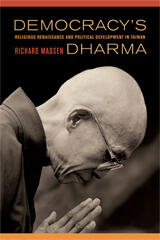
This is a CDDRL's Special Event within our Democracy in Taiwan Program. It is also co-sponsored by the Public Diplomacy/Emerging Publics Project of the Center for the Pacific Rim at University of San Francisco. In this seminar, Dr. Richard Madsen will talk about his new book that explores the religious renaissance that has reformed, revitalized, and renewed the practices of Buddhism and Daoism in Taiwan and how this religious renaissance embraces democracy modernity.  

Image
10896
Richard Madsen is distinguished professor and chair of the sociology department at the University of California, San Diego and a co-author (with Robert Bellah et al.) of The Good Society and Habits of the Heart which received the Los Angeles Times Book Award and was jury nominated for the Pulitzer Prize. He has authored or co-authored five books on China, including Morality and Power in a Chinese Village for which he received the C. Wright Mills Award; China's Catholics: Tragedy and Hope in an Emerging Civil Society; and China and the American Dream.  He also co-edited (with Tracy B. Strong) The Many and the One: Religious and Secular Perspectives on Ethical Pluralism in the Modern World. His latest book is Democracy’s Dharma: Religious Renaissance and Political Development in Taiwan.

Richard Madsen received an MA in Asian studies and a Ph.D. in sociology from Harvard.

"Madsen is a genial and well-informed guide, both to social-political change in Taiwan and to the ins and outs of religious movements. His engaging writing skillfully interweaves profound insights and themes into the descriptive analytical narrative. Democracy's Dharma presents new material based on recent research while offering a fresh spin on thinking about Asian religions."–Thomas Gold, editor of Social Connections in China: Institutions, Culture, and the Changing Nature of Guanxi

Philippines Conference Room

Richard Madsen Distinguished Professor Speaker Department of Sociology at the University of California, San Diego
Conferences
Paragraphs

With the inauguration in February 2008 of South Korean President Lee Myung-bak, The Korea Society and Stanford University’s Walter H. Shorenstein Asia-Pacific Research Center launched a nonpartisan group of former senior U.S. government officials, scholars, and other American experts on Korea to explore how to revitalize the U.S. alliance with the Republic of Korea (ROK) after nearly a decade of strains and tensions.

New Beginnings group members believe that the United States cannot afford to lose the opportunity presented by President Lee’s desire to build a global partnership. The group has identified several steps that the United States, in cooperation with the ROK, could take to move the alliance into a new era.

All Publications button
1
Publication Type
Policy Briefs
Publication Date
Journal Publisher
Shorenstein APARC
Authors
Robert Carlin
Gi-Wook Shin
Daniel C. Sneider
David Straub
Authors
Heather Ahn
News Type
News
Date
Paragraphs

The Koret Foundation of San Francisco has approved a $300,000 gift in support of the Korean Studies Program at Stanford University.

The two-year gift allows the Center to establish a Koret Fellowship and to bring leading professionals in Asia and the United States to Stanford to study United States–Korean relations. The fellows will conduct their own research on the bilateral relationship, with an emphasis on contemporary relations with the broad aim of fostering greater understanding and closer ties between the two countries.

“As a Korean American, I am pleased to support efforts to strengthen the bilateral relationship between Korea and the United States,” said Susan Koret, chairman of the board of the Koret Foundation. “The strength of Stanford’s program is a strong indicator that our foundation’s support will have a positive impact.”

“This is a very important and timely grant, as the two allies seek to repair the strains of the past and to strengthen their long standing relationship for the future,” said Professor Gi-Wook Shin, Center director. “Equally, we value our relationship with Koret, and we believe this is the beginning of a long-lasting relationship between the Foundation and our Center.”

The Korean Studies Program (KSP) focuses on multidisciplinary, social science-oriented, collaborative research on policy-relevant topics on Korea. KSP's mission is to be a research center in the truest sense, with its own research fellows and collaborative projects.

An entrepreneurial spirit guides Koret in addressing societal challenges and strengthening Bay Area life. Investing in strategic, local solutions, Koret helps to inspire a multiplier effect – encouraging collaborative funding and developing model initiatives.

In the San Francisco Bay Area, Koret adds to the region’s vitality by promoting educational opportunity, contributing to a diverse cultural landscape, and bolstering organizations that are innovative in their approaches to meeting community needs.

The Koret Fellowship is expected to commence with the 2008/2009 academic year.


About the Korean Studies Program at Shorenstein APARC

The Stanford Korea Program was formally established in 2001 at the Shorenstein Asia-Pacific Research Center with the appointment of Professor Gi-Wook Shin, as the founding director. The Stanford KSP offers courses on Korea, hosts seminars related to the study of Korea, sponsors workshops and conferences, conducts research projects, supports fellowships, and collaborates with a broad range of visiting scholars.

Hero Image
koret found logo
All News button
1

Energy and Environment Building - 4205
473 Via Ortega
Stanford University
Stanford, CA 94305

0
Graduate student

Kaitlin Shilling has spent most of her career working in the non-governmental sector, and specifically in post-crisis development, which she is now studying in more depth at Stanford University. Just prior to returning to the ivory tower, Ms. Shilling spent over a year and a half working for DAI, a development consulting company, on two USAID-funded projects in Jalalabad, Afghanistan. She began as the Director of Finance and Operations for the Afghanistan Immediate Needs Project, and then moved to the Alternative Livelihoods Project to run the Gender and Micro-Enterprise Department. Her work on both of these projects involved collaborating with other NGOs, donors, and UN agencies working in the region.

Before moving to Afghanistan, Ms. Shilling worked in the home office of DAI for almost two years in the Crisis Mitigation and Recovery Group at DAI. Ms. Shilling's work included projects in Indonesia, East Timor, and Liberia, in addition to writing proposals to win new business. While at Stanford, Kaitlin will pursue research relating to post-crisis reconstruction with a focus on incorporating natural resource management into program design.

-

Nuclear energy production today and in the near future will still be dominated by light-water reactors and therefore there will be a continued need for uranium enrichment. There is currently a focused attention on gas centrifuge enrichment. Gas centrifuge technology is much cheaper and efficient, but also poses a greater security concern, than the former gas diffusion technology.

In order to address the increased security concerns, the International Atomic Energy Agency (IAEA) is planning and implementing strengthened safeguards procedures involving an increased reliance on continuous and remote monitoring technologies, and environmental sampling. The IAEA is also promoting multilateral enrichment centers as an additional avenue to enhance international security. Much of the current enrichment industry today already involves international partnerships such as between the US and European companies, or the tripartite agreement between Russia, China and the IAEA.

In order for safeguards and multilateral approaches to be viable and effective, they need to be accepted by industry, operators, states and the regulatory agencies. This talk will address how strengthened safeguards could be implemented while accommodating potentially conflicting interests such as: the protection of proprietary information, transparency in monitoring, applicability in multilateral arrangements, cost-effectiveness, and the ultimate goal of ensuring that enrichment activities remain peaceful.

Elena Rodriguez-Vieitez is a postdoctoral science fellow at CISAC, Stanford. Her research concerns proliferation risks associated with the global expansion of nuclear power. She received her PhD in nuclear engineering at the University of California, Berkeley. Her dissertation focused on nuclear physics experimental work conducted at cyclotron facilities at the Lawrence Berkeley National Lab and Michigan State University, where she analyzed nuclear structure and fragmentation reaction data of neutron-rich unstable nuclei. As a nuclear engineering graduate student, she collaborated on a Department of Energy research project on radioactive waste transmutation in molten-salt reactors, where she modeled actinide transmutation efficiency and evaluated proliferation and environmental risks. As a graduate student, Rodriguez-Vieitez was also a research associate on public policy and nuclear threats at the University of California Institute on Global Conflict and Cooperation. Prior to her PhD studies, she was an intern at the National Academy of Sciences' Board on Radioactive Waste Management in Washington, DC.

Reuben W. Hills Conference Room

Elena Rodriguez-Vieitez Speaker
Seminars
-

Abstract
We will present our observations from a visit to India’s nuclear facilities and several think tanks during March 2008. We will comment on India’s nuclear research programs, nuclear energy development, and the implications for the proposed U.S.-India nuclear deal and for scientific collaboration between our countries. We visited the Indira Gandhi Center for Atomic Research (IGCAR) in Kalpakkam, the Bhabha Atomic Research Center (BARC) in Trombay, had detailed discussions with the top leadership of the India Department of Atomic Energy (DAE), and also visited several institutes in Bangalore and Chennai to discuss nuclear energy and nuclear nonproliferation.

Chaim Braun is a vice president of Altos Management Partners, Inc., and a CISAC science fellow and affiliate. He is a member of the Near-Term Deployment and the Economic Cross-Cut Working Groups of the Department of Energy (DOE) Generation IV Roadmap study. He conducted several nuclear economics-related studies for the DOE Nuclear Energy Office, the Energy Information Administration, the Electric Power Research Institute, the Nuclear Energy Institute, Non-Proliferation Trust International, and others. Braun has worked as a member of Bechtel Power Corporation's Nuclear Management Group, and led studies on power plant performance and economics used to support maintenance services. Braun has worked on a study of safeguarding the Agreed Framework in North Korea, he was the co-leader of a NATO Study of Terrorist Threats to Nuclear Power Plants, led CISAC's Summer Study on Terrorist Threats to Research Reactors, and most recently co-authored an article with former CISAC Co-Director Chris Chyba on nuclear proliferation rings.

Siegfried Hecker is a professor (research) in the Department of Management Science and Engineering, a senior fellow at FSI, and co-director of CISAC. He is also an emeritus director of Los Alamos National Laboratory. Hecker's research interests include plutonium science, nuclear weapon policy and international security, nuclear security (including nonproliferation and counter terrorism), and cooperative nuclear threat reduction. Over the past 15 years, he has fostered cooperation with the Russian nuclear laboratories to secure and safeguard the vast stockpile of ex-Soviet fissile materials. His current interests include the challenges of nuclear India, Pakistan, North Korea, and the nuclear aspirations of Iran. Hecker works closely with the Russian Academy of Sciences and is actively involved with the U.S. National Academies, serving on the National Academy of Engineering Council and its International Programs Committee, as chair of the Committee on Counterterrorism Challenges for Russia and the United States, and as a member of the National Academies Committee on International Security and Arms Control Nonproliferation Panel.

Reuben W. Hills Conference Room

Chaim Braun CISAC Fellow and CISAC Affiliate Speaker

CISAC
Stanford University
Encina Hall, C220
Stanford, CA 94305-6165

(650) 725-6468 (650) 723-0089
0
Senior Fellow, Freeman Spogli Institute for International Studies, Emeritus
Research Professor, Management Science and Engineering, Emeritus
hecker2.jpg PhD

Siegfried S. Hecker is a professor emeritus (research) in the Department of Management Science and Engineering and a senior fellow emeritus at the Freeman Spogli Institute for International Studies (FSI). He was co-director of CISAC from 2007-2012. From 1986 to 1997, Dr. Hecker served as the fifth Director of the Los Alamos National Laboratory. Dr. Hecker is an internationally recognized expert in plutonium science, global threat reduction, and nuclear security.

Dr. Hecker’s current research interests include nuclear nonproliferation and arms control, nuclear weapons policy, nuclear security, the safe and secure expansion of nuclear energy, and plutonium science. At the end of the Cold War, he has fostered cooperation with the Russian nuclear laboratories to secure and safeguard the vast stockpile of ex-Soviet fissile materials. In June 2016, the Los Alamos Historical Society published two volumes edited by Dr. Hecker. The works, titled Doomed to Cooperate, document the history of Russian-U.S. laboratory-to-laboratory cooperation since 1992.

Dr. Hecker’s research projects at CISAC focus on cooperation with young and senior nuclear professionals in Russia and China to reduce the risks of nuclear proliferation and nuclear terrorism worldwide, to avoid a return to a nuclear arms race, and to promote the safe and secure global expansion of nuclear power. He also continues to assess the technical and political challenges of nuclear North Korea and the nuclear aspirations of Iran.

Dr. Hecker joined Los Alamos National Laboratory as graduate research assistant and postdoctoral fellow before returning as technical staff member following a tenure at General Motors Research. He led the laboratory's Materials Science and Technology Division and Center for Materials Science before serving as laboratory director from 1986 through 1997, and senior fellow until July 2005.

Among his professional distinctions, Dr. Hecker is a member of the National Academy of Engineering; foreign member of the Russian Academy of Sciences; fellow of the TMS, or Minerals, Metallurgy and Materials Society; fellow of the American Society for Metals; fellow of the American Physical Society, honorary member of the American Ceramics Society; and fellow of the American Academy of Arts and Sciences.

His achievements have been recognized with the Presidential Enrico Fermi Award, the 2020 Building Bridges Award from the Pacific Century Institute, the 2018 National Engineering Award from the American Association of Engineering Societies, the 2017 American Nuclear Society Eisenhower Medal, the American Physical Society’s Leo Szilard Prize, the American Nuclear Society's Seaborg Medal, the Department of Energy's E.O. Lawrence Award, the Los Alamos National Laboratory Medal, among other awards including the Alumni Association Gold Medal and the Undergraduate Distinguished Alumni Award from Case Western Reserve University, where he earned his bachelor's, master's, and doctoral degrees in metallurgy.

Date Label
Siegfried S. Hecker Co-Director of CISAC and Professor (Research), Department of Management Science and Engineering; FSI Senior Fellow Speaker
Seminars
-
China’s 11 January 2007 test of a sophisticated anti-satellite weapon has caused a great deal of concern with some analysts predicting the start of an arms race in space while others have tried to minimize its significance. Using the pattern of debris created by the test, this talk will describe the weapon’s capabilities: including it being a hit-to-kill weapon, its most likely mass, and guidance and control capabilities, and its ability to attack satellites at all altitudes; its limitations: it uses visible light and not infrared, deep-space attacks will be severely limited by available launch pads, and the long warning time such an attack would give the US. The talk will also report on the results of a “war game” of an all out Chinese attack on US space assets. The bottom line of that analysis indicates that not only could the US ride out such an attack but it could avoid loosing any of its strategically important communications or navigation satellites.

Geoffrey Forden has been at MIT since 2000 where his research includes the analysis of Russian and Chinese space systems as well as trying to understand how proliferators acquire the know-how and industrial infrastructure to produce weapons of mass destruction. In 2002-2003, Dr. Forden spent a year on leave from MIT serving as the first Chief of Multidiscipline Analysis Section for UNMOVIC, the UN agency responsible for verifying and monitoring the dismantlement of Iraq's weapons of mass destruction. Prior to coming to MIT, he was a strategic weapons analyst in the National Security Division of the Congressional Budget Office after having spent a year at CISAC as a Science Fellow, a time he still looks back upon as a very happy and productive experience. Dr. Forden holds a PhD in physics.

Reuben W. Hills Conference Room

Geoffrey Forden Senior Research Associate, Program on Science, Technology and Society Speaker Massachusetts Institute of Technology
Seminars
-
The world’s energy infrastructure stands on the brink of a major revolution. Much of the large power generation infrastructure in the industrialized world will need replacement over the next two to three decades while in the developing world, including China and India, it will be installed for the first time. Concurrently, the risks of climate change and unprecedented high prices for oil and natural gas are transforming the economic and ethical incentives for alternative energy sources leading to growth of nuclear and renewables, including solar, wind, biofuels and geothermal technologies. The transition from today’s energy systems, based on fossil fuels, to a future decarbonized or carbon-neutral infrastructure is a socio-technical problem of global dimensions, but one for which there is no accepted solution, either at the international, national, or regional levels.

This talk describes a novel methodology to understand global energy systems and their evolution. We are incorporating state-of-the-art open tools in information science and technology (Google, Google Earth, Wikis, Content Management Systems, etc.) to create a global real time observatory for energy infrastructure, generation, and consumption. The observatory will establish and update geographical and temporally referenced records and analyses of the historical, current, and evolving global energy systems, the energy end-use of individuals, and their associated environmental impacts. Changes over time in energy production, use, and infrastructure will be identified and correlated to drivers, such as demographics, economic policies, incentives, taxes, and costs of energy production by various technologies. As time permits Dr. Gupta will show, using Google Earth, existing data on power generation infrastructure in three countries (South Africa, India and the USA) and highlight examples of unanticipated crisis (South Africa), environment (USA) and exponential growth (India). Finally Dr. Gupta will comment on how/why trust and transparency created by democratization of information that such a system would provide could motivate cooperation, provide a framework for compliance and monitoring of global treaties, and precipitate action towards carbon-neutral systems.

Rajan Gupta is the leader of the Elementary Particles and Field Theory group at Los Alamos National Laboratory and a Laboratory fellow.  He came to the USA in 1975 after obtaining his Masters in Physics from Delhi University, India, and earned his PhD in Theoretical Physics from The California Institute of Technology in 1982. The main thrust of his research is to understand the fundamental theories of elementary particle interactions, in particular the interactions of quarks and gluons and the properties hadrons composed of them. In addition, he uses modeling and simulations to study Biological and Statistical Mechanics systems, and to push the envelope of High Performance Computing. Starting in 1998 his interests broadened into the areas of health, education, development and energy security. He is currently carrying out an integrated systems analysis of global energy systems. In 2000 Dr. Gupta started the forum “International Security in the new Millennium” at Los Alamos National Laboratory. Its goals are to understand global issues dealing with societal and security challenges.

Reuben W. Hills Conference Room

Rajan Gupta Group Leader, Elementary Particles and Field Theory Speaker Los Alamos National Laboratory
Seminars
Subscribe to Asia-Pacific