0
Research Scholar at CISAC
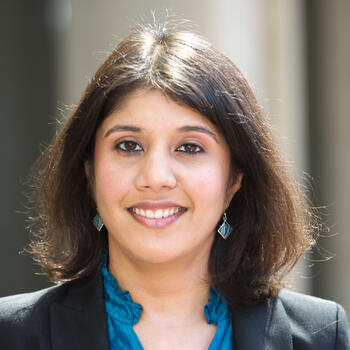
Arzan Tarapore Headshot CISAC PhD

Arzan Tarapore is a Research Scholar whose research focuses on Indian military strategy and regional security issues in the Indo-Pacific. In academic year 2024-25, he is also a part-time Visiting Research Professor at the China Landpower Studies Center, at the U.S. Army War College. Prior to his scholarly career, he served for 13 years in the Australian Defence Department in various analytic, management, and liaison positions, including operational deployments and a diplomatic posting to the Australian Embassy in Washington, DC.

His academic work has been published in the Journal of Strategic Studies, International Affairs, The Washington Quarterly, Asia Policy, and Joint Force Quarterly, among others, and his policy commentary frequently appears on platforms such as Foreign Affairs, the Hindu, the Indian Express, The National Interest, the Lowy Institute's Interpreter, the Brookings Institution’s Lawfare, and War on the Rocks.

He previously held research and teaching positions at Georgetown University, the East-West Center in Washington, the Observer Research Foundation in New Delhi, and the RAND Corporation.

He earned a PhD in war studies from King's College London, an MSc from the London School of Economics, and a BA (Hons) from the University of New South Wales. Follow his commentary on Twitter @arzandc and his website at arzantarapore.com.

CV
Date Label
Authors
News Type
Q&As
Date
Paragraphs

This interview was originally conducted and published by Melissa De Witte on behalf of the Stanford News Service.


September 2, 1945, is recognized in many American history books as the day World War II formally ended in Asia. But according to Stanford sociologist Gi-Wook Shin, the conflict was never fully resolved in the region, leading to strains in diplomatic relations today.

On the 75th anniversary of this historic milestone, Shin discusses the legacy of World War II in the Asia-Pacific, specifically the failure among nations to fully address past wrongdoings and reach a mutual understanding of the conflict.

As a result, there is a “mismatch” in how Koreans, Chinese, Japanese and also Americans memorialize the war: China celebrates its victory against Japan while Korea commemorates its liberation from Japanese oppression. Meanwhile, Japan honors the victims of the atomic bombings in Hiroshima and Nagasaki – an atrocity many Americans still feel uncomfortable talking about today, Shin points out.

Here, Shin discusses how these diverging perspectives of World War II have led to misgivings today and how, some 75 years later, relations can still be improved in the region.

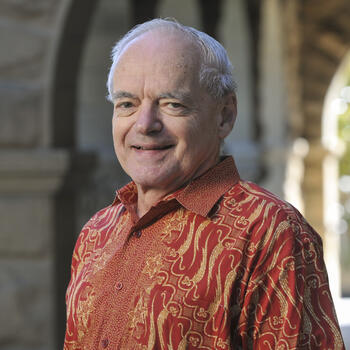
Shin is a professor of sociology in the School of Humanities and Sciences, the director of the Walter H. Shorenstein Asia-Pacific Research Center, the William J. Perry Professor of Contemporary Korea, director of the Korea Program and a senior fellow at the Freeman Spogli Institute for International Studies. He has led a decade-long study on historical memory in wartime period in Asia called 'Divided Memories and Reconciliation.'

[Subscribe to our newsletters to get the latest updates from our scholars.]


As the world remembers 75 years of the war ending in Asia, what legacies from this period persist today?

War has not really ended in Asia. Even before war settlements were signed, another war broke out on the Korean peninsula and technically never ended. Furthermore, “history wars” that began in the 1980s have intensified in recent years, as Japan and its neighbors continue to fight over the unfortunate past and dispute over territories. Despite increased economic, cultural, and educational exchanges and interactions, war legacies persist to strain regional relations.

Is there anything in this history that you think has been largely forgotten, overlooked or misunderstood?

While U.S. Army Gen. Douglas MacArthur formally accepted Japan’s surrender to allied forces aboard the USS Missouri in Tokyo Bay some 75 years ago, legacies from the war have persisted, straining regional relations to this very day, according to Shin. (Image credit: United States Navy/Wikimedia Commons)

America celebrates World War II victory in Europe (Victory in Europe Day) but remains relatively quiet on its victory in the Asia-Pacific war. In contrast to the moral clarity and nobility of purpose associated with the war in Europe and the defeat of Nazi Germany, the path to war with Japan and its conclusion is far less clear and many Americans still feel uncomfortable talking about the use of atomic weapons – even if it was militarily necessary but morally questionable. Also, it was during the war that about 120,000 people in the U.S. of Japanese ancestry (62 percent being U.S. citizens) were incarcerated in concentration camps.

Compared to Europe, U.S.-led post-war settlements in Asia such as the Tokyo War Crimes Tribunal and San Francisco Peace Treaty were insufficient in addressing atrocities committed by Japan during wartime and the colonial period, sowing the seeds of current disputes and tensions between Japan and its neighbors. The Tokyo tribunal focused on Japanese actions that had most directly affected Western allies (the attack on Pearl Harbor and the mistreatment of Allied prisoners of war) and thus failed to address the massive suffering of the Chinese and the Koreans. The 1951 Peace Treaty expunged Japan’s obligations to pay reparations for its wartime acts but neither the Republic of Korea nor the People’s Republic of China was party to the treaty.

You have written extensively about the repeated failure among Koreans, Chinese and Japanese to produce a shared, historical view of World War II. Can you briefly describe what are these conflicting, historical memories? 

For Koreans and Chinese, Japanese atrocities such as the Nanjing massacre, sexual slavery and forced labor are key events that shape their historical memories. For Japanese, on the other hand, actions related to the U.S. such as the Japanese attack on the Pearl Harbor and American bombings (fire and atomic) on Japanese cities are most important to the formation of their memories of war, which led to a widely held view that they were also victims of American aggression and that post-war settlements were “victor’s justice.” These divergent memories are reflected in the ways that they commemorate the end of the war. China celebrates its victory against Japan in the war, while Korea commemorates its liberation from Japanese oppression. Japan holds its annual ceremony to honor victims of atomic bombings.

According to your scholarship, what explains these divergent perspectives?

The divergence comes from the different weight each country places on historical events in their respective memory formation. Japanese actions figure prominently for Chinese and Korean, but China and Korea are not as significant to Japanese war memories as much as the U.S. is. This mismatch creates perception gaps and misgivings, hindering historical reconciliation.

How has this tension affected relations in the region? Do you think, some 75 years later, these tensions persist today?

Yes, they are very much alive. Look at the current Japanese-South Korean relations. They are two leading economies with liberal democracies in Asia and also key U.S. allies. They are important trade partners and are facing the same demographic crisis. They share strategic interests in the face of a rising China and North Korean aggression. Nonetheless, the resurfacing of the unresolved historical issues has continued to strain the bilateral relationship. For example, the relationship deteriorated since late 2018 when the South Korea supreme court ruled that Japanese companies should compensate Koreans who were conscripted as forced laborers during the war. In response to the ruling, the Japanese government removed Korea from a list of favored trade partners and the Korean government followed suit. These governmental actions are now fueled by populist nationalism (the rightist in Japan and the leftist in Korea), which has proven to be very effective in the politics of both nations.

Can the U.S. play any role to help achieve historical reconciliation?

The U.S. can take a more proactive role in encouraging Japan to work toward achieving regional reconciliation. As noted above, Japan does not seem to be taking its Asian neighbors as seriously as it should be when it comes to historical matters, but is rather predominantly focused on reconciling with the U.S. For example, Japan had been calling for the U.S. president to visit the sites of atomic bombings as a way of “removing a historical thorn” in the relationship and President Obama did make a historic visit to Hiroshima in 2016. Japanese Prime Minister Shinzo Abe followed suit soon after by visiting Pearl Harbor to pay respects to the victims of the 1941 attack. But the reconciliation efforts stopped there and did not expand to other victim countries of the war.

When you teach this history of World War II, what do you remind students about this period? How might the past shape students’ understanding of Northeast Asia or the U.S. in the present day?

To avoid repeating the unfortunate past (colonialism and war), I ask, what and how we can learn from history? For example, was the war with Japan necessary, or was it the result of a series of accidents and miscalculations or lack of political leadership? How does the war help us to understand the current tensions between the U.S. and China? What can we learn from the experience of the Japanese internment during the war? Even though President Reagan made an official apology of the internment in 1988, why do we still see similar racialist politics in American society? Addressing these questions requires a critical reflection of the history.

<< The original interview is available via Stanford News >>

Read More

A young boy prays after releasing a floating lantern onto the Motoyasu River in front of the Atomic Bomb Dome in Hiroshima, Japan.
Commentary

Why the US-Japan Partnership Prospered Despite Hiroshima and Nagasaki

There has been little diplomatic conflict between the United States and Japan over the atomic bombings of Hiroshima and Nagasaki during WWII, but that stability could change in the future, writes Japan Program Director Kiyoteru Tsutsui in an op-ed for The Hill.
Why the US-Japan Partnership Prospered Despite Hiroshima and Nagasaki
Encina Courtyard
News

Call for Stanford Student Applications: APARC Hiring 2020-21 Research Assistants

To support Stanford students working in the area of contemporary Asia, the Shorenstein Asia-Pacific Center is offering research assistant positions for the fall, winter, and spring quarters of the 2020-21 academic year.
Call for Stanford Student Applications: APARC Hiring 2020-21 Research Assistants
Hero Image
The Japanese delegation onboard the USS Missouri during the surrender ceremony on September 2, 1945.
Wikimedia Commons
All News button
1
Subtitle

In an interview with Stanford News, Gi-Wook Shin, the director of APARC and the Korea Program, describes how divergent perspectives on the legacies of WWII continue to shape different understandings of history and impact inter-Asia and U.S.-Asia relations.

-

This is a virtual event. Please click here to register and generate a link to the talk. 
The link will be unique to you; please save it and do not share with others.


Sponsored by the Stanford China Program and the Stanford Center at Peking University.
 

International institutions established after WWII and shaped by the Cold War facilitated attainment of unprecedented peace and prosperity.  But what worked well in the past may no longer be adequate to address the challenges and opportunities in the world these institutions helped to create.  Should legacy institutions be reformed, replaced, or supplemented by new mechanisms to manage new global challenges?  This program will examine whether existing institutions of global governance are adequate, and if not, why changing them will be difficult.


Image
Dr. Thomas Fingar
Thomas Fingar is a Shorenstein APARC Fellow in the Freeman Spogli Institute for International Studies at Stanford University. He was the inaugural Oksenberg-Rohlen Distinguished Fellow from 2010 through 2015 and the Payne Distinguished Lecturer at Stanford in 2009. From 2005 through 2008, he served as the first deputy director of national intelligence for analysis and, concurrently, as chairman of the National Intelligence Council. Fingar served previously as assistant secretary of the State Department’s Bureau of Intelligence and Research (2000-01 and 2004-05), principal deputy assistant secretary (2001-03), deputy assistant secretary for analysis (1994-2000), director of the Office of Analysis for East Asia and the Pacific (1989-94), and chief of the China Division (1986-89). Between 1975 and 1986 he held a number of positions at Stanford University, including senior research associate in the Center for International Security and Arms Control.

Fingar's most recent books are The New Great Game: China and South and Central Asia in the Era of Reform, editor (Stanford, 2016), Uneasy Partnerships: China and Japan, the Koreas, and Russia in the Era of Reform (Stanford, 2017), and Fateful Decisions: Choices that will Shape China’s Future, co-edited with Jean Oi (Stanford, 2020).


Dr. Stephen J. StedmanStephen Stedman is a Freeman Spogli senior fellow at the Center on Democracy, Development, and the Rule of Law and FSI, an affiliated faculty member at CISAC, and professor of political science (by courtesy) at Stanford University. 

In 2011-12 Professor Stedman served as the Director for the Global Commission on Elections, Democracy, and Security, a body of eminent persons tasked with developing recommendations on promoting and protecting the integrity of elections and international electoral assistance. The Commission is a joint project of the Kofi Annan Foundation and International IDEA, an intergovernmental organization that works on international democracy and electoral assistance. In 2003-04 Professor Stedman was Research Director of the United Nations High-level Panel on Threats, Challenges and Change and was a principal drafter of the Panel’s report, A More Secure World: Our Shared Responsibility. In 2005 he served as Assistant Secretary-General and Special Advisor to the Secretary- General of the United Nations, with responsibility for working with governments to adopt the Panel’s recommendations for strengthening collective security and for implementing changes within the United Nations Secretariat, including the creation of a Peacebuilding Support Office, a Counter Terrorism Task Force, and a Policy Committee to act as a cabinet to the Secretary-General.  His most recent book, with Bruce Jones and Carlos Pascual, is Power and Responsibility: Creating International Order in an Era of Transnational Threats (Washington DC: Brookings Institution, 2009).

Via Zoom Webinar. Register at: https://bit.ly/3b6qmKT

Thomas Fingar Shorenstein APARC Fellow, Stanford University
Stephen Stedman Deputy Director, Center on Democracy, Development and Rule of Law, Stanford University
Seminars
Authors
News Type
News
Date
Paragraphs

Friction between machines and humans has existed since the beginning of the automated industry and machine-assisted work. It’s a trend that fuels the imaginations of pop culture and political debates alike as people voice worries about the roles increasingly sophisticated robots and technology are taking in society and workplaces.

But is this concern warranted? According to APARC’s Yong Suk Lee, the deputy director of the Korea Program and the SK Center Fellow at FSI, and Karen Eggleston, the deputy director of APARC and the director of the Asia Health Policy Program, perhaps not. A recent article published by the Stanford Institute for Human-Centered Artificial Intelligence (HAI) highlights Lee and Eggleston’s ongoing research into innovative uses of technology across industries, particularly in healthcare. Their findings indicate that the adoption of robotics ultimately does more to augment and adjust, rather than outrightly replace, the role of human labor in the workplace.

What will ultimately matter is whether there will be entirely new occupations, what economists call the ‘reinstatement effect.’ Simply saying that robots lead to permanent job reductions isn’t the end of the story.
Yong Suk Lee
Deputy Director of the Korea Program

[Subscribe to our newsletters to stay up-to-date with the latest from our researchers.]

Lee studies the impacts of AI and robotics across multiple industries, including manufacturing, retail banking, and nursing homes. A trend he sees across most sectors following the adoption of robotics or AI is a positive increase in productivity. This has impacts for both the short-term and long-term relationships between humans and their robot coworkers, or “co-bots.” While it is true that the introduction of automation and robots initially replaces a significant number of workers in sectors such as manufacturing, over time, that impact reverses and there are job gains in many cases.

“The impact of robots often evolves over time from replacing human workers to augmenting them,” Lee explains, “and productivity gains [can] create opportunities for existing and new occupations.” This happens in a variety of ways. In some cases, the use of robotics and automation in one area frees up time, labor, and resources to employ more people in other, higher-skilled areas. In another situation, increases in productivity brought on by automation allow for greater company growth than would not have been possible otherwise. This, in turn, spurs the need to expand the workforce.

Alternatively, supplementing the labor of a small workforce with robotics and AI can also spread limited resources much farther. Lee and Eggleston’s studies of the impacts of robots on nursing home care in Japan repeatedly show that the use of robots positively increases the quality of service that oftentimes-understaffed care facilities can provide to the elderly and infirm. This can range from monitoring the physical condition of patients and reliably delivering medications to providing mental and emotional support to elderly residents through the use of robotic humanoid companions. Such innovative use of tech fills critical gaps that a human-only workforce would struggle to meet in a staffing shortage like Japan faces.

Looking to the future, Lee shares this perspective: “When the automobile was invented, we suddenly had a new demand for drivers. Now we’ll have to see if [automation] creates demand for other new occupations.” It’s an area of innovation and research he, Dr. Eggleston, and other Stanford researchers will be closely watching with their human eyes in the years to come.

Read the original article by Stanford HAI here >>

Read More

A communications robot named Pepper by Softbank
Q&As

Robots May Be the Right Prescription for Struggling Nursing Homes

Karen Eggleston and Yong Suk Lee speak to the Oliver Wyman Forum on how robotics and advancing technologies are helping staff in Japanese nursing homes provide better and safer care to their patients.
Robots May Be the Right Prescription for Struggling Nursing Homes
Cover image of the book "Healthy Aging in Asia", showing a smiling elderly Chinese woman with a cane standing in a small village.
News

New Book Highlights Policy Initiatives and Economic Research on Healthy Longevity Across Asia

Asia health policy expert Karen Eggleston’s new volume, ‘Healthy Aging in Asia,’ examines how diverse Asian economies – from Singapore and Hong Kong to Japan, India, and China – are preparing for older population age structures and transforming health systems to support patients who will live with chronic disease for decades.
New Book Highlights Policy Initiatives and Economic Research on Healthy Longevity Across Asia
Encina Courtyard
News

Call for Stanford Student Applications: APARC Hiring 2020-21 Research Assistants

To support Stanford students working in the area of contemporary Asia, the Shorenstein Asia-Pacific Center is offering research assistant positions for the fall, winter, and spring quarters of the 2020-21 academic year.
Call for Stanford Student Applications: APARC Hiring 2020-21 Research Assistants
Hero Image
A man with interacts with 'Emiew,' a humanoid robot.
A man with interacts with 'Emiew,' a humanoid robot made by Hitachi.
Koichi Kamoshida, Getty Images
All News button
1
Subtitle

Yong Suk Lee and Karen Eggleston’s ongoing research into the impact of robotics and AI in different industries indicates that integrating tech into labor markets adjusts, but doesn’t replace, the long-term roles of humans and robots.

Date Label
-

**Please note all CDDRL events are scheduled using the Pacific Time Zone

About this Event:  This book offers a novel theory of the nuances in relationships between business and political elites in three authoritarian regimes in developing Asia: Indonesia under Suharto’s New Order, Malaysia under the Barisan Nasional (BN), and China under the Chinese Communist Party (CCP). How did business-state relations in all three regimes come to be seen as “crony,” and why do some crony arrangements generate growth and political stability and others stagnation or crisis? The book develops conceptual models of state-business relations (mutual alignment and mutual endangerment) and explains their genesis. I argue that the main factors explaining why one pattern dominates over the other are the political status of capitalists, determined during regime formation, and the political management of the financial system. The research draws on extensive archival and interview sources as well as novel datasets on corporate filings in each country.


Image
Meg Rithmere
About the Speaker:  Meg Rithmire is F. Warren MacFarlan associate professor in the Business, Government, and International Economy Unit. Professor Rithmire holds a PhD in Government from Harvard University, and her primary expertise is in the comparative political economy of development with a focus on China and Asia. Her first book, Land Bargains and Chinese Capitalism (Cambridge University Press, 2015), examines the role of land politics, urban governments, and local property rights regimes in the Chinese economic reforms. A new project, for which Meg conducted fieldwork in Asia 2016-2017, investigates the relationship between capital and the state and globalization in Asia. The project focuses on a comparison of China, Malaysia, and Indonesia from the early 1980s to the present. The research has two components; first, examining how governments attempt to discipline business and when those efforts succeed and, second, how business adapts to different methods of state control. 


Online, via Zoom: REGISTER

Meg Rithmire F. Warren MacFarlan associate professor in the Business, Government, and International Economy Unit
Seminars
-

Webinar recording: https://youtu.be/ou4OpF-8j-g


Connie will speak about how the Chinese detention barracks on Angel Island were saved from demolition in the 1970s, opening the door to the hidden history of the immigration station. She will recount the experience of her grandmother, Mrs. Lee Yoke Suey, who was detained in the barracks for 15 and a half months starting in 1924 and how the United States Court of Appeals for the Ninth Circuit ruled on her grandmother’s case.  

The Stanford Program on International and Cross-Cultural Education (SPICE), which is a program of the Freeman Spogli Institute for International Studies, worked with graphic artist Rich Lee to publish Angel Island: The Chinese-American Experience. Its author, Jonas Edman, will share activities and materials from this graphic novel that tells the story of Chinese immigrants who were detained at Angel Island Immigration Station in San Francisco Bay between 1910 and 1940.

This webinar is a joint collaboration between the Center for East Asian Studies and SPICE at Stanford University.


Featured Speakers:

Connie Young Yu

Connie Young Yu

Connie Young Yu is a writer, activist and historian. She is the author of Chinatown, San Jose, USA, co-editor of Voices from the Railroad: Stories by Descendants of Chinese Railroad Workers, and has written for many exhibits and documentaries on Asian Americans. She was on the citizens committee (AIISHAC) that saved the Angel Island immigration barracks for historical preservation and was a founding member of Asian Americans for Community Involvement (AACI). Connie is board member emeritus of the Chinese Historical Society of America and historical advisor for the Chinese Historical and Cultural Project (CHCP).


Jonas Edman

Image
Jonas Edman

Jonas Edman is an Instructional Designer for the Stanford Program on International and Cross-Cultural Education (SPICE). In addition to writing curricula, Jonas coordinates SPICE’s National Consortium for Teaching About Asia (NCTA) professional development seminars on East Asia for middle school teachers, and teaches online courses for high school students. He also collaborates with Stanford Global Studies on the Education Partnership for Internationalizing Curriculum (EPIC) Fellowship Program. Prior to joining SPICE in 2010, Jonas taught history and geography in Elk Grove, California, and taught “Theory of Knowledge” at Stockholm International School in Stockholm, Sweden.


Via Zoom Webinar. Registration Link: https://bit.ly/3g9qnPc.

Connie Young Yu, independent historian and author
Jonas Edman Stanford University
Workshops
Authors
Daphne Keller
News Type
Q&As
Date
Paragraphs

Daphne Keller leads the newly launched Program on Platform Regulation a program designed to offer lawmakers, academics, and civil society groups ground-breaking analysis and research to support wise governance of Internet platforms.

Q: Facebook, YouTube and Twitter rely on algorithms and artificial intelligence to provide services for their users. Could AI also help in protecting free speech and policing hate speech and disinformation?   

DK: Platforms increasingly rely on artificial intelligence and other algorithmic means to automate the process of assessing – and sometimes deleting – online speech. But tools like AI can’t really “understand” what we are saying, and automated tools for content moderation make mistakes all the time. We should worry about platforms’ reliance on automation, and worry even more about legal proposals that would make such automated filters mandatory. Constitutional and human rights law give us a legal framework to push back on such proposals, and to craft smarter rules about the use of AI. I wrote about these issues in this New York Times op ed and in some very wonky academic analysis in the Journal of European and International IP Law.

Q: Can you explain the potential impacts on citizens’ rights when the platforms have global reach but governments do not?

DK: On one hand, people worry about platforms displacing the legitimate power of democratic governments. On the other hand, platforms can actually expand state power in troubling ways. One way they do that is by enforcing a particular country’s speech rules everywhere else in the world. Historically that meant a net export of U.S. speech law and values, as American companies applied those rules to their global platforms. More recently, we’ve seen that trend reversed, with things like European and Indian courts requiring Facebook to take user posts down globally – even if the users’ speech would be legally protected in other countries. Governments can also use soft power, or economic leverage based on their control of access to lucrative markets, to convince platforms to “voluntarily” globally enforce that country’s preferred speech rules. That’s particularly troubling, since the state influence may be invisible to any given users whose rights are affected.   

There is such a pressing need for thoughtful work on the laws that govern Internet platforms right now, and this is the place to do it... We have access to the people who are making these decisions and who have the greatest expertise in the operational realities of the tech platforms.
Daphne Keller
Director of Program on Platform Regulation, Cyber Policy Center Lecturer, Stanford Law School

Q: Are there other ways that platforms can expand state power? 

DK: Yes, platforms can let states bypass democratic accountability and constitutional limits by using private platforms as proxies for their own agenda. States that want to engage in surveillance or censorship are constrained by the U.S. Constitution, and by human rights laws around the world. But platforms aren’t. If you’re a state and you want to do something that would violate the law if you did it yourself, it’s awfully tempting to coerce or persuade a platform to do it for you. This issue of platforms being proxies for other actors isn’t limited to governments – anyone with leverage over a platform, including business partners, can potentially play a hidden role like this.

I wrote about this complicated nexus of state and private power in Who Do You Sue? for the Hoover Institution.    

Q: What inspired you to create the Program on Platform Regulation at the Cyber Policy Center right now?

DK: There is such a pressing need for thoughtful work on the laws that govern Internet platforms right now, and this is the place to do it. At the Cyber Policy Center, there’s an amazing group of experts, like Marietje Schaake, Eileen Donahoe, Alex Stamos and Nate Persily, who are working on overlapping issues. We can address different aspects of the same issues and build on each other’s work to do much more together than we could individually.

The program really benefits from being at Stanford and in Silicon Valley because we have access to the people who are making these decisions and who have the greatest expertise in the operational realities of the tech platforms. 

The Cyber Policy Center is part of the Freeman Spogli Institute for International Studies at Stanford University.

Hero Image
Q&A with Daphne Keller
All News button
1
Subtitle

Keller explains some of the issues currently surrounding platform regulation

News Type
News
Date
Paragraphs

As the COVID-19 pandemic continues to take massive tolls on lives and livelihoods at home and abroad, students have been thrown into turmoil and are facing uncertainties about funding, graduation, research opportunities, and career choices. At Shorenstein APARC, we are committed to supporting Stanford students as best we can. We are therefore announcing today new quarter-long research assistantships for current undergraduate and graduate students working in the area of contemporary Asia. These opportunities are in addition to our recent internship and fellowship offerings.

Guidelines

Shorenstein APARC is seeking to hire motivated and dedicated undergraduate and graduate students as paid research assistants who will work with assigned APARC faculty members on projects focused on contemporary Asia, studying varied issues related to the politics, economies, populations, security, foreign policies, and international relations of the countries of the Asia-Pacific region.

2020-21 research assistant positions will be offered in the fall, winter, spring, and summer quarters. We expect to hire up to 10 research assistants per quarter.

Application Cycles
Students should submit their applications by the following deadlines:

  • Applications for fall 2020 by September 1, 2020;
  • Applications for winter 2020 by December 1, 2020;
  • Applications for spring 2021 by March 1, 2021.
     

The positions are open to current Stanford students only. Undergraduate- and graduate-level students are eligible to apply.

All positions will be up to 15 hours per week for undergraduate students and up to 20 hours per week for graduate students (minimum of 10 hours per week). The hourly pay rate is $17 for undergraduate students, $25 for graduate students.

Hiring is contingent upon verification of employment eligibility documentation.

The fall-quarter employment start date is September 16, 2020.

Successful candidates may request appointment renewal for a consecutive quarter.

Apply Now

  • Complete the application form and submit it along with these 3 required attachments:
  • Arrange for a letter of recommendation from a faculty to be sent directly to APARC. Please note: the faculty members should email their letters directly to Kristen Lee at kllee@stanford.edu.
     

We will consider only applications that include all supporting documents.

Read More

A young boy prays after releasing a floating lantern onto the Motoyasu River in front of the Atomic Bomb Dome in Hiroshima, Japan.
Commentary

Why the US-Japan Partnership Prospered Despite Hiroshima and Nagasaki

There has been little diplomatic conflict between the United States and Japan over the atomic bombings of Hiroshima and Nagasaki during WWII, but that stability could change in the future, writes Japan Program Director Kiyoteru Tsutsui in an op-ed for The Hill.
Why the US-Japan Partnership Prospered Despite Hiroshima and Nagasaki
Portrait of Oriana Mastro with text: "Q&A with Oriana Skylar Mastro"
Q&As

FSI’s Incoming Center Fellow Oriana Skylar Mastro Discusses Chinese Ambitions, Deteriorating U.S.-China Relations

Mastro, whose appointment as a Center Fellow at Shorenstein APARC begins on August 1, considers the worsening relations between the world’s two largest economies, analyzes Chinese maritime ambitions, and talks about her military career and new research projects.
FSI’s Incoming Center Fellow Oriana Skylar Mastro Discusses Chinese Ambitions, Deteriorating U.S.-China Relations
Shiran Shen (left) and Lizhi Liu (right)
News

Former Doctoral Students Win Prestigious Dissertation Awards

Interdisciplinary environmental scholar Shiran Victoria Shen is the recipient of the Harold D. Lasswell Award and political economist Lizhi Liu is the recipient of the Ronald H. Coase Award in recognition of their outstanding doctoral dissertations.
Former Doctoral Students Win Prestigious Dissertation Awards
Hero Image
Encina Courtyard Rod Searcey
All News button
1
Subtitle

To support Stanford students working in the area of contemporary Asia, the Shorenstein Asia-Pacific Center is offering research assistant positions for the fall, winter, and spring quarters of the 2020-21 academic year.

-

Join the Cyber Policy Center on August 26th, at 10 a.m. pacific time, for a look how governments around the world are pushing to ban strong encryption. The talk will feature speakers Sam Woolley, Riana Pfefferkorn and Mathew Baum as they explore the different policy issues being used by governments to justify their agendas. This event is open to the public, but registration is required.

REGISTER


Matthew A. Baum (Ph.D., UC San Diego, 2000) is the Marvin Kalb Professor of Global Communications and Professor of Public Policy at Harvard University's John F. Kennedy School of Government and Department of Government. His research focuses on delineating the effects of domestic politics on international conflict and cooperation in general and American foreign policy in particular, as well as on the role of the mass media and public opinion in contemporary American politics. His research has appeared in over a dozen leading scholarly journals, such as the American Political Science ReviewAmerican Journal of Political Science, and the Journal of Politics. His books include Soft News Goes to War: Public Opinion and American Foreign Policy in the New Media Age (2003, Princeton University Press), War Stories: The Causes and Consequences of Public Views of War (2009, Princeton University Press, co-authored with Tim Groeling), and War and Democratic Constraint: How the Public Influences Foreign Policy (2015, Princeton University Press, co-authored with Phil Potter). He has also contributed op-ed articles to a variety of newspapers, magazines, and blog sites in the United States and abroad. Before coming to Harvard, Baum was an associate professor of political science and communication studies at UCLA. 

Riana Pfefferkorn is the Associate Director of Surveillance and Cybersecurity at the Stanford Center for Internet and Society. Her work focuses on investigating and analyzing the U.S. government's policy and practices for forcing decryption and/or influencing crypto-related design of online platforms and services, devices, and products, both via technical means and through the courts and legislatures. Riana also researches the benefits and detriments of strong encryption on free expression, political engagement, economic development, and other public interests.

Dr. Samuel Woolley is a writer and researcher. He is an assistant professor in the School of Journalism and in the School of Information (by courtesy) at the University of Texas at Austin.  He is the program director of propaganda research at the Center for Media Engagement at UT. Woolley's work focuses on the ways in which emerging technology are leveraged for both democracy and control. He is the author of the book "The Reality Game: How the Next Wave of Technology Will Break the Truth" (PublicAffairs), an exploration of how tools from artificial intelligence to virtual reality are being used in efforts to manipulate public opinion and discusses what society can do to respond. He is the co-editor (with Dr. Philip N. Howard), of the book "Computational Propaganda" (Oxford University Press), a series of country-based case studies on social media and digital information operations. 

Paragraphs

Reopening colleges and universities during the coronavirus disease 2019 (COVID-19) pandemic poses a special challenge worldwide. At the start of the pandemic, Taiwan took proactive steps to contain the virus and implemented 124 action items in 5 weeks, resulting in only 446 confirmed cases, 7 deaths, and no domestic case for 67 consecutive days as of 18 June 2020. To accomplish this, the Taiwanese government adopted the strategy of strict border control and containment in the crucial first 3 months of the pandemic.

All Publications button
1
Publication Date
Journal Publisher
Annals of Internal Medicine
Authors
C. Jason Wang
Number
2020
Subscribe to Asia-Pacific