-

Kirk R. Smith will speak about his current research on health-damaging and climate-changing air pollution from household energy use in developing Asia, including field measurement and health-effects studies in India, China, and Nepal, compared to other countries such as Mexico and Guatemala. The work encompasses developing and deploying small, smart, and cheap microchip-based monitors as well as tools for international policy assessments.

Dr. Smith is Professor of Global Environmental Health and Director of the Global Health and Environment Program at the School of Public Health at the University of California, Berkeley.  Previously, he was founder and head of the Energy Program of the East-West Center in Honolulu, where he still holds appointment as Adjunct Senior Fellow in Environment and Health after moving to Berkeley in 1995. He serves on a number of national and international scientific advisory committees including the Global Energy Assessment, National Research Council's Board on Atmospheric Science and Climate, the Executive Committee for WHO Air Quality Guidelines, and the International Comparative Risk Assessment. He participated along with many other scientists in the IPCC's 3rd and 4th assessments and thus shared the 2007 Nobel Peace Prize. He holds visiting professorships in India and China and bachelors, masters, and doctoral degrees from UC Berkeley. In 1997, he was elected a member of the US National Academy of Sciences. In 2009, he received the Heinz Prize in Environment.

Daniel and Nancy Okimoto Conference Room

Kirk R. Smith Professor of Global Environmental Health and Director of the Global Health and Environment Program at the School of Public Health Speaker University of California, Berkeley
Seminars
-

Professor Ogawa will present recent work on declining fertility and the rising cost of children in East Asian countries, using measures of investment per child from the National Transfer Accounts analysis of public and private investments in children's education and health. He and his co-authors also study whether the amount of resources allocated to children has been crowded out by the increasing amount of resources needed for support of the elderly in Japan and other aging societies.

Naohiro Ogawa is professor of population economics at the Nihon University College of Economics and Advanced Research Institute for Sciences and Humanities (ARISH), Tokyo. He is also Director of the Nihon University Population Research Institute (NUPRI). Over the past thirty years he has written extensively on population and development in Japan and other Asian countries. More specifically, his research has focused on issues such as socioeconomic impacts of low fertility and rapid aging, modeling demographics and social security-related variables, as well as policies related to fertility, employment, marriage, child care, retirement and care for the elderly. His recent work includes measuring intergenerational transfers. He has published numerous academic papers in internationally recognized journals. In collaboration with other scholars he has also edited several journals and books among which the most recent one is Population Aging, Intergenerational Transfers and the Macroeconomy (2007). Naohiro Ogawa has served on a number of councils, committees and advisory boards set up by the Japanese government and international organizations such as the Asian Population Association, the IUSSP and the WHO. He is currently an associate member of the Science Council of Japan.

Philippines Conference Room

Naohiro Ogawa Professor of Population Economics Speaker the Nihon University
Seminars
-

The world watches closely as China, the world's top energy consumer, announces its plans for the next five years: a series of comprehensive economic reform, development, and transformation guidelines that will shape how the country - and to a large extent the world - uses energy and addresses climate change.

How will China balance economic growth with environmental concerns? How will it manage its transformation from an investment-based and export-led economy to one having a robust domestic demand, all the while ensuring energy efficiency and sustainability? And what role will China play in developing renewable and clean tech solutions for the rest of the world? These are questions that have a profound impact on the world energy and climate landscape for years to come.

In this EWG discussion, we will highlight some of the proposed energy, efficiency and climate goals and policies, look back on China's progress and challenges in achieving its last five-year plan, and consider broader implications on the road ahead.

Stanford University

Joe Chang Speaker
Seminars

N/A

0
CDDRL Fellow 2010-2011
PhD

Natan Sachs is a CDDRL pre-doctoral fellow and a PhD candidate in the Department of Political Science at Stanford University. His primary research interest is on the formation of political cleavages and especially the politics of religious identity, with a regional focus on Southeast Asia and the Middle East. He is also interested in the use of experiments in comparative politics and has conducted extensive fieldwork in Indonesia, using experimental methods.

News Type
News
Date
Paragraphs
Earlier in 2010, Walter H. Shorenstein Asia-Pacific Research Center scholars Donald K. Emmerson and Daniel C. Sneider were selected as research associates for the prestigious National Asia Research Program (NARP), a policy-oriented research and conference program run jointly by the National Bureau of Asian Research and the Woodrow Wilson International Center for Scholars. Emmerson, director of the Southeast Asia Forum, and Sneider, associate director for research at Shorenstein APARC, presented at a NARP symposium held on October 14, 2010 in honor of Professor Robert Scalapino of the Department of Political Science at the University of California, Berkeley. The two joined other prominent Asia scholars from across the United States. Emmerson took part in the session on regionalism in Asia with the presentation "An American Place at an Asian Table? Regionalism and its Reasons." Sneider's presentation, "Japan's New Asianism: Threat or Opportunity?," was featured during the session on governance in Asia.
Hero Image
DanDon1
All News button
1

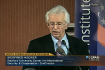
CISAC's Siegfried Hecker presented the findings of his recent trip to North Korea, where he was given a tour of a nuclear facility reportedly capable of enriching uranium. In his remarks he described two new nuclear facilities, a small light-water power reactor in early stages of construction, and a "modern, clean centrifuge plant" for uranium enrichment. Following his presentation he and Robert Carlin, a CISAC visiting professor, spoke about North Korean nuclear programs and the international reaction to North Korea's nuclear ambitions. This event occurred the day after North Korean military attacks on the South Korean island of Yeonpyeong.


Dr. Hecker's Nov. 23, 2010 Presentation at the Korea Economic Institute (C-Span video)


Korea Economic Institute

CISAC
Stanford University
Encina Hall, C220
Stanford, CA 94305-6165

(650) 725-6468 (650) 723-0089
0
Senior Fellow, Freeman Spogli Institute for International Studies, Emeritus
Research Professor, Management Science and Engineering, Emeritus
hecker2.jpg PhD

Siegfried S. Hecker is a professor emeritus (research) in the Department of Management Science and Engineering and a senior fellow emeritus at the Freeman Spogli Institute for International Studies (FSI). He was co-director of CISAC from 2007-2012. From 1986 to 1997, Dr. Hecker served as the fifth Director of the Los Alamos National Laboratory. Dr. Hecker is an internationally recognized expert in plutonium science, global threat reduction, and nuclear security.

Dr. Hecker’s current research interests include nuclear nonproliferation and arms control, nuclear weapons policy, nuclear security, the safe and secure expansion of nuclear energy, and plutonium science. At the end of the Cold War, he has fostered cooperation with the Russian nuclear laboratories to secure and safeguard the vast stockpile of ex-Soviet fissile materials. In June 2016, the Los Alamos Historical Society published two volumes edited by Dr. Hecker. The works, titled Doomed to Cooperate, document the history of Russian-U.S. laboratory-to-laboratory cooperation since 1992.

Dr. Hecker’s research projects at CISAC focus on cooperation with young and senior nuclear professionals in Russia and China to reduce the risks of nuclear proliferation and nuclear terrorism worldwide, to avoid a return to a nuclear arms race, and to promote the safe and secure global expansion of nuclear power. He also continues to assess the technical and political challenges of nuclear North Korea and the nuclear aspirations of Iran.

Dr. Hecker joined Los Alamos National Laboratory as graduate research assistant and postdoctoral fellow before returning as technical staff member following a tenure at General Motors Research. He led the laboratory's Materials Science and Technology Division and Center for Materials Science before serving as laboratory director from 1986 through 1997, and senior fellow until July 2005.

Among his professional distinctions, Dr. Hecker is a member of the National Academy of Engineering; foreign member of the Russian Academy of Sciences; fellow of the TMS, or Minerals, Metallurgy and Materials Society; fellow of the American Society for Metals; fellow of the American Physical Society, honorary member of the American Ceramics Society; and fellow of the American Academy of Arts and Sciences.

His achievements have been recognized with the Presidential Enrico Fermi Award, the 2020 Building Bridges Award from the Pacific Century Institute, the 2018 National Engineering Award from the American Association of Engineering Societies, the 2017 American Nuclear Society Eisenhower Medal, the American Physical Society’s Leo Szilard Prize, the American Nuclear Society's Seaborg Medal, the Department of Energy's E.O. Lawrence Award, the Los Alamos National Laboratory Medal, among other awards including the Alumni Association Gold Medal and the Undergraduate Distinguished Alumni Award from Case Western Reserve University, where he earned his bachelor's, master's, and doctoral degrees in metallurgy.

Date Label
Siegfried S. Hecker Speaker

CISAC
Stanford University
Encina Hall, C245 - Desk 2
Stanford, CA 94305-6165

(650) 736-0290
0
Carlin_Robert.jpg MA

Bob Carlin is a Visiting Scholar at CISAC. From both in and out of government, he has been following North Korea since 1974 and has made 25 trips there. He recently co-authored a lengthy paper to be published by the London International Institute of Strategic Studies, entitled "Politics, Economics and Security: Implications of North Korean Reform."

Carlin served as senior policy advisor at the Korean Peninsula Energy Development Organization (KEDO) from 2002-2006, leading numerous delegations to the North for talks and observing developments in-country during the long trips that entailed.

From 1989-2002, he was chief of the Northeast Asia Division in the Bureau of Intelligence and Research, U.S. Department of State. During much of that period, he also served as Senior Policy Advisor to the Special Ambassador for talks with North Korea, and took part in all phases of US-DPRK negotiations from 1992-2000. From 1971-1989, Carlin was an analyst at the Central Intelligence Agency, where he received the Exceptional Analyst Award from the Director of Central Intelligence.

Carlin received his AM in East Asian regional studies from Harvard University in 1971 and his BA in political science from Claremont Men's College.

Affiliate
Robert Carlin Speaker
Conferences
-

Northeast Asian countries share a tumultuous history from the last century. But South Korea stands alone in that it has launched a comprehensive national investigation to take a more balanced look at its tortuous modern history and finally give voice to the many thousands of people who perished in state-sponsored political killings but whose stories have long been silenced.

In the past several years, the South Korean government's Truth and Reconciliation Commission has led an effort to dig into this grim hidden history. It has confirmed dozens of mass political killings during the Korean War—summary executions of leftists and supposed sympathizers, including women and children, who were shot and dumped into makeshift trenches, mine shafts or the sea. Grave by mass grave, investigators and victims' families have unearthed the skeletons and buried truths. No longer shackled by the repression of free speech, victims of the Communist witch-hunts by the post-war military governments in Seoul also began speaking out. The Commission investigated their cases and concluded that state interrogators used torture to extract false confessions from the victims. Its findings led courts to reopen the cases, reverse the old convictions and clear the victims' names, sometimes posthumously. But the Commission's work has also reawakened the painful memories and stoked political controversy in South Korea. It exposed the deep-running ideological divide, reminding South Koreans of the long shadow the Korean War still casts over their society.

Mr. Sang-Hun Choe, whose Pulitzer-winning journalism identified and helped spur the desire of South Koreans to revisit their recent history, has written extensively about the Commission's investigations.

Philippines Conference Room

Shorenstein APARC
Stanford University
Encina Hall, Room C333
Stanford, CA 94305-6055

(650) 725-6459 (650) 723-6530
0
2010-2011 Fellow in Korean Studies
RSD10_076_0075.JPG

A Pulitzer Prize-winning journalist, Mr. Choe, has written extensively on United States-Korea relations for the international news media, including the Associated Press and The International Herald Tribune, the international version of The New York Times, where he currently serves as a correspondent. While at the Walter H. Shorenstein Asia-Pacific Research Center, Mr. Choe will analyze the perspective of U.S. experts focusing on issues concerning South Korea's government, media, and society.

Sang-Hun Choe 2010-2011 Fellow in Korean Studies, APARC Speaker
Seminars
-

For years, Japanese economists and public officials described regional development in East Asia as a unitary thing, something akin to a flock of flying geese -- with Japan as the lead goose, transferring capital and technology to its slower neighbors. But times have changed. For one thing, China is now the biggest bird in East Asia. So what has happened to the traditional "flying geese" pattern of development, and how has this impacted Japan?

Walter Hatch is an associate professor of government and the director of the Oak Institute for Human Rights at Colby College in Maine. He is the author of Asia's Flying Geese: How Regionalization Shapes Japan (Cornell UP, 2010), co-author of Asia in Japan's Embrace: Building a Regional Production Alliance (Cambridge UP, 1996), and the author and co-author of numerous articles on the politics and political economy of East Asia, especially Japan and China. He is now editing a book about NGOs and civil society in China, and working on his own new book about the way in which war memories continue to haunt international relations in East Asia. He received his PhD from the University of Washington in 2000.

Philippines Conference Room

Walter Hatch Associate Professor of Government & Director, Oak Institute for Human Rights Speaker Colby College
Seminars
News Type
News
Date
Paragraphs
Hard Choices: Security, Democracy, and Regionalism in Southeast Asia, an acclaimed volume in the Walter H. Shorenstein Asia-Pacific Research Center's three-part series on regionalism in Asia, was reviewed in the most recent issue of the Journal of Current Southeast Asian Affairs. Donald K. Emmerson, director of Shorenstein APARC's Southeast Asia Forum, is the editor of the volume. Reviewer Corrina Krome states, "I highly recommend the book, especially for its comprehensive references and indices, and for the inclusion of the 2007 ASEAN Charter . . ."
Hero Image
HardChoices frontcoverLOGO1
All News button
1
Subscribe to Asia-Pacific