1
kelsi_caywood.jpg

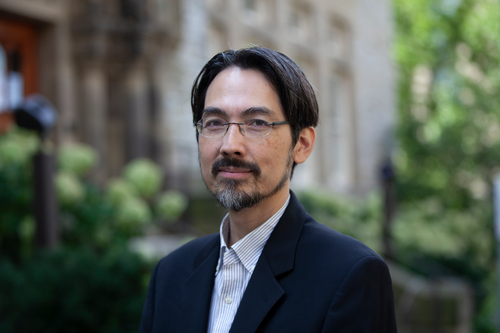
Kelsi Caywood graduated from Stanford with a Master's in International Policy, concentrating in governance and development. Her research areas include comparative policy analysis of the Asia-Pacific region, global women's issues, and migration and mobility. During her Master's program, she served as editor-in-chief of the Stanford International Policy Review, a course assistant, and a research assistant for Professor H. R. McMaster. Prior to Stanford, Kelsi received a Master of Law from Peking University as a Yenching Scholarship recipient and a BA in Political Science from Yale University. Her international work and study experiences include South Korea, China, the United Kingdom, and France.

In the Korea Program at APARC, Kelsi supported the research and practice partnerships stemming from the New Asia Research Project, a cluster of multi-year studies focusing on the new societal issues and challenges facing Korea and its neighbor countries. Currently, she focuses on the Global Talents book project and a series of research articles examining human resource development and associated global talent strategies in four Asia-Pacific countries: Australia, China, India, and Japan.

Research Associate, Korea Program (former)
Date Label
Authors
Gary Mukai
News Type
Blogs
Date
Paragraphs

Under the leadership of Carey Moncaster (MA ’94) and Liyi Ye (MA ’16), Stanford e-China recently concluded its Spring 2021 session. Launched in Winter 2020, Stanford e-China, Technologies Changing the World: Design Thinking into Action, is offered twice annually and introduces high school students in China to cutting-edge technologies that are defining the future and providing exciting areas for academic study, professional opportunities, and entrepreneurial innovation. Focusing on the fields of green tech, finance tech, health tech, and artificial intelligence, students engage in live discussion sessions and real-time conversations with Stanford University scholars, Silicon Valley entrepreneurs, as well as American high school students. Moncaster partners with Stanford e-China Advisor Liyi Ye and Ye’s team at Third Classroom in Shanghai.

A key challenge in developing Stanford e-China has been finding and refining a framework that encourages students to analyze the challenges facing each of the technologies highlighted in the course and then brainstorm innovative solutions. To showcase the dynamic research and teachings at Stanford University, Moncaster honed in on Design Thinking, a creative-thinking and problem-solving framework widely utilized throughout campus and Silicon Valley. Moncaster explained, “Design Thinking is a very hands-on, interactive, team-based experience that is dependent on critical feedback from other people. Translating the Design Thinking concepts online, with students, scholars, and practitioners virtually scattered across the world, presents an exciting opportunity to create curriculum that effectively introduces the relevant skills and mindset.”

For final projects, Stanford e-China students delve into an area of personal interest in one of the technology fields, applying aspects of the Design Thinking framework to develop a prototype pitch and action plan. Some of the sample projects have focused on improving the accessibility of digital healthcare for China’s rural residents, improving the mental health of Chinese students, utilizing solar energy at rural schools to provide electricity to students at night, and lowering carbon emissions at traditional power plants. Once it has been deemed safe to travel to the United States again, the top three students from each session will be invited to annual ceremonies at Stanford University. During the ceremonies, students will present their pitches and sharpen their Design Thinking skills with Stanford community members present.

Based on feedback from students, a highlight of Stanford e-China has been the chance to collaborate with American high school students studying about China and U.S.–China relations in SPICE’s China Scholars Program (CSP). With the support of CSP instructor Dr. Tanya Lee, the Chinese and American students work together in small groups on WeChat and Canvas to apply Design Thinking to an environmental challenge in their respective communities. In the process, they figure out how to bridge different time zones, tech resources, learning styles, and cultural perspectives.

Moncaster reflected, “Since Tanya, Liyi, and I are trying to cultivate future leaders in U.S.–China relations, we are hoping to increase the interaction between the students in Stanford e-China and the China Scholars Program. It has been fascinating to hear them discuss not only cutting-edge technologies but also how they can serve as change agents and address topics such as social inequality.” She continued, “Thanks to our inspiring guest speakers and the robust dialogue between my students and the CSP students, I am confident that many of my students have been inspired to become social entrepreneurs of the future. I also hope that some of my students will consider applying to Stanford as undergraduates or graduate students.”

Thanks to our inspiring guest speakers and the robust dialogue between my students and the CSP students, I am confident that many of my students have been inspired to become social entrepreneurs of the future.
Carey Moncaster

In terms of next steps, Moncaster and Ye hope to shift some of their attention to training schoolteachers in China—including the regular schoolteachers of their Stanford e-China students—via professional development seminars. SPICE Instructor Dr. Mariko Yoshihara Yang and Dr. Rie Kijima already offered one such seminar, which focused on Design Thinking. SPICE hopes to offer additional seminars to teachers in China on Design Thinking as well as other pedagogically focused strategies such as Project-Based Learning.

SPICE is seeking support to broaden its work with Stanford e-China, the China Scholars Program, and teacher professional development in China.

Read More

arches at Stanford University
Blogs

High School Students in China and the United States Collaborate

Students in SPICE’s China Scholars and Stanford e-China Programs meet in virtual classrooms.
High School Students in China and the United States Collaborate
Hero Image
screenshot of an instructor and a student
Stanford e-China Instructor Carey Moncaster and Stanford e-China Advisor Liyi Ye
All News button
1
Subtitle

SPICE seeks to expand its offerings to students and teachers in China.

Authors
Noa Ronkin
News Type
News
Date
Paragraphs

The Walter H. Shorenstein Asia-Pacific Research Center (APARC) at Stanford University is pleased to announce that political scientist Charles Crabtree has been appointed as a visiting assistant professor with the Japan Program.

Crabtree is an assistant professor in the Department of Government at Dartmouth College. During the 2021-22 academic year, while on leave from Dartmouth, Crabtree will research fairness in politics, with applications to areas including the study of repression, human rights, policing, and immigration. He will also collaborate with Kiyoteru Tsutsui, director of the Japan Program and senior fellow at the Freeman Spogli Institute, on several forthcoming publications and seminars that generate fresh perspectives on Japanese political, economic, and societal issues.

"Charles is an excellent academic partner, and I am delighted to have him with us at Stanford this year,” said Tsutsui. “His research into the normatively important issue of discrimination makes unique contributions to public evaluations of institutional legitimacy across regimes, especially in the context of Japanese politics, where it is insufficiently studied.”

Crabtree’s research focuses on the politics, sociology, and economics of discrimination across countries in Asia, particularly in Japan, where out-group discrimination continues to mar the lived experiences of many. He examines the consequences of discrimination and evaluates various means of reducing it in politics, the workplace, and everyday life. His book on this subject, Studying Discrimination: An Experimental Approach, is under contract with Cambridge University Press.

Methodologically, Crabtree is interested in research design, experiments, and applying computational tools to better understand the social world. He has published his research in journals such as the American Journal of Political Science, the British Journal of Political Science, the Journal of Politics, and Political Analysis. As someone who deeply believes in the value of public scholarship, he regularly writes on issues related to Japan for The Hill and about American and Japanese politics for outlets such as Foreign Policy, the Japan Times, the South China Morning PostThe Atlantic, and the Washington Post.

Crabtree holds a doctorate in Political Science from the University of Michigan and master’s degrees from Pennsylvania State University and Northwestern University.

Read More

Portrait of Ma'ili Yee, 2020-21 APARC Diversity Fellow
News

Student Spotlight: Ma’ili Yee Illuminates a Vision for Building the Blue Pacific Continent

With support from Shorenstein APARC’s Diversity Grant, coterminal student Ma’ili Yee (BA ’20, MA ’21) reveals how Pacific island nations are responding to the U.S.-China rivalry by developing a collective strategy for their region.
Student Spotlight: Ma’ili Yee Illuminates a Vision for Building the Blue Pacific Continent
Figures of Kuomintang soldiers are seen in the foreground, with the Chinese city of Xiamen in the background, on February 04, 2021 in Lieyu, an outlying island of Kinmen that is the closest point between Taiwan and China.
Commentary

Strait of Emergency?

Debating Beijing’s Threat to Taiwan
Strait of Emergency?
SINGAPORE (Aug. 23, 2021) Vice President Kamala Harris visits combat ship USS Tulsa, part of a deployment in the U.S. 7th Fleet area of operation in support of a free and open Indo-Pacific region.
Commentary

The Significance of Kamala Harris’ Vietnam Trip: Interview with Donald K. Emmerson

Emmerson talks to VnExpress about the implications of Harris’ visit to Hanoi, the first such visit by a U.S. vice president.
The Significance of Kamala Harris’ Vietnam Trip: Interview with Donald K. Emmerson
Hero Image
Photo of Charles Crabtree Rod Searcey
All News button
1
Subtitle

Crabtree, an assistant professor at Dartmouth College, researches discrimination in politics, particularly in Japan.

-

Fall 2021 Webinar Series Kickoff with Mr. Ban Ki-moon and Prof. Nicole Ardoin

September 28, 5-6 p.m. California time/ September 29, 9-10 a.m. Korea time

This event is held virtually via Zoom. Registration required.


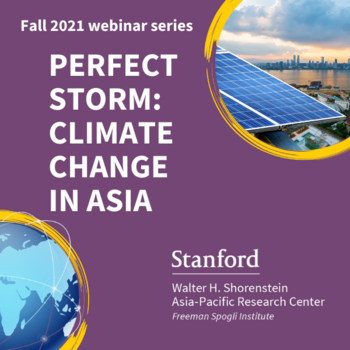
The Asia-Pacific region is the world’s most vulnerable region to climate change risks. With its densely populated low-lying territories and high dependence on natural resources and agriculture sectors, Asia is increasingly susceptible to the impacts of rising sea levels and weather extremes. The impacts of climate change encompass multiple socioeconomic systems across the region, from livability and workability to food systems, physical assets, infrastructure services, and natural capital.

The Shorenstein Asia-Pacific Research Center’s Fall 2021 webinar series, “Perfect Storm: Climate Change in Asia,” explores climate change impacts and risks in the region, adaptation and mitigation strategies, and policy responses.

Join us for the series kickoff event, featuring a keynote address by former UN Secretary-General and former South Korean Foreign Minister Ban Ki-moon, who is known for putting sustainable development and climate change at the top of the UN agenda, and a discussion with Stanford social ecologist Nicole Ardoin, a leading expert in environment, sustainability, and climate change education. Mr. Ban’s keynote will focus on COVID-19 and climate change.


Panelists 

Portrait of Mr. Ban Ki-moonMr. Ban Ki-moon, Chairman of Ban Ki-moon Foundation for a Better Future, 8th Secretary-General of the UN

Ban Ki-moon is a South Korean diplomat who was the 8th Secretary-General of the United Nations and a career diplomat in South Korea’s Ministry of Foreign Affairs and in the UN.

Mr. Ban’s current leadership roles include the Chairman of South Korea’s Presidential National Council on Climate and Air Quality; Chairman of Boao Forum for Asia; Co-Chair of the Ban Ki-moon Centre for Global Citizens, Vienna; Chairman of the International Olympic Committee’s Ethics Committee; Distinguished Chair Professor and Honorary Chairman at the Institute of Global Engagement and Empowerment at Yonsei University in Seoul, Korea; and President of the Assembly and Chair of the Council of Global Green Growth Institute.

Mr. Ban served two consecutive terms as the Secretary General of the UN (2007-2016). Throughout his tenure at the UN, he strove to be a bridge builder, to give voice to the world’s poorest and the most vulnerable people, and to make the organization more transparent and effective. He successfully pressed for action to combat climate change — an effort that culminated in the adoption and rapid entry into the landmark Paris Agreement in 2016. Mr. Ban worked closely with member states of the UN to shape the 2030 Agenda for Sustainable Development and to establish UN Women, which has been advancing the organization’s work for gender equality and women’s empowerment. He also launched major efforts to strengthen UN peace operations, to protect human rights, to improve humanitarian response, and to prevent violent extremism and to revitalize the disarmament agenda.

At the time of his appointment at the UN, Mr. Ban was the Minister of Foreign Affairs and Trade of the Republic of Korea. His 37 years with the Ministry included postings in New Delhi, Washington D.C., and Vienna, and responsibilities for a variety of portfolios, including Foreign Policy Adviser to the President, Chief National Security Adviser to the President, Vice Minister, Deputy Minister for Policy Planning and Director-General for American Affairs. Mr. Ban has also been actively involved in issues relating to inter-Korean relations by serving as Chairman of the Preparatory Commission for the Comprehensive Nuclear Test Ban Treaty Organization.

Mr. Ban earned a master’s degree in public administration from the John F. Kennedy School of Government at Harvard University in 1985 and a bachelor’s degree in international relations from Seoul National University in 1970.
 

Image
Portrait of Nicole Ardoin
Nicole Ardoin, Emmett Family Faculty Scholar, is the Sykes Family Director of the Emmett Interdisciplinary Program in Environment and Resources (E-IPER) in the School of Earth, Energy, and Environmental Sciences at Stanford University. She is a senior fellow with the Stanford Woods Institute for the Environment and an associate professor in the Graduate School of Education.

Founder of the Stanford Social Ecology Lab, Professor Ardoin is an interdisciplinary social scientist who researches individual and collective environmental behavior as influenced by environmental learning and motivated by place-based connections. Professor Ardoin and members of her lab pursue their scholarship with a theoretical grounding and orientation focused on applications for practice. They often work in collaboration with community partners, including public, private, and social sector organizations at a range of scales, to co-design and implement studies that build on a theoretical frame while concurrently addressing questions of interest to the partners. This work occurs primarily in informal settings, such as parks and protected areas, nature-based tourism locales, community gathering spaces, and other everyday-life settings.

Interested in actionable knowledge and notions of co-production, Professor Ardoin and her group collaborate with sustainability, environmental conservation, and philanthropic organizations to study the design, implementation, and effectiveness of a range of social-ecological practices. Through reflective learning, curiosity, and humility, the Social Ecology Lab strives to bring theoretically based insights to sustainability opportunities and challenges.

Professor Ardoin is an associate editor of the journal Environmental Education Research, a trustee of the George B. Storer Foundation, chair of NatureBridge's Education Advisory Council, an advisor to the Student Conservation Association and Teton Science Schools, among other areas of service to the field.


Moderator

Image
Photo of Gi-Wook Shin
Gi-Wook Shin, Director of APARC and the Korea Program

Gi-Wook Shin is the director of the Walter H. Shorenstein Asia-Pacific Research Center; the William J. Perry Professor of Contemporary Korea; the founding director of the Korea Program; a senior fellow of the Freeman Spogli Institute for International Studies; and a professor of sociology, all at Stanford University. As a historical-comparative and political sociologist, his research has concentrated on social movements, nationalism, development, and international relations.

Via Zoom Webinar
Register:  https://bit.ly/3ndgszc


Mr. Ban Ki-moon <br>Chairman of Ban Ki-moon Foundation for a Better Future; 8th Secretary-General of the UN<br><br>
Nicole Ardoin <br>Emmett Family Faculty Scholar and Sykes Family Director of E-IPER, School of Earth, Energy & Environmental Sciences; Associate Professor, Graduate School of Education; Senior Fellow, Woods Institute for the Environment; Stanford University<br><br>
Gi-Wook Shin <br>Director of APARC and the Korea Program
Panel Discussions
-

Image
header for Technology and Geopolitics: EU Proposals for Regulating Rights, Security and Trade

The future of technology policy in Europe will be affected by growing nationalism and protectionism, cyber and national security threats, and great power rivalries. The Program on Democracy and the Internet invites you to a technology policy discussion led by International Policy Director, Marietje SchaakeJoin us on September 16th from 9 AM - 12 PM PST (6 PM - 9 PM CET), as we dive into conversations on EU legislative packages, digital trade rules, and cybersecurity & geopolitics. We hope to develop a more precise understanding of how the EU and its allies can collaborate to create compatible technology standards, build more resilient supply chains, and address novel opportunities and risks presented by emerging technologies.This event is organized by the Program on Democracy and the Internet (part of the Cyber Policy Center and the Center on Philanthropy and Civil Society) and co-sponsored by the Institute for Human-Centered Artificial Intelligence.

Moderators: 


Speakers:


Seminars

Shorenstein APARC
Stanford University
Encina Hall, Room E301
Stanford, CA 94305-6055

(650) 736-0656 (650) 723-6530
0
mike_breger.jpg

Michael (Mike) Breger joined APARC in 2021 and serves as the Center's communications manager. He collaborates with the Center's leadership to share the work and expertise of APARC faculty and researchers with a broad audience of academics, policymakers, and industry leaders across the globe. 

Michael started his career at Stanford working at Green Library, and later at the Center for Russian, East European and Eurasian Studies, serving as the event and communications coordinator. He has also worked in a variety of sales and marketing roles in Silicon Valley.

Michael holds a master's in liberal arts from Stanford University and a bachelor's in history and astronomy from the University of Virginia. A history buff and avid follower of international current events, Michael loves learning about different cultures, languages, and literatures. When he is not at work, Michael enjoys reading, painting, music, and the outdoors.

Communications Manager
Date Label
-

About the Seminar: US response to 9/11 included a major focus on peace building through democracy promotion. The seminar examines the rationale and milestones for American engagement in distant lands. How will such an approach work in future foreign policy implementation is also discussed with some conclusions about future engagement.


For Fall Quarter 2021, we will be hosting a hybrid weekly Research Seminar Series. All events will be open to the public online via Zoom, and a limited-capacity in-person element for Stanford affiliates may be added in accordance with the County's health and safety guidelines.


Image
Shirin Tahir-Kheli
About the Speaker: Dr. Shirin Tahir-Kheli is a Senior Fellow and Founding Director of the South Asia Program at the Foreign Policy Institute of the Johns Hopkins University School of Advanced International Studies (SAIS). In 2011, Tahir-Kheli was named by Newsweek as one of the "150 Women Who Shake the World." She specializes in South Asia, nuclear non-proliferation, United Nations and U.S. foreign policy, and women's empowerment.

She is the author and editor of several monographs, including Pakistan Today: The Case for U.S.-Pakistan Relations (with Shahid Javed Burki, Foreign Policy Institute, 2017); Manipulating Religion for Political Gain in Pakistan: Consequences for the U.S. and the Region (Foreign Policy Institute, 2015); and India, Pakistan and the United States: Breaking with the Past (Council on Foreign Relations, 1997).

Democracy Promotion in U.S. Foreign Policy: Looking Back, Looking Forward
Download pdf

Online, via Zoom

Shirin Tahir-Kheli Ambassador & Senior Fellow, Foreign Policy Institute, Johns Hopkins School of Advanced International Studies, Washington DC Organization
Seminars
-

About the Seminar: Nick surveyed the universe of recent applicants to the Indonesian civil service to study the effects of high-stakes examinations on political attitudes. Leveraging applicants' scores on the civil service examination, he employs a regression discontinuity design to compare the attitudes of applicants who narrowly failed against those who narrowly passed. Nick shows that the simple fact of failure on the civil service examination negatively affects applicants’ belief in the legitimacy of the process, some attitudes towards outgroups, and national identification. Next, Nick found that applicants who were offered – and accepted – employment in the civil service reported higher satisfaction with the process, greater amity towards outgroups, and higher national identification. Since more applicants fail than pass, these results suggest that civil service examination outcomes may have unintended consequences for social cohesion – particularly in contexts where successful applicants disproportionately hail from specific ethnic, racial, or religious groups.


For Fall Quarter 2021, we will be hosting a hybrid weekly Research Seminar Series. All events will be open to the public online via Zoom, and a limited-capacity in-person element for Stanford affiliates may be added in accordance with the County's health and safety guidelines.
 

About the Speaker: Nick is a Ph.D. candidate in political science at the University of California, Berkeley, studying comparative politics. Most of his research is interested in identifying whether and when certain political institutions worsen group-based antagonisms. He has a particular regional interest in Southeast Asia.

Image
Nicholas Kuipers

Online, via Zoom

1
CDDRL Predoctoral Scholar, 2021-22
nick_kuipers.jpg

Nicholas Kuipers is a Ph.D. candidate in political science at the University of California, Berkeley, studying comparative politics and political economy. Nicholas’ research has been supported by the Institute for International Studies, the National Science Foundation (NSF), the Southeast Asia Research Group (SEAREG), and the Weiss Family Fund. His research has been published in Asian Survey, British Journal of Political Science, Journal of Politics, and Journal of Experimental Political Science. A graduate of Oberlin College, he previously worked in Jakarta at Saiful Mujani Research & Consulting, a political consultancy specializing in public opinion surveys.

Nick Kuipers Ph.D. Candidate, UC Berkeley CDDRL Predoctoral Fellow
Seminars
Authors
News Type
Blogs
Date
Paragraphs

At first, I almost didn’t apply to the Reischauer Scholars Program (RSP). As someone with primarily Eastern European heritage, I doubted that I had a unique perspective to add to a coalition of students dedicated to learning more about Japan’s rich culture, economics, history, and society. In my mind, my personal experience couldn’t have been further from the course’s content. However, as a recent graduate of the RSP, my experience has completely shattered my previous misconceptions. Stanford’s RSP isn’t just an online program that gives students a comprehensive, in-depth view of Japan—it brings together a community of academically and socially diverse individuals from across the United States, along with their manifold perspectives, to build future leaders in the U.S.–Japan relationship. 

My experience has completely shattered my previous misconceptions.

My path to the RSP began in Model United Nations (MUN) and my tenth-grade world history class that encouraged me to delve deeper into the political and ideological theories that govern and shape our society. Japan was a major focus for multiple of my MUN conferences, where I descended into multiple Wikipedia rabbit-holes on a wide range of topics, from Japan’s stance on sustainable development to socio-political effects on Japanese gender equality quotas. Furthermore, throughout my dual enrollment in a MicroMasters program in international jurisprudence and a course on East Asian culture and law, I learned more about the intricacies of Japan’s Eurocentric depiction in the geo-political sphere. In the international law resources I was exposed to, Japan was often portrayed as “lawless,” while the Western legal system was presented as the “key” to maintaining a proper rule of law in East Asia. Through the latter course which focused on the intersection between Japanese culture and law, Japanese law was accurately shown as an extension of the rich Japanese culture I had learned about in my history classes; in this regard, each cultural facet needed to be taken into account with the legal theory of the state. Since then, I’ve been hooked on understanding the role of implicit motives in shaping international policy and cultural precedent in jurisprudence. At the RSP, I have been able to pursue my passions alongside like-minded peers.

At the RSP, I have been able to pursue my passions alongside like-minded peers. 

From the first week of the RSP, the diversity of students was evident. Each of my fellow peers offered their own outlook on topics ranging from “Religions in Japan” to “The Power of Popular Culture.” Across online forums and virtual classrooms, complex concepts were thoroughly discussed through witty back-and-forth banter, new ideas were buttressed by comprehensive research, and interconnected themes were explored via collaboration. The RSP’s inclusive and dynamic environment was one of my favorite aspects of the program. Weekly Zoom meetings with our instructor, Ms. Naomi Funahashi, and my peers allowed me to grasp unfamiliar concepts and take a deep dive into the things I didn’t previously know through active engagement. Moreover, at each virtual classroom, we had the opportunity to meet government officials, business leaders, and scholars at the forefront of U.S.–Japan relations. Each speaker’s ideas will forever retain importance to my understanding of the Japanese American experience, which remains equally relevant in the modern day.

The RSP’s commitment to educating the future leaders of the U.S.–Japan relationship is shown in its culmination. Near the final months of the 20-week RSP, students are given the opportunity to explore a topic of their choosing related to Japan or the U.S.–Japan dynamic. In my final paper, titled “The Rite of Rights: An Examination of Socio-Cultural Precedent in Japanese Law,” I coalesced my RSP education with my interest in international and Japanese jurisprudence. Even after its conclusion, the RSP continues the discussion on U.S.–Japan relations for the years to come by compiling and sharing all the research papers written within that year’s program. 

Ultimately, I am grateful to the Reischauer Scholars Program for creating a mosaic of different experiences and cultures by bringing together my peers. Throughout my involvement in the RSP, I have strengthened my belief in the cross-cultural intersections that bind us all together. It is through these bonds, along with empathy and compassion, that the RSP helps students weave themselves into the U.S.–Japan international tapestry, shaping the world. 


The next session of the Reischauer Scholars Program will run from February to June 2022. The application will open September 6, 2021.

Read More

Brandon Cho at Todaiji Temple, Nara
Blogs

A Journey Through Time: The RSP as a Gateway from the Past to My Future

The following reflection is a guest post written by Brandon Cho, an alumnus of the Reischauer Scholars Program.
A Journey Through Time: The RSP as a Gateway from the Past to My Future
George Takei, Hosato Enterprises, Inc., Los Angeles
Blogs

Live Long and Prosper… and Stand Back

In his March 15, 2021 lecture for SPICE’s Reischauer Scholars Program, actor George Takei—who played Hikaru Sulu, helmsman of the USS Enterprise in Star Trek—added “and Stand Back” to the iconic Star Trek words, “Live Long and Prosper,” as he was greeting students.
Live Long and Prosper… and Stand Back
Hero Image
high school girl standing amidst park greenery
Kristine Pashin at the Farnam Memorial Gardens in New Haven, CT; photo courtesy Kristine Pashin
All News button
1
Subtitle

The following reflection is a guest post written by Kristine Pashin, an alumna of the Reischauer Scholars Program, which will begin accepting student applications on September 6, 2021.

Authors
Oriana Skylar Mastro
News Type
Commentary
Date
Paragraphs

This commentary was first published by The Lowy Institute.


Two recent naval exercises demonstrate the potential for Russia-China cooperation in the Indian Ocean, and how the two present a much greater threat to a continued US role and influence in the region than either would individually.

Last year, South Africa hosted a maritime exercise with Russia and China, the first-ever trilateral exercise among the three countries. Exercise Mosi was designed, according to the South African Navy, to “enhance interoperability and maritime security“ and showed the three countries’ willingness to work together to counter security threats at sea, such as terrorism and piracy. There were the obligatory social and cultural activities, and then military maneuvers that focused on a surface gunnery exercise, helicopter cross-deck landings, boarding operations and disaster control exercises.

China and Russia followed this up in December 2019 with another trilateral maritime exercise with Iran in the Gulf of Oman called Exercise Marine Security Belt. The exercises included live-fire drills and an anti-piracy exercise involving Iranian commandos. According to the Iranian naval commander, the exercises’ message was that “Iran cannot be isolated.” A Chinese spokesman stated: “The naval drills aim to deepen exchange and cooperation among the navies of the three countries, and display their strong will and capability to jointly maintain world peace and maritime security”.

Both China and Russia have gradually been increasing their presence in the Indian Ocean. Russia recently announced it would establish a naval facility in Port Sudan on the Red Sea. China opened its first overseas base in Djibouti in 2017, and China’s navy has increased operations in the Indian Ocean region over the past three decades.


Sign up for APARC newsletters to receive our experts' analysis and insights.


The Covid-19 crisis may have slowed further moves towards cooperation this year. Moscow just hosted the 12th BRICS summit virtually, which doesn’t lend itself to deep military engagement. But the trilateral exercises are notable because they signal Moscow’s and Beijing’s desire to cooperate in the region. And more importantly, they reveal that regional powers such as South Africa and Iran, as well as other countries, welcome the increased role of China and Russia.

Relations between South Africa and the United States were already strained when Pretoria agreed to the trilateral exercises last year. Under the Trump administration, the United States grew critical of South Africa’s UN voting record. Washington also declined to exempt the country from hikes in tariffs on US imports of steel and aluminum. In contrast, China has pledged the most investments of any country in South Africa. Russia has followed in its footsteps in building political, military and trade ties across sub-Saharan Africa.

Iran has even more reason to build relations with China and Russia. Since the US withdrawal from the Iran nuclear deal in 2018, Iran has strengthened its ties to China and Russia, using multi-billion-dollar loans from the two countries to resist US sanctions and deepening defense cooperation and intelligence sharing.

Smaller countries can also find the Russia-China nexus useful. According to a Chinese-language source, Sudan, a long-standing regional partner of China, first proposed hosting a Russian base in 2017 as a counterbalance “against aggressive acts of the United States”.

In other words, China and Russia together may be better equipped to compete with the United States and its allies in the Indian Ocean region for influence, for several reasons.

Moscow may be more willing than Beijing to play the ringleader role in organizing and directing opposition against the United States, but it doesn’t have the economic heft to make such cooperation a winning proposition for Indian Ocean states.

While China has considerable resources, it is more concerned about provoking the United States and potentially worsening already poor relations. China often argues that it is a different type of great power, one that does not engage in hegemonic behavior such as alliance formation. China is also keen to avoid sparking a countervailing coalition against it.

For these reasons, Beijing often tones down its rhetoric about the nature of its relationship with Russia. China claimed the Indian Ocean exercises do “not target any third party”. For Russia, however, overtly undermining the United States is a key component of its strategy and plays well domestically for Putin.

On the other hand, China has the economic resources to wield influence and invest heavily in Indian Ocean countries. In Pakistan alone, Beijing has pledged an estimated $87 billion in funding and completed roughly $20 billion worth of projects. Recently, Beijing and Tehran reportedly agreed to a 25-year deal to expand China’s investment in Iranian banking, telecommunications, ports and railways in exchange for oil.

While China and Russia are nowhere near dominating the Indian Ocean region militarily, their combined influence may promise trouble for the United States and its partners. The two countries will likely work together to inure their partners to international pressure, including over human rights violations. And those partners will receive security benefits (such as military access) and economic benefits (such as preferential economic ties) in return. Although it seems a bit exaggerated, there is some truth to Iranian Admiral Hossein Khanzadi’s declaration that strategic coordination with Russia and China means “the era of American free action in the region is over”.

China and Russia may be slow in enhancing their strategic coordination in the Indian Ocean slowly, but the intent is there. The United States and its allies may still be dominant militarily. But we should be careful not to fall under the illusion that this guarantees influence. With China and Russia presenting themselves as strong alternative powers, the United States and like-minded countries have to work that much harder to promote sustainable economic development, protect international rules and norms, and ensure peace and security in the region.

Read More

Joe Biden and Lt. Gen. Lloyd J. Austin III attend a ceremony welcoming troops home at Fort Bragg in North Carolina on April 8, 2009.
Commentary

The Real Reason Biden’s Pick for Pentagon Chief is the Wrong Choice

Does Joe Biden's choice of Army Gen. Lloyd Austin III for secretary of defense offer a "safe choice" at the expense of preparing a strong front in the great-power competition with China and advancing women in senior leadership roles at the Defense Department?
The Real Reason Biden’s Pick for Pentagon Chief is the Wrong Choice
The Australian flag flies outside the Great Hall of the People in Beijing
Commentary

Free Nations Must Speak for Australia

The Biden administration needs to rethink the entire nature of alliances for an era of heavy-handed economic diplomacy from Beijing says Oriana Skylar Mastro and Zack Cooper in an op-ed for the Australian Financial Review.
Free Nations Must Speak for Australia
A warship sailing in the South China Sea and a photo of three soldiers standing guard in front of a Chinese traditional building
News

China’s South China Sea Strategy Prioritizes Deterrence Against the US, Says Stanford Expert

Analysis by FSI Center Fellow Oriana Skylar Mastro reveals that the Chinese military has taken a more active role in China’s South China Sea strategy, but not necessarily a more aggressive one.
China’s South China Sea Strategy Prioritizes Deterrence Against the US, Says Stanford Expert
Hero Image
putin jinping cropped
Russian President Vladimir Putin shakes hands with Chinese President Xi Jinping during a signing ceremony in Beijing's Great Hall of the People on June 25, 2016. (Photo by Greg Baker-Pool/Getty Images).
All News button
1
Subtitle

Rhe US and its allies may have military dominance in the region, but it’s no guarantee of influence.

Subscribe to Asia-Pacific