News Type
News
Date
Paragraphs

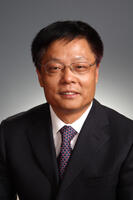
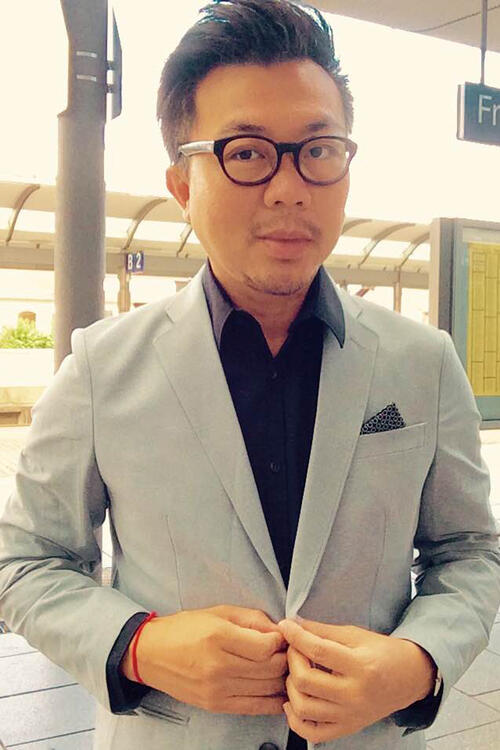
Stanford professor Gi-Wook Shin has been reappointed for another term as the director of Stanford's Walter H. Shorenstein Asia-Pacific Research Center (APARC), from July 1, 2016 through Aug. 31, 2019. The announcement was made yesterday in an email.

“I have been blessed with such a wonderful group of faculty, staff and visitors over the years and am truly grateful for your confidence in me and support of my work,” Shin said. “I look forward to continuing to work with all of you in the coming years.”

Shin has since 2005 served as director of Shorenstein APARC, one of six centers within the Freeman Spogli Institute for International Studies (FSI).

“We are extremely grateful for Gi-Wook’s leadership and are looking forward to his continued dedication to Shorenstein APARC and FSI,” FSI Director Michael McFaul said.

A comparative historical and political sociologist, Shin came to Stanford in 2001 to build a program focused on Korean studies. Under his leadership, Shorenstein APARC and the Korea Program have grown into a premiere forum for scholars, government officials and business leaders to convene on the interdisciplinary study of contemporary Asia.

Shin is a critically acclaimed author/editor of more than a dozen books and numerous articles. His recent works include an examination of how South Korea can leverage brain drain in Global Talent: Skilled Labor as Social Capital in Korea and an analysis of how memories of World War II are interpreted in contemporary Asia and Europe in Confronting Memories of World War II: European and Asian Legacies.

Shin will be on sabbatical leave from Oct. 1, 2015, through June 30, 2016. During that time, Takeo Hoshi will serve as the center’s acting director.

Hoshi is a senior fellow in FSI and a professor, by courtesy, of finance at Stanford’s Graduate School of Business. He also leads the Japan Program at Shorenstein APARC.

Kathleen Stephens will serve as the acting director of the Korea Program in Shin’s absence. Announced earlier this year, Stephens will join the center in September as the William J. Perry Distinguished Fellow in Korean Studies.

Hero Image
giwook shin
Gi-Wook Shin is reappointed as director of the Walter H. Shorenstein Asia-Pacific Research Center.
All News button
1
-

Center members are cordially invited to the

2015 - 2016 Center Orientation

Come meet new colleagues and learn about

research & projects taking place this year,

while enjoying a delicious lunch


Conferences
Authors
Naomi Funahashi
News Type
News
Date
Paragraphs

The Stanford Program on International and Cross-Cultural Education (SPICE) honored two of the top students of the 2015 Reischauer Scholars Program (RSP) at a Japan Day event at Stanford University on August 13, 2015. The two 2015 RSP Japan Day honorees were Meera Santhanam and Katie Goldstein.

Japan Day commenced with welcoming comments by Dr. Gary Mukai, SPICE Director, and opening remarks by Consul General Jun Yamada, Consulate General of Japan in San Francisco. Praising Meera, Katie, and their fellow RSP students for their dedication to the study of Japan and U.S.–Japan relations, Consul General Yamada noted, “The U.S.–Japan relationship is one of the most important bilateral relationships in the world today. Without a doubt this is due to past generations’ tireless efforts to understand each other and build the kind of mutual trust that has made this relationship so durable and successful. To assure the future vitality of the U.S.–Japan relationship, it is therefore our joint responsibility to prepare the future generation for continuing this task. Through the Reischauer Scholars Program which has been instrumental in fostering future leaders who have acquired a deep and broad understanding of Japan, a solid foundation for this purpose has been established.” 

Mukai recognized Naomi Funahashi, RSP Manager and Instructor, for her tenth year of teaching the RSP. Funahashi has empowered over 250 Americans with not only subject matter content knowledge on Japan and U.S.–Japan relations but also tools of critical analysis and perspective taking. Reflecting on her ten years of teaching the RSP, Funahashi commented, “While advancements in distance-learning technology over the past ten years have eased the logistical challenges of the RSP, the students remain at the heart of why I continue to love teaching this course. I have the unique privilege of guiding some of the most talented high school students in the United States through an exploration and examination of Japan, and I am confident that many of them will comprise the leadership of future U.S.–Japan relations.”

Funahashi gave an overview of the RSP to the Japan Day audience of over 30 people, which included Professor Indra Levy, RSP advisory board member, and Maiko Tamagawa, Advisor for Educational Affairs, Consulate General of Japan in San Francisco. Named in honor of former U.S. Ambassador to Japan Edwin O. Reischauer, a leading educator and noted scholar of Japanese history and culture, the RSP is an online course on Japan and U.S.–Japan relations that is offered annually to 25–30 high school sophomores, juniors, and seniors across the United States.

Meera Santhanam (junior, The Nueva School, CA) and Katie Goldstein (senior, Crystal Springs Uplands High School, CA) were recognized for their coursework and exceptional research essays. They articulately presented their research that focused on women in the Japanese workforce and equity-related issues concerning LGBTQ people in Japan, respectively; and skillfully answered provocative questions from the audience. 

Image
2015rsp


Since 2003, the RSP has provided a creative and innovative approach to teaching high school students about Japan and U.S–Japan relations. The program provides American students with unique opportunities to interact with diplomats and top scholars affiliated with Stanford University, the University of Tokyo, the University of Hawaii, and other institutions through online lectures and discussions, and introduces both American and Japanese perspectives on many historical and contemporary issues.

The 2015 Japan Day honorees were reflective of the introduction of varied topics and perspectives in the RSP curriculum. When asked to comment on her RSP experience, Santhanam remarked, “With exposure to a wide array of perspectives and in-depth content alike, participating in this program is a decision I would make a thousand times over again. This rare, interdisciplinary opportunity allowed me to connect with my topic on not just an academic, but personal level as well.” Goldstein shared a similar sentiment, also noting the scholarly, yet congenial atmosphere of Japan Day: “The speakers—Dr. Gary Mukai, Naomi Funahashi, and Consul General Yamada—wonderfully set the formal yet fun tone of the academic event. The conversation, while centered around Japan, revolved around a myriad of topics: literature, current events, policies, you name a topic and it was talked about.”

For the first time in the history of the RSP, several RSP alumni introduced high school life in the United States to Japanese students enrolled in SPICE’s inaugural Stanford e-Japan course, which introduces U.S. society and culture and U.S.–Japan relations to Japanese high school students.

Stanford e-Japan students indicated early on in the course their desire to interact with students from the United States, and as a result, Waka Takahashi Brown, Stanford e-Japan Manager and Instructor, invited RSP alumni to comment on the discussion boards and guest speak at the virtual classroom on “U.S. High Schools and Education” on August 14, 2015. Brown noted, “The response from both the e-Japan students and Reischauer Scholars has been overwhelmingly positive. Not only have students been more engaged in the discussion boards, but the Stanford e-Japan students also seemed very eager to know what about Japan interested the U.S. students to participate in the Reischauer Scholars Program. I would not be surprised if the RSP and e-Japan students strike up a friendship from these initial brief exchanges.”

The distinguished RSP advisory committee members are Consul General Jun Yamada; Professor Emeritus Nisuke Ando, Doshisha University and Kyoto University; Ambassador Michael Armacost, Shorenstein Asia Pacific Research Center, Stanford University; Professor Indra Levy, Stanford University; Professor Phillip Lipscy, Stanford University; and Professor Emeritus Daniel Okimoto, Stanford University.

SPICE has received numerous grants in support of the RSP from the United States-Japan Foundation, the Center for Global Partnership (The Japan Foundation), and the Japan Fund, which is administered by the Freeman Spogli Institute for International Studies at Stanford University.

The RSP will be accepting applications for the 2016 program in September and October 2015. For more information about the RSP, visit www.reischauerscholars.org or contact Naomi Funahashi.

Hero Image
2015rsp
All News button
1

Shorenstein APARC
Encina Hall, Room E301
Stanford, CA 94305-6055

(650) 724-9632 (650) 723-6530
0
Program Coordinator, China Program
adam_martyn_headshot.jpg

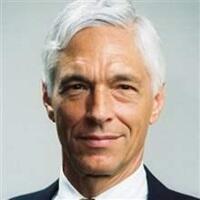
Adam Martyn was the program coordinator of the China Program at the Shorenstein Asia-Pacific Research Center. He earned a bachelor's degree in international studies from New York University. As a student at NYU, Martyn researched infanticide in rural West Africa. He also spent a semester studying at Eastern China Normal University in Shanghai. Prior to attending NYU, Martyn served as a volunteer with the United States Peace Corps in Ghana, West Africa. As a Peace Corps volunteer, he coordinated several technical training events and developed health and education outreach programs.

News Type
News
Date
Paragraphs

Video of A career in Economics...it's much more than you think

Marcella Alsan, an assistant professor of Medicine and CHP/PCOR core faculty member, shows how economics is a broader field than most people realize in this video produced by the American Economic Association (AEA).  Along with other top economists, she discusses the interdisciplinary nature of economics, specifically as it relates to global health.  Alsan states that "without understanding economic principals and economic forces, [there is] a real gaping hole in actually practicing medicine."  Understanding economics can help us to understand policy decisions and to tackle the broad problems of society.

Hero Image
aea video AEA
All News button
1
0
david_yang_headshot.jpeg

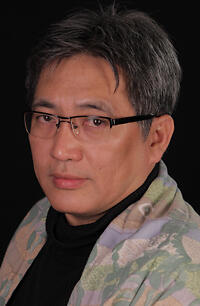
David Y. Yang is a Ph.D. student in Economics at Stanford University. He received his B.A. in Statistics and B.S. in Business Administration from the University of California, Berkeley. His research interests focus on political economy, behavioral economics, and economic history. In particular, he is interested how citizens form their preferences, beliefs and attitudes.

Graduate Student - Economics
SCPKU Pre-Doctoral Fellow, October-November 2015
Shorenstein APARCStanford UniversityEncina Hall, Room E301Stanford,  CA  94305-6055
650-723-6530
0
Corporate Affiliate Visiting Fellow, 2015-16
MD

Qi-Hong Sun is a corporate affiliate visiting fellow at the Walter H. Shorenstein Asia-Pacific Research Center (Shorenstein APARC) for 2015-16.

Paragraphs

Drawing on twenty-four years of experience in government, Michael H. Armacost explores how the contours of the U.S. presidential election system influence the content and conduct of American foreign policy. He examines how the nomination battle impels candidates to express deference to the foreign policy DNA of their party and may force an incumbent to make wholesale policy adjustments to fend off an intra-party challenge for the nomination. He describes the way reelection campaigns can prod a chief executive to fix long-neglected problems, kick intractable policy dilemmas down the road, settle for modest course corrections, or scapegoat others for policies gone awry.

Armacost begins his book with the quest for the presidential nomination and then moves through the general election campaign, the ten-week transition period between Election Day and Inauguration Day, and the early months of a new administration. He notes that campaigns rarely illuminate the tough foreign policy choices that the leader of the nation must make, and he offers rare insight into the challenge of aligning the roles of an outgoing incumbent (who performs official duties despite ebbing power) and the incoming successor (who has no official role but possesses a fresh political mandate). He pays particular attention to the pressure for new presidents to act boldly abroad in the early months of his tenure, even before a national security team is in place, decision-making procedures are set, or policy priorities are firmly established. He concludes with an appraisal of the virtues and liabilities of the system, including suggestions for modestly adjusting some of its features while preserving its distinct character.

All Publications button
1
Publication Type
Books
Publication Date
Journal Publisher
Columbia University Press
Authors
News Type
News
Date
Paragraphs

Karl Eikenberry, a distinguished fellow at Stanford’s Freeman Spogli Institute for International Studies, will serve on the Commission on Language Learning at the American Academy of Arts and Sciences (AAAS). The new commission is part of a national effort to examine the state of American language education.

The commission will work with scholarly and professional organizations to gather research about the benefits of language instruction and to initiate a national conversation about language training and international education.

Eikenberry joins eight other commissioners, including: Martha Abbott, executive director of the American Council on the Teaching of Foreign Languages; Nicholas Dirks, chancellor of the University of California at Berkeley; and Diane Wood, chief judge, of the 7th U.S. Circuit Court of Appeals. The group is led by Paul LeClerc, director of Columbia University’s Global Center in Paris.

Eikenberry, who is also a member of the AAAS Commission on Humanities and Social Sciences, contributed to “The Heart of the Matter,” a 2013 report that aims to advance dialogue on the importance of humanities and social sciences for the future of the United States.

Hero Image
karl eikenberry headline
All News button
1
Authors
Gi-Wook Shin
News Type
News
Date
Paragraphs

Japan has been actively pursuing internationalization of its higher education, and recruiting foreign students has been a major part of this endeavor. In 1983, Japan announced its plan to recruit 100,000 foreign students by the year 2000, and in 2008 instituted a plan to recruit 300,000 foreign students by 2020. Subsequent government-led projects such as the Global 30 (2009-2014) and the Top Global University (2014-2023) projects have also stipulated international student recruitment as a major requirement.

As a result, the number of foreign students in Japanese universities has increased significantly from 10,428 in 1983 to 139,185 in 2014. Likewise, foreign faculty numbers have grown from just 418 (0.8% of total faculty) in 1994 to 6,034 (6.8%) in 2014. Although the figures are still relatively low compared with those in Europe and North America, they bring a potentially powerful force for social change to a country marked by high ethnic homogeneity.

In particular, the influx of foreign students and faculty to Japanese universities creates more culturally diverse campuses, often cited as a desirable result of and a key motive for pursuing internationalization. In the U.S. and Europe, such changes have led to significant discursive and programmatic efforts to create a culture of respect for diversity and inclusion. For example, Europe has, despite its critics, consistently articulated the value of "interculturality," diversity, and respect for cultural differences as a broader discourse for European higher education.

However, this is not the case with Japan and most other Asian nations. One major reason is that Japanese universities primarily attract foreign students as a means to particular ends, such as enhancing university prestige, creating "education hubs," filling the gap in the declining college student population and improving international higher education rankings. As a result, Japanese campuses have become much more diverse than in the past. However, appreciation of the intrinsic educational value of a culturally diverse student and faculty body has not been embraced.

Our study shows a noticeable disjuncture between structural, educational and interpersonal levels of diversity. That is, Japanese universities have accepted more and more students of varying racial and ethnic backgrounds (structural diversity), but the curriculum still offers limited opportunities for students to think more deeply about assumptions concerning race, ethnicity and other individual/group differences (educational diversity).

In particular, our interviews with more than 50 students at top Japanese institutions, including the University of Tokyo, Waseda University and Kyushu University, reveal low levels of cross-cultural interaction between Japanese and foreign students (interpersonal diversity). Foreign students often report that Japanese students are very friendly and polite to them but nonetheless find it very difficult to become friends with them. One male undergraduate student from Nepal we interviewed said, "Japanese students are very nice. If I need help finding a building on campus, for example, I can just stop any Japanese student and they will be very polite and try to help me." Another student from Sri Lanka agreed, saying, "Everybody is very polite. I mean, sometimes they are overwhelmingly polite."
 

However, despite the politeness of the Japanese, many of the respondents indicated that making friends with Japanese students is difficult, with some pointing this out to be "the hardest part about being in Japan." One foreign student seemed puzzled: "Making real friends is hard. But I don't know why." One South Korean student we interviewed provided a clue: "People here are very individualistic and very independent, I think. In my laboratory, I will be the one who will approach my lab mates, especially the Japanese. They are very helpful but I have to be the one who starts the conversation."

The Japanese government and universities have worked closely to attract foreign students but due to the lack of interpersonal interaction between Japanese and foreign students, Japan is missing out on crucial opportunities in its higher education internationalization efforts.

First, international students gain many opportunities to interact with each other and learn intercultural skills for global citizenship while Japanese students much less so. As one foreign student said, "It's a very diverse environment because we all come from different countries. We can communicate different ways of thinking and share different ideas." Yet, most Japanese students are hesitant to interact with foreign students, missing the chance to learn intercultural skills. As the number of young Japanese going abroad to study has been on the decline in recent years (82,945 in 2004 to 60,138 in 2012), the contribution of foreign students to global education in Japanese colleges will be all the more important.

Second, diversity is instrumental in promoting innovation, and Japan should take advantage of the diversity that foreign students bring to its society. Much research demonstrates the positive effects of diversity on various academic and social outcomes (ability to form out-group friendship networks, increased cultural awareness, acquiring global citizenship skills, improving the campus climate, innovation, etc.). Facilitating diversity and recognizing their long-term effects for innovation and development should be a major goal of higher education in Japan.

Finally, foreign students can be valuable social capital for Japan, especially playing the role of transnational bridges between Japan and their home countries. Many come to Japan to learn about Japanese society and economy, with plans to become a bridge between Japan and their home countries after graduation. However, due to the lack of interpersonal interaction with Japanese students, foreign students often end up interacting primarily among themselves. Thus, they are also likely to bridge among themselves, rather than with Japanese, and that is a loss, given that Japan has invested so much in attracting foreign students.

Japan wants to make its top universities "super global," but they should first realize that this requires more than simply recruiting foreigners. What is most urgent is producing "global citizens" with inter-cultural skills and that can be achieved through the creation of a campus environment and culture that appreciates and respects diversity. It should also better appreciate the value of foreign students as transnational bridges with Japan.

To achieve such goals, Japanese universities need to establish institutional frameworks or programs to promote interaction between Japanese and foreign students. For example, they should offer more courses that both Japanese and foreign students can take together. Rather than just focusing on teaching Japanese languages and cultures to foreign students, Japanese students should be encouraged to take more courses in English and also those on other cultures and societies, ideally together with foreign students. These courses can instill values of cultural diversity in higher education in Japan. Japanese universities also need to ensure that structural segregation, either between programs, courses, dormitories and campuses, isn't an obstacle for promoting greater interaction between foreign and local students.

Our focus group interviews with Japanese students show that foreign and Japanese students misunderstand each other to a great extent. Foreign students are disappointed that not many Japanese are willing to approach them, but Japanese students are afraid to inconvenience their foreign visitors with their "poor" English. Foreign students are tired from guessing what their Japanese counterparts really feel and think, or their honne, but Japanese students think it is impolite to be too frank and direct even with other Japanese, let alone towards foreign students. To reduce these and other misgivings and gaps in cultural understanding, Japanese universities need to put in place more cross-cultural programs and opportunities for both sides to come into natural contact.

In short, internationalization efforts by Japanese universities should not stop at recruiting foreigners to their campuses. Rather, fostering a tolerant, inclusive university culture where foreigners are considered full, valued members should be considered an important step toward making Japanese universities truly international.

Stanford professor Gi-Wook Shin and Yonsei University professor Rennie J. Moon lead the research project, Diversity and Tolerance in Korea and Asia. This Nikkei Asian Review article was originally carried on July 16 and reposted with permission.

Hero Image
rennie 2
Japanese university students are interviewed by Rennie Moon (front), a lead researcher on cultural diversity in Asian higher education.
Rennie Moon
All News button
1
Subscribe to Asia-Pacific