News Type
News
Date
Paragraphs

As 2017 approaches, the Shorenstein Asia-Pacific Research Center documents highlights from the 2015-16 academic year. The latest edition of the Center Overview, entitled "Challenges to Globalization," includes research, people, events and outreach features, and is now available for download online.

Hero Image
containers port singapore
A container is loaded onto a ship docked at the terminal port in Singapore, June 2016.
ROSLAN RAHMAN/AFP/Getty Images
All News button
1
Authors
News Type
News
Date
Paragraphs

In this new articleMegan Palmer, a senior research scholar at the Center for International Security and Cooperation, talks about the different ways that the FBI is collaborating with the biotech community in order to be prepared to respond to an emerging biological threat. One of them is by reaching out to student bioengineers at programs like the International Genetically Engineered Machine (iGEM) Competition. The purpose of that event is to demonstrate how synthetic biology can be used to address pressing global issues.

As the article states, whether it’s an accidental outbreak or a biological attack, the FBI seeks to create a culture of trust and transparency with the biotech community. Palmer discussed this topic recently at the Biofabricate conference for synthetic biology and design in New York City.

As Palmer noted, biological attacks are a historical reality. In 1984, cult members poisoned patrons of 10 salad bars in Oregon with salmonella, sickening more than 750 people. And in 2001 shortly after the 9/11 attacks, anthrax spores that were mailed to newsrooms and government offices killed five people. While other incidents may have simply failed, it seems prudent to prepare for future attacks that could be even more deadlier.

Enter the FBI's foreay into the biotech community. Collaboartion between the public and private sectors is increasing in this area. As Palmer said, examples exist of iGEM students acting as "white hat biohackers" to help biotech companies detect weaknesses in their systems that  all in collaboration with the FBI, Palmer says. 

“There’s the overall sense that the government has acknowledged that it is not necessarily the center of influence in technological development,” Palmer told the publication. “We’re going to start seeing many more examples of partnerships between the government and the private sector where you wouldn't have necessarily expected them before. People should be willing to give them a chance.” 

To Palmer, the key to the collaboration is open communication. She reports progress with the FBI and biotech community on this front. Palmer herself asks the FBI questions about its involvement and interest in biotech dangers. So far, they have “been willing to have more of those conversations,” she said. The true test will come when the relationship is finally tested by what Palmer describes as a “triggering event,” either a situation where there is reason to believe a biotech has occurred or one in which the FBI is prying a bit too much into the lives of biologists. Palmer said that if the relationship doesn’t withstand this type of challenge, the trust between the FBI and the community would weaken, and communication would break down.

Follow CISAC on Twitter at @StanfordCISAC and on Facebook at www.facebook.com/StanfordCISAC.

Hero Image
gettyimages 455672555
Close up image of human hand holding test tube. CISAC's Megan Palmer explains in a new article how the FBI is collaborating with the biotech community in order to be prepared to respond to an emerging biological threat.
SergeyNivens/Getty Images
All News button
1
-

In China, rapidly changing prices and structures of the factors of production, cause a series of shocks and opportunities to Chinese manufacturing firms. The traditional image of ‘Made in China’ is undergoing profound changes to counteract the economic shocks. Meanwhile, the supply-side structural reforms proposed by the Chinese government in recent years, provide a basket of policies and financial support for the firms to cope with the pressure of the economic downside risks. Unfortunately, due to the difficulty in collecting data from microeconomic units, both the real status of firms (especially SMEs), or the performance and utility of government policies are difficult to evaluate objectively, not to mention making effective improvement. Therefore, began in 2015, Wuhan University cooperated with Hong Kong University of Science and Technology, Tsinghua University and Chinese Academy of Social Sciences, launched the first ‘China Enterprises - Employees Survey’ (CEES), and the China CEES Database has established. So far, the Database has collected data from more than 1121 Chinese manufacturing sample enterprises and more than 9389 matched sample employees on various aspects, including firm’s basic information, production, sales, innovation, finance, quality and workers for more than 1400 variables in 3 consecutive years (2013, 2014, 2015). The data shows that, Chinese manufacturing sector is undergoing huge changes these years, challenges are there, but more opportunities lie in innovation activities.


Image
prof cheng
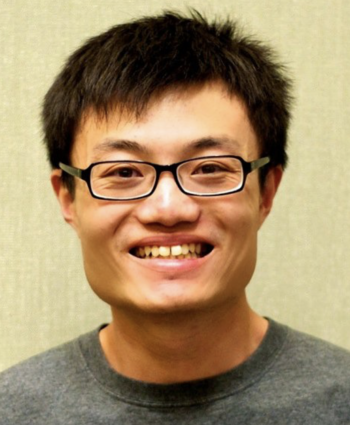
Cheng Hong joins the Walter H. Shorenstein Asia-Pacific Research Center (Shorenstein APARC) during the 2016–17 academic year from the Institute of Quality Development Strategy at Wuhan University, where he serves as a Professor of Economics and Dean of the Institute.  His research interests encompass China’s economic transition, quality of economic development, product quality governance and regulation, and entrepreneurship and innovation. During his time at Shorenstein APARC, he will participate in a research on the phenomenon of ‘zombie firms’ emerging in China.  Cheng is Director of Management Committee of China Employer-Employee Survey (CEES). He is also the Founding Editor of Journal of Macro-Quality Research since 2013. He received the First China Quality Award Nomination from the Chinese government in 2013.  He received a Ph.D. in economics from Wuhan University in 1999.

Doll Conference Room (Room 320)
Gunn-SIEPR Building
366 Galvez Street, Stanford, CA 94305-6015
map
 

616 Serra StreetEncina Hall E301Stanford, CA94305-6055
(650) 723-6530
0
hong_cheng.jpg PhD

Cheng Hong joins the Walter H. Shorenstein Asia-Pacific Research Center (Shorenstein APARC) during the 2016–17 academic year from the Institute of Quality Development Strategy at Wuhan University, where he serves as a Professor of Economics and Dean of the Institute.

His research interests encompass China’s economic transition, quality of economic development, product quality governance and regulation, and entrepreneurship and innovation. During his time at Shorenstein APARC, he will participate in a research on the phenomenon of ‘zombie firms’ emerging in China.

Cheng is Director of Management Committee of China Employer-Employee Survey (CEES). He is also the Founding Editor of Journal of Macro-Quality Research since 2013. He received the First China Quality Award Nomination from the Chinese government in 2013.

He received a Ph.D. in economics from Wuhan University in 1999.

Visiting Scholar
Seminars
Authors
News Type
News
Date
Paragraphs

Reality stands in the way of a quickly transformed U.S.-Russia relationship, Stanford historian Norman Naimark said. Naimark, an expert in Russian history and faculty affiliate at Stanford’s Center for International Security and Cooperation (CISAC), anticipates that "strategic constraints" will set in for the incoming Trump administration as it begins to understand some of the fundamental differences between Moscow and Washington.

The relationship between the two longtime global rivals may not change as fast or dramatically as some suggest, Naimark said. In fact, “deals” may be harder to make with the Putin regime in Russian than Trump anticipates.

CISAC recently interviewed Naimark on the subject of future U.S.-Russia ties:

How might the election of Donald Trump change the U.S.-Russia relationship?

There are many important things we do not yet know about the future Trump administration. How will his foreign policy team reflect (or not) the views of the Republican establishment, including the vice president, on issues towards Russia? How wedded is Trump to his campaign rhetoric and promises about Russia? How influential will the new president be in the making of foreign policy, when his interests and self-proclaimed competence clearly relate to domestic issues? How ready will the Trump administration be to reverse long-standing U.S. treaty and alliance obligations, both formal and informal?

Answers to those questions would help us assess the range of possibilities for any changes in Russian-American relations, which are presently worse than at any time since the beginning of the 1980s, the period of what some call the “second Cold War.” If Hillary Clinton had won the election, one could have been fairly certain that relations would have continued at their present parlous, if steady state, with both sides taking actions to undermine the other, while criticizing the other’s motives. Some commentators have suggested that the Trump victory opens a door for concessions on the part of the Americans – on Crimea, on Ukraine, on Syria, on sanctions, on NATO troops in the eastern member nations – that might encourage Putin to respond accordingly, improving the tone and content of Russian-American relations.

But I would caution against thinking that this will come fast, if it comes at all, or that the impact will be groundbreaking or of significant duration. There are some fundamental differences between Moscow and Washington that reflect deep and abiding issues. For example, both look at Russia’s “sphere of influence” from opposite perspectives: while Putin seeks to expand and consolidate it, the U.S. follows a revived containment policy. “Deals” may be harder to make with Russia under these circumstances than Trump anticipates.

If U.S. foreign policy establishment generally holds skeptical views of the Putin regime, how difficult will it be for Trump to strike off on his own in reshaping the relationship?

The history of American foreign policy since the Second World War has demonstrated that the president and his immediate advisors can have enormous influence on the flow of events. Again, nothing happens at once, independent of a cumbersome process of formulating and executing policy changes. But profound shifts do happen and they can alter the trajectory of American foreign policy. Still it is important to remember that Putin’s determined anti-American stance has Russian domestic political determinants that will impede change, even if President-elect Trump initiates steps to improve the character of the relationship.

What are the biggest flashpoints or challenges between Russia and the U.S.?

Ukraine, Syria, and the lifting of sanctions are probably at the top of the list, though the recent slippage of the arms control regime is a matter of great concern. The problems associated with Ukraine – both the issue of the illegal annexation of Crimea and the Russian destabilization of and military interference in Donbass – have been “handed off” by Washington to the Europeans in general and Germany, with Angela Merkel in the lead, in specific.

The Minsk II sanctions are a European initiative to get the Russians to conform to international norms on a Ukrainian settlement. Trump could hardly make a deal with Putin about Ukraine without serious European input.

Syria is different, though the constraints here also seem extremely difficult to overcome, given the U.S.’ principled opposition to strengthening Assad in power. Secretary of State John Kerry’s dogged attempts to come to an agreement with the Russians about Syria involved, as best we know, a number of important American concessions. Though both the United States and the Russian Federation are deeply hostile to ISIS, and it makes sense for both to join forces to attack the terrorist entity, the maintenance of the Assad regime would be very hard for the U.S. foreign policy and military establishment to accept.

Why does Putin seemingly think Trump is better for Russia than Hillary Clinton would have been?

Some of it is personal: Trump and Putin have said positive things about one another, though these exchanges were based in part on a mistranslation of a supposed compliment to Trump by Putin. Trump has been more conciliatory about dictators and has explicitly promised better relations with Russia. But the issues go deeper. Trump has indicated that he would reduce the United States’ support of NATO and reevaluate U.S. support of Ukrainian interests, both of which would weaken the American position in Europe, one of Moscow’s major foreign policy goals.

The Russian president also welcomes Trump’s readiness to recalibrate American involvement in Syria. Meanwhile, Clinton was seen as having tried to undermine Putin’s election to the Russian presidency in 2012 and as supporting an aggressive democratization program in Russia. She is the personification for him of the liberal, internationalist, and interventionist wing of the Washington foreign policy establishment that advocates, in his view, the Americanization of the international order.

With this said, Putin is surely nervous about Trump’s inconsistencies and volatility, which could exacerbate rather than calm Russian-American tensions.

What does history tell us about the U.S.-Russia relationship and what may happen in the future?

Since the beginning of the Cold War (some might argue since the Russian Revolution, almost a century ago), the relationship between the U.S. and Russia has been fraught with deep tensions and mutual hostility. The Cold War was a very dangerous period of relations, when proxy wars, dramatic international crises, and the potential use of nuclear weapons dominated the relationship. One of the major disappointments of the post-Cold War period is the unsuccessful integration of the Russian Federation in the international system as a force for peace and stability. Putin is an important part of the story. But there are also deep historical and structural reasons for this problem and they will not be solved by the waving of an American president’s magic wand. Though both countries are changing, we may have to wait a good long while for the Putin-era enmity to disappear.

Naimark is also the Donald Andrews Whittier Fellow at the Stanford Humanities Center, the Robert and Florence McDonnell Professor of East European Studies in the history department, a senior fellow of the Hoover Institution and an affiliated faculty fellow at the Europe Center at the Freeman Spogli Institute for International Studies. He recently published a new book, Genocide: A World History.

Follow CISAC on Twitter at @StanfordCISAC and on Facebook at www.facebook.com/StanfordCISAC.

MEDIA CONTACTS

Norman Naimark, Center for International Security and Cooperation: (650) 723-2674, naimark@stanford.edu

Clifton B. Parker, Center for International Security and Cooperation: (650) 725-6488, cbparker@stanford.edu

 
Hero Image
gettyimages 472846300
Photo of a gala concert held in Red Square to mark the 70th anniversary of the former Soviet Union's role in WWII. Stanford scholar Norman Naimark said that "strategic constraints" will set in for the incoming Trump administration as it begins to understand some of the fundamental differences between Moscow and Russia.
Handout/Getty Images
All News button
1
News Type
News
Date
Paragraphs

The U.S.-Asia Security Initiative at Stanford’s Shorenstein Asia-Pacific Research Center, in collaboration with the Japan Center for International Exchange, has published a report highlighting the findings from its Inaugural U.S.-Japan Security Workshop, a Track 1.5 dialogue in Tokyo that convened government and military officials from the United States and Japan, as well as scholars and regional experts, in May 2016.

The report, titled “Japan’s Evolving Defense Policy and U.S.-Japan Security Cooperation: Expectations versus Reality,” examines recent changes in Japan’s defense policy and the implications of these revisions on the U.S.-Japan alliance and regional security.

Sections of the report include:

  • American and Japanese Perspectives on the Security Trends in Asia
  • The Impact of the New Security Policy on U.S.-Japan Security Cooperation Efforts
  • Defense Cooperation and Weapons Development & Acquisition
  • Conclusions—Facing the Policy and Operational Challenges Head-On

Rising tensions in Asia underscore a need for expanded security cooperation. The report is offered as a tool to American and Japanese policy researchers and practitioners who seek to study and address the evolving security environment and what the future holds for the alliance.

The report may viewed by clicking here.

Hero Image
us japan selfdefenseforce flickr us pacific fleet
The Japan Maritime Self-Defense Force destroyer JS Takanami (front) sails alongside the guided-missile destroyer USS McCampbell during a March 2014 tactical training event between the two ships.
Flickr/U.S. Pacific Fleet - Chris Cavagnaro
All News button
1
Authors
Amy Zegart
News Type
News
Date
Paragraphs

Amy Zegart, co-director of CISAC, wrote the following op-ed for the San Francisco Chronicle:

Donald Trump’s stunning win has made many wonder: Just how dangerous could a Trump foreign policy be? There are plenty of reasons to be afraid, very afraid.

Trump knows almost nothing about national security but says his own top adviser would be himself. He has said he might use nuclear weapons against the Islamic State and would abandon the North Atlantic Treaty Organization and our Asia-Pacific allies unless they paid more — as though alliances are a two-bit mafia protection racket rather than an enduring source of American power projection across the globe. He doesn’t know what the U.S. nuclear triad is (it’s the cornerstone of our deterrence against total nuclear war), and he doesn’t care that he doesn’t know.

He dismisses U.S. intelligence reports attributing election hacking to the Russian government as “public relations.” And his Twitter trigger fingers have alarmed many about putting a man with so little obvious self-control anywhere near the U.S. nuclear codes. Three reasons, however, suggest that a Trump foreign policy might not be the doomsday scenario that many fear.

The first is the heavy burden of office. All presidents feel it. Campaigning is one thing, governing is another. Candidate Jimmy Carter railed against the Central Intelligence Agency during the 1976 presidential campaign and vowed to declaw it. President Carter did the opposite, embracing covert operations and declaring in his 1981 State of the Union message that, “Our national interests are critically dependent on a strong and effective intelligence capability.” Nothing is more sobering than seeing, up close, every day, what dangers confront the United States and threaten our vital interests. The campaign trail is exhilarating. The Oval Office is exhausting. Leading the most powerful country on Earth is an awesome responsibility that every president feels. That’s why they seem to age in dog years. 

The second check on recklessness is Congress. To be sure, presidents have far more unilateral powers when it comes to foreign policy than domestic policy. But Congress still matters. Congress controls the purse and oversees the executive branch — often times, not so well. But in moments of crisis, Congress does weigh in because voters back home demand it. Congressional pressure — and the prospect that Congress would cut off funding — finally pushed President Richard Nixon to end the Vietnam War. National Security Agency surveillance was dramatically reformed when Congress passed the USA Freedom Act in 2015. CIA assassination plots against foreign leaders ended when Congress’ Church committee investigation uncovered them and said, “enough.” To be sure, Republicans will again control the House and Senate come January. But the one thing that instantly unites all Republicans and Democrats is protecting their own power against an overreaching executive.

The third check is bureaucracy. American intelligence and military officials are professionals. They are trained to do their jobs regardless of who’s in power. While there are always exceptions (I’m thinking of you, FBI Director James Comey), the men and women who work at the tip of the spear of our national security establishment put country first. At the CIA, speaking truth to power is a cherished value. In the Pentagon, refusing to follow an unlawful order is deeply inculcated. These are not slogans on hats. These are the creeds by which our national security professionals live, and die. Spend any time at Strategic Command headquarters in Omaha, Neb., where there’s a red clock on the wall counting the time in seconds to nuclear impact on the operations center, and you’ll know just how real these values are. 

Implementing policy is harder than most people think. It takes time, it takes approvals, it takes organizational gears to grind, it takes coordination across agencies, it takes bureaucratic infighting and political maneuvering, and it often takes a bevy of lawyers. Every president complains that the process is far too cumbersome. Presidents issue plenty of orders that are not carried out quickly, or ever. Agendas are always long. Time is always short. Events often intervene. And concerned bureaucracies can wait it out while the president’s four-year term ticks away.

In the summer of 1952, when Dwight Eisenhower was running for president, Harry Truman famously captured just how hard it is to make change. Imagining how Eisenhower would handle the presidency, Truman remarked, “He’ll sit here and he’ll say, ‘Do this! Do that! And nothing will happen. Poor Ike — it won’t be a bit like the Army. He’ll find it very frustrating.” 

Let’s hope so.


Hero Image
Checks on Trump's foreign policy
The CIA symbol is shown on the floor of the CIA Headquarters. The CIA is one of the government agencies that president-elect Donald Trump would find to be a check on any reckless national security decisions or actions, according to Stanford political scientist Amy Zegart.
Mark Wilson/Getty Images
All News button
1
Authors
News Type
News
Date
Paragraphs

Marjorie Kiewit, a former CISAC researcher and longtime supporter, passed away at her home in Boston on Nov. 12, 2016.  She was 95.

Kiewit was a researcher for the Center for International Security and Cooperation under John W. Lewis, CISAC co-founder and the William Haas Professor of Chinese Politics. She was also a generous and enthusiastic supporter of CISAC’s mission to make the world safer through knowledge and education.

Lewis said, “Marjorie worked throughout CISAC in its formative years and supported with wonderful gifts the entire center. In the last 10 years or so, she primarily supported my project (the Project on Peace and Cooperation in the Asian-Pacific Region), but she embraced the overall center's commitment to peace.”

For example, Lewis and his co-author acknowledge the support of Kiewit that made this 2016 research paper on China’s interests in the South China Sea possible. Always maintaining such connections after her two-plus decades at Stanford, Kiewit worked on campus at the Northeast Asia-United States Forum and then CISAC. She also served as a member of Stanford’s Board of Visitors for the Institute of International Studies. 

One Stanford colleague said Kiewit possessed an “intuitively correct understanding of the world events and world leaders.”  Another described her as “engaged, intelligent and relevant to how we faced extraordinary challenges and opportunities with the Chinese, North Koreans and Russians. She brought light and joy into all of our work."

Roots and results

Image
unknown 2
Kiewit was born on May 28, 1921, in Milwaukee, Wis., to Kellogg and Laura Harkins. She graduated summa cum laude from Lawrence University in Appleton, Wis., in 1943.  Later, she married James Buchanan, and they resided in Neenah, Wis., with their four children. She served as president of the Neenah School Board, on the Wisconsin Governor's Commission in Education, and as first woman president of the Board of Trustees of Lawrence University. Kiewit attended the University of Chicago, where she received her doctorate in higher education in 1977. Upon graduation, she worked for the Dallas Independent School District as a senior analyst.  

Kiewit maintained her association with Stanford for over three decades until her death, during which time she traveled with high-level delegations to China, Russia, and North and South Korea and cultivated close relationships with Chinese educators and senior policy makers to share ideas and proposals in the field of educational and foreign policy. She was also the founder and served as longtime chairperson of the Helios Foundation, which supports charitable institutions throughout the world and promotes philanthropy for future generations. She spent the last 20 years living in Boston to be near family, which was always a priority in her life, her family stated.

Kiewit was preceded in death by her two husbands; parents; two brothers, John and William Harkins; and her daughter, Linda Jacob.  She is survived by her sister, Barbara Belle of Belleville, Wis.; her daughters Barbara (Jack) Aalfs of Sioux City, Iowa and Nancy (Tom) McLoughlin of Mystic, Conn.; her son John (Lynne) Buchanan of Appleton, Wis.; her son-in-law Jonah Jacob of Boston; and seven grandchildren, 12 great-grandchildren, and three step-grandchildren. 

A celebration of Kiewit's life will be held next summer in Appleton, Wis.  Donations in her memory may be made to the Marjorie Buchanan Kiewit Scholarship Fund at Lawrence University. The address is:

Development Office, Lawrence University

711 E. Boldt Way

Appleton, WI 54911


Hero Image
sb background encina
All News button
1
-

Image
Due to an overwhelming response, we have reached venue capacity and are no longer accepting RSVPs. 


On November 8, the American electorate chose Donald Trump as their next President. Mr. Trump comes to office with a declared intent to drastically change U.S. trade policy and to reassess U.S. alliances, including in Asia. Faced with the realities of governing, however, how will the new administration shape its policies toward Asia? How will it tackle both economic and security challenges in the region, and globally?

A panel of Stanford experts, just returned from South Korea and Japan and discussions there with Asian policy makers, will discuss these questions.

The panelists:

Gi-Wook Shin, Senior Fellow, Freeman Spogli Institute for International Studies; Professor of Sociology; Director, Shorenstein Asia-Pacific Research Center; Director, Korea Program, Shorenstein Asia-Pacific Research Center

Michael Armacost, Shorenstein APARC Distinguished Fellow; Former U.S. Ambassador to Japan

Takeo Hoshi, Henri H. and Tomoye Takahashi Senior Fellow in Japanese Studies, Freeman Spogli Institute for International Studies; Director, Japan Program, Shorenstein Asia-Pacific Research Center

Kathleen Stephens, William J. Perry Distinguished Fellow; Former U.S. Ambassador to Korea

Panel Discussions
-

Center members and their  family are cordially invited 

to Shorenstein APARC’s 

Annual Holiday Party


Come celebrate the season and 

the New Year with colleagues and friends. 

Libations and heavy hors d’oeuvres fused with 

festive music will tantalize your senses and 

invigorate your holiday spirit.


A holiday themed movie will be shown in 

the Philippines Room for the kids of all ages.


Subscribe to Asia-Pacific