-

Abstract:

In India, the world’s largest democracy, the symbiotic relationship between crime and politics raises complex questions. For instance, how can free and fair democratic elections exist alongside rampant criminality? Why do political parties actively recruit candidates with reputations for wrongdoing? Why do voters elect (and even reelect) them, to the point that a third of state and national legislators assume office with pending criminal charges? In a new book, When Crime Pays: Money and Muscle in Indian Politics, Milan Vaishnav takes readers deep into the marketplace for criminal politicians by drawing on fieldwork on the campaign trail, large surveys, and an original database on politicians’ backgrounds. The result is the first systematic study of an issue that has profound implications for democracy both with and beyond India’s borders.


Speaker Bio:

Image
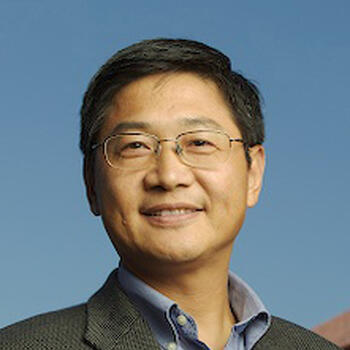
milan vaishnav
Milan Vaishnav is a senior fellow in the South Asia Program at the Carnegie Endowment for International Peace. His primary research focus is the political economy of India, and he examines issues such as corruption and governance, state capacity, distributive politics, and electoral behavior. He is the author of When Crime Pays: Money and Muscle in Indian Politics (Yale University Press, 2017) and co-editor (with Pratap Bhanu Mehta and Devesh Kapur) of Rethinking Public Institutions in India (Oxford University Press, 2017). He was previously a fellow at the Center for Global Development and has taught at Columbia, Georgetown, and George Washington Universities. He holds a Ph.D. in political science from Columbia University.

Milan Vaishnav Senior Fellow, South Asia Program Carnegie Endowment for International Peace
Seminars
News Type
News
Date
Paragraphs

Jaemin Jung, a writer for the South Korean publication known as “SisaIn,” recently interviewed CISAC's Siegfried Hecker on the issue of North Korea’s nuclear weapons:

Jung: In your recent op-ed piece in The New York Times, you said talking to North Korea is the best option for the Trump administration. Do you still believe so even when the current North Korean regime repeatedly declared to the world that it would never give up its nuclear program as a nuclear power state?

Hecker: Well, I still believe that talking directly, someone from the Trump administration to North Korea, is essential today. However, what I mean by talking is talk to the regime to make sure that we do not have a nuclear catastrophe. The main reason for talking is to eliminate a potential nuclear confrontation. The issue of whether or not North Korea should have nuclear weapons or will ever give up nuclear weapons has to be a much longer-term issue. The immediate issue, I believe, is that we have a nuclear crisis on our hands now, and we must talk in order to make sure that such a confrontation does not happen. So, that’s the reason for talking.

Jung: In other words, direct talk is essential to avoid any misunderstanding or miscalculation on the part of North Korea?

Hecker: Precisely. The reason for direct talking is to make sure there be no such misunderstanding, potential accidents, or potential escalations to the nuclear arena. Making sure that does not happen, that is the reason for talking now.

Jung: Does it mean that after you build trust from such talking, you then move on to real agenda such as denuclearization?

Hecker: Yes. So, what I recommend is not only talking but also listening. I think it’s important for the new administration to listen to what the Kim Jong Un regime has to say.  By listening we could learn enough to understand how to forge better negotiations, or the long term issue of getting rid of nuclear weapons.

Jung: Regarding the now suspended nuclear talks, many people blame the North for breaking its nuclear agreements with the U.S. or cheating repeatedly. In other words, whether we can trust North Korea is a big issue here. What is your take?

Hecker: Well, we don’t have a relationship that provides the underpinning or foundation for trust: trust by America about North Korea or trust by North Korea about the United States.  When it comes to negotiations, an agreement could be signed pretty quickly but trust can take years and years to develop. So, as you look back, North Korea has indeed violated many of the agreements that they signed. In some cases, we can say that it was to develop a hedge in case the United States dropped out of the agreement. For example, in the Agreed Framework signed in 1994, the United States did not follow its end as quickly and as fully as it promised to do. North Koreans developed a hedge. They cheated by developing an enriched uranium program. Over the years, the Agreed Framework may have been able to build trust by building two modern light water reactors there. But the Bush administration did not trust North Korea and killed the agreement. Now, 15 years later, there is still no trust. It would have to be developed. I think this would take at least a decade.

Jung: In that respect, trust is something not only North Korea but the United States should care about, right?

Hecker: That should be one of the main objectives of whatever next round of negotiations are.

Jung: In your article, you suggested direct talks between the US and North Korea instead of a multilateral talks like the 6-party talks.  In the past, the US tried many times talking directly with the North in Geneva or other places, but failed. Why now?

Hecker: The Geneva talks in 1994 were successful. They led to the Agreed Framework. The main reason that I proposed direct talks between the U.S. and North Korea now is, as I mentioned in the beginning, to avoid a nuclear catastrophe. We have to better understand what North Korea’s nuclear intentions are. What do they expect to get from their nuclear weapons, what are their nuclear policies, what do they have in place to avoid nuclear accidents, what do they have in place to make certain their nuclear weapons are safe and secure? Those kinds of discussions cannot be held in a multilateral forum. The only country that has the opportunity to have those kind of talks with North Korea is the United States. So, talk to avoid a nuclear catastrophe should be bilateral. Eventually negotiations have to include South Korea, they have to include China, and the 6-Party Talks members Japan and Russia should be involved. So, negotiations will have to be multilateral affair. However, to get to the point of meaningful negotiations, to avoid nuclear catastrophe, there should be bilateral talks. The sooner, the better.

Jung: Can you specify what you mean by ‘nuclear catastrophe’?

Hecker: What I’m concerned about is that in the past 10 years North Korea has developed, as best we know because nobody knows for sure, a really threatening nuclear arsenal, perhaps having enough nuclear material of 20-25 nuclear weapons. They continue to try and make those weapons more sophisticated and to be able to mount them on missiles. So, with that level of nuclear firepower, the reason that I worry about nuclear catastrophe is that one could have an accident, there is concern about security and safety of their nuclear weapons, there could be miscalculation on the part of the regime, there could be confrontation and escalation of military activities that could lead to nuclear use. Any use of nuclear devices of any sort on the Korean peninsula is what I call nuclear catastrophe. Today the most important part is to avoid the use or detonation of nuclear device on the Korean peninsula. That has to be the first objective of the Trump administration.

Jung: If the direct talks with the North go well, you said Trump should send a presidential envoy to Pyongyang.  Don’t you think Trump must get North Korea’s commitment to denuclearization before sending such an envoy?

Hecker: That approach misunderstands what my concerns are. My most immediate concerns are to avoid the use of nuclear weapons. The issue of denuclearization comes down the road. In other words, it’s a longer-term issue. The concerns I have about the use of nuclear weapons are so great that they require talks now without preconditions. Any future negotiations, of course, must be aimed at eventual denuclearization of North Korea. However, in my opinion, that’s much of a long-term issue. It will not happen over the next few years. I am not talking about negotiations now. I’m talking about talking, talking to avoid a nuclear catastrophe.

Jung: Do you prefer the U.S. talking with North Korea about it in formal or informal setting?

Hecker: I am saying at this point a presidential envoy should bring up the topic in a quiet, informal setting, but it has to have the imprimatur of the Trump administration.

Jung: In op-ed, you said the nuclear clock keeps ticking, and every six to seven weeks, the North may be able to add another nuclear weapon to its arsenal. Is the nuclear bomb based on plutonium only, or does it include uranium-based bomb, too?

Hecker: My estimate is not based on plutonium alone. It’s based on both plutonium and highly enriched uranium.  North Korea cannot produce more than one bomb’s worth of plutonium per year. With highly enriched uranium we have great uncertainties. We simply do not know enough about highly enriched uranium program. My best estimates are perhaps as many as six nuclear weapons out of highly enriched uranium per year.  So, it’s possible that North Korea could make 6-8 nuclear weapons per year. But let me stress the fact again that’s my best estimate, and we don’t know for certain. It’s important to realize that the nuclear crisis is here now. We don’t need to wait until North K. can reach mainland U.S. with a nuclear-tipped missile.

Jung: So, how many nuclear weapons do you think North Korea has now?

Hecker: Again, all we can do is estimate, and my own estimate is North Korea may have enough plutonium and highly enriched uranium for perhaps 20-25 nuclear weapons as of the end of 2016.

Jung: Some experts believe freeze on North Korea’s nuclear capabilities, not denuclearization, is the best realistic option at this point to break the long stalled nuclear talks.  What do you think?

Hecker: I’ve been promoting for the last eight years or so that we proceed in the following manner: First, halt the program, then roll it back, and then eventually eliminate it. To me, freeze is the same as halt. So, the most important part is to stop the problem from getting worse. However, there are many aspects to what we call halt or freeze. I stated it in the following manner - I call it “Three Nos.” We would like North Korea to make no more bombs (that means, no more plutonium or highly enriched uranium), no better bombs (no more nuclear tests or long-range missile test), and no export of bombs or nuclear material. So, that would be the essence of a freeze or halt.)

Jung: I see many North Korea experts agree with your proposal as a realistic option to break the current bottleneck in the nuclear talks. Did you get any reaction from the U.S. government?

Hecker: Well, I wish the American government had supported that eight years ago, because then we’d be in a much better position today. Unfortunately, for a number of reasons we didn’t get there, and now we have to deal with the way things are. Now, the Trump administration comes in, and its challenge is to avoid a nuclear detonation on the Korean peninsula. That’s the challenge, and because of that, it’s a completely different challenge than the Obama administration or the Bush administration faced, and the Trump administration must address that challenge differently.

Jung: So, what is your advice to the Trump administration?

Hecker: At this point, talk to the North Koreans to prevent any sort of potential nuclear catastrophe, and then try to listen to the North Koreans. And make sure they understand our strong commitment to our allies, South Korea and Japan, and that we care about human rights in North Korea, and we are committed to the eventual denuclearization of North Korea. Finally, it will be to North Korea’s advantage to get back to serious negotiations to eventually denuclearize the Korean peninsula. That’s my advice. 

Hero Image
gettyimages 508888794
People watch a television screen showing a breaking news on North Korea's long-range rocket launch at Seoul Station on Feb. 7, 2016 in Seoul, South Korea. CISAC's Siegfried Hecker urges direct talks between the U.S. and North Korea to resolve an increasingly dangerous situation in the latter country.
Han Myung-Gu/Getty Images
All News button
1
Authors
News Type
News
Date
Paragraphs

When governments and scholars work together on data security, society benefits from better safeguards and protections, a U.S. intelligence expert said Wednesday.

The difficulty is keeping up with technology and societal trends, Admiral Bobby R. Inman said at the Center for International Security and Cooperation's annual Drell Lecture for 2017. His talk was titled, “The Challenges of Providing Data Security.”

Inman, whose U.S. Navy career spanned 31 years, served as the director of the National Security Agency, deputy director of the Central Intelligence Agency, and held other influential positions in the U.S. intelligence community. After retiring from the Navy, Inman worked on start-ups in the private sector, in higher education, and as chairman of the Federal Reserve Bank of Dallas. He is currently the Lyndon B. Johnson Centennial Chair in National Policy at the University of Texas, Austin.

'9/11 changed everything'

During his talk, Inman recounted the early days of cryptography and the dialogue between government officials like himself and scholars at universities such as Stanford and UC Berkeley. Cryptography or cryptology is the practice and study of techniques for secure communication in the presence of third parties typically known as adversaries.

Inman was a key driver behind establishing the United States Foreign Intelligence Surveillance Court in 1978. The purpose of the “FISA” court was to oversee requests for surveillance warrants against foreign spies inside the United States by federal law enforcement and intelligence agencies.

Today, technology has overwhelmed many issues regarding how the government tracks the communications of foreign entities, Inman said. And events have ushered in a different orientation on what type of information and from whom is sought by U.S. intelligence. “9/11 changed everything,” he added.

After 9/11, U.S. intelligence began to focus on foreign individuals in addition to the traditional foreign state actors, Inman said. He pointed out the value of such data collection, as penetrating small groups with human agents is extraordinarily difficult and dangerous.

“The only way you’re likely to get a lead on them (terrorists or narcotic traffickers) is through their communications,” he said.

The Internet, especially social media, has exploded in usage and made data security efforts even more complex, Inman said. “A vastly different world.” As a result, serious privacy, commercial usages and intellectual property issues need to be resolved more than ever. He noted that the rule of law is important to follow when the governmnt or other entities collect and examine communications data.

Inman is particularly worried about how “basic issues of ethics and morality” have eroded in society, which results in people scheming to sell private data for profit that puts others at risk. Another issue involves how to prevent terrorist groups from preying upon mentally weak people and recruiting them over the Internet.

A key reason Inman was invited to be the Drell speaker this year was his connection to Martin Hellman and Whitfield Diffie, two pioneering cryptographers from CISAC who drew Inman’s attention in the mid-1970s when they wrote a groundbreaking paper in their field of study. The three later established long-running friendships that produced strong cryptography frameworks.

Inman said, “We were privileged to start the dialogue. That’s where you begin to solve problems,” as fears and misperceptions can be resolved through discussions and openness. “I think what we need is a repeat of pulling together people” from academia and government to deal with today’s security threats. “We need to assess where we are.”

His concern is who would convene such a dialogue. “We’re in a pretty bumpy time, nationally,” said Inman, who urges a neutral party to be such a convener. On broader security fronts, Inman said he is most apprehensive about a possible nuclear exchange between Pakistan and India.

Legacy of Drell

The event included a tribute to Sidney Drell, who passed away last December at the age of 90. Drell co-founded CISAC, and jointly directed it from 1983 to 1989. The Drell Lecture, which is named after him, is an annual public event sponsored by CISAC. By tradition, the lecturer addresses a current and critical national or international security issue that has important scientific or technical dimensions.

In her opening remarks, Amy Zegart, co-director of CISAC, described Drell as a “true giant in the field of theoretical physics” who devoted his life’s work to reducing the threat of nuclear catastrophe. One trademarks of the Drell lecture was that its namesake had the opportunity to ask the first question of the speaker. “He had a unique way of asking penetrating questions" with gentle decency and fairness, she added.

CISAC’s William Perry, also on hand to discuss Drell’s legacy, said, “Sid Drell was truly a man for all seasons” who excelled in various fields of academic and policy. Perry first met Drell 55 years ago when he was beginning his own career in nuclear arms control. “Sid’s deep interest in arms control led to him teaming up with John Lewis” to launch CISAC, he noted.

“He was an extraordinary man,” Perry said, “and we shall never see his like again.”

Drell was a fan of classical music, especially the St. Lawrence String Quartet, a chamber music group whose music was piped in to the Bechtel Conference Room before the event began.

Follow CISAC at @StanfordCISAC and  www.facebook.com/StanfordCISAC

MEDIA CONTACTS

Clifton B. Parker, Center for International Security and Cooperation: (650) 725-6488, cbparker@stanford.edu


Hero Image
gettyimages 507473994 Getty Images
All News button
1
-

About the Event

“No Pain, No Gain” is a periodic event that will highlight China-based entrepreneurs with roots at Stanford University. Entrepreneurs will discuss the challenges they faced and how they overcame them. Using the Graduate School of Business’ state-of-the-art distance learning technology, there will be audiences at Stanford and at the Stanford Center at Peking University (SCPKU).

The discussion will take the form of a structured conversation between the entrepreneur and a moderator, either a professor from the GSB or a subject matter expert selected for his or her familiarity with the entrepreneur and/or the sector.

This time, two young female entrepreneurs, Gu Ji MBA '12, Cordy Xie MBA '16, are invited to share their stories and what is the biggest challenges facing them when starting the new ventures. 

On the Stanford side the audience will consist of current Stanford students and GSB alumni with an interest in entrepreneurship in China. In Beijing the audience will consist of Stanford alumni and current students at Peking University and Tsinghua University. The event will be in English. Admission to this event is free of charge.

Registration

https://www.eventbank.cn/event/7474/


Panel Discussions
-

Each year up to 100 high-achieving students with demonstrated intellect, leadership potential and civic commitment will receive full funding to pursue a graduate education at Stanford. Join us to learn more about the Knight-Hennessy Scholars Program. 

                                      Registration报名

https://apply.knight-hennessy.stanford.edu/register/PKU 


Knight-Hennessy Info Session Flyer
Download pdf
John Hennessy Knight-Hennessy Scholars
Seminars
Paragraphs

In an op-ed for The Diplomat, Stanford assistant professor Phillip Y. Lipscy says the Trump presidency offers Japanese Prime Minister Shinzo Abe an opportunity to realize his vision of a more prominent Japan, yet the depth of the bilateral relationship and ability to deliver hinge on how much the two leaders can compromise on economic and security interests.

All Publications button
1
Publication Type
Commentary
Publication Date
Journal Publisher
The Diplomat
Authors
Phillip Lipscy
Authors
News Type
News
Date
Paragraphs

On Feb. 1, Harold Trinkunas, associate director of research and senior research scholar at Stanford’s Center for International Security and Cooperation (CISAC), gave a talk on China’s growing economic engagement in Latin America – its true scope and scale – and its implications.

Trinkunas endeavored to answer three questions: (1) What is China’s policy in Latin America?; (2) What is the actual scope of China’s trade, investments and lending in the region?; and, (3) Is the situation producing a “win-win” situation for both China and Latin America, or a “win-lose” situation?
 
According to Trinkunas, China’s own need for commodities in the early 2000s drew the country towards pursuing relations with countries in Latin America; and the cornerstone of China’s relationship with Latin America rests on trade, investments and loans. China’s engagement on all three dimensions have grown significantly. The region’s total trade with China, for example, grew from practically nothing in 1980 to 13 percent in 2014. China’s percentage of total stock of foreign direct investment (FDI) in the region has also grown substantially from practically zero to $109 billion in 2015. China’s policy banks have also scaled up their lending to the region, even outpacing aggregate lending by the World Bank and the Inter-American Development Bank combined, which have traditionally been the source of multilateral bank loans to Latin American and Caribbean countries.
 
Yet, despite such significant increases in economic activity in the region, Trinkunas clarified how, while China is an important trading partner for a concentrated group of countries (such as Argentina, Brazil, Chile, Cuba, Paraguay, Peru and Uruguay), the United States has remained the dominant trading partner in the region. The flow of China’s FDI has been concentrated in two countries – Ecuador and Venezuela – with limited investments in other countries. And almost all of its lending has also been concentrated in four countries: Venezuela, Ecuador, Argentina and Brazil, with Venezuela receiving, by far, the most loans. Thus, while China’s economic presence has grown exponentially since the early 2000s, it is still not a dominant economic partner except with respect to a handful of countries.
 
Trinkunas concluded that this growing economic relationship between China and Latin America has mostly led to a “win-win” situation for China and its partners in the region. China’s appetite for commodities provided the engine for growth in South America from the early 2000s to 2012, enabling its middle class population to double from 90 million to nearly 180 million people. Latin America has also benefited from China’s infrastructure investments and construction expertise, which it sorely needs, while China has been able to usefully redeploy its surplus capacity. In addition, China’s growing economic presence in the region affords Latin American countries greater latitude to pursue alternative sources of capital and trade apart from that of the United States and other OECD countries. In addition, despite fears to the contrary, Trinkunas finds that China’s economic inducements, while attractive to the countries in the region, do not necessarily translate into actual political or geopolitical influence. Latin American countries’ position on geopolitics, as reflected in their U.N. votes, for example, has not necessarily reflected increased support for China. And China’s own impact on the economic policymaking of its biggest Latin American loan recipient – Venezuela – has been nebulous at best. China’s influence is limited, furthermore, by the fact that most Latin American countries are not beholden to Chinese capital but can and do access other sources of finance. 
 
Yet, there are legitimate concerns regarding China’s growing economic presence in the region, which Trinkunas also explained. China’s emphasis on extracting primary commodities, for example, represents an economic step backward for the region, which is pushing to further industrialize. China also comes under scrutiny for allegedly engaging in unfair competition in the manufacturing sector and for investing in countries with poor governance records. Trinkunas is skeptical, however, when it comes to viewing China’s influence over the region as overall negative. 
 
In closing, Trinkunas noted that recent withdrawal of the United States from the Trans-Pacific Partnership (TPP) was an unfortunate turn of events that went against a policy recommendation he had put forth in his report. This is because the TPP could have served an important, dual purpose for the United States – to maintain its trade interests in the region and to negotiate regulatory requirements that could enhance good governance in Latin America. Nevertheless, both Trinkunas and Shorenstein Asia-Pacific Research Center Fellow Thomas Fingar, who provided commentary at the end, agreed that there has been nothing in China’s own policy deliberations or pronouncements that suggest that its intention has been to interfere with U.S. interests or to seek political influence in the region.
 
Related Links:
Hero Image
fingar trinkunas photo
Harold Trinkunas, CISAC associate director for research and senior research scholar, and Thomas Fingar, Shorenstein APARC fellow, discuss China's role in Latin America at a colloquium on Feb. 1, 2017.
All News button
1
News Type
Commentary
Date
Paragraphs

The populist backlash against globalization is being felt acutely across Europe as well as here in the US. And yet whether you look at it from an economic, political or military perspective, transnational cooperation has become an integral part of our global landscape. Hear CDDRL Mosbacher Director Francis Fukuyama on the future of globalization for World Affairs

Hero Image
screen shot 2017 02 22 at 12 18 02 pm
All News button
1
Authors
News Type
News
Date
Paragraphs

In a shack that now sits below sea level, a mother in Bangladesh struggles to grow vegetables in soil inundated by salt water. In Malawi, a toddler joins thousands of other children perishing from drought-induced malnutrition. And in China, more than one million people died from air pollution in 2012 alone.

Around the world, climate change is already having an effect on human health.

In a recent paper, Katherine Burke and Michele Barry from the Stanford Center for Innovation in Global Health, along with former Wellesley College President Diana Walsh, described climate change as “the ultimate global health crisis.” They offered recommendations to the new United States president to address the urgently arising health risks associated with climate change.

gettyimages 451722570 Bangladeshi children make their way through flood waters.

The authors, along with Stanford researchers Marshall Burke, Eran Bendavid and Amy Pickering who also study climate change, are concerned by how little has been done to mitigate its effects on health.

“I think it’s likely that health impacts could be the most important impact of climate change,” said Marshall Burke, an assistant professor of earth system science and a fellow at the Freeman-Spogli Institute for International Studies.

There is still time to ease — though not eliminate — the worst effects on health, but as the average global temperature continues to creep upward, time appears to be running short.

“I think we are at a critical point right now in terms of mitigating the effects of climate change on health,” said Amy Pickering, a research engineer at the Woods Institute for the Environment. “And I don’t think that’s a priority of the new administration at all.”

Health effects of climate change

Even in countries like the United States that are well-equipped to adapt to climate change, health impacts will be significant.

“Extremes of temperature have a very observable direct effect,” said Eran Bendavid, an assistant professor of medicine and Stanford Health Policy core faculty member.

“We see mortality rates increase when temperatures are very low, and especially when they are very high.”

Bendavid also has seen air pollutants cause respiratory problems in people from Beijing to Los Angeles to villages in Sub-Saharan Africa.

“Hotter temperatures make it such that particulate matter and dust and pollutants stick around longer,” he said.

In addition to respiratory issues, air pollution can have long-term cognitive effects. A study in Chile found that children who are exposed to high amounts of air pollution in utero score lower on math tests by the fourth grade.

“I think we’re only starting to understand the true costs of dirty air,” said Marshall Burke. “Even short-term exposure to low levels can have life-long effects.”

Low-income countries like Bangladesh already suffer widespread, direct health effects from rising sea levels. Salt water flooding has crept through homes and crops, threatening food sources and drinking water for millions of people.

“I think that flooding is one of the most pressing issues in low-income and densely populated countries,” said Pickering. “There’s no infrastructure there to handle it.”

Standing water left over from flooding is also a breeding ground for diseases like cholera, diarrhea and mosquito-borne illnesses, all of which are likely to become more prevalent as the planet warms.

On the flip side, many regions of Sub-Saharan Africa — where clean water is already hard to access — are likely to experience severe droughts. The United Nations warned last year that more than 36 million people across southern and eastern Africa face hunger due to drought and record-high temperatures.

Residents may have to walk farther to find water, and local sources could become contaminated more easily. Pickering fears that losing access to nearby, clean water will make maintaining proper hygiene and growing nutritious foods a challenge.

Flow Chart detailing how Climate CHnage Affects Your Health Climate change will affect health in all sectors of society.

All of these effects and more can also damage mental health, said Katherine Burke and her colleagues in their paper. The aftermath of extreme weather events and the hardships of living in long-term drought or flood can cause anxiety, depression, grief and trauma.

Climate change will affect health in every sector of society, but as Katherine Burke and her colleagues said, “….climate disruption is inflicting the greatest suffering on those least responsible for causing it, least equipped to adapt, least able to resist the powerful forces of the status quo.

“If we fail to act now,” they said, “the survival of our species may hang in the balance.”

What can the new administration do to ease health effects?

If the Paris Agreement’s emissions standards are met, scientists predict that the world’s temperature will increase about 2.7 degrees Celsius – still significant but less hazardous than the 4-degree increase projected from current emissions.

The United States plays a critical role in the Paris Agreement. Apart from the significance of cutting its own emissions, failing to live up to its end of the bargain — as the Trump administration has suggested — could have a significant impact on the morale of the other countries involved.

“The reason that Paris is going to work is because we’re in this together,” said Marshall Burke. “If you don’t meet your target, you’re going to be publicly shamed.”

The Trump administration has also discussed repealing the Clean Power Plan, Obama-era legislation to decrease the use of coal, which has been shown to contribute to respiratory disease.

“Withdrawing from either of those will likely have negative short- and long-run health impacts, both in the U.S. and abroad,” said Marshall Burke.

Scott Pruitt, who was confirmed today as the head of the Environmental Protection Agency (EPA), is expected to carry out Trump’s promise to dismantle environment regulations.

Despite the Trump administration’s apparent doubts about climate change, a few prominent Republicans do support addressing its effects.

Secretary of State Rex Tillerson, the former chairman and CEO of Exxon Mobile, supports a carbon tax, which would create a financial incentive to turn to renewable energy sources. He also has expressed support for the Paris Agreement. It is possible that as secretary of state, Tillerson could help maintain U.S. obligations from the Paris Agreement, though it is far from certain whether he would choose to do so or how Trump would react.

More promising is a recent proposal from the Climate Leadership Council. Authored by eight leading Republicans — including two former secretaries of state, two former secretaries of the treasury and Rob Walton, Walmart’s former chairman of the board — the plan seeks to reduce emissions considerably through a carbon dividends plan.

gettyimages 613945168 Already an issue, malnutrition will increase with droughts in Sub-Saharan Africa.

Their proposal would gradually increase taxes on carbon emissions but would return the proceeds directly to the American people. Americans would receive a regular check with their portion of the proceeds, similar to receiving a social security check. According to the authors, 70 percent of Americans would come out ahead financially, keeping the tax from being a burden on low- and middle-income Americans while still incentivizing lower emissions.

“A tax on carbon is exactly what we need to provide the right incentives and induce the sort of technological and infrastructure change needed to reduce long-term emissions,” said Marshall Burke.

Pickering added, “This policy is a ray of hope for meaningful action on climate.”

It remains to be seen whether the new administration and congress would consider such a program.

What can academics do to help?

Meanwhile, academics can promote health by researching the effects of climate change and finding ways to adapt to them.

“I think it’s fascinating that there’s just so little data right now on how climate change is going to impact health,” said Pickering.

Studying the effects of warming on the world challenges traditional methods of research.

“You can’t create any sort of experiment,” said Bendavid. “There’s only one climate and one planet.”

The scholars agree that interdisciplinary study is a critical part of adapting to climate change and that more research is needed.

“If ever there was an issue worthy of a leader’s best effort, this is the moment, this is the issue,” said Katherine Burke and her colleagues. “Time is short, but it may not be too late to make all the difference.”

Hero Image
smokestacksfinal Lukas Schulze / Getty Images
All News button
1
Subscribe to Asia-Pacific