Authors
News Type
News
Date
Paragraphs

The Program on Human Rights at Stanford's Center on Democracy, Development, and the Rule of Law, in partnership with the McCoy Family Center for Ethics in Society, is offering up to three summer fellowships to talented Stanford undergraduates interested in gaining practical experience at human rights organizations around the world. The fellowship will award grants of up to $5,000 for students undertaking a human rights project for a minimum of eight weeks during the summer. The deadline to apply is Dec. 9, 2013. 

Students have the opportunity to focus on issues that include freedom of speech; discrimination against women; the rights of children, elderly and minorities; and access to food, health, education and housing. Past fellows have identified and worked with a number of different organizations based in the U.S. and abroad that promote, monitor, evaluate, or advance human rights work.

Image
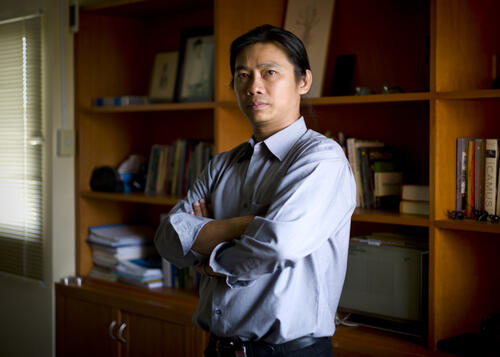
Photo Credit: Adrian Bonifacio

Former Human Rights Fellows include computer science major Firas Abuzaid (’14), who spent the summer of 2013 in Amman, Jordan working with Visualizing Justice, an organization that is dedicated to empowering people worldwide to create visual stories for social justice and human rights. In 2011, Adrian Bonifacio (’13) worked with the Asian Pacific Mission for Migrants, a non-governmental organization based in Hong Kong, China that promotes and defends the rights of migrant workers. Garima Sharma (’15), an economics major, spent this past summer working with Apne Aap: Women Worldwide, an anti-trafficking NGO based in Forbesganj, India.

In order to apply to the fellowship, students must submit a proposal that identifies a partner organization, a project that would contribute towards the organization’s mission and a tentative budget. The application period for the summer fellowship is now open to Stanford undergraduates through Dec. 9. To view profiles of the four 2013 fellows please click here. Additional information about the fellowship - including the application - is available here.

For more information, please contact Joan Berry, the executive director at the McCoy Family Center for Ethics in Society at joanberry@stanford.edu or Ana Bracic, the fellowship mentor at the Program on Human Rights at bracic@stanford.edu

Hero Image
100 0983 headliner logo
All News button
1
Authors
Duncan Clark
Rustin Crandall
News Type
News
Date
Paragraphs

The U.S. Ambassador to China, Gary Locke, was surrounded by attendees at the China 2.0 conference.
The China 2.0 initiative at Stanford Graduate School of Business hosted its 4th annual conference on October 3, 2013 at Stanford University.

Martin Lau, President of Tencent, opened the conference with a keynote discussing Tencent's business model, international partnership strategies, and the social impact of internet on Chinese society.

In the second keynote address by Gary Locke, the U.S. Ambassador to the People's Republic of China, he shared his insights into China's recent advances in the technology sector, the Chinese government’s approach to managing the internet, and the risks and opportunities U.S. companies should consider before entering the Chinese market.

Charles Chao, CEO and Chairman of the Board of SINA, closed the conference with a keynote on how Weibo, one of SINA's most popular services, has made an unprecedented impact on Chinese society.

Growth and Innovation in Firms

Tencent started out in 1998 when China had four million internet users. Since then the market has grown 150 times to today’s 600 million users. Tencent’s equity market capitalization recently surpassed the $100 billion mark, and the company generates significantly more revenues than its higher-valued peer Facebook. In his speech, Lau modestly described the company’s “secret sauce number one” as “luck.”

We support the companies to make them successful, and in that process, we try to benefit from the know-how, we try to benefit from the growth, and we also contribute our know-how to these companies.

Martin Lau
President, Tencent

Lau also elaborated how Tencent has created a supportive environment for startups to grow and develop. “…[O]ur approach is actually to back the founders, to say the founders will be the driving force of the company, so unlike Jack [Ma], who said ‘Yahoo is in my pocket,’ we don’t put any company in our pocket. We support the companies to make them successful, and in that process, we try to benefit from the know-how, we try to benefit from the growth, and we also contribute our know-how to these companies.”

In partnership with Innovation Works, Tencent invested another $1 million in August 2013 in a San Francisco startup Kamcord, which allows users to record and share mobile gameplays. While Tencent has been investing in startups in Silicon Valley, Chao gave an example of SINA Weibo’s recent experimental collaboration with a local home appliance manufacturer in China, Hisense. Weibo users can link their accounts to the Hisense air-conditioner, which can then be switched on and off remotely.

Charles Chao, CEO of SINA, talked to participants at the China 2.0 conference.
“We also send a lot of our devices to our users so each will measure the temperature outside their house constantly, and send it back to Weibo every hour so we will accurately predict or calculate the exact temperature of this location through this kind of collaboration,” Chao noted. “...[E]verybody’s talking about the Internet of Things ..... but nobody knows how to do it. So we are doing a lot of experiments to see whether by collecting data and by connecting people to objects, by connecting objects to objects, whether we can create data, and create opportunities in these areas,” he added.

Charles predicted that internet companies will continue to disrupt other areas, including finance (with micro-loans) and commerce. SINA’s valuation was boosted earlier in 2013 by Alibaba’s acquisition of an 18% stake in SINA Weibo. Today SINA is valued at over $6 billion.

Social Impact of Internet

It [Weibo] basically serves as a check and balance in society and makes Chinese society much better.

Charles Chao
CEO, SINA

SINA Weibo, launched in 2009, has over 500 million registered users, and over 56 million unique daily active users. It continues to dominate the market as China’s leading micro-blogging platform. It would be no exaggeration to say that Weibo has transformed social interaction in China by bringing the public square to everyone’s smartphone. “[Weibo] allows every user in China to report, to publish, to share the content, the information directly, and also not only create content but also distribute content themselves through social relations and through the follower relationship… It basically serves as a check and balance in society and makes Chinese society much better,” Chao argued.

The message was echoed by Lau in his keynote. “...[A]ll these internet companies, a lot of them are making an impact on society in an incredible way, bringing people closer together, changing businesses, and also making society more transparent… I think together we are really making a lot of changes and impact on Chinese society and I think we are ready to make more,” Lau said.

Ambassador Locke also emphasized the importance of a free and open internet to China’s economy and society in his address. “Attempts to unleash the economic power of the internet while controlling the political and cultural content are ultimately counterproductive, and indeed at odds with each other,” commented Locke. “Restrictions on communications that limit the free flow of ideas, whether political, economic, or personal, will only serve to prevent countries from moving forward. Frankly speaking, the United States and China’s government have different views on these issues but we are constantly, consistently, and candidly discussing them.”

Sino-U.S. Links

During a recent meeting between U.S. Vice President Joe Biden and Chinese Foreign Minister Wang Yi at the White House, Biden said that he believed China’s development was not only in the interest of the United States, but for the rest of the world as well.

Ambassador Locke also highlighted the importance of how the two countries handle global issues. “Whether it’s finding a cure to some of the most dreaded diseases of the world, or ending the proliferation of nuclear weapons, whether in North Korea or Iran and elsewhere, China and the United States have to be involved together. Indeed, the world is looking for leadership from both the United States and China to solve some of the toughest challenges and problems facing the universe.”

Expecting the Chinese system to work on American terms is a recipe for failure.

Gary Locke
U.S. Ambassador to China

Despite finding agreement on some issues, China and United States still hold many differing views. The intellectual property (IP) challenge is one of them. "Expecting the Chinese system to work on American terms is a recipe for failure.” Locke added that some companies conclude that “the best way to avoid being ripped off in China it is to stay out of China—but besides missing a tremendous opportunity, companies that never set foot in China are not immune from having their IP infringed upon in China, and may later find infringing products making their way back to the United States or to third-world markets.”

Martin Lau, President of Tencent, and Marguerite Gong Hancock, director of China 2.0 at the China 2.0 conference.
Lau illustrated another example of difference between the countries in terms of the internet business sector. In China, online gaming is generating over $6 million in revenue. “To put it in perspective, that is actually more than display ads and search ads added together in China. Of course over time this will change, but it also tells you the kind of business mix in China, the opportunities and challenges that companies face in China, are actually very different from that in the US,” noted Lau.

The annual China 2.0 conference, now in its fourth year, attracted over 600 Stanford students and faculty along with current and rising leaders from China and Silicon Valley's tech, entrepreneur, and investor communities.

The panel and interactive discussions were focused on topics including Big Data, venture capital’s outlook on internet and digital media, China’s role in the global innovation network, cross-border venture finance, and Chinese mobile firms going global. These sessions brought together 20 founders, senior executives and leaders from: Asia Society, Baidu, Bertelsmann, DCM, Foursquare, Foxconn Interconnect Technology, FunPlus Game, GGV Capital, GSR Ventures, LinkedIn, Queen's Road Capital, Riverwood Capital, Silicon Valley Bank, Stanford Graduate School of Business, and WestSummit Capital.

All News button
1
-


SPEAKERS

Eze Vidra - Head of Campus London and Google for Entrepreneurs European Outreach, Google

Samantha Evans - Vice Consul, SoftwareUK Trade & Investment


ABOUT THE SEMINAR

Innovation Hub: London
Eze VidraHead of Campus London and Google for Entrepreneurs European Outreach, Google
Samantha Evans - Vice Consul, Software, UK Trade & Investment (UKTI)

Wednesday, October 30, 12:00-1:00 pm 
Venue: McClelland Building, Room M109 - Stanford Graduate School of Business. 

London's Tech City, or Silicon Roundabout, is the fastest growing tech cluster in Europe with over 1300 startups, and has managed to attract industry leaders such as Amazon, Facebook, Google, Intel, and more to establish a presence there. 

Learn more about what is going on in this hub of innovation in a one-hour seminar with Eze Vidra, the head of Campus London, Google's first physical startup hub worldwide providing entrepreneurs with work and event space, mentorship, and educational programs. Joining him will be Vice Consul Samantha Evans of UKTI, who will offer a government/policy perspective on Tech City.

This talk is part of a seminar series hosted by the Silicon Valley Project at Stanford Graduate School of Business.


ABOUT THE SPEAKERS

Image
Eze Vidra is the Head of Campus London and Google for Entrepreneurs Europe. In March 2012, Eze launched Campus London, Google's first physical startup hub worldwide providing entrepreneurs with work and event space, mentorship and educational programs as well as access to a vibrant startup community.

Before Campus, Eze spearheaded Google's commerce strategic partnerships in EMEA, launching Google Shopping in Spain and Local Shopping in the UK among other projects. In the years before joining Google, Eze held product management leadership roles at Shopping.com in Israel, Gerson Lehrman Group in New York, Ask.com in Silicon Valley and AOL Europe in London, where was the Principal Product Manager for Search in EMEA. In 2003, Eze co-founded a startup in Israel, developing text-input technology for mobiles.

In 2005, Eze founded VC Cafe, a highly regarded venture capital blog shining a spotlight on Israeli startups. In 2012, he founded Techbikers, a non-for-profit cycling community responsible for starting a school and 20 libraries for children in the developing world. Eze serves as advisory board member of BBC Worldwide Labs and is a trustee of StartupWeekend Europe. He holds a BA in Business and Entrepreneurship from IDC in Israel (Cum Laude) and an MBA from London Business School. A native Argentinean raised in Israel, Eze is fluent in Spanish, Hebrew and English and lives in London with his family.

Eze Vidra's bio on the Campus London website: http://www.googleventures.com/team/eze-vidra
Eze Vidra on twitter: www.twitter.com/ediggs

Image
Samantha Evans is the Vice Consul for Software at UK Trade & Investment. Her role is to advise Enterprise software companies and fast growing start-ups on the opportunities in the UK and European Market as well as providing practical support to accelerate their success in the UK. UKTI is a UK Government organization based in 90 cities across the world – with a overall aim of economic development for the UK – both through import and export.

Sam moved to San Francisco for her current role in January 2013. She previously worked for MIDAS – Manchester’s Investment Agency and a Technology Accelerator in Manchester.

M109, First Floor, McClelland Building
Stanford Graduate School of Business
Knight Management Center

Seminars

Asylum Access
1611 Telegraph Avenue
Suite #1111
Oakland, CA 94612

0
PSE Visiting Practitioner in Residence, 2013-14
emily_hs.jpg

Emily Arnold-Fernández was a social entrepreneur in residence during the fall 2012 quarter with CDDRL's Program on Social Entrepreneurship. She will be spending the 2013/14 academic year as a practitioner-in-residence with the Program on Social Entrepreneurship.

She is the founder and executive director of Asylum Access, is a social entrepreneur and human rights pioneer. Recognizing that refugees throughout Africa, Asia and Latin America – some of whom flee with nothing more than the clothes on their backs – were almost always unequipped to go into a legal proceeding in a foreign country, alone, and explain why they should not be deported, Emily founded Asylum Access to advocate on behalf of refugees seeking to assert their rights.

“For half a century, international law has given refugees the rights to live safely,
seek employment, send children to school and rebuild their lives. But those rights are
meaningless unless they are respected on the ground,” she says. “Asylum Access
provides a rare opportunity to fill a gaping hole in our human rights system – by making
refugee rights a reality for real people.”

For her innovative approach to the global refugee crisis, Emily was honored by the
Dalai Lama as one of 50 “Unsung Heroes of Compassion” from around the world (2009)
and Waldzell Institute’s Architects of the Future Award (2012). She has also been
recognized as Pomona College’s Inspirational Young Alumna (2006), awarded the
prestigious Echoing Green fellowship (2007), and recognized as the New Leaders
Council’s 40 Under 40 (2010), among others. Emily’s ground-breaking work with
Asylum Access has earned her international speaking invitations and widespread media
attention, including the Rotary International Peace Symposium (2008, 2009), the UN
High Commissioner for Refugees’ Annual Consultations (2008, 2009), a cover feature in
the Christian Science Monitor (September 2009), and the San Francisco Examiner’s
Credo column (July 2011). She holds a B.A. cum laude from Pomona College and a J.D.
from Georgetown University Law Center.

Committed to sharing her knowledge with young and aspiring social
entrepreneurs, Emily serves as an adjunct professor at the University of San Francisco,
teaching a course in social entrepreneurship. In Fall 2012, Emily was selected as one of
three Social Entrepreneurs in Residence at Stanford where she participated as “expert
respondent” in Stanford Law School’s Law, Social Entrepreneurship and Social Change
course, and in Spring 2013, Emily led an intensive skills-building course on social
entrepreneurship at Pomona College.

A visionary human rights activist, Emily Arnold-Fernández takes her inspiration
from a line in a June Jordan poem: “We are the ones we have been waiting for.”

CISAC
Stanford University
Encina Hall, 2nd Floor, C205-9
Stanford, CA 94305-6165

(650) 723-2186
0
Visiting Scholar
1-RSD13_085_0287a.jpg

Sun Lixin joined CISAC as a visiting scholar in September 2013. She is a PhD in Contemporary History of the Middle East from Northwest University, Xi’an, China. She has been associated with the China Institute of International Studies (CIIS) since 1998. Now she is an associate research fellow and the deputy director of the department of the developing world studies at CIIS.

In December 2002, she traveled to Israel to conduct research. From September 2003 to February 2004, she was a visiting scholar in the East-West Center at the University of Hawaii. From March to July in 2004, she was a visiting scholar at Johns Hopkins—Nanjing Center, in Nanjing University, China.

Dr. Sun has published over thirty academic articles, including “The Middle East in 2012: Exacerbation of the Turmoil,” published in the CIIS Blue Book on International Situations and China’s Foreign Affairs, 2013; “Palestinian-Israeli Relations Face a Profound Dilemma,” in the CIIS Blue Book on International Situations and China’s Foreign Affairs, 2013; “No Substantial Breakthrough of the Relationship Between Iran and the U.S.,”  in the Summary Book on International Situation and China’s Diplomacy of CIIS, World Affairs Press, 2010; “The Special Relationship Between Iran and Syria: Reason, Influence and Prospect”, in the Summary Book on International Situations and China’s Diplomacy of CIIS, World Affairs Press, 2009; and “The Middle East Peace Process after Israel’s General Election” in International Studies, 2000.

-

About the Topic: Recent revelations indicate the extent to which the government has used data-mining as a tool for surveillance, and the lengths to which it used official secrecy to conceal the scope and nature of its activities, all in the name of national security. What if data-mining could also be a tool for citizens to ensure government accountability? This talk will describe new research using computational methods to explore large corpora of declassified documents. It includes efforts to detect unstudied events, identify topics deemed particularly sensitive, and measure how official secrecy shapes the official record. This work is still exploratory in nature, and the challenges to be overcome are political and ethical, and not just technical. But it is already clear that computational methods will be essential if the government is to adopt a more enlightened, risk-management approach to official secrecy.

About the Speaker: Matthew Connelly’s work seeks to offer new, more productive ways to think about the history – and future – of world politics. He works with computer scientists and statisticians to try to uncover the scope and nature of official secrecy, and venture predictions about what a fuller accounting might reveal about major global threats. His publications include A Diplomatic Revolution: Algeria's Fight for Independence and the Origins of the Post-Cold War Era (2002), and Fatal Misconception: The Struggle to Control World Population (2008). He has written research articles in Comparative Studies in Society and History; The International Journal of Middle East Studies and The American Historical Review, and published commentary for The Atlantic Monthly and The National Interest. He received his Ph.D. from Yale University in 1997.

CISAC Conference Room

Matthew Connelly Professor of History Speaker Columbia University
Seminars
Authors
News Type
News
Date
Paragraphs

Lina Khatib, co-founding head of the Program on Arab Reform and Democracy at Stanford's Center on Democracy, Development, and the Rule of Law (CDDRL), has announced that she will step down from the position in December to lead the Carnegie Middle East Center in Beirut.

Khatib managed CDDRL's Program on Arab Reform and Democracy for nearly four years, growing the new program into a leading research initiative examining contemporary issues of democratic protest and reform in the Arab world.

“Lina has done an extraordinary job of building the Program on Arab Reform and Democracy from its inception,” said Larry Diamond, director of CDDRL and the faculty principal investigator to the program. “Her high standards of academic scholarship, deep knowledge of the region and wide range of contacts among Arab scholars and civic activists have made our Arab Reform and Democracy program a leader in understanding the profound political changes and complex challenges confronting Arab states and societies today. We are sorry to lose her, but we look forward to working with her in her new and important role at the Carnegie Endowment.”

During her tenure at CDDRL, Khatib greatly expanded the research agenda of the program through partnerships with leading academics and policy think tanks in the U.S. and the Arab world, and through the program’s annual conference. 

In March 2012, the Program’s conference in Tunis on Democratic Transition and Development in the Arab World broke ground by bringing together the two leaders of the country’s principal Islamist and secular political parties. The book resulting from the 2011 conference, “Taking to the Streets: The Transformation of Arab Activism,” co-edited by Khatib and Ellen Lust of Yale University, will be published soon by Johns Hopkins University Press.

Other new research projects include: the Brookings Doha Center-Stanford Project on Arab Transitions; Entrepreneurship after the Arab Spring, in partnership with the Center for International and Private Enterprise; and Political Reform Prospects in Yemen, with contributions from leading Yemeni scholars and practitioners.

These collaborations have yielded numerous working papers, policy briefs and reports for an academic and policy-making audience. Bi-lingual publications have also helped the program to expand its reach in the Arab world. (These and other materials are available at: http://arabreform.stanford.edu/).

"It is immensely rewarding to see the Program on Arab Reform and Democracy grow into a viable, credible intellectual hub with a large footprint both at Stanford and especially in the Arab region," said Khatib. "At CDDRL, I have been privileged to work with some of the best scholars in the world, and within a unique academic environment that is a true incubator of talent. I look forward to continuing to collaborate with the Program in my new role at Carnegie and am confident that the Program will continue to be a leader in policy-relevant research on democratic transitions in Arab countries."

As a research scholar at CDDRL, Khatib produced her own original interdisciplinary research on the intersections of politics, media and social factors in the Middle East. Her latest book, "Image Politics in the Middle East: The Role of the Visual in Political Struggle" (IB Tauris, 2013) examines the power struggles among states, non-state political actors and citizens in the region that are expressed through visuals.

Among her countless contributions to the program, Khatib also worked hard to build a community of scholars across Stanford University committed to the study of the Arab world through the launch of the Arab Studies Table and her support of other forums on campus.

Hero Image
DSC 0975 logo Sadaf Minapara
All News button
1
News Type
News
Date
Paragraphs

The Program on Arab Reform and Democracy is pleased to announce that Nabil Mouline and Hesham Sallam have joined the program as researchers.

Nabil Mouline will spend his time at CDDRL as a visiting scholar writing a book on the sociological history of Saudi Arabia, while Hesham Sallam, as a CDDRL pre-doctoral fellow, will work on his doctoral thesis on Islamist movements and economic reform in Egypt.

Both scholars will be affiliated with ARD throughout the 2013-14 academic year and will, together with ARD researcher Amr Adly, cooperate on managing different aspects of the Program on Arab Reform and Democracy.

For further information on their research, please refer to their biographies on our website.

All News button
1
-

ABOUT THE SPEAKER: Niccolò Petrelli is a postdoctoral fellow at CISAC. His research focuses on reassessing the theory and practice of counterinsurgency. Incorporating insights from the contiguous fields of study of "civil wars" and "peacekeeping operations" and employing critical historical analysis of case studies, the research aims to analyze the features, limits and influence of the theory of Counterinsurgency. Before joining CISAC in 2013, Niccolò was a military research fellow at the Military Center for Strategic Studies (Ce.Mi.S.S.) within the Center for Advanced Defense Studies (CASD) in Rome, Italy, and a research assistant at the International Institute for Counter-Terrorism (ICT) in Herzliya. Niccolò received his PhD in Political Science from the University of Roma Tre in 2013. In his dissertation, he examined the impact of strategic culture on the Israeli approach to counterinsurgency.


ABOUT THE TOPIC: In "Counterinsurgency: A Conceptual Reassessment," Niccolò Petrelli will address unresolved issues in the study of counterinsurgency (COIN). The talk will focus on three main questions: How did COIN theory emerge and which are its intellectual sources? To what extent has COIN practice been informed by theory? Is the population-centric COIN paradigm prevalent in scholarly studies and in the contemporary professional discourse historically accurate? In order to answer these questions, the talk will first outline a critical historical analysis of the development of COIN theory, tracing its intellectual roots and fundamental assumptions. Subsequently, it will reassess practice through the qualitative comparative analysis of several case studies of COIN campaigns.

CISAC Conference Room

Niccolo Petrelli Postdoctoral Fellow, CISAC Speaker

Not in residence

0
Lecturer
Vardi,_Gil-li.jpg

Gil-li Vardi joined CISAC as a visiting scholar in December 2011. She completed her PhD at the London School of Economics in 2008, and spent two years as a research fellow at the Oxford Leverhulme Programme on the Changing Character of War at the University of Oxford, after which she joined Notre Dame university as a J. P. Moran Family Assistant Professor of Military History.

Her research examines the interplay between organizational culture, doctrine, and operational patterns in military organizations, and focuses on the incentives and dynamics of change in military thought and practice.

Driven by her interest in both the German and Israeli militaries and their organizational cultures, Vardi is currently revising her dissertation, "The Enigma of Wehrmacht Operational Doctrine: The Evolution of Military Thought in Germany, 1919-1941," alongside preparing a book manuscript on the sources of the Israeli Defence Forces’ (IDF) early strategic and operational perceptions and preferences.

Gil-li Vardi Visiting Scholar, CISAC Commentator
Seminars
News Type
News
Date
Paragraphs

REAP co-director Scott Rozelle begins a ten-part series for Caixin Magazine titled, "Inequality 2030: Glimmering Hope in China in a Future Facing Extreme Despair." Rozelle explains why continued high income inequality could spell trouble for China's future growth and stability.

REAP co-director Scott Rozelle begins a ten-part series for Caixin Magazine titled, "Inequality 2030: Glimmering Hope in China in a Future Facing Extreme Despair." Rozelle explains why continued high income inequality could spell trouble for China's future growth and stability.

To read the column in Chinese, click here.

> To read Column 2: China's Inequality Starts During the First 1,000 Days, click here

> To read Column 3: Behind Before They Start - The Preschool Years (Part 1), click here

> To read Column 4: Behind Before They Start - The Preschool Years (Part 2), click here.  

> To read Column 5: How to Cure China's Largest Epidemic, click here.

> To read Column 6: A Tale of Two Travesties, click here


Image


Inequality 2030:

Glimmering Hope in China in a Future Facing Extreme Despair


Column 1: Introduction and why we need to worry about inequality


Inequality is underrated

China’s growth slowed in 2012 and in the first half of 2013. And, the world is holding its collective breath. Can China’s once white-hot economy be re-ignited and continue to blaze ahead? Or has its economy finally begun its inevitable slow down, a braking that all countries that reach middle income levels of development experience.

While the financial pundits and economic crystal ball gazers are focused on growth rates and world economy spillovers, we are worrying about another indicator: China’s level of inequality. In fact, we believe that what happens to inequality in the future is probably more important in the long run than growth. Whether high or low, we believe the nation’s income distribution will be one of the most important determinants of the quality of life in China in the 2030s.

Why is inequality more important than growth? Of course, nominally both are important. China needs to maintain 6 to 8 percent over the next 10 years. China needs to continue to grow 4 to 6 percent until 2030. However, we believe that as China’s economy matures over the next two decades, growth will slow. The growth rates of healthy, developed economies are never more than 2 to 3 percent. This slowing is inevitable. It is a done deal. Inequality, on the other hand, could be high or low. And, if it is high: China could be in for a troubled adulthood. It could even be headed for stagnation. High inequality could even lead to collapse and the loss of all things good that have been built up over the past three decades.

Remedial learning about Inequality and the Middle Income Trap

So what allows some countries to successfully transition from middle to high income? Solid banking practices: important. Good corporate governance: a must. Competition policy: few would argue. In this part of the column we want to put forth an argument that an equitable income distribution is also a necessary ingredient for long-run, stable growth. The basis of this statement is an empirical regularity that characterizes nearly every case of successful development (during the shift from middle to high income) in the last half of the 20th century.

Since 1945, we can divide the world into three groups of countries. The high income countries, like the US, the UK, Germany and France; the poor and chronically underdeveloped; and the new members of the OECD club. Somewhat surprisingly, over the past 70 years, there have been only 15 or so countries that have graduated from poor to middle to high income. The list includes two East Asian countries/regions (South Korea and Taiwan); four Mediterranean countries (Portugal; Spain; Greece and Israel); six Eastern European countries (Croatia; Slovenia; Slovak Republic; Hungary; Czech Republic and Estonia; and two other countries (Ireland and New Zealand).

Most salient for our column is that in the case of all of these successful countries an equitable income distribution is feature they all share. This is true goingback as early in their development paths as possible. Using a popular measure of inequality, the Gini ratio (where 0 is perfect equality and 100 is perfect inequality), it can be shown that the average Gini ratio of the new members of the OECD club is only 33, a level of the Gini that is relative low. The range of the Gini measures for these successfully graduating countries is from 26 to 39. Not one of the Gini ratios is more than 40. Such a pattern of income distributions suggests that, on average, those countries that were successful in moving from low to middle to higher income not only share a common growth path, successfully took them from middle to high income, all of the nations did so with fairy low levels of inequality.

Such low levels of inequality for the successfully developed countries can be seen to be in stark contrast to the countries in the world that grew, hit middle income status and then ultimately stagnated or collapsed. Argentina, Brazil, Iraq and Mexico are examples of countries that had rapid spurts of growth, joined the ranks of the world’s middle income countries, only to find their growth aspirations squashed. These countries all were striving to become high income, industrialized, developed countries. At some point during the past 70 years, however, each of these countries experienced either dire collapse or long and frustrating stagnation.

What is a characteristic that all of these failed-to-move-up-from-middle-income countries share? When comparing the Gini ratios of these wannabe-but-never-made-it nations with those that successfully graduated, there could not be a greater contrast. Whereas there were no successful developed countries with a Gini ratio over 40, there were no countries that experience growth and stagnation/collapse with Gini ratios under 40. The Gini ratios of Brazil and Mexico and Iraq were all around 50.

So where is China on this list? China’s level of inequality, according to one of the most complete and internationally comparable study done at Beijing Normal University by Professor Li Shi and his colleagues, is among the highest in the world. As of 2007, it was 50 (or 49.7 to be precise). Between 2003 and 2007 it rose more than any country in the world. Others say it is higher—see the work of Li Gan from Sichuan University. Hence, although China has attained middle income status in the past decade, it also is part of a group of countries that is trying to transition to high income status at levels of inequality which have not ever been associated with successful transition—at least not in the past 70 years.

What is the problem with high inequality?

So why is it that inequality is so inimical for a middle income country striving to reach high income? We believe the reason is twofold. The first has to do with the inevitability of growth slow down and expectations. When a country is growing fast (as countries can do when they are moving from poor to middle income—as China has been over the past three decades), even if there is a high level inequality, most people in society have expectations that they will be better off if they stick inside the system. In China during the past several decades, even for those at the lower end of the income distribution, their standard of living is higher now than 10 years ago. Relying on extrapolations from the past, most people believe that they will continue to become better off. At the very least they will tell you that they expect their children will be able to live a better life in the future.

High growth has made these rising expectations possible—even for the poor. There has been enough for all to “go around.” Hence, with positive expectations about being able to get better in the future, even facing long working hours, cruel living conditions and low wages, individuals have chosen to work “inside the system.” For most, working in the system mean that they get a job, save as much as possible and look forward to making even more and having more savings in the future.

This whole system, however, is predicated on growth trickling down to the poor. If growth slows, it is possible that the expectations may not be realized. We believe that it is these expectations that have produced the glue holding society together—despite the high levels of inequality.  The key question or the real fear is that when expectations are popped, individuals may decide to opt out of the system into the informal or even the gray/black economy.

The second problem with high income inequality is that it often is accompanied by high inequality in education, nutrition and health. So why is this a problem? In a high income, developed economy, by definition wages are high. Because wages are high, however, employers will demand that employees are equipped with the requisite skills—math, language, science, English, computer skills—to perform tasks that create earnings that help offset the high wages. If individuals do not have such skills, employers may take actions to layoff such employees or not hire them in the first place. Employers will look to replace labor with capital and/or move low-skilled jobs off shore. The problem with many countries that have grown fast from poor the middle income and are currently trying to push onto high income status is that there was a disconnect between what students learned in the previous decade or so and what job skills are needed. If a high enough proportion of the labor force is not equipped with the skills needed for a high wage economy, a share of the labor force might become unemployable. As before, if this polarization of the labor force occurs, the only choice of those that are unemployable by the formal labor force would be to move into the informal labor force and/or gray/black economy.

While all economies have such polarized segments of their economy, there are several problems facing middle income countries—especially those that had grown fast in recent years. Dealing with large shares of population in an informal economy requires lots of resources—for unemployment insurance, disability, retraining, health, etc. Since these countries have not yet graduated to high income status, by definition, their level of wealth might make it difficult to spend large sums of money to contain disruption out of the informal economy. If the disruption continues, it can lead to escalating violence and unrest, which will require even more resources to contain. Ironically, the very disruption that is being created by the slowing growth could very well lead to a further slowing of growth if fewer resources are spent on productive investments (instead of containment) and if the disruption itself diminishes interest in investment inside the country. In addition, many of those in the informal economy may exhibit particularly unsatisfied behavior (read anger and disaffection) since the may well feel their original expectations were undermined by the formal establishment. If the size of this part of the population is big enough, the country could find itself atop a powder keg.

In summary, then, the problem with inequality is complicated but real. Inequality in the face of slow growth can lead to unfulfilled expectations and diminished opportunities. Individuals can be polarized into two groups: those inside the system and those outside the system. If inequality is particularly great, the number of those outside the system could be large. Since middle income countries are not rich yet, resources may be insufficient to contain the anger and violence of those in the gray/black economies and/or support the needs of those in the informal economy (who are not contributing a lot to the overall economy). If the disruption is large enough, there could be negative feedback onto growth which could serve to further exacerbate the problem. An end point of stagnation or collapse is certainly plausible.

Our column’s real title: 10 ways to battle inequality; 10 ways to save China’s future

This column is going to be a series of ten articles about China’s inequality. It is a column about how managing that inequality may mean the difference between a bright and vibrant China in 2033 and a China teetering on the edge of collapse. Despite the potential doom, however, this is a column of hope because we believe inequality can be managed—given aggressive, enlightened and motivated decisions TODAY … or at least in the very near future.

However, this column is not about inequality today. We are not going to analyze the accuracy of the estimates of income inequality produced by the China National Bureau of Statistics. We are not going to vote for the higher estimate of Li Shi and his group from Beijing Normal University or the even higher one from Sichuan University’s Li Gan. We are simply going to live with the status quo, one that virtually everyone agrees with: China’s income distribution in 2013 is highly unequal.

Instead we are going to be writing about inequality tomorrow. However, one of the most basic axioms of poverty economics—especially given China’s high inequality today—means that we need to be engaged in this battle against high inequality tomorrow today. The axiom that we are talking about has been made famous both by Nobel Laureates who are spinning their advice for the global economy and by retiring economic planners-cum-policy makers as they write their memoirs. The iron rule of income distribution—lets call this Axiom 1, at some point in the future is:

Tomorrow’s income inequality = Today’s income inequality + Today’s human capital inequality.

This simple formula, above all, embodies on important lesson. Tomorrow’s income inequality is what we are interested in. The first installment of our column today has tried to motivate that this has to be low – or at least not too high – for China to enjoy long-run sustained growth and stable prosperity. We also know—by assumption or by common sense—that Today’s income inequality is high. Hence: to get to where we want to go—that is, low income inequality in the 2030s—we have one and only one degree of freedom. We need to put tremendous attention on reducing human capital inequality today.

If you are following our argument, and if you know anything about the gap between health and education in China today, this column would appear to be one of despair. In fact, this column will fuel that despair. Why? Because are going to show that the human capital gap in China today is ugly. Ugly as in wide. The gap is wide for education. The gap is wide for nutrition. The gap is wide for health. It is wide for babies, preschoolers, elementary school kids, those in middle and high school and for the college-bound. If China does not do anything—and, we mean act seriously—about this gap, and you believe in Axiom 1, it may be time for you to begin to plan for the worst in the coming years.

However, this column will also try to be a source of hope. We will discuss a large number of interventions that work. There are actions that can reduce the human capital gaps at all age levels—from infants to those in elite universities. They are proven. Many are cheap. Many are simple. Some need fundamental rethinking. But, when you add up the price tag of them all and you compare it to the possible costs in the future, we believe a War on Rural Education, Nutrition and Health Inequality is the Best Buy that the government can make.

Stay tuned, then, in the coming months—one column per month. We are going to write about inequality in baby health, nutrition and cognitive abilities between infants in the Qingling Mountains in Southern Shaanxi and China’s tiny princes and princesses in the cities in October. We are going to write about preschool inequality in November. December, January and February will examine the health, nutrition and education crises in poor rural elementary schools and in schools in China’s migrant communities. The rest of the months will talk about inequality in middle school, vocational high school, academic high school and college. There is not a lot of pretty about the gaps that exist in each of these age groups. However, as we stated above, we also will offer solutions—ones that we have evaluated; others that others have initiated. Many of them work. Others need more effort. We will try to inform you of the choices and the hope that can be created by trying. Seriously trying.

Hero Image
14523870718 49105ee43e z
All News button
1
Subscribe to Middle East and North Africa