-

Abstract

The overflow of information generated during disasters can be as paralyzing to humanitarian response as the lack of information. Making sense of this flash flood of information, "Big Data", is proving an impossible challenge for traditional humanitarian organizations; so they’re turning to Digital Humanitarians: tech-savvy volunteers who craft and leverage ingenious crowdsourcing solutions with trail-blazing insights from artificial intelligence. Digital Humanitarians take online collective action to the next level—particularly when spearheading relief efforts in countries ruled by dictatorships. This talk charts the rise of Digital Humanitarians and concludes with their collective action in repressive contexts.


Speaker Bio

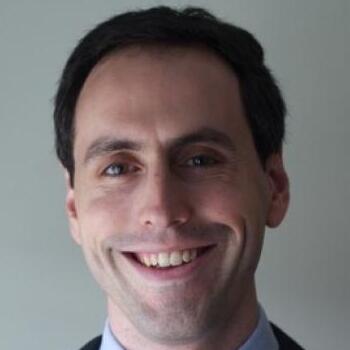
Patrick Meier is the author of the book " Digital Humnitarians: How Big Data is Changing the Face of Humanitarian Response." He directs QCRI's Social Innovation Program where he & his team use human and machine computing to develop "Next Generation Humanitarian Technologies" in partnership with international humanitarian organizations. Patrick was previously with Ushahidi and the Harvard Humanitarian Initiative. He has a PhD from The Fletcher School, Pre-Doc from Stanford and an MA from Columbia. His influential blog iRevolutions has received over 1.5 million hits. Patrick tweets at @patrickmeier.

**** NOTE LOCATION****

School of Education

Room 128

Patrick Meier Director of Social Innovation at QCRI
-

Abstract

Convened by Professor Joel Beinin and Professor Robert Crews, this one-day conference will explore the global history of the Middle East and North Africa. The conference is chronologically delimited by two New York-centered financial panics that had substantial consequences for the Middle East and North Africa. While the region has long been engaged in global circuits of commerce, culture, and migration, this choice of chronological frame highlights the renewed salience of political economy in several academic disciplines.


Conference Program

8:45 -9:00 Welcoming Remarks

9:00 -10:30 Political Economy

Chair: Robert Crews (Stanford University)

Toby Jones (Rutgers University) “Energy and War in the Persian Gulf” (Abstract)

Brandon Wolfe-Honnicutt (California State University, Stanislaus) “Oil, Guns, and Dollars: U.S. Arms Transfers and the Breakdown of Bretton Woods” (Abstract)

10:45-12:15 Ideas and Institutions

Chair: Aishwary Kumar (Stanford University)

Yoav Di-Capua (University of Texas at Austin) “An Iconic Betrayal: Jean Paul Sartre and the Arab World” (Abstract)

Omnia El Shakry (University of California, Davis) “The Arabic Freud: Psychoanalysis and the Psyche in postwar Egypt” (Abstract)

1:30-3:30 Global Palestine

Chair: Hesham Sallam (Stanford University)

Laleh Khalili (University of London, SOAS) “Palestine and Circuits of Coercion” (Abstract)

Ilana Feldman (George Washington University) “Humanitarianism and Revolution: Samed, the Palestinian Red Crescent Society, and the work of liberation” (Abstract)

3:15-4:45 Circulation of Popular Culture

Chair: Alexander Key (Stanford University)

Hisham Aidi (Columbia University)  “Frantz Fanon and Judeo-Arab Music” (Abstract)

Paul A. Silverstein (Reed College) “A Global Maghreb: Crossroads, Borderlands, and Frontiers in the Rethinking of Area Studies” (Abstract)

5:00 pm Concluding Remarks

Chair: Joel Beinin (Stanford University)

For more information, please contact The Sohaib and Sara Abbasi Program in Islamic Studies abbasiprogram@stanford.edu

*Organized by the The Sohaib and Sara Abbasi Program in Islamic Studies and co-sponsored by the History Department, CDDRL's Program on Arab Reform and Democracy, The Mediterranean Studies Forum, Stanford Global Studies, and the Stanford Humanities Center*


[[{"fid":"217988","view_mode":"crop_870xauto","fields":{"format":"crop_870xauto","field_file_image_description[und][0][value]":"Abbasi annual conference 2015","field_file_image_alt_text[und][0][value]":"","field_file_image_title_text[und][0][value]":"","field_credit[und][0][value]":"","field_caption[und][0][value]":"","field_related_image_aspect[und][0][value]":"","thumbnails":"crop_870xauto","pp_lightbox":false,"pp_description":false},"type":"media","attributes":{"width":870,"class":"media-element file-crop-870xauto"}}]]


Conferences
Paragraphs

The principles of humanitarian assistance dictate that aid be distributed in accordance with need while remaining neutral with respect to the political stakes. However, these principles have unique implications in the postconflict context, where need is often correlated with opponents’ performance in the previous contest. In these cases, humanitarian assistance is likely to be biased towards the conflict loser. Using a crisis-bargaining framework, this article describes a simple logic for how humanitarian aid can inadvertently undermine peace by creating a revisionist party with the incentive to renegotiate the postwar settlement. The empirical expectations of the theory are tested using a panel dataset of cross-national humanitarian aid expenditures in civil conflicts since the end of the Cold War. As the theory predicts, postconflict states treated with higher levels of humanitarian assistance exhibit shorter spells of peace; however, this effect only occurs after conflicts that ended with a decisive victory. 


All Publications button
1
Publication Type
Journal Articles
Publication Date
Journal Publisher
The Journal of Politics
Authors
Number
2
-

The final class will pose nine questions, each question digging into
each of the nine topics covered over the quarter.  Pizza at 6pm!

Bechtel Conference Center, EncinaHall

Helen Stacy
-

Abstract

Paul Amar will discuss his book The Security Archipelago, winner of the 2014 Charles Taylor Book Award of the American Political Science Association. The book provides an alternative historical and theoretical framing of the refashioning of free-market states and the rise of humanitarian security regimes in the Global South by examining the pivotal, trendsetting cases of Brazil and Egypt. Addressing gaps in the study of neoliberalism and biopolitics, Amar describes how coercive security operations and cultural rescue campaigns confronting waves of resistance have appropriated progressive, antimarket discourses around morality, sexuality, and labor. Homing in on Cairo and Rio de Janeiro, Amar reveals the innovative resistances and unexpected alliances that have coalesced in new polities emerging from the Arab Spring and South America's Pink Tide. These have generated a shared modern governance model that he terms the "human-security state."


Speaker Bio

Image
paul amar 1

Paul Amar, Associate Professor in the Global & International Studies Program, is a political scientist with affiliate appointments in Feminist Studies, Sociology, Comparative Literature, Middle East Studies, and Latin American & Iberian Studies. At UCSB he currently serves as Chair of Middle East Studies, Coordinator of the Campus Cluster on Security Studies, and member of the Graduate Studies Council. In addition, he serves as coordinator of scholarly  projects for the Arab Council of the Social Sciences, based in Beirut. Before he began his academic career, he worked as a journalist in Egypt, a police reformer in Brazil, and as a conflict-resolution and economic development specialist at the United Nations. His books include:  Cairo Cosmopolitan (2006); New Racial Missions of Policing (2010); Global South to the Rescue (2011); Dispatches from the Arab Spring (2013); The Middle East and Brazil (2014), and The Security Archipelago: Human-Security States, Sexuality Politics and the End of Neoliberalism. This most recent book was awarded the Charles Taylor Award for "Best Book of the Year" in 2014 by the Interpretive Methods Section of the American Political Science Association.


*This event is co-sponsored with CDDRL's Program on Arab Reform and Democracy and the Mediterranean Studies Program.*


[[{"fid":"217928","view_mode":"crop_870xauto","fields":{"format":"crop_870xauto","field_file_image_description[und][0][value]":"Paul Amar Flyer","field_file_image_alt_text[und][0][value]":"","field_file_image_title_text[und][0][value]":"","field_credit[und][0][value]":"","field_caption[und][0][value]":"","field_related_image_aspect[und][0][value]":"","thumbnails":"crop_870xauto","pp_lightbox":false,"pp_description":false},"type":"media","attributes":{"width":"870","class":"media-element file-crop-870xauto"}}]]


Reuben Hills Conference Room
2nd Floor East Wing E207
Encina Hall
616 Serra Street
Stanford, California 94305

Paul Amar Associate Professor, Global and International Studies Program University of California, Santa Barbara
Seminars
-

*This event is co-sponsored with CDDRL's Program on Arab Reform and Democracy and The Sohaib and Sara Abbasi Program in Islamic Studies.*

Abstract

European and US-based scholars and practitioners have debated the purposes and sometimes the (limited) macro-effects of programs designed to promote transitions from authoritarianism to democracy in Middle East countries. Yet this discussion often lacks analysis of on-the-ground experiences or ignores the cumulative wisdom of local counterparts and intermediaries. This seminar is based on Carapico’s ground-breaking study Political Aid and Arab Activism: Democracy Promotion, Justice, and Representation (Cambridge University Press, 2013) which explores two decades’ worth of projects sponsored by American, European, and other transnational agencies in four key sub-fields: the rule of law, electoral design and monitoring, female empowerment, and civil society. Specifically in the seminar Carapico will discuss controversies and contradictions surrounding projects in Egypt, Palestine, and Iraq (the three main cases) and Jordan, Morocco, Yemen, Algeria, Tunisia, and Lebanon (where democracy brokers also work) to help explain why so many feminists and other advocates for justice, free elections, and civic agency concluded that foreign funding is inherently political and paradoxical.

Speaker Bio

sheila carapico color Sheila Carapico

Sheila Carapico, Professor of Political Science and International Studies at the University of Richmond, has been exploring Arab activism since studying in Cairo and traveling around the region in 1971/72. She lived in Sana’a from 1977 through 1980, mainly researching community development initiatives and foreign aid interventions. Subsequently she worked as a consultant for the International Fund for Agricultural Development, the Netherlands Embassy, Human Rights Watch, and several other agencies in Yemen, Egypt, and Lebanon. She was a Fulbright research scholar and visiting fellow at the Sana’a University Women’s Studies and Social Research Center for two years during the ‘democratic opening’ in Yemen in the early 1990s. She served as Visiting Chairperson in the Department of Political Science at the American University in Cairo for all of 2010 and the ‘Arab spring’ semester of 2011, and returned to AUC as a visiting faculty member in the spring of 2013. In addition to Political Aid she is the author of Civil Society in Yemen: A Political Economy of Activism in Modern Arabia (Cambridge University Press, 1998) and other works on the comparative and international politics of the Arabian Peninsula and the Arab world. She is a contributing editor of Middle East Report.      


[[{"fid":"217801","view_mode":"crop_870xauto","fields":{"format":"crop_870xauto","field_file_image_description[und][0][value]":"Sheila Carapico flyer","field_file_image_alt_text[und][0][value]":"","field_file_image_title_text[und][0][value]":"","field_credit[und][0][value]":"","field_caption[und][0][value]":"","field_related_image_aspect[und][0][value]":"","thumbnails":"crop_870xauto","pp_lightbox":false,"pp_description":false},"type":"media","attributes":{"width":"870","class":"media-element file-crop-870xauto"}}]]


Sheila Carapico Professor of Political Science Department of Political Science, University of Richmond
Seminars
-

This event has been cancelled. We will update our website once the new date has been determined.

Encina Hall, C148
616 Jane Stanford Way
Stanford, CA 94305

0
Olivier Nomellini Senior Fellow at the Freeman Spogli Institute for International Studies
Director of the Ford Dorsey Master's in International Policy
Research Affiliate at The Europe Center
Professor by Courtesy, Department of Political Science
yff-2021-14290_6500x4500_square.jpg

Francis Fukuyama is the Olivier Nomellini Senior Fellow at Stanford University's Freeman Spogli Institute for International Studies (FSI), and a faculty member of FSI's Center on Democracy, Development and the Rule of Law (CDDRL). He is also Director of Stanford's Ford Dorsey Master's in International Policy, and a professor (by courtesy) of Political Science.

Dr. Fukuyama has written widely on issues in development and international politics. His 1992 book, The End of History and the Last Man, has appeared in over twenty foreign editions. His book In the Realm of the Last Man: A Memoir will be published in fall 2026.

Francis Fukuyama received his B.A. from Cornell University in classics, and his Ph.D. from Harvard in Political Science. He was a member of the Political Science Department of the RAND Corporation, and of the Policy Planning Staff of the US Department of State. From 1996-2000 he was Omer L. and Nancy Hirst Professor of Public Policy at the School of Public Policy at George Mason University, and from 2001-2010 he was Bernard L. Schwartz Professor of International Political Economy at the Paul H. Nitze School of Advanced International Studies, Johns Hopkins University. He served as a member of the President’s Council on Bioethics from 2001-2004. He is editor-in-chief of American Purpose, an online journal.

Dr. Fukuyama holds honorary doctorates from Connecticut College, Doane College, Doshisha University (Japan), Kansai University (Japan), Aarhus University (Denmark), the Pardee Rand Graduate School, and Adam Mickiewicz University (Poland). He is a non-resident fellow at the Carnegie Endowment for International Peace. He is a member of the Board of Trustees of the Rand Corporation, the Board of Trustees of Freedom House, and the Board of the Volcker Alliance. He is a fellow of the National Academy for Public Administration, a member of the American Political Science Association, and of the Council on Foreign Relations. He is married to Laura Holmgren and has three children.

(October 2025)

CV
Date Label
Olivier Nomellini Senior Fellow at the Freeman Spogli Institute for International Studies (FSI); Resident in FSI's Center on Democracy, Development, and the Rule of Law; Professor, by courtesy, of Political Science Speaker Stanford University
Seminars
Authors
News Type
News
Date
Paragraphs

To predict how agriculture will be affected by future climate change, scientists often rely on a single crop model – a computer simulation of how a specific crop’s yield responds to temperature changes. By combining 30 such models into a single study, and comparing each model against data from existing experimental wheat fields around the world, a team of researchers including Stanford professor David Lobell have developed a more powerful and accurate way to predict future wheat yields.

In a new analysis published in Nature Climate Change, the team’s results support previous work suggesting that wheat yields around the world are sensitive to rising temperatures. Using the new method of analysis, the team estimates an average six percent future yield loss for every one degree Celsius rise in global mean temperature.

“Combining 30 models gives us a much greater ability to predict future impacts and understand past impacts,” said Lobell. “This is a clear step forward.”

Lobell is professor of environmental earth system science in the School of Earth Science at Stanford and the deputy director of the Center on Food Security and the Environment. He is a senior fellow at the Stanford Woods Institute for the Environment and at the Freeman Spogli Institute for International Studies.

The estimated six percent yield loss for every degree increase is equivalent to about a quarter of the current volume of wheat traded globally in 2013. Yields at some sites, notably those in Mexico, Brazil, India and Sudan, show simulated wheat yield losses of more than 20 percent - in Sudan’s case, more than 50 percent - under a scenario in which global mean temperature rises by two degrees Celsius.

With higher temperatures also comes an increase in the variability of wheat yields, both by location and between years. More fluctuation in wheat yields could mean greater global price volatility for the staple crop.

Approximately 70 percent of the wheat produced today is grown either on irrigated plots or in rainy regions. The research team accounted for this factor by focusing its simulations on multiple regional-specific varieties of wheat that are commonly grown under these conditions.

The new paper includes several suggestions for avoiding some of the predicted yield losses. For example, some varieties of wheat are more heat tolerant than others, and farmers in the places hardest hit by rising temperatures could switch varieties to capitalize on this heat resistance. The effects of rising temperatures could also be managed, in part, by adjusting sowing and harvesting dates, or changing the way fertilizers are applied to crops.


Contact: David Lobell, dlobell@stanford.edu

Hero Image
wheat closeup
All News button
1
-

This event is open to Stanford undergraduate students only. 

The Center on Democracy, Development, and the Rule of Law (CDDRL) is currently accepting applications from eligible juniors due February 27, 2015 who are interested in writing their senior thesis on a subject touching upon democracy, economic development, and rule of law (DDRL) from any university department. CDDRL faculty and current honors students will be present to discuss the program and answer any questions.

For more information on the CDDRL Senior Honors Program, please click here.


CDDRL Class of 2015 Class of 2015 in front of the White House with Francis Fukuyama.


[[{"fid":"217337","view_mode":"crop_870xauto","fields":{"format":"crop_870xauto","field_file_image_description[und][0][value]":"SHP15 Info Session Flyer","field_file_image_alt_text[und][0][value]":"","field_file_image_title_text[und][0][value]":"","field_credit[und][0][value]":"","field_caption[und][0][value]":"SHP15 Info Session Flyer","field_related_image_aspect[und][0][value]":"","thumbnails":"crop_870xauto","pp_lightbox":false,"pp_description":false},"type":"media","attributes":{"height":1056,"width":870,"class":"media-element file-crop-870xauto"}}]]

Encina Hall, C148
616 Jane Stanford Way
Stanford, CA 94305

0
Olivier Nomellini Senior Fellow at the Freeman Spogli Institute for International Studies
Director of the Ford Dorsey Master's in International Policy
Research Affiliate at The Europe Center
Professor by Courtesy, Department of Political Science
yff-2021-14290_6500x4500_square.jpg

Francis Fukuyama is the Olivier Nomellini Senior Fellow at Stanford University's Freeman Spogli Institute for International Studies (FSI), and a faculty member of FSI's Center on Democracy, Development and the Rule of Law (CDDRL). He is also Director of Stanford's Ford Dorsey Master's in International Policy, and a professor (by courtesy) of Political Science.

Dr. Fukuyama has written widely on issues in development and international politics. His 1992 book, The End of History and the Last Man, has appeared in over twenty foreign editions. His book In the Realm of the Last Man: A Memoir will be published in fall 2026.

Francis Fukuyama received his B.A. from Cornell University in classics, and his Ph.D. from Harvard in Political Science. He was a member of the Political Science Department of the RAND Corporation, and of the Policy Planning Staff of the US Department of State. From 1996-2000 he was Omer L. and Nancy Hirst Professor of Public Policy at the School of Public Policy at George Mason University, and from 2001-2010 he was Bernard L. Schwartz Professor of International Political Economy at the Paul H. Nitze School of Advanced International Studies, Johns Hopkins University. He served as a member of the President’s Council on Bioethics from 2001-2004. He is editor-in-chief of American Purpose, an online journal.

Dr. Fukuyama holds honorary doctorates from Connecticut College, Doane College, Doshisha University (Japan), Kansai University (Japan), Aarhus University (Denmark), the Pardee Rand Graduate School, and Adam Mickiewicz University (Poland). He is a non-resident fellow at the Carnegie Endowment for International Peace. He is a member of the Board of Trustees of the Rand Corporation, the Board of Trustees of Freedom House, and the Board of the Volcker Alliance. He is a fellow of the National Academy for Public Administration, a member of the American Political Science Association, and of the Council on Foreign Relations. He is married to Laura Holmgren and has three children.

(October 2025)

CV
Date Label
Honors Program Director

Encina Hall, C150
616 Jane Stanford Way
Stanford, CA 94305

0
Center Fellow, Freeman Spogli Institute for International Studies
didi_kuo_2023.jpg

Didi Kuo is a Center Fellow at the Freeman Spogli Institute for International Studies (FSI) at Stanford University. She is a scholar of comparative politics with a focus on democratization, corruption and clientelism, political parties and institutions, and political reform. She is the author of The Great Retreat: How Political Parties Should Behave and Why They Don’t (Oxford University Press) and Clientelism, Capitalism, and Democracy: the rise of programmatic politics in the United States and Britain (Cambridge University Press, 2018).

She has been at Stanford since 2013 as the manager of the Program on American Democracy in Comparative Perspective and is co-director of the Fisher Family Honors Program at CDDRL. She was an Eric and Wendy Schmidt Fellow at New America and is a non-resident fellow with the Carnegie Endowment for International Peace. She received a PhD in political science from Harvard University, an MSc in Economic and Social History from Oxford University, where she studied as a Marshall Scholar, and a BA from Emory University.

Date Label
Mentor
Subscribe to Middle East and North Africa