Authors
Beth Duff-Brown
News Type
News
Date
Paragraphs


“I am the first child of my parents. I have a small brother at home. If the first child were a son, my parents might be happy ... but I am a daughter. I complete all the household tasks, go to school, again do the household activities in the evening … my parents do not give value or recognition to me.”


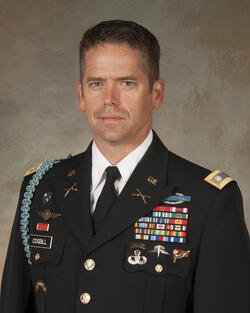
Stanford Assistant Professor of Medicine Marcella Alsan often refers to this comment by a 15-year-old girl from Nepal when she talks about how the division of labor among men and women starts at a young age in the developing world.

“Anecdotally, girls must sacrifice their education to help out with domestic tasks, including taking care of children, a job that becomes more onerous if their younger siblings are ill,” said, Alsan, a core faculty member at the Center for Health Policy/Center for Primary Care and Outcomes Research (CHP/PCOR) within the Freeman Spogli Institute of International Studies, and the Department of Medicine.

More than 100 million girls worldwide fail to complete secondary school, despite research that shows a mother’s literacy is the most robust predictor of child survival. So Alsan is analyzing whether medical interventions in children under 5 tend to lead their older sisters back to school.

She is one of two winners of this year’s Rosenkranz Prize for Health Care Research in Developing Countries, awarded by CHP/PCOR to promising young Stanford researchers.

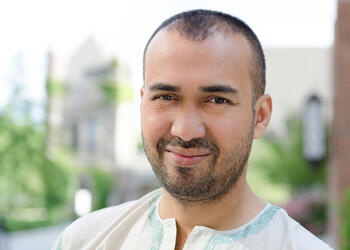
Her Stanford Department of Medicine colleague, Jason Andrews, is the other recipient of the $100,000 prize given to young Stanford researchers to investigate ways to improve access to health care in developing countries.

Andrews is looking at cheap, effective diagnostic tools for infectious diseases, while Alsan is researching how older girls in poorer countries are impacted by the health of their younger siblings.

“My proposed work lays the foundation for a more comprehensive understanding of how illness in households and early child health interventions impact a critical determinant of human development: an older girl’s education,” she said.

Image

Alsan, the only infectious-disease trained economist in the United States, said Stanford is the ideal place to carry out her interdisciplinary global health research.

“I am humbled and honored to receive this prize, since Dr. Rosenkranz has done so much for women’s health worldwide,” she said.

Alsan – an MD with a specialty in infectious disease who has a PhD in economics from Harvard – said she intends to estimate the impact that illnesses in under-5 children have on older girls’ schooling using econometric tools.

She will compile data from more than 100 Demographic and Health Surveys (DHS) covering nearly 4 million children living in low- and middle-income countries.

The surveys ask about episodes of diarrhea, pneumonia and fever in children under 5 and record data on literacy and school enrollment for every child in the household.

Alsan also intends to collaborate with partners in sub-Saharan Africa to study the gendered effect of household illness on time use, using culturally appropriate questionnaires.

Douglas K. Owens, a Stanford professor of medicine and director of CHP/PCOR, called Alsan’s work “groundbreaking.”

“Although training is critical, more importantly, her work to date shows a degree of innovation, creativity and rigor that led us to conclude she was likely to become one of the top investigators in her field worldwide,” he said.

Low-Cost Diagnostic Tools

Andrews, also an assistant professor of medicine, has been working on ways to bring low-cost diagnostic tools to impoverished communities that bear the brunt of disability and death from infectious disease.

“I began working in rural Nepal as an undergraduate student and as a medical student founded a nonprofit organization that provides free medical services in one of the most remote and impoverished parts of the country,” Andrews said. “As I became a primary physician, and then an infectious diseases specialist, one of the consistent and critical challenges I encountered in this setting was routine diagnosis of infectious disease.”

He said those routine diagnostics were typically hindered by lack of electricity, limited laboratory infrastructure and lack of trained lab personnel.

“In my experiences working throughout rural Nepal – and in India, South Africa, Brazil, Peru and Ethiopia – I found these challenges to be common across rural resource-limited settings,” said Andrews, who founded a nonprofit Nyaya Health – recently renamed Possible Health – which provides modern, low-cost healthcare to rural Nepal.

Andrews has been collaborating with engineers to develop an electricity-free, culture-based incubation and identification system for typhoid; low-cost portable microscopes to detect parasitic worm infections; and most recently an easy-to-use molecular diagnostic tool that does not require electricity.

“The motivation for these projects was not to develop fundamentally new diagnostic approaches, but rather to find simple, low-cost means to make established laboratory techniques affordable and accessible,” he said.

Image
The Rosenkranz Prize will allow him to continue to develop a simple, rapid, molecular diagnostic for cholera that is 10 times more sensitive than the tests that are currently available. The diagnostic tool uses paper for DNA extraction, in contrast to traditional approaches that rely on expensive instruments requiring electricity and maintenance.

“We then perform isothermal amplification heated by a reusable, solar-heated, phase-change material,” Andrews said, adding that the entire process is completed in less than 20 minutes and can be performed by anyone with minimal training.

Andrews will enroll 250 patients with suspected cases of cholera in Nepal, using the new diagnostic tools and adapting as many local supplies as possible.

Andrews also intends to establish and curate a website to gather open-source ideas and evidence on diagnostic techniques for use in the developing world.

“Stanford is one of the world’s greatest hubs for innovation and information sharing as pertains to science and technology and is an ideal home for this venture,” he said.

In the current scientific climate, most National Institutes of Health grants go to established researchers. The Rosenkranz Prize aims to stimulate the work of Stanford’s bright young stars – researchers who have the desire to improve health care in the developing world, but lack the resources.

The award’s namesake, George Rosenkranz, first synthesized cortisone in 1951, and later progestin, the active ingredient in oral birth control pills. He went on to establish the Mexican National Institute for Genomic Medicine, and his family created the Rosenkranz Prize in 2009.

The award embodies Dr. Rosenkranz’s belief that young scientists hold the curiosity and drive necessary to find alternative solutions to longstanding health-care dilemmas.

“As in past years, the competition was extremely tough,” said Grant Miller, a senior fellow at the Freeman Spogli Institute and associate professor of medicine who chaired the prize committee this year.

“It’s exciting to see all of the truly innovative global health research being done by junior scholars at Stanford,” he said. “Both Jason and Marcella really exemplify this – and the legacy of George Rosenkranz.”

Image


Hero Image
african girls study
All News button
1
News Type
News
Date
Paragraphs

Ban Ki-moon, the eighth secretary-general of the United Nations, will deliver a public speech at Stanford University on Friday, June 26.

Ban’s visit will highlight the 70th anniversary of the founding of the U.N., part of a larger trip to the Bay Area to commemorate the San Francisco Conference, where the charter establishing the U.N. was signed in 1945. After his speech, he will participate in a question and answer session with Ambassador Kathleen Stephens, the U.S. ambassador to the Republic of Korea (2008-11).

The Stanford event will take place at 3 p.m. RSVP is required by June 24; seating is first come, first served. Media must pre-register by 9 a.m. on June 25.

It is Ban’s second visit to Stanford in under three years. In Jan. 2013, he delivered a speech to mark the occasion of the Walter H. Shorenstein Asia-Pacific Research Center (APARC)’s thirtieth anniversary.

“I believe we face a unique opportunity,” Ban said in Dinkelspiel Auditorium. “Because the changes we face are so profound – the decisions we make will have a deeper and more lasting impact than perhaps any other set of decisions in recent decades.”

Calling on students to be ‘global citizens,’ he spoke about the ongoing crisis in Syria, the mandate to act on climate change, and the need for a sustainable peace worldwide.

“Growing up, the U.N. was a beacon of hope for me and my country,” he said. “I urge you to harness that same spirit and make a difference.”

Ban was born in the Republic of Korea in 1944. As a youth, more than fifty years ago, Ban visited California during his first trip to the United States with a Red Cross, saying “my trip here opened my eyes to the world.” He has since held a 37-year career in public service in the Ministry of Foreign Affairs, including the role of minister of foreign affairs and trade, foreign policy advisor and chief national security advisor to the president.

“It’s truly our pleasure to host Secretary-General Ban Ki-moon on the seventieth anniversary of the U.N.,” said Gi-Wook Shin, a Stanford professor and director of Shorenstein APARC. “The U.N. has had a profound impact on the shaping of global order in the postwar era. And Ban’s leadership has steered the organization toward the world’s most pressing aims.”

Ban is reaching the end of his term as secretary-general. He assumed office in Jan. 2007 and was reelected for a second term in June 2011. Over his tenure, Ban has led a major push toward peace and non-proliferation activities, youth, women’s rights and the environment. He has urged leaders of China, Japan and South Korea to work harder on reconciliation over the wartime past to ensure long-term stability in the region.

The June 26 event, which can be followed at #UNatStanford, is co-sponsored by Shorenstein APARC and the Freeman Spogli Institute for International Studies at Stanford University; with promotional co-sponsors Asia Society, Asia Foundation and the World Affairs Council of Northern California.

CONTACT: Event inquires may be directed to Debbie Warren, dawarren@stanford.edu or (650) 723-8387; Media inquires may be directed to Lisa Griswold, lisagris@stanford.edu or (650) 736-0656

Hero Image
ban shin conversation
U.N. Secretary-General Ban Ki-moon talks with professor Gi-Wook Shin following a public lecture at Stanford in Jan. 2013. | Rod Searcey
All News button
1
Paragraphs

I propose and test a theoretical framework that explains institutional change in international relations. Like firms in markets, international institutions are affected by the underlying characteristics of their policy areas. Some policy areas are prone to produce institutions facing relatively little competition, limiting the outside options of member states and impeding redistributive change. In comparison, institutions facing severe competition will quickly reflect changes in underlying state interests and power. To test the theory empirically, I exploit common features of the Bretton Woods institutions—the International Monetary Fund and World Bank—to isolate the effect of variation in policy area characteristics. The empirical tests show that, despite having identical membership and internal rules, bargaining outcomes in the Bretton Woods institutions have diverged sharply and in accordance with the theory.

All Publications button
1
Publication Type
Journal Articles
Publication Date
Journal Publisher
American Journal of Political Science
Authors
Phillip Lipscy
-

Abstract:

Ballroom dancing legend Pierre Dulaine will discuss his 'Dancing Classrooms' method which he applied in his award winning documentary 'Dancing in Jaffa' to bring Arab and Jewish children together through dance. Mr. Dulaine will speak about the film, his journey into the world of dance and his experience as a Judge on the Arabic version of the TV show 'So You Think You Can Dance.'  Talk features audio-visual presentation and free lunch.

Speaker Bio:

Image
pierre dulaine 21

Pierre Dulaine was born in Jaffa, Palestine in 1944 to an Irish father and a Palestinian mother--both of whom fled the area in 1948.  After eight months of moving several times, Dulaine's family settled in Amman, Jordan. In 1956, the Suez Crisis forced Dulaine's parents to flee the country, eventually resettling in Birmingham, England.  In 1994 Dulaine founded the Dancing Classrooms program in New York City's public schools in which he encouraged children from various backgrounds to dance together. He later traveled to the city of his birth, Jaffa, to visit his childhood home and to make a film, 'Dancing in Jaffa,' where he brought Israeli Arabs and Jews together through dance and music.  His life was also fictionalized in the film Take the Lead starring Antonio Banderas.  More recently, Pierre Duaine has gained much acclaim in the Arab world for his role as Judge on the Arabic version of the TV show 'So You Think You Can Dance' where he encouraged young Arab men and women to pursue dance as way of dealing with difficult circumstances and certain outdated social taboos.

(See flyer for a list of the co-sponsors)


Note: A screening of 'Dancing in Jaffa' will take place on campus on May 29. For more information, click here.


[[{"fid":"218684","view_mode":"crop_870xauto","fields":{"format":"crop_870xauto","field_file_image_description[und][0][value]":"PD flyer","field_file_image_alt_text[und][0][value]":"","field_file_image_title_text[und][0][value]":"","field_credit[und][0][value]":"","field_caption[und][0][value]":"","field_related_image_aspect[und][0][value]":"","thumbnails":"crop_870xauto","pp_lightbox":false,"pp_description":false},"type":"media","attributes":{"height":1344,"width":870,"class":"media-element file-crop-870xauto"}}]]

Stanford Language Center,
Building 30-102,
Stanford, CA

Pierre Dulaine
Lectures
-

Abstract:

In July and August, hostilities in the Gaza Strip left 2,131 Palestinians and 71 Israelis dead, including 501 Palestinian children and one Israeli child. Of Gaza’s 1.8 million residents, 475,000 are living in temporary shelters or with other families because their homes have been severely damaged. The extent of destruction has raised questions around culpability for war crimes on all sides of the conflict. International organizations including the United Nations Human Rights Council, Amnesty International and Human Rights Watch have called for independent investigation. At the end of 2014, Palestine deposited a 12(3) application to the ICC for ad-hoc jurisdiction as well as acceded to the Rome Statute, thus granting the International Criminal Court the authority to investigate war crimes conducted in Palestinian territory. Such an investigation would bring both Israel and Palestine under scrutiny for events from this summer and as far back as 2012, and possibly to 2002 when the ICC was first formed to investigate war crimes. This is the third large scale military offensive against the besieged coastal enclave since Israel’s unilateral disengagement in 2005. Given the shortcomings of the ceasefire on August 26, 2014, another attack is seemingly inevitable. How is such civilian carnage possible notwithstanding the humanitarian and human rights legal regimes established to reduce civilian suffering? And what are the prospects for accountability under international criminal law and beyond? This lecture will explore these questions and specifically the prospects for accountability at the ICC. 


Speaker Bio:

Image
20120912 law 006

Noura Erakat is a human rights attorney, activist, and an Assistant Professor at George Mason University. Her scholarship investigates the laws of war, human rights, refugee law, and national security. She is a Co-Editor of Jadaliyya, an electronic magazine that leverages scholarly expertise and local knowledge on the Middle East. She has taught International Human Rights Law and the Middle East at Georgetown University since Spring 2009 and before beginning at George Mason University, she was a Freedman Teaching Fellow at Temple University, Beasley School of Law. She has served as Legal Counsel for a Congressional Subcommittee in the House of Representatives, chaired by Congressman Dennis J. Kucinich. She helped to initiate and organize several national formations including Arab Women Arising for Justice (AMWAJ) and the U.S. Palestinian Community Network (USPCN). While an undergraduate student at UC Berkeley, Noura helped launch the first university divestment campaign at UC Berkeley in 2001 and upon graduating from Berkeley Law School, she helped seed BDS campaigns throughout the country uas the National Organizer with the US Campaign to End the Israeli Occupation. There, she also helped initiate federal lawsuits in the U.S. against Israeli officials in for war crimes and crimes against humanity. She has lived and worked throughout the Middle East including as part of a legal fact-finding delegation to the Gaza Strip in the aftermath of Israel’s Winter 2008/09 onslaught and spent the Spring 2010 academic semester in Beirut, Lebanon as a Visiting Scholar at the American University in Beirut.  Noura has appeared on PBS News Hour, BBC World Service, NPR’s “To The Point,” MSNBC's "Up With Chris Hayes," Fox’s “The O’ Reilly Factor,” NBC’s “Politically Incorrect,” Democracy Now, and Al-Jazeera Arabic and English. Her non-scholarly publications have appeared in the New York Times, USA Today, the Los Angeles Review of Books, The Nation, Huffington Post, and Foreign Policy among others.  Most recently, she co-published an anthology entitled Aborted State? The UN Initiative and New Palestinian Junctures. 


This event is co-sponsored by the Sohaib and Sara Abbasi Program in Islamic Studies.


[[{"fid":"218623","view_mode":"crop_870xauto","fields":{"format":"crop_870xauto","field_file_image_description[und][0][value]":"Noura Erakat flyer","field_file_image_alt_text[und][0][value]":"","field_file_image_title_text[und][0][value]":"","field_credit[und][0][value]":"","field_caption[und][0][value]":"","field_related_image_aspect[und][0][value]":"","thumbnails":"crop_870xauto","pp_lightbox":false,"pp_description":false},"type":"media","attributes":{"width":"870","class":"media-element file-crop-870xauto"}}]]

Okimoto Conference Room
3rd Floor East Wing
Encina Hall
616 Serra Street
Stanford, California 94305

Noura Erakat Assistant Professor George Mason University
Seminars
Authors
News Type
News
Date
Paragraphs

Rigorous inspections, no cheating and continued talking can help generate a successful U.S.-Iranian nuclear deal, Stanford faculty experts say.

But the United States and the world community need to convince Iran it has more to lose than to gain from building a nuclear bomb, according to Siegfried Hecker, a research professor in the Department of Management Science and Engineering and a senior fellow at the Freeman Spogli Institute for International Studies.

On April 2, the United States, Iran and five other world powers agreed on "key parameters" for resolving a long-standing dispute over Iran's nuclear program. Aimed at curbing Iran's nuclear program in exchange for lifting of financial sanctions, the broad agreement charts the course for a possible final, detailed agreement by June 30.

Hecker said that even though Iran has already put in place all the requisite technical capabilities to build the bomb, it has not yet decided to exercise the option to build one.

The problem, he said, is that it takes rather small quantities of bomb fuel, highly enriched uranium or plutonium, to build a bomb, whereas commercial nuclear power production requires huge amounts of uranium and large enrichment capacity.

"In other words, even a small production capacity is useful for bombs, whereas large capacities are required for electricity. Hence, it is all but impossible to prevent Iran from reconstituting the capabilities to build the bomb should it decide to break the agreement," he wrote in an article for the Bulletin of Atomic Scientists.

Hecker said it is important is to have Iran agree to an "intrusive inspection and verification regime" so the international community can respond quickly should Iran "break out" with a nuclear weapon.

"Breakout time" measures the amount of time to build a nuclear weapon – the United States wants a year, while some say Iran is within a few months. It has been a key sticking point between Western and Iranian negotiators.

"There are lessons to be learned from what happened in North Korea – it 'broke out' in 2003, and the U.S. and international community did not respond adequately. Consequently, North Korea not only has the bomb today, but a rapidly growing nuclear arsenal," said Hecker, who recently wrote about the North Korean situation.

Hecker is an expert in plutonium science, global threat reduction and nuclear security who served as the director of the Los Alamos National Laboratory, where the first atomic bomb was created in 1945.

From a purely economic and technical standpoint, he said there is no need for Iran to have any enrichment capability or to build the type of reactor they chose for medical isotope production in their Arak facility.

"The enrichment services are readily available to Iran in the international market. However, insisting on zero enrichment or no centrifuges shatters Iran's pride and questions why the regime has spent billions of dollars pursuing what is really not needed to have civilian nuclear energy," he said.

The key objective for the next few years, he said, should the deal be formalized, is to convince Iran that it has "more to gain from keeping its end of the bargain than it would lose by exercising its hedge."

Inspections critical

Allen Weiner, director of the Stanford Program in International and Comparative Law and a senior lecturer at Stanford Law School, said the robustness of the inspection process and whether Iran decides to cheat are two big factors.

"If we stop and think about where we are starting from, it certainly seems that the agreed arrangement can't hurt. Without the agreement, if Iran concludes that it wishes to build nuclear weapons, it is doubtful that international actions can stop that," he said.

Weiner points out that Iran has weathered sanctions for nearly a decade and has continued to move closer to "breakout" capability. "Given that backdrop, the framework arrangement has the potential to help," he said.

If Iran's nuclear program spurs similar ones among its neighbors, the outlook is dire, said Weiner, a former U.S. State Department lawyer.

"A Middle East region with multiple nuclear-armed states would be a very dangerous place. The risk of nuclear confrontation would grow under such circumstances," he said, noting the especially acute tensions now between Shiite states like Iran and Sunni ones like Saudi Arabia and Egypt.

Weiner noted, "The greatest danger if multiple states in the region acquire nuclear weapons may be miscalculations or mistakes leading to the use of a nuclear weapon."

The length of the breakout period for Iran between a decision to build nuclear weapons and its ability to actually assemble such a weapon is seen as critical, according to Weiner: "That window presumably provides time for the international community to develop a response."

As for sticking points, for the United States the acceptance of the basic idea that Iran would retain a uranium enrichment capability was difficult, "although it was a pill the U.S. swallowed early in the negotiations," Weiner said.

Once the United States had agreed to this, it had to accept the risk of Iranian breakout, which makes the ultimate deal dependent on Iran's good faith, he said.

"It creates the grave fear that even if the agreement works, we are merely kicking the Iranian nuclear crisis down the road for 10 years," due to the time limits under the arrangement on the restrictions on the number of centrifuges that Iran may operate to enrich uranium, Weiner said.

For Iran, it was difficult to accept the reality that not all sanctions would be immediately lifted, he added. The country says it is only trying to exercise its rights to operate a peaceful civilian nuclear power program.

"Iran feels that it has accepted both substantive restrictions on its nuclear program and an intensive inspection regime that do not apply to other Nuclear Nonproliferation Treaty states, and that it should not continue to be singled out for sanctions, even partial ones, in order to earn the trust of the international community," he said.

Finally, the road ahead will be exceedingly difficult due to internal politics in both countries. Abbas Milani, the director of Iranian studies at Stanford and co-director of the Iran Democracy Project at the Hoover Institution, offers this perspective:

"While the people of Iran are rejoicing at what they think is a new beginning, and while Iranian President Hassan Rouhani and his men are congratulating Iran for its 'victory,' the conservative press has been blasting the agreement as defeatist and accusing the U.S. of publishing a faulty version of the agreement. In short, it is a happy moment, but a final resolution is yet to come."

Hero Image
unnamed2
Representatives from world powers and Iran gather in Lausanne, Switzerland, on Thursday after announcing a framework agreement on limiting Iran's nuclear capabilities. | Glen Johnson
All News button
1
-

Read a full event summary here

Agricultural crops are on the front lines of climate change. Can we expect increased food production in the context of global warming? Do our crops come pre-adapted to a climate not seen since the dawn of agriculture, or must we take bold measures to prepare agriculture for climate change? This talk will focus on the role that crop diversity must necessarily play in facilitating the adaptation of agricultural crops to new climates and environments. Genebanks, the “Doomsday Vault” near the North Pole, and possible new roles for plant breeders and farmers will be explored. 
 

Image
cary fowler 1

Dr. Cary Fowler is perhaps best known as the “father” of the Svalbard Global Seed Vault, which UN Secretary General Ban Ki-Moon has described as an “inspirational symbol of peace and food security for the entire humanity.” Dr. Fowler proposed creation of this Arctic facility to Norway and headed the international committee that developed the plan for its establishment by Norway. The Seed Vault provides ultimate security for more than 850,000 unique crop varieties, the raw material for all future plant breeding and crop improvement efforts. He currently chairs the International Council that oversees its operations.

In 2005 Dr. Fowler was chosen to lead the new Global Crop Diversity Trust, an international organization cosponsored by Food and Agriculture Organization of the UN (FAO) and the Consultative Group on International Agricultural Research (CGIAR). This position carried international diplomatic status. During his tenure, he built an endowment of $130 million and raised an additional $100 million (including the first major grant given for agriculture by the Gates Foundation) for programs to conserve crop diversity and make it available for plant breeding. The Trust organized a huge global project to rescue 90,000 threatened crop varieties in developing countries – the largest such effort in history - and is now engaged in an effort Dr. Fowler initiated with the Royal Botanic Gardens (Kew) to collect, conserve and pre-breed the wild relatives of 26 major crops. He oversaw development of a global information system to aid plant breeders and researchers find appropriate genetic materials from genebanks around the world. These initiatives at the Crop Trust, positioned the organization as a major path-breaking player in the global effort to adapt crops to climate change.

Prior to leading the Global Crop Diversity Trust, Dr. Fowler was Professor at the Norwegian University of Life Sciences in Ås Norway. He headed research and the Ph.D. program at the Department of International Environment and Development Studies and was a member of the university committee that allocated research funding to the different departments. 

The U.N.’s FAO recruited him in the 1990s to lead the team to produce the UN’s first global assessment of the State of the World’s Plant Genetic Resources. He was personally responsible for drafting and negotiating the first FAO Global Plan of Action on the Conservation and Sustainable Utilization of Plant Genetic Resources, formally adopted by 150 countries in 1996. Following this, Dr. Fowler served as Special Assistant to the Secretary General of the World Food Summit (twice) and represented the Consultative Group on International Agricultural Research (CGIAR/World Bank) in negotiations on the International Treaty on Plant Genetic Resources. He chaired a series of Nordic government sponsored informal meetings of 15 countries to facilitate negotiations for this treaty. And, he represented Norway on the Panel of Experts of the Convention on Biological Diversity.

Cary Fowler was born in 1949 and grew up in in Memphis, Tennessee, the son of a judge and a dietician. He studied at Simon Fraser University in Canada where he received a B.A. (honors – first class) degree. He earned his Ph.D. at Uppsala University in Sweden with a thesis on agricultural biodiversity and intellectual property rights. Dr. Fowler has lectured widely, been a visiting scholar at Stanford University and a visiting professor at the University of California – Davis. He is the author or co-author of more than 100 articles and several books including the classic Shattering: Food, Politics and the Loss of Genetic Diversity (University of Arizona Press), Unnatural Selection, Technology, Politics and Plant Evolution (Gordon & Breach Science Publishers) and The State of the World’s Plant Genetic Resources (UN-FAO).

Dr. Fowler currently serves on the boards of Rhodes College, the NY Botanical Garden Corporation, the Lillian Goldman Charitable Trust and Amy Goldman Charitable Trust. He remains associated with the Global Crop Diversity Trust as Special Advisor. He is a former member of the U.S. National Plant Genetic Resources Board (appointed by the Secretary of Agriculture) and former board and executive committee member of the International Maize and Wheat Improvement Center in Mexico. He has served as chair of the national Livestock Conservancy. He is the recipient of several awards: Right Livelihood Award, Vavilov Medal, the Heinz Award, Bette Midler’s Wind Beneath My Wings Award, the William Brown Award of the Missouri Botanical Garden and two honorary doctorates. He is one of two foreign elected members of the Russian Academy of Agricultural Sciences and is a member of the Russian Academy of Sciences. 


Dr. Cary Fowler Speaker Senior Advisor, Global Crop Diversity Trust
Symposiums
Subscribe to Middle East and North Africa