-

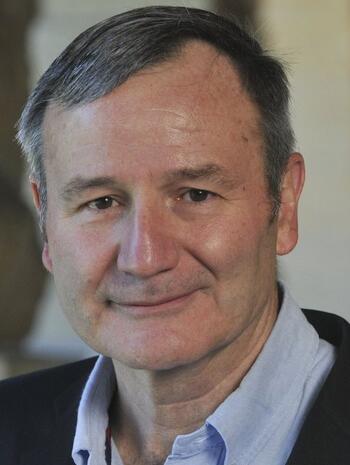
What will happen when a new US president is sworn in? Michael McFaul, former US ambassador to Russia and director of the Freeman Spogli Institute for International Studies, leads a panel of faculty experts to discuss the imminent foreign policy challenges that the next president must face.

Michael McFaul

CDDRL
Stanford University
Encina Hall, C147
616 Jane Stanford Way
Stanford, CA 94305-6055

(650) 724-6448 (650) 723-1928
0
Mosbacher Senior Fellow in Global Democracy at the Freeman Spogli Institute for International Studies
William L. Clayton Senior Fellow at the Hoover Institution
Professor, by courtesy, of Political Science and Sociology
diamond_encina_hall.png MA, PhD

Larry Diamond is the William L. Clayton Senior Fellow at the Hoover Institution, the Mosbacher Senior Fellow in Global Democracy at the Freeman Spogli Institute for International Studies (FSI), and a Bass University Fellow in Undergraduate Education at Stanford University. He is also professor by courtesy of Political Science and Sociology at Stanford, where he lectures and teaches courses on democracy (including an online course on EdX). At the Hoover Institution, he co-leads the Project on Taiwan in the Indo-Pacific Region and participates in the Project on the U.S., China, and the World. At FSI, he is among the core faculty of the Center on Democracy, Development and the Rule of Law, which he directed for six and a half years. He leads FSI’s Israel Studies Program and is a member of the Program on Arab Reform and Development. He also co-leads the Global Digital Policy Incubator, based at FSI’s Cyber Policy Center. He served for 32 years as founding co-editor of the Journal of Democracy.

Diamond’s research focuses on global trends affecting freedom and democracy and on U.S. and international policies to defend and advance democracy. His book, Ill Winds: Saving Democracy from Russian Rage, Chinese Ambition, and American Complacency, analyzes the challenges confronting liberal democracy in the United States and around the world at this potential “hinge in history,” and offers an agenda for strengthening and defending democracy at home and abroad.  A paperback edition with a new preface was released by Penguin in April 2020. His other books include: In Search of Democracy (2016), The Spirit of Democracy (2008), Developing Democracy: Toward Consolidation (1999), Promoting Democracy in the 1990s (1995), and Class, Ethnicity, and Democracy in Nigeria (1989). He has edited or coedited more than fifty books, including China’s Influence and American Interests (2019, with Orville Schell), Silicon Triangle: The United States, China, Taiwan the Global Semiconductor Security (2023, with James O. Ellis Jr. and Orville Schell), and The Troubling State of India’s Democracy (2024, with Sumit Ganguly and Dinsha Mistree).

During 2002–03, Diamond served as a consultant to the US Agency for International Development (USAID) and was a contributing author of its report, Foreign Aid in the National Interest. He has advised and lectured to universities and think tanks around the world, and to the World Bank, the United Nations, the State Department, and other organizations dealing with governance and development. During the first three months of 2004, Diamond served as a senior adviser on governance to the Coalition Provisional Authority in Baghdad. His 2005 book, Squandered Victory: The American Occupation and the Bungled Effort to Bring Democracy to Iraq, was one of the first books to critically analyze America's postwar engagement in Iraq.

Among Diamond’s other edited books are Democracy in Decline?; Democratization and Authoritarianism in the Arab WorldWill China Democratize?; and Liberation Technology: Social Media and the Struggle for Democracy, all edited with Marc F. Plattner; and Politics and Culture in Contemporary Iran, with Abbas Milani. With Juan J. Linz and Seymour Martin Lipset, he edited the series, Democracy in Developing Countries, which helped to shape a new generation of comparative study of democratic development.

Download full-resolution headshot; photo credit: Rod Searcey.

Former Director of the Center on Democracy, Development and the Rule of Law
Faculty Chair, Jan Koum Israel Studies Program
Date Label

615 Crothers Way,
Encina Commons, Room 128A
Stanford University
Stanford, CA 94305

(650) 721-4052
0
Research Fellow, Hoover Institution
abbas_milani_photo_by_babak_payami.jpg PhD

Abbas Milani is the Hamid and Christina Moghadam Director of Iranian Studies at Stanford University and a visiting professor in the department of political science. In addition, Dr. Milani is a research fellow and co-director of the Iran Democracy Project at the Hoover Institution.

Prior to coming to Stanford, Milani was a professor of history and political science and chair of the department at Notre Dame de Namur University and a research fellow at the Institute of International Studies at the University of California at Berkeley. Milani was an assistant professor in the faculty of law and political science at Tehran University and a member of the board of directors of Tehran University's Center for International Studies from 1979 to 1987. He was a research fellow at the Iranian Center for Social Research from 1977 to 1978 and an assistant professor at the National University of Iran from 1975 to 1977.

Dr. Milani is the author of Eminent Persians: Men and Women Who Made Modern Iran, 1941-1979, (Syracuse University Press, Syracuse, NY, 2 volumes, November, 2008); King of Shadows: Essays on Iran's Encounter with Modernity, Persian text published in the U.S. (Ketab Corp., Spring 2005); Lost Wisdom: Rethinking Persian Modernity in Iran, (Mage 2004); The Persian Sphinx: Amir Abbas Hoveyda and the Riddle of the Iranian Revolution (Mage, 2000); Modernity and Its Foes in Iran (Gardon Press, 1998); Tales of Two Cities: A Persian Memoir (Mage 1996); On Democracy and Socialism, a collection of articles coauthored with Faramarz Tabrizi (Pars Press, 1987); and Malraux and the Tragic Vision (Agah Press, 1982). Milani has also translated numerous books and articles into Persian and English.

Milani received his BA in political science and economics from the University of California at Berkeley in 1970 and his PhD in political science from the University of Hawaii in 1974.

Hamid and Christina Moghadam Director of Iranian Studies
Co-director of the Iran Democracy Project
CDDRL Affiliated Scholar
Date Label

CISAC
Stanford University
Encina Hall, E216
Stanford, CA 94305-6165

(650) 725-9754 (650) 723-0089
0
Senior Fellow at the Freeman Spogli Institute for International Studies
Morris Arnold and Nona Jean Cox Senior Fellow at the Hoover Institution
Senior Fellow at the Stanford Institute for Human-Centered AI
Professor, by courtesy, of Political Science
amyzegart-9.jpg PhD

Dr. Amy Zegart is the Morris Arnold and Nona Jean Cox Senior Fellow at the Hoover Institution. The author of five books, she specializes in U.S. intelligence, emerging technologies, and national security. At Hoover, she leads the Technology Policy Accelerator and the Oster National Security Affairs Fellows Program. She also is an associate director and senior fellow at the Stanford Institute for Human-Centered AI; a senior fellow at the Freeman Spogli Institute; and professor of political science by courtesy, teaching 100 students each year about how emerging technologies are transforming espionage.

Her award-winning research includes the leading academic study of intelligence failures before 9/11: Spying Blind: The CIA, the FBI, and the Origins of 9/11 (Princeton, 2007) and the bestseller Spies, Lies, and Algorithms: The History and Future of American Intelligence (Princeton, 2022), which was nominated by Princeton University Press for the Pulitzer Prize. She also coauthored Political Risk: How Businesses and Organizations Can Anticipate Global Insecurity, with Condoleezza Rice (Twelve, 2018). Her op-eds and essays have appeared in Foreign Affairs, Politico, the New York Times, the Washington Post, and the Wall Street Journal.

Zegart has advised senior officials about intelligence and foreign policy for more than two decades. She served on the National Security Council staff and as a presidential campaign foreign policy advisor and has testified before numerous congressional committees. Before her academic career, she spent several years as a McKinsey & Company consultant.

Zegart received an AB in East Asian studies from Harvard and an MA and a PhD in political science from Stanford. She serves on the boards of the Council on Foreign Relations, Kratos Defense & Security Solutions, and the American Funds/Capital Group.

Date Label
Panel Discussions
Pick Hall 411 5828 S. University Avenue Chicago, Illinois 60637
0
rochelleterman_rsd17_076_0417a.jpg

Rochelle is an assistant professor in the Department of Political Science at the University of Chicago. Her research examines international norms, gender and advocacy, with a focus on the Muslim world. She is currently working on a book project that examines resistance and defiance towards international norms. The manuscript is based on her dissertation, which won the 2017 Merze Tate (formerly Helen Dwight Reid) Award for the best dissertation in international relations, law, and politics from the American Political Science Association. Rochelle received her Ph.D. in Political Science with a designated emphasis in Gender & Women’s Studies at the University of California, Berkeley. Before coming to Chicago, she was a post-doc at the Center for International Security and Cooperation at Stanford University.

Affiliate
CV
News Type
News
Date
Paragraphs

The Asia Health Policy Program at Stanford’s Shorenstein Asia-Pacific Research Center, in collaboration with scholars from Stanford Health Policy's Center on Demography and Economics of Health and Aging, the Stanford Institute for Economic Policy Research, and the Next World Program, is soliciting papers for the third annual workshop on the economics of ageing titled Financing Longevity: The Economics of Pensions, Health Insurance, Long-term Care and Disability Insurance held at Stanford from April 24-25, 2017, and for a related special issue of the Journal of the Economics of Ageing.

The triumph of longevity can pose a challenge to the fiscal integrity of public and private pension systems and other social support programs disproportionately used by older adults. High-income countries offer lessons – frequently cautionary tales – for low- and middle-income countries about how to design social protection programs to be sustainable in the face of population ageing. Technological change and income inequality interact with population ageing to threaten the sustainability and perceived fairness of conventional financing for many social programs. Promoting longer working lives and savings for retirement are obvious policy priorities; but in many cases the fiscal challenges are even more acute for other social programs, such as insurance systems for medical care, long-term care, and disability. Reform of entitlement programs is also often politically difficult, further highlighting how important it is for developing countries putting in place comprehensive social security systems to take account of the macroeconomic implications of population ageing.

The objective of the workshop is to explore the economics of ageing from the perspective of sustainable financing for longer lives. The workshop will bring together researchers to present recent empirical and theoretical research on the economics of ageing with special (yet not exclusive) foci on the following topics:

  • Public and private roles in savings and retirement security
  • Living and working in an Age of Longevity: Lessons for Finance
  • Defined benefit, defined contribution, and innovations in design of pension programs
  • Intergenerational and equity implications of different financing mechanisms for pensions and social insurance
  • The impact of population aging on health insurance financing
  • Economic incentives of long-term care insurance and disability insurance systems
  • Precautionary savings and social protection system generosity
  • Elderly cognitive function and financial planning
  • Evaluation of policies aimed at increasing health and productivity of older adults
  • Population ageing and financing economic growth
  • Tax policies’ implications for capital deepening and investment in human capital
  • The relationship between population age structure and capital market returns
  • Evidence on policies designed to address disparities – gender, ethnic/racial, inter-regional, urban/rural – in old-age support
  • The political economy of reforming pension systems as well as health, long-term care and disability insurance programs


Submission for the workshop

Interested authors are invited to submit a 1-page abstract by Sept. 30, 2016, to Karen Eggleston at karene@stanford.edu. The authors of accepted abstracts will be notified by Oct. 15, 2016, and completed draft papers will be expected by April 1, 2017.

Economy-class travel and accommodation costs for one author of each accepted paper will be covered by the organizers.

Invited authors are expected to submit their paper to the Journal of the Economics of Ageing. A selection of these papers will (assuming successful completion of the review process) be published in a special issue.


Submission to the special issue

Authors (also those interested who are not attending the workshop) are invited to submit papers for the special issue in the Journal of the Economics of Ageing by Aug. 1, 2017. Submissions should be made online. Please select article type “SI Financing Longevity.”


About the Next World Program

The Next World Program is a joint initiative of Harvard University’s Program on the Global Demography of Aging, the WDA Forum, Stanford’s Asia Health Policy Program, and Fudan University’s Working Group on Comparative Ageing Societies. These institutions organize an annual workshop and a special issue in the Journal of the Economics of Ageing on an important economic theme related to ageing societies.


More information can be found in the PDF below.


Hero Image
Flickr/Vinoth Chandar
All News button
1
News Type
Q&As
Date
Paragraphs

FSI HOSTS PANEL ON MIDDLE EAST BUSINESSES DURING GLOBAL ENTREPRENEURSHIP SUMMIT AT STANFORD

Startup culture is growing fast in the Middle East, despite what you have (or more likely, haven’t) heard about the region.

“There have been at least two startup conferences this year that got 5,000 people each,” said venture investor Christopher Schroeder. “If it had been 10,000 people in the Middle East getting together to talk about the Muslim Brotherhood, I guarantee you would have heard about it.”

Together with Michael McFaul, Condoleezza Rice, and Stephen Hadley, Schroeder introduced one of the first partner events of the seventh annual Global Entrepreneurship Summit. The panel, titled “From the Valley to the Wadi: How Entrepreneurship is Making the Middle East More Peaceful, More Stable and More Prosperous,” was organized by Stanford’s Freeman Spogli Institute for International Studies and the Atlantic Council’s Rafik Harari Center for the Middle East. The theme that quickly emerged, given the confluence of former Cabinet members and experienced businesspeople, was the role of government in economic growth.

FSI director McFaul, formerly the US ambassador to Russia, welcomed the audience to Stanford (this year’s GES host) and introduced former secretary of state Condoleezza Rice. Rice described the connection between prosperity and democratic development – which, as she pointed out, is not a quick or easy process. “Today people think of the US as a consolidated democracy, but they forget that it took us time to get there,” she said. “The Constitution I swore to uphold as Secretary of State originally treated my ancestors as three-fifths of a man.”

Hadley, who served as national security advisor to President George W. Bush, moderated a discussion with successful entrepreneurs from the MENA (Middle East and North Africa) region to challenge stereotypes, candidly discuss problems, and offer solutions for growth. Rice noted in her introduction that countries like Saudi Arabia must include the half of their potential workforce – women – whose economic participation is currently restricted. However, panelist Ruba Al Hassan, a UAE entrepreneur and founder of the Global Youth Empowerment Movement, reminded the audience that about 25% of MENA entrepreneurs are women, compared to 18% in Silicon Valley.

The panel discussed the roles that policy can and cannot play in economic development. “The government can help the private sector by focusing on education,” said Ahmed Alfi, whose Cairo-based venture capital firm Sawari Ventures has funded an online education platform used by millions of refugees around the region. “There is no such thing as ‘not enough money for education’ – only the misallocation of funds.”

Ala’ al Sallal, who grew up a refugee in Jordan and founded online retailer Jamalon, cautioned against resting all hopes for change in the private sector. “Businesses are not social problem solvers; when we can’t operate in one market, we move to another,” he said. While the panelists agreed with an audience member’s comment that economic growth in the Middle East is bottom-up, not top-down, they also pointed out that policy issues such as open borders, special economic zones and public infrastructure play a critical role in creating the conditions for entrepreneurship to flourish.

Follow @fsistanford on Twitter for details of this and other events at the Freeman Spogli Institute for International Studies at Stanford University.

All News button
1
News Type
Commentary
Date
Paragraphs

FSI SENIOR FELLOWS FRANCIS FUKUYAMA & LARRY DIAMOND DISCUSS DEMOCRACY IN THE JULY/AUGUST ISSUE OF FOREIGN AFFAIRS

Larry Diamond and Francis Fukuyama, senior fellows at the Freeman Spogli Institute, have both written essays in the July/August 2016 issue of Foreign Affairs. Follow the links below to read the full articles without a subscription block:

Diamond, who is also the former director of the Center for Democracy, Development and the Rule of Law (CDDRL), takes stock of the global democratic recession and urges the next president to make democracy promotion a pillar of his or her foreign policy agenda in his article "Democracy in Decline."

In "American Political Decay or Renewal?" Fukuyama, the Olivier Nomellini Senior Fellow at FSI and the Mosbacher Director of CDDRL, analyzes the rising tide of populism as represented by the current candidates for the US Presidential elections.

Hero Image
Person voting
Getty Images
All News button
1
Authors
Larry Diamond
News Type
News
Date
Paragraphs


In the July/August edition of Foreign Affairs, Larry Diamond takes stock of the global democratic recession, and urges the next president to make democracy promotion a pillar of his or her foreign policy agenda. 


Click here to read the full article. 

Hero Image
gettyimages 170323998
Turkey's Prime Minister Recep Tayyip Erdogan addresses members of parliament from his ruling AK Party (AKP) during a meeting at the Turkish parliament in Ankara on June 11, 2013. | Adem Altan / Stringer - Getty Images
All News button
1
Authors
News Type
News
Date
Paragraphs

Stanford’s Center on Democracy, Development and the Rule of Law congratulates its undergraduate honors class for completing their original research and undergraduate theses. They graduated from Stanford University on June 12 with honors in their respective disciplines.

Graduates include Vehbi “Deger” Turan, who was awarded the Firestone Medal for his thesis entitled “Augmenting Citizen Participation in Governance through Natural Language Processing.” Turan’s project employed existing literature on democratic participation, case studies and an original algorithm in order to devise a means by which government agencies can evaluate public comments received via the Internet on political issues.

The Firestone Medal for Excellence in Undergraduate Research recognizes Stanford's top ten percent of honors theses in social science, science and engineering among the graduating senior class.

Turan decided to explore this topic shortly after joining the Fisher Family CDDRL Honors Program.

According to the program’s Director Stephen Stedman, “After listening to a research seminar at our Center, Deger believed that he could develop an aggregation tool to help policy makers understand such immense data.”

Francis Fukuyama, the Mosbacher Director of CDDRL also noted, “Deger is perhaps the best example to date of why interschool honors programs are valuable. He is a computer science major who came to us expressing an interest in using his background in artificial intelligence to help solve critical public policy problems.” Fukuyama together with Associate Professor of Political Science Justin Grimmer advised Turan on his honor’s thesis.

Turan will be starting a new position at Atomic Labs’ Zenreach start-up after graduation.

The CDDRL Award for Outstanding Thesis was given to Rehan Adamjee whose thesis explored the different factors at play in choosing between healthcare providers in a rural area of Pakistan.

Adamjee and Turan are just two members of a the 2016 cohort of 11 honors students, many of whom traveled to foreign countries to collect original data, conduct interviews and research their thesis topics. Their topics range from timely case studies on the use of social media as a tool of empowerment to a glimpse at the effects of regional politics on healthcare reform in Post-Soviet Russia.

The 2016 class joins 76 graduates from CDDRL’s honors program since its launch in 2007.

The Fisher Family CDDRL Honors Program trains Stanford students from diverse majors to write theses with global policy implications on a subject related to democracy, development and the rule of law. Students attend a class on research methods the spring quarter of their junior year. During their senior year, in tandem with the CDDRL research community and their faculty advisor, students conduct both local and international research in order to write their theses. Students travel to Washington, DC for the annual honors college to meet policymakers and members of the development community to enrich their thesis topics.

A list of our graduating students along with links to all their theses can be found below.


NAMEMAJORTHESIS

Rehan Adamjee

Economics; Public Policy

Advisor: Jayanta Bhattacharya

Anna Blue

International Relations

Advisor: Alberto Diaz Cayeros

Sarah Johnson

Economics

Advisor: Lisa Blaydes

Shang-Ch’uan Li

Materials, Science and Engineering

Advice and Consent: Increase in Malaysian Judges Appointed from the Practicing Bar after the Passage of the Judicial Appointments Commission Act 2009

Advisors: Erik Jensen, Justin Grimmer

Hannah Meropol

Political Science

Advisor: Lisa Blaydes

Jelani Munroe

Economics; Public Policy

Advisor: Pete Klenow

Hannah Potter

International Relations

Advisor: Stephen Stedman

Tebello Qhotsokoane

Public Policy

Advisor: Marcel Fafchamps

Hadley Reid

Human Biology

Advisor: Grant Miller

Paul Shields

International Relations; Slavic Language & Literature

Advisor: Kathryn Stoner

Deger Turan

Computer Science

Advisors: Francis Fukuyama, Justin Grimmer


Meet our Class of 2017 

Hero Image
headline
The graduating class of 2015-2016 CDDRL senior honors students take a group photo with CDDRL Mosbacher Director Francis Fukuyama and the Fisher Family CDDRL Honors Program Director Stephen Stedman. From left to right: Didi Kuo (CDDRL honors program mentor); Jelani Munroe; Stephen Stedman; Tebello Qhotsokoane; Paul Shields; Shang-Ch’uan Li; Hannah Potter; Hadley Reid; Vehbi Deger Turan; Sarah Johnson; Hannah Meropol; Rehan Adamjee; Anna Blue | Alice Kada
All News button
1
Authors
News Type
News
Date
Paragraphs

Millions of people in the developing world could be spared from lifelong disability — or possible death — from parasitic worm diseases under a vastly expanded treatment program that is cost-effective, according to a new analysis led by Stanford University School of Medicine researchers.

The modeling analysis suggests that current World Health Organization guidelines may need to be revised to more effectively combat parasitic worm disease, which afflicts some 1.5 million people across the globe. It points the way to a sweeping new program in which more than 1 billion doses of two low-cost drugs — often donated — could be dispensed in sub-Saharan Africa to largely knock out these infections.

Using prevalence and cost-effectiveness models, the researchers found it would be economically worthwhile to make these drugs available to schoolchildren every year in communities where as few as 5 percent have schistosomiasis, as opposed to the 50 percent threshold now recommended by WHO. It would also be feasible to expand treatment to adults and preschool-aged children, who often aren’t included in WHO guidelines, and to combine treatment in areas heavily afflicted by the two most common types of worm infections, which are caused by schistosomes and the soil-transmitted helminths, said Nathan Lo, a Stanford MD-PhD student and lead author of the study.

“If we incorporate this new evidence, we can start to consider elimination of this as a public health problem,” Lo said. “Substantial populations are not receiving treatment under current guidelines that could benefit under a cost-effective program.”

A prevalent ailment

Based on the analysis, it would make economic sense to increase treatment for schistosomiasis by six times the current estimated needs and twice current estimates for soil-transmitted helminth infections in sub-Saharan Africa, said Jason Andrews, MD, assistant professor of medicine and the senior author of the study.

“These worms cause an array of health effects from anemia, malnutrition and growth stunting to infertility, cancer of the urinary tract and liver cirrhosis,” Andrews said. “Mass drug administration of the scale we’ve proposed could prevent many of these problems. Our analysis indicates that this would not only be effective but also a cost-effective investment when compared alongside other health interventions.”

The study was published online June 7 in The Lancet Infectious Diseases.

The other Stanford co-author of the paper is Eran Bendavid, MD, assistant professor of medicine and a core faculty member at Stanford Health Policy. Researchers in Switzerland, Canada and the Ivory Coast also contributed to the study.

Parasitic worm diseases are among the most prevalent ailments in the developing world, with documented transmission in 78 countries, according to WHO. About 150,000 people die of complications every year from these parasitic infections.

The two major categories of parasitic worms are the Schistosoma worms and the soil-transmitted helminths. The Schistosoma parasites reproduce in freshwater snails and can penetrate the skin of people who swim in contaminated lakes or rivers or who walk in muddy fields. The helminth worms, such as roundworm, whipworm and hookworm, are mainly found in soil. These worms may produce small eggs in the body that are expelled in human feces and can be transmitted to others through ingestion of this material in soil or water supplies.

Low-cost treatments

Both diseases are easily treated with low-cost drugs that have relatively few side effects, Lo said. Schistosomiasis is typically treated with praziquantel, which costs about 21 cents a pill and can reduce egg production by 98 percent, he said. The helminths can be readily treated with albendazole, which costs about 3 cents a pill and can reduce the number of worm eggs by as much as 95 percent.

In the past 15 years, there has been a significant reduction in the global prevalence of these infections and greater access to medication, with 15 to 45 percent of those who need it getting treatment, according to WHO. Yet these diseases remain a persistent problem in many parts of the world, including Africa, South America and South Asia.

In February, WHO issued a press release urging further expansion of treatment where the disease is most endemic, with a goal of reaching 75 percent coverage in preschool- and school-age children by 2020. However, the WHO guidelines were written a decade ago and have not been updated to address changing goals and information. 

“The guidelines were based on the best judgment of experts at the time, but I think there’s fairly broad agreement that it’s time to revisit these in view of new data, analyses and priorities,” Andrews said.

He and his colleagues decided to take a systematic look at how best to control these infections, using a variety of models to examine prevalence and transmission patterns across Africa, as well as a cost-effectiveness model to determine what made the most economic sense.

They found that it would be most cost-effective to treat Schistosoma worm infections annually when prevalence among children was as low as 5 percent — well below WHO’s current threshold of 50 percent prevalence. In the case of helminth infections, they found it would be economically worthwhile to treat school-age children when prevalence was 20 percent — the same level currently recommended by WHO.

Their analysis also shows that it would be feasible to include preschool-age children and adults in the treatment program, as both age groups may experience the disabling symptoms of parasitic infection but have not been traditionally included in these treatment programs. Moreover, adults can easily reinfect children through fecal contamination in the household environment, Lo said.

Finally, the researchers found that it would save money to treat the two diseases at the same time, rather than as separate programs because most of the cost is involved in delivering the treatment, not in the pills themselves.

“It makes sense to work together to treat multiple diseases when they are in a single setting,” Lo said. “If you have health-care workers who go into a village to do one treatment, they will have go back to the village for a different treatment, and the second visit costs just as much.”

If these proposed recommendations for sub-Saharan Africa were followed, it would require a sixfold increase in treatment for Schistosoma infections — from about 120 million to more than 750 million doses annually — and a doubling of the number of doses for helminth infections from 335 million to nearly 660 million a year, the researchers estimate.

Question of affordability

The scientists did not calculate the cost of the total proposed program, and it’s unclear whether current funders would be willing to increase their support. These programs are currently funded by the U.S. Agency for International Development, local ministries of health and various nonprofits, as well as pharmaceutical companies that donate the drugs.

In scaling up treatment, it would also be important to be mindful of the potential for drug resistance, although the proposed guidelines meet the best practices for avoiding the emergence of resistance, Lo said. He said resistance with these drugs has been documented in animals, though not in human populations.

The research was funded by the Doris Duke Charitable Foundation, the Mount Sinai Hospital-University Health Network AMO Innovation Fund and the Stanford University Medical Scholars Program. 


Hero Image
schistosomiasis
All News button
1
News Type
News
Date
Paragraphs

Secretaries Rice & Albright anchor joint event with the Carnegie Endowment

At FSI in May 2016, Washington DC met Silicon Valley and the results were enlightening.

On May 11 and 12, FSI director Michael McFaul welcomed the Carnegie Endowment for International Peace to Stanford for a series of in-depth discussions on technology and international affairs. Anchored by appearances from Carnegie president William Burns, LinkedIn CEO Reid Hoffman, and former secretaries of state Condoleezza Rice and Madeleine Albright, the inaugural Carnegie Forum on Technology, Innovation and International Affairs offered a close examination of the intersection of geopolitics and technology.

The invitation-only event opened with a fireside chat between Burns and Hoffman, covering questions from China’s digital future to European privacy concerns with U.S. trends in between. Despite waves of nationalism and violent extremism worldwide, Burns struck a note of long-term optimism about the ways in which technology affects individuals’ and nations’ relationships to one another.

On the second day, a lineup of regional and subject-matter experts from Stanford, Carnegie and beyond addressed longstanding concerns in the Middle East, new challenges in Asia, and the myriad opportunities for both connection and conflict offered by rapid technological advances. “We tend to have just one narrative for the Middle East, and that is crisis and conflict,” said venture capitalist Christopher Schroeder, who moderated a discussion among Carnegie and FSI senior scholars on the region. “But I would submit that something else is happening too. Last December I went to a gathering of 5,000 entrepreneurs – the type of event that you would all recognize here in Silicon Valley – but it was in Cairo.”

It was a familiar theme throughout the day, from a forward-looking panel on the growth of Asian economies to a comparison of privacy and cybersecurity issues around the world. Moderated by World Affairs Council CEO Jane Wales, the final panel on “Disrupting International Affairs” featured Carnegie visiting scholar James Rothkopf and Matthew Stepka, the former VP of Google Special Projects.

In an off-the-record keynote conversation, Rice, Albright and Burns discussed the foreign policy highlights of their own tenures and offered candid thoughts on today’s challenges. “In many ways, the digital age poses similar challenges to the nuclear age,” said Burns. “Scholars at Carnegie and at Stanford made profound contributions to the international response to nuclear proliferation. The challenges of the 21st century require the same focus and discipline, the same commitment to understanding divergent international perspectives, and working toward shared solutions.”

All News button
1
Subscribe to Middle East and North Africa