-

Image
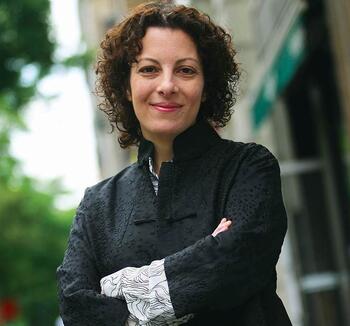
Julie Owono & Dr. Niousha Roshani Event September 28

PART OF THE FALL SEMINAR SERIES

Join us via Zoom on Tue, September 28th from 12 PM - 1 PM PST for a conversation with PDI fellows, Julie Owono and Dr Niousha Roshani, moderated by Co-Director of the Cyber Policy Center, Nathaniel Persily, as they discuss the challenges to content policy and the solutions that a multistakeholder approach has to offer. This is part of the fall seminar series organized by Stanford Cyber Policy Center’s Program on Democracy and the Internet, and the William and Flora Hewlett Foundation’s Cyber Initiative. 


REGISTER


The multistakeholder governance model is increasingly presented as a solution for addressing content governance issues online. While this inclusive and collaborative approach mirrors the foundational principle of an “open and free internet”, challenges with online content around scale and rapidity notably, call for further experimentation. 

The Content Policy & Society Lab (CPSL), a new project of the Program on Democracy and the Internet (PDI) at Stanford’s Cyber Policy Center (CPC), aims to be one of these experiments - by creating a safe space for a diverse array of stakeholders from government, the private sector, civil society, and academia to share knowledge and collaborate on solutions.

Moderator: Nathaniel Persily, Co-Director, Cyber Policy Center

Speakers: Julie Owono, PDI Fellow and Niousha Roshani, PDI Fellow


Stanford Law School Neukom Building, Room N230 Stanford, CA 94305
650-725-9875
0
James B. McClatchy Professor of Law at Stanford Law School
Senior Fellow, Freeman Spogli Institute
Professor, by courtesy, Political Science
Professor, by courtesy, Communication
headshot_3.jpg

Nathaniel Persily is the James B. McClatchy Professor of Law at Stanford Law School, with appointments in the departments of Political Science, Communication, and FSI.  Prior to joining Stanford, Professor Persily taught at Columbia and the University of Pennsylvania Law School, and as a visiting professor at Harvard, NYU, Princeton, the University of Amsterdam, and the University of Melbourne. Professor Persily’s scholarship and legal practice focus on American election law or what is sometimes called the “law of democracy,” which addresses issues such as voting rights, political parties, campaign finance, redistricting, and election administration. He has served as a special master or court-appointed expert to craft congressional or legislative districting plans for Georgia, Maryland, Connecticut, New York, North Carolina, and Pennsylvania.  He also served as the Senior Research Director for the Presidential Commission on Election Administration. In addition to dozens of articles (many of which have been cited by the Supreme Court) on the legal regulation of political parties, issues surrounding the census and redistricting process, voting rights, and campaign finance reform, Professor Persily is coauthor of the leading election law casebook, The Law of Democracy (Foundation Press, 5th ed., 2016), with Samuel Issacharoff, Pamela Karlan, and Richard Pildes. His current work, for which he has been honored as a Guggenheim Fellow, Andrew Carnegie Fellow, and a Fellow at the Center for Advanced Study in the Behavioral Sciences, examines the impact of changing technology on political communication, campaigns, and election administration.  He is codirector of the Stanford Program on Democracy and the Internet, and Social Science One, a project to make available to the world’s research community privacy-protected Facebook data to study the impact of social media on democracy.  He is also a member of the American Academy of Arts and Sciences, and a commissioner on the Kofi Annan Commission on Elections and Democracy in the Digital Age.  Along with Professor Charles Stewart III, he recently founded HealthyElections.Org (the Stanford-MIT Healthy Elections Project) which aims to support local election officials in taking the necessary steps during the COVID-19 pandemic to provide safe voting options for the 2020 election. He received a B.A. and M.A. in political science from Yale (1992); a J.D. from Stanford (1998) where he was President of the Stanford Law Review, and a Ph.D. in political science from U.C. Berkeley in 2002.   

CV
Date Label
Julie Owono
Niousha Roshani
Seminars
Authors
Oriana Skylar Mastro
News Type
Commentary
Date
Paragraphs

There are many reasons to fear an impending Chinese attack on Taiwan: Intensified Chinese aerial activity. High-profile Pentagon warnings. Rapid Chinese military modernization. President Xi Jinping’s escalating rhetoric. But despite what recent feverish discussion in foreign policy and military circles is suggesting, the U.S. withdrawal from Afghanistan isn’t one of them.

Some critics of President Biden’s decision to withdraw from Afghanistan argue the move will embolden Beijing because it telegraphs weakness — an unwillingness to stick it out and win wars that China will factor in when deciding whether to attack Taiwan, which it considers to be part of its territory.

The reality is, though, that the U.S. departure from Afghanistan will more likely give pause to Chinese war planners — not push them to use force against Taiwan.

The Chinese Communist Party’s stated goal is “national rejuvenation”: Regaining China’s standing as a great power. Chinese leaders and thinkers have studied the rise and fall of great powers past. They have long understood that containment by the United States could keep China from becoming a great power itself.

Luckily for Beijing, the Afghan war — along with Iraq and other American misadventures in the Middle East — distracted Washington for two decades. While China was building roads and ports from Beijing to Trieste, Italy, fueling its economy and expanding its geopolitical influence, the United States was pouring money into its war on terrorism. While Beijing was building thousands of acres of military bases in the South China Sea and enhancing its precision-strike capabilities, the U.S. military was fighting an insurgency and dismantling improvised explosive devices.

While Beijing was building thousands of acres of military bases in the South China Sea and enhancing its precision-strike capabilities, the U.S. military was fighting an insurgency and dismantling improvised explosive devices.
Oriana Skylar Mastro

In many ways, it was just dumb luck that Mr. Xi and his predecessors, thanks in part to the war in Afghanistan, could build national power, undermine international normsco-opt international organizations and extend their territorial control all without the United States thwarting their plans in any meaningful way.

But the end of the war in Afghanistan could bring these good times — which the Communist Party calls the “period of important strategic opportunities” — to an abrupt end. Sure, over the past 10 years American presidents tried to get back into the Asia game even as the war continued. Barack Obama asserted we would pivot to Asia back in 2011. Donald Trump’s national security team made great power competition with China its top priority.

But neither went much beyond paying lip service. The withdrawal shows Mr. Biden is truly refocusing his national security priorities — he even listed the need to “focus on shoring up America’s core strengths to meet the strategic competition with China” as one of the reasons for the drawdown.

Such a refocusing comes not a moment too soon. Chinese expansion and militarization in the South China Sea, deadly skirmishes with India, its crackdown in Hong Kong and repression in Xinjiang all point to an increasingly confident and aggressive China. In particular, Chinese military activity around Taiwan has spiked — 2020 witnessed a record number of incursions into Taiwan’s airspace. The sophistication and scale of military exercises has increased as well. These escalations come alongside recent warnings from Mr. Xi that any foreign forces daring to bully China “will have their heads bashed bloody” and efforts toward “Taiwan independence” will be met with “resolute action.”

The U.S. policy toward Taiwan is “strategic ambiguity” — there is no explicit promise to defend it from Chinese attack. In this tense environment, U.S. policymakers and experts are feverishly considering ways to make U.S. commitment to Taiwan more credible and enhance overall military deterrence against China. A recent $750 million arms sale proposal to Taiwan is part of these efforts, as is talk of inviting Taiwan to a democracy summit, which undoubtedly would provoke Beijing’s ire.

Some have argued that America’s withdrawal from Afghanistan undermines efforts to signal U.S. support for Taiwan. On the surface, it may seem as if the U.S. withdrawal would be a good thing for China’s prospects at what it calls “armed reunification.” Indeed, this is the message the nationalist Chinese newspaper The Global Times is peddling: The United States will cast Taiwan aside just as it has done with Vietnam, and now Afghanistan.

However, the American departure from Afghanistan creates security concerns in China’s own backyard that could distract it from its competition with the United States. Beijing’s strategy to protect its global interests is a combination of relying on host nation security forces and private security contractors and free-riding off other countries’ military presence. Analysts have concluded that China is less likely than the United States to rely on its military to protect its interests abroad. Beijing appears committed to avoiding making the same mistakes as Washington — namely, an overreliance on military intervention overseas to advance foreign policy objectives.

Now there will be no reliable security presence in Afghanistan and undoubtedly broader instability in a region with significant economic and commercial interests for China. Chinese leaders are also worried that conflict in Afghanistan could spill across the border into neighboring Xinjiang, where Beijing’s repressive tactics have already been the cause of much international opprobrium.

The reality is, the United States stayed much longer in Afghanistan than most expected. This upsets China’s calculus about what the United States would do in a Taiwan crisis, since conventional wisdom in Beijing had been that the painful legacy of Somalia would deter Washington from ever coming to Taipei’s aid.

But U.S. interventions in Afghanistan and Iraq have called these assumptions into question. Taiwan, with its proportionately large economy and semiconductor industry, is strategically important to the United States. U.S. power and influence in East Asia are reliant on its allies and military bases in the region and America’s broader role as the security partner of choice. If Taiwan were to fall to Chinese aggression, many countries, U.S. allies included, would see it as a sign of the arrival of a Chinese world order. By comparison, Afghanistan is less strategically important, and yet the United States stayed there for 20 years.

If Taiwan were to fall to Chinese aggression, many countries, U.S. allies included, would see it as a sign of the arrival of a Chinese world order. By comparison, Afghanistan is less strategically important, and yet the United States stayed there for 20 years.
Oriana Skylar Mastro

This does not bode well for any designs Beijing might have for Taiwan.

It’s true that China would benefit from a home-field advantage given Taiwan’s proximity, and that Beijing’s arsenal is far greater than Taiwan’s. China, too, would likely enjoy more domestic public support for any conflict than the U.S. would for yet another intervention.

But if China has any hope of winning a war across the Strait, its military would have to move fast, before the United States has time to respondChinese planners know that the longer the war, the greater the U.S. advantage. Unlike Chinese production and manufacturing centers, which can all be targeted by the United States, the American homeland is relatively safe from Chinese conventional attack. China is far more reliant on outside sources for oil and natural gas, and thus vulnerable to U.S. attempts to cut off its supply.

And the Chinese economy would suffer more: Since the war would be happening in Asia, trade would be bound to be disrupted there. The United States would need to stick it out for only a short time — not 20 years — for these factors to come into play.

A call on Thursday between Mr. Biden and Mr. Xi hinted at the stakes — the two “discussed the responsibility of both countries to ensure competition does not veer into conflict,” according to the White House.

Chinese leaders already expected a tense relationship with the Biden administration. Now they are faced with the fact that the United States might have the will and resources to push back against Chinese aggression, even if it means war.

So, while there may be other reasons to oppose the end of the war in Afghanistan, the impact on China’s Taiwan calculus is not — and should not be — one of them.

Read More

Figures of Kuomintang soldiers are seen in the foreground, with the Chinese city of Xiamen in the background, on February 04, 2021 in Lieyu, an outlying island of Kinmen that is the closest point between Taiwan and China.
Commentary

Strait of Emergency?

Debating Beijing’s Threat to Taiwan
Strait of Emergency?
An Island that lies inside Taiwan's territory is seen with the Chinese city of Xiamen in the background.
Commentary

The Taiwan Temptation

Why Beijing Might Resort to Force
The Taiwan Temptation
A case holding lunar rock and debris collected from the Moon by China's space program that is part of a display at the National Museum of China is seen on March 2, 2021 in Beijing,
Commentary

Chinese Space Ambition

On the American Foreign Policy Council Space Strategy podcast, Center Fellow Oriana Skylar Mastro discusses how China views space and why the United States must not surrender global leadership in pursuing aspirational and inspirational space goals.
Chinese Space Ambition
Hero Image
Taiwan island seen from mid-air.
Taiwan island seen from mid-air. | Yongyuan Dai/Getty Images
All News button
1
Subtitle

In a New York Times opinion piece, Center Fellow Oriana Skylar Mastro argues that the U.S. withdrawal from Afghanistan does not represent a potential catalyst for an impending Chinese attack on Taiwan.

-

Image
header for Technology and Geopolitics: EU Proposals for Regulating Rights, Security and Trade

The future of technology policy in Europe will be affected by growing nationalism and protectionism, cyber and national security threats, and great power rivalries. The Program on Democracy and the Internet invites you to a technology policy discussion led by International Policy Director, Marietje SchaakeJoin us on September 16th from 9 AM - 12 PM PST (6 PM - 9 PM CET), as we dive into conversations on EU legislative packages, digital trade rules, and cybersecurity & geopolitics. We hope to develop a more precise understanding of how the EU and its allies can collaborate to create compatible technology standards, build more resilient supply chains, and address novel opportunities and risks presented by emerging technologies.This event is organized by the Program on Democracy and the Internet (part of the Cyber Policy Center and the Center on Philanthropy and Civil Society) and co-sponsored by the Institute for Human-Centered Artificial Intelligence.

Moderators: 


Speakers:


Seminars
-

About the Seminar: Africa arguably poses some of the most challenging conditions for democratic emergence and survival.  According to our existing theories, this is due to a number of economic, social, geographic factors, and institutional legacies of predatory neo-colonial states. Yet three decades of democratic endurance in significant, key cases suggest that the continent has much to teach us about how democracies maintain despite extremely challenging conditions. And the wave of global democratic backsliding has particular contours across the continent that illuminate how democratic institutions are utilized for autocratization, and with what constraints. This research project explores two most-different cases – South Africa and Benin – with highly diverse challenges and yet strikingly similar pathways to establish and maintain democracy against all odds, and the contemporary challenges that are pushing both to autocratic concessions.


Image
rachel_beatty_riedl.jpg
About the Speaker: Rachel Beatty Riedl (PhD Princeton University) is the John S. Knight Professor of International Studies, Director of the Einaudi Center for International Studies, and professor in the Department of Government at Cornell University. Her research interests include institutional development in new democracies, local governance and decentralization policy, authoritarian regime legacies, and religion and politics, with a regional focus in Africa. Previously, she was an Associate Professor in the Department of Political Science, Faculty Fellow in the Institute for Policy Research, and Director of the Program of African Studies at Northwestern University. Riedl is co-host of the podcast Ufahamu Africa, featuring weekly episodes of news highlights and interviews about life and politics on the African continent.

Online, via Zoom

Rachel Beatty Riedl Cornell University, John S Knight Professor of International Studies
Seminars
-

About the Seminar: US response to 9/11 included a major focus on peace building through democracy promotion. The seminar examines the rationale and milestones for American engagement in distant lands. How will such an approach work in future foreign policy implementation is also discussed with some conclusions about future engagement.


For Fall Quarter 2021, we will be hosting a hybrid weekly Research Seminar Series. All events will be open to the public online via Zoom, and a limited-capacity in-person element for Stanford affiliates may be added in accordance with the County's health and safety guidelines.


Image
Shirin Tahir-Kheli
About the Speaker: Dr. Shirin Tahir-Kheli is a Senior Fellow and Founding Director of the South Asia Program at the Foreign Policy Institute of the Johns Hopkins University School of Advanced International Studies (SAIS). In 2011, Tahir-Kheli was named by Newsweek as one of the "150 Women Who Shake the World." She specializes in South Asia, nuclear non-proliferation, United Nations and U.S. foreign policy, and women's empowerment.

She is the author and editor of several monographs, including Pakistan Today: The Case for U.S.-Pakistan Relations (with Shahid Javed Burki, Foreign Policy Institute, 2017); Manipulating Religion for Political Gain in Pakistan: Consequences for the U.S. and the Region (Foreign Policy Institute, 2015); and India, Pakistan and the United States: Breaking with the Past (Council on Foreign Relations, 1997).

Democracy Promotion in U.S. Foreign Policy: Looking Back, Looking Forward
Download pdf

Online, via Zoom

Shirin Tahir-Kheli Ambassador & Senior Fellow, Foreign Policy Institute, Johns Hopkins School of Advanced International Studies, Washington DC Organization
Seminars
-

About the Seminar: How are politicians selected in the countries of Middle East and North Africa where electoral politics is to a large extent dominated by secular-Islamist competition? By bringing together a novel candidate survey, a contemporaneous household survey, interviews and a conjoint experiment with party officials, this paper describes the political selection processes around the first democratic local elections in Tunisia. It shows that there is a divergence between the main secular party and the main Islamist party: The secular party suffers from a relatively negative political selection, because its candidates are less competent even though the secular voter base has a larger share of citizens with higher educational attainment. Party-related factors, i.e. what the party elites look for when selecting their candidates, are likely to explain a large share of this divergence: Secular party officials prioritize connectedness and loyalty over competence.


About the Speaker: Aytug Sasmaz is a political scientist working on political parties, social policy and democratic decline, primarily in the Middle East and North Africa region. He recently received his PhD from Harvard.

Image
Aytug Sasmaz

Online, via Zoom

1
CDDRL Postdoctoral Scholar, 2021-22
aytug.jpg

I am a political scientist (PhD degree expected in July 2021 from Harvard) working on political parties, social welfare policies and local governance, primarily in the Middle East and North Africa. My dissertation project focuses on secular parties in the region and explores why they could not form a robust electoral alternative to the Islamist parties in the post-uprisings period. In other projects, I explore voters' responses to executive aggrandizement (focusing on Turkey), and social welfare in the context of ethnic and organizational diversity (focusing on Lebanon). Prior to PhD, I worked as an education policy analyst in Turkey, managing several research projects in collaboration with the Ministry of Education, World Bank and UNICEF. I hold a BA degree in Political Science from Boğaziçi, and Master's degrees from the LSE and Brown. 

CDDRL Postdoctoral Fellow
Seminars
Authors
News Type
Q&As
Date
Paragraphs

This Q&A with Allen S. Weiner was originally published on the Stanford Law School website.

As the Taliban’s forces closed in on Kabul on Sunday, August 15, 2021, the Afghan President Ashraf Ghani left his country, the acting U.S. ambassador was evacuated, the American flag on the embassy in the country’s capital lowered—and the Biden administration’s plans for an orderly withdrawal of troops, diplomats, and Afghan aids and translators by the anniversary of 9/11 dashed as a scramble for the door becomes more chaotic. After twenty years, 2 trillion dollars, and the lives of almost 2,500 American personnel lost, President Biden said it was time to let the Afghan government and military stand on its own. Here, Stanford Law national security law expert Allen Weiner, who is a research affiliate at FSI’s Center for Democracy, Development and the Rule of Law, and the Center for International Security and Cooperation, discusses the U.S. mission to Afghanistan, its withdrawal, and potential consequences.

What was the American/NATO objective when we invaded Afghanistan almost twenty years ago?

The immediate United States objective at the time of the 2001 invasion was to destroy Al Qaeda’s base of operations in Afghanistan and to kill or capture senior Al Qaeda leaders there.  As those of us who are old enough to remember will recall, the invasion (“Operation Enduring Freedom”) was the U.S.-led response to the 9/11 attacks against World Trade Center twin towers and the Pentagon that were carried out by Al Qaeda. Because the Taliban regime in Afghanistan had a symbiotic relationship with—and provided a safe haven to—Al Qaeda on Afghanistan’s territory, the U.S. and its NATO allies also sought to drive the Taliban from power. At the time, the Taliban was fighting a civil war in Afghanistan and by October 2001 had achieved effective control over most of the country. President Bush and others quickly began to emphasize an additional objective for overthrowing the Taliban— to liberate the Afghan people from the regime’s repressive practices. We sought to promote basic human rights and to end the Taliban’s oppression of women.

Were those objectives met?

The U.S. and its NATO allies largely met those initial goals. Al Qaeda’s training camps in Afghanistan were destroyed, many of its leaders were killed and captured (although some, including Osama bin Laden, managed to escape at least initially), and its ability to plan, finance, and execute major global terrorist operations was severely diminished. U.S. and NATO forces drove the Taliban from power, and after a transitional period, a new government led by Hamid Karzai was established. Women and girls resumed participation in public life in Afghanistan, including education.

But those successes were fleeting?

As we know, the successes did not last. Although Al Qaeda never resumed significant operations in Afghanistan, the organization metastasized, and lethal variants of the organization arose in Yemen, Iraq and Syria, and the Maghreb, among other places. Other terrorist groups, such as the Islamic State and al Shabaab, either grew out of or have affiliations of varying degrees of intensity with Al Qaeda. We have also seen attacks carried out by homegrown terrorist organizations with only loose affiliations to Al Qaeda, sometimes only ideological affinities. So, while Operation Enduring Freedom significantly disrupted terrorist operations originating from Afghanistan, it cannot be said to have eliminated the threat of transnational terrorism.

And the Taliban continued to be a simmering problem in Afghanistan, didn’t it?

The goal of eradicating the Taliban, obviously, also was unmet. Although then Secretary of Defense Donald Rumsfeld declared an end to major combat operations against Al Qaeda and the Taliban in May 2003, a revitalized Taliban renewed an intense civil war in the summer of  2006. That civil war against the Afghanistan government—which appears now to have been won by the Taliban—continued with varying degrees of intensity until the past few days. And if another of the goals of the invasion was to improve the protection of human rights in Afghanistan, we must recognize that civilians suffered terribly during the civil war.

Are there any (hopefully) enduring successes from the twenty-year investment by the U.S. and NATO?

Afghanistan did make significant progress in terms of economic development and the realization of at least some civil and political rights. Per capita GDP rose dramatically in the decades after the U.S. invasion. The status of women and girls improved along many dimensions, including health, life expectancy, education levels, and participation in government institutions. The Taliban’s victory clearly imperils these gains.

The Trump Administration negotiated an agreement with Taliban in 2020 providing for the withdrawal of U.S. Forces from Afghanistan by May 2021, as part of which the Taliban promised not to deliberatively attack U.S. troops during the withdrawal period.  Since then, the Taliban has been steadily gaining control over provinces in the county, and civilian casualties have been rising. Was it pure fantasy that the US was maintaining the peace?

The Trump Administration’s February 2020 agreement with Taliban, in which the U.S. promised to withdraw its forces from Afghanistan in a little over a year, even though the Taliban did not agree to even a ceasefire, much less reach any political agreements with the government about ending the civil war, was the beginning of the end. It clearly signaled to both the Taliban and the government that the U.S. was now concerned only with the security of its own forces, and that the Afghan government was on its own. Given that the Taliban was making progress in gaining territory, at least in the countryside, even with U.S. troops present, many analysts—including the U.S. intelligence community—forecast the eventual overthrow of the Afghan government. It is only the shocking speed with which that happened that is a real surprise.

The fall of the Afghan government has taken many, including apparently some in the Biden administration, by surprise. Why did the collapse of the Afghan military happen so swiftly?  And what role did the Afghan police force and corruption play?

Many commentators who have been critical of the U.S. effort to build up the Afghan military have long expressed doubts about the effectiveness of the Afghanistan National Defense and Security Forces (ANDSF), and many analysts predicted that the Taliban would ultimately prevail against the government after the U.S. and its NATO allies withdrew from Afghanistan. That said, I don’t think anyone predicted it would happen as swiftly as it did.

Multiple factors have been cited to explain how the Taliban—a force estimated to comprise some 75,000 fighters—defeated the 300,000-member strong ANDSF. First, despite the seeming superiority of the government forces, conditions for ANDSF soldiers were quite abysmal. Many reportedly went months without being paid. They lacked ammunition and even food. There are reports of incompetent leadership within the armed forces, leaving Afghan soldiers exposed in the middle of pitch battles, without reinforcements.

A second factor is the pervasive and corrosive corruption among Afghan government actors.  This helps explain why—despite the U.S. infusion of billions of dollars in military assistance— Afghan soldiers went without pay and lacked adequate ammunition.  It also explains why in some cases, after Afghan forces fighting alongside U.S. forces succeeded in clearing territory of Taliban insurgents, the Afghan government would fail to hold it. The notoriously corrupt and unprofessional Afghanistan police forces—who were in charge of security after territory had been cleared of Taliban fighters by the ANDSF—reportedly engaged in predatory practices targeting the local community or could be bought off by the insurgency to cede ground back.

Third, some critics of the U.S. effort to modernize the Afghan army have long argued that the ANDSF lacked resolve to aggressively engage the Taliban insurgency in the absence of active support from U.S. soldiers. Although there are many stories of Afghan soldiers fighting fiercely, there are anecdotal accounts of Afghan armed forces engaging in “mini non-aggression deals” with Taliban fighters in their area of responsibility in an effort to avoid armed engagement.

Fourth, the lack of motivation of Afghan armed forces was exacerbated in recent years by the unpopularity and perceived fecklessness of the Afghan government led by President Ashraf Ghani. Re-elected in 2019 after an election with sharply disputed results, in which voter turnout was less than 20 percent, the Ghani government was widely seen as ineffective in addressing corruption, effectively managing the country, or confronting the growing security threat posed by the Taliban. It became a common refrain among Afghan soldiers that the Ghani government was not one worth fighting for.

Fifth, it appears that in at least some provinces in Afghanistan, the Taliban, in essence, offered government forces negotiated settlements to cede control of territory. In some cases, this involved offering payments to government soldiers to switch sides—a particularly attractive offer for soldiers who had not been paid in months. It is likely that the Taliban offered broader commitments, e.g., not to engage in retribution against government soldiers who abandoned the fight, although I have not yet seen reports of such deals.

Sixth, there a seasonal calendar to armed conflict in Afghanistan, and the Taliban has typically engaged in its major military operations during the spring and summer.  Delaying the U.S. withdrawal by six months, so that U.S. forces did not leave during the height of what is known in Afghanistan as “fighting season,” might have given the ANDSF more time to prepare to defend Afghanistan’s cities. Although given how swiftly Afghan government forces were swept aside, this now seems doubtful to me.

Finally, from an operational standpoint, the U.S. has invested billions of dollars in Afghanistan to attempt to build up a military that functions in ways that resemble how a NATO army operates, with air power and advanced weaponry. Such a military depends on extremely complex behind-the-scenes logistics arrangements. In Afghanistan, these logistics systems depended heavily on U.S. contractors, who also began withdrawing from the country after President Biden announced the U.S. withdrawal. Many of the aircraft in Afghanistan’s air force, for instance, were grounded because they lacked parts needed for repairs or routine servicing. One of the lessons of the defeat of the ANDSF is that building a foreign country’s military also requires developing indigenous logistics capacity.

Troops had been drawn down to about 3,000 and negotiations that excluded the Afghan gov’t were conducted with the Taliban during the Trump administration. Could Biden, realistically, have rewound the clock–bringing more troops back? Was Biden pushed into a tough corner?

Although the withdrawal agreement the Trump Administration concluded with the Taliban in February 2020 may not have initiated the death spiral for the Afghanistan government and military, it certainly catalyzed it, as I noted above. It did put the Biden Administration in a tough position; the only option would have been to renege on the agreement, leave U.S. troops in Afghanistan, and to seek to renegotiate the agreement. That said, although that may have been a tough position, it was not an impossible one, as evidenced by the fact that the Biden Administration unilaterally changed the agreed upon date by which U.S. forces would withdraw from Afghanistan from May to August.

I’m not a military strategist, so I can’t say whether maintaining a force of 3,000 U.S. troops in Afghanistan would have changed the military situation on the ground. But I think if the U.S. had said that it would not withdraw the U.S. military presence until there was a ceasefire and the Taliban and the Afghan government have negotiated a power sharing agreement/end to the civil war, that might have changed the Taliban’s political assessment about how to proceed. I stress that this only “might” have changed the Taliban’s thinking. The fact that the Taliban has been fighting for twenty years suggests that the group was very determined to regain control of Afghanistan and re-establish its vision of life for the Afghan people.

I understand that Russia and other countries have negotiated agreements to ensure the safety of their embassies and diplomatic staff so that they can continue operations in Kabul. Have the Americans done the same? If not, how significant will that be for the future safety of the U.S and the threat of terrorism? Will we have “eyes on the ground” and intelligence sources?

The United States is currently withdrawing all of its diplomatic personnel from Afghanistan and will presumably once again shutter its embassy in Kabul. The U.S. will face a difficult question about whether to recognize the new Taliban regime that will be installed in Afghanistan, and if so, whether to resume diplomatic relations and re-open its embassy. If the Taliban regime pursues the policies that characterized its period of rule in the late 1990s, particularly the severe repression of women and girls, I doubt the U.S. will re-establish relations. Even if the U.S. did re-establish diplomatic relations, it is inconceivable that the Taliban would permit the United States to maintain the large intelligence and security presence we have had in Afghanistan over the past two decades. So, we will not have the ability gather intelligence on the ground or to conduct military operations against any terrorist threats that emerge in Afghanistan.

The Taliban has pledged that it will not allow Afghanistan’s territory to be used by terrorist groups that seek to conduct hostile operations against foreign countries. Although the Taliban learned in 2001 about the potential costs to it of harboring such groups on Afghanistan’s territory—namely, being overthrown by the U.S. and its NATO allies—there are obviously reasons to question the Taliban’s promise.

Is there anything Biden can do now to minimize the damage?

The Biden administration does not have much leverage at this point. The administration will presumably signal to the Taliban that it will closely monitor its conduct with respect to preventing its territory from being used by terrorist groups and its performance on human rights issues, including the treatment of women and girls. Should the Taliban perform poorly on these issues, the U.S. could try to secure sanctions against the Taliban regime through the Security Council; after all, the Council had imposed sanctions on the Taliban in the 1990s in response to its providing a safe haven to Osama bin Laden and its violation of human rights, particularly discrimination against women and girls. Today, however, it is unclear whether Russia and China, which are likely to seek stable relations with the Taliban government, would support such sanctions. That means the U.S. would probably be limited to unilateral sanctions as a way of signaling disapproval of, and seeking to change the behavior of, a prospective Taliban government.

Allen S. Weiner

Allen S. Weiner

Affiliate at CDDRL and CISAC
FULL PROFILE

Read More

Helicopter crew members in Afghanistan.
Commentary

Biden's Afghanistan Decision

President Biden has inherited America’s longest war—the war in Afghanistan—at a critical moment. Under the Trump administration’s deal with the Taliban, the US government is supposed to withdraw forces from the country by May 2021. But the Taliban hasn’t taken the steps required in the deal against international terrorists, like Al Qaeda.
Biden's Afghanistan Decision
picture of man with American flag in the background
Q&As

There's no reason' for Trump's move to pull troops from Afghanistan

Brett McGurk, former presidential envoy for the global coalition to defeat ISIS, joins Andrea Mitchell to discuss the last minute foreign policy moves, including the decision to draw down the number of troops in Afghanistan, that President Trump is saddling the incoming Biden administration with.
There's no reason' for Trump's move to pull troops from Afghanistan
chayes
News

Sarah Chayes discusses life in Taliban-resurgent Afghanistan

Sarah Chayes discusses life in Taliban-resurgent Afghanistan
Hero Image
Displaced Afghans are seen at a makeshift IDP camp in Kabul.
Getty Images
All News button
1
Subtitle

National security law expert Allen Weiner, a research affiliate at CDDRL and CISAC, discusses the U.S. mission to Afghanistan, its withdrawal and consequences moving forward.

News Type
News
Date
Paragraphs

The Program on Arab Reform and Democracy (ARD) at CDDRL is pleased to announce the launch of an interview series titled “Conversations on Arab Reform and Democracy” (CARDs). CARDs is an outgrowth of ARD’s efforts to promote critical discussions around questions of political change, and social and economic rights in the Arab World. The series provides a forum for scholars to address timely, salient issues in public debates based on their recent publications and long-term research engagement.

Hosted by ARD Research Scholar and Associate Director Hesham Sallam, the launching episode brings to focus ongoing political developments in Tunisia and features Daniel Brumberg, associate-professor of Government at Georgetown University where he also serves as the director of the MA Program in Democracy and Governance. The conversation covers the recent power grab by President Kais Saied, its implications for various political actors in the country, the political legacies that are shaping the ongoing political conflicts, and more. Click below to watch the first episode.

Follow CARDs on Social Media

Hero Image
CARDs screen
All News button
1
Subtitle

The Program on Arab Reform and Democracy (ARD) at CDDRL is pleased to announce the launch of an interview series titled “Conversations on Arab Reform and Democracy” (CARDs).

All Publications button
1
Publication Type
Conference Memos
Publication Date
Subtitle
The Project on Middle East Political Science partnered with Stanford University’s Center for Democracy, Development and the Rule of Law and its Global Digital Policy Incubator for an innovative two week online seminar to explore the issues surrounding digital activism and authoritarianism. This workshop was built upon more than a decade of our collaboration on issues related to the internet and politics in the Middle East, beginning in 2011 with a series of workshops in the “Blogs and Bullets” project supported by the United States Institute for Peace and the PeaceTech Lab. This new collaboration brought together more than a dozen scholars and practitioners with deep experience in digital policy and activism, some focused on the Middle East and others offering a global and comparative perspective. POMEPS STUDIES 43 collects essays from that workshop, shaped by two weeks of public and private discussion.
Authors
Larry Diamond
Eileen Donahoe
Shelby Grossman
Subscribe to Middle East and North Africa