-

Join the Visiting Fellows in Israel Studies program at Freeman Spogli Institute for International Studies and Hamid and Christina Moghadam Program in Iranian Studies for a panel discussion with counterterrorism expert Matthew Levitt on regional security developments, current challenges, and old rivalries in the Middle East.

Matthew Levitt

Dr. Matthew Levitt

Director of the Jeanette and Eli Reinhard Program on Counterterrorism and Intelligence at the Washington Institute for Near East Policy. From 2005 to early 2007, Dr. Matthew Levitt served as deputy assistant secretary for intelligence and analysis at the U.S. Department of the Treasury. In that capacity, he served both as a senior official within the department's terrorism and financial intelligence branch and as deputy chief of the Office of Intelligence and Analysis, one of sixteen U.S. intelligence agencies coordinated under the Office of the Director of National Intelligence. During his tenure at Treasury, Dr. Levitt played a central role in efforts to protect the U.S. financial system from abuse and to deny terrorists, weapons proliferators, and other rogue actors the ability to finance threats to U.S. national security. In 2008-2009, he served as a State Department counterterrorism advisor to the special envoy for Middle East regional security (SEMERS), General James L. Jones.
Full profile
Amichai Magen
Amichai Magen
Abbas Milani
Abbas Milani


Encina Commons 

Hamid Moghadam Conference Room 119 

615 Crothers Way, Stanford, CA 94305

Limited seating is available 


Matthew Levitt
Panel Discussions
Authors
News Type
News
Date
Paragraphs

An environmental catastrophe is brewing in the Gaza Strip – large swaths of Gaza’s infrastructure have been destroyed, agricultural lands have been ruined, air pollution and sewage risks are escalating, and water resources are contaminated, panelists said on a webinar hosted by the Visiting Fellows in Israel Studies,  a program at the Freeman Spogli Institute for International Studies, on April 8.

Larry Diamond, the Mosbacher Senior Fellow in Global Democracy at the Freeman Spogli Institute for International Studies, and Professor Alon Tal, a Visiting Fellow in Israel Studies, moderated the event, “Environmental Lessons and Implications of the Gaza War.”

Panelists included Galit Cohen, Dr. Tareq Abu Hamed, Dorit Banet, and Victor Weiss. Since Hamas’ terror attacks on Israel on Oct. 7, 2023, and Israel’s military response into Gaza afterwards, the environmental ramifications from the war have become perilous, the panelists noted. Given possible long-lasting ecological implications, the United Nations has already started a comprehensive assessment of the impacts from the conflict in Gaza – a slow-going process as fighting continues.


We have to build a new relationship and partnerships with the other regional countries to promote resilience.
Victor Weiss
Director of Sustainability for the Israel National Security Council


Estimated $18 Billion Reconstruction 


To begin with, projected reconstruction costs to rebuild Gaza currently total $18 billion, said Galit Cohen, director of the Program on Climate Change at the Israel Institute for National Security. She has experience identifying and analyzing risks and opportunities for Israel’s national security in the field of climate change.

Water, sewage, waste, food and air pollution risks abound in Gaza, which is one of the most densely populated areas in the world, Cohen said. At least 57 percent of water, sanitation and health facilities in Gaza have been destroyed so far, including desalinization plants, and only 3-7 liters of water is typically available per day for each person, which is well below the recommended minimum of 50-100 liters.

“In the current situation in regard to the environmental issues, it's about the water security and about the sewage, sanitation and construction waste – all the list of those issues that need to be mitigated and also dealt with,” Cohen said. For example, “there is no active wastewater treatment facility now in Gaza,” and the many unclaimed dead bodies deep in the rubble pose environmental risks as well.

As for solutions, she said, “Trying to build the institutions and the government that can undertake the responsibility of the civil society there” is the first step to working together on a rebuild of Gaza. The goal should be to create a new coalition with the U.S. and countries such as Egypt, Jordan, UAE, and Saudi Arabia (and others) that can undertake a reconstruction of Gaza so Palestinians can live there without enduring an environmental catastrophe.

“This is the only way we can survive here – Israel and all the rest,” Cohen said.


In such areas, this needs to be totally agreed upon with totally new regulation in Israel.
Dorit Banet
Co-founder of the Eilat-Eilot Renewable Energy Initiative


Coalition Building


Dr. Tareq Abu Hamed, director of the Arava Institute for Environmental Studies, described the sensitive environmental interdependence of countries in the region.

“The streams and rivers originating in Israel and the West Bank originate in Jordan, and in Israel the vast majority of the aquifers of underground water in our region is shared between Israel and its neighbors – between Jordan and its neighbors, and it’s shared between Palestine and its neighbors. That means if there’s an environmental challenge or an environmental issue with the water that we have, one country alone cannot deal with it. Regional cooperation is a must,” he said.

Dr. Hamed has served as the Israeli Ministry of Science’s Deputy Chief Scientist, and later the Acting Chief Scientist, and was the highest ranking Palestinian in the Israeli government. About his current position at the Arava Institute, he said, “We use the environment as a tool. We use science as [a] diplomacy tool to bring people together. We use science to build bridges, to build trust, and to build understanding.”

The regional effects in climate change could be exacerbated by the war in Gaza, he said. “The region that we live in is a hotspot when it comes to climate change, the heat waves, and the sea level rise.”

The warming of the Eastern Mediterranean is increasing, and it is already much higher than any other place in the world, he said. On top of this, climate change often produces migration to other areas, creating possible instability effects for existing populations in the new areas, and statistics show people already have been moving out of Gaza and other countries in the immediate region, likely due to the worsening climate, and in addition now, to the conflict.

He said the intense bombing of Gaza has significantly damaged farmlands, infrastructure, including apartment buildings, the roads, water treatment plants, wastewater treatment plants and water wells. “What happened on Oct. 7 happened because of the lack of knowledge of the other side.” 

He added, “This is a great chance for us to rethink what happened and to rebuild a better future for all of us.”


We use the environment as a tool. We use science as diplomacy to bring people together. We use science to build bridges, to build trust, and to build understanding.
Tareq Abu Hamed
Director of the Arava Institute for Environmental Studies


Renewable Energy Concerns – or Opportunity?


The war in Gaza seriously affects the prospect of green or renewable energy in the immediate conflict area, said Dorit Banet, who co-founded the Eilat-Eilot Renewable Energy Initiative and has been Israel’s leading government official in the area of renewable energy for two decades.

More than 100,000 Israelis were estimated to be displaced from their homes in southern Israel after Oct. 7. Banet has noted in prior media stories that some in Israel are eying a push to “build back better” by transforming the region into a more sustainable area. Israel has committed to reaching 30% renewable energy by 2030, though that may be difficult.

Banet said at least another 2 gigawatts of solar renewable energy could be immediately produced in one particular Israeli area based on the existing infrastructure – and eventually as much as another 8.5 gigawatts of solar energy. 

This would offer people in the area much more energy resilience, she said. “In such areas, this needs to be totally agreed upon with totally new regulation in Israel.”


This is the only way we can survive here – Israel and all the rest.
Galit Cohen
Director of the Program on Climate Change at the Israel Institute for National Security


Promoting Resilience


Victor Weiss, director of sustainability for the Israel National Security Council, said the ongoing war could have a negative impact on the global economy, the availability of budget, and the willingness of countries to allocate resources to climate issues.   

“A regional war is expected to affect fuel markets and lead to damaged supply chains” and the general instability of markets, said Weiss, who was a senior military officer and founder of the Israel Defense Force’s Environmental Unit.

“We have to build a new relationship and partnerships with the other regional countries to promote resilience,” he added.

Weiss said that Israel’s National Security Council recently defined climate issues as a strategic threat to that country’s national security. “The climate chapter was written in the National Security Council Risk Assessment and the main threats were mapped. We are working to define the threats, to formulate the national response to those threats,” he said.

An opportunity exists for Israel, Gaza and every population affected by this conflict to “go forward on the hope of an optimistic future to our region,” he said.


‘Powerful, Informative’


In closing, Prof. Diamond described the discussion as “very powerful, informative and in the end, also moving” for the audience. “There’s going to be a staggering challenge of reconstruction when this war is over, and hopefully we can get started on it as soon as possible.”

Alon Tal added, “We’ve only begun this discussion about the reconstruction. Let’s hope that very quickly we can end the destruction, the death and the suffering, and move forward to a time of renewal.”
 

The full webinar of "Environmental Lessons and Implications of the Gaza War" is available to view below.

Read More

Alon Tal joins the Freeman Spogli Institute for International Studeis as a Visiting Fellow in Israel Studies
News

Alon Tal Joins the Visiting Fellows in Israel Studies Program at FSI

Professor Tal’s expertise in sustainability and public policy will offer students valuable insight into the intersection of climate change issues and politics in the Middle East.
Alon Tal Joins the Visiting Fellows in Israel Studies Program at FSI
Picture of the the Jerusalem Light Rail walking up Jaffa Street. Modern face of Jerusalem, Israel.
News

New Continuing Studies Course on Modern Israel with Larry Diamond and Amichai Magen

Open for enrollment now through Stanford Continuing Studies, "Modern Israel: Insights and Analysis from Stanford Scholars and Guests" will run online for ten weeks on Wednesdays, from April 3 through June 5.
New Continuing Studies Course on Modern Israel with Larry Diamond and Amichai Magen
Mohammad Darawshe (bottom), an expert on Jewish-Arab relations inside Israel speaks to the Stanford community via Zoom on on the impact of the Oct. 7 Hamas attack on Israeli Arabs alongside Amichai Magen (top left) and political scientist Larry Diamond (top right).
News

How an Israeli Arab Scholar Finds ‘Pieces of Peace’

In a webinar for the Stanford community, an expert on Jewish-Arab relations in Israel shared what he and other scholars have found works – and doesn’t – in advancing peace between the two communities.
How an Israeli Arab Scholar Finds ‘Pieces of Peace’
Hero Image
[Left to Right] Dorit Banet, Galit Cohen, Tareq Abu Hamed, Victor Weiss
Dorit Banet, Galit Cohen, Tareq Abu Hamed, and Victor Weiss joined the Visiting Fellows in Israel Studies Program at the Freeman Spogli Institute for International Studies to discuss the environmental consequences of the ongoing war in Gaza.
All News button
1
Subtitle

Environmental experts examined the challenge of sustainable restoration and preserving environmental quality for the future of Gazans and residents of the region in the wake of the Israel-Hamas War.

-
Alexandra Hudson book talk

Author Alexandra Hudson, daughter of the "Manners Lady," was raised to respect others. But as she grew up, she discovered a difference between politeness―a superficial appearance of good manners―and true civility. In a timely new book, Hudson sheds light on how civility can help bridge our political divide. 

On May 14, the Center on Democracy, Development and the Rule of Law is pleased to host Hudson for a conversation about her latest book, The Soul of Civility: Timeless Principles to Heal Society and Ourselves (St. Martin's Press, 2023), with Francis Fukuyama, the Olivier Nomellini Senior Fellow at the Freeman Spogli Institute for International Studies (FSI).

ABOUT THE BOOK

From classical philosophers like Epictetus, to great twentieth-century thinkers like Martin Luther King Jr., to her own experience working in the federal government during one of the most politically fraught eras in our nation's history, Hudson examines how civility―a respect for the personhood and dignity of others―transcends political disagreements. Respecting someone means valuing them enough to tell them when you think they are wrong.

It’s easy to look at the divided state of the world and blame our leaders, the media, or our education system. Instead, we should focus on what we can control: ourselves. The Soul of Civility empowers readers to live tolerantly with others despite deep differences, and to rigorously protest wrongs and debate issues rather than silencing disagreements. A robust public discourse is essential to a truly civil society, and respecting others means telling hard truths. If enough of us decide to change ourselves, we might be able to change the world we live in, too.

Provocative, personal, and acutely relevant, The Soul of Civility is an essential book for our era.

ABOUT THE SPEAKERS

Alexandra Hudson

Alexandra Hudson

Author

Alexandra O. Hudson is a writer, popular speaker, and the founder of Civic Renaissance, a publication and intellectual community dedicated to beauty, goodness, and truth. She was named the 2020 Novak Journalism Fellow, and contributes to Fox News, CBS News, The Wall Street Journal, USA Today, TIME Magazine, POLITICO Magazine, and Newsweek. She earned a master’s degree in public policy at the London School of Economics as a Rotary Scholar, and is an adjunct professor at the Indiana University Lilly School of Philanthropy. She is also the creator of a series for The Teaching Company called Storytelling and The Human Condition. Her first book, The Soul of Civility: Timeless Principles to Heal Society and Ourselves, was released by St. Martin’s Press in October 2023. She lives in Indianapolis, IN, with her husband and children.


Francis Fukuyama 2022

Francis Fukuyama

Olivier Nomellini Senior Fellow, FSI

Francis Fukuyama is Olivier Nomellini Senior Fellow at Stanford University's Freeman Spogli Institute for International Studies (FSI), and a faculty member of FSI's Center on Democracy, Development and the Rule of Law (CDDRL). He is also Director of Stanford's Masters in International Policy Program, and a professor (by courtesy) of Political Science.  Dr. Fukuyama has written widely on issues in development and international politics. His 1992 book, The End of History and the Last Man, has appeared in over twenty foreign editions. His most recent book, Liberalism and Its Discontents, was published in the spring of 2022.

Francis Fukuyama
Francis Fukuyama

In-person: William J. Perry Conference Room (Encina Hall, 2nd floor, 616 Jane Stanford Way, Stanford)
Online: Via Zoom

Alexandra Hudson
Seminars
Date Label
-

Encina Commons, 123
615 Crothers Way, Stanford, CA 94305

Marta Tawil Kuri
-

We have reached capacity for this event and registration is closed.


Members of the public are invited to tune in via Zoom.

Salam Fayyad event

Please join us for a conversation with Dr. Salam Fayyad, former Prime Minister of the Palestinian Authority. The discussion will cover the quest for Palestinian statehood and governance reform, the ongoing war in Gaza and its ramifications, and the prospects for peace and stability in the Middle East.

Dr. Fayyad will be in conversation with Larry Diamond, Mosbacher Senior Fellow on Global Democracy at the Freeman Spogli Institute for International Studies, and Hesham Sallam, Senior Research Scholar and Associate Director for Research at CDDRL. Together, they lead CDDRL's Program on Arab Reform and Democracy. Kathryn Stoner, Mosbacher Director of the Center on Democracy, Development and the Rule of Law, will provide introductory remarks.

This is an in-person event. Only those with an active Stanford ID and access to the Bechtel Conference Center in Encina Hall may attend in person. All attendees will need to show their Stanford ID at check-in.

Speakers

Salam Fayyad

Salam Fayyad

Former Prime Minister, Palestinian Authority

Salam Fayyad is a Visiting Senior Scholar and Daniella Lipper Coules '95 Distinguished Visitor in Foreign Affairs at the Princeton School of Public Affairs. An economist by training, he served as Minister of Finance for the Palestinian Authority from 2002-2005 and as Prime Minister from 2007 to 2013. During his tenure as finance minister and prime minister, he introduced a number of economic and governance reforms. Shortly after stepping down as Prime Minister in June 2013, he founded "Future for Palestine," a nonprofit development foundation. Prior to that, he served with the International Monetary Fund from 1987 to 2001, including as the IMF resident representative in the West Bank and Gaza Strip from 1996 to 2001. Currently, he is also a Distinguished Statesman with the Atlantic Council’s Brent Scowcroft Center on International Security and a Distinguished Fellow at the Brookings Institution.


Professor Larry Diamond

Larry Diamond

Mosbacher Senior Fellow in Global Democracy, Freeman Spogli Insitute for International Studies
Full Bio

Larry Diamond is the William L. Clayton Senior Fellow at the Hoover Institution, the Mosbacher Senior Fellow in Global Democracy at the Freeman Spogli Institute for International Studies (FSI), and a Bass University Fellow in Undergraduate Education at Stanford University. He is also professor by courtesy of Political Science and Sociology at Stanford. He leads the Hoover Institution’s programs on China’s Global Sharp Power and on Taiwan in the Indo-Pacific Region. At FSI, he leads the Program on Arab Reform and Democracy, based at the Center on Democracy, Development and the Rule of Law, which he directed for more than six years. He also co-leads with (Eileen Donahoe) the Global Digital Policy Incubator based at FSI’s Cyber Policy Center. He is the founding coeditor of the Journal of Democracy and also serves as senior consultant at the International Forum for Democratic Studies of the National Endowment for Democracy. His research focuses on democratic trends and conditions around the world and on policies and reforms to defend and advance democracy. His latest edited book (with Orville Schell), China's Influence and American Interests (Hoover Press, 2019), urges a posture of constructive vigilance toward China’s global projection of “sharp power,” which it sees as a rising threat to democratic norms and institutions. He offers a massive open online course (MOOC) on Comparative Democratic Development through the edX platform and is now writing a textbook to accompany it.


Hesham Sallam

Hesham Sallam

Senior Research Scholar, CDDRL
Associate Director, Program on Arab Reform and Democracy
Full Bio

Hesham Sallam is a Senior Research Scholar at CDDRL, where he serves as Associate Director for Research. He is also Associate Director of the Program on Arab Reform and Democracy. Sallam is co-editor of Jadaliyya ezine and a former program specialist at the U.S. Institute of Peace. His research focuses on political and social development in the Arab World. Sallam’s research has previously received the support of the Social Science Research Council and the U.S. Institute of Peace. He is author of Classless Politics: Islamist Movements, the Left, and Authoritarian Legacies in Egypt (Columbia University Press, 2022), co-editor of Struggles for Political Change in the Arab World (University of Michigan Press, 2022), and editor of Egypt's Parliamentary Elections 2011-2012: A Critical Guide to a Changing Political Arena (Tadween Publishing, 2013). Sallam received a Ph.D. in Government (2015) and an M.A. in Arab Studies (2006) from Georgetown University, and a B.A. in Political Science from the University of Pittsburgh (2003).


Kathryn Stoner

Kathryn Stoner

Mosbacher Director, Center on Democracy, Development and the Rule of Law
Full Bio

Kathryn Stoner is the Mosbacher Director of the Center on Democracy, Development and the Rule of Law (CDDRL) and a Senior Fellow at CDDRL and the Center on International Security and Cooperation at FSI. From 2017 to 2021, she served as FSI's Deputy Director. She is a Professor of Political Science (by courtesy) at Stanford, and she teaches in the Department of Political Science and in the Program on International Relations, as well as in the Ford Dorsey Master's in International Policy Program. She is also a Senior Fellow (by courtesy) at the Hoover Institution.

Hesham Sallam
Hesham Sallam
Larry Diamond
Larry Diamond

Bechtel Conference Center (Encina Hall, First floor, Central, S150)
616 Jane Stanford Way, Stanford, CA 94305

This is an in-person event for Stanford affiliates only. Registration is required to attend.
Only those with an active Stanford ID and access to Encina Hall may attend in person.

Salam Fayyad Visiting Senior Scholar and Daniella Lipper Coules '95 Distinguished Visitor in Foreign Affairs Visiting Senior Scholar and Daniella Lipper Coules '95 Distinguished Visitor in Foreign Affairs Princeton School of Public Affairs
Panel Discussions
Date Label
-
Sebnem Gumuscu book talk

Why do some parties in power commit to democracy while others do not? Sebnem Gumuscu will explain why by relying on her extensive field research in Turkey, Egypt, and Tunisia. Islamist parties rose to power in free and fair elections in all three countries, yet only in Tunisia remained committed to pluralism and liberal democratic norms. In Turkey and Egypt, in contrast, the AKP and the Muslim Brotherhood subverted democracy by committing to righteous majoritarianism. Gumuscu will explore the different trajectories of these Islamist parties and unpack the role of party factions in charting their democratic course.

This event is co-sponsored by CDDRL's Program on Turkey, the Program on Arab Reform and Democracy, and the Abbasi Program in Islamic Studies.

ABOUT THE SPEAKER

Sebnem Gumuscu is an Associate Professor of Political Science at Middlebury College. Her research interests include political Islam, dominant parties, democratization and democratic backsliding, and Middle Eastern and North African politics. Her articles appeared in journals such as Comparative Political Studies, Journal of Democracy, Government and Opposition, Third World Quarterly, South European Society and Politics, and Middle Eastern Studies.

Her first book, Democracy, Identity, and Foreign Policy in Turkey: Hegemony through Transformation (Palgrave Macmillan, 2014), co-authored with E. Fuat Keyman, examines Turkey's transformation under the Justice and Development Party since 2002 within the broader context of Turkish modernization.

Her new book, Democracy or Authoritarianism: Islamist Governments in Turkey, Egypt, and Tunisia (Cambridge University Press) focuses on Islamist parties and their democratic commitments in power. Relying on extensive fieldwork in Turkey, Egypt, and Tunisia, she unpacks intra-party dynamics to explain divergent trajectories of Islamist governments.

Encina Hall E008 (Garden Level, East)     
616 Jane Stanford Way, Stanford, CA 94305

Online via Zoom

Sebnem Gumuscu
Seminars
Date Label
-
Salma Mousa seminar

As the climate crisis grows more urgent, so does the question of how we can encourage citizens to mitigate it. We partner with a municipal government and NGO in Lebanon to evaluate a program that tracks and inspects citizens’ waste and then sends personalized feedback on how they can improve sorting quality. Two months after the intervention, the program improved sorting quality by an average of 0.3 out of 5 stars (14%) overall and 1.1 stars (42%) among those who complied with the program. Treated households were also over three times as likely to sign up for a raffle for ‘green’ prizes four months later (5.4% vs. 1.6%) — demonstrating an impact on other environmentally-conscious behaviors. However, positive effects disappear after the program ends. We find null results on sorting quality at the 12-month mark for all but a select few households who continue complying with the program even after inspections stop. We also observe negative treatment effects on the likelihood of volunteering for other environmental initiatives, indicating fatigue. The results suggest that information combined with monitoring can boost civic behaviors — but that continuous monitoring is likely needed to unlock durable results.

ABOUT THE SPEAKER

Salma Mousa is a scholar of social cohesion — typically using field experiments and partnerships with local governments and NGOs to explore the question of how to build it in the Middle East and beyond. Currently an Assistant Professor at UCLA's political science department, her research has been published in Science and covered by The Economist, BBC, Der Spiegel, the Times of London, and PBS NOVA. Salma received her PhD from Stanford University's political science department in 2020 and was previously an Assistant Professor of political science at Yale University.

Virtual to Public. Only those with an active Stanford ID with access to Encina E008 in Encina Hall may attend in person.

Hesham Sallam
Hesham Sallam

Virtual to Public. Only those with an active Stanford ID with access to E008 in Encina Hall may attend in person.

0
CDDRL Postdoctoral Scholar, 2020-21
mousa.jpg

An Egyptian-Canadian raised in Saudi Arabia, the UAE, Qatar, and Canada, Salma Mousa received her PhD in Political Science from Stanford University in 2020. A scholar of comparative politics, her research focuses on migration, conflict, and social cohesion.  Salma's dissertation investigates strategies for building trust and tolerance after war. Leveraging field experiments among Iraqis displaced by ISIS,  American schoolchildren, and British soccer fans, she shows how intergroup contact can change real-world behaviors — even if underlying prejudice remains unchanged.   A secondary research agenda tackles the challenge of integrating refugees in the United States. Combining a meta-analytic review, ethnographic fieldwork, and field experiments with resettlement agencies, this project identifies risk factors and promising policies for new arrivals.  Salma has held fellowships at the U.S. Institute of Peace, Stanford’s Immigration Policy Lab, the Freeman Spogli Institute, the Stanford Center for International Conflict and Negotiation, the McCoy Center for Ethics in Society, and the Stanford Center on Philanthropy and Civil Society. Her work has been supported by the Abdul Latif Jameel Poverty Action Lab (JPAL), the Innovations for Poverty Action Lab (IPA), the King Center on Global Development, the Institute for Research in the Social Sciences (IRiSS), the Program on Governance and Local Development (GLD), and the Abbasi Program in Islamic Studies. Her research has been featured by The Economist, BBC, and Der Spiegel,  on the front page of the Times of London and on PBS NOVA.

CV
Salma Mousa Professor at UCLA Professor at UCLA Professor at UCLA
Seminars
Date Label
-
Lisa Blaydes seminar

How do regimes instrumentalize ascriptive identity to maintain political power? In this paper, I document, analyze, and seek to explain patterns of elite continuity in Kuwait. To do this, I establish the pre-oil wealth and "rootedness" of Kuwaiti families and connect this status to post-oil measures of social prestige. Next, I analyze survey data from 13,000 respondents from across the region to show that local "rootedness" positively impacts the ability of Arab Gulf nationals to obtain services from their governments. Taken together, my evidence suggests that ascriptive identity associated with one's historical family lineage impacts economic, political, and social outcomes for citizens in ways that maintain historical rank hierarchies.

ABOUT THE SPEAKER

Lisa Blaydes is Professor of Political Science and Senior Fellow at the Freeman Spogli Institute at Stanford University. She is the author of Elections and Distributive Politics in Mubarak's Egypt (Cambridge University Press, 2011) and State of Repression: Iraq under Saddam Hussein (Princeton University Press, 2018).

Virtual to Public. Only those with an active Stanford ID with access to Encina E008 in Encina Hall may attend in person.

Hesham Sallam
Hesham Sallam

Virtual to Public. Only those with an active Stanford ID with access to E008 in Encina Hall may attend in person.

Encina Hall West, Room 408
Stanford, CA 94305-6044

(650) 723-0649
0
Senior Fellow at the Freeman Spogli Institute for International Studies
James T. Watkins IV and Elise V. Watkins Professor of Political Science
lisa_blaydes_108_vert_final.jpg

Lisa Blaydes is a Professor of Political Science at Stanford University. She is the author of State of Repression: Iraq under Saddam Hussein (Princeton University Press, 2018) and Elections and Distributive Politics in Mubarak’s Egypt (Cambridge University Press, 2011). Professor Blaydes received the 2009 Gabriel Almond Award for best dissertation in the field of comparative politics from the American Political Science Association for this project.  Her articles have appeared in the American Political Science Review, International Studies Quarterly, International Organization, Journal of Theoretical Politics, Middle East Journal, and World Politics. During the 2008-2009 and 2009-2010 academic years, Professor Blaydes was an Academy Scholar at the Harvard Academy for International and Area Studies. She holds degrees in Political Science (PhD) from the University of California, Los Angeles, and International Relations (BA, MA) from Johns Hopkins University.


Affiliated faculty at the Center on Democracy, Development and the Rule of Law
Affiliated faculty at the Center for International Security and Cooperation
Date Label
Lisa Blaydes
Seminars
Date Label
Authors
News Type
News
Date
Paragraphs

Born in the aftermath of World War II, the State of Israel has undergone remarkable development as a nation over the past 75 years, oscillating between periods of war and strained peace while building a vibrant multiethnic society, economy, and technology sector. Taught by Larry Diamond (Mosbacher Senior Fellow in Global Democracy at the Freeman Spogli Institute for International Studies, William L. Clayton Senior Fellow at the Hoover Institution, and professor, by courtesy, of sociology and of political science) and Amichai Magen (visiting professor and fellow in Israel Studies at the Freeman Spogli Institute for International Studies), this 10-week online course will offer an informed analysis of modern Israel. Each week, the professors will be joined by Stanford experts and other guest speakers who will analyze important dimensions of Israeli life.

This course will inevitably dedicate time to the ongoing Middle East conflict, which again exploded into violence last October, and to the continuing efforts to find a formula for Israeli-Palestinian peace. In this context, former Secretary of State Condoleezza Rice will discuss the emerging dynamics of geopolitics in the Middle East, and former Palestinian negotiator Ghaith al-Omari and Ambassador Dennis Ross will explore options for Israeli-Palestinian peacemaking. In addition, Israeli author Yossi Klein Halevi will revisit his New York Times bestselling book, Letters to My Palestinian Neighbor, in light of the October 7, 2023, Hamas terror attack and the subsequent Gaza war. But the course will also look beyond the conflict, venturing into other lesser-known areas of Israeli life and history, including lectures on the politics of historical memory in divided societies with Stanford professor of history James T. Campbell, and Zionism and anti-Zionism with Stanford professor of the humanities Russell Berman. UC Berkeley School of Law professor Masua Sagiv will discuss the constitutional questions central to Israel’s effort to have a Jewish and democratic state. As we proceed, Sophia Khalifa Shramko will share the experience of growing up as an Arab woman in Israel. Finally, Stanford professor of economics Ran Abramitzky and Stanford visiting professor Alon Tal will explore Israel’s modern economy and efforts to use innovation to achieve sustainability in an environmentally challenging region. 

Please note: There are no formal prerequisites for this course, though prior interest and engagement with topics related to Israel and the Middle East are an advantage. This course is co-sponsored by Stanford's Freeman Spogli Institute for International Studies (FSI), and it is an adaptation of a class offered to Stanford undergraduates.

Read More

Amichai Magen, Marshall Burke, Didi Kuo, Larry Diamond, and Michael McFaul onstage for a panel discussion at Stanford's 2023 Reunion and Homecoming
Commentary

At Reunion Homecoming, FSI Scholars Offer Five Policy Recommendations for the Biden Administration

FSI scholars offer their thoughts on what can be done to address political polarization in the United States, tensions between Taiwan and China, climate change, the war in Ukraine, and the Israel-Hamas war.
At Reunion Homecoming, FSI Scholars Offer Five Policy Recommendations for the Biden Administration
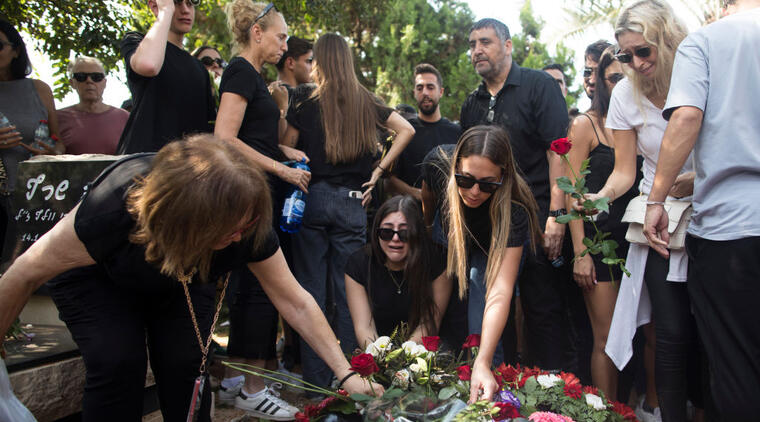
Family and friends of May Naim, 24, who was murdered by Palestinians militants at the "Supernova" festival, near the Israeli border with Gaza strip, react during her funeral on October 11, 2023 in Gan Haim, Israel. (Getty Images)
News

FSI Scholars Analyze Implications of Hamas’ Terror Attack on Israel

Larry Diamond moderated a discussion between Ori Rabinowitz, Amichai Magen and Abbas Milani on the effects of Hamas’ attacks on Israel and what the emerging conflict means for Israel and Middle Eastern geopolitics.
FSI Scholars Analyze Implications of Hamas’ Terror Attack on Israel
Protestors wave flags as thousands of Israelis attend a rally against Israeli Government's judicial overhaul plan on March 27, 2023 in Jerusalem, Israel.
Commentary

What’s Happening to Israel’s Democracy?

Law and governance expert Amichai Magen joins FSI Director Michael McFaul on the World Class podcast to discuss the judicial reforms recently passed by Israel’s legislature, and the implications these have for democracy in Israel and beyond.
What’s Happening to Israel’s Democracy?
Hero Image
Picture of the the Jerusalem Light Rail walking up Jaffa Street. Modern face of Jerusalem, Israel.
Picture of the the Jerusalem Light Rail walking up Jaffa Street. Modern face of Jerusalem, Israel. Photo credit: Laura Siegal via Unsplash | Laura Siegal via Unsplash
All News button
1
Subtitle

Open for enrollment now through Stanford Continuing Studies, "Modern Israel: Insights and Analysis from Stanford Scholars and Guests" will run online for ten weeks on Wednesdays, from April 3 through June 5.

Date Label
Subscribe to Middle East and North Africa