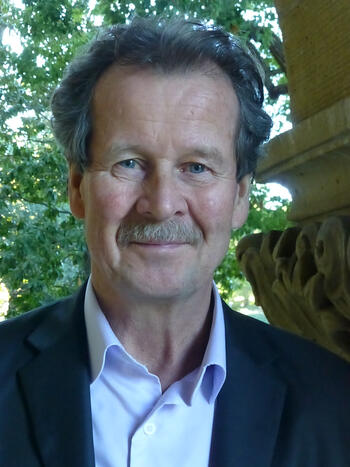
Mari Tanaka1, a Ph.D. candidate in economics at Stanford, has been named the Shorenstein APARC Predoctoral Fellow in Contemporary Asia for 2014–15. She will join the Shorenstein Asia-Pacific Research Center this fall, examining the effects of enterprise development and international trade in low-income countries.
The fellowship supports a Stanford predoctoral student researching topics related to contemporary political, economic and social change in the Asia-Pacific region.
Tanaka’s dissertation focuses on the impact of Myanmar’s recent trade opening on local manufacturing firms. She is interested in how trade with the United States, European Union and Japanese buyers affects firms’ management practices and working conditions, particularly safety and health standards.
By analyzing data collected in about 400 firms in 2013–14, Tanaka plans to compare the evolutions of those measures in garment plants, an industry heavily affected by trade opening, to processed food plants, an industry little affected because of strict food regulations imposed by developed countries.
Tanaka is a fourth-year Ph.D. student in economics at Stanford. She holds a master’s degree in economics from the University of Tokyo and a bachelor’s degree from the International Christian University, Japan.
The Obama administration’s policy of “re-balance” toward Asia, that began as early as 2009, is now increasingly under stress, as those in the region question American staying power and China emerges as a challenger to U.S. dominance. As the territorial disputes in the East and South China Seas in recent months have demonstrated, China’s relations with the region and the United States have become visibly strained, bringing the U.S. re-balance policy into question and raising concerns about security tensions and the danger of conflict.
U.S.-China relations are heading, for the foreseeable future, into “a very scratchy time,” predicted Kenneth Lieberthal, a respected senior China scholar at The Brookings Institution, in his keynote speech delivered at the annual Oksenberg Lecture on June 3 at the Shorenstein Asia-Pacific Research Center.
Lieberthal told a standing room audience in Encina Hall that while the U.S. attempt to temper its relations with China and others has “worked quite well over time,” now, “at a geostrategic level, we seem to be sliding with increasing speed toward an inflection point in U.S.-China relations.”
The discussion was part of the Oksenberg Lecture, an annual dialogue that functions as a policy workshop on U.S.-Asia relations, named in honor of late professor and senior fellow Michel Oksenberg (1938–2001). Oksenberg was a noted China specialist, who served as a senior member of the National Security Council and is credited as the architect of the normalization of relations with China under the Carter administration in the late 1970s.
Points of tension in the U.S.-China relationship have been increasingly visible. Senior American officials have assailed China for its aggressive actions toward its neighbors over the Diaoyu/Senkaku Islands and in South China Sea, including its latest altercations with Vietnam and the Philippines. The United States recently indicted five members of China’s People’s Liberation Army for carrying out cyber espionage against U.S. technology companies.
Incidents like these have prompted both countries to throw harsh words at each other, leading to a situation of brinkmanship. However, Lieberthal pointed out that tense relations between the United States and China are certainly not new. Most notably, relations took a nosedive in 1989 when China cracked down on democratization protests at Tiananmen Square, in 1999 after the accidental bombing of the Chinese Embassy in Serbia, and in 2008, in response to the global financial crisis.
The U.S.-China relationship has been riddled with periods of distrust in the past. But now, “the speed and scale of China’s economic growth, especially over the last two decades, has also increased concerns, on all sides, that the evolving distribution of power may create new frictions and suspicions,” Lieberthal said.
Yet, refusing to work with each other is not an option, the senior scholar, who also served in the Clinton administration, told the audience. Without the United States and China in conversation, progress in multilateral areas such as climate change and trade would falter, he argued. Given the two countries’ position as the world’s largest economies, the international system would effectively be constrained if the two were entrenched in long-term bitterness.
Lieberthal recognized the common admonition, “if we treat China as an enemy, it will surely become one,” saying this warning could be applied to both sides. China and the United States must make greater efforts to manage and mitigate tensions.
“The question is whether we can prevent bad things, not only specific conflicts, but the political tensions and politics that make cooperation on major issues very, very difficult at best.”
He then outlined a few steps that could help China and the United States sort out their disputes. His recommendations began with the need for strong determination on the part of top political leaders to move things forward and the importance of clear, consistent use of vocabulary when discussing issues.
As a final point, but one that was offered as a contingent factor to success, Lieberthal said U.S.-China relations and both countries’ roles in greater Asia will depend on “how effective each of us is in dealing with domestic reforms,” because, “that will determine how dynamic, how vibrant, how innovative, and how secure we feel.”
During the lecture, Ret. Lt. Gen. Karl Eikenberry shared his observations from the Shangri-La Dialogue, an inter-governmental security forum held from May 30 – June 1 in Singapore. The Dialogue has in recent years become a gathering of premiere defense ministers to discuss security issues in Track I and “quasi-track” meetings.
Afterward, Eikenberry talked with Shorenstein APARC about key highlights and implications that emerged from the Dialogue:
Shangri-La Dialogue
Photo credit: Flickr/The International Institute for Strategic Studies
Media reported a tense environment overlaid the Dialogue. What was the general atmosphere there?
The remarks at the Shangri-La Dialogue by Japanese Prime Minister Abe and U.S. Defense Secretary Hagel on the one hand, and Chinese General Wang Guanzhong, made clear very different views on the causes for tension surrounding various maritime sovereignty claims in the East and South China Seas. Still, if you read the full text of all three speeches and the Q&As that followed, there is still great emphasis placed on dialogue and common interests. And in the many meetings that took place between national delegations on the margins of the conference events, the emphasis was on cooperation.
What revelations at the Dialogue were surprising?
I think the degree to which dissatisfaction with China’s assertive behavior in pursuing its maritime claims was expressed by many of the participants – not just the United States and Japan. Vietnam, the Philippines and India were explicit. Analysts have said the only China (through threatening behavior) could contain China by catalyzing a counterbalancing response. From the results of the Dialogue, I think this is correct.
Japanese Prime Minister Shinzo Abe emphasized values and international law throughout his keynote speech. What is your take on this?
The Prime Minister did emphasize both democracy and rule of law during his prepared remarks and answers to questions from conference participants. He was drawing an obvious distinction between Japan’s and China’s political systems and commitment to approaches to resolving territorial disputes. I think the Prime Minister is trying to establish Japan as a leader in East and Southeast Asia, and wanted to make clear what he views as important differences between the Japanese and Chinese “models.”
U.S. Defense Secretary Chuck Hagel referenced China’s suspension of the U.S.-China Cyber Working Group. What direction do you think the cybersecurity dialogue will go now?
It was unfortunate that China suspended its participation in the U.S.-China Cyber Working Group after the U.S. Government’s indictment of five People’s Liberation Army officers for alleged cyber theft. The U.S. Government has been providing the PRC Government with evidence of cyber theft being conducted by entities in China and has failed to receive any meaningful response so the indictments seem warranted. It would seem that the Cyber Working Group is precisely the forum to discuss this matter and the many related to managing the cyber domain with agreed rules and procedures. Working Groups provide a forum to address disagreement and disputes. I think China’s response was counterproductive and hope the government will indicate a willingness to resume the dialogues in the near future.
Where do you see the regional security conversation heading next?
The risk is that security dialogues will be divided into two camps – one led by the United States and its close allies and partners, and the other by China – somewhat isolated at this time but seeking to entice Asian nations to bandwagon to its side. Perhaps further regional economic integration can facilitate a more common approach to security, but this year’s Shangri-La Dialogue is perhaps a warning that trends, for now, are not heading in a positive direction.
Hero Image
Kenneth Lieberthal of The Brookings Institution delivered the keynote speech at the annual Oksenberg Lecture on June 3.
Screening of the film Forasters (Outsiders) directed by Catalan film director Ventura Pona, and followed by a Q&A session led by Joan Ramon Resina. Dr. Resina is a professor of Iberian and Latin American Cultures, and Comparative Literature, and the director of the Iberian Studies Program and research affiliate of The Europe Center.
Forasters portrays a family's experiences with two traumatic events, with a forty year gap between them, and how they affect family members as well as their ideal of social harmony.
Forasters received eight nominations at the 2009 Gaudi Awards, including Best Film in Catalan Language, Best Director (Ventura Pons), and Best Screenplay (Ventura Pons). Anna Lizaran received the Gaudi Award for Best Actress in a Leading Role for her portrayal of the family matriarch Emma.
The electoral eruption of anti-European Union populism is a reflection of structural flaws in that body but does not represent a fatal political blow, according to Stanford scholars.
In the May 25 elections for the European Parliament, anti-immigration parties won 140 of the 751 seats, well short of control, but enough to rattle supporters of the EU, which has 28 member nations. In Britain, Denmark, France and Greece, the political fringe vote totals stunned the political establishments.
Stanford political scientist Francis Fukuyama said the rise of extremism and anti-elitism is not surprising in the wake of the 2008 economic downturn and subsequent high levels of unemployment throughout Europe. In one sense, the EU elites have themselves to blame, he said.
Some have argued that the European Union should adopt a form of fiscal union because without one, decisions about taxes and spending remain at the national level.
As Fukuyama points out, this becomes a problem, as in the case of a debt-ridden Greece, which he believes should not have qualified for EU membership in the first place. In fact, he said, it would have been better for Greece itself to leave the euro at the outset of the 2008 crisis.
Still, Fukuyama said the big picture behind the recent election is clear – it was a confluence of issues and timing.
"It is a bit like an off-year election in the U.S., where activists are more likely to vote than ordinary citizens," he said.
Fukuyama believes the EU will survive this electoral crisis. "I think the EU will be resilient. It has weathered other rejections in the past. The costs of really exiting the EU are too high in the end, and the elites will adjust, having been given this message," he said.
Meanwhile, the populist parties in the different countries are not unified or intent on building coalitions with each other.
"Other than being anti-EU, most of them have little in common," Fukuyama said. "They differ with regard to specific positions on immigration, economic policy, and they respond to different social bases."
Ongoing anger
Dan Edelstein, a professor of French, said the largest factor for success by extremist candidates was "ongoing anger toward the austerity policy imposed by the EU," primarily by Germany.
Edelstein estimates that a large majority of French voters are still generally supportive of the EU. For the time being, the anti-EU faction does not have a majority, though they now have much more representation in the European Parliament.
Edelstein noted existing strains among the anti-EU parties – for example, the UK Independence Party in Britain has stated that it would not form an alliance with the National Front party in France.
Immigration remains a thorny issue for some Europeans, Edelstein said.
"'Immigration' in most European political debates, tends to be a synonym for 'Islam.' While there are some countries, such as Britain, that are primarily worried about the economic costs of immigration, in most continental European countries, the fears are cultural," he said.
As Edelstein put it, Muslims are perceived as a "demographic threat" to white or Christian Europe. However, he is optimistic in the long run.
"It seems a little early to be writing the obituary of the EU. Should economic conditions improve over the next few years, as they are predicted to, we will likely see this high-water mark of populist anger recede," said Edelstein.
Cécile Alduy, an associate professor of French, writes in the May 28 issue of The Nation about how the ultra-right-wing National Front came in first place in France's election.
"This outcome was also the logical conclusion of a string of political betrayals, scandals and mismanagement that were only compounded by the persistent economic and social morass that has plunged France into perpetual gloom," she wrote.
Historian J.P. Daughton said that like elsewhere in the world, immigration often becomes a contentious issue in Europe in times of economic difficulties.
"High unemployment and painful austerity measures in many parts of Europe have led extremist parties to blame immigrants for taking jobs and sapping already limited social programs," he said.
Anti-immigration rhetoric plays particularly well in EU elections, Daughton said. "Extremist parties portray European integration as a threat not only to national sovereignty, but also to national identity.
Edelstein, Alduy and Daughton are all Faculty Affiliates of The Europe Center.
Wake-up call
Russell A. Berman, a professor of German studies and comparative literature, said many Europeans perceive the EU as "somehow impenetrable, far from the civic politics of the nation states."
As a result, people resent regulations issued by an "intangible bureaucracy," and have come to believe that the European Parliament has not grappled with major issues such as mustering a coherent foreign policy voice, he said.
"The EU can be great on details but pretty weak on the big picture," said Berman, who is the Walter A. Haas Professor in the Humanities, Senior Fellow at the Hoover Institution, and Faculty Affiliate of The Europe Center. "It is this discrepancy that feeds the dissatisfaction."
Yet he points out that the extremist vote surged in only 14 nations of the EU – in the other 14, there was "negligible extremism," as he describes it.
"We're a long way from talking about a fatal blow, but the vote is indeed a wake-up call to the centrists that they have to make a better case for Europe," Berman said.
Shorenstein Asia-Pacific Research Center faculty and scholars have published a variety of publications in early 2014, covering topics from the Japanese fiscal condition to disability policy in North Korea.
Publications are often products of long-standing research projects led by Center affiliates. New Challenges for Maturing Democracies in Korea and Taiwan, coedited by Shorenstein APARC Director Gi-Wook Shin and Center on Democracy, Development and Rule of Law Director Larry Diamond, emerged from the Stanford Korea Democracy Project, which seeks to understand social movements in South Korea.
Postdoctoral fellows who reside at Shorenstein APARC for a year of vigorous study and engagement in Center activities also support research publications. Former visiting scholar Dominik Müller, now at Goethe-University Frankfurt, published Islam, Politics and Youth in Malaysia: The Pop-Islamist Reinvention of PAS. Müller examined the religious bureaucracy of Malaysia at Shorenstein APARC in 2013.
Shorenstein APARC manages an active publishing program with Stanford University Press and the Brookings Institution Press. Center affiliates also publish extensively in external peer-reviewed academic journals and books, as well as in a working paper series led by the Asia Health Policy Program.
The volume is a collection of 22 articles that span the course of Aoki’s 45-year academic career. The essays cover a wide range of topics from the comparative perspective including corporate governance, institutional change and mechanism design in Japan, China and South Korea. The articles suggest policy responses for industry and governments.
Comparing the European and Asian legacies, the book provides insight into the influence that World War II continues to have on contemporary politics and attitudes. The collection gathers a variety of perspectives that compare how Europe and Asia handle memories and reflections of guilt, and how wartime experiences are reinterpreted and used for domestic and international purposes.
The article examines the fiscal regime of Japan and considers if the country can withstand its high debt to GDP ratio. The paper shows that Japan’s fiscal situation is unsustainable through various simulations, and suggests that sufficiently large tax increases and/or expenditure cuts would put government debt on a sustainable path.
Indonesia has changed dramatically in recent decades, and a wealth of literature highlights divergent interpretations and perspectives surrounding those dynamics. The article considers the demise of liberal democracy, the rise of President Sukarno in 1959, and the latter’s replacement by General Suharto in 1965. The essay is part of the larger volume, Producing Indonesia: The State of the Field of Indonesian Studies.
The Fukushima nuclear disaster was a critical event that shook Japan’s political economy, society and national psyche, as well as the world’s perspectives on nuclear energy policy. The article examines how the nuclear disaster unfolded and analyzes the response undertaken by the Democratic Party of Japan under Prime Minister Naoto Kan. Kushida is the Takahashi Research Associate at Shorenstein APARC.
The paper describes current relations between South Korea and Japan, recognizing that their relationship has noticeably deteriorated in recent months. While the United States has attempted to promote dialogue, its hesitant intervention is unlikely to change the overall dynamic of the Japan-Korea relationship. Sneider suggests that a more active U.S. mediation role could encourage reconciliation and normalization of relations.
The working paper details the environment that people with disabilities face in the Democratic People’s Republic of North Korea. Despite its reputation as a repressive, closed society where human rights are routinely abused, there are in fact a number of institutions that work to address the needs of the disabled. Zellweger writes from a perspective of a senior aid worker with over thirty years of experience in Asia; she was the Pantech Fellow at Shorenstein APARC from 2011–13.
To view the full listing of publications, as well as reviews and purchasing information, please consult the Publications page on Shorenstein APARC's website.
Hero Image
Shorenstein APARC affiliates frequently produce and disseminate research.
The presentation summarizes preliminary findings of my research project on Allied policy towards resistance groups during World War II and its impact on post-war political and ideological divisions.
The research is linked with a multiplicity of historical problems: the western Allies’ balance of political and military considerations during World War II; the Anglo-American cooperation and competition in the field of intelligence; the use of special operations as an instrument of foreign policy, especially in regard to countries where the development of resistance movements had a strong impact on post-war settlement (e.g. Yugoslavia, Greece and Poland); the politics of communist movements between war and revolution in Central and Eastern Europe; the relationship between the Western Allies and the Soviet Union and the Allies’ perception of the latter.
The particular contribution of the project is to bring together aspects which are usually addressed separately: the different national scenarios, whose connections and mutual influence will be investigated; the two Western intelligence agencies, which have been researched mostly in separate ways by scholars of the corresponding nationalities; the Soviet and Western allies’ policies.
Tommaso Piffer is a Marie Curie Postdoctoral Fellow at the Davis Center for Russian and Eurasian Studies at Harvard and at the University of Cambridge. Among his publications is a biography of Alfredo Pizzoni, the political chief of the Italian Resistance (Il Banchiere della Resistenza, 2005), an account of the relationship between the Allies and the Italian Resistance during World War II (Gli Alleati e la Resistenza Italiana, 2010) as well as several essays. He also edited a book in memory of Victor Zaslavsky on Totalitarian societies and democratic transition (Società totalitarie e transizione alla democrazia, 2011, with Vladislav Zubok) and the collection of essays on the political mass murder of Porzus (Porzus. Violenza e resistenza sul confine orientale, 2012). He is an affiliate at the Harvard Center for European Studies and a contributor to the cultural insert of the Italian newspaper Corriere della Sera.
Open to Stanford affiliates
Sponsored by the Center for Russian, East European and Eurasian Studies and co-sponsored by The Europe Center
History Corner, Room 307
Tommaso Piffer
Marie Curie Postdoctoral Fellow, Davis Center for Russian and Eurasian Studies, Harvard and University of Cambridge
Speaker
On the first day, develop a set of research interventions (surveys, experiments, archival searches, participant observations, etc.) that will gain some leverage in measuring differential policies in Europe and their impact on integration, however specified; or in examining the various immigrant populations to measure their differential success in integration, however specified. Each of the participants (either singly or in collaboration) will write up one or two research proposals that lay out the outcomes of interest and the strategy for explaining variation on those outcomes. Discuss problems and opportunities for each of the submitted proposals and fulfill this first goal.
The second goal of the workshop, and the subject for the second day, to think through three related issues. The first is how to frame the set of proposals in a way that they all fit into a well-defined framework, as if each proposal were a piece of a coherent puzzle. The second is to think through funding sources for this set of interventions that would allow us to conduct the research we proposed and to continue collaborating across these projects. The third is to explore whether there are scholars whose work we know who should be invited to join our group and become part of the grant proposing team.
Wednesday, May 7, 2014 Agenda
I. Citizenship (discussant Thad) – [9-11AM]
Hainmueller/Hangartner – Return on getting citizenship; encouragement design in Switzerland
Gest/Hainmueller/Hiscox – Encouragement design on citizenship in US (Chicago)
Hainmueller/Laitin – Encouragement design on citizenship in France
Alter/Margalit – Immigration and political participation, where immigrants get immediate rights to citizenship (Israel)
Dancygier/Vernby – return on citizenship for labor market success (Sweden)
II. Local Context (Rafaela) [11:15-12:15]
Adida/Hangartner – RDD on Sudanese refugees in various US cities; experiment with IRC on Iraqi/Chaldian integration in El Cajon
III. Contracts of Integration (Yotam) [1:30-3PM]
Hainmueller/Hangartner – Integration Contracts and Naturalization
Hainmueller/Laitin – Integration Contracts in France
IV. Discrimination (Jens) [3:30-5PM]
Ortega/Polavieja – Immigrants and Job security in Spain and elsewhere in Europe
Margalit – Overcoming employer abuse of immigrant workers
Dancygier/Vernby – failure of immigrants to get nominated for political office
Thursday, May 8, 2014 Agenda
Discussion on what investments in collective goods might advance this research perspective productively. We might look at favorable granting institutions and how we might combine our memos into a macro proposal; or we might think about building a common research infrastructure (in the way J-PAL has done for experimental development studies). Working towards a jointly authored volume might be another way to aggregate our research projects. All of this discussion depends on the complementarities that emerge from our discussions on Wednesday. David will chair the Thursday discussion.
Department of Political Science
Stanford University
Encina Hall, W423
Stanford, CA 94305-6044
(650) 725-9556
(650) 723-1808
0
dlaitin@stanford.edu
James T. Watkins IV and Elise V. Watkins Professor of Political Science
laitin.jpg
PhD
David Laitin is the James T. Watkins IV and Elise V. Watkins Professor of Political Science and a co-director of the Immigration Policy Lab at Stanford. He has conducted field research in Somalia, Nigeria, Spain, Estonia and France. His principal research interest is on how culture – specifically, language and religion – guides political behavior. He is the author of “Why Muslim Integration Fails in Christian-heritage Societies” and a series of articles on immigrant integration, civil war and terrorism. Laitin received his BA from Swarthmore College and his PhD from the University of California, Berkeley.
Affiliated faculty at the Center for International Security and Cooperation
Affiliated faculty at The Europe Center
David Laitin
(Workshop Faculty Organizer) Stanford University
Speaker
616 Serra Street
Encina Hall West, Room 100
Stanford, CA 94305-6044
0
Associate Professor of Political Science
Europe Center Affiliated Faculty
101105_JensHainmueller_1583.jpg
Jens Hainmueller's research has appeared in journals such as the American Political Science Review, American Journal of Political Science, Journal of the American Statistical Association, Review of Economics and Statistics, Political Analysis, International Organization, and the Journal of Statistical Software, and has received awards from the American Political Science Association, the Society of Political Methodology, the Midwest Political Science Association.
Hainmueller received his PhD from Harvard University and also studied at the London School of Economics, Brown University, and the University of Tübingen. Before joining Stanford, he served on the faculty of the Massachusetts Institute of Technology.
Jens Hainmueller
Stanford University
Speaker
Claire Adida
UC San Diego
Speaker
Dominik Hangartner
London School of Economics and Political Science
Speaker
Kare Vernby
Uppsala University, Sweden
Speaker
Yotam Margalit
Columbia University
Speaker
Francesc Ortega
Queens College CUNY
Speaker
Thad Dunning
UC Berkeley
Speaker
Rafaela Dancygier
Princeton University
Speaker
Simon Ejdemyr
Stanford University
Speaker
Simon Hix
London School of Economics and Political Science
Speaker
A new research collaborative examines diversity issues and challenges in Korea and greater Asia. In both ethnically diverse and homogenous societies in the region, labor migration, the foreign bride phenomenon, and international students—have together contributed to shifting demographics, a greater sense of diversity, and the need to explore better ways to foster effective social cohesion.
A central focus of the research efforts at Shorenstein APARC is to analyze the bridges linking Asia and the United States. As the Asian diaspora continues to grow in America and across the world, new possibilities have emerged for migrants who become integrated into their host societies while remaining engaged with their home societies. Such trans-migration creates new innovation and trade opportunities for both Asia and the United States, as a positive-sum game where both sides benefit.
Projecting the impacts of climate change on agriculture requires knowing or assuming how farmers will adapt. But empirical estimates of the effectiveness of this private adaptation are scarce and the sensitivity of impact assessments to adaptation assumptions is not well understood. Here we assess the potential effectiveness of private farmer adaptation in Europe by jointly estimating both short-run and long-run response functions using time-series and cross-sectional variation in subnational yield and profit data. The difference between the impacts of climate change projected using the short-run (limited adaptation) and long-run (substantial adaptation) response curves can be interpreted as the private adaptation potential. We find high adaptation potential for maize to future warming but large negative effects and only limited adaptation potential for wheat and barley. Overall, agricultural profits could increase slightly under climate change if farmers adapt but could decrease in many areas if there is no adaptation. Decomposing the variance in 2040 projected yields and farm profits using an ensemble of 13 climate model-runs, we find that the rate at which farmers will adapt to rising temperatures is an important source of uncertainty.