Image
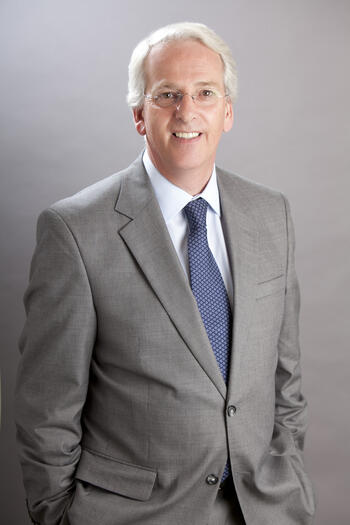
Image of Professor Gerrhard Besier
Gerhard Besier is a theologian, historian and psychologist. He held Chairs in Contemporary (Church) History and European Studies  at the Universities of Berlin, Heidelberg and Dresden. He is currently the Director of the Sigmund Neumann Institute for the Research on Freedom, Liberty and Democracy. Professor Besier has published widely on the themes of German-Polish antagonisms, transformation processes in Europe since 1945, European dictatorships, confessional controversies in Germany, Europe and the USA, and on stereotypes and prejudices. His latest book Neither Good Nor Bad. Why Human Beings Behave How They Do was published in English by Cambridge Scholars Publishing (Newcastle upon Tyne) in June 2014.

Co-sponsored by the Department of History and The Europe Center.

Lane History Corner, Room 307

Gerhard Besier Director Speaker Sigmund Neumann Institute for the Research on Freedom, Liberty and Democracy, Dresden
Lectures
-

Forward-thinking companies, government organizations, and NGOs are beginning to link their efforts to build markets, promote environmental conservation, and reduce poverty in developing economies.

Join GDP for a discussion that explores potential synergies and challenges associated with linking these efforts. The panelists will share their own experiences and other promising models currently employed by companies, NGOs and government organizations around the world.

The Jerry Yang and Akiko Yamazaki
Environment and Energy Building
Stanford University
473 Via Ortega, Office 363
Stanford, CA 94305

(650) 723-5697 (650) 725-1992
0
Senior Fellow, Stanford Woods Institute and Freeman Spogli Institute for International Studies
William Wrigley Professor of Earth System Science
Senior Fellow and Founding Director, Center on Food Security and the Environment
Roz_low_res_9_11_cropped.jpg PhD

Rosamond Naylor is the William Wrigley Professor in Earth System Science, a Senior Fellow at Stanford Woods Institute and the Freeman Spogli Institute for International Studies, the founding Director at the Center on Food Security and the Environment, and Professor of Economics (by courtesy) at Stanford University. She received her B.A. in Economics and Environmental Studies from the University of Colorado, her M.Sc. in Economics from the London School of Economics, and her Ph.D. in applied economics from Stanford University. Her research focuses on policies and practices to improve global food security and protect the environment on land and at sea. She works with her students in many locations around the world. She has been involved in many field-level research projects around the world and has published widely on issues related to intensive crop production, aquaculture and livestock systems, biofuels, climate change, food price volatility, and food policy analysis. In addition to her many peer-reviewed papers, Naylor has published two books on her work: The Evolving Sphere of Food Security (Naylor, ed., 2014), and The Tropical Oil Crops Revolution: Food, Farmers, Fuels, and Forests (Byerlee, Falcon, and Naylor, 2017).

She is a Fellow of the Ecological Society of America, a Pew Marine Fellow, a Leopold Leadership Fellow, a Fellow of the Beijer Institute for Ecological Economics, a member of Sigma Xi, and the co-Chair of the Blue Food Assessment. Naylor serves as the President of the Board of Directors for Aspen Global Change Institute, is a member of the Scientific Advisory Committee for Oceana and is a member of the Forest Advisory Panel for Cargill. At Stanford, Naylor teaches courses on the World Food Economy, Human-Environment Interactions, and Food and Security. 

CV
Roz Naylor

Program on Energy and Sustainable Development
616 Jane Stanford Way
Encina Hall East, Rm E412
Stanford, CA 94305

(650) 724-9709 (650) 724-1717
0
new_mct_headshot_from_jeremy_cropped2.jpg PhD

Mark C. Thurber is Associate Director of the Program on Energy and Sustainable Development (PESD) at Stanford University, where he studies and teaches about energy and environmental markets and policy. Dr. Thurber has written and edited books and articles on topics including global fossil fuel markets, climate policy, integration of renewable energy into electricity markets, and provision of energy services to low-income populations.

Dr. Thurber co-edited and contributed to Oil and Governance: State-owned Enterprises and the World Energy Supply  (Cambridge University Press, 2012) and The Global Coal Market: Supplying the Major Fuel for Emerging Economies (Cambridge University Press, 2015). He is the author of Coal (Polity Press, 2019) about why coal has thus far remained the preeminent fuel for electricity generation around the world despite its negative impacts on local air quality and the global climate.

Dr. Thurber teaches a course on energy markets and policy at Stanford, in which he runs a game-based simulation of electricity, carbon, and renewable energy markets. With Dr. Frank Wolak, he also conducts game-based workshops for policymakers and regulators. These workshops explore timely policy topics including how to ensure resource adequacy in a world with very high shares of renewable energy generation.

Dr. Thurber has previous experience working in high-tech industry. From 2003-2005, he was an engineering manager at a plant in Guadalajara, México that manufactured hard disk drive heads. He holds a Ph.D. from Stanford University and a B.S.E. from Princeton University.

Associate Director for Research at PESD
Social Science Research Scholar
Date Label
Jim Leape
Authors
News Type
News
Date
Paragraphs

Appeared in Stanford Report, August 29, 2014

A worrying spike in anti-Semitism in Europe is a stark reminder that prejudice against Jewish people is still a reality there today, say Stanford scholars. Anti-capitalism has been a particular source of anti-Semitism, according to Professor Russell Berman.

European leaders need to speak out more strongly against the escalation of anti-Semitism, a Stanford professor says.

"They should be willing to enforce the law," said Russell Berman, a Stanford professor of German studies and of comparative literature who is affiliated with the Europe Center on campus.

In recent weeks, slogans invoking anti-Semitism have been heard during European protests against the Palestinian deaths in the Palestinian-Israeli conflict. In France and Germany, synagogues and Jewish community centers have been firebombed. In Britain, a rabbi was attacked near a Jewish boarding school.

"Protesters who storm synagogues should be arrested and prosecuted. Too often police have shown a blind eye when political protests have transformed into anti-Semitic mob actions," said Berman, the Walter A. Haas Professor in the Humanities and a senior fellow at the Hoover Institution and the Freeman Spogli Institute for International Studies.

He said that European societies in the long run have to find a way to grapple with their failed immigration policies and achieve more effective integration, he said. This includes more efficiently integrating immigrants into the cultural expectations of their new societies.

"Post–World War II Europe had as a core value a rejection of the anti-Semitism that led to the Holocaust. Europeans have to develop a pedagogy that can pass that value on to the new members of their communities," said Berman.

Roots of hatred

The recent eruption of anti-Semitism in Europe has multiple causes, according to Berman. The continent's lagging economy, the influx of immigrants from Muslim countries and the ongoing Israeli and Palestinian conflict are large factors.

And as last year's European parliament elections revealed, right-wing extremism has grown across Europe, he said.

"The far right is historically a home of anti-Semitism wrapped in nationalism and xenophobia. Some of this development can be attributed to the ongoing economic crisis, but some is certainly also a reaction against what is sometimes called the 'democracy deficit' in the European Union," Berman said.

Some Europeans believe their national political life has been subordinated to a "transnational bureaucracy" in the form of the European Union, Berman said. He added that this breeds resentment, and one expression of that is anti-Semitism, which is coinciding with traditional European nationalism.

Berman added, "Clearly this does not apply to all Muslims in Europe, but it has become an unmistakable feature in those population cohorts susceptible to radicalization as a response to a sense of social marginalization."

In Europe, immigrant populations are often clustered in de facto segregated neighborhoods, forming a parallel society, Berman said.

"While policies of multiculturalism have in the United States often contributed to productive integration, in Europe they have worked differently and undermined social cohesion. In that context, anti-Semitism has festered," he said.

Ongoing conflicts in the Middle East have also fanned the flames of European anti-Semitism, Berman said. Meanwhile, protests did not arise in Europe when Muslims and Christians were massacred in recent months in Syria and Iraq.

"A year ago, one could still make an at least conceptual distinction between anti-Zionism [criticism of Israel] and anti-Semitism [hatred of Jews]," he said.

The events in the past months in the streets of Europe have erased that distinction, Berman said.

"The politics of criticizing Israel have been fully taken over by anti-Semites, whether from the traditional European far right, the extremist left or parts of the immigrant communities," he said.

Anti-capitalism, economic downturns

When the European economy soured, leaving many young people unemployed at a time of surging globalism – all against a "residual" communist backdrop that still exists in parts of Europe – anti-Semitism was the result, according to Berman.

"That inherent anxiety and free-floating animosity in Europe turns into hostility to minorities," he said. "It can generate both anti-Jewish and anti-Muslim prejudices, but anti-capitalism is today, as it has been historically, a particular source of anti-Semitism."

Berman calls this left-wing anti-Semitism – the targeting Jews as the symbols of capitalism – which he says has a long history. "A socialist leader of the 19th century once called anti-Semitism 'the anti-capitalism of fools,' and that's part of what we still see today," Berman said.

Opportunity, education, the future

Amir Eshel, a professor of German studies and of comparative literature and affiliated faculty member of The Europe Center, said Europe needs to do a better job of integrating Muslim immigrants into their new societies. In particular, he said, more economic opportunities must be given to people from disenfranchised communities.

"Nothing is as important as giving people opportunities to make their lives better," said Eshel, the Edward Clark Crossett Professor in Humanistic Studies. He is also an affiliated faculty member at the Europe Center in the Freeman Spogli Institute for International Studies.

Eshel points to important roles for the media and educational systems to play in clamping down on anti-Semitism. There are programs in place – International Holocaust Remembrance Day, for example – to remind people about the evil inflicted on Jews in Europe more than 60 years ago.

"What has changed is that young people are less biographically connected to these crimes of the past," said Eshel.

"When this happens, as the Holocaust drifts further in time, a certain sensibility arises that one should not be bound by the lessons of the past," he said.

Anti-Semitism in Europe, he said, is the worst he's seen or known about since the end of World War II. He's especially worried about the large numbers of Muslims from Britain and France who have joined the jihadist movements in places like Syria and Iraq.

"It's not going to be easy to track them if they return," Eshel noted, "and it'll be a challenge for many years in Europe."

Fear among Jews

History Professor Norman Naimark said that some French Jews are leaving the country because of ongoing anti-Semitic violence.

"Germany has also experienced an ongoing problem on both the extreme left and right, but there the authorities and the Jewish community seem to have the situation under control," added Naimark, the Robert and Florence McDonnell Professor in Eastern European Studies.

Naimark, the director of the Stanford Global Studies Division and a senior fellow at the Hoover Institution and the Freeman Spogli Institute for International Studies, described European anti-Semitism as following an oscillating curve up and down, especially in times of Middle East crises.

"England seems particularly susceptible to these kinds of oscillations," he said.

Hero Image
Memorial plaque stained with anti-Semitic vandalism in Mazowieckie, Poland, March 19, 2012.
A memorial plaque stained with anti-Semitic vandalism in Mazowieckie, Poland, March 19, 2012. This incident and other more recent ones reflect an increase in anti-Semitism in Europe.
Jendrzej Wojnar/AP
All News button
1
-


Please click on the image below to view the video recording of this event.


Co-sponsored by The Europe Center and the Center for Russian, East European and Eurasian Studies.


Barnes/McDowell/Cranston Room
Fisher Conference Center at the Arrillaga Alumni Center

Miroslav Lajcak Deputy Prime Minister and Foreign Minister Speaker Slovak Republic

Encina Hall
616 Jane Stanford Way
Stanford, CA 94305-6055

0
Senior Fellow, Freeman Spogli Institute for International Studies
Ken Olivier and Angela Nomellini Professor of International Studies, Department of Political Science
Peter and Helen Bing Senior Fellow, Hoover Institution
mcfaul_headshot_2025.jpg PhD

Michael McFaul is the Ken Olivier and Angela Nomellini Professor of International Studies in Political Science, Senior Fellow at the Freeman Spogli Institute for International Studies, and the Peter and Helen Bing Senior Fellow at the Hoover Institution, all at Stanford University. He joined the Stanford faculty in 1995 and served as FSI Director from 2015 to 2025. He is also an international affairs analyst for MSNOW.

McFaul served for five years in the Obama administration, first as Special Assistant to the President and Senior Director for Russian and Eurasian Affairs at the National Security Council at the White House (2009-2012), and then as U.S. Ambassador to the Russian Federation (2012-2014).

McFaul has authored ten books and edited several others, including, most recently, Autocrats vs. Democrats: China, Russia, America, and the New Global Disorder, as well as From Cold War to Hot Peace: An American Ambassador in Putin’s Russia, (a New York Times bestseller) Advancing Democracy Abroad: Why We Should, How We Can; and Russia’s Unfinished Revolution: Political Change from Gorbachev to Putin.

He is a recipient of numerous awards, including an honorary PhD from Montana State University; the Order for Merits to Lithuania from President Gitanas Nausea of Lithuania; Order of Merit of Third Degree from President Volodymyr Zelenskyy of Ukraine, and the Dean’s Award for Distinguished Teaching at Stanford University. In 2015, he was the Distinguished Mingde Faculty Fellow at the Stanford Center at Peking University.

McFaul was born and raised in Montana. He received his B.A. in International Relations and Slavic Languages and his M.A. in Soviet and East European Studies from Stanford University in 1986. As a Rhodes Scholar, he completed his D. Phil. in International Relations at Oxford University in 1991. 

CV
Date Label
Professor of Political Science, and Senior Fellow, the Freeman Spogli Institute and the Hoover Institution Speaker Stanford University

CISAC
Stanford University
Encina Hall, C235
Stanford, CA 94305-6165

(650) 723-6927 (650) 725-0597
0
Senior Fellow, by courtesy, at the Freeman Spogli Institute for International Studies
Robert & Florence McDonnell Professor of East European Studies
Professor of History
Professor, by courtesy, of German Studies
Senior Fellow at the Hoover Institution
Naimark,_Norman.jpg MS, PhD

Norman M. Naimark is the Robert and Florence McDonnell Professor of East European Studies, a Professor of History and (by courtesy) of German Studies, and Senior Fellow of the Hoover Institution and (by courtesy) of the Freeman-Spogli Institute for International Studies. Norman formerly served as the Sakurako and William Fisher Family Director of the Stanford Global Studies Division, the Burke Family Director of the Bing Overseas Studies Program, the Convener of the European Forum (predecessor to The Europe Center), Chair of the History Department, and the Director of Stanford’s Center for Russian, East European, and Eurasian Studies.

Norman earned his Ph.D. in History from Stanford University in 1972 and before returning to join the faculty in 1988, he was a professor of history at Boston University and a fellow of the Russian Research Center at Harvard. He also held the visiting Catherine Wasserman Davis Chair of Slavic Studies at Wellesley College. He has been awarded the Officer's Cross of the Order of Merit of the Federal Republic of Germany (1996), the Richard W. Lyman Award for outstanding faculty volunteer service (1995), and the Dean's Teaching Award from Stanford University for 1991-92 and 2002-3.

Norman is interested in modern Eastern European and Russian history and his research focuses on Soviet policies and actions in Europe after World War II and on genocide and ethnic cleansing in the twentieth century. His published monographs on these topics include The History of the "Proletariat": The Emergence of Marxism in the Kingdom of Poland, 1870–1887 (1979, Columbia University Press), Terrorists and Social Democrats: The Russian Revolutionary Movement under Alexander III (1983, Harvard University Press), The Russians in Germany: The History of The Soviet Zone of Occupation, 1945–1949 (1995, Harvard University Press), The Establishment of Communist Regimes in Eastern Europe (1998, Westview Press), Fires of Hatred: Ethnic Cleansing In 20th Century Europe (2001, Harvard University Press), Stalin's Genocides (2010, Princeton University Press), and Genocide: A World History (2016, Oxford University Press). Naimark’s latest book, Stalin and the Fate of Europe: The Postwar Struggle for Sovereignty (Harvard 2019), explores seven case studies that illuminate Soviet policy in Europe and European attempts to build new, independent countries after World War II.


Affiliated faculty at The Europe Center
Affiliated faculty at the Center on Democracy, Development and the Rule of Law
The Sakurako and William Fisher Family Director of the Stanford Global Studies Division and Robert and Florence McDonnell Professor in East European Studies Speaker Stanford University
Kathryn Stoner Faculty Director, Susan Ford Dorsey Program in International Policy Studies and Senior Fellow, Freeman Spogli Institute Speaker Stanford University
-

Image
medieval manuscripts poster crop

Featuring:  Ronald Egan (moderator) - Professor, East Asian Languages & Cultural Studies at Stanford University

An international conference on manuscripts, reading, writing, book history, and the classification of knowledge in medieval China and Europe. Special attention to common problems and divergent paths taken with regard to manuscript production, copying and transcription, orality vs. the written circulation of texts, writing systems, and the social space of manuscripts. The conference brings together international specialists on the medieval manuscript tradition in Europe with those working on parallel topics in medieval Chinese history.

Schedule:

September 11, 2014 • 1:30pm–5pm

September 12, 2014 • 9am–5pm

September 13, 2014 • 9am–12pm


Stanford Center at Peking University
The Lee Jung Sen Building
Peking University
No.5 Yiheyuan Road Haidian District
Beijing, P.R.China 100871

Directions/Map

Ronald Egan (moderator) - Professor, East Asian Languages & Cultural Studies at Stanford University
Conferences
-

Image
medieval manuscripts poster crop


Featuring:  Ronald Egan (moderator) - Professor, East Asian Languages & Cultural Studies at Stanford University

An international conference on manuscripts, reading, writing, book history, and the classification of knowledge in medieval China and Europe. Special attention to common problems and divergent paths taken with regard to manuscript production, copying and transcription, orality vs. the written circulation of texts, writing systems, and the social space of manuscripts. The conference brings together international specialists on the medieval manuscript tradition in Europe with those working on parallel topics in medieval Chinese history.

Schedule:

September 11, 2014 • 1:30pm–5pm

September 12, 2014 • 9am–5pm

September 13, 2014 • 9am–12pm

Stanford Center at Peking University
The Lee Jung Sen Building
Peking University
No.5 Yiheyuan Road Haidian District
Beijing, P.R.China 100871

Directions/Map

Ronald Egan (moderator) - Professor, East Asian Languages & Cultural Studies at Stanford University
Conferences
-
About the Topic: Re-establishing and strengthening the rule of international law in 
international affairs was a central Allied aim in the First World War. Revisionism in its many 
forms has erased this from our memory, and with it the meaning of the war. Imperial 
Germany’s actions and justifications for its war conduct amounted to proposing an entirely 
different set of international-legal principles from those that other European states recognized 
as public law. This talk examines what those principles were and what implications they had 
for the legal world order.
 
About the Speaker: Isabel V. Hull received her Ph.D. from Yale University in 1978 and 
has since then been teaching at Cornell University, where she is the John Stambaugh 
Professor of History. A German historian, her work has reached backward to 1600 and 
forward to 1918 and has focused on the history of sexuality, the development of civil society, 
military culture, and imperial politics and governance. She has recently completed a book 
comparing Imperial Germany, Great Britain, and France during World War I and the impact 
of international law on their respective conduct of the war. It will appear in Spring 2014 
under the title, A Scrap of Paper: Breaking and Making International Law in the First World 
War. Her talk is based on this latest research.

Central Conference Room, Encina Hall (2nd Floor)

Isabel Hull John Stambaugh Professor of History Speaker Cornell University
Seminars
-
About the Topic: During the Cold War countless peoples and movements in both the decolonizing world and the advanced industrial states mobilized under the banner of self-determination, and sought to institutionalize its status as a human right in international law. This talk, focusing on the end of European empire in the 1970s will explore why self-determination came to have such expansive and potentially disruptive meaning in the post-WWII era, serving as a short-hand for a wide range of claims to sovereignty.
 
About the Speaker: Brad Simpson is an assistant professor of history and international studies at Princeton University. His research and teaching interests are twentieth-century U.S. foreign relations and international history. His first book, Economists with Guns: Authoritarian Development and U.S.-Indonesian Relations, 1960-1968 (Stanford 2008) explores the intersection of anti-Communism and development thinking in shaping U.S. Indonesian relations. 
 
He is currently researching a global history of self-determination, exploring its political, cultural and legal descent through post 1945 US foreign relations and international politics. Simpson is also a founder and director of a project at the non-profit National Security Archive to declassify U.S. government documents concerning Indonesia and East Timor during the reign of General Suharto (1966-1998). He has recently published in International History ReviewCold War HistoryReviews in American HistoryDiplomatic HistoryThe Journal of Interdisciplinary HistoryCritical Asian Studies, and Peace and Change.

Encina Hall Basement, Room E008

Brad Simpson Assistant Professor of History and International Studies Speaker Princeton University
Seminars
News Type
News
Date
Paragraphs

In this Wall Street Journal commentary by William J. Perry and George P. Shultz, the Stanford scholars argue that Russia has completely ignored the Budapest Memorandums on Security Assurances of 1994. They say Russia has taken Crimea and is actively stirring trouble in the eastern part of that country, a blatant violation of solemn vows.

The commentary can be read here.


Hero Image
ukraine gun site Reuters
All News button
1
-

Please note that this is a new date for this event.  It has been rescheduled from March 12th to May 7th, 2015.


Under what conditions is judicial independence from national governments necessary for judicial influence over national government action?  Some scholar argue that informal and sub constitutional factors matter more than "parchment protections", while others believe judicial independence is critical for judicial influence. Building off of a basic separation of powers argument, we demonstrate that formal institutional protections designed to ensure judicial independence should be critical only when elected officials are sufficiently unified, where "sufficiently unified" depends upon the design of the political system. That is, they are more than "parchment barriers" and less than necessary. To test the argument, we introduce a new cross-national database on high court constitutional review (CompLaw). The Complaw database is designed to systematically and consistently code data on high court constitutional decisions at a very fine-grained level across a large variety of political systems.

This talk is part of The Europe Center's "European Governance Seminar Series."

Image
Professor Clifford Carrubba, Political Science, Emory University


Clifford J. Carrubba, B.A. (1991), Duke University; Ph.D (1998), Stanford University. Previous appointment at SUNY Stony Brook (Assistant Professor). Specialization: comparative legislative and judicial politics, comparative institutions, European politics, game theory. Current research projects include studies of legislative behavior and roll call vote analysis, the design and change of judicial institutions (with application to the European Court of Justice), and statistical tests of game theoretic models.

Carrubba is currently serving as the Director of The Institute for Quantitative Theory and Methods, developed and launched by Dr. Carrubba in December of 2011.

Does Judicial Independence Matter for Judicial Influence?
Download pdf
Cliff Carrubba Professor of Political Science & Law by Courtesy Speaker Emory University
Seminars
Subscribe to Europe