Authors
Beth Duff-Brown
News Type
News
Date
Paragraphs

Non-communicable diseases such as heart and respiratory disease, cancer, obesity and diabetes are now responsible for some two-thirds of premature deaths around the world. And most of those are in low- and middle-income countries.

The United Nations has estimated that on top of the social and psychological burdens of chronic disease, the cumulative loss to the global economy could reach $47 trillion by 2030 if things remain status quo.

“That was a big whopper of a number and got a lot of attention, and that was good because it raised awareness,” said Rachel Nugent, vice president for global non-communicable diseases (NDCs) at the research institute RTI International.

“It’s an issue that is driven by a lot of different factors, “ she said. “And understanding how the larger social and economic factors affect NDCs, at a policy level, very little progress has been made — there’s been very little collaboration.”

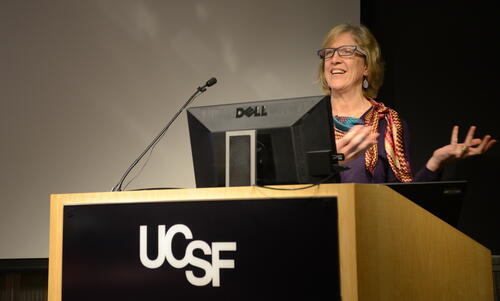
Nugent was addressing the fourth annual Global Health Economics Colloquium at University of California San Francisco, with health experts, policymakers, students and researchers from Stanford, Berkeley and UCSF who gather every year to take a deep dive into the economics of a global health issue. More than 200 experts from 10 universities and public health departments attended the conference.

The daylong gathering focused on recent developments in the economics of NDCs, looking at case studies from around the world, and new guidelines for cost-effectiveness analysis and the role of economics in reducing health inequality.

“The donors are not convinced that there are cost-effective things that we can do in these countries; a lot of them are very skeptical that this is affecting the poor,” said Nugent, a member of the World Health Organization’s expert advisory panel on the management of NCDs.

In India, for example, much of the population still defecates outdoors, contaminating water sources and agricultural products, which can lead to malnutrition and physical and cognitive disorders. Many donors would rather see funds go to building latrines as they can see tangible results; NDC prevention is a long-term slog.

“But I don’t think we should necessarily think of NDCs as either-or,” said Nugent.  “I think that integration of services and programming is very much at the forefront of what is the right way to go.”

Image
rachel nugent

Cost-effectiveness Analyses

Nugent’s research has shown five cost-effective interventions would avert more than 5 million premature deaths from NCDs by 2030, or a reduction of 28.5 percent in projected mortality from chronic disease around the world. And the average benefit-cost ratio is 9:1, at a global cost of $8.5 billion a year.

The interventions are raising the price of tobacco products by 125 percent through taxation; providing aspirin to 75 percent of those suffering from acute myocardial infarction; reducing salt intake by 30 percent; reducing the prevalence of high blood pressure with low-cost hypertension medication; and providing preventive drug therapy to 70 percent of those at high risk of heart disease.

Gillian Sanders-Schmidler, a professor of medicine at Duke University Medical Center and former assistant professor of medicine at Stanford Health Policy’s Center for Primary Care and Outcomes Research, addressed the colloquium about recommendations of the Second Panel on Cost-Effectiveness in Health and Medicine.

“There is a continued emphasis on transparency and comparability across analyses,” said Sanders-Schmidler. “And of course the big changes are that we’re now asking for a second reference case and using an ‘impact inventory’ table to clarify the scope of the findings.”

The independent panel of non-government scientists and scholars, which also included Stanford Health Policy’s Douglas K. Owens, focused on new ways to deliver health care effectively, yet with a focus on efficiency, as health care spending in the United States has reached 18 percent of GDP, much greater than the global average of 10 percent.

The first panel that convened in 1996 recommended that all cost-effectiveness analyses of health interventions include a reference case that uses standard methodological practices to improve comparability and quality. The second panel, which published its findings in September, now recommends that in addition to the societal perspective recommended by the original panel, that CEAs include a second reference case that looks at the health-care sector impact of an intervention. Additional guidance was given on what to include in the societal perspective reference case.

The panel wrote in its JAMA “special communication” that these societal reference cases should include medical costs “borne by third-party payers and paid out-of-pocket by patients, time costs of patients in seeking and receiving care, time costs of informal (unpaid) caregivers, transportation costs, effects on future productivity and consumption, and other costs and effects outside the health-care sector.”

They found most countries, including the United States, give greater weight to clinical evidence in their cost-effectiveness analyses. The panel now recommends an “impact inventory” that helps analysts and end-users of cost effectiveness analyses look at the impact of interventions beyond the formal health-care sector.

“We’re trying to ask people to be explicit,” said Owens, director of the Center of Primary Care and Outcomes Research and Center for Health Policy at Stanford.

“We want them to look at how to value outcomes in a societal perspective, not just the health-care sector, to look at all these other sectors such as productivity consumption, criminal justice, education, housing and the environment,” he said.

Image
sodas

Case Studies

Several case studies presented at the colloquium indicated that policy changes, government intervention and social factors are key to preventing obesity and diabetes and other NCDs.

Kristine Madsen, an associate professor of public health at UC Berkeley who focuses on childhood obesity, spoke about the nation’s first “soda tax” on sugar-sweetened beverages, which was implemented in Berkeley in March 2015.

The city has seen a 21 percent decline in the drinking of soda and other sugary drinks in low-income neighborhoods after the city levied a penny-per-ounce tax on sodas and sugary drinks. At the same time, according to a study in the American Journal of Public Health, neighboring San Francisco — where a similar soda-tax measure was defeated — and Oakland saw a 4 percent increase in the purchase of sweetened beverages.

“This decline of 21 percent in Berkeley represents the largest public health impact in an intervention that I have ever seen,” said Madsen.

Sergio Bautista of the Mexico National Institute of Public Health and UC Berkeley, said that Mexico’s sugary drinks tax implemented in January 2014 is expected to lead to a 10 percent reduction in sugary drinks consumption and prevent an estimated 189,300 cases of diabetes in a country famed for its sugary bottled cola.

William Dow, a professor of health policy management at UC Berkeley, shared his research on Costa Rica, where on average people live longer than Americans, despite the several times higher income and 10 times higher health expenditures in the United States.

Costa Rican men have a life expectancy of 77 and the women typically live until age 82; in Americans the numbers are 76 and 81, respectively. Obesity is low among Costa Rican men and few of their women smoke. Lung cancer mortality in the United States is four times higher among men and six times higher among women.

“It’s remarkable in so many ways,” Dow said, noting that deaths in the Central American country are due predominantly to infectious disease. “Does Costa Rica have any unique effective programs to emulate, or is there something going on upstream driving those health outcomes?”

He believes Costa Rica’s national health insurance and excellent access to primary care for nearly all its people are key. Having this guaranteed lifetime access to health care also reduces the stress and depression that can so badly harm physical health.

“And I would argue that probably diet is one of the most important things going on here,” said Dow, noting their diets are healthy.

Costa Ricans eat mostly unprocessed foods such as rice and black beans, corn tortilla, yam and squash, with little meat and plenty of fresh fruit.

“They also have the highest remaining life expectancy at age 80 of any country in the world, he said. “What we have learned in Costa Rica would be helpful in many other countries.”

Hero Image
ariel people Getty Images
All News button
1
-

Abstract:

As the number of migrants in Europe has risen in recent years, far right parties have fuelled voters’ fears concerning what the influx will mean for their nations. This project utilizes paired pre-election polls and actual vote shares across state and regional elections pre- and postmigrant crisis to provide evidence that far right sympathists often practiced preference falsification prior to this legitimizing shock, but that the crisis reshaped the political conversation such that far right identification is no longer deemed politically shameful. Although the theoretical framework surrounding preference falsification is well developed in the social movement literature as well as in American politics, Laura Jakli argues that it has untapped parallels in the study of Europe's far right. She also embeds priming and list experiments in a Facebook survey to determine whether there is a significant difference between subjects' willingness to identify with the far right using explicit versus implicit measurement approaches.


Speaker Bio:

Image
headshot jakli
Laura Jakli is a PhD student and FLAS fellow at UC Berkeley. Her research focuses on the intersection of modern European politics and political behavior. She has designed and implemented field experiments, internet-based survey experiments, and interview-based research in the US, Greece, and Hungary. Her dissertation examines the relationship between digital media polarization and individual-level attitude strength as well as aggregate-level electoral mobilization. The overall goal of her dissertation is to explain why recent far right voter turnout has been remarkably high relative to the underlying distribution of ideological adherents across the West. She holds a BA from Cornell University and an MA from UC Berkeley.

Laura Jakli PhD student and FLAS fellow at UC Berkeley
Seminars
-

Although the post-1989 world is the world that America and Europe made, it has now become the world that America and Europe have started to fear and sometimes even hate. Looking back across the turbulent decades since 1989, we are astounded by the speed with which yesterday's euphoric victory has turned into today's anxiety and distress. Explaining why and how it happened in the different parts of Europe, Russia, Turkey, Eastern Europe is the principal ambition of this lecture.


[[{"fid":"225445","view_mode":"crop_870xauto","fields":{"format":"crop_870xauto","field_file_image_description[und][0][value]":"","field_file_image_alt_text[und][0][value]":false,"field_file_image_title_text[und][0][value]":false,"field_credit[und][0][value]":"","field_caption[und][0][value]":"","thumbnails":"crop_870xauto"},"type":"media","field_deltas":{"1":{"format":"crop_870xauto","field_file_image_description[und][0][value]":"","field_file_image_alt_text[und][0][value]":false,"field_file_image_title_text[und][0][value]":false,"field_credit[und][0][value]":"","field_caption[und][0][value]":"","thumbnails":"crop_870xauto"}},"link_text":null,"attributes":{"style":"font-size: 13.008px; height: 320px; width: 320px; float: left; margin-right: 15px;","class":"media-element file-crop-870xauto","data-delta":"1"}}]]Ivan Krastev is the Chairman of the Centre for Liberal Strategies in Sofia and Permanent fellow at the Institute for Human Sciences, Vienna. He is a founding board member of the European Council on Foreign Relations, a member of the Board of Trustees of The International Crisis Group and is a Contributing Opinion Writer of The New York Times. His latest books in English are “Democracy Disrupted. The Global Politics on Protest” (UPenn Press, May 2014); “In Mistrust We Trust: Can Democracy Survive When We Don't Trust Our Leaders?” (TED Books, 2013). He is a co-author with Stephen Holmes of a forthcoming book on Russian politics.  His book “After Europe” is forthcoming in English (Penn Press, 2017) and in German (Suhrkamp, 2017).


THIS EVENT HAS REACHED FULL CAPACITY. PLEASE CONTACT MAGDALENA magdafb@stanford.edu TO GET ON THE WAITLIST. 

Ivan Krastev Chairman of the Center for Liberal Strategies Speaker
Lectures

Damian Collins MP is a member of the House of Commons, and Chairman of the Parliamentary Select Committee for Cuture, Media and Sport. He graduated in modern history from the University of Oxford, and 'Charmed Life, the phenomenal world of Philip Sassoon'Damian Collins MP is a member of the House of Commons, and Chairman of the Parliamentary Select Committee for Culture, Media and Sport. He graduated in modern history from the University of Oxford, and Charmed Life, the Phenomenal World of Philip Sassoon is his first book.


No RSVP required.  For more information, please contact jewishstudies.stanford.edu.

This event is co-sponsored by The Taube Center for Jewish Studies, the Department of History, and The Europe Center.


Lane History Corner (Building 200)
Room 302


Damian Collins Member of Parliament, UK
Lectures
-

About the Event: NATO is entering today the 4th phase of its history and must adapt to changes in today’s security environment in order to remain relevant. NATO’s ability to adapt will ultimately redefine NATO’s place in the world.  General Mercier will discuss challenges facing NATO faces such as maintaining the unity between members in the Alliance, addressing potential crises in Eastern Europe, reopening dialogue with Russia, and addressing instability on NATO-member borders.

About the Speaker: General Denis Mercier is the North Atlantic Council as Supreme Allied Commander Transformation. Prior to this assignment, he served as the French Air Force Chief of Staff from 2012-2015.

He graduated with a Master’s of Science from the French Air Force Academy in 1981, qualifying as a fighter pilot in 1983. He has more than 3000 flying hours including 182 hours in combat missions. Gen. Mercier commanded the 1/12 "Cambrésis" Fighter Squadron, a founding unit of the NATO Tiger association. He participated in numerous other NATO exercises and operations, including Operation Deny Flight over Bosnia-Herzegovina in 1994, "Strong Resolve” in 1998, and Operation Allied Force in Kosovo.

From 1999 to 2002, Gen. Mercier was deputy head of the combined joint task force deputy branch at Regional Headquarters where he contributed to the development of the Combined Joint Task Force concept. He was a member of the combined analysis team for exercise "Allied Effort '01" and an evaluator of the CJTF HQ for Exercise "Strong Resolve '02". He also acted as liaison officer for the Commander Striking Fleet Atlantic stationed in Norfolk, VA.

He later served as the commander of Reims Air force base, integrating Mirage F1CR squadrons with ISAF in Afghanistan. From 2004 to 2008 he served as the head of the plans division at the French Air Force headquarters and was nominated as a flag officer in 2007. He then commanded the French Air Force Academy in Salon-de-Provence. As senior military advisor for the Minister of Defence from 2010-2012, Gen. Mercier prepared and participated in all NATO ministerial meetings, summits in Lisbon and Chicago, and was special advisor to Operation Unified Protector over Libya.

Among other awards, Gen. Mercier has been awarded the rank of Grand Officier of the French Legion of Honor and, among other distinctions, an officer of the National Order of Merit.

Encina Hall, 2nd floor

General Denis Mercier Supreme Allied Commander Transformation, NATO
Seminars
-

Daniel Stegmueller is a Professor of Quantitative Methods in the Social Sciences at the Graduate School of Social and Economic Sciences, University of Mannheim. He is also an associate member of Nuffield College, University of Oxford, and of CAGE, University of Warwick. His research lies at the intersection of political economy and political behavior. He studies political preferences and choices in advanced industrialized societies, specifically individuals' preferences for redistribution and redistributive voting. He is interested in how these are shaped by social structure and institutions, but also by basic individual gcharacteristics, such as cognitive and non-cognitive skills.


This seminar is part of the Comparative Politics Workshop in the Department of Political Science and is co-sponsored by The Europe Center.

Daniel Stegmueller University of Mannheim
Workshops
-

Torun Dewan is a political scientist at the London School of Economics. His main research is in political economy and in the formal and empirical analysis of decision making in political parties, legislatures and executives. Amongst other issues he has looked at how cabinets structure the incentives of ministers, how leadership acts as a coordinating focal point, how political parties aggregate dispersed information, and how elections provide incentives for policy experimentation.


This seminar is part of the Comparative Politics Workshop in the Department of Political Science and is co-sponsored by The Europe Center.

Torun Dewan London School of Economics
Workshops
-

The Italian civil war and the Nazi occupation of Italy occurred at a critical juncture, just before the birth of a new democracy and when, for the first time in a generation, Italians were choosing political affiliations and forming political identities. In this paper we study how these traumatic events shaped the new political system. We exploit geographic heterogeneity in the intensity and duration of the civil war, and the persistence of the battlefront along the “Gothic line” cutting through Northern-Central Italy. We find that the Communist Party gained votes in the post-war elections where the Nazi occupation and the civil war lasted longer, mainly at the expense of the centrist and catholic parties. This effect persists until the early 1990s. Evidence also suggests that this is due to an effect on political attitudes. Thus, the foreign occupation and the civil war left a lasting legacy of political extremism and polarization on the newborn Italian democracy.

Guido Tabellini is the Intesa Sanpaolo Chair in Political Economics at Universita' Bocconi.

This seminar is part of the Comparative Politics Workshop in the Department of Political Science and is co-sponsored by The Europe Center.

Guido Tabellini Bocconi University
Seminars

Celebrated international artist Ori Gersht will be delivering a lecture entitled "Optical Unconsciousness" with an introduction by Alexander Nemerov (Department Chair & Carl and Marilynn Thoma Provostial Professor in the Arts and Humanities; Stanford University). A public Q & A will follow. For more information, please visit The Contemporary.

Free and open to the public. 


Gersht's visit is generously co-sponsored by Kim Allen and Alex Cohen, in honor of the marriage of Karen Underhill and Richard Meller; The Taube Center for Jewish Studies; The Department of Art and Art History; The Division of Literatures, Cultures, and Languages; The Europe Center; and The Contemporary.

Ori Gersht International Artist Speaker
Lectures
Authors
News Type
News
Date
Paragraphs

When governments and scholars work together on data security, society benefits from better safeguards and protections, a U.S. intelligence expert said Wednesday.

The difficulty is keeping up with technology and societal trends, Admiral Bobby R. Inman said at the Center for International Security and Cooperation's annual Drell Lecture for 2017. His talk was titled, “The Challenges of Providing Data Security.”

Inman, whose U.S. Navy career spanned 31 years, served as the director of the National Security Agency, deputy director of the Central Intelligence Agency, and held other influential positions in the U.S. intelligence community. After retiring from the Navy, Inman worked on start-ups in the private sector, in higher education, and as chairman of the Federal Reserve Bank of Dallas. He is currently the Lyndon B. Johnson Centennial Chair in National Policy at the University of Texas, Austin.

'9/11 changed everything'

During his talk, Inman recounted the early days of cryptography and the dialogue between government officials like himself and scholars at universities such as Stanford and UC Berkeley. Cryptography or cryptology is the practice and study of techniques for secure communication in the presence of third parties typically known as adversaries.

Inman was a key driver behind establishing the United States Foreign Intelligence Surveillance Court in 1978. The purpose of the “FISA” court was to oversee requests for surveillance warrants against foreign spies inside the United States by federal law enforcement and intelligence agencies.

Today, technology has overwhelmed many issues regarding how the government tracks the communications of foreign entities, Inman said. And events have ushered in a different orientation on what type of information and from whom is sought by U.S. intelligence. “9/11 changed everything,” he added.

After 9/11, U.S. intelligence began to focus on foreign individuals in addition to the traditional foreign state actors, Inman said. He pointed out the value of such data collection, as penetrating small groups with human agents is extraordinarily difficult and dangerous.

“The only way you’re likely to get a lead on them (terrorists or narcotic traffickers) is through their communications,” he said.

The Internet, especially social media, has exploded in usage and made data security efforts even more complex, Inman said. “A vastly different world.” As a result, serious privacy, commercial usages and intellectual property issues need to be resolved more than ever. He noted that the rule of law is important to follow when the governmnt or other entities collect and examine communications data.

Inman is particularly worried about how “basic issues of ethics and morality” have eroded in society, which results in people scheming to sell private data for profit that puts others at risk. Another issue involves how to prevent terrorist groups from preying upon mentally weak people and recruiting them over the Internet.

A key reason Inman was invited to be the Drell speaker this year was his connection to Martin Hellman and Whitfield Diffie, two pioneering cryptographers from CISAC who drew Inman’s attention in the mid-1970s when they wrote a groundbreaking paper in their field of study. The three later established long-running friendships that produced strong cryptography frameworks.

Inman said, “We were privileged to start the dialogue. That’s where you begin to solve problems,” as fears and misperceptions can be resolved through discussions and openness. “I think what we need is a repeat of pulling together people” from academia and government to deal with today’s security threats. “We need to assess where we are.”

His concern is who would convene such a dialogue. “We’re in a pretty bumpy time, nationally,” said Inman, who urges a neutral party to be such a convener. On broader security fronts, Inman said he is most apprehensive about a possible nuclear exchange between Pakistan and India.

Legacy of Drell

The event included a tribute to Sidney Drell, who passed away last December at the age of 90. Drell co-founded CISAC, and jointly directed it from 1983 to 1989. The Drell Lecture, which is named after him, is an annual public event sponsored by CISAC. By tradition, the lecturer addresses a current and critical national or international security issue that has important scientific or technical dimensions.

In her opening remarks, Amy Zegart, co-director of CISAC, described Drell as a “true giant in the field of theoretical physics” who devoted his life’s work to reducing the threat of nuclear catastrophe. One trademarks of the Drell lecture was that its namesake had the opportunity to ask the first question of the speaker. “He had a unique way of asking penetrating questions" with gentle decency and fairness, she added.

CISAC’s William Perry, also on hand to discuss Drell’s legacy, said, “Sid Drell was truly a man for all seasons” who excelled in various fields of academic and policy. Perry first met Drell 55 years ago when he was beginning his own career in nuclear arms control. “Sid’s deep interest in arms control led to him teaming up with John Lewis” to launch CISAC, he noted.

“He was an extraordinary man,” Perry said, “and we shall never see his like again.”

Drell was a fan of classical music, especially the St. Lawrence String Quartet, a chamber music group whose music was piped in to the Bechtel Conference Room before the event began.

Follow CISAC at @StanfordCISAC and  www.facebook.com/StanfordCISAC

MEDIA CONTACTS

Clifton B. Parker, Center for International Security and Cooperation: (650) 725-6488, cbparker@stanford.edu


Hero Image
gettyimages 507473994 Getty Images
All News button
1
Subscribe to Europe