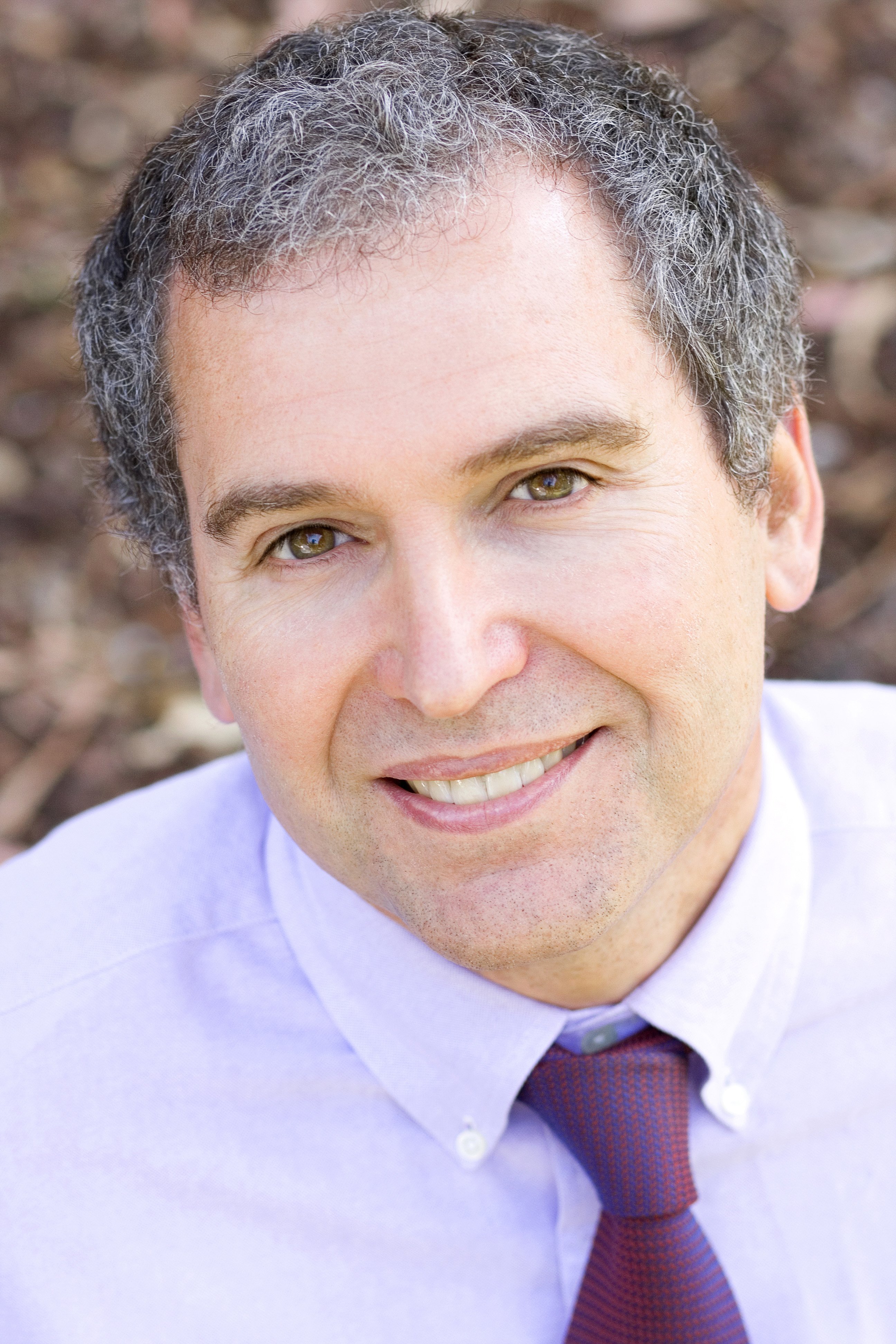
0
narayan_headshot_-_ashray_narayan.jpg

Ashray Narayan is an M.A. candidate in International Policy at Stanford’s Freeman Spogli Institute whose work bridges technology policy, media, and democracy. He previously managed programs at Stanford’s Center for International Security and Cooperation with Professor Andrew Grotto, led marketing and launch strategy for the Sequoia‑backed startup Rox, and held senior creative roles at Buck Mason and Bode. Earlier experiences include the U.S. Department of State’s Bureau of Economic and Business Affairs and research at UC Berkeley. Ashray earned a B.A. in Economics from USC. 

Master's in International Policy Class of 2027
Date Label

Incumbent president Emmanuel Macron is favorite to win reelection on April 24, but the outcome remains uncertain; it will largely depend on the results of the first round of voting on April 10. Three candidates, all on the Right and far Right, can still potentially defeat Macron. Even if Macron he is reelected, this should not be construed as an endorsement of the status quo. French politics is in the midst of a major partisan and ideological realignment.


Photo of Patrick Chamorel
Patrick Chamorel teaches transatlantic relations and comparative US and European politics at Stanford in Washington as well as, occasionally, at FSI's Ford Dorsey master in international policy. His research focuses on elections, political elites and democratic institutions in both the US and Europe. He is a frequent commentator on French, European and US media. Chamorel is a member of the editorial board of "American Purpose". At Stanford, he has been a Research scholar at CDDRL as well as a National Fellow at the Hoover Institution. He was an adviser to the French minister of industry as well as the Prime Minister. Chamorel holds a PhD in political science from Sciences-Po in Paris and a masters in public law from the university of Paris.


*If you need any disability-related accommodation, please contact: Shannon Johnson (sj1874@stanford.edu) by March 24, 2022.

0
Senior Resident Scholar at the Stanford Center in Washington
chamorel_patrick_photo.jpg

Patrick Chamorel conducts research on elections, populism, political movements and cleavages in Western democracies; Comparative US/European politics; Transatlantic relations; European politics; French politics, economic and foreign policy. He was most recently a Research Scholar at the Center for Democracy, Development and the Rule of Law at the Freeman Spogli Institute for International Studies (FSI), Stanford University.

Chamorel teaches comparative American and European politics, public policy and political economy, as well as transatlantic relations both at Stanford in Washington and at FSI’s Ford Dorsey Master in International Policy. He has also taught at the Stanford in Paris campus, the Reims Euro-American campus of Sciences-Po Paris, the University of California (Berkeley and Santa Cruz), George Washington University, and Claremont McKenna College where he was the Crown Visiting professor of Government in 2001-5.

Patrick Chamorel was a Fellow of the Institute for Governmental Studies at UC Berkeley, the Woodrow Wilson Center in Washington DC and the Hoover Institution at Stanford, as well as a Congressional Fellow of the American Political Science Association (Offices of Harry Reid in the U.S. Senate and Norman Mineta in the House of Representatives).

Patrick Chamorel has written and lectured extensively on US and European politics. His research has focused on US and European elections and the rise of populism; US strategic, political and economic relations with Europe; American and European political and business elites; the impact of globalization on government, business and civil society, as well as the rise of Euro-skepticism in America.

He regularly contributes to the media, including the Wall Street Journal, Die Welt, Les Echos, Atlantico.fr, the Canadian Broadcasting Corporation, Al-Jazeera, i24news, RMC, Talk Media News, BFM-TV, Le Figaro TV and CNN International. He is also a regular consultant to the US State Department.

In the 1990s, Patrick Chamorel was a Senior Advisor to the Minister of Industry and in the Policy Planning Office of the Prime Minister in Paris. He is a graduate of Sciences-Po in Paris where he also earned his Ph.D. in Political Science after doing research at UC Berkeley and Stanford University. He holds a Master in Public Law from the University of Paris.

Senior Resident Scholar speaker Stanford Center in Washington
Governance

Image
Facebook's Faces event flyer on blue and red background with photo of Chinmayi Arun
Join us on Tuesday, March 1 from 12 PM - 1 PM PT for a panel discussion on “Facebook’s Faces” featuring Chinmayi Arun, Resident Fellow at the Yale Law School in conversation with Nate Persily of the Stanford Cyber Policy Center. This weekly seminar series is jointly organized by the Cyber Policy Center’s Program on Democracy and the Internet and the Hewlett Foundation’s Cyber Initiative.

About The Seminar: 

Scholarship about social media platforms discusses their relationship with states and users. It is time to expand this theorization to account for differences among states, the varying influence of different publics and the internal complexity of companies. Viewing Facebook’s relationships this way includes less influential states and publics that are otherwise obscured. It reveals that Facebook engages with states and publics through multiple, parallel regulatory conversations, further complicated by the fact that Facebook itself is not a monolith. Arun argues that Facebook has many faces – different teams working towards different goals, and engaging with different ministries, institutions, scholars and civil society organizations. Content moderation exists within this ecosystem.
 
This account of Facebook’s faces and relationships shows that less influential publics can influence the company through strategic alliances with strong publics or powerful states. It also suggests that Facebook’s carelessness with a seemingly weak state or a group, may affect its relationship with a strong public or state that cares about the outcome.

To be seen as independent and legitimate, the Oversight Board needs to show its willingness to curtail Facebook’s flexibility in its engagement with political leaders where there is a real risk of harm. This essay hopes to show that Facebook’s fear of short-term retaliation from some states should be balanced out by accounting for the long-term reputational gains with powerful publics and powerful states who may appreciate its willingness to set profit-making goals aside in favor of human flourishing.

About the Speakers:

Image
Chinmayi Arun
Chinmayi Arun is a resident fellow of the Information Society Project at Yale Law School, and an affiliate of the Berkman Klein Center of Internet & Society at Harvard University. She has served on the faculties of two of the most highly regarded law schools in India for over a decade, and was the founder Director of the Centre for Communication Governance at National Law University Delhi. She has been a Human Rights Officer with the United Nations and is a member of the United Nations Global Pulse Advisory Group on the Governance of Data and AI, and of UNESCO India’s Media Freedom Advisory Group.

Chinmayi serves on the Global Network Initiative Board, and is an expert affiliated with the Columbia Global Freedom of Expression project. She has been consultant to the Law Commission of India and member of the Indian government’s multi stakeholder advisory group for the India Internet Governance Forum in the past.

Image
Nate Persily
Nathaniel Persily is the James B. McClatchy Professor of Law at Stanford Law School, with appointments in the departments of Political Science, Communication, and FSI.  Prior to joining Stanford, Professor Persily taught at Columbia and the University of Pennsylvania Law School, and as a visiting professor at Harvard, NYU, Princeton, the University of Amsterdam, and the University of Melbourne. Professor Persily’s scholarship and legal practice focus on American election law or what is sometimes called the “law of democracy,” which addresses issues such as voting rights, political parties, campaign finance, redistricting, and election administration. He has served as a special master or court-appointed expert to craft congressional or legislative districting plans for Georgia, Maryland, Connecticut, New York, North Carolina, and Pennsylvania.  He also served as the Senior Research Director for the Presidential Commission on Election Administration. His current work, for which he has been honored as a Guggenheim Fellow, Andrew Carnegie Fellow, and a Fellow at the Center for Advanced Study in the Behavioral Sciences, examines the impact of changing technology on political communication, campaigns, and election administration.  He is codirector of the Stanford Cyber Policy Center, Stanford Program on Democracy and the Internet, and the Stanford-MIT Healthy Elections Project, which supported local election officials in taking the necessary steps during the COVID-19 pandemic to provide safe voting options for the 2020 election. He is also a member of the American Academy of Arts and Sciences, and a commissioner on the Kofi Annan Commission on Elections and Democracy in the Digital Age.


Seminars
-

Never in history has a democracy succeeded in being both diverse and equal, treating members of many different ethnic or religious groups fairly. And yet achieving that goal is now central to the democratic project in countries around the world. It is “the great experiment” of our time.

Why is it so hard to build diverse democracies? Would principles and policies do we need to adopt to maximize the chances of making them work? And how good are the chances of success? The project of building thriving diverse democracies may well fail. But the chances of success, this talk argues, are better than the pessimism which is now dominant suggests.

ABOUT THE SPEAKER

Image
yascha_mounk.jpg
Yascha Mounk is a Professor of the Practice of International Affairs at Johns Hopkins University, a Contributing Editor at The Atlantic, a Senior Fellow at the Council on Foreign Relations, and the Founder of Persuasion. The host of The Good Fight podcast, his latest book is The Great Experiment: Why Diverse Democracies Fall Apart and How They Can Endure.


Virtual to Public. Only those with an active Stanford ID with access to E008 in Encina Hall may attend in person.

Didi Kuo

Virtual to Public. Only those with an active Stanford ID with access to E008 in Encina Hall may attend in person.

Yascha Mounk Professor of the Practice of International Affairs Johns Hopkins University
Seminars
Authors
Oriana Skylar Mastro
News Type
Commentary
Date
Paragraphs

This commentary was originally published by The Wall Street Journal.


A Russian invasion of Ukraine would be the most consequential use of military force in Europe since World War II and could put Moscow in a position to threaten U.S. allies in Europe. Many in the American foreign-policy establishment argue that the appropriate U.S. response to any such invasion is a major American troop deployment to the Continent. This would be a grave mistake.

The U.S. can no longer afford to spread its military across the world. The reason is simple: an increasingly aggressive China, the most powerful state to rise in the international system since the U.S. itself. By some measures, China’s economy is now the world’s largest. And it has built a military to match its economic heft. Twenty-five years ago, the Chinese military was backward and obsolete. But extraordinary increases in Beijing’s defense budget over more than two decades, and top political leaders’ razor-sharp focus, have transformed the People’s Liberation Army into one of the strongest militaries the world has ever seen.


Sign up for APARC newsletters to receive our experts' commentary and analysis.


China’s new military is capable not only of territorial defense but of projecting power. Besides boasting the largest navy in the world by ship count, China enjoys some capabilities, like certain types of hypersonic weapons, that even the U.S. hasn’t developed.

Most urgently, China poses an increasingly imminent threat to Taiwan. Xi Jinping has made clear that his platform of “national rejuvenation” can’t be successful until Taiwan unifies with the mainland—whether it wants to or not. The PLA is growing more confident in its ability to conquer Taiwan even if the U.S. intervenes. Given China’s military and economic strength, China’s leaders reasonably doubt that the U.S. or anyone else would mount a meaningful response to an invasion of Taiwan. To give a sense of his resolve, Mr. Xi warned that any “foreign forces” standing in China’s way would have “their heads . . . bashed bloody against a Great Wall of steel forged by over 1.4 billion Chinese people.”

If Taiwan falls into Chinese hands, the U.S. will find it harder to defend critical allies like Japan and the Philippines, while China will be able to project its naval, air and other forces close to the U.S. and its territories

The U.S. must defend Taiwan to retain its credibility as the leader of a coalition for a free and open Indo-Pacific. From a military perspective, Taiwan is a vital link in the first island chain of the Western Pacific. If Taiwan falls into Chinese hands, the U.S. will find it harder to defend critical allies like Japan and the Philippines, while China will be able to project its naval, air and other forces close to the U.S. and its territories. Taiwan is also an economic dynamo, the ninth-largest U.S. trading partner of goods with a near-monopoly on the most advanced semiconductor technology—to which the U.S. would most certainly lose access after a war.

The Biden administration this month ordered more than 6,000 additional U.S. troops deployed to Eastern Europe, with many more potentially on the way. These deployments would involve major additional uncounted commitments of air, space, naval and logistics forces needed to enable and protect them. These are precisely the kinds of forces needed to defend Taiwan. The critical assets—munitions, top-end aviation, submarines, and intelligence, surveillance and reconnaissance capabilities—that are needed to fight Russia or China are in short supply. For example, stealthy heavy bombers are the crown jewel of U.S. military power, but there are only 20 in the entire Air Force.

The U.S. has no hope of competing with China and ensuring Taiwan’s defense if it is distracted elsewhere. It is a delusion that the U.S. can, as Pentagon press secretary John Kirby said recently, “walk and chew gum at the same time” with respect to Russia and China. Sending more resources to Europe is the definition of getting distracted. Rather than increasing forces in Europe, the U.S. should be moving toward reductions.

To be blunt: Taiwan is more important than Ukraine. America’s European allies are in a better position to take on Russia than America’s Asian allies are to deal with China.

There is a viable alternative for Europe’s defense: The Europeans themselves can step up and do more for themselves, especially with regard to conventional arms. This is well within Europe’s capacity, as the combined economic power of the NATO states dwarfs that of Russia. NATO allies spend far more on their militaries than Russia. To aid its European allies, the U.S. can provide various forms of support, including lethal weapons, while continuing to remain committed to NATO’s defense, albeit in a more constrained fashion, by providing high-end and fungible military capabilities. The U.S. can also continue to extend its nuclear deterrent to NATO.

The U.S. should remain committed to NATO’s defense but husband its critical resources for the primary fight in Asia, and Taiwan in particular. Denying China the ability to dominate Asia is more important than anything that happens in Europe. To be blunt: Taiwan is more important than Ukraine. America’s European allies are in a better position to take on Russia than America’s Asian allies are to deal with China. The Chinese can’t be allowed to think that America’s distraction in Ukraine provides them with a window of opportunity to invade Taiwan. The U.S. needs to act accordingly, crisis or not.

Ms. Mastro is a center fellow at the Shorenstein Asia-Pacific Research Center, part of Stanford’s Freeman Spogli Institute for International Studies, and a nonresident senior fellow at the American Enterprise Institute. Mr. Colby is a principal at the Marathon Initiative and author of “The Strategy of Denial: American Defense in an Age of Great Power Conflict.”

Headshot of Oriana Skylar Mastro

Oriana Skylar Mastro

Center Fellow at the Freeman Spogli Institute for International Studies
Full Biography

Read More

President Xi and Kim Jong Un meet on a TV screen
Commentary

North Korea Is Becoming an Asset for China

Pyongyang’s Missiles Could Fracture America’s Alliances
North Korea Is Becoming an Asset for China
Chinese military propaganda depicting the Second Taiwan Strait Crisis of 1958.
News

Reassessing China’s Capabilities and Goals for Strategic Competition

On the World Class podcast, Oriana Skylar Mastro argues that in order to set effective policy toward China, the United States needs to better understand how and why China is projecting power.
Reassessing China’s Capabilities and Goals for Strategic Competition
Taiwan Wall
Commentary

Would the United States Come to Taiwan's Defense?

On CNN's GPS with Fareed Zakaria, APARC Center Fellow Oriana Skylar Mastro shares insights about China's aspirations to take Taiwan by force and the United States' role, should a forceful reunification come to pass.
Would the United States Come to Taiwan's Defense?
Hero Image
Army Reserve members during practice
U.S. Army Reserve members during a Cold Weather Operations Course near Fort McCoy, Wisconsin, Jan. 13, 2022.
U.S. Army Reserve photo by Sgt. 1st Class Clinton Wood
All News button
1
Subtitle

Getting bogged down in Europe will impede the U.S.’s ability to compete with China in the Pacific.

Date Label
650-736-7622
0
jb_headshot_copy.jpg MS

In addition to her role as Director of Strategic Partnerships for the Human Trafficking Data Lab, Jessie Brunner serves as Deputy Director of Strategy and Program Development at the Center for Human Rights and International Justice at Stanford University. In this capacity she manages the Center's main interdisciplinary collaborations and research activities, in addition to advising on overall Center strategy. Jessie currently researches issues relevant to data collection and ethical data use in the human trafficking field, with a focus on Brazil and Southeast Asia. Furthermore, in her role as co-Principal Investigator of the Re:Structure Lab, Jessie is investigating how supply chains and business models can be re-imagined to promote equitable labor standards, worker rights, and abolish forced labor. Brunner earned a MA in International Policy from Stanford University and a BA in Mass Communications and a Spanish minor from the University of California, Berkeley.

Director of Strategic Partnerships, Human Trafficking Data Lab
Deputy Director of Strategy and Program Development, Center for Human Rights and International Justice

This event is open to the public online via Zoom, and limited-capacity in-person attendance for Stanford affiliates may be available in accordance with Stanford’s health and safety guidelines.

Register for Zoom                                            Register for In-Person

(Open to all)                                            (Stanford Only)

Recent elections in the advanced western democracies have undermined the basic foundations of political systems that had previously beaten back all challenges -- from both the left and the right. The election of Donald Trump to the U.S. presidency, only months after the United Kingdom voted to leave the European Union, signaled a dramatic shift in the politics of the rich democracies. In Anti-System Politics, Jonathan Hopkin traces the evolution of this shift and argues that it is a long-term result of abandoning the post-war model of egalitarian capitalism in the 1970s. That shift entailed weakening the democratic process in favor of an opaque, technocratic form of governance that allows voters little opportunity to influence policy. With the financial crisis of the late 2000s these arrangements became unsustainable, as incumbent politicians were unable to provide solutions to economic hardship. Electorates demanded change, and it had to come from outside the system.

Using a comparative approach, Hopkin explains why different kinds of anti-system politics emerge in different countries and how political and economic factors impact the degree of electoral instability that emerges. Finally, he discusses the implications of these changes, arguing that the only way for mainstream political forces to survive is for them to embrace a more activist role for government in protecting societies from economic turbulence. A historically-grounded analysis of arguably the most important global political phenomenon at present, Anti-System Politics illuminates how and why the world seems upside down.


Image
Jonathan Hopkin

Jonathan Hopkin is Professor in the European Institute and the Department of Government of the London School of Economics and Political Science. He obtained his PhD at the European University Institute in Florence. He is the author of Party Formation and Democratic Transition in Spain (1999, Macmillan) and Anti-System Politics: The Crisis of Market Liberalism in Rich Democracies (2020, Oxford University Press). Previously he taught at the Universities of Bradford, Durham and Birmingham, and held visiting positions at Johns Hopkins University Baltimore, the University of Bologna, and the Autonomous University of Barcelona. He has published widely on the party politics and political economy of Europe in peer-reviewed journals as well as for a wider audience.

*If you need any disability-related accommodation, please contact Shannon Johnson (sj1874@stanford.edu) by February 24, 2022.

Hybrid: Online via Zoom and in-person for Stanford affiliates.

Jonathan Hopkin Professor of Comparative Politics speaker London School of Economics

The focus of religion & politics research has been predominantly on the impact of religious actors on democratic and non-democratic political systems and religion-inspired political behavior. But to better understand the political significance of religion, it is necessary to look below this institutional level and adopt a micropolitical perspective which incorporates insights from fields such as behavioral ecology, social psychology or cognitive science to study the internal politics of religious communities.

Why is religion, despite its costly requirements and uncertain rewards, such a potent factor of mobilization? How does it legitimize claims for power and status? Why do religious groups significantly outlast secular ones? To address some of these questions, I examine political systems of communitarian religious groups – including the American Shakers and Russian Skoptsy – through the lenses of costly signaling theory of religion. This evolutionarily-informed theoretical framework contributes to the explanation of seemingly irrational and costly ascetic and ecstatic religious behavior not only as signals of commitment, but also as bids for power and status. The added value of such micropolitical study of religious communities is that it may shed light on the complex relationship between religion and political power in the early stages of human social development. But it also contributes to our understanding of some modern religio-political phenomena, such as various form of political sacrifice, including suicidal terrorism.
 

Image
Maciej Potz

Maciej Potz is a professor of Political Science at the Department of Political Systems, Faculty of International and Political Studies, University of Łódź, Poland. He earned his Ph.D. in 2006 from the Silesian University in Katowice and his post-doctoral degree from the University of Łódź in 2017, both in Political Science. His primary area of interest is religion and politics, with special focus on theocracies (as a Foundation for Polish Science scholar, he studied Shaker and Mormon theocracies in the USA in 2009 and 2012) and political strategies of religious actors in contemporary democracies, especially in Poland and the USA. His other research interests include political theory (especially theory of power and democratic theory), comparative politics and, most recently, evolutionary political science.

Maciej Potz published three monographs: (i) Granice wolności religijnej [The Limits of Religous Liberty] 2008 (2nd ed. 2015), Wrocław: FNP, on religious freedom, church-state relations and confessional politics in the USA; (ii) Amerykańskie teokracje. Źródła i mechanizmy władzy usankcjonowanej religijnie [American Theocracies. The Sources and Mechanisms of Religion-Sanctioned Power] 2016, Łódź: UŁ, theorizing theocracy as a type of a political system and emprically exploring North American theocracies; (iii) Political Science of Religion: Theorizing the Political Role of Religion, 2020, London: Palgrave MacMillan – a theoretical framework for the analysis of religion’s impact on politics. He also authored several journal articles, including in Religion, State and Society, Journal of Political Power, Politics and Religion and Studia Religiologica.

Maciej Potz has taught political science-related courses in the University of Lodz and, as guest lecturer, at other European universities, including University of the West of Scotland in Glasgow, Buskerund College and NTNU (Norway), University of Joensuu (Finland), University of La Laguna (Spain). He participated in a number of international conferences, including “XXI World IAHR Congress in Erfurt (2015), IPSA World Congresses of Political Science in Santiago (2019), Madrid (2012) and Poznań (2016), APSA Annual Meeting (forthcoming in 2021).  

The research project he will be pursuing at Stanford, entitled Costly signaling Under His Eye: explaining the commune longevity puzzle, uses costly signaling theory of religion to explore the determinants of cohesion and longevity of (communitarian) religious groups. It also proposes a novel political interpretation of signaling behavior. Over the next three years, he will head a research team undertaking an empirical study (funded by National Science Centre of Poland) of power and status in Catholic religious orders.


*If you need any disability-related accommodation, please contact: Shannon Johnson (sj1874@stanford.edu) by February 3, 2022.

Maciej Potz Professor of Political Science speaker University of Łódź, Poland
Subscribe to Europe