


Managing Uncertainties in the Regulation of Nuclear Facilities and Materials
-
This presentation will describe the NRC’s mission, the traditional approach to regulation of nuclear power facilities, and the NRC’s more recent use of probabilistic risk assessment (PRA) in regulation. The presentation will also explore uncertainties in PRA and the role they play in NRC decision making.
About the speaker: The Honorable George Apostolakis was sworn in as a Commissioner of the U.S. Nuclear Regulatory Commission (NRC) on April 23, 2010, to a term ending on June 30, 2014.
Dr. Apostolakis has had a distinguished career as an engineer, professor and risk analyst. Before joining the NRC, he was a professor of Nuclear Science and Engineering and a professor of Engineering Systems at the Massachusetts Institute of Technology. He was also a member and former Chairman of the statutory Advisory Committee on Reactor Safeguards of the NRC.
In 2007, Dr. Apostolakis was elected to the National Academy of Engineering for "innovations in the theory and practice of probabilistic risk assessment and risk management." He has served as the Editor-in-Chief of the International Journal Reliability Engineering and System Safety and is the founder of the International Conferences on Probabilistic Safety Assessment and Management. He received the Tommy Thompson Award for his contributions to improvement of reactor safety in 1999 and the Arthur Holly Compton Award in Education in 2005 from the American Nuclear Society.
Dr. Apostolakis is an internationally recognized expert in risk assessment. He has published more than 120 papers in technical journals and has made numerous presentations at national and international conferences. He has edited or co-edited eight books and conference proceedings and has participated in many probabilistic risk assessment courses and reviews.
Dr. Apostolakis received his diploma in electrical engineering from the National Technical University in Athens, Greece in 1969. He earned a master's degree in engineering science in 1970 and a Ph.D. in engineering science and applied mathematics in 1973, both from the California Institute of Technology.
Reuben W. Hills Conference Room
George Apostolakis
Commissioner
Speaker
Nuclear Regulatory Commission
Seminars
Asia "pivot" emphasizes security over economy, says Stanford's Emmerson
News Type
News
Date
Paragraphs
Scarborough Shoal, a tiny rocky outcropping and lagoon off the west coast of the Philippines, sits at the center of the latest South China Sea tug-of-war. Protesters took to the streets in Manila on May 11 to criticize China’s support of fishermen who entered the disputed territory a month ago and sparked a yet unresolved naval standoff between the Philippines and China. On May 9, while ships from both sides maneuvered in the area, Manila's secretary of defense assured Filipinos that if Beijing attacked, Washington would come to the country’s defense.
That expectation had been strengthened in Manila in November 2011 when the visiting American secretary of state, Hillary Clinton, referred to the South China Sea as the “West Philippine Sea.” Clinton’s slip of the tongue was not a major diplomatic incident. But some Flipinos saw it as a sign of U.S. support for their government's maritime claims.
Washington’s refusal to side with any of the claimant states had not changed. What had changed was the level of American concern. In the November 2011 issue of Foreign Policy Clinton had defended the idea of a “pivot” toward Asia, meaning a renewed U.S. focus on Asia after a decade of intense military activity in Afghanistan and Iraq.
The term “pivot” has fallen out of favor in Washington, but the Obama administration’s heightened interest in Asia is real and ongoing, says Donald K. Emmerson, director of Stanford’s Southeast Asia Forum. He recently discussed the nuances of what he describes as an important but “lopsided pivot.”
How does the pivot fit into the larger global picture?
In the continuing debate as to whether the United States is in decline, the key question is: relative to what? Certainly, if we compare the situation now with the period immediately after World War II, the United States is less powerful relative to the power of other states. But 1945 ushered in a uniquely unipolar moment in American history. Americans had escaped the physical devastation wreaked on Europe and much of Asia. Germany and Japan lay in ruins. Twenty million Russians were dead. China’s long-running civil war would soon resume. Suddenly America had no credible competitors for global power.
Today? Conventional wisdom holds that Asia has become the center of gravity in the global economy. Yet even if we use purchasing power parity rather than exchange rates to measure the American share of world GDP, that share has only modestly decreased. Meanwhile, China’s remarkable rise may be leveling off. The evidence is less that the United States is in secular decline than that the world is changing in ways to which Americans need to adapt if they are to regain economic health. If the pivot facilitates that adaptation, it will have been a success.
Do you interpret the pivot to the Asia-Pacific as more hype or reality?
The pivot is definitely a reality, but the reality is partly about symbolism and atmospherics. The pivot conveys reassurance, particularly to Southeast Asia, that the United States cares about the Asia-Pacific region and that it is willing to cooperate more than before with the Association of Southeast Asian Nations (ASEAN). Part of that is simply “showing up”—a willingness to attend ASEAN regional meetings. Another part of the pivot, however, involves raising the American security profile in the region, which has so far strengthened ASEAN’s diplomatic hand in dealing with China’s sweeping claim to the South China Sea.
How has the pivot been received and interpreted in Asia?
Generally speaking, the pivot has been welcomed in Southeast Asia, despite worries that if it becomes an effort to contain China, a Sino-American cold war could result. The specific responses of Southeast Asian governments have differed, however, on a spectrum from passive acquiescence to active support.
In Japan, the rotation of prime ministers in and out of office has understandably focused that country’s politics more on domestic concerns, and the still not fully resolved disposition of U.S. forces on Okinawa has drawn energy from the bilateral relationship.
As a “middle power,” South Korea has been supportive of multilateral frameworks and solutions. Seoul is pleased to see a renewed American interest in working with Asians in multilateral settings such as ASEAN and the East Asia Summit.
China’s response has varied between cool and hostile. The foreign ministry has treated the pivot with some equanimity compared with the hostility of those in the People’s Liberation Army who view increased American involvement in Asia as a threat to Chinese aims and claims, especially regarding the South China Sea. China’s foreign policy is the outcome of contestation between various groups inside the country that do not necessarily see eye to eye on how best to handle the United States.
What do you see as the main implications, repercussions, and complications of the pivot?
The pivot, as Hillary Clinton advertised it in her Foreign Policy article, signals a shift in U.S. priorities away from Iraq and Afghanistan. For a time following the 9/11 attacks on America in 2001, the United States tended either to neglect Southeast Asia or to treat it as a second front in the “war on terror.” Economically, the pivot implies an acknowledgment that if America is to prosper in this century it will have to pay closer attention to Asia as an engine of global economic growth. Diplomatically, the pivot implies that with regard to Asian states, Washington cannot merely manage its relations bilaterally as the hub where their spokes meet, but must cultivate multilateral diplomacy as well. Militarily, the pivot implies that even while the American global force posture is drawn down in some parts of the world, it needs to be upgraded in Asia in response to Asian and American concerns over the terms on which China’s rise will take place.
A major constructive repercussion of the pivot has been the evolution of China’s own diplomacy in Southeast Asia. Previously China had disavowed multilateral diplomacy with Southeast Asians over claims to the South China Sea—a bilateralist strategy that in Southeast Asian eyes resembled an effort to “divide and rule.” America’s willingness to reach out to ASEAN and take part in ASEAN events has helped diplomats in any one Southeast Asian country to resist having to face China alone. Multilateral discussions, involving China and meant to prepare the way toward an eventual Code of Conduct, are now underway.
But as we saw recently during Hillary Clinton’s visit to the Philippines, it is important for Washington to maintain its independence and impartiality while facilitating peace in the region.
Complications? Yes, there is a danger that Washington could be dragged into supporting, or appearing to support, the claims of one of the Southeast Asian parties to the dispute. The Obama administration is aware of this risk, however, and I strongly doubt that an American official will again refer to the “West Philippine Sea.”
A more serious complication in the longer run may arise from the pivot’s emphasis to date on Asian-Pacific security, and its relative lack of attention to creating and cultivating American economic opportunities in Asia.
China’s economic footprint in Asia is large and growing. It has moved up to become the main trading partner of many countries that used to trade proportionally more with the United States. An unbalanced relationship in which China saves and lends what Americans borrow and spend is unhealthy for both countries, and it cannot last. The pivot should forestall an invidious division of labor whereby Washington through the Seventh Fleet subsidizes the regional peace that enables Asians to prosper doing business with China. A higher priority needs to be placed on promoting American trade and investment in Asia, including China.
The Obama administration is hoping to persuade more Asian economies to join an arrangement called the Trans-Pacific Strategic Economic Partnership (TPP), but the bar that it sets is high. The TPP’s strict protections for the environment, labor, and intellectual property rights and its comprehensive cuts in both tariff and non-tariff barriers to trade have raised its quality but lowered its appeal, especially to the region’s larger economies. Meanwhile, anticipated cuts in American budgets for defense will only intensify the need to refocus the pivot on economic as well as military access to Asia.
Related Resources
Foreign Policy: “America’s Pacific Century”
November 2011 article by Hillary Clinton introducing the concept of the "Asia pivot."
Stanford Daily: "Obama pivots policy toward Asia"
Summary of Donald K. Emmerson's May 1, 2012 talk.
LinkAsia: "Treat Scarborough Shoal Incident as a 'Wake Up Call'"
Hero Image

Hillary Clinton departs a U.S. navy ship docked in Manila Bay, November 2011.
Flickr / U.S. Navy photo by Mass Communication Specialist 3rd Class Andrew Ryan Smith; http://bit.ly/LyyYYd
All News button
1
Comment by Karl Eikenberry on "Keeping NATO Relevant"
News Type
News
Date
Paragraphs
Jamie Shea's essay "Keeping NATO Relevant" appearing in the Carnegie Endowment for International Peace April 2012 edition of Policy Outlook offers a comprehensive, thoughtful, and - given the 20-21 May NATO Summit in Chicago - timely discussion of the Alliance's future.
Shea, currently the Deputy Assistant Secretary General for Emerging Security Challenges, is one of the most experienced and articulate senior officials assigned to the NATO International Staff.
During my own posting to NATO Headquarters in Brussels from 2007 to 2009, I was consistently impressed with Shea’s ability to make clear the Alliance’s strategic vulnerabilities and opportunities. He has done this in spades in “Keeping NATO Relevant.”
As the NATO mission in Afghanistan transitions from one of large scale combat to that of limited training assistance, Alliance leaders must look to the future and better define the organization's purpose. The author identifies and covers the relevant issues well - threat assessment, tasks, required capabilities, degree of reliance on the United States, and the role of partnerships between NATO and other countries.
A fiscally constrained United States will need to rely on its alliance partners even more in the post- Iraq and Afghanistan era. Foremost among these alliances is NATO. I commend Jamie Shea's article to those interested in better understanding its limitations and potential.
Karl Eikenberry is the Freeman Spogli Institute for International Studies Institute Payne Distinguished Lecturer and research affiliate at The European Center . He was the Deputy Chairman of the NATO Military Committee from 2007 to 2009.
All News button
1

Bo Xilai affair a turning point for China's top leadership
News Type
News
Date
Paragraphs
A revelatory story emerged in China this spring: Bo Xilai, Chongqing’s powerful Communist Party head, was stripped of both his post and party membership and accused of shocking abuses of power, including covering up his wife’s alleged involvement in the death of a shadowy British businessman.
On May 2, the Shorenstein Asia-Pacific Research Center held a special seminar to make sense of what this unusual high-level scandal could mean for the future of China’s current political system, erupting just months ahead of a once-in-a-generation leadership transition.
Minxin Pei, director of the Keck Center for International and Strategic Studies at Claremont McKenna College, said the scandal is a severe test for the Chinese Communist Party (CCP), which balances on a knife’s edge as it prepares to replace the majority of its Politburo members—the highest CCP echelon. The Bo affair has exposed the existence of serious corruption at a very high level of government, calling into question the party’s image and credibility.
“This is the biggest threat to party unity since 1989,” he said.
More potentially damaging still, however, is the negative light it has cast on China’s overall political system. The scandal has revealed weaknesses and loopholes in the power structure, and the government’s poor crisis management skills.
“The Bo Xilai affair is the beginning of the end of the Tiananmen era,” Pei said. “Twenty years from now, historians will make this point.”
Xueguang Zhou, a professor of sociology and Freeman Spogli Institute senior fellow, agreed with Pei’s analysis that Bo’s fall from power has tarnished the party’s image and deeply disrupted the cohesiveness of its upper leadership.He spoke also of the outpouring of criticism on social media sites for the government’s inability to reign in corruption—so much so that censors have not been able to keep up.
“These voices have been so fierce in criticizing the top leadership that it has huge implications for the emergence of China’s civil society,” Zhou said.
He expressed his concern for the future of local politics after the smoke from the Bo affair has cleared. Although it is widely acknowledged in China that shady political dealings go hand-in-hand with local-level politics, positive innovations in governance also frequently occur at the city and county level.
“I hope that local governments will still have the power to experiment,” he said.
After all is said and done, China’s top leadership is at a major turning point. Only time will tell the full impact of the fall of Bo Xilai, both during this year’s power transition and the evolution of China’s government structure in the coming decades.
Hero Image

A rain-spattered window and misty bridge in Chongqing, October 2011, one month before the death of British businessman Neil Heywood.
Flickr/International Hydropower Association; http://bit.ly/J8JSoh
All News button
1
ICC Turns Ten: Reviewing the Past, Assessing the Future
-
Image
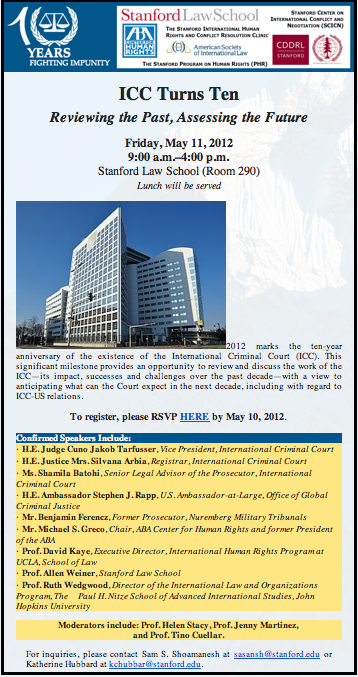
Stanford Law School (Room 290)
Helen Stacy
Senior Fellow, CDDRL; Affiliated Faculty, Stanford School of Law; Europe Center Research Affiliate and Director, Program on Human Rights
Moderator
Stanford University
Conferences
The Next Phase of China’s Health System Reforms
-
In spring 2009, China’s leadership announced ambitious national health reforms. Have the five stated goals of the first three years of reform been met? What policies will China pursue in the next phase? As a prominent advisor to China's State Council Health Reform Office, Liu will discuss progress and prospects for reforms—especially the role of the private sector within the health system—within the context of China’s 2012 leadership transition.
Gordon Liu is a professor of economics at Peking University's (PKU) Guanghua School of Management, and director of PKU's China Center for Health Economic Research. Previously, he served as a tenured associate professor at the University of North Carolina at Chapel Hill (2000–2006), and as an assistant professor at the University of Southern California (1994–2000).
Liu's primary research interests include health and development economics, health policy and reform, and pharmaceutical economics. His current research is funded by the State Council Health Reform Office, the National Science Foundation, UNICEF, and the China Medical Board.
Liu currently serves on the State Council Health Reform Advisory Commission, and the Expert Panel for the State Ministry of Human Resource and Social Security. He serves as co-editor for the journal Value in Health, and as editor-in-chief for China Journal of Pharmaceutical Economics. He sits on the editorial boards for the European Health Economic Review, Global Handbook for Health Economics, and Chinese Journal of Health Economics.
He received his PhD in Economics from the City University of New York Graduate School while working as a graduate research fellow at the National Bureau of Economic Research under the supervision of Michael Grossman (1986–1991). He obtained post-doctoral training at Harvard University with William Hsiao (1992–1993). Liu has served as the president for the Chinese Economists Society, and chair for the Asian Consortium for the International Society for Pharmacoeconomics and Outcomes Research.
Philippines Conference Room
Gordon Liu
Professor of Economics
Speaker
Peking University Guanghua School of Management
Seminars