-

Abstract:

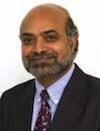
There is a wide diversity in the provision of public services in India. In some states one can go for miles without seeing a functional school or public health centre, where roads are poorly maintained, and electricity has not yet been introduced. In other places, governments tend to function remarkably in extending basic public services to all, with tremendous consequences to human lives. In this talk, Vivek Srinivasen will explore why some parts of India have developed an impressive social commitment to such services unlike others. In this context, he will also discuss the remarkable changes in Bihar and other parts of North India in the recent years.

 Speaker Bio: 

Vivek Srinivasen joined the Liberation Technology Program as the manager in February 2011 after completing his Ph.D. in Social Sciences from the Maxwell School of Syracuse University. Prior to this, Srinivasen worked with campaigns on various socio-economic rights in India, including the right to food, education and the right to information. Based on these experiences he has written (and co-authored) extensively on issues surrounding the right to food, including Notes from the right to food campaign: people's movement for the right to food (2003), Rights based approach and human development: An introduction (2008), Gender and the right to food: A critical re-examination (2006), Food Policy and Social Movements: Reflections on the Right to Food Campaign in India (2007).

Encina Ground Floor Conference Room

Vivek Srinivasen Program Manager Speaker Program on Liberation Technology, Stanford University
Seminars
Paragraphs

Climate change will lead to massive conflicts, according to claims of such prominent sources as Sir Nicholas Stern and the US National Security Agency - claims repeated by the media. Efforts to tease a specific climate change signal from historical records of civil conflict have proved inconclusive, however: they postulate that farmers will become fighters when resources become critically scarce; but they have been unable to illuminate what specific mechanisms may be involved. Yet the potential for climate change to cause significant civil conflict seems intuitively obvious, and the need for better understanding remains urgent. My research focuses on sub-Saharan Africa, the most conflict-prone region in the world; and it asks what factors make some countries erupt in civil conflict, while others do not. I find that drops in agricultural exports diminish government capacity as tax revenues shrink, leading to an increase in the risk of civil conflict. Thus, government capacity to provide security and services is likely to become weak just at the time when climate change is increasing the need for both. How governments respond will determine the risk of civil conflict, but this research shows that their capacity to respond will, in fact, also be affected. The implications of these conclusions apply beyond sub-Saharan Africa, and begin to move the debate from questions around if climate change will cause conflict to more productive discussions of how climate change may affect conflict risk.

All Publications button
1
Publication Type
Dissertations
Publication Date
Authors
Kaitlin Shilling
News Type
News
Date
Paragraphs

The November 17 Liberation Technology Seminar was co-hosted by the Stanford Institute for Economic Policy Research (SIEPR), a nonpartisan economic policy research organization that unites remarkable economic talent from all parts of Stanford University. This seminar featured four student-led design projects that were created in the Designing Liberation Technologies course taught each spring at Stanford's Hasso Plattner Institute of Design (d.school) by professors' Josh Cohen and Terry Winograd. The class works in partnership with the University of Nairobi's School of Computing and Informatics to develop user-based designs that address outstanding challenges in the slums of Nairobi, Kenya. 

Josh Cohen described the three main elements of the design school class:

(1) There is a focus on user/human-centered design. Projects are designed based on a close engagement with end users: the people who will be using the solutions. (2) Courses are inter-disciplinary. The idea is to take people who are deeply embedded in a certain discipline and put them together with people from other disciplines. In order to come up with a solution to a real problem, team collaboration is necessary and (3) The approach to problem solving is about practice, not about theory. It is necessary to fail early and fail often in the process of creating workable solutions.

The panelists consisted of students who were working with partners in Kenya on how mobile technology could be used to address various social issues. A multidisciplinary team of students work in close collaboration with partners in Kenya, and some of these ideas are now being tested on the ground.

The first project that was described was M-maji (mmaji.wordpress.com). Sangick Jeon described how water in Kibera is scarce, costly and contaminated. Their aim is to use the nearly ubiquitous mobile technology to improve access to water. Vendors are able to advertise their water and then buyers can ask questions and provide feedback. This saves the time and resources that it takes to find clean water.

Nishuari, the second project, addresses the problem of inaccurate advice and rumors which lead to risky sexual behavior and often HIV and AIDS. They provide a mobile counseling service whereby individuals can submit health questions and receive responses from trained counselors using text messages. This helps to break down logistical and social barriers.

The third, Makmende considered the issue of serious crime in Kibera. Their aim is to look at how individuals can get safely from Point A to Point B. They set up walking groups so that people would not have to walk alone. Over 90% of people had a mobile phone and this was seen to be an effective way of building timely communication, so that groups of people can coordinate to walk more safely to reach their destinations.

The final project was Take Taka, which was the one project that was not focused on using computer technology. The team took up sanitation as the project and decided early on that the use of mobile phones adds no value to the issue. The focused instead of designing a special sanitary bucket that could be used instead of a toilet inside the home, and on developing a system of transmitting the deposits to a biogas unit. This project however has not been carried forward.

All News button
1
-

This seminar is jointly hosted by the Stanford Program on Regions of Innovation and Entrepreneurship (SPRIE) and Greater China Business Club (GCBC) at Stanford Graduate School of Business.

About the seminar

There is often much discussion about the current Chinese economic environment and how it impacts global economic growth. However, to gauge the true impact of China on the world economy, one should look at what will happen over the long term as the country gets closer to the United States in economic strength and maturity. This talk looked at the current trends in the Chinese political and economic arena, the long-term prospects for Chinese economic growth, and how these trends would impact the global economic order. Examples from the technology and internet industry were used to demonstrate this effect and how China would shape global industries.

About the speaker

Chris joined McKinsey & Company’s Asia leadership team in 2011 as a senior advisor in
technology. He leads engagements for clients in the technology, telecommunications and
semiconductor industries and is taking a leadership role in advanced technology areas both in Asia and globally. Previous to McKinsey, Chris was the General Manager of Intel China,
directly responsible for the overall region’s multi-billion dollar P&L. Chris managed Intel
China’s business operations, its technical and development operations, its strategic programs with enterprise, Internet & government customers, and owned the mobile, server, phone, embedded and consumer electronics product lines. Chris also managed Intel’s Olympics Program. During his 3-year tenure ending in 2010, overall revenue increased by over 80%.

Formerly, Chris was Chief of Staff to Intel Executive Vice President Sean Maloney, assisting
Mr. Maloney in leading Intel’s $15 billion mobile PC business as well as its $45 billion global
Sales & Marketing Group. Chris led Intel’s wireless business unit as well as various business
development, sales, marketing and product management teams at Intel. Chris was previously a private equity investor at The Blackstone Group in New York City. He served as a consultant for Bain & Company in South Africa and led the Board of Directors for Decortech, a privatelyheld technology company.

During a six months sabbatical in 2010, Chris led a major charity program in China and was a visiting professor of strategy at the MIT-Fudan University MBA program in Shanghai. Chris’s academic and policy works have been published by Stanford University; in Opportunity ’08 by the Brookings Institution; and in the Strategic Management of Technology and Innovation textbook by Clayton Christensen and Robert Burgelman. Chris has served as a senior fellow at Tsinghua University and was the author of the ‘Asia Diary’ column for Forbes Online. Chris is a member of the Council on Foreign Relations, a member of the National Committee on US-China Relations, and an Advisory Board Member for the Seva Foundation.

Chris received an MBA from Stanford Business School (2001), where he was an Arjay Miller
scholar; a Masters of Arts in Political Science from Stanford University (2001); and a Bachelors of Science in Economics, summa cum laude, from the Wharton School at the University of Pennsylvania (1996).

Chris was born in Washington, D.C., spent his entire childhood in rural Colorado, lived as an
expatriate in France and South Africa, and currently lives with his wife Xiaomin in China.

N302, Oberndorf Event Center
3rd Floor, North Building
Knight Management Center
Stanford Graduate School of Business

Christopher Thomas Senior Advisor Speaker McKinsey & Company
Seminars
-

Infectious diseases, especially those transmitted from person to person through the respiratory route, continue to pose a threat to the global community. Public health surveillance systems and the International Health Regulations are intended to facilitate the recognition of and rapid response to infectious diseases that pose the risk of developing into a pandemic, but the response to the 2009 H1N1 influenza pandemic illustrates the continuing challenges to implementing appropriate prevention and control measures. The response to the 2009 H1N1 influenza pandemic will be discussed and its implications examined.


Speaker biography:

Arthur Reingold, MD is Professor and Head of the Division of Epidemiology and Associate Dean for Research in the School of Public Health (SPH) at the University of California, Berkeley (UCB). He holds concurrent appointments in Medicine and in Epidemiology and Biostatistics at the University of California, San Francisco (UCSF). He completed his BA and MD degrees at the University of Chicago and then completed a residency in internal medicine at Mt. Auburn Hospital in Cambridge, Massachusetts. He is board certified in internal medicine and holds a current medical license in California, but has devoted the last 25 years to the study and prevention of infectious diseases in the U.S and in developing countries throughout the world.

He began his career as an infectious disease epidemiologist at the U.S. Centers for Disease Control and Prevention (CDC), working there for eight years. While at CDC, he worked domestically on Toxic Shock Syndrome, Legionnaires’ disease, bacterial meningitis, fungal infections, and non-tuberculous mycobacterial infections and internationally on epidemic meningitis in West Africa and Nepal.

Since joining the faculty at UCB in 1987, he has worked on a variety of emerging and re-emerging infections in the U.S.; on acute rheumatic fever in New Zealand; and on AIDS, tuberculosis, malaria, and acute respiraatory infections in Brazil, Uganda, Ivory Coast, Zimbabwe, India and Indonesia. He has directed the National Institutes of Health (NIH) Fogarty AIDS International Training and Research Program at UCB/UCSF since its inception in 1988; co-directed (with Dr. Duc Vugia of the California Department of Health Services), the CDC-funded California Emerging Infections Program since its inception in 1994; and served as the Principal Investigator of the UCB Center for Infectious Disease Preparedness (CIDP) since its inception in 2002.

He also has ongoing research projects concerning malaria in Uganda; HIV/AIDS and related conditions in Brazil; and tuberculosis in India.  He regularly teaches courses on epidemiologic methods, outbreak investigation, and the application of epidemiologic methods in developing countries, among others. He also teaches annual short courses on similar topics in Hong Kong, Brazil, Switzerland, and other countries.

He has been elected to membership in the American Epidemiological Society; fellowship in the American Association for the Advancement of Science and the Infectious Diseases Society of America; and membership in the Institute of Medicine of the National Academy of Sciences. In Hong Kong, He has a close working relationship with Chinese University, particularly with its School of Public Health and its Centre for Emerging Infectious Diseases. Dr. Reingold gives short courses at the School of Public Health each year and he serves on the Advisory Board of the Centre for Emerging Infectious diseases.

Reuben W. Hills Conference Room

Arthur Reingold Professor of Epidemiology and Associate Dean of Research Speaker UC Berkeley School of Public Health
Seminars
Paragraphs

Promotion of smallholder irrigation is cited as a strategy for enhancing income generation and food security for sub-Saharan Africa’s poor farmers, but what makes this technology a successful poverty alleviation tool? In the short run, the technology should pave the way for increased consumption, asset accumulation, and reduced persistent poverty among users. Over the longer run, it should lead to institutional feedbacks that support sustained economic development and nutritional improvements. Our conceptual model and review of case studies reveal the importance of three sub-components of irrigation technology—access, distribution, and use—and the ways in which the design of the technology itself can either bridge, or succumb to, institutional gaps. These critical features are illustrated in an experimental evaluation of a solar-powered drip irrigation project in rural northern Benin, which provides a controlled study of technology impacts in the Sudano-Sahel. The combined evidence highlights the technical and institutional requirements for project success and points to two important areas of research in the scale-up of any small-scale irrigation strategy: the risk behavior of water users, and the evolution of institutions that either support or obstruct project replication over space and time.

All Publications button
1
Publication Type
Journal Articles
Publication Date
Journal Publisher
World Development
Authors
Rosamond L. Naylor
News Type
News
Date
Paragraphs

Paul Kim, the assistant dean for technology & CTO at Stanford University's School of Education, led the Nov. 3 Liberation Technology Seminar Series on “Global Inequalities, Achievement Gaps, and Mobile Innovations.” Kim has been reconceptualizing the whole education system, with a particular focus on the education of children in deprived areas.

Kim firmly believes that education, as is expressed in the U.N. Declaration of Human Rights, is a basic human right that should be available to all children, but the fact is that a large number of children are out of school, and many receive a poor quality of education. In this context, technology could enable the realization of the right to education.

Kim argues that donation of computers in a large scale was the main mode of introducing technology in education, but this model has its problems. Often computers are donated to schools but are not used either because people do not know how to use them or there is no access to electricity. Kim emphasized the importance of creating tools that are simple and likely to work in highly challenging conditions. With this in mind, he has started focusing on the use of mobile phones as a learning tool, given their low power consumption, low cost, ubiquitous availability and increasing capabilities.

He also pointed out that there have been many initiatives such as one laptop per child, where even the distribution of 110,000 in a place like Rwanda has not made a major contribution to educational achievements. He argued that such projects are detached from curriculum, and are focused on technology. In order to be successful, you have to understand the ecosystem, not just particular pieces of technology. You have to understand the value perceptions of everybody in the ecosystem: teachers, parents and students and make sure that all of the values are aligned. Otherwise the project will not succeed.

Kim further suggested that there is often a block at the teacher training stage and that there is a problem of pedagogy. Kim suggested that we should focus more on student centered exploration based learning because if you merely teach, the students switch off. However, if you engage with them, they will be more responsive. He suggested that instead of using words such as ‘teaching’ and ‘students’, we should use words such as ‘coaching’ and ‘agents’ and Kim’s own innovations follow are based on the philosophy of enabling student-led learning with the teachers playing a supportive role.

When using technical devices, Kim argued, it is incredibly important to empower the children themselves to learn how to use them rather than just telling them what to do. Students will express their creativity and extensive knowledge when they are given the opportunity to do so.

All News button
1
Authors
News Type
Commentary
Date
Paragraphs

This past Thursday, on the 10th of November 2011, former U.N. Secretary-General, Kofi Annan delivered a speech at Stanford University on the occasion of the launch of the Freeman Spogli Institute for International Studies' Center on Food Security and the Environment. Citing UN estimates, more precisely the UNFPA State of the World Population 2011 report, he highlighted that the world population had recently reached seven billion and growing. Advancements in healthcare and technology have increased our life expectancy, affording 'man' the ability to escape a life that is, in Hobbesian parlance, "poor, nasty, brutish, and short." Yet this apparent human success story eclipses the "shameful failure" of the international community to address an indiscernible fact: that in the contemporary technological age, an astonishing number of people in the world go hungry each day. The marriage of a globalized economy and scientific innovation was supposed to - at least in theory - increase and spread wealth and resources to enhance the human condition. And yet today - talks of unfettered markets and the financial crisis aside -, we lay witness to close to one billion people around the world who lack food security (both chronic and transitory). Citing numbers from the World Bank, Annan stated that rapidly rising food prices since 2010 have "pushed an additional 70 million people into extreme poverty". Adding to these disturbing figures is the fact that one of the world's most ravenous culprits of infanticide is no other than hunger, which claims the young lives of 17,000 children every day.

Dwindling incentives to farm and increasing pressures on farmers are not helping the food insecurity crisis. Frequently, companies who contract local farmers to produce cash crops for export do not employ "strategic agricultural planning" or take into account the impact their policies and modus operandi may have on local farming communities and their immediate (food) needs. Artificially low prices for agricultural goods force farmers from their land and discourage investment in the sector, Annan warns. Agricultural subsidies in the US and Europe against farm produce injected into the market by farmers from developing countries have also added to the problem. Agricultural subsidies in Europe in particular have had a devastating impact on farmers from other parts of the world - mostly in Asia and Africa - who simply cannot compete with the existing market conditions and the low price tags attached to their goods. This phenomenon is most acute in Africa where a significant segment of the population lives modestly by working the land and these subsidies are choking the lifeline that feeds their families. To bring home the point of the sheer imbalance between the conditions of Western farmers and the 'rest', Annan stated that with a fraction of the funds generated by a reduction of subsidies, one "can fly every European cow around the world first class and still have money left over". Without a more balanced approach to international trade policy making, subsidies will continue to be a factor in food insecurity.

And it gets worse. The 'Four Horsemen of the Apocalypse' of our times - (i) an ever emerging global water crisis, (ii) land misuse and degradation, (iii) climate change, and (iv) kleptocratic governance - have combined to aggravate an already dire international food insecurity predicament. The hard truth is that without countering the forward gallop of these ills, food insecurity cannot be adequately addressed.

The facts on the ground and projections into the future do not paint a promising picture. Food prices are expected to rise by 50 percent by the year 2050, Annan warns, and this at a time when the world will be home to two billion more inhabitants. In 40 years from now, there simply isn't enough food to nourish and satisfy the world's population.

The growing world food crisis also stifles development. It is the cyclical brutality of poverty that keeps the hungry down. Without the means or access to proper and adequate nutrition, the impoverished who are always the first victims of food insecurity invariably suffer from poor health, in turn resulting in low productivity. This vicious cycle traps the less privileged to a seemingly inescapable downward spiral.

During the course of his poignant remarks, Annan stated that without addressing food insecurity "the result will be mass migration, growing food shortages, loss of social cohesion and even political instability". He is correct on all counts.

The fact is that a world which 'cultivates' and then neglects the hungry is a dangerous and volatile world. Since time immemorial, dramatic human migrations have had a direct correlation with changes in climate, habitat and resource scarcity. Survival instincts are engrained in our genetic make-up. When the most basic and fundamental necessities of life are sparse and hard to come by, our natural inclination is to look for 'greener pastures'. An unaddressed and lingering food insecurity crisis will mean the world will witness significant and rapid migration trends in the 21st century (a phenomenon very much in motion today). The injection of mass flows of people into other foreign populations will cause friction and conflict induced by integration challenges, both social and economic (surmountable, but conflicts no less).

Moreover, the desperation and unmet basic needs of the underprivileged can translate into open outbursts of conflict and violence. Tranquility and social harmony are virtues enjoyed by countries that can provide for their people. Leaving the growing food insecurity dilemma unaddressed will be to invite inevitable political instability and violence in countries and fragile regions of the world grappling with high poverty rates and concomitant food insecurity challenges. More often than not, history has shown a positive nexus between hunger and social upheaval (it bears noting that La Grande Révolution of 1789-99 was preceded by slogans of "Du pain, du pain!"). Further, it does not take too much of a forethought to recognize that it is precisely in environments of destitute and despondency where autocratic rule can easily take root and grow to inflict further suffering.

Food insecurity can also lead to wars, but similarly wars contribute to food insecurity by destroying both the land and the ability to cultivate the land. Conflict represents formidable barriers to the access and availability of otherwise usable land (countries like Somalia, Sudan, Burundi, Ethiopia and Liberia come to mind).

To be sure, "[w]ithout food, people have only three options: they riot, they emigrate or they die" (borrowed from the often cited words of Josette Sheeran, the Executive Director of the UN World Food Program).

How are we to tackle this grave problem in a realistic and effective manner? Annan rightly tells us that the "[l]ack of a collective vision is irresponsible". Implicit in Annan's remarks is also a lack of leadership to effectively tackle and untie the Gordian Knot of food insecurity. The nature and colossal character of food insecurity demands action and cooperation on a global scale. Climate change and its negative impact on the environment - e.g. diminishing arable lands, water resources, recurring drought -, one of the accelerators of food insecurity, requires robust and committed international agreement and action to reduce the emission of greenhouse gases. Strict adherence and compliance with the Kyoto Protocol and the Copenhagen Accord are a must in this regard. With strategic agricultural planning, knowledge transfer and investment, uncultivated arable lands - abundant in many parts of the world, including in Africa - can become productive and bear fruit, reducing in turn the hunger crisis. Efforts to implement more balanced international trade policies which make farming viable across continents as well as efforts to eradicate corruption (by promoting good governance) are also part and parcel of the fight against hunger. So are innovative ways of thinking about establishing, say rapid response mechanisms to preempt and effectively counter famine and other food emergencies by bolstering the capacities of relevant existing international and regional organizations. We could also reduce the threat of hunger by doing more than just pay lip-serve to the UN Millennium Development Goals (MDGs) and uphold our commitments to the MDGs through sustained funding and support.

The UN and other multilateral bodies and pacts are tools we have created to work collaboratively - as best as human frailties permit - to confront global challenges and ills that threaten the social fabric of human society (whether they be food insecurity, dearth in development, war and the crimes that emanate from aggression which threaten peace and security, inter alia). Our capacity to reason, innovate, communicate and cooperate is hence an indispensible tool in our struggle to keep the peace, to protect our fundamental human rights and to satisfy our most basic needs for survival. It's time to put these faculties to work in confronting the world's food security challenges.

It is only fitting to conclude these brief remarks by quoting from the man and the lecture that inspired them. "If we pool our efforts and resources we can finally break the back of this problem", stated Annan in his call for action to defeat food insecurity. If there's a will, history tells us, change is within grasp, no matter how daunting the task. It only takes the trinity of courage, commitment and leadership.

All News button
1
Subscribe to Sub-Saharan Africa