


Explaining Institutional Change: Policy Areas, Outside Options, and the Bretton Woods Institutions
Paragraphs
I propose and test a theoretical framework that explains institutional change in international relations. Like firms in markets, international institutions are affected by the underlying characteristics of their policy areas. Some policy areas are prone to produce institutions facing relatively little competition, limiting the outside options of member states and impeding redistributive change. In comparison, institutions facing severe competition will quickly reflect changes in underlying state interests and power. To test the theory empirically, I exploit common features of the Bretton Woods institutions—the International Monetary Fund and World Bank—to isolate the effect of variation in policy area characteristics. The empirical tests show that, despite having identical membership and internal rules, bargaining outcomes in the Bretton Woods institutions have diverged sharply and in accordance with the theory.
All Publications button
1
Publication Type
Journal Articles
Publication Date
Journal Publisher
American Journal of Political Science
Rethinking the Nuclear Age: The View from Africa and Its Implications for Policy
-
Abstract: Today’s international relations are plagued by anxieties about the nuclear state and the state of being nuclear. But exactly what does it mean for a nation, a technology, a substance, or a workplace to be “nuclear”? How, and to whom, does the designation “nuclear” matter? Considering these questions from African vantage points shifts our paradigm for understanding the global nuclear order. In any given year of the Cold War, African mines supplied 20%–50% of the Western world’s uranium ore. As both political object and material substance, African ore shaped global conceptions and meanings of the “nuclear,” with enduring consequences for the legal and illegal circulation of radioactive materials, the global institutions and treaties governing nuclear weapons and atomic energy, and the lives and health of workers. This talk explores those consequences, drawing on historical and contemporary examples from Niger and South Africa. The view from Africa offers scholars and policymakers fresh perspectives on issues including global nuclear governance, export controls, pricing mechanisms, and occupational health regulation
About the Speaker: Gabrielle Hecht is professor of history at the University of Michigan, where she also directs the Program in Science, Technology, and Society. Her publications include two books on history and policy in the nuclear age. Being Nuclear: Africans and the Global Uranium Trade (MIT Press, 2012) offers new perspectives on the global nuclear order. The Radiance of France: Nuclear Power and National Identity (MIT Press, 1998, 2nd edition, 2009) explores how the French embedded nuclear policy in reactor technology. It received awards from the American Historical Association and the Society for the History of Technology. Hecht was appointed by ministerial decree to the scientific advisory board for France’s national radioactive waste management agency, ANDRA. She also serves on the advisory board for AGORAS, an interdisciplinary collaboration between academic and industry researchers to improve safety governance in French nuclear installations. She recently advised the U.S. Senate Committee on Investigations on the history of the uranium market, for its report on Wall Street Bank Involvement with Physical Commodities. Hecht’s work has been funded by the National Science Foundation, the National Endowment for the Humanities, the American Council for Learned Societies, and the South African and Dutch national research foundations, among others. Hecht holds a Ph.D. in history and sociology of science from the University of Pennsylvania.
Encina Hall (2nd floor)
Gabrielle Hecht
Professor of History
Speaker
University of Michigan
Seminars
Doomsday Vaults, Genebanks and Plant Breeding in the Age of Climate Change
-
Read a full event summary here.
Agricultural crops are on the front lines of climate change. Can we expect increased food production in the context of global warming? Do our crops come pre-adapted to a climate not seen since the dawn of agriculture, or must we take bold measures to prepare agriculture for climate change? This talk will focus on the role that crop diversity must necessarily play in facilitating the adaptation of agricultural crops to new climates and environments. Genebanks, the “Doomsday Vault” near the North Pole, and possible new roles for plant breeders and farmers will be explored.
Image

Dr. Cary Fowler is perhaps best known as the “father” of the Svalbard Global Seed Vault, which UN Secretary General Ban Ki-Moon has described as an “inspirational symbol of peace and food security for the entire humanity.” Dr. Fowler proposed creation of this Arctic facility to Norway and headed the international committee that developed the plan for its establishment by Norway. The Seed Vault provides ultimate security for more than 850,000 unique crop varieties, the raw material for all future plant breeding and crop improvement efforts. He currently chairs the International Council that oversees its operations.
In 2005 Dr. Fowler was chosen to lead the new Global Crop Diversity Trust, an international organization cosponsored by Food and Agriculture Organization of the UN (FAO) and the Consultative Group on International Agricultural Research (CGIAR). This position carried international diplomatic status. During his tenure, he built an endowment of $130 million and raised an additional $100 million (including the first major grant given for agriculture by the Gates Foundation) for programs to conserve crop diversity and make it available for plant breeding. The Trust organized a huge global project to rescue 90,000 threatened crop varieties in developing countries – the largest such effort in history - and is now engaged in an effort Dr. Fowler initiated with the Royal Botanic Gardens (Kew) to collect, conserve and pre-breed the wild relatives of 26 major crops. He oversaw development of a global information system to aid plant breeders and researchers find appropriate genetic materials from genebanks around the world. These initiatives at the Crop Trust, positioned the organization as a major path-breaking player in the global effort to adapt crops to climate change.
Prior to leading the Global Crop Diversity Trust, Dr. Fowler was Professor at the Norwegian University of Life Sciences in Ås Norway. He headed research and the Ph.D. program at the Department of International Environment and Development Studies and was a member of the university committee that allocated research funding to the different departments.
The U.N.’s FAO recruited him in the 1990s to lead the team to produce the UN’s first global assessment of the State of the World’s Plant Genetic Resources. He was personally responsible for drafting and negotiating the first FAO Global Plan of Action on the Conservation and Sustainable Utilization of Plant Genetic Resources, formally adopted by 150 countries in 1996. Following this, Dr. Fowler served as Special Assistant to the Secretary General of the World Food Summit (twice) and represented the Consultative Group on International Agricultural Research (CGIAR/World Bank) in negotiations on the International Treaty on Plant Genetic Resources. He chaired a series of Nordic government sponsored informal meetings of 15 countries to facilitate negotiations for this treaty. And, he represented Norway on the Panel of Experts of the Convention on Biological Diversity.
Cary Fowler was born in 1949 and grew up in in Memphis, Tennessee, the son of a judge and a dietician. He studied at Simon Fraser University in Canada where he received a B.A. (honors – first class) degree. He earned his Ph.D. at Uppsala University in Sweden with a thesis on agricultural biodiversity and intellectual property rights. Dr. Fowler has lectured widely, been a visiting scholar at Stanford University and a visiting professor at the University of California – Davis. He is the author or co-author of more than 100 articles and several books including the classic Shattering: Food, Politics and the Loss of Genetic Diversity (University of Arizona Press), Unnatural Selection, Technology, Politics and Plant Evolution (Gordon & Breach Science Publishers) and The State of the World’s Plant Genetic Resources (UN-FAO).
Dr. Fowler currently serves on the boards of Rhodes College, the NY Botanical Garden Corporation, the Lillian Goldman Charitable Trust and Amy Goldman Charitable Trust. He remains associated with the Global Crop Diversity Trust as Special Advisor. He is a former member of the U.S. National Plant Genetic Resources Board (appointed by the Secretary of Agriculture) and former board and executive committee member of the International Maize and Wheat Improvement Center in Mexico. He has served as chair of the national Livestock Conservancy. He is the recipient of several awards: Right Livelihood Award, Vavilov Medal, the Heinz Award, Bette Midler’s Wind Beneath My Wings Award, the William Brown Award of the Missouri Botanical Garden and two honorary doctorates. He is one of two foreign elected members of the Russian Academy of Agricultural Sciences and is a member of the Russian Academy of Sciences.
Dr. Cary Fowler
Speaker
Senior Advisor, Global Crop Diversity Trust
Symposiums
Reimagining Civil Society in Sub-Saharan Africa: Opportunities for Action on Behalf of Minorities
-
Abstract:
African civil society is grappling with the stagnation of democratization after the highs of the Arab Spring and the crackdowns in its aftermath. Many governments, including several in sub-Saharan Africa, have retreated to repressive laws, big security budgets and expensive patronage that is straining resources and, in some instances, reigniting tensions between communities. More than dealing with bad governance as usual, African civil society is challenged to find new ways to protect the most vulnerable groups. Renowned Ugandan lawyer Nicholas Opiyo, celebrated anti-corruption activist John Githongo, and distinguished scholar of democracy, Larry Diamond, unpack the tool kit for civil society actors to find new ways to confront old dangers to minorities in sub-Saharan Africa.
Bios:
Image
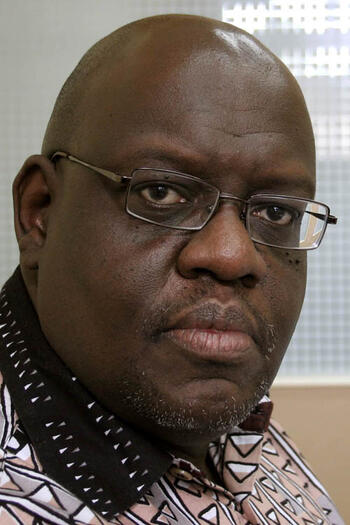 John Githongo
Image
John Githongo, former correspondent for The Economist, is a courageous leader in the struggle to combat corruption and improve governance in Kenya.
Selected in 2011 as one of the world’s 100 most influential Africans by New African magazine and one of the world’s top 100 global thinkers by Foreign Policy magazine, Mr. Githongo currently serves as CEO of Inuka Kenya, an NGO that works with Kenyan youth to provide civic education and address societal problems.
From 2003 to 2004, he served as permanent secretary for governance and ethics in Kenya’s post-transition government, and risked his life and career to expose one of the biggest government corruption scandals in Kenyan history.
Mr. Githongo has served as CEO of Transparency International Kenya, vice president of World Vision, senior associate member at St. Antony’s College Oxford, and member of the Kenya Human Rights Commission.
Image
 Nicholas Opiyo
Image
Opiyo is a former Secretary of the Ugandan bar association and a vocal defender of human rights outside the courts as regular commentator on public affairs. He heads Chapter Four Uganda – a legal charity and think tank named after Chapter Four, the bill of rights in Uganda’s constitution. As well as consulting widely on human rights related issues for the World Bank and other international agencies, he leads a team of lawyers seeking out strategic litigation in defense of human rights and providing immediate legal representation to human rights defenders. His public interest cases include challenges to Uganda’s anti-pornography law, discrimination under the HIV Prevention and Control Act, Uganda’s laws on defamation and freedom of expression amongst others. He is also engaged in litigation before the regional East African Court of Justice as well before the African Commission on Human and People’s Rights.
Image
 Larry Diamond
Image
Larry Diamond is a senior fellow at the Hoover Institution and at the Freeman Spogli Institute for International Studies, where he directs the Center on Democracy, Development, and the Rule of Law. Diamond also serves as the Peter E. Haas Faculty Co-Director of the Haas Center for Public Service at Stanford. He is the founding co-editor of the Journal of Democracy and also serves as Senior Consultant (and previously was co-director) at the International Forum for Democratic Studies of the National Endowment for Democracy. During 2002-3, he served as a consultant to the U.S. Agency for International Development (USAID) and was a contributing author of its report Foreign Aid in the National Interest. He has also advised and lectured to the World Bank, the United Nations, the State Department, and other governmental and nongovernmental agencies dealing with governance and development.
Nicholas Opiyo
Visiting Ugandan Constitutional and Human Rights Lawyer
John Githongo
2015 Mimi and Peter E. Haas Distinguished Visitor at Stanford University
Larry Diamond
Senior Fellow at the Freeman Spogli Institute for International Studies, Director of the Center on Democracy, Development, and the Rule of Law
Seminars
Corruption, Democracy and Security
-
AUDIO FROM SEGMENT OF TALK
Abstract:
A democratic recession is underway across much of Africa. Ironically it coincides with sustained economic growth since 1998. Much of this growth derived from political and economic liberalization in the 1990s, that has accelerated over the past 15 years due to an upsurge in demand for Africa’s natural resources. GDP growth does not mean development, however, and deepening inequality is more easily politicised and militarized along identity lines by elites in an era where across the world the politics of identity is resurgent. Both the war against terror and the rise of the Chinese governance model – authoritarian but efficient and compelling politically and economically – have seen elites consolidate power in fewer hands stalling and/or reversing the democratic developments of the last two decades. This elite capture of democratic processes is not limited to the South and has led to a delegitimisation of traditional political parties and players. Additionally, the securitization of geopolitics that has accompanied the ‘war against terror’ has fed a dramatic upsurge in spending on ‘national security’. National security is the last refuge of the corrupt. Indeed, this securitization has been accompanied not only by an upsurge in graft but the ongoing democratic recession. My presentation asks why and how this has come about. Finally, how can democratic gains be protected, consolidated and expanded.
Speaker Bio:
Image

John Githongo
Visiting Anti-Corruption Journalist, Haas Center
Visiting Anti-Corruption Journalist, Haas Center
Visiting Anti-Corruption Journalist, Haas Center
Seminars
A global perspective on food systems
All Publications button
1
Publication Type
Journal Articles
Publication Date
Journal Publisher
Journal of Agriculture, Food Systems and Community Development
External URL
LAD Case Studies
The case studies below are integral teaching tools for the Leadership Academy for Development workshops conducted around the world.
This insect is causing a lot of problems in Africa (and it’s not the mosquito)
News Type
News
Date
Paragraphs
Dr. Marcella Alsan finds that disease associated with the tsetse fly continues to influence development in Africa.
All News button
1