


The collision of civil war and threat of global pandemics
News Type
News
Date
Paragraphs
There are 30 civil wars underway around the globe, where civilians are dealing with death and destruction as well as public health emergencies exacerbated by the deadly march of conflict.
Yemen is battling an unprecedented cholera outbreak which has killed more than 2,150 people this year, with another 700,000 suspected cases of the water-borne disease. The government and a rival faction have been fighting for control of the country, taking 10,000 lives since 2015.
Some 17 children in Syria have been paralyzed from a confirmed polio outbreak in northeastern districts, with 48 cases reported in a country that had not had a case of polio since 1999. The cases are concentrated in areas controlled by opponents of President Bashar al-Assad.
And in the Democratic Republic of Congo — where the civil war officially ended years ago, but thousands of people still suffer from recurrent uprisings and scant infrastructure — a yellow fever outbreak was met last year with a lack of vaccines. The WHO was forced to give inoculations containing a fifth of the normal dose, providing protection for only one year.
And yet today, of the nearly 200 countries on this planet, only six nations — three rich ones and three poor ones — have taken steps to evaluate their ability to withstand a global pandemic.
“The bottom line is that despite the profound global threat of pandemics, there remains no global health mechanism to force parties to act in accordance with global health interests,” write FSI’s Paul Wise and Michele Barry in the Fall 2017 issue of Daedalus.
“There also persists inherent disincentives for countries to report an infectious outbreak early in its course,” the authors write. “The economic impact of such a report can be profound, particularly for countries heavily dependent upon tourism or international trade.”
China, for example, hesitated to report the SARS outbreak in 2002 for fear of instability during political transition and embarrassment over early mishandling of the outbreak. Reporting cases of the 2013 Ebola outbreak in West Africa were slow and the virus killed some 11,300 people in Sierra Leone, Guinea and Liberia before the epidemic was declared over in January 2016.
Image
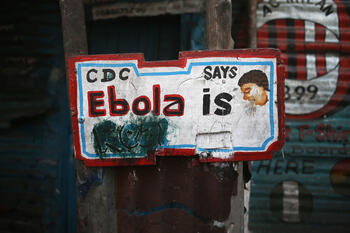
“Tragic delays in raising the alarm about the Ebola outbreak in West Africa were laid at the doorstep of the affected national authorities and the regional WHO committees, which were highly concerned about the economic and social implications of reporting an outbreak,” Wise and Barry write in the journal published by the American Academy of Arts and Sciences.
The Daedalus issue, “Civil War & Global Disorder: Threats and Opportunity,” explores the
factors and influences of contemporary civil wars. The 12 essays look at the connection of intrastate strife and transnational terrorism, the limited ambitions of intervening powers, and the many direct and indirect consequences associated with weak states and civil wars.
“Wise and Barry, both medical doctors with extensive field experience in violence-prone developing countries, analyze the relationship between epidemics and intrastate warfare,” write FSI’s Karl Eikenberry and Stephen D. Krasner in their introduction to the issue that includes eight essays by Stanford University faculty.
“Their discussion is premised on the recognition that infectious pandemics can threaten the international order, and that state collapse and civil wars may elevate the risk that pandemics will break out,” they wrote.
Eikenberry and Krasner are hosting a panel discussion about the new volume of Daedalus with FSI senior scholars, including Wise and Barry, on Oct. 23. Members of the Stanford community and the public are invited and can RSVP here. Podcasts with the authors will also be available at FSI’s World Class site over the next few weeks.
Prevention, Detection and Response
Barry and Wise believe there is significant technical capacity to ensure that local infectious outbreaks are not transformed into global pandemics. But those outbreaks require some level of organized and effective governance — and political will.
Prevention, detection, and response are the keys to controlling the risk of a pandemic. Yet it’s almost impossible for these to coincide in areas of conflict.
Prevention includes solid immunization programs and efforts to reduce the risk of animal-to-human spillover associated with exposure to rodents, monkeys and bats.
Then, early detection of an infectious outbreak with pandemic potential is crucial, through a methodical surveillance structure to collect and test samples drawn from domestic and wild animals, a capacity sorely lacking in areas of conflict and weak governance.
Image
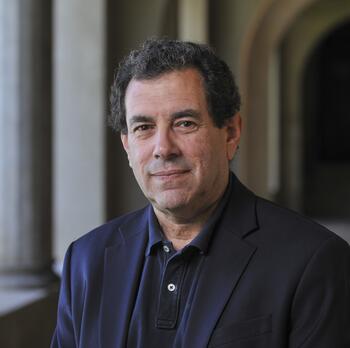
“Civil wars commonly disrupt traditional means of communication,” they write. “The Ebola virus outbreak in West Africa exposed glaring weaknesses in the global strategy to control pandemic outbreaks in areas with minimal public health capacity.”
New strategies that utilize satellite or other technology to link remote or insecure areas to surveillance are urgently needed, they said.
Then there is the response in countries where civil war not only makes it difficult, but politically treacherous.
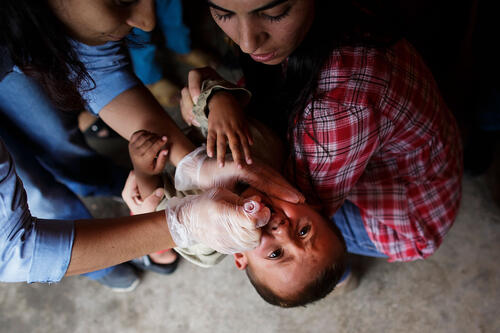
In Syria, there had not been a case of polio reported since 1999. In 2013, health workers began to see children with the kind of paralysis that is associated with a highly contagious polio outbreak.
“However, the government and regional WHO office have been intensely criticized for their slow and uneven response,” the authors note, particularly the government’s resistance to mobilizing immunization efforts in areas sympathetic to opposition forces.
Pressure from international health organizations and neighbors in the region ultimately led to the reinstatement of vaccination campaigns throughout Syria.
“The Syrian polio outbreak is an important reminder that health interventions, though technical in nature, can be transformed into political currency when certain conditions are met,” they write. “At the most basic level, the destruction or withholding of essential health capabilities can be used to coerce adversaries into political compliance, if not complete submission.”
Image
Strengthening Global Oversight
The only comprehensive global framework for pandemic detection and control, the authors write, is the International Health Regulations treaty, which was signed in 2005 by 196 member-nations of the World Health Organization to work together for global health security.
The IHR imposed a deadline of 2012 for all states to have in place the necessary capacities to detect, report and respond to local infectious outbreaks. But only a few parties have reported meeting these requirements, and one-third has not even begun the process. There have also been efforts to enhance state reporting of health systems capacities through voluntary assessments of countries working through the Global Health Security Agenda consortium.
But both frameworks, Barry said in an interview, need financial and political support.
Image

“I see a stronger IHR with more than words — but actual money behind it in order for it to become stronger,” said Barry, noting the Global Health Security Agenda ends in 2018 and she has been asked to sit on a NAAS task force to form its next iteration. “I’m hoping we can move the needle to put money into bio-surveillance and health security, especially in conflict areas.”
Why should Americans care?
“Pathogens know no borders,” Barry said. “And with climate change, we have tremendous movement of vectors; with globalization and billions of people routinely in flight, we have tremendous health threats traveling first class and coach.”
Twenty Countries at High Risk
Meanwhile, some 20 countries are at high risk for pandemic emergence. The two Stanford professors are urgently calling for “new approaches that better integrate the technical and political challenges inherent in preventing pandemics in areas of civil war.”
Wise and Barry note that human factors, such as the expansion of populations into previously forested areas, domesticated animal production practices, food shortages, and alterations in water usage and flows, have been the primary drivers of altered ecological relationships.
So globalization with climate change brews the perfect storm.
“There is substantial evidence that climate change is reshaping ecological interactions and vector prevalence adjacent to human populations,” they said. “Enhanced trade and air transportation have increased the risk that an outbreak will spread widely. While infectious outbreaks can be due to all forms of infectious agents, including bacteria, parasites, and fungi — viruses are of the greatest pandemic concern.”
Science suggests the greatest danger of pandemic lies in tropical and subtropical regions where human and animals are most likely to interact. Most of the estimated 400 emerging infectious diseases that have been identified since 1940 have been zoonoses, or infections that have been transmitted from animals to humans. The human immunodeficiency virus (HIV), for example, is believed to have emerged from a simian host in Central Africa.
Recent analyses have suggested that the “hotspots” for emerging infectious diseases overlap substantially with areas plagued by civil conflict and political instability.
The U.S. Agency for International Development and the Centers for Disease Control and Prevention have been working on the Emerging Pandemic Threats Program to improve local pandemic detection and response capacities by directing resources and training to countries thought to be at high risk for pandemic. However, it is not clear that this and related programs are addressing the political dynamics at the local level that will determine the essential cooperation of local communities with any imposed global health security response.
“The unpredictability of a serious infectious outbreak, the speed with which it can disseminate, and the fears of domestic political audience can together create a powerful destabilizing force,” Wise and Barry write in their conclusion. “Current discussions regarding global health governance reform have largely been preoccupied by the performance and intricate bureaucratic interaction of global health agencies. However, what may prove far more critical may be the ability of global health governance structures to recognize and engage the complex, political realities on the ground in areas plagued by civil war.”
Hero Image

All News button
1
Media roundtable focuses on security, defense, democracy
News Type
News
Date
Paragraphs
Deep policy discussions between journalists and top Stanford scholars highlighted a recent media roundtable at the Hoover Institution.
The event drew about 30 members of the national media from a variety of print and broadcast outlets, including CNN, CBS, The New York Times, Wall Street Journal, MSNBC, The Washington Post, and Politico. The two-day media roundtable on Oct. 15-16 was titled, “Outside the Beltway.”
Over the course of the two-day conference, participants engaged in robust discussions with Hoover Institution fellows and Freeman Spogli Institute for International Studies scholars, including former U.S. Secretary of State and Hoover and FSI senior fellow Condoleeza Rice, who kicked off the event with a foreign policy conversation.
Drones and cybersecurity, for example, were topics of conversation for Amy Zegart and Herb Lin from the Center for International Security and Cooperation (CISAC).
Drones and new warfare
Zegart said, “New technology is being used in ways never imagined ... The question is, could drones be next?”
Drones are possible “coercion tools,” more effective than people would believe, Zegart said. “We need to figure out how the logic works with coercion, in regard to states.”
How do you get others to back down without a fight? You need to issue a costly threat, she said. For example, “trip-wire” forces of more than 20,000 in South Korea represent such a credible threat to North Korea. “Low-cost is low credibility,” or “cheap talk,” on the other hand.
Drones lower the cost of coercion, Zegart said. One point is that such strikes have huge public support, as the risk of U.S. casualties are very low, according to polls – 62 percent favor such drone strikes.
Zegart said drones could shift the “relative costs” of war and are better able to sustain military action over a lengthy time frame. They also affect the “psychology of punishment.” Hovering over a target for long periods of time, decapitation strikes against regime leaders, and the constant state of “near-ambush” changes the character of war and for a military campaign to stay the course.
“Certainty of punishment is a very powerful way to change the behavior of the adversary,” moreso than “severity of punishment, said Zegart, who has affirmed these conclusions through surveys with foreign military officers. That research also showed that domestic political support for military reaction is the most popular reason for making threats credible. But a deeper dive into such issues is urged, she added.
“We’re really behind the curve in figuring out how to make military threats credible in the world,” said Zegart. “Lots of questions remain.”
Hacking, information attacks
Lin spoke about the recent Equifax data hacking, among other topics.
He said, “The harm we all feel is both tangible and intangible” in regard to such hacks. In other words, there is both material threat and a peace of mind threat, he explained.
The “Internet-of-Things” is another looming problem, Lin said. In the future, liability issues will factor into how all these devices are connected and who is responsible in case of misdeeds, he said.
In the case of health care, confidentiality is a critical societal goal, but hacking creates numerous scenarios: “Would you prefer your blood type posted online or changed in your medical records,” Lin said, explaining the different ways information misuse may affect people.
On the global security front, “cyber war” takes advantage of the flaws of information technology (IT), and “information warfare” takes advantage of the virtues of IT, he noted. Such efforts begin to level the playing field between international actors and agencies.
“You give large megaphones to small players,” Lin said.
In Russia, information warfare is actually studied as a theory of warfare. And the results show that it works – it’s easier to destroy democratic values online than create or reinforce them, Lin said. For example, Russia’s meddling in the 2016 elect stoked political polarization in America.
One media member asked Lin how the U.S. could prevent Russia from using cyber and information warfare in upcoming U.S. elections.
Lin said, “It’s not clear to me that the U.S. government is really going to be willing to do anything,” but some public pressure may move entities like media companies to respond more effectively.
And Zegart noted, “The Russians are still here.” They are present right now in any number of settings, from social media to traditional media and in public spheres, for example, she said.
“Attacking brains” was how Zegart described Russia’s goal. For American social media companies, she suggested, “Think about battleground states” and focus on “triaging” these areas.
WWII, Russia
The media also heard presentations from Hoover's Kori Schake on defense policy; Hoover's Victor Davis Hanson on “The Second World Wars,” his new book; Hoover's Michael Auslin on the Asian century; Hoover and FSI's Michael McFaul discussed the U.S-Russia relationship; and Hoover and FSI's Larry Diamond on democracy in the world order.
McFaul spoke about the hot spots in the relationship between the U.S. and Russian governments, his time as the U.S. ambassador to Russia during the Obama administration, and his suggested approaches to today’s engagement with Russia. He noted how Russia's President Vladimir Putin has prevailed on many recent occasions against the best interests of the U.S. One instance is Syria and how complicated that issue was for foreign policy makers during his tenure.
"The objective we sought to achieve -- the end of the civil war -- our policies did not achieve," said McFaul, who urges stronger U.S. action against Russian cyber attacks on the U.S. electoral process, now and into the future.
Hanson said that people today often fail to appreciate the deadly scope of the WWII conflict. For example, he pointed out that more people died in that conflict than any in human history, with 27,000 people dying every day in WWII. It was also the first time that more civilians were killed than soldiers. Of all the six major powers involved in the conflict, Japan killed about 10 people for every person they lost.
Lessons from WWII? “Things change very quickly in a war,” Hanson said. In 1942, it looked like the Axis powers had the upper hand; the next year, the Allies were surging. Also, a country should rely on a formidable deterrence strategy to discourage would-be attackers.
Once you lose it, “deterrence is very, very hard to recapture,” Hanson said.
MEDIA CONTACTS:
Clifton B. Parker, Center for International Security and Cooperation: (650) 725-6488, cbparker@stanford.edu
Hero Image

All News button
1
Civil Wars, Global Disorder, and the Future of the International System
-
Join Amb. Karl Eikenberry, Prof. Stephen Krasner, and FSI senior scholars for a discussion of the new volume of Daedalus, the journal of the American Academy of Arts and Sciences and a product of the Academy's Civil Wars, Violence and International Responses Project.
More than 30 countries around the world today are engulfed in civil wars, and the consequences are global. From policy to pandemics, the impacts of internal conflict reverberate across oceans and generations.
To introduce the latest volume of Daedalus, co-edited by Amb. Eikenberry and Prof. Krasner, the Freeman Spogli Institute for International Studies is pleased to join the Academy in hosting a panel discussion featuring seven of the eight FSI co-authors on the volume. FSI director Michael McFaul, former US ambassador to Russia, will introduce the panel.
A reception will follow the panel at 5:30 p.m.
Featuring:
Ambassador Michael McFaul (Director of the Freeman Spogli Institute for International Studies, Stanford University), Opening
Dr. Michele Barry (Senior Associate Dean for Global Health, Stanford School of Medicine), Featured Author
Ambassador Karl W. Eikenberry (Oksenberg-Rohlen Distinguished Fellow, Shorenstein Asia-Pacific Research Center at Stanford; Freeman Spogli Institute for International Studies; Center for International Security and Cooperation; Faculty Member, Stanford University), Featured Author
Professor James D. Fearon (Theodore and Frances Geballe Professor in the School of Humanities and Sciences, Stanford University), Featured Author
Dr. Francis Fukuyama (Olivier Nomellini Senior Fellow, Freeman Spogli Institute for International Studies), Featured Author
Professor Stephen D. Krasner (Graham H. Stuart Professor of International Relations, Stanford University; Senior Fellow, Hoover Institution, Stanford University), Featured Author
Professor Stephen Stedman (Senior Fellow, Freeman Spogli Institute for International Studies, Stanford University), Featured Author
Dr. Paul Wise (Richard E. Behrman Professor of Child Health and Society, Stanford University), Featured Author
The Stanford Faculty Club, The Gold Lounge
439 Lagunita Drive
Stanford, CA
Michael A. McFaul
Encina Hall
616 Jane Stanford Way
Stanford, CA 94305-6055
0
Senior Fellow, Freeman Spogli Institute for International Studies
Ken Olivier and Angela Nomellini Professor of International Studies, Department of Political Science
Peter and Helen Bing Senior Fellow, Hoover Institution
Michael McFaul is the Ken Olivier and Angela Nomellini Professor of International Studies in Political Science, Senior Fellow at the Freeman Spogli Institute for International Studies, and the Peter and Helen Bing Senior Fellow at the Hoover Institution, all at Stanford University. He joined the Stanford faculty in 1995 and served as FSI Director from 2015 to 2025. He is also an international affairs analyst for MSNOW.
McFaul served for five years in the Obama administration, first as Special Assistant to the President and Senior Director for Russian and Eurasian Affairs at the National Security Council at the White House (2009-2012), and then as U.S. Ambassador to the Russian Federation (2012-2014).
McFaul has authored ten books and edited several others, including, most recently, Autocrats vs. Democrats: China, Russia, America, and the New Global Disorder, as well as From Cold War to Hot Peace: An American Ambassador in Putin’s Russia, (a New York Times bestseller) Advancing Democracy Abroad: Why We Should, How We Can; and Russia’s Unfinished Revolution: Political Change from Gorbachev to Putin.
He is a recipient of numerous awards, including an honorary PhD from Montana State University; the Order for Merits to Lithuania from President Gitanas Nausėda of Lithuania; Order of Merit of Third Degree from President Volodymyr Zelenskyy of Ukraine, and the Dean’s Award for Distinguished Teaching at Stanford University. In 2015, he was the Distinguished Mingde Faculty Fellow at the Stanford Center at Peking University.
McFaul was born and raised in Montana. He received his B.A. in International Relations and Slavic Languages and his M.A. in Soviet and East European Studies from Stanford University in 1986. As a Rhodes Scholar, he completed his D. Phil. in International Relations at Oxford University in 1991.
International Working Group on Russian Sanctions
The International Working Group on Russian Sanctions aims to provide expertise and experience to governments and companies around the world by assisting with the formulation of sanctions proposals that will increase the cost to Russia of invading Ukraine, and support democratic Ukraine in the defense of its territorial integrity and national sovereignty.
Read more
Global Populisms
A new project examining the global surge in populist movements and what it means for established democratic rules and institutions.
Read More
CV
Document
mcfaul-cv-1-25-2026.pdf
(473.05 KB)
Hide publication sections
Off
James D. Fearon
CISAC
Stanford University
Encina Hall
Stanford, CA 94305-6165
0
jfearon@stanford.edu
Senior Fellow at the Freeman Spogli Institute for International Studies
Theodore and Frances Geballe Professor in the School of Humanities and Sciences
Professor of Political Science
James Fearon is a senior fellow at the Freeman Spogli Institute for International Studies, where he is also the social science co-director at its Center for International Security and Cooperation. He is the Theodore and Frances Geballe Professor in the School of Humanities and Sciences and a professor of political science, as well as an affiliate at the institute's Center on Democracy, Development, and the Rule of Law. His research interests include civil and interstate war, ethnic conflict, the international spread of democracy and the evaluation of foreign aid projects promoting improved governance. Fearon was elected to the National Academy of Sciences in 2012 and the American Academy of Arts and Sciences in 2002. Some of his current research projects include work on the costs of collective and interpersonal violence, democratization and conflict in Myanmar, nuclear weapons and U.S. foreign policy, and the long-run persistence of armed conflict.
Co-director, Center for International Security and Cooperation
Affiliated faculty at the Center on Democracy, Development, and the Rule of Law
CV
Document
jfvita_current.pdf
(79 KB)
Hide publication sections
Off
Francis Fukuyama
Encina Hall, C148
616 Jane Stanford Way
Stanford, CA 94305
0
f.fukuyama@stanford.edu
Olivier Nomellini Senior Fellow at the Freeman Spogli Institute for International Studies
Director of the Ford Dorsey Master's in International Policy
Research Affiliate at The Europe Center
Professor by Courtesy, Department of Political Science
Francis Fukuyama is the Olivier Nomellini Senior Fellow at Stanford University's Freeman Spogli Institute for International Studies (FSI), and a faculty member of FSI's Center on Democracy, Development and the Rule of Law (CDDRL). He is also Director of Stanford's Ford Dorsey Master's in International Policy, and a professor (by courtesy) of Political Science.
Dr. Fukuyama has written widely on issues in development and international politics. His 1992 book, The End of History and the Last Man, has appeared in over twenty foreign editions. His book In the Realm of the Last Man: A Memoir will be published in fall 2026.
Francis Fukuyama received his B.A. from Cornell University in classics, and his Ph.D. from Harvard in Political Science. He was a member of the Political Science Department of the RAND Corporation, and of the Policy Planning Staff of the US Department of State. From 1996-2000 he was Omer L. and Nancy Hirst Professor of Public Policy at the School of Public Policy at George Mason University, and from 2001-2010 he was Bernard L. Schwartz Professor of International Political Economy at the Paul H. Nitze School of Advanced International Studies, Johns Hopkins University. He served as a member of the President’s Council on Bioethics from 2001-2004. He is editor-in-chief of American Purpose, an online journal.
Dr. Fukuyama holds honorary doctorates from Connecticut College, Doane College, Doshisha University (Japan), Kansai University (Japan), Aarhus University (Denmark), the Pardee Rand Graduate School, and Adam Mickiewicz University (Poland). He is a non-resident fellow at the Carnegie Endowment for International Peace. He is a member of the Board of Trustees of the Rand Corporation, the Board of Trustees of Freedom House, and the Board of the Volcker Alliance. He is a fellow of the National Academy for Public Administration, a member of the American Political Science Association, and of the Council on Foreign Relations. He is married to Laura Holmgren and has three children.
(October 2025)
Global Populisms
A new project examining the global surge in populist movements and what it means for established democratic rules and institutions.
Read More
CV
Document
francis_fukuyama_cv_april_2024.pdf
(223.42 KB)
Hide publication sections
Off
Stephen D. Krasner
CDDRL
Stanford University
Encina Hall
Stanford, CA 94305-6055
0
skrasner@stanford.edu
Senior Fellow at the Freeman Spogli Institute for International Studies, Emeritus
Graham H. Stuart Professor of International Relations
Senior Fellow at the Hoover Institution, Emeritus
Stephen Krasner is the Graham H. Stuart Professor of International Relations. A former director of CDDRL, Krasner is also an FSI senior fellow, and a fellow of the Hoover Institution.
From February 2005 to April 2007 he served as the Director of Policy Planning at the US State Department. While at the State Department, Krasner was a driving force behind foreign assistance reform designed to more effectively target American foreign aid. He was also involved in activities related to the promotion of good governance and democratic institutions around the world.
At CDDRL, Krasner was the coordinator of the Program on Sovereignty. His work has dealt primarily with sovereignty, American foreign policy, and the political determinants of international economic relations. Before coming to Stanford in 1981 he taught at Harvard University and UCLA. At Stanford, he was chair of the political science department from 1984 to 1991, and he served as the editor of International Organization from 1986 to 1992.
He has been a fellow at the Center for Advanced Studies in the Behavioral Sciences (1987-88) and at the Wissenschaftskolleg zu Berlin (2000-2001). In 2002 he served as director for governance and development at the National Security Council. He is a fellow of the American Academy of Arts and Sciences and a member of the Council on Foreign Relations.
His major publications include Defending the National Interest: Raw Materials Investment and American Foreign Policy (1978), Structural Conflict: The Third World Against Global Liberalism (1985), Sovereignty: Organized Hypocrisy (1999), and How to Make Love to a Despot (2020). Publications he has edited include International Regimes (1983), Exploration and Contestation in the Study of World Politics (co-editor, 1999), Problematic Sovereignty: Contested Rules and Political Possibilities (2001), and Power, the State, and Sovereignty: Essays on International Relations (2009). He received a BA in history from Cornell University, an MA in international affairs from Columbia University and a PhD in political science from Harvard.
CV
Document
krasner_bio_july_2021.doc
(96.5 KB)
Stephen J. Stedman
CDDRL
Encina Hall, C152
616 Jane Stanford Way
Stanford, CA 94305-6055
0
sstedman@stanford.edu
Senior Fellow at the Freeman Spogli Institute for International Studies
Professor, by courtesy, of Political Science
Stephen Stedman is a Senior Fellow at the Freeman Spogli Institute for International Studies (FSI) and the Center on Democracy, Development and the Rule of Law (CDDRL), an affiliated faculty member at CISAC, and professor of political science (by courtesy) at Stanford University. He is director of CDDRL's Fisher Family Honors Program in Democracy, Development and Rule of Law, and will be faculty director of the Program on International Relations in the School of Humanities and Sciences effective Fall 2025.
In 2011-12 Professor Stedman served as the Director for the Global Commission on Elections, Democracy, and Security, a body of eminent persons tasked with developing recommendations on promoting and protecting the integrity of elections and international electoral assistance. The Commission is a joint project of the Kofi Annan Foundation and International IDEA, an intergovernmental organization that works on international democracy and electoral assistance.
In 2003-04 Professor Stedman was Research Director of the United Nations High-level Panel on Threats, Challenges and Change and was a principal drafter of the Panel’s report, A More Secure World: Our Shared Responsibility.
In 2005 he served as Assistant Secretary-General and Special Advisor to the Secretary- General of the United Nations, with responsibility for working with governments to adopt the Panel’s recommendations for strengthening collective security and for implementing changes within the United Nations Secretariat, including the creation of a Peacebuilding Support Office, a Counter Terrorism Task Force, and a Policy Committee to act as a cabinet to the Secretary-General.
His most recent book, with Bruce Jones and Carlos Pascual, is Power and Responsibility: Creating International Order in an Era of Transnational Threats (Washington DC: Brookings Institution, 2009).
Director, Fisher Family Honors Program in Democracy, Development and Rule of Law
Director, Program in International Relations
Affiliated faculty at the Center for International Security and Cooperation
Hide publication sections
Off
Paul H. Wise
0
Richard E. Behrman Professor of Child Health and Society
Senior Fellow, Freeman Spogli Institute for International Studies
Dr. Paul Wise is dedicated to bridging the fields of child health equity, public policy, and international security studies. He is the Richard E. Behrman Professor of Child Health and Society and Professor of Pediatrics, Division of Neonatology and Developmental Medicine, and Health Policy at Stanford University. He is also co-Director, Stanford Center for Prematurity Research and a Senior Fellow in the Center on Democracy, Development, and the Rule of Law, and the Center for International Security and Cooperation, Freeman Spogli Institute for International Studies, Stanford University. Wise is a fellow of the American Academy of Arts and Sciences and has been working as the Juvenile Care Monitor for the U.S. Federal Court overseeing the treatment of migrant children in U.S. border detention facilities.
Wise received his A.B. degree summa cum laude in Latin American Studies and his M.D. degree from Cornell University, a Master of Public Health degree from the Harvard School of Public Health and did his pediatric training at the Children’s Hospital in Boston. His former positions include Director of Emergency and Primary Care Services at Boston Children’s Hospital, Director of the Harvard Institute for Reproductive and Child Health, Vice-Chief of the Division of Social Medicine and Health Inequalities at the Brigham and Women’s Hospital and Harvard Medical School and was the founding Director or the Center for Policy, Outcomes and Prevention, Stanford University School of Medicine. He has served in a variety of professional and consultative roles, including Special Assistant to the U.S. Surgeon General, Chair of the Steering Committee of the NIH Global Network for Women’s and Children’s Health Research, Chair of the Strategic Planning Task Force of the Secretary’s Committee on Genetics, Health and Society, a member of the Advisory Council of the National Institute of Child Health and Human Development, NIH, and the Health and Human Secretary’s Advisory Committee on Infant and Maternal Mortality.
Wise’s most recent U.S.-focused work has addressed disparities in birth outcomes, regionalized specialty care for children, and Medicaid. His international work has focused on women’s and child health in violent and politically complex environments, including Ukraine, Gaza, Central America, Venezuela, and children in detention on the U.S.-Mexico border.
Core Faculty, Center on Democracy, Development and the Rule of Law
Affiliated faculty at the Center for International Security and Cooperation
Hide publication sections
Off
Panel Discussions
At 90, Perry driven by vision of a nuclear-free world
News Type
News
Date
Paragraphs
At 90, William J. Perry has seen a lot in this world.
Maybe, in fact, too much. When it comes to nuclear warfare and annihilation, few people alive have contemplated such tragic outcomes quite like Perry, a senior fellow at the Center for International Security and Cooperation (CISAC), a former U.S. secretary of defense, and one of the world’s top nuclear weapons experts.
Perry, who becomes a nonagenarian on Oct. 11, has been called America’s “nuclear conscience.” He has sometimes referred to himself as a “prophet of doom,” and certainly not in a congratulatory sense, but more as a scientist on a mission. A brilliant mathematician who's worked with nearly every administration since Eisenhower, Perry's been up-close to nuclear weapons and near-miss crises for the last several decades.
Today, Perry is devoted to education on the subject of nuclear weapons – he understands exactly how much horror they would wreak on humanity and beyond.
And while no one would call Perry a crusader type (he is pragmatic, modest and private), there’s no doubt he’s on an energetic crusade for a nuclear-free world. Reaching young minds – those who will inherit the leadership of this world – is his calculus in the formula of world peace.
So, Perry reaches out in ways that resonant with youth. Last year created a series of virtual lectures, "Living at the Nuclear Brink," known as a MOOC, or massive open online course. His new online course, "The Threat of Nuclear Terrorism," launches Oct. 17.
“Nuclear weapons may seem like 20th century history, but the choices we make about these weapons in the 21st century will decide your future in truly fundamental ways,” Perry wrote in the earlier course's introduction.
Conversations with conscience
An engineer and policy maker, Perry has academic affiliations that range widely across the Stanford campus. He is the Michael and Barbara Berberian Professor (emeritus), a senior fellow at the Freeman Spogli Institute for International Studies, and a senior fellow at the Hoover Institution. He's always in demand for a panel discussion or speaker event.
On Nov. 1, he's the featured subject of a CISAC event, "A Conversation with William J. Perry: Assessing Nuclear Risk in a New Era." That talk will include a Perry discussion with CISAC co-director Amy Zegart and another panel discussion, led by CISAC co-director Rod Ewing, with scholars Siegfried Hecker, David Holloway and Scott Sagan.
Perry's been known to participate in “Ask Me Anything” chats on Reddit, a place popular with youth. He connects with all types of audiences, conveying in direct encounters the exact nature of the nuclear dangers now facing civilization, and what can be done to reduce those dangers. This mission to educate led him to write a memoir, My Journey at the Nuclear Brink, all the while giving countless media interviews and delivering major speeches before major think tanks, nongovernmental organizations and policymakers.
One core Perry message is that U.S. foreign policies do not reflect the existing danger of nuclear threats -- the reason is that this risk isn’t widely recognized across society. And young people need to understand this dynamic that creates a distorted, too complacent view of a very real nuclear weapons problem throughout the world.
Perry, with the help of both his daughter, Robin Perry, his son, David Perry, granddaughter, Lisa Perry, and grandson Patrick Allen, established the William J. Perry Project, which informs the public about the role of nuclear weapons in today's world, while urging the elimination of these weapons.
It’s a family on a mission, and the Perrys believe the only way to avoid nuclear war is by directly contemplating the scenario in a personal, direct sense through learning and education.
"We're really just out there trying to reach a generation that isn't engaged on this issue right now," said Lisa Perry in an article on the Perry Project web site. She is the digital media manager for the project. "It's something we learned in history class. There was no conversation about what's happening now."
As her grandfather explained, "The dangers will never go away as long as we have nuclear weapons. But we should take every action to lower the dangers, and I think it can be done."
Early entrepreneurship days
Perry was born in Vandergrift, Pennsylvania, in 1927, the year that Charles Lindbergh completed the first solo flight across the Atlantic.
As a child, Perry fell in love with math. Math for him represented analytical discipline and the beauty of overcoming challenge. By solving math problems, one can master not only numerical problems, but other seemingly all-too difficult challenges. The key, as Perry discovered, was breaking down the larger problem into smaller parts. This evolved complexity into simplicity, which is more easily understood. Perry went on to cultivate this problem-solving mindset the rest of his life.
Image
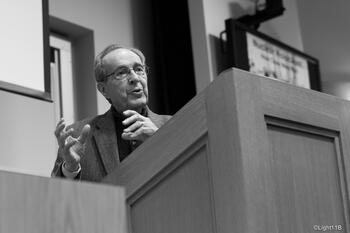
After his military service, Perry received his B.S. (1949) and M.A. (1950) degrees from Stanford, and a Ph.D. in mathematics from Pennsylvania State University in 1957. He chose a career in defense electronics, and became one of the Silicon Valley’s early entrepreneurs, founding a company that pioneered digital technologies to analyze the Soviet nuclear missile arsenal. And so, he was often asked to counsel the federal government on national security.
In October 1962 during the Cuban missile crisis, Perry received an urgent request from the U.S. government to help analyze U-2 photos of the Soviet installation of nuclear-armed missiles in Cuba. Perry later recollected that he thought the world could end during that crisis, and that those days might well be his last.
From 1977 to 1981 during the Carter administration, Perry served as the Pentagon’s undersecretary of defense for research and engineering, where he oversaw weapon systems and research. After leaving the Pentagon in 1981 to work in the private sector, Perry became a Stanford engineering professor and a co-director of the Preventive Defense Project at Stanford's Center for International Security and Cooperation (CISAC).
He was the co-director of CISAC from 1988 to 1993. Today, he is the Michael and Barbara Berberian Professor emeritus at Stanford, with a joint appointment at the Freeman Spogli Institute for International Studies and the School of Engineering. He is also a senior fellow at the Hoover Institution.
In 1994, President Bill Clinton tapped Perry to become the 19th U.S. Secretary of Defense. However, it was not so easy for the White House to recruit him.
Perry treasured his privacy so much that he originally turned down the job of defense secretary. Only when Clinton and Al Gore assured him that his family’s privacy could be maintained, he finally accepted the offer. With the Cold War having ended a fear years earlier, he found it would become a historic time to serve as America’s defense secretary.
Years later he recalled standing with his Russian and Ukrainian counterparts as their teams destroyed missile silos in the former Soviet Union. By the end of the 1980s, Perry thought the world had survived the horrific prospect of nuclear annihilation – and that it was behind everyone, left in the ashes of the Cold War.
Not so fast. Welcome to 2017.
Beyond doomsday
Today, Perry believes, the world is arguably more dangerous than ever before. His view is supported by The Bulletin of Atomic Scientists, which announced in January 2017 that the Doomsday clock now stands at two-and-a-half minutes to midnight, suggesting that existential threats now pose a greater danger to humanity than they have at any time since the height of the Cold War.
In fact, in 2016, Perry warned that the Doomsday clock should stand at five minutes to midnight for nuclear war – but only one minute to midnight for the threat of nuclear terrorism. He said during that press conference that the clock now issued a “more dangerous, more ominous forecast than two thirds of the years during the Cold War.”
As a result, Perry’s profile has risen higher than ever as the world confronts increasingly unsettling nuclear threats like a war between the U.S. and North Korea, reckless nuclear rhetoric by state leaders, and the possibility that terrorists may use nukes.
On North Korea in particular, Perry has urged a return to deterrence on the part of the United States:
“The threat to use nuclear weapons has always been tied to deterrence or extended deterrence; historical U.S. policy is that the use of nuclear weapons would only be in response to the first use of nuclear weapons against the United States or an ally covered by our extended deterrence,” he said in a statement.
With North Korea, Perry notes that the U.S. should not make empty threats, because empty threats weaken America’s credibility and reduce the ability to actually take strong action. “As Theodore Roosevelt said, ‘Speak softly but carry a big stick,’” he said.
During the early Cold War, he said, when the Soviets used “shrill” language, U.S. presidents like Eisenhower merely responded in tempered, moderate tones. “Just as in those tense times, today’s crisis also calls for measured language,” Perry said.
On top of this, Perry said the U.S. and Russians seem to be “sleepwalking into this new nuclear arms race,” and that while a new Cold War and arms race may look different than the prior one in U.S.-Soviet history, they are both dangerous and “totally unnecessary.”
Whether on the North Korean peninsula or elsewhere, a miscalculation could be catastrophic, Perry warns. That’s one reason he joined other former "Cold Warriors" like George Schulz, Henry Kissinger and Sam Nunn to write an op-ed in the Wall Street Journal in 2007. They argued that the goal of U.S. nuclear policy should be not merely the reduction and control of atomic arms, but the ultimate elimination of all nuclear weapons everywhere.
What type of world does Perry dream about in his brightest visions? One without nuclear weapons. He believes collective humanity must “delegitimize” nuclear war as an acceptable risk of modern civilization. A safer world, one that requires great purpose, persistence, and patience to make a reality, is possible, if people understand the threats and take action to reduce them, Perry has said.
“This global threat requires unified global action,” Perry wrote in July 2017 in support of a new United Nations treaty banning the use of nuclear weapons.
Education and knowledge – that’s how Perry believes humanity can safely evolve past its nuclear phase.
MEDIA CONTACT:
Clifton B. Parker, Center for International Security and Cooperation: (650) 725-6488, cbparker@stanford.edu
Hero Image

All News button
1
Expanded CISAC duties for Trinkunas
News Type
News
Date
Paragraphs
As the new deputy director for the Center for International Security and Cooperation, Harold Trinkunas will assume more day-to-day management duties of the center in addition to his research scholarship.
Trinkunas, who starts his new role Oct. 1, will provide additional oversight over CISAC’s core operations, from research and fellowships to administration and finance. He was previously CISAC’s associate director for research; he will continue to be a senior research scholar affiliated with the center.
In his new capacity, Trinkunas will work to ensure that CISAC remains on a sustainable footing as its faculty, scholars and fellows generate knowledge to build a safer world and educate the next generation of security experts. This will contribute to maintaining CISAC’s position as a global thought leader on meeting the most pressing challenges for international security and international cooperation.
CISAC’s associate director position for administration and finance will report to Trinkunas, who joined CISAC in September 2016. Previously, that position (under recruitment now) reported to CISAC’s co-directors.
The new organizational structure brings CISAC into alignment with other centers at the Freeman Spogli Institute for International Studies. It will also allow co-directors Amy Zegart and Rod Ewing to focus more time on CISAC’s external relationships – with CISAC supporters, policy makers and media. These are key audiences for the Center’s scholarly findings and education programs.
Zegart, CISAC co-director for the social sciences, said, "I couldn't be more delighted that Harold has agreed to become CISAC's deputy director. Creating this deputy director position will enable us to bring together longer-range strategic planning and day-to-day operations -- and Harold is ideally suited to the task, with deep experience in university administration at the Naval Postgraduate School, Brookings, and Stanford as well as an active and exciting scholarly research agenda."
Ewing, CISAC co-director for the sciences, said, “Harold’s expanded role in CISAC will allow for a better coordination of administrative and budgetary decisions on a day-to-day basis. I certainly look forward to working with Harold as we continue to expand the impact of CISAC scholarship on policy issues.”
Management, research
Trinkunas joined CISAC last year from the Brookings Institution, where he was the Charles W. Robinson Chair and senior fellow as well as director of the Latin America Initiative in the Foreign Policy program.
“This is a great opportunity to work in collaborative ways with exceptional scholars around some very important international security challenges facing today’s world,” Trinkunas said then.
Born and raised in Venezuela, Trinkunas earned his doctorate in political science from Stanford in 1999; he was also a predoctoral fellow and later a visiting professor at CISAC. His first exposure to CISAC took place when he served as a teaching assistant to Scott Sagan in 1992.
Through the years, CISAC has evolved and adjusted its focus to reflect the global security realities, Trinkunas said. Research at CISAC spans biosecurity and global health, terrorism, cybersecurity, governance, and nuclear risk and cooperation, among others.
Trinkunas said he enjoys the mentoring aspect of working with emerging scholars in the CISAC fellowship program, which he oversees.
Security, governance
Trinkunas’ most recent book, Aspirational Power: Brazil's Long Road to Global Influence, co-authored with David Mares of UC San Digo, was published last year by the Brookings Institution Press. Aspirational Power was chosen as one of Foreign Affair’s “best books of 2016.”
Trinkunas studies the intersection of security and governance. In his research, he has examined civil-military relations, ungoverned spaces, terrorist financing, emerging power dynamics, and global governance.
MEDIA CONTACTS:
Harold Trinkunas, Center for International Security and Cooperation: (650) 725-8035, antanas@stanford.edu
Clifton B. Parker, Center for International Security and Cooperation: (650) 725-6488, cbparker@stanford.edu
Hero Image

All News button
1
New biosecurity initiative launched
News Type
News
Date
Paragraphs
A new biosecurity initiative at the Freeman Spogli Institute for International Studies (FSI) aims to identify and mitigate biological risks, both natural and man-made, and safeguard the future of the life sciences and associated technologies.
The initiative will be led by David A. Relman, a senior fellow at the Center for International Security and Cooperation and FSI. Relman, the Thomas C. and Joan M. Merigan Professor in the Departments of Medicine, and Microbiology & Immunology, has served as the science co-director at CISAC for the past four years. He will leave this position on Aug. 31 to lead the new initiative.
Michael McFaul, director and senior fellow at FSI, said, “With exceptional leadership skills, valuable experience and abundant energy, David Relman is ideally positioned to work with scholars from across campus who offer critical expertise in biosecurity. This is an exciting, challenging and important new initiative for FSI that is designed to protect public health from the many new risks now accelerating.”
Relman said the biosecurity initiative will seek to advance the beneficial applications of the life sciences while reducing the risks of misuse by promoting research, education and policy outreach in biological security. His CISAC leadership gives him the know-how to lead such a wide-ranging effort across diverse disciplines and communities.
Relman said, “The opportunity to serve as co-director at CISAC has been a wonderful experience, one that has afforded me the chance to get to know outstanding faculty and staff, their scholarship, and critical policy-relevant work, all of which I had not fully appreciated sitting across campus. This experience has made clear the unusual qualities of Stanford University, and the great people that work here. I am now greatly looking forward to this new opportunity at FSI.”
Biosecurity collaborations
During Relman’s term as CISAC’s science co-director from 2013-2017, he led an expansion of the transdisciplinary work in science and security to include biology, biological and other areas of engineering, medicine, and earth and environmental sciences.
The foundations for work in biological science, technology and security were established at CISAC, especially in the hiring of Megan Palmer, a senior research scholar at CISAC and FSI. Both Relman and Palmer worked together on engagements and discussions with a growing network of more than 20 faculty involved in biosecurity across Stanford.
Palmer said, “Stanford has an opportunity and imperative to advance security strategies for biological science and technology in a global age. Our faculty bring together expertise in areas including technology, policy, and ethics, and are deeply engaged in shaping future of biotechnology policy and practices.”
New insights, new risks
In his new post, Relman said he intends to build on this foundation by creating an initiative that consolidates and focuses activity in biosecurity, develops research and educational programs, attracts new resources, and looks outward at opportunities for policy impact and changing practices across the globe.
Relman said that “new capabilities and insights are reshaping important aspects of the life sciences and associated technologies, and are accompanied by a host of new risks.” If misused, whether by malice or accident, “they pose the potential for large-scale harm,” he noted.
Relman added that the initiative will bring together interest and expertise across the centers and programs of FSI in partnership with Schools and Departments across the university.
At FSI, CISAC will co-sponsor the biological security initiative, which will leverage Stanford expertise in the life sciences, engineering, law and policy. Key partners will include Tim Stearns (biology), Drew Endy (bioengineering), Mildred Cho (bioethics), and Hank Greely (law), according to Relman. The biosecurity group will also partner with another new program at FSI in global health and conflict, which is led by Paul Wise, Frank Fukuyama, Steve Stedman, Steve Krasner, and others, he added.
Stanford’s School of Medicine and Department of Medicine will also co-sponsor the initiative, thanks to leadership from Lloyd Minor, Michele Barry and Robert Harrington. Relman looks forward to establishing similar relationships with other schools and departments, he said.
“These partnerships are critical. I’m excited to work with a growing community both within and beyond Stanford towards the goal of a peaceful and prosperous world in the century of biology,” he said.
MEDIA CONTACTS:
David Relman, Center for International Security and Cooperation: relman@stanford.edu
Megan Palmer, Center for International Security and Cooperation: mjpalmer@stanford.edu
Clifton B. Parker, Center for International Security and Cooperation: (650) 725-6488, cbparker@stanford.edu
Hero Image

All News button
1
Rod Ewing to serve as CISAC co-director
News Type
News
Date
Paragraphs
Rod Ewing will serve as co-director of the sciences for Stanford’s Center for International Security and Cooperation.
Ewing, a mineralogist and materials scientist, is the Frank Stanton Professor in Nuclear Security at CISAC and senior fellow at the Freeman Spogli Institute for International Studies. He begins his new position on Sept. 1, following David Relman, the previous co-director for the sciences. Amy Zegart is the CISAC co-director for the social sciences.
Ewing, whose research is focused on the properties of nuclear materials, leads the Reset Nuclear Waste Policy program at CISAC. He describes the center as a unique organization that “explicitly acknowledges” the role of science and the social sciences in formulating policy.
“CISAC is a rare opportunity for political and social scientists, historians and scientists and engineers to work together on solving pressing problems. The fact that we have two co-directors reflects a serious intent to integrate knowledge from the widest range of perspectives in order to find policy solutions to important problems,” he said.
Scholarship, research
Ewing is the author or co-author of more than 750 research publications and the editor or co-editor of 18 monographs, proceedings volumes or special issues of journals. He has published widely in mineralogy, geochemistry, materials science, nuclear materials, physics and chemistry in more than 100 different journals. Ewing was granted a patent for the development of a highly durable material for the immobilization of excess weapons plutonium. He is also a founding editor of the magazine, Elements. In 2015, he won the Roebling Medal, the highest award of the Mineralogical Society of America for scientific eminence.
“My work on nuclear waste started out with a focus on technical issues, but over several decades, I realized that technical solutions were not enough. I now focus on trying to understand why institutions – universities, national laboratories and federal agencies – fail to arrive at the technical solutions. I have been surprised to learn how little science has been applied to the nuclear waste problem – and how social issues have dominated the outcome,” Ewing said.
Expertise, policy
In particular, Ewing seeks to understand why so little information from experts rise through an organization and change accepted ‘truths.’
“I first saw this when I was a soldier in Vietnam and continue to see the same problem in many other areas, that a disconnect exists between the on-the-ground reality and policy,” said Ewing who served in the U.S. Army as an interpreter of Vietnamese attached to the 25th Infantry Division from 1969 to 1970.
“At the very highest levels, policies seem to be based on a hunch or a bias rather than an analysis of the problem. I have always wondered why this is so common – as it often leads a country or organization down a wrong and often dangerous path,” he added.
Born in Abilene, Texas, Ewing attended Texas Christian University (B.S., 1968, summa cum laude) and graduate school at Stanford University (M.S., 1972; Ph.D., 1974). He began his academic career as an assistant professor at the University of New Mexico (1974) rising to the rank of Regents’ Professor of Earth & Planetary Sciences in 1993.
From 1997 to 2013, Ewing was a professor at the University of Michigan, and in 2014, he joined Stanford.
MEDIA CONTACTS:
Rod Ewing, Center for International Security and Cooperation: (650) 725-8641, rewing1@stanford.edu
Clifton B. Parker, Center for International Security and Cooperation: (650) 725-6488, cbparker@stanford.edu
Hero Image

All News button
1
U.S., allies focus on cybersecurity at Stanford
News Type
News
Date
Paragraphs
When it comes to cybersecurity, Stanford is the hot spot, especially if you work in national security.
On Aug. 18, officials from the U.S. military, National Security Agency, U.S. Cyber Command, Joint Chiefs of Staff, and from countries known as the “Five Eyes,” attended cybersecurity discussions on campus. Most attendees were chief information officers. John Zangardi, the principal deputy chief information officer for the U.S. Department of Defense, led the group.
The "Five Eyes" refers to an alliance comprising the U.S., Australia, Canada, New Zealand, and the United Kingdom. These countries abide by an agreement for joint cooperation in signals intelligence, military intelligence, and human intelligence.
The event was held at the Hoover Institution, a co-sponsor along with Stanford’s Center for International Security and Cooperation, a center in the Freeman Spogli Institute for International Relations. Participants took part in two roundtables – the first one, “Geopolitical Perspectives,” provided a strategic overview of international security with Stanford’s William J. Perry (CISAC and the Hoover Institution), Michael McFaul (FSI and the Hoover Institution), Toomas Henrik Ilves (Hoover Institution), and Francis Fukuyama (the Hoover Institution and FSI's Center on Democracy, Development, and the Rule of Law).
The second discussion, the “Cyber Information Warfare Panel,” focused on cyber challenges with Amy Zegart (CISAC and the Hoover Institution), Herb Lin (CISAC and the Hoover Institution), John Villasenor (CISAC and the Hoover Institution), and Jay Healey (CISAC).
Hero Image

All News button
1
Exploring cybersecurity, Capitol Hill-style
News Type
News
Date
Paragraphs
As cyber attacks escalate in magnitude – reflected in the 2016 Russian meddling in the U.S. election and the 2014 Sony Pictures hacking – the red alert has gone out to Washington D.C. to confront the issue.
At Stanford, Capitol Hill staffers are doing just that, thanks to the Congressional Cyber Boot Camp that takes place Aug. 14-16. The third installment of its kind since 2014, the workshop offered panel discussions, role-playing exercises, informational sessions, and networking opportunities -- all aimed at getting Congress on top of a fast-accelerating issue that has ramifications throughout the American domain.
This year’s event involved almost three dozen staffers hailing from U.S. Senate and House member offices and committees such as the U.S. Senate Select Committee on Intelligence, Homeland Security, Appropriations, Judiciary, Energy and Commerce. Top cyber and policy experts addressed them about some of the thorniest issues emerging in cyber realms -- and what it means for this country's political leadership and citizenry.
The boot camp was held at the Hoover Institution, a co-sponsor along with Stanford’s Center for International Security and Cooperation, the Freeman Spogli Institute for International Relations, the Stanford Cyber Initiative, and the Stuart Family Congressional Fellowship Program.
CISAC co-director Amy Zegart said, "The Congressional Cyber Boot Camp is our signature event because we’re connecting the worlds of public policy and cybersecurity in ways that help advance national security." Zegart, also the Davies Family Senior Fellow at Hoover, was a co-convener of the boot camp along with Herbert Lin, a CISAC and Hoover senior fellow, and widely-known cybersecurity expert.
Zegart said the boot camp has grown so popular that a waiting list now exists. And, she points to policy impacts after just three years. For example, a legal counsel to U.S. Sen. John McCain, the chair of the Senate Armed Services Committee, attended a prior boot camp, which resulted in McCain visiting and reaching out to CISAC and the Hoover on cybersecurity issues over the past few years. A lot of those discussions are confidential, but that input had its roots in the boot camp and Stanford experts gather there.
“We created the cyber boot camp precisely because many Congressional staffers had told us this was the type of help they needed,” Zegart said.
In her introductory remarks to the group, Zegart said, “If we can help you, you can help our country.” The boot camp would be focused on, she said, encouraging “new knowledge” and building “new networks of people” in the field of cybersecurity.
Sean Kanuck, an affiliate with CISAC who served as the U.S.’ first national intelligence officer for cyber issues from 2011 to 2016, talked about reframing cybersecurity problems in his keynote address to the Stanford Congressional Cyber Boot Camp.
Exercises, networking
As Zegart said, cybersecurity is an urgent issue for policy makers like those at the boot camp, and last year’s presidential election and major hacking of corporations and security organizations attest to the increasing importance that Washington D.C. now places on it. Preparation is considered critical.
And so, this year’s camp included a simulation exercise with Congressional staffers assuming the roles of executives at a large, fictitious company (“Frizzle”) that is under a major cyberattack.
Each boot camp gets a new round of fresh Congressional faces. Last year, the Los Angeles Times published a story on the boot camp and all of the questions and issues that arose in such a scenario. For example, when should customers or authorities be informed, and what about retaliation? For most, cyber is a brave new world – and expert advice is appreciated – something that Stanford’s boot camp offers.
Evolving security threat
Cyber experts point out that nations are increasingly dependent on information and information technology for societal functions. This makes ensuring the security of information and information technology — against a broad spectrum of hackers, criminals, terrorists, and state actors – a top priority for any country. And it seems like every day, something new is introduced.
“Cybersecurity challenges are evolving at a rapid pace, and the cyber threat the nation faces today will be different from the one it faces tomorrow,” Zegart and Lin wrote in the workshop’s agenda.
Cybersecurity is not merely a technical matter, but a “multi-faceted enterprise” that requires drawing on computer science, economics, law, political science, psychology, and other disciplines, they noted.
The idea behind the boot camp is to help congressional staffers – those writing the nation’s policies on cybersecurity – use “multiple perspectives and disciplines” as they analyze and act on cybersecurity issues.
“The Stanford Cyber Boot Camp endeavors to give congressional staffers a conceptual framework to understand the threat environment of today and how it might evolve so that they are better able to anticipate and manage the problems of tomorrow,” Zegart and Lin said.
That seems to be happening on Capitol Hill, where staffers now know who to call for cyber advice.
Lin said he routinely receives calls from Congressional staffers who are alumni of the boot camp – they are seeking his feedback and guidance on cyber policy or legislation. Of course, those discussions are not for public disclosure, given the sensitivity. Lin was also asked to testify twice before Congress on cyber issues, and he was chosen by the Obama Administration to serve on the President’s Commission on Enhancing National Cybersecurity. He attests that the boot camp opened up the door for him being invited to that commission.
In December 2016, the White House cyber commission, with the help of experts like Lin, issued strong recommendations to upgrade the nation’s cybersecurity systems.
That’s the kind of policy impact the cyber boot camp seeks.
Topics and speakers
Themes covered at this week’s cyber camp:
• the role of offensive operations in cyberspace for improving the nation’s cybersecurity;
• why cyber defense is more difficult than offense;
• the role of market forces in enhancing or weakening cybersecurity;
• automotive cyber security; problems in applying existing law to accelerating technology;
• the economic, psychological, and organizational factors involved in cybersecurity;
• and the fundamental principles of cybersecurity.
Scheduled speakers included:
• Condoleezza Rice, senior fellow at the Hoover Institution and former U.S. Secretary of State and National Security Advisor.
• Michael McFaul, director and senior fellow at both FSI and the Hoover Institution.
• Marc Andreessen, co-founder and general partner of Andreessen Horowitz.
• Toomas Hendrik Ilves, the former president of Estonia; and distinguished visiting fellow this past year at CISAC, Hoover, and FSI.
• Andy Grotto, CISAC fellow, Hoover research fellow, and former senior director for cybersecurity policy at the National Security Council.
• Joel Peterson, chairman of JetBlue Airways; professor at Stanford Graduate School of Business; and chairman at the Hoover Institution Board of Overseers.
The group also will take a walking tour of the Hoover Institution’s Library and Archives and a trip to the Tesla factory in Fremont.
Prior coverage of boot camps:
Stanford News story on 2014 event
Stanford News story on 2015 event
Hoover story on 2016 media boot camp
MEDIA CONTACT:
Clifton B. Parker, Center for International Security and Cooperation: (650) 725-6488, cbparker@stanford.edu
Hero Image

All News button
1