Intelligence

Due to the large response we have received, registration for this event is for the wait list only.

This event will be livestreamed here when the event begins.

In an age of terrorism, where should a democratic society draw the line on government surveillance? Edward Snowden’s explosive disclosures about the National Security Agency’s intelligence-collection operations have ignited an intense debate about the appropriate balance between security and liberty in America. In a special series this year, nationally prominent experts will explore the critical issues raised by the NSA’s activities, including their impact on our security, privacy, and civil liberties. This timely series will address one of the most challenging questions the nation faces today as it tries to strike the right balance between safety and liberty.

The Security Conundrum will look behind and beyond the headlines, examining the history and implementation of the NSA operations, the legal questions generated by them, the media’s role in revealing them, and the responsibility of Congress to oversee them. It will also address the NSA’s uneasy and evolving relationship with Silicon Valley. Each session in the series is designed to explore these issues from a different vantage point. The guest speakers, in conversation with Stanford scholars, will probe the problems, explain the political, legal, and technological contours of the NSA actions, and outline ways to preserve the nation’s security without sacrificing our freedoms. 


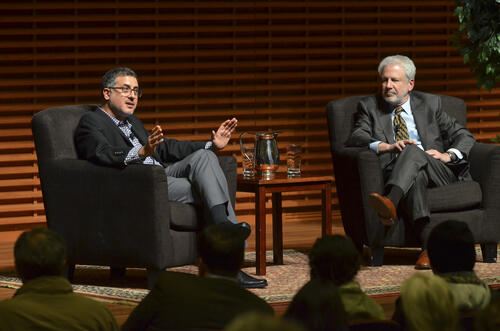
An Evening with Senator Mark Udall

Mark Udall was the senior US Senator from the state of Colorado from 2009–2015. During his tenure in the US Senate, Senator Udall held various national security committee assignments, both with the Senate Armed Services Committee and the Senate Select Committee on Intelligence. An active member of the Senate Intelligence Committee, Senator Udall gained notoriety for his vocal opposition to NSA surveillance programs in the wake of the Edward Snowden disclosures in June of 2013. However, as early as 2011, Senator Udall called on the Office of the Director of National Intelligence to declassify material related to US government surveillance. Following the Snowden revelations, Senator Udall advocated for adopting the recommendations from the President’s Review Group on Intelligence and Communications Technologies, as well as substantively reforming the NSA. 

In a conversation with Amy Zegart, CISAC Co-Director and Davies Family Senior Fellow at the Hoover Institution, Senator Udall will provide a lawmaker’s perspective on the oversight of controversial NSA programs. He will discuss the divide between security and civil liberties, as well as his thoughts on reform of US intelligence collection activities.


Ticket information: Admission is free but advance registration is required. Doors open at 6:30 PM; no entry after 7:40 PM. Registration is limited to 1 ticket per person. A photo ID will be required at the door.


The Security Conundrum is co-sponsored by Stanford’s Freeman Spogli Institute for International Studies, the Center for International Security and Cooperation, the Hoover Institution, Stanford Continuing Studies, Stanford in Government, and the Stanford Law School.

CEMEX Auditorium

Knight Management Center

641 Knight Way, Stanford University

Mark Udall Former US Senator, State of Colorado Speaker

CISAC
Stanford University
Encina Hall, E216
Stanford, CA 94305-6165

(650) 725-9754 (650) 723-0089
0
Senior Fellow at the Freeman Spogli Institute for International Studies
Morris Arnold and Nona Jean Cox Senior Fellow at the Hoover Institution
Senior Fellow at the Stanford Institute for Human-Centered AI
Professor, by courtesy, of Political Science
amyzegart-9.jpg PhD

Dr. Amy Zegart is the Morris Arnold and Nona Jean Cox Senior Fellow at the Hoover Institution. The author of five books, she specializes in U.S. intelligence, emerging technologies, and national security. At Hoover, she leads the Technology Policy Accelerator and the Oster National Security Affairs Fellows Program. She also is an associate director and senior fellow at the Stanford Institute for Human-Centered AI; a senior fellow at the Freeman Spogli Institute; and professor of political science by courtesy, teaching 100 students each year about how emerging technologies are transforming espionage.

Her award-winning research includes the leading academic study of intelligence failures before 9/11: Spying Blind: The CIA, the FBI, and the Origins of 9/11 (Princeton, 2007) and the bestseller Spies, Lies, and Algorithms: The History and Future of American Intelligence (Princeton, 2022), which was nominated by Princeton University Press for the Pulitzer Prize. She also coauthored Political Risk: How Businesses and Organizations Can Anticipate Global Insecurity, with Condoleezza Rice (Twelve, 2018). Her op-eds and essays have appeared in Foreign Affairs, Politico, the New York Times, the Washington Post, and the Wall Street Journal.

Zegart has advised senior officials about intelligence and foreign policy for more than two decades. She served on the National Security Council staff and as a presidential campaign foreign policy advisor and has testified before numerous congressional committees. Before her academic career, she spent several years as a McKinsey & Company consultant.

Zegart received an AB in East Asian studies from Harvard and an MA and a PhD in political science from Stanford. She serves on the boards of the Council on Foreign Relations, Kratos Defense & Security Solutions, and the American Funds/Capital Group.

Date Label
Amy Zegart Co-Director, CISAC, Davies Family Senior Fellow at the Hoover Institution Moderator
Lectures
Authors
News Type
Commentary
Date
Paragraphs

Julie Cordua, executive director of Thorn, a non-profit organization founded by Ashton Kutcher and Demi Moore, spoke passionately on the topic child exploitation and sexual abuse imagery for the Stanford Program on Human Rights’ Winter Speaker Series U.S Human Rights NGOs and International Human Rights on February 4, 2015.

Cordua addressed the Stanford audience about the importance of technology for acting as the “digital defenders of children." She provided a chilling account of child sexual exploitation, first describing the problem and then going on to challenge preconceived notions about it. For example, she highlighted that in order to tackle the issue, it must first be understood that it concerns a highly vulnerable population; most child victims of sexual exploitation come from extremely abusive backgrounds and many have been sexually abused by one or more parents.

Cordua emphasized that technology innovations have contributed to a proliferation of child exploitation and sexual abuse imagery through the use of encrypted networks that make it extremely difficult to hunt down perpetrators and find victims. Cordua feels that while technology is intensifying the problem, technology is also the solution.  Examples she gave were the development of algorithms that aim to track perpetrators and their victims and advertisements that encourage pedophiles to seek help.

Helen Stacy, director of the Program on Human Rights, queried Cordua on Thorn’s relationship with the government and private sector, as well as on Thorn’s approach for testing the efficacy of their programs. Cordua responded that Thorn does not apply for government funds so as to maintain independence over their projects but that they actively cultivate strong relationships with politicians and law enforcers. In relation to evaluation metrics, Cordua acknowledged that metrics are especially difficult in such a cryptic field as it is nearly impossible to know what numbers they are dealing with from the onset. Questions from the audience included effective strategies for changing the conversation of pedophilia in the public sphere, the emotional stamina required for pursuing such work, and strategies for connecting with and providing a safe platform for victims of child sexual exploitation.

Dana Phelps, Program Associate, Program on Human Rights


Hero Image
dsc 0476
Julie Cordua, executive director of Thorn, speaks at Stanford
Dana Phelps
All News button
1
-

Abstract: Chevaline was the codename given to a highly-secret program begun in 1970 to improve the performance of the UK's force of Polaris submarine-launched ballistic missiles in order to give them the capability to overcome Soviet ABM defenses deployed around Moscow. After much technical difficulty, delays in project timescale and cost escalation the new system was finally introduced in 1982, but it had already attracted major criticism for the expenditure involved, claims of project mismanagement, the rationale that underpinned its development, and its concealment from proper parliamentary scrutiny. This lecture will explore the background to the program, why it ran into so many problems, and how it became one of the most controversial episodes in post-war British defense policy. An understanding of the problems confronted by the attempt to improve Polaris illuminates a number of key themes and issues that are of relevance to policymakers concerned with strategic weapons programs and project management.

About the Speaker: Matthew Jones’ current research focuses on British nuclear history during the Cold War. He has also written on many different aspects of US and British foreign and defense policy in the 20th century, and has a long-standing interest in empire and decolonization in South East Asia. Jones’ first book, Britain, the United States and the Mediterranean War, 1942-44 (Macmillan, 1996), examined strains in the Anglo-American relationship by strategic issues and command problems in the Mediterranean theater. His book, Conflict and Confrontation in South East Asia, 1961-1965: Britain, the United States, Indonesia, and the Creation of Malaysia (Cambridge University Press, 2002), looks at the federation of Malaysia during British decolonization in the early 1960s. After Hiroshima: The United States, Race, and Nuclear Weapons in Asia, 1945-1965 (Cambridge University Press, 2010) addresses US nuclear policies in Asia in the period of the Korean War, confrontation with China, and early engagement in Vietnam. His current project on UK nuclear policy encompasses the development of nuclear strategy within NATO, the Anglo-American nuclear relationship, and European responses to strategic arms control. In 2008, Jones was appointed by the Prime Minister to become the Cabinet Office official historian of the UK strategic nuclear deterrent and the Chevaline program, a commission that will lead to the publication of a two-volume official history exploring British nuclear policy between 1945 and 1982. Jones’s journal articles have appeared in Diplomatic History, Historical Journal, Journal of Cold War Studies, and English Historical Review. He gained his DPhil in Modern History at St. Antony’s College, Oxford, in 1992.

Encina Hall (2nd floor)

Matthew Jones Professor of International History Speaker London School of Economics and Political Science
Seminars
-

Abstract: The first Snowden disclosure was that Verizon was providing daily updates of telephony metadata to the NSA. This caused great consternation, and resulted in two government studies, one by the President's NSA Review Committee and one by the Privacy and Civil Liberties Oversight Board.  Both concluded the collection should be ended. The President asked Office of the Director of National Intelligence to produce a report "assessing the feasibility of creating software that would allow the intelligence community more easily to conduct targeted information acquisition rather than bulk collection."  This talk reports on that work, which considered the issue from the angle of technical alternatives, and concluded that there is no technical replacement for bulk data collection, but that software can enhance targeted collection and automate control of data usage. This talk will discuss that report, conducted by the National Research Council, explaining what the report says — and what it doesn't say.

About the Speaker: Susan Landau is Professor of Cybersecurity Policy in the Department of Social Science and Policy Studies at Worcester Polytechnic Institute. Landau has been a senior staff Privacy Analyst at Google, a Distinguished Engineer at Sun Microsystems, a faculty member at the University of Massachusetts at Amherst and at Wesleyan University. She has held visiting positions at Harvard, Cornell, and Yale, and the Mathematical Sciences Research Institute. Landau is the author of Surveillance or Security?  The Risks Posed by New Wiretapping Technologies (MIT Press, 2011), and co-author, with Whitfield Diffie, of Privacy on the Line: The Politics of Wiretapping and Encryption (MIT Press, 1998, rev. ed. 2007). She has written numerous scientific and policy research papers, and has also published in other venues, including Science, Scientific American, and the Washington Post. Landau has testified in Congress on cybersecurity and on electronic surveillance. Landau currently serves on the Computer Science Telecommunications Board of the National Research Council.  A 2012 Guggenheim fellow, Landau was a 2010-2011 fellow at the Radcliffe Institute for Advanced Study, the recipient of the 2008 Women of Vision Social Impact Award, and also a fellow of the American Association for the Advancement of Science and the Association for Computing Machinery.  She received her BA from Princeton, her MS from Cornell, and her PhD from MIT.

Encina Hall (2nd floor)

Susan Landau Professor of Cybersecurity Policy in the Department of Social Science and Policy Studies Speaker Worcester Polytechnic Institute
Seminars
Authors
News Type
News
Date
Paragraphs


The United States has thrust itself and the world into the era of cyber warfare, Kim Zetter, an award-winning cybersecurity journalist for WIRED magazine, told a Stanford audience. Zetter discussed her book “Countdown to Zero Day,” which details the discovery and unraveling of Stuxnet, the world’s first cyber weapon. 

Stuxnet was the name given to a highly complex digital malware that targeted, and physically damaged, Iran’s clandestine nuclear program from 2007 until its cover was blown in 2010 by computer security researchers. The malware targeted the computer systems controlling physical infrastructure such as centrifuges and gas valves.

Reports following its discovery attributed the creation and deployment of Stuxnet to the United States and Israel. The New York Times quoted anonymous U.S. officials claiming responsibility for Stuxnet. 

Zetter began reporting on the cyber weapon in 2010.

“When the first news came out, I didn’t think much of it,” Zetter told a CISAC seminar on Monday. The title of her book refers to a “zero-day attack," which exploits a previously unknown vulnerability in a computer application or operating system.

“Watching the Symantec researchers unravel Stuxnet, I knew what fascinated me was the process and brilliance of the researchers. The detective story is what pulled me in.” 

Zetter’s book follows computer security researchers from around the world as they discover and disassemble Stuxnet over the course of months, much longer than any time spent on typical malware. The realization that Stuxnet was the world’s first cyber weapon sent shock waves throughout the tech community, yet did not create as much of a stir in mainstream society. 

“It’s funny because a lot of people still don’t know Stuxnet or haven’t even heard of it,” Zetter said. “The recent vandalization of Sony seems to have finally gotten people’s attention. It was not a case of true cyber warefare, but I'm glad that my book came out right before it happened because its perception as a nation-state attack has led to interest in all nation-state attacks, including Stuxnet. The Snowden leaks also put cyber warfare on the map.” 


“Countdown to Zero” also places Stuxnet in political context. The first version of Stuxnet was built and unleashed by the Bush administration in 2007, according to Zetter. Iran accelerated its enrichment process in 2008, leading to fears it would have enough uranium to build a bomb by 2010. President Barack Obama inherited the program; he not only continued it,but accelerated it. Another, more aggressive version of Stuxnet was unleashed in June 2009 and again in 2010. Obama gave the order to unleash Stuxnet while publicly demanding Iran to open itself up to negotiations. 

The effectiveness of the world’s first cyber weapon remains a subject of debate. The most optimistic assessment of Stuxnet is that it delayed and slowed Iran’s uranium development enough to dissuade Israel from unilaterally striking the country, and it afforded time for intelligence and diplomatic efforts. Stuxnet contributed to dissension and frustration among the upper ranks of Iran’s government (the head of Iran’s nuclear program was replaced) and bought time for harsh economic sanctions to impact the Iranian public.

“Stuxnet actually had very little effect on Iran’s nuclear program,” said Zetter. “It was premature, it could have had a much bigger effect had the attackers waited.” Iran still made a net gain in their uranium stockpile while being attacked and they are updating their centrifuges, which would make Stuxnet obsolete.

The more unsettling parts of Zetter’s book catalog security vulnerabilities in America’s public infrastructure, which could easily be victim to a Stuxnet-style attack, and consider the implications of the era Stuxnet heralded. For example, in 2001 hackers attacked California ISO, a nonprofit corporation that manages the transmission system for moving electricity throughout most of California. More recently, Zetter writes, in 2011 a security research team “penetrated the remote-access system for a Southern California water plant and was able to take control of equipment the facility used for adding chemicals to drinking water.”

The Obama administration has publicly announced that shoring up infrastructure security is a top priority. Zetter finds this ironic, because unleashing Stuxnet has opened the U.S. up to attacks using the same malware.

“When you launch a cyber weapon, you don’t just send the weapon to your enemies, you send the intellectual property that created it and the ability to launch the weapon back against you,” writes Zetter. “Marcus Ranum, one of the early innovators of the computer firewall, called Stuxnet ‘a stone thrown by people who live in a glass house.’”

More broadly, Stuxnet heralded an era of cyber warfare that could prove to be more destructive than the nuclear era. For Zetter there is also irony to the use of cyber weapons to combat nuclear weapons. She quotes Kennette Benedict, the executive director of the “Bulletin of the Atomic Scientists,” pointing out, “that the first acknowledged military use of cyber warfare is ostensibly to prevent the spread of nuclear weapons. A new age of mass destruction will begin in an effort to close a chapter from the first age of mass destruction.” 

Zetter has similar fears.

“The U.S. lost the moral high ground from where it could tell other countries to not use digital weapons to resolve disputes,” Zetter said. “No one has been killed by a cyber attack, but I think it’s only a matter of time.”

Joshua Alvarez was a 2012 CISAC Honors Student. 

Hero Image
cntdwn20day
All News button
1
-

Abstract: NSA stands for National Security Agency, but the agency is at odds with itself in its security mission. Undermining global encryption standards, intercepting Internet companies' data center transmissions, using auto-update to spread malware, and demanding law enforcement back doors in products and services are all business as usual. What legal basis does NSA and FBI have for these demands, and do they make the country more or less safe?

About the Speaker: Jennifer Granick started as the Stanford Law School Center for Internet and Society's (CIS) Director of Civil Liberties in June of 2012. She became an affiliate at the Center for International  Security and Cooperation in July 2012. 

Jennifer returned to Stanford after stints as General Counsel of entertainment company Worldstar Hip Hop and as counsel with the internet boutique firm of Zwillgen PLLC. Before that, she was the Civil Liberties Director at the Electronic Frontier Foundation. Jennifer practices, speaks and writes about computer crime and security, electronic surveillance, consumer privacy, data protection, copyright, trademark and the Digital Millennium Copyright Act.

From 2001 to 2007, Jennifer was Executive Director of CIS and taught Cyberlaw, Computer Crime Law, Internet intermediary liability, and Internet law and policy. Before teaching at Stanford, Jennifer spent almost a decade practicing criminal defense law in California. She was selected by Information Security magazine in 2003 as one of 20 "Women of Vision" in the computer security field. She earned her law degree from University of California, Hastings College of the Law and her undergraduate degree from the New College of the University of South Florida.

Encina Hall (2nd floor)

Jennifer Granick Director of Civil Liberties at Stanford Center for Internet and Society Speaker Stanford University
Seminars
Authors
News Type
News
Date
Paragraphs

Understanding the nature of violent conflict in the world's most dangerous flashpoints may help find ways to peace and stability, according to a Stanford expert.

Once a soldier, now a scholar, Joe Felter knows better than most the intrinsic meaning of war and conflict – he served on the front lines in the U.S. Special Forces in places such as Iraq, Afghanistan and the Philippines.

Today, the senior research scholar at Stanford's Center for International Security and Cooperationand research fellow at the Hoover Institution is on a different kind of mission: building knowledge on the subject of politically motivated conflict.

For example, how are the most casualties suffered and under what conditions? Are there patterns to why rebels are surrendering? And how do armed battles affect development and education in local communities?

Answers to these and other questions are found in the Empirical Studies of Conflict project database, which is led by Felter and Jacob Shapiro, his former Stanford political science classmate, now a professor at Princeton University. The effort focuses on insurgency, civil war and other sources of politically motivated violence worldwide. Launched last year, it currently covers the Philippines, Afghanistan, Colombia, Iraq, Northern Ireland, Mexico, the Israeli-occupied territories, Pakistan and Vietnam. The site includes geospatial and tabular data as well as thousands of documents, archives and interviews.

Since 2009, Felter has collaborated with colleagues at Princeton, the University of California, San Diego, and other institutions in developing the database. Today, they are advising policymakers and military leaders on how best to curb conflict, reduce civilian casualties and promote prosperity. Felter and his colleagues have outlined some of their work in this Foreign Affairs article published in January 2015.

Felter's research on Filipino insurgencies, for instance, has produced significant results. The senior officials there have invited him to brief their military on battlefield trends and counterinsurgency strategy, as Felter and his colleagues have interviewed thousands of combatants as part of the project.

What do they learn about the insurgent mindset? One Islamic militant chief talked tactics with him, then revealed that his greatest tool was his men's belief that Allah was waiting for them on the other side. Others included a Roman Catholic nun who was running guns and money to help the poor and a young college freshman recruited with the promise of $40 a month to support her family.

Pathways to peace

In the case of the Philippines, Felter had access to more than 100,000 individual reports of conflict episodes dating back to 1975 and more than 13,000 interview transcripts from rebels who were captured or had surrendered over the last 30 years. That information was coded in detail and compiled as part of the Empirical Studies of Conflict Project database. The Philippines is home to some of the most protracted Muslim separatist and communist insurgencies in the world, and that is precisely why the government is interested in learning how to thwart it.

L.A. Ciceroscholar Joe Felter and student research assistant Crystal Lee

Crystal Lee, a Stanford senior and history major, has been Joe Felter’s research assistant since her freshman year.

"For me, it's kind of validating all the thousands and thousands of hours that went into all our coding," said Felter, adding that the information will help the Philippines government find ways to ease the costs and human suffering in the conflicts it faces.

It has been a transformational journey for Felter, who retired in 2012 from the U.S. Army as a colonel following a career as a Special Forces and foreign area officer with missions and deployments across Asia, Panama, Iraq and Afghanistan. In 2010-11, he commanded the International Security and Assistance Force Counter Insurgency Advisory and Assistance Team in Afghanistan.

"I spent a long time in the military deployed to environments where you could appreciate that what you were doing was having an impact," Felter said.

In higher education now, his vantage point is different from what it was on the front lines. Today, both perspective and policy are two of his main goals.

"Since I transitioned to academia, I haven't lost my commitment to trying to help practitioners in the field to better understand conflict – by using data," Felter said.

Stanford senior Crystal Lee, a history major, has been working with Felter as a research assistant since her freshman year, helping him code and compile the datasets.

"It's been really interesting for me to think about the implications that this type of data analysis has on governments and broader policy work," said Lee, who also has analyzed and reconstructed hundreds of interviews with former rebels for Felter's upcoming book.

She said that a romantic notion exists in Silicon Valley that if one uses a huge database, one can wave a magic wand and believe that so-called "big data" will solve everything. "But it's a really messy field and we've had to use best practices to make sense of the increasingly complicated picture of counterinsurgency and terrorism," she said.

Study at the local level

Felter pointed out that to truly comprehend the nature of counterinsurgency in places like the Philippines, Iraq or Afghanistan, one must realize that its roots are in local communities.

"You need to study it at the local level to really understand it," Felter said. "And the Philippines is like a petri dish for studying both insurgency and counterinsurgency because you have multiple, long-running insurgencies, each with distinct characteristics, and with an array of government and military responses to address these threats over time."

The coders are now doubling back over the dataset from 1975 to 2012 to make sure it's accurate and cleaned of any potentially sensitive details before it goes public. The data are the basis for two of Felter's ongoing book projects and dozens of working papers and journal articles.

Roots of research

A Stanford alum, Felter was in the Philippines in 2004 conducting field research as part of his doctoral dissertation when he was first able to gain access to what would become a trove of detailed incident-level data on insurgency and counterinsurgency.

John Troncoscholar Joe Felter with members of the First Scout Ranger Regiment, Philippine Army

Stanford scholar Joe Felter with members of the First Scout Ranger Regiment, Philippine Army. His research in the Philippines helps inform the Empirical Studies of Conflict database.

After bringing back the data and meeting with his faculty advisers – Stanford political science Professors David Laitin and James Fearon – he realized the extensive incident-level data could be coded in a manner that would make it a tremendous resource for scholars studying civil wars, insurgencies and other forms of politically motivated violence.

"This comprehensive conflict dataset is going to be the holy grail of micro-level conflict data," Felter said. "It has the potential to drive a significant number of publications, reports and analyses, and enable conflict researchers to develop insights and test theories that they would not have been able to do before."

The network is expanding. A dozen young scholars who were supported by funding for the Empirical Studies of Conflict (ESOC) project as postdoctoral fellows have now been placed in tenure-track positions at universities.

"What's unique about ESOC is that we're trying hard to make it easier for others to study conflict by pulling together everything we can on the conflicts we've studied," said Jake Shapiro, an associate professor of politics and international affairs at Princeton University and the project's co-director.

On Iraq, for example, the website provides data on conflict outcomes, politics and demographics, in addition to maps, links to other useful information sources and other types of research on Iraq, he said.

Shapiro says researchers working for the Canadian Armed Forces, the World Bank and the U.S. military have already turned to the database for help. Insurgencies cost human lives and dollars, enough so that the United States and the international community are now focused on rebuilding social and political orders in those troubled countries.

As Felter put it, "We are devoted to learning from all those experiences and to making it easier for others to do so as well, so that we can all live more peacefully and safely in the future."

Research highlights

The Empirical Studies of Conflict project includes the following scholarly advances:

• Research on insurgent compensation paid during the U.S. Iraq conflict shows that pay was not based on risk factors.
• Findings show rebel violence will decrease when projects are secure and valued by community members and when implementation is conditional on the behavior of non-combatants.
• A journal article describes the preference for "certainty" in the relationship between violence and economic risk in wartime Afghanistan.

Media Contact

Beth Duff-Brown, Center for International Security and Cooperation: (650) 725-6488,bethduff@stanford.edu

Clifton B. Parker, Stanford News Service: (650) 725-0224, cbparker@stanford.edu

Hero Image
conflict joe
CISAC Senior Research Scholar Joe Felter with members of the First Scout Ranger Regiment, Philippine Army. His research in the Philippines helps inform the Empirical Studies of Conflict Project database.
John Tronco
All News button
1
Authors
News Type
News
Date
Paragraphs


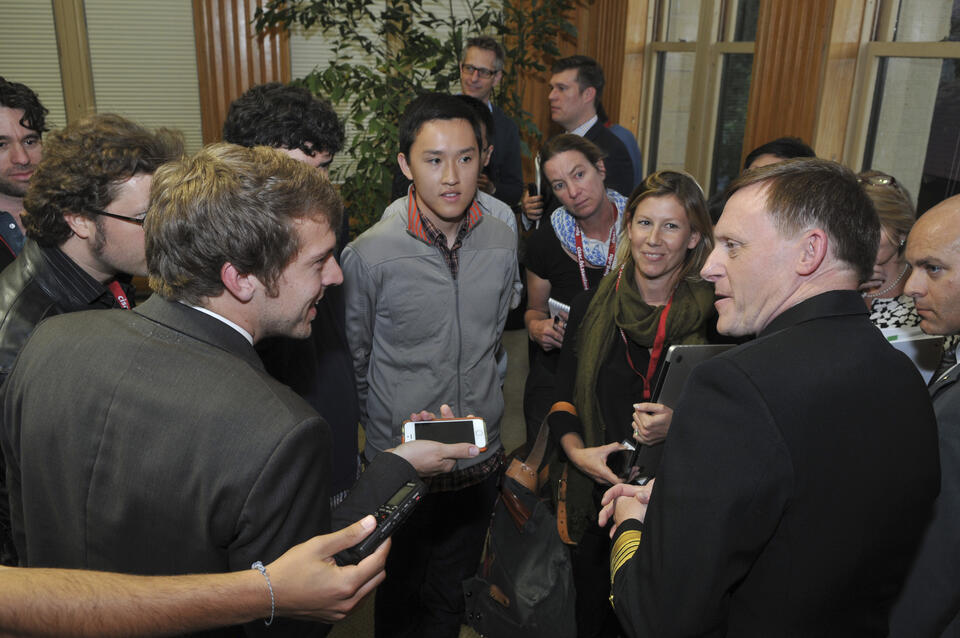
American deterrence, though traditionally centered on the nuclear triad, is becoming ever more integrated and dependent on other technologies in space and the cyber world, Admiral Cecil D. Haney, commander of the U.S. Strategic Command, told a Stanford audience.

Haney, appointed to lead USSTRATCOM by President Barack Obama last year, made a daylong visit to Stanford on Tuesday, holding seminars and private meetings with faculty, scholars and students at the Hoover Institution and the Center for International Security and Cooperation. His seminar at CISAC focused on strategic deterrence in the 21st century.

Admiral Haney has made it USSTRATCOM’s goal, in accordance with the Nuclear Nonproliferation Treaty (NPT) and the 2010 START Treaty, to reduce America’s nuclear weapons stockpile. But he sees a world where maintaining a deterrent is still necessary.

“As we work to continue our nation’s goal of reducing the role of our nation’s nuclear weapons, we find other nations not only modernizing their strategic capabilities but also promoting them,” he said. Russia, Iran, and China attracted particular concern. Haney declined to estimate how much the U.S. can reduce its stockpile without hurting its deterrent posture.

While the nuclear triad is still the foundation of American deterrence, space and cyberspace technology are now fully integrated with nuclear platforms, making cyber and space security indispensable.

“Deterrence is more than just the triad,” said Haney. “We are highly dependent on space capabilities, more so than ever before. Space is fully integrated in our joint military operations as well as in our commercial and civil infrastructure. But space today is contested, congested, and competitive.” 

Haney said there are more than 20,000 softball-sized objects orbiting Earth.


Image
dsc 9384


“Only about 1,000 of those objects are satellites, the rest is debris, increasing threats to our operational satellites as they travel at speeds exceeding 17,000 mph,” he said. The Joint Space Operation Center receives an average of 30 collision alerts per day.

Damage to some of our satellites could have devastating impacts on our economy, communications and infrastructure. Rival nations also pose space security challenges.

According to the U.S. government, China recently tested an anti-satellite missile. This follows a 2007 test when China successfully destroyed one of its satellites, and consequently created a cloud of debris that still poses a threat to international satellites.

“Keeping assured access to the space domain is a full-time job,” Haney said.

Likewise cybersecurity. America’s increasing reliance on cyberspace for both military and civilian purposes has created security vulnerabilities that can be exploited by both state and non-state actors. Haney cited the recent attacks on J.P. Morgan and Sony, Russia and China’s attacks on regional rivals, and non-state terror groups.

“We have benefited enormously from advanced computer capabilities, but it has opened up threat access to our critical infrastructure,“ Haney said. “As we confront terrorist groups we all know that they are not only using cyber for recruiting and messaging – but also to seek weapons of mass destruction.”

In a Q&A session after his talk during the CISAC seminar, a variety of concerns were raised about the USSTRACOM mission, including triad modernization, the ongoing personnel issues that have been in the news, and missile defense.

FSI Senior Fellow Scott Sagan asked about the recent spate of personnel problems at U.S. nuclear silos. Haney said a full review of personnel and procedures, ordered by Defense Secretary Chuck Hagel, was completed and changes have been enacted.

“We are trying to positively reinforce our workforce and I am getting a lot of positive feedback from operators,” Haney said. “We are having monthly conversations that include operational officers. When I visit sites I don’t just meet with commanders, I have meals with smaller groups of lower-ranking personnel.”

Haney previously served as commander of the Pacific Fleet. A graduate of the U.S. Naval Academy, he has personal experience with America’s nuclear deterrent as he served in submarines armed with nuclear ballistic missiles, which, in addition to land-based intercontinental ballistic missiles (ICBMs) and strategic bombers, make up part of the United States’ nuclear triad.

USSTRATCOM is one of nine unified commands that have control of forces from all four branches of the U.S. military. The command’s well-known responsibility is command and control of America’s nuclear arsenal, a role it inherited from the Cold War-era Strategic Air Command. Since its establishment in 1992, USSTRATCOM has been assigned additional responsibilities, most notably cyberspace and outer space.


You can listen to the audio of his presentation here.


Joshua Alvarez was a CISAC Honors Student during the 2011-2012 academic year.


Hero Image
dsc 9057 Rod Searcey
All News button
1
News Type
News
Date
Paragraphs


CISAC's Scott Sagan is the chair of a new project by the American Academy of Arts & Sciences, called the New Dilemmas in Ethics, Technology and War.  The project convenes an interdisciplinary group of scholars and practitioners (political scientists, philosophers, ethicists, lawyers, physicians, historians, soldiers, and statesmen) in a series of small workshops to explore the intricate linkage between the advancement of military technology and the moral and ethical considerations of the deployment of such capabilities in war and in postwar settings.

The project will produce a multidisciplinary Dædalus issue that will inform the debate surrounding the acceptable use of modern instruments of war and will provide a useful teaching tool for both universities and military service academies.

You can read more about the project on the AAA&S website here.

Hero Image
ethics sagan U.S. Army Staff Sgt. Ryan C. Matson
All News button
1
Subscribe to Intelligence