


Symposium about the March 2011 Tohoku, Japan, Earthquake
News Type
News
Date
Paragraphs
Please join us on The Great Tohoku, Japan Disaster - Symposium Iand The Great Tohoku, Japan Disaster - Symposium II for two evenings devoted to an examination of and conversation about the March 11, 2011 Tohoku earthquake in northern Honshu, Japan, and the subsequent tsunami and nuclear accident. In talks and panel discussions, experts from the School of Earth Sciences and the Freeman Spogli Institute for International Studies will focus on what happened, the impacts of the events, and what the future holds for Japan and other earthquake- and tsunami-zone regions of the world.
All News button
1
Understanding Three Decades of Lag in Indian Nuclear Decision-Making
-
This talk reviews three decades of Indian nuclear decision-making. It argues that India’s slow pace of weaponization in the face of Pakistani nuclearization and Sino- Pakistani nuclear cooperation in the 1980s, the slack in building an institutional capacity to wield nuclear weapons after they came into existence in the 1990s, and the reluctant attempts at developing an operational arsenal even after formally claiming nuclear power status and almost going to war with a nuclear Pakistan in the last decade, constitute puzzling behavior. Existing proliferation models explain facets of Indian nuclear behavior. However, they don’t explain it in its totality. The different facets of Indian nuclear decision making in the last three decades can be collapsed into a single dependent variable: the lag in strategic decision-making. This talk operationalizes the concept of ‘lag’, critically reviews existing explanations of Indian nuclear behavior, and offers an alternative framework for understanding Indian nuclear decision-making.
Gaurav Kampani is a sixth year doctoral student at Cornell University's Department of Government. His major and minor fields are International Relations and Comparative Politics. Kampani's research interests cover international security and focus on the relationship between domestic institutions and strategic policy, military strategy, operations planning, and weapons development.
Kampani's dissertation project studies Indian civil-military institutions and nuclear weapons-related operational practices in the decade prior 1998 and the decade since.
Between 1998-2005, Kampani worked on South Asia-related nuclear and missile proliferation issues at the James Martin Center for Nonproliferation Studies, Monterey CA.
Reuben W. Hills Conference Room
Gaurav Kampani
Nuclear Security Fellow
Keynote Speaker
CISAC
Paul Kapur
Associate Professor, U.S. Naval Postgraduate School; Faculty Affiliate, CISAC
Commentator
Seminars
Lessons from the Failure of Nuclear Negotiations with North Korea
-
Today nuclear negotiations with North Korea, begun twenty years ago, have returned to their starting point. The Geneva Agreement of 1994 collapsed as a result of North Korea’s clandestine uranium enrichment program, and the PRC-hosted Six Party talks have failed to halt nuclear tests by North Korea. Neither the engagement policy of the Clinton Administration nor the coercive policy of President Bush succeeded in resolving the North Korean nuclear conundrum. The North now claims it should be treated as a nuclear weapons state.
North Korea is currently waging a "peace offensive" to deflect criticism from the international community for its reckless military provocations against South Korea last year. The North may also need dialogue with the international community more than we do, to obtain economic assistance, since starving people would not support their regime and nuclear weapons cannot feed its people. The United States and South Korea agree, however, that under present circumstances, engagement with North Korea would be futile. They maintain that their refusal to resume talks with North Korea is a deliberate and strategic decision. Looking back on real-world experience, North Korea has consistently used provocations as "leverage" to arrive at negotiations on its terms. In most cases, it has gained considerable concessions, using its well-known brinkmanship tactics.
Now that North Korea has confirmed the existence of its uranium enrichment program and announced it will begin constructions of LWRs on its own, neighboring countries are deeply concerned about nuclear safety—not to mention nuclear security—in North Korea. This provides a reason for an unconditional dialogue with North Korea, apparently precisely the situation North sought. In this light, Mr. Yu will review the last twenty years of negotiations with North Korea to draw lessons for dealing with the regime in the future.
Mr. Yu is a former Minister of Foreign Affairs and Trade of Korea. He served as Korea's Ambassador to Israel, Japan and Philippines.
Philippines Conference Room
Myung Hwan Yu
Shorenstein APARC
Encina Hall E313
616 Serra Street
Stanford, CA 94305-6055
0
myngyu@stanford.edu
2010-2011 Visiting Scholar
Mr. Yu is a former Minister of Foreign Affairs and Trade of Korea. He served as Korea's Ambassador to Israel, Japan and Philippines.
Seminars
Kenji E. Kushida
0
Former Research Scholar, Japan Program
Kenji E. Kushida was a research scholar with the Japan Program at the Walter H. Shorenstein Asia-Pacific Research Center from 2014 through January 2022. Prior to that at APARC, he was a Takahashi Research Associate in Japanese Studies (2011-14) and a Shorenstein Postdoctoral Fellow (2010-11).
Kushida’s research and projects are focused on the following streams: 1) how politics and regulations shape the development and diffusion of Information Technology such as AI; 2) institutional underpinnings of the Silicon Valley ecosystem, 2) Japan's transforming political economy, 3) Japan's startup ecosystem, 4) the role of foreign multinational firms in Japan, 4) Japan's Fukushima nuclear disaster. He spearheaded the Silicon Valley - New Japan project that brought together large Japanese firms and the Silicon Valley ecosystem.
He has published several books and numerous articles in each of these streams, including “The Politics of Commoditization in Global ICT Industries,” “Japan’s Startup Ecosystem,” "How Politics and Market Dynamics Trapped Innovations in Japan’s Domestic 'Galapagos' Telecommunications Sector," “Cloud Computing: From Scarcity to Abundance,” and others. His latest business book in Japanese is “The Algorithmic Revolution’s Disruption: a Silicon Valley Vantage on IoT, Fintech, Cloud, and AI” (Asahi Shimbun Shuppan 2016).
Kushida has appeared in media including The New York Times, Washington Post, Nihon Keizai Shimbun, Nikkei Business, Diamond Harvard Business Review, NHK, PBS NewsHour, and NPR. He is also a trustee of the Japan ICU Foundation, alumni of the Trilateral Commission David Rockefeller Fellows, and a member of the Mansfield Foundation Network for the Future. Kushida has written two general audience books in Japanese, entitled Biculturalism and the Japanese: Beyond English Linguistic Capabilities (Chuko Shinsho, 2006) and International Schools, an Introduction (Fusosha, 2008).
Kushida holds a PhD in political science from the University of California, Berkeley. He received his MA in East Asian Studies and BAs in economics and East Asian Studies with Honors, all from Stanford University.
China-US Inadvertent Nuclear Escalation
-
Reuben W. Hills Conference Room
Riqiang Wu
Nuclear Security Fellow at CISAC and PhD Student at Tsinghua University, China
Speaker
Seminars
North Korea's Yongbyon Nuclear Complex: A presentation by Siegfried S. Hecker at the Korea Economic Institute
CISAC's Siegfried Hecker presented the findings of his recent trip to North Korea, where he was given a tour of a nuclear facility reportedly capable of enriching uranium. In his remarks he described two new nuclear facilities, a small light-water power reactor in early stages of construction, and a "modern, clean centrifuge plant" for uranium enrichment. Following his presentation he and Robert Carlin, a CISAC visiting professor, spoke about North Korean nuclear programs and the international reaction to North Korea's nuclear ambitions. This event occurred the day after North Korean military attacks on the South Korean island of Yeonpyeong.
Image
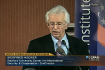
Dr. Hecker's Nov. 23, 2010 Presentation at the Korea Economic Institute (C-Span video)
Korea Economic Institute
Siegfried S. Hecker
CISAC
Stanford University
Encina Hall, C220
Stanford, CA 94305-6165
0
shecker@stanford.edu
Senior Fellow, Freeman Spogli Institute for International Studies, Emeritus
Research Professor, Management Science and Engineering, Emeritus
Siegfried S. Hecker is a professor emeritus (research) in the Department of Management Science and Engineering and a senior fellow emeritus at the Freeman Spogli Institute for International Studies (FSI). He was co-director of CISAC from 2007-2012. From 1986 to 1997, Dr. Hecker served as the fifth Director of the Los Alamos National Laboratory. Dr. Hecker is an internationally recognized expert in plutonium science, global threat reduction, and nuclear security.
Dr. Hecker’s current research interests include nuclear nonproliferation and arms control, nuclear weapons policy, nuclear security, the safe and secure expansion of nuclear energy, and plutonium science. At the end of the Cold War, he has fostered cooperation with the Russian nuclear laboratories to secure and safeguard the vast stockpile of ex-Soviet fissile materials. In June 2016, the Los Alamos Historical Society published two volumes edited by Dr. Hecker. The works, titled Doomed to Cooperate, document the history of Russian-U.S. laboratory-to-laboratory cooperation since 1992.
Dr. Hecker’s research projects at CISAC focus on cooperation with young and senior nuclear professionals in Russia and China to reduce the risks of nuclear proliferation and nuclear terrorism worldwide, to avoid a return to a nuclear arms race, and to promote the safe and secure global expansion of nuclear power. He also continues to assess the technical and political challenges of nuclear North Korea and the nuclear aspirations of Iran.
Dr. Hecker joined Los Alamos National Laboratory as graduate research assistant and postdoctoral fellow before returning as technical staff member following a tenure at General Motors Research. He led the laboratory's Materials Science and Technology Division and Center for Materials Science before serving as laboratory director from 1986 through 1997, and senior fellow until July 2005.
Among his professional distinctions, Dr. Hecker is a member of the National Academy of Engineering; foreign member of the Russian Academy of Sciences; fellow of the TMS, or Minerals, Metallurgy and Materials Society; fellow of the American Society for Metals; fellow of the American Physical Society, honorary member of the American Ceramics Society; and fellow of the American Academy of Arts and Sciences.
His achievements have been recognized with the Presidential Enrico Fermi Award, the 2020 Building Bridges Award from the Pacific Century Institute, the 2018 National Engineering Award from the American Association of Engineering Societies, the 2017 American Nuclear Society Eisenhower Medal, the American Physical Society’s Leo Szilard Prize, the American Nuclear Society's Seaborg Medal, the Department of Energy's E.O. Lawrence Award, the Los Alamos National Laboratory Medal, among other awards including the Alumni Association Gold Medal and the Undergraduate Distinguished Alumni Award from Case Western Reserve University, where he earned his bachelor's, master's, and doctoral degrees in metallurgy.
Hide publication sections
Off
Robert Carlin
CISAC
Stanford University
Encina Hall, C245 - Desk 2
Stanford, CA 94305-6165
0
rcarlin@stanford.edu
Carlin_Robert.jpg
MA
Bob Carlin is a Visiting Scholar at CISAC. From both in and out of government, he has been following North Korea since 1974 and has made 25 trips there. He recently co-authored a lengthy paper to be published by the London International Institute of Strategic Studies, entitled "Politics, Economics and Security: Implications of North Korean Reform."
Carlin served as senior policy advisor at the Korean Peninsula Energy Development Organization (KEDO) from 2002-2006, leading numerous delegations to the North for talks and observing developments in-country during the long trips that entailed.
From 1989-2002, he was chief of the Northeast Asia Division in the Bureau of Intelligence and Research, U.S. Department of State. During much of that period, he also served as Senior Policy Advisor to the Special Ambassador for talks with North Korea, and took part in all phases of US-DPRK negotiations from 1992-2000. From 1971-1989, Carlin was an analyst at the Central Intelligence Agency, where he received the Exceptional Analyst Award from the Director of Central Intelligence.
Carlin received his AM in East Asian regional studies from Harvard University in 1971 and his BA in political science from Claremont Men's College.
Affiliate
Conferences
North Korea's Yongbyon Nuclear Complex: A Report by Siegfried S. Hecker
Paragraphs
Excerpt: "On November 12, during my most recent visit to the Yongbyon Nuclear Complex with Stanford University colleagues John W. Lewis and Robert Carlin, we were shown a 25 to 30 megawatt-electric (MWe) experimental light-water reactor (LWR) in the early stages of construction. It is North Korea's first attempt at LWR technology and we were told it is proceeding with strictly indigenous resources and talent. The target date for operation was said to be 2012, which appears much too optimistic."
All Publications button
1
Publication Type
Policy Briefs
Publication Date
Journal Publisher
CISAC
Reuben W. Hills Conference Room
Siegfried S. Hecker
CISAC
Stanford University
Encina Hall, C220
Stanford, CA 94305-6165
0
shecker@stanford.edu
Senior Fellow, Freeman Spogli Institute for International Studies, Emeritus
Research Professor, Management Science and Engineering, Emeritus
Siegfried S. Hecker is a professor emeritus (research) in the Department of Management Science and Engineering and a senior fellow emeritus at the Freeman Spogli Institute for International Studies (FSI). He was co-director of CISAC from 2007-2012. From 1986 to 1997, Dr. Hecker served as the fifth Director of the Los Alamos National Laboratory. Dr. Hecker is an internationally recognized expert in plutonium science, global threat reduction, and nuclear security.
Dr. Hecker’s current research interests include nuclear nonproliferation and arms control, nuclear weapons policy, nuclear security, the safe and secure expansion of nuclear energy, and plutonium science. At the end of the Cold War, he has fostered cooperation with the Russian nuclear laboratories to secure and safeguard the vast stockpile of ex-Soviet fissile materials. In June 2016, the Los Alamos Historical Society published two volumes edited by Dr. Hecker. The works, titled Doomed to Cooperate, document the history of Russian-U.S. laboratory-to-laboratory cooperation since 1992.
Dr. Hecker’s research projects at CISAC focus on cooperation with young and senior nuclear professionals in Russia and China to reduce the risks of nuclear proliferation and nuclear terrorism worldwide, to avoid a return to a nuclear arms race, and to promote the safe and secure global expansion of nuclear power. He also continues to assess the technical and political challenges of nuclear North Korea and the nuclear aspirations of Iran.
Dr. Hecker joined Los Alamos National Laboratory as graduate research assistant and postdoctoral fellow before returning as technical staff member following a tenure at General Motors Research. He led the laboratory's Materials Science and Technology Division and Center for Materials Science before serving as laboratory director from 1986 through 1997, and senior fellow until July 2005.
Among his professional distinctions, Dr. Hecker is a member of the National Academy of Engineering; foreign member of the Russian Academy of Sciences; fellow of the TMS, or Minerals, Metallurgy and Materials Society; fellow of the American Society for Metals; fellow of the American Physical Society, honorary member of the American Ceramics Society; and fellow of the American Academy of Arts and Sciences.
His achievements have been recognized with the Presidential Enrico Fermi Award, the 2020 Building Bridges Award from the Pacific Century Institute, the 2018 National Engineering Award from the American Association of Engineering Societies, the 2017 American Nuclear Society Eisenhower Medal, the American Physical Society’s Leo Szilard Prize, the American Nuclear Society's Seaborg Medal, the Department of Energy's E.O. Lawrence Award, the Los Alamos National Laboratory Medal, among other awards including the Alumni Association Gold Medal and the Undergraduate Distinguished Alumni Award from Case Western Reserve University, where he earned his bachelor's, master's, and doctoral degrees in metallurgy.
Hide publication sections
Off
Seminars
Rodney C. Ewing
CISAC
Stanford University
Encina Hall, E203
Stanford, CA 94305-6165
0
rewing1@stanford.edu
1946-2024
Senior Fellow at the Freeman Spogli Institute for International Studies
Frank Stanton Professor in Nuclear Security
Professor of Geological Sciences
Rod Ewing was the Frank Stanton Professor in Nuclear Security and Co-Director of the Center for International Security and Cooperation in the Freeman Spogli Institute for International Studies and a Professor in the Department of Geological Sciences in the School of Earth, Energy and Environmental Sciences at Stanford University. He was also the Edward H. Kraus Distinguished University Professor Emeritus at the University of Michigan, where he had faculty appointments in the Departments of Earth & Environmental Sciences, Nuclear Engineering & Radiological Sciences and Materials Science & Engineering. He was a Regents' Professor Emeritus at the University of New Mexico, where he was a member of the faculty from 1974 to 1997. Ewing received a B.S. degree in geology from Texas Christian University (1968, summa cum laude) and M.S. (l972) and Ph.D. (l974, with distinction) degrees from Stanford University where he held an NSF Fellowship. His graduate studies focused on an esoteric group of minerals, metamict Nb-Ta-Ti oxides, which are unusual because they have become amorphous due to radiation damage caused by the presence of radioactive elements. Over the past thirty years, the early study of these unusual minerals has blossomed into a broadly-based research program on radiation effects in complex ceramic materials. In 2001, the work on radiation-resistant ceramics was recognized by the DOE, Office of Science – Decades of Discovery as one of the top 101 innovations during the previous 25 years. This has led to the development of techniques to predict the long-term behavior of materials, such as those used in radioactive waste disposal.
He was the author or co-author of over 750 research publications and the editor or co-editor of 18 monographs, proceedings volumes or special issues of journals. He had published widely in mineralogy, geochemistry, materials science, nuclear materials, physics and chemistry in over 100 different ISI journals. He was granted a patent for the development of a highly durable material for the immobilization of excess weapons plutonium. He was a Founding Editor of the magazine, Elements, which is now supported by 17 earth science societies. He was a Principal Editor for Nano LIFE, an interdisciplinary journal focused on collaboration between physical and medical scientists. In 2014, he was named a Founding Executive Editor of Geochemical Perspective Letters and appointed to the Editorial Advisory Board of Applied Physics Reviews.
Ewing had received the Hawley Medal of the Mineralogical Association of Canada in 1997 and 2002, a Guggenheim Fellowship in 2002, the Dana Medal of the Mineralogical Society of America in 2006, the Lomonosov Gold Medal of the Russian Academy of Sciences in 2006, a Honorary Doctorate from the Université Pierre et Marie Curie in 2007, the Roebling Medal of the Mineralogical Society of America in 2015, Ian Campbell Medal of the American Geoscience Institute, 2015, the Medal of Excellence in Mineralogical Sciences from the International Mineralogical Association in 2015, the Distinguished Public Service Medal of the Mineralogical Society of America in 2019, and was a foreign Fellow of the Royal Society of Canada. He was also a fellow of the Geological Society of America, Mineralogical Society of America, Mineralogical Society of Great Britain and Ireland, American Geophysical Union, Geochemical Society, American Ceramic Society, the American Association for the Advancement of Science and the Materials Research Society. He was elected a Fellow of the National Academy of Engineering in 2017.
He was president of the Mineralogical Society of America (2002) and the International Union of Materials Research Societies (1997-1998). He was the President of the American Geoscience Institute (2018). Ewing had served on the Board of Directors of the Geochemical Society, the Board of Governors of the Gemological Institute of America and the Science and Security Board of the Bulletin of the Atomic Scientists.
He was co-editor of and a contributing author of Radioactive Waste Forms for the Future (North-Holland Physics, Amsterdam, 1988) and Uncertainty Underground – Yucca Mountain and the Nation’s High-Level Nuclear Waste (MIT Press, 2006). Professor Ewing had served on thirteen National Research Council committees and board for the National Academy of Sciences, Engineering and Medicine that have reviewed issues related to nuclear waste and nuclear weapons. In 2012, he was appointed by President Obama to serve as the Chair of the Nuclear Waste Technical Review Board, which is responsible for ongoing and integrated technical review of DOE activities related to transporting, packaging, storing and disposing of spent nuclear fuel and high-level radioactive waste; he stepped down from the Board in 2017.
Co-director of the Center for International Security and Cooperation
CV
Document
ewing_cv_2020.pdf
(1012.94 KB)
Hide publication sections
Off