Civil Wars
News Type
Commentary
Date
Paragraphs

By Hal Benton, Seattle Times staff reporter

Karl Eikenberry is a retired Army officer whose two tours of Afghanistan duty — and later service as ambassador to that nation — left him keenly aware of the limits of U.S. military power.

As a soldier, Eikenberry launched the still-ongoing effort to build an Afghan military force capable of fending off the Taliban. As a diplomat, he was stationed at the Kabul embassy during President Barack Obama’s surge that would eventually push American troop strength in Afghanistan to more than 100,000 service members in an attempt to improve security.

“Americans and the world have rightly been disappointed with the results of our costly military campaigns in Iraq and Afghanistan in the 21st century. Hugely expensive, protracted … and damaging to our country’s prestige abroad,” Eikenberry said Thursday to a Town Hall audience in Seattle.

Read the full article in The Seattle Times.

Hero Image
An SDF (Syrian Democratic Forces) fighter looks over seized ISIL weapons
An SDF (Syrian Democratic Forces) fighter looks over seized ISIL weapons that were found in the last stronghold of the extremist group as they were displayed at an SDF base on March 22, 2019 outside Al Mayadin, Syria.
Chris McGrath/Getty Images
All News button
1
Paragraphs

From October 22–23, 2018, the U.S.-Asia Security Initiative (USASI) at Stanford University, in conjunction with the Institute for China-U.S. People-to-People Exchange at Peking University and the American Academy of Arts and Sciences (AAAS), gathered scholars and policy practitioners at the Stanford Center at Peking University to participate in the “Civil Wars, Intrastate Violence, and International Responses” workshop. The workshop was an extension of a project examining the threats posed by intrastate warfare launched in 2015 and led by AAAS and Stanford University’s Freeman Spogli Institute for International Studies. The goal of this workshop was to facilitate frank discussions exposing participants to a wide range of views on intrastate violence and international responses.

The workshop was divided into sessions that assessed trends in intrastate violence since the end of the Cold War, examined the threats to international security posed by civil wars and intrastate violence, and evaluated international responses, including an analysis of the limits of intervention and a discussion of policy recommendations. Participants also had an opportunity to make closing comments and recommendations for future research.

This report provides an executive summary and summaries of the workshop sessions on a non-attribution basis.
All Publications button
1
Publication Type
Policy Briefs
Publication Date
Authors
Authors
Thomas Holme
News Type
News
Date
Paragraphs


The two-day forum, part of a project of the American Academy of Arts and Sciences, led by the Freeman Spogli Institute’s Karl Eikenberry and Stephen Krasner, gathered experts to examine trends in civil wars and solutions moving forward.   


Image
Attendees at a two-day forum, part of a project of the American Academy of Arts and Sciences

The Council on Foreign Relations presently tracks six countries in a state of civil war, including three (South Sudan, Afghanistan, and Yemen) where the situation is currently worsening. Furthermore, three states (Central African Republic, Myanmar, and Nigeria) are experiencing sectarian violence with the potential to become larger conflicts. With two months still remaining in 2018, the combined fatalities in Afghanistan, Syria, and Yemen alone is fast approaching 100,000 for the year.

It was against this backdrop that Shorenstein APARC’s U.S.-Asia Security Initiative (USASI), the American Academy of Arts and Sciences (AAAS), and the School for International Studies at Peking University recently co-hosted the security workshop “Civil Wars, Intrastate Violence, and International Responses.” Held in Beijing, on October 22-23, the workshop brought together thirty-five U.S. and international experts to gain a wider perspective on intrastate violence and consider the possibilities for, and limits of, intervention. The workshop is the latest activity of the AAAS project on Civil Wars, Violence, and International Responses, chaired by Ambassador Karl Eikenberry, director of USASI, and by Stephen Krasner, senior fellow at the Freeman Spogli Institute for International Studies (FSI) and professor of international relations.

“Some of the major discussion topics included the appropriate political and economic development models to apply to fragile states recovering from internal conflict, justifications for intervention, and the likely impact of great power competition on the future treatment of civil wars." - Karl Eikenberry

Workshop participants included academics and professionals with expertise in political science, global health, diplomacy, refugee field work, United Nations, and the military. Countries represented at the table included the United States, Ethiopia, France, and China. Throughout the two-day session, they examined three crucial questions: What is the scope of intrastate conflicts and civil wars, and to what extent is it attributable to domestic or international factors? What types of threats to global security emanate from state civil wars? What policy options are available to regional powers and the international community to deal with such threats?


Image
USASI Director Karl Eikenberry addresses one of the sessions

USASI Director Karl Eikenberry addresses one of the sessions

China’s Emerging Role in Addressing Intrastate Violence

The workshop’s timing and location was prescient. Over the past two decades, China’s global exposure–through trade, investment, and financing–has increased dramatically. Coupled with a growing number of its citizens living abroad, China’s equity in other states has reached the point where it has a direct interest in those experiencing or are at risk of political instability and internal violence. Indeed, through its ambitious Belt and Road Initiative, China has the opportunity to help stabilize fragile states by stimulating economic development.

“The workshop revealed, at least for me, that China is backing away from its absolute defense of sovereignty and non-intervention,” said Stephen Krasner. “As Chinese interests have expanded around the world, and as both its investments and the number of its citizens living abroad have increased, the Chinese have become more concerned with political conditions in weakly governed countries.”

With China’s growing policy and academic interests in addressing civil wars and intrastate violence, as well as its higher international profile in places like United Nations peacekeeping operations, the Beijing event provided an excellent opportunity for Chinese experts to exchange views with their international colleagues.

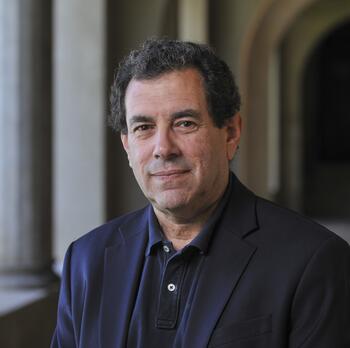
Paul H. Wise, MD, MPH; Senior Fellow at Stanford Health Policy

Paul H. Wise, MD, MPH; Senior Fellow at Stanford Health Policy

Where We are Today, Where We Go Tomorrow

The Beijing workshop was arranged into four sessions, with themes focusing on trends in intrastate violence, the threats it poses to international security, the limits of intervention, and advice to policymakers.

Each panel included presentations of prepared papers, moderator comments, and an open discussion by all participants. A fifth and final session provided an opportunity to summarize the preceding discussions. The workshop then closed out with an open conversation, where participants offered insight and policy recommendations developed over the preceding two days of dialogue.

Image
Martha Crenshaw seated at round table
“The workshop,” observed Martha Crenshaw (shown above), a Senior Fellow at FSI, “was a unique opportunity to exchange views with Chinese colleagues on the subject of civil conflict in the contemporary world. A valuable learning experience for all of us."

The "Civil Wars, Intrastate Violence, and International Responses” workshop marks the second phase of the AAAS project by the same name that launched in 2015. The first phase of the project culminated in the publication of 28 essays across two volumes of the AAAS quarterly journal Dædalus. The ongoing second phase consists of a series of roundtables and workshops in which project participants engage with academics and with government and international organization officials to build a larger conceptual understanding of the threats posed by the collapse of state authority associated with civil wars, and to contribute to current policymaking. Project activities have included meetings with the United Nations leadership and staff; academic activities in the United States; sessions with the U.S. executive and legislative branches; and a visit to Nigeria.

Throughout the workshop, Chatham House Rule of non-attribution applied to all dialogue. A workshop report will be published by the co-hosts in early 2019.

The U.S.-Asia Security Initiative is part of Stanford University’s Walter H. Shorenstein Asia-Pacific Research Center (APARC). Led by former U.S. Ambassador and Lieutenant General (Retired) Karl Eikenberry, USASI seeks to further research, education, and policy relevant dialogues at Stanford University on contemporary Asia-Pacific security issues.

March 1, 2019 update: the workshop report is now available online. Download the report >> 
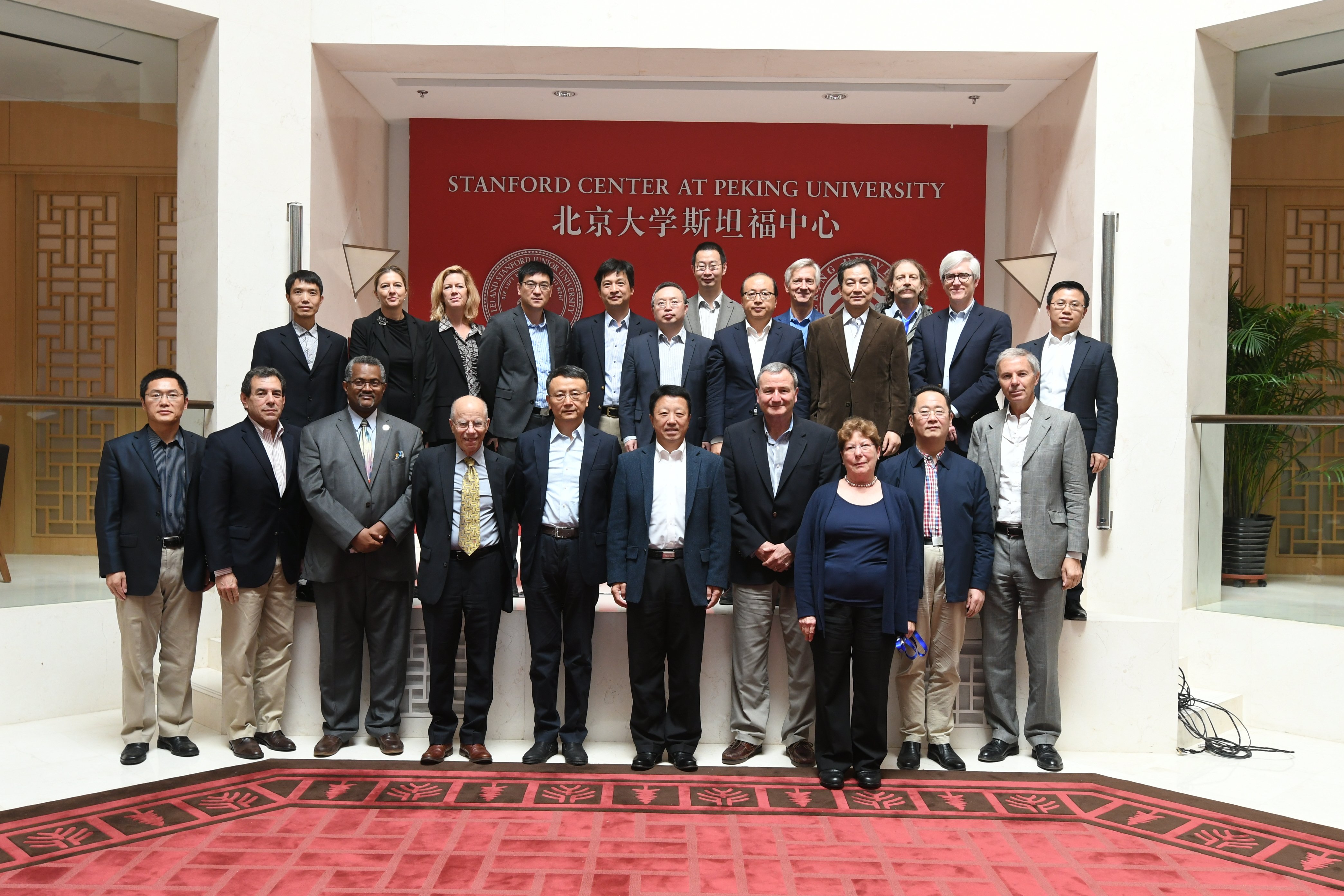
Group photo of Participants in the “Civil Wars, Intrastate Violence, and International Responses” workshop

Participants in the “Civil Wars, Intrastate Violence, and International Responses” workshop

Hero Image
Karl Eikeberry at Civil Wars, Intrastate Violence, and International Response Workshop
All News button
1
-

Abstract: What are the effects of international intervention on the rule of law after civil war? Rule of law requires not only that state authorities abide by legal limits on their power, but also that citizens rely on state laws and institutions to adjudicate disputes. Using an original survey and list experiment in Liberia, I show that exposure to the UN Mission in Liberia (UNMIL) increased citizens’ reliance on state over non-state authorities to resolve the most serious incidents of crime and violence, and increased non-state authorities’ reliance on legal over illegal mechanisms of dispute resolution. I use multiple identification strategies to support a causal interpretation of these results, including an instrumental variables strategy that leverages plausibly exogenous variation in the distribution of UNMIL personnel induced by the killing of seven peacekeepers in neighboring Cote d’Ivoire. My results are still detectable two years later, even in communities that report no further exposure to peacekeepers. I also find that exposure to UNMIL did not mitigate and may in fact have exacerbated citizens’ perceptions of state corruption and bias in the short term, but that these apparently adverse effects dissipated over time. I conclude by discussing implications of these complex but overall beneficial effects

Speaker Bio: Rob Blair is an Assistant Professor of Political Science and International and Public Affairs at Brown University. His research focuses on international intervention and the consolidation of state authority after civil war, with an emphasis on rule of law and security institutions. He has conducted fieldwork on these and related topics in Colombia, Liberia, Uganda, and Côte d'Ivoire. He has also worked in various capacities for the the UN Office of Rule of Law and Security Institutions, the Political Instability Task Force, Freedom House, and the Small Arms Survey. He holds a B.A. from Brown, an M.Sc in Conflict Studies from Universidad de los Andes in Bogotá, Colombia, and a Ph.D in political science from Yale University. His research has been published in the American Political Science Review and other venues.

Robert Blair Carnegie Junior Faculty Fellow CISAC, Stanford University
Seminars
Authors
Beth Duff-Brown
News Type
News
Date
Paragraphs

More children die from the indirect impact of armed conflict in Africa than those killed in the crossfire and on the battlefields, according to a new study by Stanford researchers. 

The study is the first comprehensive analysis of the large and lingering effects of armed conflicts — civil wars, rebellions and interstate conflicts — on the health of noncombatants.

The numbers are sobering: 3.1 to 3.5 million infants born within 30 miles of armed conflict died from indirect consequences of battle zones between 1995 and 2005. That number jumps to 5 million deaths of children under 5 in those same conflict zones.

“The indirect effects on children are so much greater than the direct deaths from conflict,” said Stanford Health Policy's Eran Bendavid, senior author of the study published today in The Lancet.

The authors also found evidence of increased mortality risk from armed conflict as far as 60 miles away and for eight years after conflicts. Being born in the same year as a nearby armed conflict is riskiest for young infants, the authors found, with the lingering effects raising the risk of death for infants by over 30 percent.

On the entire continent, the authors wrote, the number of infant deaths related to conflict from 1995 to 2015 were more than three times the number of direct deaths from armed conflict. Further, they demonstrated a strong and stable increase of 7.7 percent in the risk of dying before age 1 among babies born within 30 miles of an armed conflict.

The authors recognize it is not surprising that African children are vulnerable to nearby armed conflict. But they show that this burden is substantially higher than previously indicated. 

“We wanted to understands the effects of war and conflict, and discovered that this was surprisingly poorly understood,” said Bendavid, an associate professor of medicine at Stanford Medicine.  “The most authoritative source, the Global Burden of Disease, only counts the direct deaths from conflict, and those estimates suggest that conflicts are a minuscule cause of death.”

Paul Wise, a professor of pediatrics at Stanford Medicine and a senior fellow at the Freeman Spogli Institute for International Studies, has long argued that lack of health care, vaccines, food, water and shelter kills more civilians than combatants from bombs and bullets. 

This study has now put data behind the theory when it comes to children.

“We hope to redefine what conflict means for civilian populations by showing how enduring and how far-reaching the destructive effects of conflict have on child health,” said Bendavid, an infectious disease physician whose co-authors include Marshall Burke, PhD, an assistant professor of earth systems science and fellow at the Center on Food Security and the Environment.

“Lack of access to key health services or to adequate nutrition are the standard explanations for stubbornly high infant mortality rates in parts of Africa,” said Burke. “But our data suggest that conflict can itself be a key driver of these outcomes, affecting health services and nutritional outcomes hundreds of kilometers away and for nearly a decade after the conflict event”. 

The results suggest efforts to reduce conflict could lead to large health benefits for children.

The Data

The authors matched data on 15,441 armed-conflict events with data on 1.99 million births and subsequent child survival across 35 African countries. Their primary conflict data came from the Uppsala Conflict Data Program Georeferenced Events Dataset, which includes detailed information about the time, location, type and intensity of conflict events from 1946 to 2016. 

The researchers also used all available data from the Demographic and Health Surveys conducted in 35 African countries from 1995 to 2015 as the primary data sources on child mortality in their analysis.

The data, they said, shows that the indirect toll of armed conflict among children is three-to-five times greater than the estimated number of direct casualties in conflict. The indirect toll is likely even higher when considering the effects on women and other vulnerable populations.

Zachary Wagner, a health economist at RAND Corporation and first author of the study, said he knows few are surprised that conflict is bad for child health.

“However, this work shows that the relationship between conflict and child mortality is stronger than previously thought and children in conflict zones remain at risk for many years after the conflict ends.” 

He notes that nearly 7 percent of child deaths in Africa are related to conflict and reiterated the grim fact that child deaths greatly outnumber direct combatant deaths.

“We hope our findings lead to enhanced efforts to reach children in conflict zones with humanitarian interventions,” Wagner said. “But we need more research that studies the reasons for why children in conflict zones have worse outcomes in order to effectively intervene.” 

Another author, Sam Heft-Neal, PhD, is a research fellow at the Center for Food Security and the Environment and in the Department of Earth Systems Science. He, Burke and Bendavid have been working together to identify the impacts of extreme climate events on infant mortality in Africa.

Hero Image
gettyimages sick baby
KYANGWALI, UGANDA - APRIL 06: A baby girl from Uganda suffering with cholera lies in a ward in the Kasonga Cholera Treatment Unit in the Kyangwali Refugee Settlement on April 6, 2018 in Kyangwali, Uganda. According to the UNHCR almost 70,000 people have arrived in Uganda from the Democratic Republic of Congo since the beginning of 2018 as they escape violence in the Ituri province. (Photo by Jack Taylor/Getty Images)
Getty Images
All News button
1
Paragraphs

Ending world hunger is a universal goal, yet progress and social awareness of the issue waxes and wanes in the course of broader political and economic developments. The massive famine in China under Chairman Mao’s 1958–62 Great Leap Forward, a succession of severe droughts and associated famines in India in 1965–66, and the political violence that accompanied regime change in Indonesia in 1964–67 left tens of millions of people starving and drew global attention to the threat of food insecurity. What emerged from these events was an international commitment to agricultural technology transfers, water resource development, and foreign assistance – partly in the spirit of humanitarian goodwill and partly in pursuit of long-term geopolitical and economic interests revolving around the Cold War. Whatever the motivation, the outcome over the ensuing decades was more than a doubling of staple cereal yields in Asia, and a steady decline in real (inflation-adjusted) cereal prices.

Despite these gains, a second, quite different, rallying cry for food security resounded in 2007–8 as international grain prices spiked, food riots erupted in numerous cities throughout the developing world, and the global economy headed into a deep recession. Several factors sparked this crisis, but unlike the earlier periods of dire food shortages, the root causes included unwieldy financial markets and escalating demands for food, animal feeds, and fuel (including biofuels) in a globalized economy. This episode prompted new analyses of the connection between global commodity markets and food security, the political-economy foundations of agricultural development, and the differential impacts of food prices on net producers and net consumers. In the five-year period from 2007 to 2012, international cereal prices were highly unstable, varying by as much as 300 percent.

Today, international agricultural markets have settled at relatively low prices, but civil conflicts, extreme climate events, and other natural disasters are blocking the path toward ending hunger. In February 2017, the United Nations declared a famine in South Sudan, as war and economic collapse ravaged the newly independent nation. Although the famine officially ended in mid-2017, food emergencies and severe undernourishment still threaten tens of millions of people in South Sudan, Yemen, Nigeria, Somalia, and Syria, due to a combination of civil conflict, prolonged droughts, and occasional floods. On the surface, it seems incomprehensible that there could be such difficulty in addressing these looming famines at a time when global cereal production and stocks are at historical highs. But the problem is not a matter of food supply; the problem is war.

Download full article here.

All Publications button
1
Publication Type
Journal Articles
Publication Date
Authors
Rosamond L. Naylor
-

[[{"fid":"229629","view_mode":"crop_870xauto","fields":{"style":"height: 899px; width: 700px;","class":"media-element file-crop-epsa-crop-portret","data-delta":"1","format":"crop_870xauto","field_file_image_description[und][0][value]":"","field_file_image_alt_text[und][0][value]":false,"field_file_image_title_text[und][0][value]":false,"field_credit[und][0][value]":"","field_caption[und][0][value]":"","thumbnails":"crop_870xauto","alt":"","title":""},"type":"media","field_deltas":{"1":{"style":"height: 899px; width: 700px;","class":"media-element file-crop-epsa-crop-portret","data-delta":"1","format":"crop_870xauto","field_file_image_description[und][0][value]":"","field_file_image_alt_text[und][0][value]":false,"field_file_image_title_text[und][0][value]":false,"field_credit[und][0][value]":"","field_caption[und][0][value]":"","thumbnails":"crop_870xauto","alt":"","title":""}},"link_text":null,"attributes":{"style":"height: 899px; width: 700px;","class":"media-element file-crop-870xauto","data-delta":"1"}}]]

Seminars
Paragraphs

This essay confronts the collision of two potential global threats: the outbreak of infectious pandemics and the outbreak and protraction of civil wars. Specifically, it addresses the potential that civil wars can elevate the risk that an infectious outbreak will emerge; the possibility that civil wars can reduce the capacity to identify and respond to outbreaks; and the risk that outbreaks in areas of civil conflict can generate political and security challenges that may threaten regional and international order. Both global health governance and international security structures seem inadequate to address the health and security challenges posed by infectious outbreaks in areas of civil conflict. New approaches that better integrate the technical and political challenges inherent in preventing pandemics in areas of civil war are urgently required.

Download here: 

All Publications button
1
Publication Type
Journal Articles
Publication Date
Authors
Paul H. Wise
Paragraphs

This essay examines why England experienced a civil war every fifty years from the Norman Conquest up until the Glorious Revolution of 1688–1689, and was completely stable after that point. The reasons had to do with, first, the slow accumulation of law and respect for the law that had occurred by the seventeenth century, and second, with the emergence of a strong English state and sense of national identity by the end of the Tudor period. This suggests that normative factors are very important in creating stable settlements. Rational choice explanations for such outcomes assert that stalemated conflicts will lead parties to accept second- or third-best outcomes, but English history, as well as more recent experiences, suggests that stability requires normative change as well. 

Download here:


All Publications button
1
Publication Type
Journal Articles
Publication Date
Authors
Francis Fukuyama
Graduate School of Business 655 Knight Way Stanford, CA 94305
(650) 721 1298
0
Associate Professor of Political Economy, GSB
Associate Professor, by courtesy, of Economics and of Political Science
saumitra_jha.jpg

Along with being a Senior Fellow at the Freeman Spogli Institute for International Studies, Saumitra Jha is an associate professor of political economy at the Stanford Graduate School of Business, and convenes the Stanford Conflict and Polarization Lab. 

Jha’s research has been published in leading journals in economics and political science, including Econometrica, the Quarterly Journal of Economics, the American Political Science Review and the Journal of Development Economics, and he serves on a number of editorial boards. His research on ethnic tolerance has been recognized with the Michael Wallerstein Award for best published article in Political Economy from the American Political Science Association in 2014 and his co-authored research on heroes with the Oliver Williamson Award for best paper by the Society for Institutional and Organizational Economics in 2020. Jha was honored to receive the Teacher of the Year Award, voted by the students of the Stanford MSx Program in 2020.

Saum holds a BA from Williams College, master’s degrees in economics and mathematics from the University of Cambridge, and a PhD in economics from Stanford University. Prior to rejoining Stanford as a faculty member, he was an Academy Scholar at Harvard University. He has been a fellow of the Niehaus Center for Globalization and Governance and the Center for the Study of Democratic Politics at Princeton University, and at the Center for Advanced Study in the Behavioral Sciences at Stanford. Jha has consulted on economic and political risk issues for the United Nations/WTO, the World Bank, government agencies, and for private firms.


Senior Fellow at the Freeman Spogli Institute for International Studies
Dan C. Chung Faculty Scholar at the Freeman Spogli Institute for International Studies
Senior Fellow at the Stanford Institute for Economic Policy Research
Date Label
Subscribe to Civil Wars