Poverty
Authors
News Type
News
Date
Paragraphs

On February 25 and 26, the Center on Democracy, Development, and the Rule of Law at Stanford University, in partnership with the Canadian Department of Foreign Affairs and International Trade, hosted a symposium titled, "Addressing the Accountability Gap in Statebuilding: The Case of Afghanistan." This event brought together leading experts, government officials, diplomats, practitioners, and academics to examine the problems of accountability, corruption, and election fraud that have risen in the wake of international statebuilding efforts in Afghanistan.

This unique forum allowed participants-both Afghan actors and members of the international community- who are heavily involved in building the institutions of the Afghan state, to participate in an honest exchange with their peers to surface challenges and generate recommendations to improve the practice of statebuilding moving forward. 

Panels were designed around the following questions: how to establish accountability in statebuilding, address electoral fraud evidenced in 2009 and 2010, manage powerbrokers who monopolize informal governance networks, coordinate anti-corruption efforts, and develop a political strategy for Afghanistan's future. What surfaced throughout these presentations and discussion was the issue of the "double compact" in Afghanistan-the failure of Afghans to self-govern and the failure of the international community to construct the institutions of a functioning state.

Participants proposed a new framework for governance that adopts a more participatory approach with the international community, Afghan government, and the public as equal partners in statebuilding endeavors. While challenges emerged there were also a number of key recommendations and strategies proposed  that can be pioneered by this influential group of policymakers and practitioners to ease the transition of responsibility to the Afghan government in 2014.  

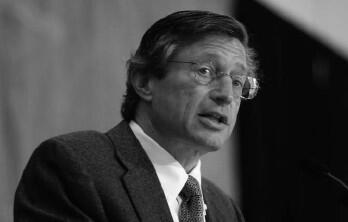
The keynote address was delivered by former Afghan Minster of Finance and 2009 presidential candidate Dr. Ashraf Ghani, to an audience of more than 100 students and members of the local community. Dr. Ghani provided an honest and pragmatic account of the parallel and conflicting systems driven by the international community, which have given rise to systemic failure and corruption in Afghanistan.

"We are dealing with a crooked playing field," Dr. Ghani said recognizing that both the Afghan and international community were jointly responsible for this outcome. "When the field itself is crooked the nature of reform and change that we must initiate are very different. "

Dr. Ghani spent considerable time discussing the outsourcing of development to Washington-based firms that manage million dollar contracts and outsource technical work to foreign technocrats. This in Dr. Ghani's opinion does little to strengthen the internal capacities of the state, provide training opportunities to Afghans or allocate resources effectively to the general public.

Dr. Ghani stressed the importance of speaking honestly about these dysfunctions in the development system, "We need to start talking truth to each other if we are going to deal with this phenomenon. This double failure now is the genesis of the present."

Dr. Ghani channeled the sentiments of the Afghan public into the room by emphasizing the uncertainty that defines their lives. "Today it is the sense of injustice that drives conflict," Dr. Ghani said. "The level of conflict is driven by injustice. What Afghans yearn for is normalcy-the sense that the lives of our children and grandchildren will be better and what my generation endured will not be repeated."

The level of conflict is driven by injustice. What Afghans yearn for is normalcy-the sense that the lives of our children and grandchildren will be better and what my generation endured will  not be repeated.                    -Dr. Ashraf Ghani 

 Looking forward, Dr. Ghani advised that accountability mechanisms and feedback loops must be implemented to ensure that the necessary auditing and accounting mechanisms are in place to control corruption and ensure transparency. In addition, he called for one coherent system of rules that must be developed and agreed upon to govern development and prevent parallel systems from circumventing these rules. Finally, he advised adopting national programs that model the success of the National Solidarity Program, which reduced child mortality rates by 16%.

Dr. Ghani commented on the unique position that Afghanistan occupies at the crossroads of Asia, in the middle of "four huge hubs of change," China, India, Russia, and the Gulf. "A new regional era has to be created, if France and Germany could overcome hundreds of years of conflict we must create another sense of opportunity."

Dr. Ghani concluded by placing the hope and responsibility for Afghanistan's future in the hands of its younger generation, "We must talk about the generation compact in Afghanistan, our sons and daughters-both literal and figurative-are the source of growth and the source of dynamism...The women of Afghanistan, the youth of Afghanistan, and the poor of Afghanistan are the three numerical majorities that have been reduced to political and economic minority. Without investing in women, investing in youth and tackling the challenge of poverty, we are not going to have stability."

At the end of the two day symposium, participants collectively called for a comprehensive political strategy to facilitate the peaceful and legal transfer of power in 2014, which marks the end of President Karzai's term in office. With this important milestone in the near future, the international community remains committed to working with their Afghan counterparts to introduce political reform measures that will strengthen accountability mechanisms between the Afghan state and society. 

As Dr. Ghani eloquently stated at the end of his presentation, "We have to have an agenda of the future, we must engage in writing the history of the future."

All News button
1
Authors
Francis Fukuyama
News Type
Commentary
Date
Paragraphs

Over the course of three short months, popular uprisings have toppled regimes in Tunisia and Egypt, sparked a civil war in Libya and created unrest in other parts of the Middle East. They also have raised a question in many people's minds: Are all authoritarian regimes now threatened by this new democratic wave? In particular, is China, a rising superpower, vulnerable to these forces?  

The Communist government in Beijing is clearly worried. It has limited news coverage of the recent uprisings and has clamped down on democratic activists and foreign reporters, acting pre-emptively against anonymous calls on the Internet for China to have its own "Jasmine Revolution." A recent front-page editorial in the Beijing Daily, an organ of the city's party committee, declared that most people in the Middle East were unhappy with the protests in their countries, which were a "self-delusional ruckus" orchestrated by a small minority. For his part, President Hu Jintao has urged the strengthening of what has been dubbed the "Great Firewall"-the sophisticated apparatus of censorship and surveillance that the regime uses to control access to the Internet.

No social scientist or intelligence analyst predicted the specific timing or spread of the Arab uprising-the fact that it would start in Tunisia, of all places, that it would be triggered by an event like the self-immolation of a vegetable seller, or that protests would force the mighty Egyptian army to abandon Hosni Mubarak. Over the past generation, Arab societies have appeared stolidly stable. Why they suddenly exploded in 2011 is something that can be understood only in retrospect, if at all.

But this doesn't mean that we can't think about social revolutions in a more structured way. Even unpredictable things take place in a certain context, and the present-day situations of China and the Middle East are radically different. Most of the evidence suggests that China is pretty safe from the democratic wave sweeping other parts of the world-at least for now.

Perhaps the most relevant thinker for understanding the Middle East today and China tomorrow is the late Samuel Huntington-not the Huntington of "The Clash of Civilizations," who argued that there were fundamental incompatibilities between Islam and democracy, but the Huntington whose classic book "Political Order in Changing Societies," first published in 1968, laid out his theory of the development "gap."

Observing the high levels of political instability plaguing countries in the developing world during the 1950s and '60s, Mr. Huntington noted that increasing levels of economic and social development often led to coups, revolutions and military takeovers. This could be explained, he argued, by a gap between the newly mobilized, educated and economically empowered people and their existing political system-that is, between their hopes for political participation and institutions that gave them little or no voice. Attacks against the existing political order, he noted, are seldom driven by the poorest of the poor in such a society; they tend to be led, instead, by rising middle classes who are frustrated by the lack of political and economic opportunity.

All of these observations would seem to apply to Tunisia and Egypt. Both countries have made substantial social progress in recent decades. The Human Development Indices compiled by the United Nations (a composite measure of health, education and income) increased by 28% for Egypt and 30% for Tunisia between 1990 and 2010. The number of people going to school has grown substantially; Tunisia especially has produced large numbers of college graduates. And indeed, the protests in Tunisia and Egypt were led in the first instance by educated, tech-savvy middle-class young people, who expressed to anyone who would listen their frustrations with societies in which they were not allowed to express their views, hold leaders accountable for corruption and incompetence, or get a job without political connections.

Mr. Huntington stressed the destabilizing power of new social groups seeking political participation. People used to be mobilized by newspapers and radio; today they are spurred to action by cell phones, Facebook and Twitter, which allow them to share their grievances about the existing system and to learn about the possibilities of the larger world. This change in the Middle East has been incredibly rapid, and it has trumped, for now, old verities about the supposed passivity of Arab culture and the resistance of Islam to modernization.

But do these remarkable developments tell us anything about the possibility for future instability in China?

It is certainly true that the dry tinder of social discontent is just as present in China as in the Middle East. The incident that triggered the Tunisian uprising was the self-immolation of Mohamed Bouazizi, who had his vegetable cart repeatedly confiscated by the authorities and who was slapped and insulted by the police when he went to complain. This issue dogs all regimes that have neither the rule of law nor public accountability: The authorities routinely fail to respect the dignity of ordinary citizens and run roughshod over their rights. There is no culture in which this sort of behavior is not strongly resented.

This is a huge problem throughout China. A recent report from Jiao Tong University found that there were 72 "major" incidents of social unrest in China in 2010, up 20% over the previous year. Most outside observers would argue that this understates the real number of cases by perhaps a couple of orders of magnitude. Such incidents are hard to count because they often occur in rural areas where reporting is strictly controlled by the Chinese authorities.

The most typical case of outraged dignity in contemporary China is a local government that works in collusion with a private developer to take away the land of peasants or poor workers to make way for a glittery new project, or a company that dumps pollutants into a town's water supply and gets away with it because the local party boss stands to profit personally. Though corruption in China does not reach the predatory levels of certain African or Middle Eastern countries, it is nonetheless pervasive. People see and resent the privileged lives of the nation's elite and their children. The movie "Avatar" was a big hit in China in part because so many ordinary Chinese identified with the indigenous people it portrayed whose land was being stolen by a giant, faceless corporation.

There is, moreover, a huge and growing problem of inequality in China. The gains from China's remarkable growth have gone disproportionately to the country's coastal regions, leaving many rural areas far behind. China's Gini index-a standard measure of income inequality across a society-has increased to almost Latin American levels over the past generation. By comparison, Egypt and Tunisia have a much more equal income distribution.

According to Mr. Huntington, however, revolutions are made not by the poor but by upwardly mobile middle-class people who find their aspirations stymied, and there are lots of them in China. Depending on how you define it, China's middle class may outnumber the whole population of the United States. Like the middle-class people of Tunisia and Egypt, those in China have no opportunities for political participation. But unlike their Middle Eastern counterparts, they have benefited from a dramatically improving economy and a government that has focused like a laser beam on creating employment for exactly this group.

To the extent that we can gauge Chinese public opinion through surveys like Asia Barometer, a very large majority of Chinese feel that their lives have gotten better economically in recent years. A majority of Chinese also believe that democracy is the best form of government, but in a curious twist, they think that China is already democratic and profess to be satisfied with this state of affairs. This translates into a relatively low degree of support for any short-term transition to genuine liberal democracy.

Indeed, there is some reason to believe that the middle class in China may fear multiparty democracy in the short run, because it would unleash huge demands for redistribution precisely from those who have been left behind. Prosperous Chinese see the recent populist polarization of politics in Thailand as a warning of what democracy may bring.

The fact is that authoritarianism in China is of a far higher quality than in the Middle East. Though not formally accountable to its people through elections, the Chinese government keeps careful track of popular discontents and often responds through appeasement rather than repression. Beijing is forthright, for example, in acknowledging the country's growing income disparities and for the past few years has sought to mitigate the problem by shifting new investments to the poor interior of the country. When flagrant cases of corruption or abuse appear, like melamine-tainted baby formula or the shoddy school construction revealed by the Sichuan earthquake, the government holds local officials brutally accountable-sometimes by executing them.

Another notable feature of Chinese government is self-enforced leadership turnover. Arab leaders like Tunisia's Zine al-Abidine Ben Ali, Egypt's Mr. Mubarak and Libya's Col. Moammar Gadhafi never knew when to quit, hanging on 23, 30 and 41 years, respectively. Since Mao, the Chinese leadership has rigidly adhered to terms of about a decade. Mr. Hu, the current president, is scheduled to step down in 2012, when he is likely to be replaced by Vice President Xi Jinping. Leadership turnover means that there is more policy innovation, in sharp contrast to countries like Tunisia and Egypt, which have been stuck for decades in the rut of crony capitalism.

The Chinese government is also more clever and ruthless in its approach to repression. Sensing a clear threat, the authorities never let Western social media spread in the first place. Facebook and Twitter are banned, and content on websites and on China-based social media is screened by an army of censors. It is possible, of course, for word of government misdeeds to get out in the time between its first posting by a micro-blogger and its removal by a censor, but this cat-and-mouse game makes it hard for a unified social space to emerge.

A final critical way in which China's situation differs from that of the Middle East lies in the nature of its military. The fate of authoritarian regimes facing popular protests ultimately depends on the cohesiveness and loyalty of its military, police and intelligence organizations. The Tunisian army failed to back Mr. Ben Ali early on; after some waffling, the Egyptian army decided it would not fire on protesters and pushed Mr. Mubarak out of power.

In China, the People's Liberation Army is a huge and increasingly autonomous organization with strong economic interests that give it a stake in the status quo. As in the Tiananmen uprising in 1989, it has plenty of loyal units around the country that it could bring into Beijing or Shanghai, and they would not hesitate to fire on demonstrators. The PLA also regards itself as the custodian of Chinese nationalism. It has developed an alternative narrative of 20th-century history that places itself at the center of events like the defeat of Japan in the Pacific war and the rise of a modern China. It is very unlikely that the PLA would switch sides and support a democratic uprising.

The bottom line is that China will not catch the Middle Eastern contagion anytime soon. But it could easily face problems down the road. China has not experienced a major recession or economic setback since it set out on its course of economic reform in 1978. If the country's current property bubble bursts and tens of millions of people are thrown out of work, the government's legitimacy, which rests on its management of the economy, would be seriously undermined.

Moreover, Mr. Huntington's scenario of rising but unfulfilled expectations among the middle class may still play out. Though there is a labor shortage among low-skill workers in China today, there is a glut of the college educated. Every year into the future, China will graduate more than seven million people from its universities, up from fewer than a million in 1998, and many of them are struggling to find work suitable to their self-perceived status. Several million unemployed college graduates are far more dangerous to a modernizing regime than hundreds of millions of poor peasants.

There is also what the Chinese themselves call the "bad emperor" problem. China's historical achievement over the centuries has been the creation of high-quality centralized bureaucratic government. When authoritarian rulers are competent and reasonably responsible, things can go very well. Indeed, such decision-making is often more efficient than in a democracy. But there is no guarantee that the system will always produce good rulers, and in the absence of the rule of law and electoral checks on executive power, there is no way to get rid of a bad emperor. The last bad emperor, commonly (if quietly) acknowledged as such, was Mao. We can't know what future tyrant, or corrupt kleptocrat, may be waiting in the wings in China's future.

The truth is that, much as we might theorize about the causes of social revolution, human societies are far too complex, and change too rapidly, for any simple theory to provide a reliable guide. Any number of observers dismissed the power of the "Arab street" to bring about political change, based on their deep knowledge of the Middle East, and they were right every year-up until 2011.

The hardest thing for any political observer to predict is the moral element. All social revolutions are driven by intense anger over injured dignity, an anger that is sometimes crystallized by a single incident or image that mobilizes previously disorganized individuals and binds them into a community. We can quote statistics on education or job growth, or dig into our knowledge of a society's history and culture, and yet completely miss the way that social consciousness is swiftly evolving through a myriad of text messages, shared videos or simple conversations.

The central moral imponderable with regard to China is the middle class, which up to now has seemed content to trade political freedom for rising incomes and stability. But at some point this trade-off is likely to fail; the regime will find itself unable to deliver the goods, or the insult to the dignity of the Chinese people will become too great to tolerate. We shouldn't pretend that we can predict when this tipping point will occur, but its eventual arrival, as Samuel Huntington might have suggested, is bound up with the very logic of modernization itself.

Hero Image
fukuyama headshot
All News button
1
-

Food and agricultural policy experts Prabhu Pingali and Philip Pardey will each speak on trends in productivity and investments in technology, survey of constraints to productivity, incentives and investment, and opportunities to raise productivity.

The Green Revolution - past successes, unfinished business, and the way forward

Pingali will review strategic components of the Green Revolution and its achievement and limits in terms of agricultural productivity improvement and broader impact at social, environmental and economic levels, including its impact on food and nutrition security. Lessons learned and the strategic insights these provide will be reviewed as the world is preparing a "redux" version of the Green Revolution with more integrative environmental and social impact combined with agricultural and economic development. Pingali will also point to core research & policy gaps that can enhance further spread and sustainable adoption of productivity enhancing technologies.

Image

Prabhu Pingali is the Deputy Director of Agricultural Development at the Bill and Melinda Gates Foundation. Formerly, he served as Director of the Agricultural and Development Economics Division of the Food and Agriculture Organization (FAO) of the United Nations. Pingali was elected to the U.S. National Academy of Sciences as a Foreign Associate in May 2007, and he was elected Fellow of the American Agricultural Economics Association in 2006. Pingali was the President of the International Association of Agricultural Economists (IAAE) from 2003-06. Pingali has over twenty five years of experience in assessing the extent and impact of technical change in agriculture in developing countries, including Asia, Africa and Latin America.

 African Agricultural R&D and Productiivity Growth in a Global Setting

Given the continuing importance of agriculture in most African economies, an in-depth understanding of the past and likely future productivity performance of African agriculture is key to assessing the overall economic growth and development prospects of the region. African agriculture operates in increasingly interconnected global commodity markets, so the relative productivity performance of African vis-à-vis rest-of-world agriculture is also relevant. This talk will present new evidence on African agricultural productivity performance and place that evidence in relation to the evolving pattern of agricultural productivity growth worldwide. Technological change is a principal driver of productivity growth, and new, updated evidence on the trends in R&D investments that give rise to these technological changes will also be presented and discussed. The productivity effects of R&D play out over comparatively long periods of time demanding a long-run look at these developments.    
 

Image

Philip Pardey is Professor of Science and Technology Policy in the Department of Applied Economics, and Director of the University of Minnesota's International Science and Technology Practice and Policy (InSTePP) center. His research deals with the finance and conduct of R&D globally, methods for assessing the economic impacts of research, and the economic and policy (especially intellectual property) aspects of genetic resources and the biosciences. He is a Fellow of the American Agricultural Economics Association and a Distinguished Fellow of the Australian Agricultural and Resource Economics Society.

Bechtel Conference Center

Prabhu Pingali Deputy director, Agricultural Development Speaker Bill & Melinda Gates Foundation
Philip Pardey Professor of Science and Technology, Applied Economics Speaker University of Minnesota
Symposiums
-

Antonio Purón was a senior partner of McKinsey & Company in the Mexico Office until January 2008.  His 27 year practice concentrated on serving clients in the energy, chemicals and petrochemicals sectors in Mexico, the United States, Argentina, Brazil, Chile and Venezuela.  In addition, he led work for clients in the financial institutions, consumer goods, retail, water, construction, transportation, manufacturing and telecommunications industries. 

In Mexico he served government and contributed to the modernization and deregulation of the national electric system and the E & P division of the national oil company, and has collaborated in the evolution of the country's basic infrastructure, such as gas distribution, municipal water utilities, ports, toll roads, and solid waste disposal.  His practice comprises both working for authorities and state-owned companies as well as with private investors interested in participating in sectors recently deregulated.

In the industrial and financial sectors he led projects for major national groups and global corporations, focused on strategic planning and growth, operations improvement, organization and process redesign, optimization and diversification of their product and market portfolios in light of the new competitive environment.  In the consumer goods industry he served the leading national companies and global corporations in projects aimed at designing their growth strategy through mergers and acquisitions, partnerships, entry to new markets as well as into other businesses and categories, and e-commerce, valuation of companies, and organizational restructuring.  In retail he collaborated with the major building materials and supermarket chains in Mexico helping to design their growth strategy, improve the performance of their process management, direct sales force management and develop and implement marketing and pricing strategies.

He has authored contributions on productivity and International competitiveness, and collaborated with several higher-education, cultural, arts, non-for-profit and social service institutions.  He is a founding member of Metropoli 2025 and of the board of Universidad Iberoamericana, Promujer, the National Arts Museum and of Instituto de Fomento e Investigación Educativa. He has authored several articles on urban productivity.

Prior to joining McKinsey, Mr. Purón worked at the Department of Special Studies of Ingeniería Panamericana, at the Instituto Mexicano del Petróleo, and at Polioles, S. A., where he had experience in planning, technological evaluation, systems development and project control.

He holds a B.S. in Chemical Engineering (Summa Cum Laude) from the Universidad Iberoamericana, and was a candidate for the master's degree in Chemistry.  He also earned an M.B.A. from Stanford University.

Since retirement Antonio is devoting the bulk of his time to three projects he is passionate about:  1) Giving a high-quality alternative to children currently dependent an poor-quality public basic education so that they can become competitive in a global society, 2) Influencing public policy to revert the current vicious circle of agricultural policies-extreme poverty-migration and 3) Changing the monopolistic control that political parties' leaderships exert on the political process in Mexico.

He is currently an associate fellow of CIDAC (independent think-tank) and participates in the boards of Banco Santander, Nadro, S.A. (JV of McKesson in Mexico), Munal (National Arts Museum), Progresemos (agricultural microfinance) and Centro de Colaboración Cívica (chapter of Partners for Democratic Change).


CO-SPONSORED BY COMPARATIVE POLITICS

CISAC Conference Room

Antonio Puron Associate Fellow CIDAC Mexico & Director Emeritus, McKinsey & Company Speaker
Seminars
Paragraphs

Climate volatility could change in the future, with important implications for agricultural productivity. For Tanzania, where food production and prices are sensitive to climate, changes in climate volatility could have severe implications for poverty. This study uses climate model projections, statistical crop models, and general equilibrium economic simulations to determine how the vulnerability of Tanzania's population to impoverishment by climate variability could change between the late 20th Century and the early 21st Century. Under current climate volatility, there is potential for a range of possible poverty outcomes, although in the most extreme of circumstances, poverty could increase by as many as 650,000 people due to an extreme interannual decline in grain yield. However, scenarios of future climate from multiple climate models indicate no consensus on future changes in temperature or rainfall volatility, so that either an increase or decrease is plausible. Scenarios with the largest increases in climate volatility are projected to render Tanzanians increasingly vulnerable to poverty through impacts on staple grains production in agriculture, with as many as 90,000 additional people entering poverty on average. Under the scenario where precipitation volatility decreases, poverty vulnerability decreases, highlighting the possibility of climate changes that oppose the ensemble mean, leading to poverty impacts of opposite sign. The results suggest that evaluating potential changes in volatility and not just the mean climate state may be important for analyzing the poverty implications of climate change.

All Publications button
1
Publication Type
Journal Articles
Publication Date
Journal Publisher
Global Environmental Change
Authors
Thomas Hertel
David Lobell
-

Thom Jayne, Professor of International Development from Michigan State University will answer the following questions: What are the trends in land access? How can smallholder farmers get higher value out of scarce land and how does that relate to food and non-food markets? Smallholder vs. large enterprises in Africa. Derek Byerlee, independent scholar and director of the 2009 World Development Report will provide additional commentary.

Thomas Jayne's professional career has been devoted to promoting effective policy responses to poverty and hunger in Africa. Jayne is Professor, International Development, in the Department of Agricultural, Food, and Resource Economics and a member of the Core Faculty of the African Studies Center at Michigan State University. He is involved in research, outreach, and capacity building programs in collaboration with African universities and government agencies, mainly focusing on food marketing and trade policies and their effects on sustainable and equitable development. Jayne's secondary research focus has been on measuring the current and long-term effects of HIV/AIDS on African agriculture. Jayne sits on the editorial boards of two development journals, received a top paper award in 2004 by the International Association of Agricultural Economists, co-authored a paper (with graduate student Jacob Ricker-Gilbert) awarded the T.W. Schultz Award at the 2009 International Association of Agricultural Economists Triennial Meetings, and received the 2009 Best Article Award in Agricultural Economics (with co-authors Xhying Xu, William Burke, and Jones Govereh). Jayne's work has also been recognized at the 1996 World Food Summit in Rome and the Secretariat of Global Agricultural Science Policy for the Twenty-First Century.

Bechtel Conference Center

Thom Jayne Professor of International Development Speaker Michigan State University
Derek Byerlee Independent Scholar and Director, World Development Report, 2009 Commentator
Symposiums
Authors
News Type
News
Date
Paragraphs

Kris Cheng is not your average senior at Stanford University, studying Energy Resources Engineering and traveling to places as diverse as rural Mongolia to research solar technology uses for nomadic communities. He is a self-taught photographer with an eye for the dramatic, capturing subjects in their natural environment but posed to enhance the style, expression, and intensity of the human condition. Kris's portraits explore the intimacy of his subjects, while also depicting the harsh realities of poverty and underdevelopment. This budding photographer captured the attention of the Center on Democracy, Development, and the Rule of Law, when he submitted the winning photograph in a competition sponsored by the Center. 

The CDDRL photo competition was intended to encourage students, faculty, and staff, to submit their original photos, which illustrate themes central to CDDRL's research mission. The selection committee was impressed by the diversity and professionalism of the entries received depicting scenes of democratic expression, abject poverty, and new technology use, among others. From  over 60 entries, Kris Cheng's image of a small boy gazing into a trash-clogged river in an unincorporated slum outside of Manila in the Philippines was selected. His imagery captured both the challenges and opportunities of the work we are engaged in and his technical style left the selection committee wanting to know more about this young photographer.

I sat down with this incredibly humble engineer who is an avid outdoorsman with a penchant for adventure sports and extreme environments, to discuss his winning photograph, the journey that brought him to where he is today, and his plans for photography going forward.  

Q: Kris, tell me a little bit about yourself and when you first embraced photography.

A: I started becoming interested in photography as a hobby at the end of high school when I was a senior.  I went all over taking photos, traveling, and kept taking more photos and was continuously improving. Overtime, it became a passion and something that I am intimately attached with - second nature, in a sense.

Q: Did you ever have any formal training in photography or is it all the learn as you go method?

A: I adopted the learn as you go approach to photography, taking a lot of photographs, searching the Internet to find images I like and exploring why I liked those certain images. Being self-taught, I found the Internet to be an amazing resource to learn from other photographs, replicate others, imitate other styles, and gain new techniques and insights to apply to my own work. Photography is a creative process that doesn't lend well to a rigid school environment, so for me it's been learning by doing. See what you like and don't like, and always keep maximizing or minimizing those characteristics. It's an iterative approach.  

All of my favorite photographers were more or less untrained - Joey Lawrence and Chase Jarvis are among the photographers I follow the most.  

Q: Stylistically, how would you describe your genre of photography? Your photographs are remarkable in the way you incorporate light and reflections, please tell me more about how you achieve this effect.

A: I do a more stylized and dramatic form of photography that I guess you could call elaborate portraiture. Everything I do is more or less planned. I get an idea in my mind for how I want them (the subjects) to look and pose based on what they have been doing. In this sense, it is not artificial, but rather trying to bring out certain qualities I see in the subject.  I use a wide range of lighting equipment, such as remotely triggered external flashes to achieve the effects in my pictures depending on the location. My travel-sized lights are not nearly as powerful as the sun, so I had to wait until a golden period around sunset each day when I could achieve the desired lighting effects.  

Q: Do you have a particular niche?

A: I do a wide range of photography, including fashion, nature, and commercial work. I don't have a particular niche per se, but I do have a very distinct style evident in all of my photos.

Q: How do you gain the trust of subjects in your photographs to capture them in such intimate and realistic ways? What is the process you go through to gain their confidence?

A: I understand the importance of the human connection and photography is secondary to this, a way of documenting interaction. I went to Mongolia last year to research solar technologies and their applications for nomadic households, namely cooking.  I was working with the non-profit ADRA in integrating one of their entrepreneurial programs for impoverished families and went on a 20-day trip across Western  Mongolia with some Mongolians. All interactions were unplanned, and we stayed with families for a few days at a time to do experiments with solar cooking, gain input, and test out conditions in the field. For me, it was very important to establish a relationship of trust with these Mongolian families and interact using humor as a bridge.

For my type of photography, it is essential to engage with people and make them feel comfortable. After I felt that a mutual sense of trust had been reached, I would let them know that I had a camera and make sure they were comfortable with their photo being captured or if they had particular preferences. I always make it a point to send the prints after they are done, though with nomadic families it's not exactly easy.

Q: That provides a great background to your work in Mongolia but I would love to hear more about your trip to the Philippines where you captured the winning image.  

A: Two summers ago in 2009, I traveled to the Philippines to conduct a feasibility study of biogas integration into a village. That particular picture was taken in an unincorporated slum that was in the process of being transformed into a village by a non-profit called GK just outside Manila.  We spent two days there and it was really hard to get to know people as I was busy with my own work and there were significant language barriers - I didn't have the type of time afforded to me in Mongolia. In this village, I came across a little boy who was looking over the trash filled river that ran through his slum, and it was striking how the boy was interacting with these conditions. Places like these are a common occurrence throughout the Philippines and especially the developing world as a whole, and through the perspective of this boy I was hoping to convey the scene from a more intimate and "local" point of view. These kids play in and around the river like it's nothing, because this is their reality and they know nothing different.

Q: What has been your favorite place to photograph from among your international travels?

A: It partly depends on where I am in terms of photography. The Philippines was a really good stepping point for Mongolia in terms of audacity and planning. I learned a lot from my experiences in the Philippines, and was really able to build and expand on that when I went to Mongolia. I expect this trend to hopefully continue.

Q: Is there a future trip planned?

A: Yes, certainly! Not this summer as I need to stay in the area and get a job, but I am expecting my next trip to be up north to Greenland for a different photographic experience that is particularly focused on nature.

Q: Have you ever considered using your photographs to build awareness and bring attention to development challenges?

A: Photography goes hand in hand with the work I have been doing in international development and I hope that my work is eye-opening for a lot of people. I know there is a lot more I could be doing to make that a focus but at this point in my career I am not sure how far I want to take photography in comparison to other development projects that I feel are more tangible.

Q: But are the two necessarily mutually exclusive? Can't development and photography go hand in hand?

A: I have definitely thought of that and in what ways we can combine the two to use photography in a very new way that can provide a more lasting impact. Documentary photography has no doubt proven to be an enormous force for social change on a variety of occasions, but this is certainly not the only way photography can play a role in development. Photography touches on a very important aspect of the human condition, especially when dealing with issues of empowerment and self-worth, and I think there is much more potential to capitalize on that. Kids with Cameras (an NGO) is a great example.

Q: What are your tools of the trade?

A:  I currently have a Canon 5D Mark II and use a 16-35mm f2.8 and 50 mm f1.4 lens, with a whole range of additional accessories and equipment. I started with an entry level Nikon D50 camera several years ago and slowly worked up my way up. Luckily, my side work freelancing allows for me to pay for my personal work and equipment.

 Q: Tell me more about the professional work you do.

A: My professional work includes freelance commercial work like music photography, portraiture, and magazine profiles. I recently contributed to a feature on eco-fashion for the New York Times, which entailed a sustainable fashion photo shoot. Before, I would just take any job I got and went full steam ahead with it for the sake of experience and (some) money, but now I'm able to be more selective with what I take on.

Q: Have you ever exhibited your photos?

A: Not really, I know a lot of other people have but I do not necessarily like to heavily promote my work. That's not really my style, and I have other commitments to balance. I haven't tried but am open to getting more exposure. To be honest, I haven't done a stellar job of properly displaying my work outside of the Internet.

Q: Do you imagine a future career for yourself as a photographer? Where do you see yourself heading with this hobby for which you are clearly talented?

A: Four years ago, I had no idea where this was going to lead or that it would get me to this point, but I guess that goes with a lot of the things I do. Hopefully, this will be something I can balance with my career, although there were a few moments when I was tempted to drop everything and just become a photographer. Lately, I have gotten into documentary filmmaking because it is a natural progression for a lot of photographers and further allows me to make a real impact with my work to highlight different social issues. It suits me well to travel to all these places where no one wants to, or is willing to go. I thrive in extreme environments.

For more information on Kris Cheng's photography, please visit www.krischeng.com.

The nine other finalists in our CDDRL photo contest include (in no particular order); Thomas Alan Hendee (student), Jorge Olarte Blanco (student), Rachel Quint (student), Francis Fukuyama (staff), Jon Strahl (student), Omar Shakir (student), and Marina Latu (staff). Please reference the gallery below for samples of their winning entries.

A reception honoring our winner and finalists will be held on Friday, January 28 from 11:30-1:00 pm in the lobby of Encina Hall.

All News button
1
Authors
Francis Fukuyama
News Type
Commentary
Date
Paragraphs

The first decade of the 21st century has seen a dramatic reversal of fortune in the relative prestige of different political and economic models. Ten years ago, on the eve of the puncturing of the dotcom bubble, the US held the high ground. Its democracy was widely emulated, if not always loved; its technology was sweeping the world; and lightly regulated "Anglo-Saxon" capitalism was seen as the wave of the future. The United States managed to fritter away that moral capital in remarkably short order: the Iraq war and the close association it created between military invasion and democracy promotion tarnished the latter, while the Wall Street financial crisis laid waste to the idea that markets could be trusted to regulate themselves.

China, by contrast, is on a roll. President Hu Jintao's rare state visit to Washington this week comes at a time when many Chinese see their weathering of the financial crisis as a vindication of their own system, and the beginning of an era in which US-style liberal ideas will no longer be dominant. State-owned enterprises are back in vogue, and were the chosen mechanism through which Beijing administered its massive stimulus. The automatic admiration for all things American that many Chinese once felt has given way to a much more nuanced and critical view of US weaknesses - verging, for some, on contempt. It is thus not surprising that polls suggest far more Chinese think their country is going in the right direction than their American counterparts.

But what is the Chinese model? Many observers casually put it in an "authoritarian capitalist" box, along with Russia, Iran and Singapore. But China's model is sui generis; its ­specific mode of governance is difficult to describe, much less emulate, which is why it is not up for export.

The most important strength of the Chinese political system is its ability to make large, complex decisions quickly, and to make them relatively well, at least in economic policy. This is most evident in the area of infrastructure, where China has put into place airports, dams, high-speed rail, water and electricity systems to feed its growing industrial base. Contrast this with India, where every new investment is subject to blockage by trade unions, lobby groups, peasant associations and courts. India is a law-governed democracy, in which ordinary people can object to government plans; China's rulers can move more than a million people out of the Three Gorges Dam flood plain with little recourse on their part.

Nonetheless, the quality of Chinese government is higher than in Russia, Iran, or the other authoritarian regimes with which it is often lumped - precisely because Chinese rulers feel some degree of accountability towards their population. That accountability is not, of course, procedural; the authority of the Chinese Communist party is limited neither by a rule of law nor by democratic elections. But while its leaders limit public criticism, they do try to stay on top of popular discontents, and shift policy in response. They are most attentive to the urban middle class and powerful business interests that generate employment, but they respond to outrage over egregious cases of corruption or incompetence among lower-level party cadres too.

Indeed, the Chinese government often overreacts to what it believes to be public opinion precisely because, as one diplomat resident in Beijing remarked, there are no institutionalised ways of gauging it, such as elections or free media. Instead of calibrating a sensible working relationship with Japan, for example, China escalated a conflict over the detention of a fishing boat captain last year - seemingly in anticipation of popular anti-Japanese sentiment.

Americans have long hoped China might undergo a democratic transition as it got wealthier, and before it became powerful enough to become a strategic and political threat. This seems unlikely, however. The government knows how to cater to the interests of Chinese elites and the emerging middle classes, and builds on their fear of populism. This is why there is little support for genuine multi-party democracy. The elites worry about the example of democracy in Thailand - where the election of a populist premier led to violent conflict between his supporters and the establishment - as a warning of what could happen to them.

Ironically for a country that still claims to be communist, China has grown far more unequal of late. Many peasants and workers share little in the country's growth, while others are ruthlessly exploited. Corruption is pervasive, which exacerbates existing inequalities. At a local level there are countless instances in which government colludes with developers to take land away from hapless peasants. This has contributed to a pent-up anger that explodes in many thousands of acts of social protest, often violent, each year.

The Communist party seems to think it can deal with the problem of inequality through improved responsiveness on the part of its own hier­archy to popular pressures. China's great historical achievement during the past two millennia has been to create high-quality centralised government, which it does much better than most of its authoritarian peers. Today, it is shifting social spending to the neglected interior, to boost consumption and to stave off a social explosion. I doubt whether its approach will work: any top-down system of accountability faces unsolvable problems of monitoring and responding to what is happening on the ground. Effective accountability can only come about through a bottom-up process, or what we know as democracy. This is not, in my view, likely to emerge soon. However, down the road, in the face of a major economic downturn, or leaders who are less competent or more corrupt, the system's fragile legitimacy could be openly challenged. Democracy's strengths are often most evident in times of adversity.

However, if the democratic, market-oriented model is to prevail, Americans need to own up to their own mistakes and misconceptions. Washington's foreign policy during the past decade was too militarised and unilateral, succeeding only in generating a self-defeating anti-Americanism. In economic policy, Reaganism long outlived its initial successes, producing only budget deficits, thoughtless tax-cutting and inadequate financial regulation.

These problems are to some extent being acknowledged and addressed. But there is a deeper problem with the American model that is nowhere close to being solved. China adapts quickly, making difficult decisions and implementing them effectively. Americans pride themselves on constitutional checks and balances, based on a political culture that distrusts centralised government. This system has ensured individual liberty and a vibrant private sector, but it has now become polarised and ideologically rigid. At present it shows little appetite for dealing with the long-term fiscal challenges the US faces. Democracy in America may have an inherent legitimacy that the Chinese system lacks, but it will not be much of a model to anyone if the government is divided against itself and cannot govern. During the 1989 Tiananmen protests, student demonstrators erected a model of the Statue of Liberty to symbolise their aspirations. Whether anyone in China would do the same at some future date will depend on how Americans address their problems in the present.

The writer is a fellow at the Freeman Spogli Institute for International Studies at Stanford University. His latest book, The Origins of Political Order, will be published in the spring.

All News button
1
-


Christopher Barrett reviews the evidence on persistent poverty with a focus on rural Africa. He emphasizes the importance of asset accumulation, productivity growth, risk management and the sociopolitical institutions that govern economic activity. Barrett's talk synthesizes lessons learned about what works, what doesn't and why, and identifies key topics in need of further investigation.

William Masters, Professor of Food Policy in the Friedman School of Nutrition at Tufts University, will join the conversation as a discussant following Barrett's presentation. 

Biography

Christopher Barrett is the Stephen B. & Janice G. Ashley Professor of Applied Economics and Management and International Professor of Agriculture at Cornell University. He teaches and does research primarily in poverty and international development. His research program also has strong links to international, agricultural, environmental and micro economics as well as to applied econometrics. He is a Faculty Fellow and Associate Director, Economic Development Programs, at the new Cornell Center for a Sustainable Future. The Center is a major Cornell initiative aimed at promoting cutting-edge research on sustainable development in collaboration with key external partners to achieve significant real-world impact. He is also the Director of Cornell's Food Systems and Poverty Reduction IGERT program.

Bechtel Conference Center

Christopher Barrett Stephen B. & Janice G. Ashley Professor of Applied Economics and Management, International Professor of Agriculture Speaker Cornell University
William Masters Professor of Food Policy Commentator Friedman School of Nutrition, Tufts
Symposiums
Subscribe to Poverty