BELARUS

Anton Radniankou is a leader with over a decade of experience spanning both the for-profit and nonprofit sectors. His notable achievements include shaping the strategy and communication efforts for the most successful presidential campaign in the history of Belarusian democratic forces. Additionally, he established one of the largest independent think tanks in the country and implemented extensive infrastructure projects funded by the European Union. Anton currently leads the Belarusian think tank, Center for New Ideas, which promotes structural reforms through research and stakeholder engagement. During the 2020 presidential campaign in Belarus, Anton acted as a consultant to reformist candidates Viktar Babaryka, Maria Kalesnikava, and Sviatlana Tsikhanouskaya. Previously, he designed and implemented initiatives centered around sustainable regional development, with budgets reaching up to 1 million EUR. He also serves as the Head of Communications for the Coordination Council of the Belarusian Democratic Forces. Anton was born in Homiel, Belarus, and studied Strategic Communications at King’s College, London.
CAMEROON
Tem Fuh Mbuh is the Acting Division Director and Program Manager of the Security and Rights Program at Open Society—Africa. Prior to this, he was the head of the Nigeria Office of the Open Society Initiative for West Africa as well as the Program Officer for Equality, Justice, and Human Rights. Previously, he served as Legal Officer at the Secretariat of the African Commission on Human and Peoples' Rights. In 2017, Tem was a Mandela Washington Fellow for Young African Leaders (University of Virginia and College of William and Mary, both in the United States. He holds a Master’s degree in Human Rights and Democratization from the University of Pretoria, South Africa. Tem's primary interests are in the areas of conflict prevention, human rights, and rule of law.
COLOMBIA
Ana Bejarano Ricaurte is a Colombian lawyer from Los Andes University, with a Masters in Law from Harvard University. Bejarano is a litigator in Bejarano Abogados, a law firm in Bogotá, and is currently the director of El Veinte, an NGO dedicated to the judicial defense of freedom of expression and the eradication of judicial harassment against the press. She is also a professor at Los Andes University, teaching a course titled: Justice and Freedom of Expression. Bejarano is an op-ed writer for Los Danieles, an independent digital opinion outlet in Colombia, and has been a member of the Colombian Institute of Procedural Law since 2011. Her research topics include justice systems, pro bono work, sociology of the legal profession, freedom of expression, and gender-based violence. She is also a proud single mother to Irene.
ETHIOPIA
Dr. Ayten Birhanie is the Executive Director of the Ethiopian Institute of Peace. Previously, he served as a Lecturer at various institutions and co-founded New Abyssinia College, where he served as College Dean and General Manager. His interests and areas of expertise include societies and politics, peacebuilding, conflict management, and transformation of the Horn of Africa, as well as the issues of social justice and equality, and human and democratic rights and responsibilities. Ayten holds a Ph.D. in Global Studies, specializing in peace and security in Africa, from Leipzig University in Germany and Addis Ababa University in Ethiopia. He also earned a Master of Arts degree in Peace Education from the University for Peace (UPEACE) in Costa Rica. He completed his Bachelor's degrees in Sociology and Social Anthropology, as well as in Business Education, from Unity University and Addis Ababa University, respectively.
GEORGIA

Ketevan Meskhishvili is a judge of the Tbilisi Appeal Court with 13 years of experience. She is a doctor of Laws and has been a full professor at the Free University of Tbilisi since 2013. In addition to her judicial role, Ketevan is a national trainer for judges, attorneys, and lawyers. She has published extensively on private law and human rights. Throughout her 20-year legal career, Ketevan has held various positions, including chief specialist at the Civil, Entrepreneurial, and Bankruptcy Cases Chamber of the Supreme Court of Georgia and legal assistant to the Deputy Chairman of the Supreme Court of Georgia. She also wrote the curricula as director of the Ph.D. and LLM programs in Law at Caucasus University. Ketevan's educational background includes studies at Iv. Javakhishvili University of Tbilisi and the European University of Saarbrücken. She has completed certified legal training courses in Georgia and Europe and has participated in exchange programs in Germany and the United States. Driven by her motto, "I evolve, therefore I exist," Ketevan is committed to continuous self-improvement and being a valuable citizen who contributes to her country's progress.

Tamar Khulordava, co-founder of Egeria Solutions, specializes in democratization and institution building. With over 20 years of experience in governance, human rights, and the rule of law, she offers consultancy at Egeria to state and non-state actors. Tamar's notable roles include serving as a member of the Parliament of Georgia (2016-2020), where she chaired the Committee on European Integration and led parliamentary delegations to the European Parliament. She also served as First Deputy Minister of Corrections, spearheading impactful reforms in criminal enforcement. Tamar has managed European Union justice programs worth over EUR 100 million and has contributed to legal education as a trainer and instructor at Tbilisi State University. She holds a degree from Tbilisi State University and has participated in various professional development programs.
HONG KONG (city)

Sunny Cheung is the co-founder and editor-in-chief of Flow HK Media, a platform that combats authoritarian propaganda and promotes democracy across more than ten countries. He currently advises the Hong Kong Democracy Council in Washington, D.C., and has previously advised the State Department, the Taiwanese government, and various international NGOs. In 2019, Sunny founded the Hong Kong Higher Institutions International Affairs Delegation, comprising all university student unions in the territory of Hong Kong, and organized worldwide lobbying efforts to support freedom and justice for the city. In 2020, he was elected by 600,000 pro-democracy voters in the municipal primaries. In 2022, he founded the International Liberty Congress in an effort to prevent further democratic recession. Sunny’s work for freedom in Hong Kong has earned him recognition as a Global Leader by the McCain Institute. He has also testified before the US Congress, Parliament of the United Kingdom, and Taiwan Legislative Yuan regarding the political situation in Hong Kong. Sunny is a graduate of the University of Hong Kong and holds an M.A. from the School for Advanced International Studies (SAIS) at Johns Hopkins University. He is a visiting fellow at Taiwan's National Sun Yat-Sen University.
INDIA
Deeksha Bhardwaj is a political journalist covering policy and governance in New Delhi. Her extensive coverage includes subjects ranging from the Election Commission and Parliament to tech policy, cybersecurity, and culture. Deeksha's portfolio showcases her ability to curate articles, deliver ground reports on national and state elections, and break important news stories on topics such as India’s burgeoning data protection legislation, social media policy, and the country’s principal opposition party, the Congress. She has a keen interest in surveillance reforms and their impact on civil rights. A graduate of Lady Shri Ram College in India, Deeksha pursued an academic career in Literatures in English before her stint as a journalist. She holds a Master of Philosophy from Delhi University and is interested in the intersection of technology, policy, society, and governance.

Manasi Subramaniam is the Editor-in-Chief and Vice President at Penguin Random House India, where she heads the literary division’s flagship imprints: Allen Lane, Viking, Hamish Hamilton, Penguin Paperbacks, and Penguin Classics. She has published some of the most exciting new voices across South Asia, including two winners of the Booker Prize and a winner of the Pulitzer Prize. She has been invited to prestigious global leadership and governance forums, including the Yale World Fellows program and the Raisina Young Fellows program, as well as professional publishing platforms such as the Frankfurt Buchmesse fellowship, the Bureau International de l'Édition Française fellowship, the Australia Council for the Arts Visiting International Publishers program, and the Zev Birger fellowship. Manasi is committed to making publishing more inclusive and accessible and bringing underrepresented voices into mainstream media. Manasi has an MA in Renaissance Literature and has worked in amateur theater and academic research on Shakespeare.

Technologist and socio-political activist Ruben Mascarenhas is the National Joint Secretary of India's youngest national political party, the Aam Admi Party (AAP). He also serves as the Party’s spokesperson and as Working President of the Mumbai Unit. He is the co-founder and director of Khaana Chahiye Foundation, which works toward solving hunger problems in urban India through policy advocacy and community mobilization. The Foundation was one of India's largest covid hunger relief programs, having served over 7.5 million cooked meals and supporting 6.5 lakh migrant workers during the migrant-worker exodus crisis. In 2009, as part of his JaagoRe! campaign, Ruben registered lakhs of Mumbai voters. In 2011, he was at the forefront of the India Against Corruption movement. In the same year, following the murder of two boys standing up to sexual harassment in Mumbai, Ruben launched the Zero Tolerance Campaign, successfully amending the anti-sexual harassment law in Maharashtra. A digital evangelist, Ruben was awarded the title of Mumbai Heroes for contributing to the highest-ever voter turnout in Mumbai in 2018. He was also a part of the founding team of SERV’D, which was a Bill Gates-funded entity to make domestic workers financially independent and debt free.
KENYA
Monica Munyendo is a judicial officer working with the Kenyan Judiciary. At present, she serves as a Principal Magistrate in Central Kenya, where she also heads a court station. She has eleven years of experience on the bench, where she handles both civil and criminal matters. During her tenure at Kilgoris court in Narok county, she trained on the legal framework of Female Genital Mutilation and has subsequently trained women and young girls within her jurisdiction to abandon the deep-rooted, harmful traditional practice. Monica is committed to fostering access to justice through promoting alternative justice systems, for example, in cases where elders facilitate parties to resolve their disputes. Previously, she worked at the Kenyan Judiciary Academy and was a trainer on election dispute resolution in the last election cycle. Monica is a Barer Fellow and holds a Master's degree in Law in Sustainable International Development from the University of Washington.
LEBANON

Ghina Bou Chakra is a Lebanese human rights defender and an advocate for civic engagement. She currently serves as Amnesty International’s Regional Media Officer for the Middle East and North Africa, exposing human rights violations within a complex landscape of enduring challenges such as political repression, gender inequality, and the stifling of dissent. In 2022, Ghina played a significant role in the Lebanese parliamentary elections, developing a media, public relations, and advocacy plan for one of the most successful anti-establishment electoral lists. Throughout Lebanon’s transformative uprising of October 17, 2019, Ghina was present on the frontlines, organizing and participating in protests over several months and ensuring the authentic narrative of the uprising reached the masses. Over the past decade, Ghina has spearheaded and participated in initiatives on environmental justice, gender equality, and social entrepreneurship. In 2021, she served as the President of Junior Chamber International (JCI) in Lebanon, empowering youth to effect positive change within their communities.
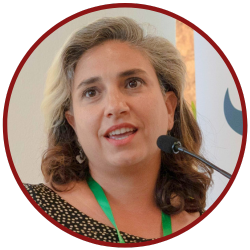
Sally Abi Khalil is a humanitarian and development practitioner with twenty years of experience in Lebanon, Jordan, Iraq, Tunisia, Egypt, and Syria. She is currently the Middle East and North Africa Director of Oxfam International. As the first Lebanese woman to run a major international NGO within the Syria Response in Lebanon, she has led humanitarian response programming, programs supporting youth and women with social innovation and social entrepreneurship initiatives, promoted the right to decent work, worked for the establishment of civil society networks, and promoted feminist approaches towards leadership and collective action. Sally’s career has followed the trajectory of civil unrest in the Arab region, where she played various roles in shaping civil society development and organizational leadership. She began her career at UNDP in Lebanon and later went on to co-direct the Tharwa Project, an independent initiative launched in Syria to foster new avenues for communication and activism in the Arab region. Following the Cedar Revolution of 2005, Sally joined the National Democracy Institute (NDI), where she managed Citizen Lebanon, a nationwide civic education and advocacy program. During the Arab Spring of 2011, she worked on the Maghreb Youth Political Party Leadership Program in Tunisia and then went on to lead NDI’s Syria country program focusing on youth political leadership development and political party development.
LIBYA
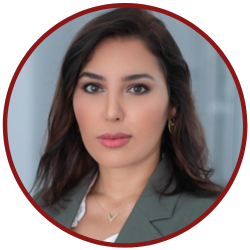
Yosra Ben Nagi is a Libyan international development expert leading complex projects with a focus on private sector development. In 2018, she led the team responsible for the establishment of the first microfinance institution in Libya. Dedicated to promoting good governance and economic growth, Yosra currently supports the Libyan Ministry of Economy and Trade in introducing economic reforms to improve the business environment and design public policies for economic diversification, regional integration, trade, and investment. Previously, she worked as an independent consultant in Extractive Industries Governance for Chemonics and the Natural Resource Governance Institute’s 2017 Resource Governance Index. She also served as an investment analyst at the Central Bank of Libya and Libya Africa Investment Portfolio. As a Chevening scholar, Yosra pursued her master’s degree in the United Kingdom and obtained an MSC. in International Business. She also holds a BSc. in Chemical Engineering from the University of Tripoli.
MALI
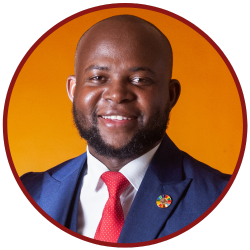
El Hadj Djitteye has 12 years of experience in international development and peacebuilding. He has worked with the UK Foreign and Commonwealth Development Office, Caravan to Class, the United States Department of State, Creative Associates International, the Center for Civilians in Conflict, Global Integrity, the Global Initiative Against Organized Crime, and the United Nations Mission in Mali. He is the Founder and Executive Director of the Timbuktu Center for Strategic Studies on the Sahel and is also an Obama Leader, One Young World Peace Ambassador, and Mandela Washington Fellow. As a survivor of the war in Mali and other conflicts across Sub-Saharan Africa, El Hadj is motivated to settle regional cultural and land conflicts and prevent extremist radicalization among youth. He holds Master’s degrees in English language and literature and international relations and diplomacy, and his writing and research explore good governance, political transition, democracy, peace and security, youth civic engagement, violent extremism, irregular migration, and cultural heritage development.
MONGOLIA
Dr. Ankhbayar Begz, also known as Paul R. Anka, is a gender studies expert and Coordinator of the Gender Equality Research Program at the Mitchell Foundation for Arts and Sciences. He holds a Master's degree in education and a Ph.D. in Gender Studies. During his studies, he developed a new index to evaluate gender equality at institutions of higher education. Paul is also an accomplished photographer. He co-founded and served as President of the "Tusgal" photography club for 10 years, which grew to be the largest club in Mongolia. His exhibit, "Portraits of Renown Literary Figures of Mongolia," showcased his passion for portrait photography. Paul was most recently a visiting scholar at the Walter H. Shorenstein Asia-Pacific Research Center (APARC) at Stanford University’s Freeman Spogli Institute for International Studies (FSI) during the 2022-2023 academic year.
NIGERIA

Ann Iyonu is the Executive Director of the Goodluck Jonathan Foundation, founded by the former Nigerian president Dr. Goodluck Ebele Jonathan. At the heart of the Foundation’s mandate is the protection of democratic integrity, prevention of violent conflicts, and promotion of peaceful resolution of disputes across Africa. Ann is also the coordinator of the West African Elders Forum (WAEF). The Forum draws on the experience and standing of its members to provide advisory, mediation, and conflict resolution support services to political leaders to sustain and advance democracy not only in West Africa but the entire continent of Africa. Since its inception in March 2020, WAEF has successfully played an active role in mediating peaceful elections in The Gambia. It has also intervened — with quiet diplomacy — in addressing nascent political challenges in several countries by reaching out to and engaging with key political leaders at the highest level. For more than a decade, Ann has worked on various democracy promotion, peace and security, and governance initiatives in the West African sub-region. This includes positions with the Institute for War and Peace Reporting and The Right to Know Nigeria, where she worked to empower citizens and exact accountability through the promotion of the freedom of information. Ann has also been a consultant to several international and national organizations, including the Open Government Partnership, as IRM Researcher, Nigeria.
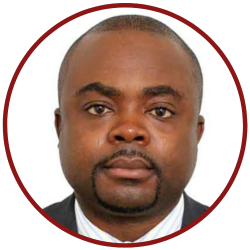
Dr. Chika Charles Aniekwe has over 19 years of experience in democratic governance, transition, conflict, peacebuilding, and stabilization. He has worked across multiple contexts — from conflict and post-conflict countries such as Sierra Leone and Chad to emerging economies such as Ethiopia and low-middle income such as Ghana and Lesotho. He is a Senior Advisor and Head of Stabilization for the UNDP/LCBC Lake Chad Basin Regional Stabilization Strategy. Dr. Aniekwe holds a Ph.D. in Development Studies, a Master’s degree in International Development from the University of Bradford, and a Bachelor of Science in Political Science from the Enugu State University of Science and Technology. His previous publications include The African Charter on Democracy, Elections and Governance: Trends, Challenges and Perspectives; The African Charter on Democracy, Elections and Governance: Past, Present and Future; and Crime and Terror Nexus: The Intersections Between Terror and Criminal Groups in the Lake Chad Basin.
PAKISTAN
Saqiba Mannan is a mid-career civil servant in Pakistan with over a decade of experience in the field of taxation. Mannan began her career in government after working as a corporate consultant for three years and completing her law degree. With 10 years of experience, she has established herself as an expert in tax audits. Currently, Mannan serves as General Manager of Finance & Accounts at Trading Corporation of Pakistan (TCP), a state-owned enterprise responsible for ensuring food security. Mannan's future goals include focusing on the policy side of public service delivery systems and working as an international taxation consultant.
REPUBLIC OF MOLDOVA
Radu Marian has been a Member of the Parliament of the Republic of Moldova since 2019 and is currently the Chairman of the Economic, Budget, and Finance Committee of the Moldovan Parliament. He is a founding member of the Party of Action and Solidarity and currently serves as the party’s vice president. Prior to his career in public service, Radu worked at the local Independent think-tank “Expert-Grup” from 2013-2016 and co-founded the educational project Twenty-Tu in 2017-2018. Radu holds a Master’s degree in international business from the University of Edinburgh and was also a Chevening scholar. He is included in the Alumni 100 list of the University of Edinburgh Business School for outstanding achievements after graduation. Raadu also holds a Bachelor’s degree in finance & banking from the Academy of Economic Studies of Moldova and completed a one-year fellowship in marketing in the United States at the University of Louisiana at Monroe.
RUSSIA
Polina Machold is a publisher managing the financial and technical aspects of a Russian online journal, “The Project” (Proekt). Her expertise in fundraising, marketing, and IT has enabled her to build sustainable media projects with a strong focus on democratic values. Polina's unwavering commitment to freedom of speech in Russia since 2011 has given her unique experience in managing crises in Russian media, including successfully leading the Proekt team through their escape from Russia in 2021 after being named an "undesirable organization" by the Russian state. With over a decade of experience in the media industry, Polina has a deep understanding of the media landscape and is always exploring new trends and technologies to stay ahead of the curve.

A lawyer by training, Yulia Gorbunova is Human Rights Watch’s senior researcher on Ukraine, where she has worked extensively documenting war crimes in the wake of Russia’s full-scale invasion of Ukraine on February 24, 2022. Prior to the most recent Russian invasion, Yulia documented abuses in the armed conflict in eastern Ukraine, and in occupied Crimea, including enforced disappearances, prosecution, and detention of Crimean Tatars and other abuses by paramilitary groups. She has focused on a range of other issues in Ukraine, including refugee rights, the right to health, and the rights of the elderly and people with disabilities. She has also worked on promoting women’s rights and the freedoms of assembly, association, and speech in several other countries in Europe and the Central Asian region. Yulia holds a Master’s degree from the University of Western Sydney and a Bachelor's in law with a focus on criminal law and international law.
SIERRA LEONE
Hamid Gbawuru Marah is a business thought leader and development management practitioner with full-cycle project management expertise, including various standards of program designing, implementation, monitoring, learning, and controlling. His career has been balanced between nongovernmental organizations, the public sector, and multilateral organizations and private sector development experience. This has included businesses in West Africa, managing business accelerators, as well as youth employment and women's economic empowerment initiatives like market systems development for employment (MSD4E), value chain development (VCD), and private sector development (PSD).
UGANDA
Anthony Masake is a lawyer with 17 years of work experience on the frontlines of defending human rights and advancing legal aid in Uganda. He works with human rights defenders and civil society organizations to advance civic space both on- and offline. He has conducted extensive research on human rights and led training on fair trials, human rights monitoring and documentation, human rights advocacy, strategic litigation, and first legal response. Anthony currently works with Chapter Four Uganda as the Acting Executive Director and Director of Programs. Previously, he worked with Uganda’s Bar Association for 8 years in legal aid service provision for the most vulnerable sections of society. He is also a columnist and a commentator on current affairs.
UKRAINE
Our six Ukrainian fellows are jointly participating in CDDRL’s Strengthening Ukrainian Democracy and Development Program.
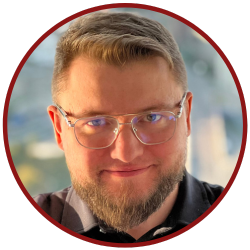
Anton Turupalov is a political consulting and government relations professional in Ukraine with extensive experience in public service. He has previously served as Deputy Mayor of Mykolayiv, Advisor to the Minister of Healthcare of Ukraine, and Advisor to the Head of the Parliament of Ukraine. Anton's expertise lies in regional policy and local administration. As a key advisor on regional policy to the former Prime Minister of Ukraine, he played a pivotal role in implementing groundbreaking system changes, including land and administrative reform. Anton organized Ukraine's first coronavirus isolation facility during the COVID-19 pandemic under challenging circumstances. Following the full-scale invasion of Ukraine by Russia in February 2022, Anton co-organized the Assistance Coordination Center in Warsaw, a hub for coordinating humanitarian aid between Ukrainian and Polish authorities, international donors, and organizations. Currently based in Warsaw, Anton serves as an advisor to the Minister of Agriculture and Food of Ukraine.
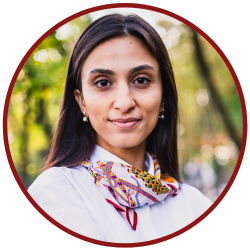
Gulsanna Mamediieva led the European and NATO integration of Ukraine's digital sector, focusing on various components like electronic communications, e-services, privacy, digital skills, and more. Since February 2022, she has been responsible for coordinating international technical assistance to support Ukraine's digital resistance to Russia’s invasion. Gulsanna serves as a member of the Council of Europe's Committee on Artificial Intelligence, Eastern Partnership Countries' Harmonization Digital Market Coordinator for Ukraine, and as Ukraine's representative in other international organizations. She is Visiting Fellow at the McCourt School for Public Policy at Georgetown University. She holds a Master's degree in Information Technology Law from the University of Tartu, Estonia, and is pursuing a Ph.D. in Internet Law at the Kyiv Institute of International Relations. Prior to her government role, Gulsanna worked as an IT lawyer at DLA Piper Ukraine, specializing in ICT and Intellectual Property.

Halyna Yanchenko was elected to the Ukrainian Verkhovna Rada (Parliament) in 2019 and is the Deputy Chair of Sluha Narodum “SN” (Servant of the People), a centrist, pro-European and anti-corruption Party. Shortly after her election, Ukraine’s president, Volodymyr Zelensky, tapped her to lead government investment efforts. In January 2022, she was appointed as a Secretary in the National Investment Council of Ukraine. In addition, she chairs the Temporary Special Commission of the Verkhovna Rada on protecting investor rights. Prior to being elected to the Verkhovna Rada of Ukraine, she led the Civil Oversight Council at the National Anti-Corruption Bureau of Ukraine. In 2014-2015 was a deputy of the Kyiv city council. Halyna earned a Master’s Degree in Sociology from the National University Kyiv-Mohyla Academy. She also studied for one year at the Wichita Falls High School in Texas.
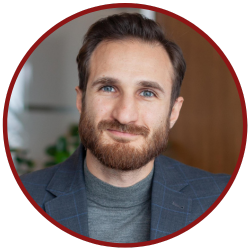
Konstantyn Chyzhyk is a Partner at British-Ukrainian law and consultancy firm Hillmont Partners, helping international companies develop business in Ukraine and advising the government and the parliament on economic and judicial reforms. As Deputy Minister of Energy and Ecology, Konstantyn coordinated European integration, investments, digital transformation, and security, worked on renewable energy sector stabilization and reform, launched new auctions on gas extraction, and managed the largest sectoral loan and grant portfolio in the government of $1.2B. As Deputy Head and later as Head of the Investment Promotion Office under the President of Ukraine, Konstantyn unlocked and secured more than $1B of foreign direct investments. As Head of Communications and International Relations of the Ministry of Finance, he promoted IMF-backed reforms and managed cooperation with investors and the IMF, World Bank, EBRD, and EIB.
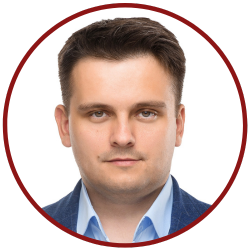
Mykhailo Pavliuk is vice-chairman of the Chernivtsi Oblast (state) legislature in Ukraine. Among his central duties is the protection of the mutual interests of communities (known in Ukrainian as hromadas) and local governing bodies. His interests have long been focused on Euro-Atlantic integration, decentralization and deconcentration of authority in Ukraine, and the engagement of public and non-governmental organizations in policymaking. As acting Governor of the Chernivtsi Oblast State Administration in 2018-2019, Mykhailo focused on the creation of a successful administrative structure of new, capable, self-sufficient communities. In 2006-2010 shortly after his university graduation, he also organized long-term public discussions about the advantages for Ukraine of European Union and NATO membership. In his spare time, Mykhailo volunteers to deliver humanitarian aid to liberated areas of Ukraine and to the Armed Forces of Ukraine. He also supports internally displaced persons in Chernivtsi and coordinates their resettlement.

Olena Kutsai is a lawyer with more than 15 years of experience in the international corporate sector, including work for Chevron and Scorpio Real Estate corporations. Olena currently serves as a Member of the Secretariat of the Business Ombudsman Council of Ukraine and is a Member of the Peace Coalition. In the Business Ombudsman Council, Olena leads high-level dialogues focused on improving the business environment in Ukraine. She is responsible for strategic cooperation with a number of stakeholders, including the Ministry of Digital Transformation and the Ministry of Ecology and Natural Resources. Olena drives several special initiatives to support the reconstruction and recovery of Ukraine following Russia’s invasion in 2022. She also develops policy recommendations promoting good governance, sustainable development, and the rule of law in Ukraine, working with the Government of Ukraine, Verkhovna Rada (parliament), the Office of the President of Ukraine, business associations, non-governmental institutions, international financial institutions (World Bank, EBRD), and international development organizations such as USAID and Agriteam. Olena is an author and co-author of the Council’s educational webinars and training for the private and public sectors. She holds a Master’s of Public Administration from the Ukrainian Catholic University and a Master’s of Law from the Eastern European University. Olena is a graduate of the Center on Democracy, Development and the Rule of Law’s Leadership Academy for Development (Stanford University) and an advanced leadership course at Harvard Business School.
UZBEKISTAN

Farrukh Irnazarov is a co-founder and Country Director at the Central Asian Development Institute and RANSIF Group. He has more than 15 years of experience working on economic development and investment strategies, trade and transportation, labor migration, and agribusiness, and has managed projects for the World Bank, ADB, UNDP, IOM, GIZ, USAID, UNICEF, GDN, Volkswagen, Gerda Henkel, and PeaceNexus Foundations. From 2014-2019, he was also a Visiting Scholar at the Woodrow Wilson Center for International Scholars (Johns Hopkins University and George Washington University in Washington, DC). Previously, Farrukh worked for the University of Applied Sciences Goettingen, the National College of Ireland, and the Ministry of Foreign Economic Relations of Uzbekistan. Farrukh teaches master classes on leadership, communication, and interviewing in difficult environments, and he is a member of Traveler’s Century Club (having visited 100+ countries). Farrukh has two Master’s in Sciences from Sweden — in Business Administration and Economics from Stockholm University (2006) and in International and European Relations from Linköping University (2005).
VENEZUELA
Alonso Moleiro is a Venezuelan journalist, writer, political analyst, civic activist, and radio anchor in Caracas, Venezuela. He graduated as a journalist from the Central Venezuelan University and has worked as a reporter and columnist in El Globo and El Nacional newspapers. He is the founder and director of the magazine Contrabando, a Venezuelan TV commentator, and served as Vice President of the National Council of Journalists from 2008-2010. Alonso was a radio anchor in the Union Radio Circuit for 10 years until the Maduro government ordered that his daily program be taken off the air. Alonso also worked as an advisor and consultant for public and private affairs, and as a volunteer in some civil and political movements that have been fighting to restore democracy in Venezuela. Alonso is the author of two books and is a member of the editorial council of the opposition newspaper Tal Cual. He currently works as a correspondent for the Spanish newspaper El País in Caracas.

Cristofer Correia is a political leader, businessman, and the author of the book Inclusive Urban Regeneration, in which public policies are proposed for poverty eradication in cities. He has pursued graduate degrees in Spain, the UK, and the United States, and is both a Chevening and Fulbright alumnus. In his political work, Cristofer is the National Training Coordinator of Voluntad Popular, an opposition political party in Venezuela led by Leopoldo Lopez and Juan Guaido. He is also CEO of Es Noticia, a WhatsApp network of 600 groups and 50,000 direct users for disseminating accurate information and overcoming censorship in Venezuela. Previously, he served as General Director of Citizen Participation at the National Assembly of Venezuela and as National Coordinator at Volunteers for Venezuela, a platform that has brought together more than 500,000 volunteers for humanitarian care in the country. Cristofer is a lecturer in Public Management at Andrés Bello Catholic University.