This is a virtual event. Please click here to register and generate a link to the talk.
The link will be unique to you; please save it and do not share with others.
这是一场虚拟会议,请点击这里报名生成会话链接。
该链接仅供您本人使用,请保存好,不要与他人共享。
The ravages of COVID-19 are now global. But the pandemic first struck in China, and the nation suffered a 6.8% decline in its first-quarter GDP. China is also the first country to move towards a recovery, however, rolling out government measures, re-opening businesses, and re-starting its economy. In this key moment, the Stanford China Program, in collaboration with alumni members of the Stanford Graduate School of Business, surveyed senior executives in China as their companies reboot their operations. In this two-part program, we first unveil potential trends and key takeaways from the survey. In the second half, we host a panel of prominent CxOs from China who give their insights and experiences rebooting their businesses. What are short-term challenges that companies in China currently face? What are some long-term implications of COVID-19 for their operational model, supply chain strategies, technology, and business digitization? What might they also mean, if any, for global trade relations and the future of globalization?
新冠肺炎疫情现在已经演变成为了全球性的公共卫生事件。但是,疫情最早发生在中国,中国第一季度GDP下降了6.8%。而中国也是第一个走向经济复苏的国家,推出了一系列政府举措复工复产、重振经济。在这一关键时期,斯坦福大学中国项目与斯坦福大学商学院的校友合作,向中国企业高管调查了企业经营重振情况。上半场,我们首先将揭示调查的潜在趋势和主要调查结果。下半场,我们将邀请由中国首席官组成的专家组,提供有关重振企业经营的见解和经验。中国企业目前面临哪些短期挑战? 新冠肺炎疫情对其经营模式、供应链战略、技术和业务数字化有哪些长期影响?它们可能对全球贸易关系和全球化未来产生哪些影响?
Agenda (in Pacific Time)
5:00-5:30 PM Survey Presentation: Key Takeaways
5:30-6:15 PM China CxO Panel: Discussion
6:15-6:30 PM Audience Q&A
(北京时间)
6月11日
早上 8: 00-8: 30 调查报告:主要调查结果
早上 8:30-9:15 中国首席官专家组:讨论
早上 9:15-9:45 观众问答
PANEL SPEAKERS
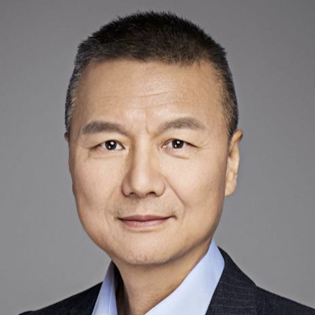
 Shiqi Wang has served as CEO and President of 21Vianet Group, Inc. since February 2018. Currently, Mr. Wang serves as Vice President of TUS Digital Group, a subsidiary of TUS Holdings, and serves on the board of directors of Beijing CIC Technology Co., Ltd. and Guangzhou Tuwei Technology Co., Ltd. . Mr. Wang has nearly 20 years of experience in the telecommunications industry, working at various renowned international companies, including 11 years with Ericsson, focusing primarily on strategy development and execution, corporate management, and equity investments. Mr. Wang received a bachelor's degree from Tsinghua University and an MBA from Peking University-Vlerick MBA Programme (BiMBA).
王世琪先生自2018年2月起担任世纪互联集团公司CEO兼总裁。在此之前,王世琪先生任启迪控股旗下启迪数字集团副总裁,他还在北京中航讯科技股份有限公司和广州图卫科技股份有限公司担任董事职务。王世琪先生在电信行业拥有近20年从业经验,曾在多家知名跨国公司任职,包括在爱立信公司工作11年,主要专注于公司战略规划与执行、产品管理和股权投资。王世琪先生拥有清华大学工学学士学位、邮电科学研究院工学硕士学位和北京大学Vlerick MBA项目MBA学位。
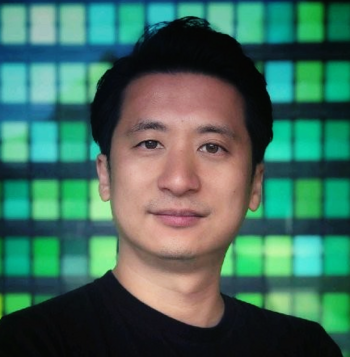
 Xiang Wang is President and Acting CFO of Xiaomi Corporation, responsible for platform functions and for assisting the CEO with Group operations. Mr. Wang joined Xiaomi Corporation in July 2015 served as its Senior Vice President and President for International Business, responsible for global expansion, IP strategy, and strategic partner relationship management. Mr. Wang has more than 20 years of experience in the semiconductor and communications fields, with great vision and comprehensive understanding of next-generation wireless communications. He has played an integral role in shaping Xiaomi’s international business operations including with respect to its intellectual property compliance, management and strategy throughout the world. In 2016, Mr. Wang put together an international team of sales and marketing teams to expand into more markets outside of China. Within just 3 years, he led his teams into over 90 markets. As of Q3 2019, Xiaomi’s international revenue accounted for 48.7% of its total revenue. Today, Xiaomi is ranked among top 5 smartphone brands in over 40 markets. Mr. Wang previously served as the Senior Vice President of Qualcomm and President of Qualcomm Greater China, leading the company’s business and operations in Greater China. Prior to that role, he was Vice President of Qualcomm CDMA Technology, responsible for Qualcomm chipset business and customer service in China. Under his leadership, Qualcomm rapidly extended and strengthened its partnerships with increasing numbers of Chinese manufacturing customers. Before joining Qualcomm, Mr. Wang held key positions in sales and marketing at internationally leading companies, including Motorola and Lucent/Agere. Mr. Wang earned his BSEE from Beijing Polytechnic University.
王翔先生担任小米集团总裁兼代理首席财务官,他负责集团职能平台,协助首席执行官负责集团运营。王翔先生于2015年7月加入小米集团,任职高级副总裁、国际商务总裁,负责全球业务拓展、知识产权战略以及战略合作伙伴管理。王翔先生在半导体行业与通信领域有着20余年的工作经验,对下一代无线通信技术有卓越的洞见和透彻的理解。在塑造小米的国际商务运营,包括知识产权的合规性、管理和战略方面,他发挥着不可或缺的作用。2016年,王先生组建了一支包含销售与市场的国际团队,来拓展小米集团的海外业务。在三年内,他带领自己的团队将小米推广至超过90多个海外市场。到2019年第三季度为止,小米的海外业务收入占其集团总收入的48.7%。如今小米在40多个海外市场的智能手机品牌中占据着前5的位置。加入小米之前,王先生在高通集团任职高级副总裁以及大中华区总裁,领导高通集团在大中华地区的业务与运营。在此之前他担任高通CDMA科技副总裁,负责高通在中国的芯片组业务以及客户服务。在他的领导之下,高通得以与越来越多的中国制造业客户拓展并加强了合作关系。加入高通之前,王先生在一些顶尖跨国公司如摩托罗拉、朗讯科技/杰尔的销售与市场部门担任重要职位。王翔先生毕业于北京工业大学,拥有电机工程学士学位。
Simon Yang is the CEO of Yangtze Memory Technologies Co., Ltd. (YMTC), who brings YMTC to a new height in 3D NAND industry. As an experienced executive in the semiconductor industry for over 30 years, Dr. Yang served as the CEO of XMC, COO/CTO of SMIC, and CTO/SVP of Chartered Semiconductor (Now GlobalFoundries), in charge of fab operation and technical R&D. Before that, he was in the Portland Technology Development sector of Intel for more than 10 years, in which he led a series of technical R&D projects. Dr. Yang obtained a Bachelor’s Degree from Shanghai University of Science & Technology, and a Master’s Degree and a Doctoral Degree from Rensselaer Polytechnic Institute.
杨士宁博士现担任长江存储 CEO,带领长江存储在 3D NAND 闪存领域屡创佳绩。杨博士在半导体技术研发与运营管理方面拥有超过 30 年的丰富经验,并曾先后担任武汉新芯 CEO、中芯国际 COO/CTO 及特许半导体 (现“格芯”) 公司 CTO/SVP 等核心高层管理职位, 全面负责公司运营管理、技术研发等工作。早前,杨博士还在英特尔 波特兰的研发部门(PTD)工作 10 余年,专注于技术研发。杨博士荣获伦斯勒理工学院硕士和博士学位。迄今为止,杨博士 拥有 40 多项专利,发表过 30 余篇技术论文。
 Zhiqiang (ZZ) Zhang is President of ABB in China since October 2018. He has extensive management experience and a deep understanding of the Chinese market, developed during his career at several large global companies over the past three decades. He joined ABB from Sandvik where he was Asia- Pacific Regional Holding Officer and President of Sandvik China, and Member of Sandvik Group Executive Committee. Prior to that, he held leadership positions at several other companies, including Nokia Siemens Networks, where he was President of the Greater China Region, and Siemens VDO Automotive, China, where he was President and CEO. Mr. Zhang is Non-Executive Board member of Georg Fischer AG (Switzerland) and Daetwyler Holding AG (Switzerland). He holds a bachelor’s degree in electronic engineering from Beijing Jiaotong University, China, and a master’s degree in business administration from the Smith School of Business at Queen’s University in Canada.
张志强先生自 2018 年 10 月起担任 ABB 中国总裁。在此之前, 他在多家大型跨国企业工作三十余年,拥有丰富的管理经验,深 谙中国市场,曾任山特维克中国区总裁、山特维克集团执行管理 委员会成员、诺基亚西门子通信公司中国区总裁、西门子威迪欧 汽车电子中国区总裁兼首席执行官等职务。张志强先生还担任瑞士乔治费歇尔集团独立董事和瑞士德特威勒 控股公司独立董事。张志强先生拥有北京交通大学计算机专业学士学位和加拿大女王 大学商学院工商管理硕士学位。
SURVEY PRESENTERS
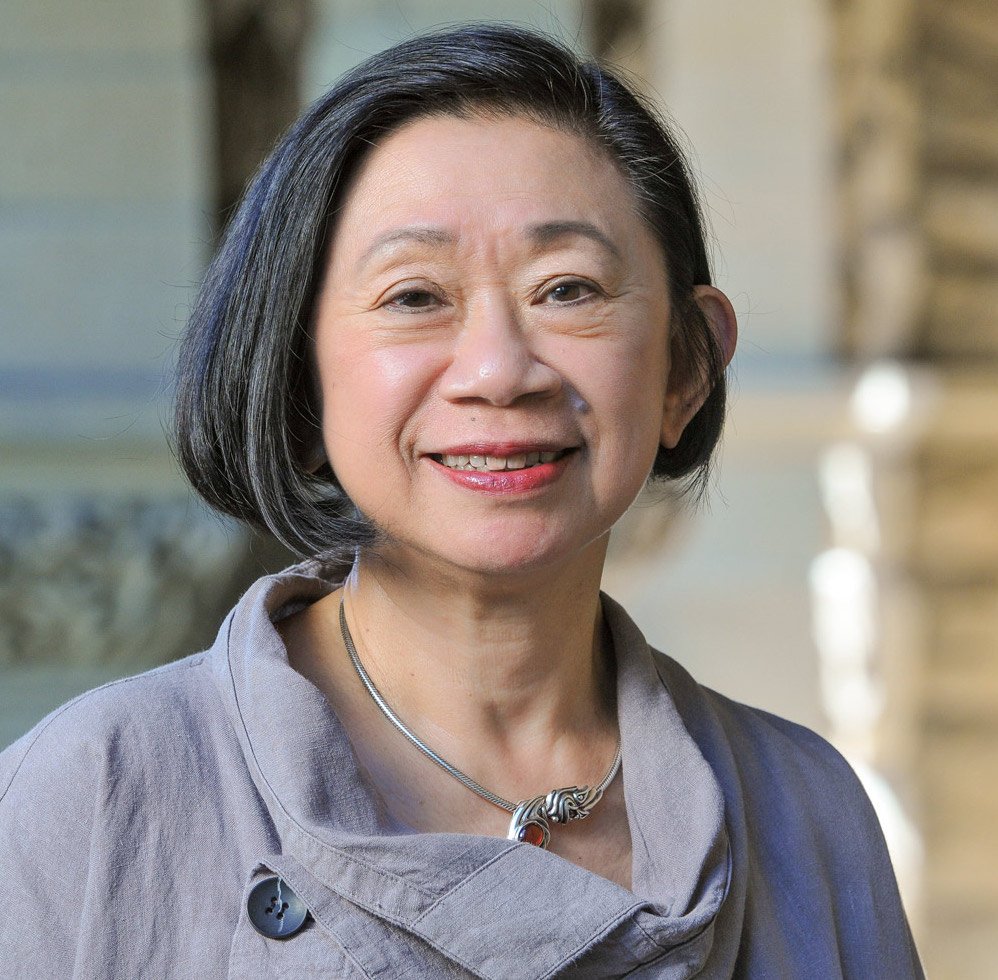 Jean C. Oi is the William Haas Professor of Chinese Politics in the Department of Political Science and a senior fellow in the Freeman Spogli Institute for International Studies at Stanford University. She directs the China Program at the Walter H. Shorenstein Asia-Pacific Research Center and is the Lee Shau Kee Director of the Stanford Center at Peking University. Professor Oi has published extensively on China’s reforms. Recent books include Zouping Revisited: Adaptive Governance in a Chinese County, coedited with Steven Goldstein (Stanford University Press, 2018), and Challenges in the Process of China’s Urbanization, coedited with Karen Eggleston and Yiming Wang (2017). Current research is on fiscal reform and local government debt, continuing SOE reforms, and the Belt and Road Initiative.
戴慕珍教授(Jean C. Oi)是美国斯坦福大学弗里曼•斯伯格国际研究所高级研究员以及政治学系中国政治学威廉•哈斯讲席教授。此外,她在沃尔特·H·肖恩斯坦亚太研究中心负责中国项目,也是北京大学斯坦福中心的李兆基冠名主任。她著有许多有关中国改革的文章。最近出版的书籍是与史蒂芬•戈尔茨坦合著的《重温邹平:中国县域的适应性治理》(斯坦福出版社,2018年),以及2017年与凯伦•艾格尔顿和王一鸣合著的《中国城市化进程中的挑战》。目前的研究是财政改革和地方政府债务,国企持续改革,以及“一带一路”倡议。
 Christopher Thomas was most recently a partner with McKinsey & Company. He served as co-Managing Partner for the Firm’s Global Digital Strategy service line as well as its Global IoT service line; and as the leader of its Asia Semiconductor Practice. Prior to McKinsey, Mr. Thomas spent ten years at Intel. He was the General Manager of Intel China, with joint ownership for the region’s $5 billion-plus P&L. In this role, he grew revenues by more than 50% and oversaw China’s successful elevation from a sales unit to an independent regional P&L business reporting directly into headquarters. Mr. Thomas began his career as a private equity investor at The Blackstone Group in New York City. He is currently a Visiting Professor at Tsinghua University, China’s leading educational institution. He received an MBA from Stanford Business School, where he was an Arjay Miller scholar; a Master of Arts in Political Science from Stanford University; and a Bachelor of Science in Economics, summa cum laude, from the Wharton School.
克里斯托弗·托马斯(Christopher Thomas) 曾任麦肯锡公司的合伙人。他曾担任该公司全球数字战略服务线和全球物联网服务线的共同管理合伙人;以及亚洲半导体业务的领导者。在麦肯锡之前,托马斯先生在英特尔工作了十年。他曾是英特尔中国公司的总经理,共同负责该地区50多亿美元的营运收益业务。在这个职位上,他增加了50%以上的公司收入,并见证中国公司成功地从一个销售点提升为一个独立的地区运营收益业务,并直接向总部汇报。托马斯先生在纽约黑石集团开始了私人股本投资者的职业生涯。他是中国领先的教育机构清华大学的客座教授。他获得了斯坦福大学商学院的工商管理硕士学位,并成为阿杰·米勒学者;从斯坦福大学获得了政治学硕士学位;从沃顿商学院以优异成绩获得了经济学学士学位。
Xander Wu oversees industry development and builds partnerships with the world’s top cloud computing companies for China Mobile International (USA). He helps clients expand their global footprint and advises companies on best practices for digital transformation. Mr. Wu has 13 years' experience in the global 4G and 5G industry, with a track record of achieving a number of the world’s first milestones in 5G and several de-facto standards for 4G and data networks. Mr. Wu graduated from Stanford Graduate School of Business, where he researched digital transformation and advised startups in the energy sector. He serves as a mentor at several incubators such as Plug and Play, helping startups find the right product/market fit and tailor go-to-market strategy.
吴雪负责中国移动国际有限公司(美国)的行业发展以及与世界顶级云计算公司建立合作关系。他帮助客户扩大其全球业务范畴,并就数字化转型的最佳实践为公司提供建议。吴先生在全球4G和5G行业拥有13年的经验,在5G领域取得了许多世界上第一个里程碑式的成就,在4G和数据网络方面也取得了一些事实标准。吴先生毕业于斯坦福大学商学院,他研究了数字化转型,并为能源行业的初创企业提供咨询。他在一些孵化器企业如Plug and Play担任导师,帮助初创企业找到合适的产品及市场,并量身定制进入市场的策略 .