Culture
-

Adoption of European law was a central part of the accession process of new member states of the EU but turned out to be much more difficult than implementation of European Law in the old member states. Problems included not only the amount of European legislation, its dynamic nature and language problems. Literal implementation resulted in diminishing the coherence of national legal rules and structures. In addition, legislation did not take account of national specifics and differences in legal culture. Built-up of working institutions and procedures takes time and efforts and deficiencies add to hampering implementation and application of European law.

Many problems of new member states in the accession process are present in the old member states as well. They may lead to a review of the European legislative process and structural reforms. The pace of legislation should slow down, it should be more reflexive and “re-connect” to the national and local level. Care should also be taken by national legislators in better integrating European law into national law. Structural reform would include strengthening of democratic institutions on a European level including the European court system. This should be accompanied by practical cooperation and mutual exchange.

Prof. Dr. Wiebe studied law at the University of Hannover, Germany, and at the University of Virginia (U.S.A.) where he received the LL.M. degree in 1988. In 2001 he completed his habilitation. Since Sept. 2002 he is a professor on the newly established Chair for Information Law and Intellectual Property Law at the Vienna University of Economics and Business Administration (www.infolaw.at). Prof. Dr. Wiebe is a member of various academic associations and Vice President of the German Computer Law Association (DGRI e.V.).

Stanford Law School
Room 182

Vienna University of Economics and Business Administration
Department of Information Technology Law and Intellectual Property Law
Althanstrasse 39-45
1090 Wien

0
Distinguished Visiting Austrian Chair Professor, 2007-2008
Visiting Professor, Stanford Law School
Head of the Deparment of Information Technology and Intellectual Property Law, Vienna University of Economics and Business Administration
wiebe.png

Andreas Wiebe, LL.M., is Head of the Deparment of Information Technology and Intellectual Property Law at the Vienna University of Economics and Business Administration. From January through June 2008, Professor Wiebe served as Distinguished Visiting Austrian Chair Professor at the Forum on Contemporary Europe, during which time he taught courses in e-commerce law and intellectual property law at the Stanford Law School. Professor Wiebe co-organized the June 14 "Transatlantic Information Law Symposium," held at the Stanford Law School and presented by the Transatlantic Technology Law Forum and the Freeman Spogli Institute for International Studies.

Andreas Wiebe Chair for Information Law and Intellectual Property Law Speaker Vienna University of Economics and Business Administration
Seminars
-
Simon Chapman will share his expertise on the spoiled identity of smoking, smokers, and the tobacco industry. Dr. Simon Chapman is a Professor, Director of Research, and Fellow at the School of Public Heatlh A27 of the University of Sydney, Australia.

Anthropology, Building 50, Room 51A
450 Serra Mall
(Inner Quad, next to Memorial Church)

Simon Chapman Professor, Director of Research, and Fellow Speaker University Sentate, School of Public Health A27, University of Sydney
Lectures
-

Civil Islam - Beyond the Headlines     

A lecture and three seminars by Robert W. Hefner, 2008 NUS-Stanford Lee Kong Chian Distinguished Fellow, Shorenstein APARC and Professor of Anthropology, Boston University 

April 28 - May 1, 2008 

Media coverage of Islam and Muslims, especially since 9/11, has featured violence and the threat of violence.  In his opening lecture and three seminars to follow, Prof. Hefner will explore a different reality "beyond the headlines."  Is there a "civil Islam"?  Are Islam and democracy compatible?  Is "Islamism" always radical, or can it be democratic?  How does Muslim schooling affect the answers to these questions?  Prof. Hefner will also look beyond the media's focus on the Middle East to examine the interactions between Islam, Muslims, and democracy in Southeast Asia.  

This is the third and final seminar in this series scheduled with Dr. Hefner.

Robert W. Hefner's latest books include Schooling Islam (co-ed., 2007); Remaking Muslim Politics (ed., 2005); and Civil Islam (2000). He is the invited editor of the sixth volume of the forthcoming New Cambridge History of Islam, Muslims and Modernity: Society and Culture since 1800.  He directs the program on Islam and civil society at Boston University since 1991. 

All four events are co-sponsored by the the Abbasi Program in Islamic Studiesthe Stanford Humanities Center, and the Southeast Asia Forum in the Walter H. Shorenstein Asia-Pacific Research Center, Stanford University.

The Board Room
Humanities Center
424 Santa Teresa Street
Stanford University
Stanford, CA

Shorenstein APARC
Stanford University
Encina Hall E301
Stanford, CA 94305-6055

0
Lee Kong Chian NUS-Stanford Distinguished Fellow on Southeast Asia
Website_Headshot.jpg PhD

Robert William Hefner, professor of anthropology and associate director of the Institute on Culture, Religion, and World Affairs at Boston University, is the inaugural Lee Kong Chian NUS-Stanford Distinguished Fellow on Southeast Asia.

Professor Hefner has been associate director of the Institute on Culture, Religion, and World Affairs at Boston University, where he has directed the program on Islam and civil society since 1991. Hefner has carried out research on religion and politics in Southeast Asia for the past thirty years, and has authored or edited a fourteen books, as well as several major policy reports for private and public foundations. His most recent books include, Schooling Islam: The Culture and Politics of Modern Muslim Education (edited with Muhammad Qasim Zaman, Princeton 2007); ed., Remaking Muslim Politics: Pluralism, Contestation, Democratization (Princeton 2005), ed., and Civil Islam: Muslims and Democratization in Indonesia (Princeton 2000). Hefner is also the invited editor for the sixth volume of the forthcoming New Cambridge History of Islam, Muslims and Modernity: Society and Culture since 1800.

Hefner is currently writing a book on Islamic education, democratization, and political violence in Indonesia. The research and writing locate the Indonesian example in the culture and politics of the broader Muslim world. His book also revisits the the question of the role of religious and secular knowledge in modernity.

Hefner will divide his time between Boston University, the National University of Singapore, and Stanford, where he will teach a seminar during the spring quarter.

Robert W. Hefner 2008 NUS-Stanford Lee Kong Chian Distinguished Fellow, Shorenstein APARC and Professor of Anthropology, Boston University Speaker
Conferences
-
Civil Islam - Beyond the Headlines     

A lecture and three seminars by Robert W. Hefner, 2008 NUS-Stanford Lee Kong Chian Distinguished Fellow, Shorenstein APARC and Professor of Anthropology, Boston University 

April 28 - May 1, 2008 

Media coverage of Islam and Muslims, especially since 9/11, has featured violence and the threat of violence.  In his opening lecture and three seminars to follow, Prof. Hefner will explore a different reality "beyond the headlines."  Is there a "civil Islam"?  Are Islam and democracy compatible?  Is "Islamism" always radical, or can it be democratic?  How does Muslim schooling affect the answers to these questions?  Prof. Hefner will also look beyond the media's focus on the Middle East to examine the interactions between Islam, Muslims, and democracy in Southeast Asia.  


This is the second of the three seminars scheduled with Dr. Hefner.  

The third and final seminar in this series will be on Thursday, May 1 and is titled Muslim Politics in Southeast Asia: Democratic Islam Hijacked? or Re-invigorated? 


Robert W. Hefner's latest books include Schooling Islam (co-ed., 2007); Remaking Muslim Politics (ed., 2005); and Civil Islam (2000). He is the invited editor of the sixth volume of the forthcoming New Cambridge History of Islam, Muslims and Modernity: Society and Culture since 1800.  He directs the program on Islam and civil society at Boston University since 1991. 

All four events are co-sponsored by the the Abbasi Program in Islamic Studiesthe Stanford Humanities Center, and the Southeast Asia Forum in the Walter H. Shorenstein Asia-Pacific Research Center, Stanford University. 

The Board Room
Humanities Center
424 Santa Teresa Street
Stanford University
Stanford, CA

Shorenstein APARC
Stanford University
Encina Hall E301
Stanford, CA 94305-6055

0
Lee Kong Chian NUS-Stanford Distinguished Fellow on Southeast Asia
Website_Headshot.jpg PhD

Robert William Hefner, professor of anthropology and associate director of the Institute on Culture, Religion, and World Affairs at Boston University, is the inaugural Lee Kong Chian NUS-Stanford Distinguished Fellow on Southeast Asia.

Professor Hefner has been associate director of the Institute on Culture, Religion, and World Affairs at Boston University, where he has directed the program on Islam and civil society since 1991. Hefner has carried out research on religion and politics in Southeast Asia for the past thirty years, and has authored or edited a fourteen books, as well as several major policy reports for private and public foundations. His most recent books include, Schooling Islam: The Culture and Politics of Modern Muslim Education (edited with Muhammad Qasim Zaman, Princeton 2007); ed., Remaking Muslim Politics: Pluralism, Contestation, Democratization (Princeton 2005), ed., and Civil Islam: Muslims and Democratization in Indonesia (Princeton 2000). Hefner is also the invited editor for the sixth volume of the forthcoming New Cambridge History of Islam, Muslims and Modernity: Society and Culture since 1800.

Hefner is currently writing a book on Islamic education, democratization, and political violence in Indonesia. The research and writing locate the Indonesian example in the culture and politics of the broader Muslim world. His book also revisits the the question of the role of religious and secular knowledge in modernity.

Hefner will divide his time between Boston University, the National University of Singapore, and Stanford, where he will teach a seminar during the spring quarter.

Robert Hefner 2008 NUS-Stanford Lee Kong Chian Distinguished Fellow, Shorenstein APARC and Professor of Anthropology, Boston University Speaker
Conferences
-

Civil Islam - Beyond the Headlines     

A lecture and three seminars by Robert W. Hefner, 2008 NUS-Stanford Lee Kong Chian Distinguished Fellow, Shorenstein APARC and Professor of Anthropology, Boston University 

April 28 - May 1, 2008 

Media coverage of Islam and Muslims, especially since 9/11, has featured violence and the threat of violence.  In his opening lecture and three seminars to follow, Prof. Hefner will explore a different reality "beyond the headlines."  Is there a "civil Islam"?  Are Islam and democracy compatible?  Is "Islamism" always radical, or can it be democratic?  How does Muslim schooling affect the answers to these questions?  Prof. Hefner will also look beyond the media's focus on the Middle East to examine the interactions between Islam, Muslims, and democracy in Southeast Asia.  


This is the first of the three seminars scheduled with Dr. Hefner.  

The second seminar of this series is on Wednesday, April 30 and is titled Schooling Islam: Madrasas and the Remaking of Muslim Modernity. 

The third seminar will be on Thursday, May 1 and is titled Muslim Politics in Southeast Asia: Democratic Islam Hijacked? or Re-invigorated? 


Robert W. Hefner's latest books include Schooling Islam (co-ed., 2007); Remaking Muslim Politics (ed., 2005); and Civil Islam (2000). He is the invited editor of the sixth volume of the forthcoming New Cambridge History of Islam, Muslims and Modernity: Society and Culture since 1800.  He directs the program on Islam and civil society at Boston University since 1991. 

All four events are co-sponsored by the the Abbasi Program in Islamic Studiesthe Stanford Humanities Center, and the Southeast Asia Forum in the Walter H. Shorenstein Asia-Pacific Research Center, Stanford University. 

The Board Room
Humanities Center
424 Santa Teresa Street
Stanford University
Stanford, CA

Shorenstein APARC
Stanford University
Encina Hall E301
Stanford, CA 94305-6055

0
Lee Kong Chian NUS-Stanford Distinguished Fellow on Southeast Asia
Website_Headshot.jpg PhD

Robert William Hefner, professor of anthropology and associate director of the Institute on Culture, Religion, and World Affairs at Boston University, is the inaugural Lee Kong Chian NUS-Stanford Distinguished Fellow on Southeast Asia.

Professor Hefner has been associate director of the Institute on Culture, Religion, and World Affairs at Boston University, where he has directed the program on Islam and civil society since 1991. Hefner has carried out research on religion and politics in Southeast Asia for the past thirty years, and has authored or edited a fourteen books, as well as several major policy reports for private and public foundations. His most recent books include, Schooling Islam: The Culture and Politics of Modern Muslim Education (edited with Muhammad Qasim Zaman, Princeton 2007); ed., Remaking Muslim Politics: Pluralism, Contestation, Democratization (Princeton 2005), ed., and Civil Islam: Muslims and Democratization in Indonesia (Princeton 2000). Hefner is also the invited editor for the sixth volume of the forthcoming New Cambridge History of Islam, Muslims and Modernity: Society and Culture since 1800.

Hefner is currently writing a book on Islamic education, democratization, and political violence in Indonesia. The research and writing locate the Indonesian example in the culture and politics of the broader Muslim world. His book also revisits the the question of the role of religious and secular knowledge in modernity.

Hefner will divide his time between Boston University, the National University of Singapore, and Stanford, where he will teach a seminar during the spring quarter.

Robert W. Hefner 2008 NUS-Stanford Lee Kong Chian Distinguished Fellow, Shorenstein APARC and Professor of Anthropology, Boston University Speaker
Conferences
-

Civil Islam - Beyond the Headlines

A lecture and three seminars by Robert W. Hefner, 2008 NUS-Stanford Lee Kong Chian Distinguished Fellow, Shorenstein APARC and Professor of Anthropology, Boston University

April 28 - May 1, 2008

Media coverage of Islam and Muslims, especially since 9/11, has featured violence and the threat of violence. In his opening lecture and three seminars to follow, Prof. Hefner will explore a different reality "beyond the headlines." Is there a "civil Islam"? Are Islam and democracy compatible? Is "Islamism" always radical, or can it be democratic? How does Muslim schooling affect the answers to these questions? Prof. Hefner will also look beyond the media's focus on the Middle East to examine the interactions between Islam, Muslims, and democracy in Southeast Asia.


The evening program on Monday, April 28 with Dr. Hefner will begin with a public reception at 6:15 p.m.

The lecture will begin at 7:00 p.m.


The following three seminars are scheduled for 4:30 p.m. and will take place in the Board Room of the Stanford Humanities Center. Reservations are not required for the seminars.

The seminar on Tuesday, April 29 is titled Varieties of Islamism: From Radical to Democratic.

The seminar on Wednesday, April 30 is titled Schooling Islam: Madrasas and the Remaking of Muslim Modernity.

The seminar on Thursday, May 1 is titled Muslim Politics in Southeast Asia: Democratic Islam Hijacked? or Re-invigorated?

Robert W. Hefner's latest books include Schooling Islam (co-ed., 2007); Remaking Muslim Politics (ed., 2005); and Civil Islam (2000). He is the invited editor of the sixth volume of the forthcoming New Cambridge History of Islam, Muslims and Modernity: Society and Culture since 1800. He directs the program on Islam and civil society at Boston University since 1991.

All four events are co-sponsored by the the Abbasi Program in Islamic Studies, the Stanford Humanities Center, and the Southeast Asia Forum in the Walter H. Shorenstein Asia-Pacific Research Center, Stanford University.

Levinthal Hall
Humanities Center
424 Santa Teresa Street
Stanford University
Stanford, CA

Shorenstein APARC
Stanford University
Encina Hall E301
Stanford, CA 94305-6055

0
Lee Kong Chian NUS-Stanford Distinguished Fellow on Southeast Asia
Website_Headshot.jpg PhD

Robert William Hefner, professor of anthropology and associate director of the Institute on Culture, Religion, and World Affairs at Boston University, is the inaugural Lee Kong Chian NUS-Stanford Distinguished Fellow on Southeast Asia.

Professor Hefner has been associate director of the Institute on Culture, Religion, and World Affairs at Boston University, where he has directed the program on Islam and civil society since 1991. Hefner has carried out research on religion and politics in Southeast Asia for the past thirty years, and has authored or edited a fourteen books, as well as several major policy reports for private and public foundations. His most recent books include, Schooling Islam: The Culture and Politics of Modern Muslim Education (edited with Muhammad Qasim Zaman, Princeton 2007); ed., Remaking Muslim Politics: Pluralism, Contestation, Democratization (Princeton 2005), ed., and Civil Islam: Muslims and Democratization in Indonesia (Princeton 2000). Hefner is also the invited editor for the sixth volume of the forthcoming New Cambridge History of Islam, Muslims and Modernity: Society and Culture since 1800.

Hefner is currently writing a book on Islamic education, democratization, and political violence in Indonesia. The research and writing locate the Indonesian example in the culture and politics of the broader Muslim world. His book also revisits the the question of the role of religious and secular knowledge in modernity.

Hefner will divide his time between Boston University, the National University of Singapore, and Stanford, where he will teach a seminar during the spring quarter.

Robert W. Hefner 2008 NUS-Stanford Lee Kong Chian Distinguished Fellow, Shorenstein APARC and Professor of Anthropology, Boston University Speaker
Conferences
-

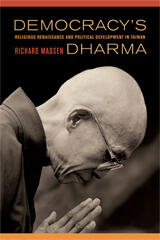
This is a CDDRL's Special Event within our Democracy in Taiwan Program. It is also co-sponsored by the Public Diplomacy/Emerging Publics Project of the Center for the Pacific Rim at University of San Francisco. In this seminar, Dr. Richard Madsen will talk about his new book that explores the religious renaissance that has reformed, revitalized, and renewed the practices of Buddhism and Daoism in Taiwan and how this religious renaissance embraces democracy modernity.  

Image
10896
Richard Madsen is distinguished professor and chair of the sociology department at the University of California, San Diego and a co-author (with Robert Bellah et al.) of The Good Society and Habits of the Heart which received the Los Angeles Times Book Award and was jury nominated for the Pulitzer Prize. He has authored or co-authored five books on China, including Morality and Power in a Chinese Village for which he received the C. Wright Mills Award; China's Catholics: Tragedy and Hope in an Emerging Civil Society; and China and the American Dream.  He also co-edited (with Tracy B. Strong) The Many and the One: Religious and Secular Perspectives on Ethical Pluralism in the Modern World. His latest book is Democracy’s Dharma: Religious Renaissance and Political Development in Taiwan.

Richard Madsen received an MA in Asian studies and a Ph.D. in sociology from Harvard.

"Madsen is a genial and well-informed guide, both to social-political change in Taiwan and to the ins and outs of religious movements. His engaging writing skillfully interweaves profound insights and themes into the descriptive analytical narrative. Democracy's Dharma presents new material based on recent research while offering a fresh spin on thinking about Asian religions."–Thomas Gold, editor of Social Connections in China: Institutions, Culture, and the Changing Nature of Guanxi

Philippines Conference Room

Richard Madsen Distinguished Professor Speaker Department of Sociology at the University of California, San Diego
Conferences
-
In the midst of leadership changes and rethinking of the Six-Party Talks, the time is ripe for reassessing how multilateralism can be advanced in Northeast Asia. The earlier stress on economic integration as the engine of regionalism has lost credibility, although the forces of interdependence continue to grow. The tendency to treat security in isolation also may be receding, as the Six-Party Talks and Sino-U.S. relations both reveal the multi-sided nature of building trust. At the same time, the pessimism associated with overemphasis on the history issue between Japan and its neighbors has receded in the face of renewed Sino-Japanese and South Korean-Japanese diplomacy. Yet, finding common ground in strategic thinking about the future of multilateralism demands a new approach that takes into account lessons from recent years.

As the building blocks of a new approach, this presentation will focus on four themes: 1) re-examination of ways to accelerate regionalism, with attention to leadership, energy cooperation, and the role of Russia; 2) development of a more comprehensive outlook on values, with attention to shared modernity, gradualism, and the role of Japan; 3) discussion of the next phase in managing North Korea, attentive to Sino-U.S. accord and the role of South Korea; and 4) evaluation of U.S. priorities and how a new president may view Northeast Asia within an overall agenda.   The objective of this talk will be to stimulate thinking on a region at a crossroads in order to capitalize on recent currents of change.

Gil Rozman attended Princeton's Critical Languages Program, returning to Carleton College as an independent major in Chinese and Russian studies. He received his PhD in sociology at Princeton with a field on Chinese, Japanese, and Russian societies and a plan to concentrate on historical comparisons first and on the domestic roots of international relations later. His books have appeared in clusters, including: four on comparative pre-modern urban development and stages of modernization; three on debates in the Soviet Union, China, and Japan over bilateral relations and changes in socialism; two on regionalism; and four on strategic thinking in Northeast Asia. Although he is still learning about Korea, many recent writings have looked at Korea within a regional context.

Philippines Conference Room

Gil Rozman Professor of Sociology Speaker Princeton University
Seminars
Subscribe to Culture