Global Health
Authors
Herbert Lin
News Type
Commentary
Date
Paragraphs

Almost since its first emergence, the spreading SARS-CoV-2 outbreak has also been accompanied by a widespread proliferation of misinformation and disinformation, what the World Health Organization (WHO) described as “a massive ‘infodemic’—an over-abundance of information … that makes it hard for people to find trustworthy sources and reliable guidance when they need it.”

Misinformation can be information that is false or inaccurate, whether deliberately or inadvertently so. Disinformation refers to information that is intended to mislead, whether or not the information is literally true.

Read the rest at Bulletin of Atomic Scientists

Hero Image
Trump talking Doug Mills/The New York Times/Bloomberg via Getty Images
All News button
1
Subtitle

Almost since its first emergence, the spreading SARS-CoV-2 outbreak has also been accompanied by a widespread proliferation of misinformation and disinformation, what the World Health Organization (WHO) described as “a massive ‘infodemic’… that makes it hard for people to find trustworthy sources and reliable guidance when they need it.”

Authors
Gary Mukai
News Type
Blogs
Date
Paragraphs

The sports world has been dramatically affected by COVID-19. Not only has there been a significant decline of events for the spectator—both in person and on television—but the impact on the participants themselves has also been unprecedented. Due to social gathering restrictions, organized youth sports have been almost completely shuttered. High schools and colleges have been cancelling their practices and competitive seasons. The PAC-12 recently postponed its football season. The pandemic has also had a dramatic effect on sports at the highest level. Only fairly recently have there been abbreviated attempts to reinstitute professional sports seasons such as Major League Baseball and the National Basketball Association. Even the 2020 Olympic Games in Tokyo were postponed to 2021.

SPICE is helping to develop the CoviDB Speaker Series, a TeachAids initiative which provides free online videos to educate the general public about the ongoing COVID-19 pandemic. For episode 4 of the CoviDB Speaker Series, TeachAids Founder and CEO Dr. Piya Sorcar decided to provide a glimpse into how the pandemic has impacted the lives of two of the world’s greatest athletes. Sorcar enlisted the support of Emmy Award-winning sportscaster Ted Robinson to interview three-time Olympic diver and gold medalist Laura Wilkinson and five-time Olympic gold medalist swimmer and Stanford student Katie Ledecky.

The interview can be viewed here. Robinson drew out insightful perspectives from Ledecky and Wilkinson concerning the uncertainty that they lived with while awaiting the decision about whether the 2020 Olympics would be held, and also their feelings once the decision to postpone the Olympics was made. Wilkinson reflected, “What was frustrating at first, turned out to be really special” as she reflected upon things like spending extra time with her family, including four children. Ledecky added that being able to focus more on her studies at Stanford University definitely helped to create a little more balance in her life. In response to Robinson’s question about maintaining the discipline to train in light of the postponement, Ledecky responded

I tried to stay focused on my goals. We are going to do whatever it takes to be the best and put in the work that we know is necessary to reach our goals.
Katie Ledecky

During a segment of the interview that focused on advice for youth, Ledecky noted, “The work that you put in doesn’t go away… It is always in the bank… At some point in the future, you are going to be able to compete again, have those opportunities to let that work show.” Wilkinson added, “When you want something, it doesn’t matter what people say about you or what they think of you. If you think you want to do this, if this is your goal, you have to go after it because you’re capable of more than you probably think you are. And other people’s opinions do not need to define you or what you’re capable of doing. You define that.”

For each of the first four episodes in the CoviDB Speaker Series, SPICE has developed a teacher’s guide to encourage the showing of the episodes in U.S. classrooms at the secondary school level. Each of the guides includes (1) a summary of the questions that were asked by the interviewer, including terms and definitions, (2) guiding questions for small-group work, and (3) debriefing activities. In the area of debriefing activities, writing prompts such as the following for episode 4 are offered to students.

  • Laura and Katie commented on how their lives have been disrupted since the pandemic. Write a diary entry about how your life has been disrupted. What has been especially challenging? What lessons have you learned from the experience?
  • Write about a time when you were disappointed with the cancellation of something. How did you cope with it? Did you learn something positive from the experience? Have you ever been in limbo about whether an event was going to happen or not? How did this make you feel?


Other suggested debriefing activities involve the designing of an artistic image, writing of a poem, or writing lyrics to a song that captures the significance of quotes from the interview such the following:

  • Laura: The sun is a great healer in a lot of ways, both emotionally and physically.
  • Katie: The Olympics is … an opportunity for the world to come together.
  • Laura: I think that it [COVID-19] has reminded us of how connected we are as a world and how we all need to be doing our individual parts to combat this.
  • Ted: I have been around athletes in team sports who at some point have said that they kept playing because they wanted their kids to see them.


As TeachAids and SPICE think about their work with youth, two statements from the interview were especially poignant to the staffs. Ledecky noted, “This is history [the time of COVID-19] but you don’t have to be afraid of it. Fear is really a mindset… so if you do everything that you can do, there is no point in worrying beyond that because worrying does not help you at all. It is not going to change anything. Do what you can control. Worry about the things that you can control and things that you cannot control, you have to let those go.” Wilkinson stated, “This [challenging time] could be that gift to you. This could be that opportunity to rise to a whole new level. Don’t look at this and be sad and upset. Look at this as an opportunity of how you can get ahead.” Though the statements were intended as advice for youth, in fact, the statements seem relevant today to all of us.

The CoviDB Speaker Series is a TeachAids initiative that is co-sponsored by the Stanford Center for Innovation in Global Health, the University of California San Francisco’s Institute for Global Health Sciences, and the Stanford Program on International and Cross-Cultural Education (SPICE).


Read More

Poster image with a title, two speakers, and five sponsors logos
News

CoviDB Speaker Series

In collaboration with TeachAids, Stanford Medicine, and the University of California, San Francisco, SPICE is helping to develop the CoviDB Speaker Series, which seeks to provide free online videos to educate the general public about the ongoing COVID-19 pandemic.
CoviDB Speaker Series
CrashCourse filming at Stanford University
Blogs

CrashCourse: The Prevention and Treatment of Concussions

CrashCourse: The Prevention and Treatment of Concussions
Hero Image
Webinar poster with three speakers
CoviDB Speaker Series; photo courtesy TeachAids
All News button
1
Subtitle

For episode 4 of the CoviDB Speaker Series, TeachAids Founder and CEO Dr. Piya Sorcar provides a glimpse into how the pandemic has impacted the lives of two of the world’s greatest athletes.

Authors
Beth Duff-Brown
News Type
News
Date
Paragraphs

Stanford postdoc Ashley Styczynski was working on newborn antimicrobial resistance in Bangladesh when the pandemic hit. The infectious disease physician realized she had to switch gears and began working with the ministry of health to prepare hospitals for the onslaught of COVID-19 patients.

“During my trainings on infection control in Bangladeshi hospitals, I learned that many health-care workers were paralyzed by the fear of not knowing how to protect themselves against COVID-19 while caring for patients, especially during shortages of PPE,” she said. “I think this has substantially contributed to the large number of health-care workers becoming infected during the pandemic. In fact, Bangladesh has the highest rate of physician mortality from COVID of any country.”

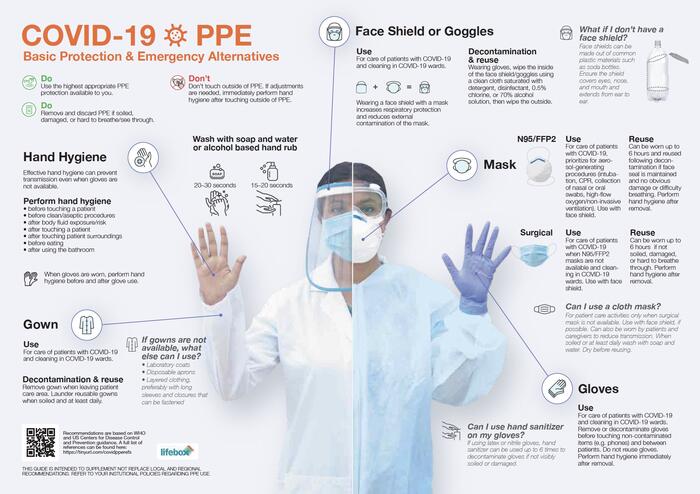
So Styczynski turned to her Stanford colleagues back home and proposed a set of infographics that could help health-care workers in Bangladesh and other under-resourced countries. Armed with a seed grant from the Stanford Center for Innovation in Global Health, they have established a website devoted to the creation and use of personal protective equipment (PPE). Bangladesh Ministry of Health has adopted their guidelines and Styczynski hopes other health ministries will do the same.

“I want them to be a tool to empower health-care workers — not just in Bangladesh but also in other low- and middle-income countries — to protect themselves with whatever resources they have access to,” Styczynski said. She said the team of collaborators from Stanford grew when researchers from other institutions heard about the research and wanted to get involved.

Image
An infographic to help health-care workers with their personal protective equipment.


The website also includes a video on PPE donning-and-doffing techniques, illustrations for building ultraviolet germicidal irradiation (UVGI) cabinets to decontaminate masks, and the PPE infographics in other languages.

Stephen P. Luby, MD, a core faculty member at Stanford Health Policy and senior fellow at the Freeman Spogli Institute for International Studies and the Woods Institute for the Environment, said the project grew out of Styczynski’s background in infectious disease epidemiology and her deep engagement with collaborators in Bangladesh.

“These scientifically sound, easy-to-understand visuals provide a clear example of how deep engagement in a high-need context allows Stanford researchers to make contributions that impact lives globally,” Luby said.

Styczynski is this year’s Rosenkranz Prize winner for her ongoing research into why Bangladesh is among the top 10 countries with the highest number of stillbirths. She believes intrauterine infections may be an underrecognized factor contributing to the stillbirths and is performing metagenomic sequencing on placental tissues of stillborn babies to examine the genetic and bacterial diversity.

She recently returned to the States to marry her now-husband, Adam Gsellman, a graphic designer who did all the infographics pro bono for the project. Styczynski met him in Bangladesh, where he was working at an IT startup focused on developing travel management software.

“After having lived in Bangladesh for nearly 6 years, he is intimately connected to the country and cares deeply about the people there as well,” she said.

Other Stanford faculty involved in the project include bioengineer Manu Prakash, one of the inventors of the cheap paper microscope, the Foldscope, now used around the world, and Thomas Baer, director of the Stanford Photonics Research Center.

During the initial planning stages, Styczynski connected with Thomas Weiser, MD, MPH, a general and trauma surgeon at Stanford Medicine and the consulting medical officer for Lifebox, a nonprofit working to improve surgical safety in resource-limited settings.

"Lifebox's work is focused on infection prevention in surgery, including decontamination of surgical instruments and appropriate PPE use for surgery,” Weiser said. "We had experience doing this in the operating room, so with Ashley's help we expanded the work to include other health-care workers at risk of infection."

He added that COVID-19 presented them with additional challenges.

"But we felt it was important to prepare the surgical ecosystem to help respond to the new demands for PPE and decontamination processes that would need to be put in place," he said.

Ashley Styczynski

Ashley Styczynski

Infectious Disease Fellow
Styczynski researches the global threat of antimicrobial resistance.
Profile

Read More

evaluating ventilator
News

Rosenkranz Prize Winner: Infectious Diseases Physician Examines High Stillborn Incidence in Bangladesh, Helps With COVID-19 Preparedness

Stanford postdoc Ashley Styczynski will investigate the epidemiology behind the alarmingly high rate of stillbirths in Bangladesh while helping prepare for the coming onslaught of coronavirus in the densely populated South Asian nation.
Rosenkranz Prize Winner: Infectious Diseases Physician Examines High Stillborn Incidence in Bangladesh, Helps With COVID-19 Preparedness
An illustration by Irene Servillo
News

An 8-Point Plan to Tackle COVID-19 Among Women in Mumbai Slums

“We’ve never been closer to each other or to those we serve," says Health Policy PhD candidate Suhani Jalota, founder of the Myna Mahila Foundation, a Mumbai-based women’s health and employment nonprofit. Its mission is to create the next generation of women leaders in urban slum communities — but COVID-19 isn't making it easy.
An 8-Point Plan to Tackle COVID-19 Among Women in Mumbai Slums
A mother and child in the fields in Sierra Leone.
Commentary

Millions of Children at Risk of Measles as Vaccination Campaigns Take Back Seat to COVID-19

SHP's Eran Bendavid Warns that millions of young children around the world are at risk of missing their measles vaccines as health-care workers focus on COVID-19.
Millions of Children at Risk of Measles as Vaccination Campaigns Take Back Seat to COVID-19
Hero Image
Ashley Styczynski shows a colleague in Bangladesh how to wear an N95 mask to protect her against COVID-19.
Ashley Styczynski shows her Bengali tutor, Marioum Akhi, how to properly use a mask during the COVID-19 pandemic.
All News button
1
Subtitle

Stanford postdoc Ashley Styczynski and collaborators build a website devoted to protecting health-care workers in under-resourced countries, using infographics and videos to show them how to create, wear and preserve personal protective equipment.

Authors
News Type
News
Date
Paragraphs

While researchers race to produce vaccines for COVID-19, countries around the world are already jockeying for what comes next.

A potentially intense competition to get their hands on them.

Read the rest at abc7 news

Hero Image
Picture of test tubes ABC7
All News button
1
Subtitle

CISAC Senior Fellow David Relman worries that developing countries may be left behind and hundreds of thousands of lives are on the line.

Paragraphs

In March 2020, when many U.S. states and localities issued their first emergency orders to address Covid-19, there was widespread acceptance of the government’s legal authority to respond quickly and aggressively to this unprecedented crisis. Today, that acceptance is fraying. As initial orders expire and states move to extend or modify them, legal challenges have sprouted. The next phase of the pandemic response will see restrictions dialed up and down as threat levels change.  As public and political resistance grows, further legal challenges are inevitable.

All Publications button
1
Publication Type
Journal Articles
Publication Date
Journal Publisher
New England Journal of Medicine
Authors
Michelle Mello
David Studdert
Number
2020
Paragraphs

Taiwan is 81 miles off the coast of mainland China and was expected to have the second highest number of cases of coronavirus disease 2019 (COVID-19) due to its proximity to and number of flights between China. The country has 23 million citizens of which 850 000 reside in and 404 000 work in China. In 2019, 2.71 million visitors from the mainland traveled to Taiwan. As such, Taiwan has been on constant alert and ready to act on epidemics arising from China ever since the severe acute respiratory syndrome (SARS) epidemic in 2003. Given the continual spread of COVID-19 around the world, understanding the action items that were implemented quickly in Taiwan and assessing the effectiveness of these actions in preventing a large-scale epidemic may be instructive for other countries.

All Publications button
1
Publication Type
Journal Articles
Publication Date
Journal Publisher
JAMA Network
Authors
C. Jason Wang
Number
2020
Paragraphs

Controversies over diagnostic testing have dominated US headlines about severe acute respiratory syndrome coronavirus 2 (SARS-CoV-2), the novel coronavirus responsible for coronavirus disease 2019 (COVID-19). Technical challenges with the first test developed by the Centers for Disease Control and Prevention (CDC) left the nation with minimal diagnostic capacity during the first few weeks of the epidemic. The CDC also initially limited access to testing to a narrow group of individuals with known exposure. The delayed discovery of a case of COVID-19 in California, followed quickly by evidence of community transmission in multiple states, revealed the shortcomings of this strategy. In the early stages, COVID-19 has spread beyond the nation’s ability to detect it.

All Publications button
1
Publication Type
Journal Articles
Publication Date
Journal Publisher
JAMA Network
Authors
Michelle Mello
Number
2020
Paragraphs

Covid-19 has exposed major weaknesses in the United States’ federalist system of public health governance, which divides powers among the federal, state, and local governments. SARS-CoV-2 is exactly the type of infectious disease for which federal public health powers and emergencies were conceived: it is highly transmissible, crosses borders efficiently, and threatens our national infrastructure and economy. Its prevalence varies around the country, with states such as Washington, California, and New York hit particularly hard, but cases are mounting nationwide with appalling velocity. Strong, decisive national action is therefore imperative.

All Publications button
1
Publication Type
Journal Articles
Publication Date
Journal Publisher
New England Journal of Medicine
Authors
Michelle Mello
Number
2020
Paragraphs

In times of emergency, many legal strictures can flex. For example, to enable hospitals to respond to Covid-19, the Department of Health and Human Services (HHS) recently waived a swath of federal regulatory requirements. But though officials’ emergency powers are extensive, the ability to discard antidiscrimination protections is not among them. A hallmark of our legal system is that our commitment to prohibiting invidious discrimination remains steadfast even in times of emergency.

All Publications button
1
Publication Type
Journal Articles
Publication Date
Journal Publisher
New England Journal of Medicine
Authors
Michelle Mello
Number
2020
Paragraphs

During the severe acute respiratory syndrome (SARS) outbreak in 2003, Taiwan reported 346 confirmed cases and 73 deaths. Of all known infections, 94% were transmitted inside hospitals. Nine major hospitals were fully or partially shut down, and many doctors and nurses quit for fear of becoming infected. The Taipei Municipal Ho-Ping Hospital was most severely affected. Its index patient, a 42-year-old undocumented hospital laundry worker who interacted with staff and patients for 6 days before being hospitalized, became a superspreader, infecting at least 20 other patients and 10 staff members. The entire 450-bed hospital was ordered to shut down, and all 930 staff and 240 patients were quarantined within the hospital. The central government appointed the previous Minister of Health as head of the Anti-SARS Taskforce. Ultimately the hospital was evacuated; the outbreak resulted in 26 deaths. Events surrounding the hospital’s evacuation offer important lessons for hospitals struggling to cope with the COVID-19 pandemic, which has been caused by spread of a similar coronavirus.

 
All Publications button
1
Publication Type
Journal Articles
Publication Date
Journal Publisher
Journal of Hospital Medicine
Authors
C. Jason Wang
Number
2020
Subscribe to Global Health