


Comparative Policy Responses to Demographic Change in East Asia: Defining a Research Agenda
Related Multimedia

Can ICT Improve Clean Water Delivery Systems in Slums? Lessons from Kibera
-
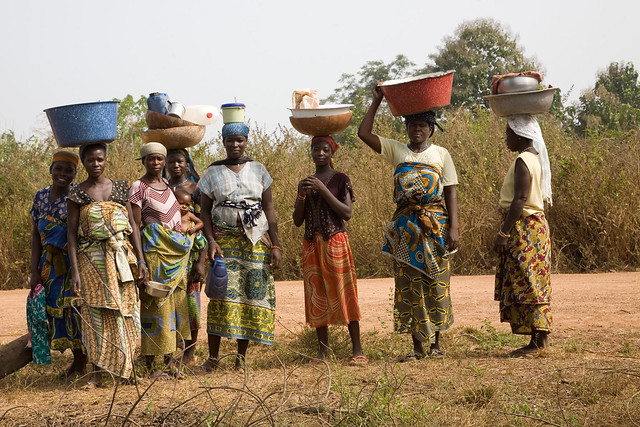
Water is scarce, costly, and contaminated in Kibera, Nairobi -- one of Africa's largest urban slums. On good days, the women and children spend just under an hour finding clean water in their community. On bad days, the price of water increases tenfold and the search takes all day. Often, people ask jokingly whether it is water or cholera they are buying.
Many slums like Kibera lack access to clean drinking water, but they don't lack access to mobile phones. This is the insight behind M-Maji, a start-up non-profit project that uses mobile phones to empower communities with better information about water availability, price, and quality. This seminar will introduce the M-Maji system, and describe some of the challenges to designing for such a complex social environment.Background: M-Maji emerged from the Designing Liberation Technologies course in the Stanford d.school, which focused on using mobile phone technology for health improvement in Kibera. M-Maji has since received funding to run a pilot from the Program on Liberation Technologies and the Center on Philanthropy and Civil Society at Stanford
Sunny Jeon is the principal investigator to M-Maji research, and is currently making frequent trips to Kenya to prepare for a randomized impact evaluation of their water program. He is also a Ph.D. Candidate in the Stanford Department of Political Science, where he is working on a dissertation project that studies the economic and political returns to ethnic diversity.
Katherine Hoffman is a co-terminal student completing a B.A. in International Relations and Economics and an M.A. in International Policy Studies with a focus on Global Health. She has been involved with M-Maji since it began in Spring quarter, and has just returned from a trip to Kenya in December to begin laying the groundwork for the project implementation.
Her primary interests include economic development and health improvement in low-resource settings. Past experience includes internships at the Bonn International Center for Conversion in Bonn, Germany and at the Institute for Financial Management in Chennai, India; she has also volunteered at the Center for the Working Girl in Quito, Ecuador and studied abroad for a quarter in Moscow.
Wallenberg Theater
Katherine Hoffman
M.A. Candidate, International Policy Studies, Global Health
Speaker
Stanford University
Sunny Jeon
Ph.D. Candidate,Political Science
Speaker
Stanford University
Seminars
Comparative Policy Responses to Demographic Change in East Asia: Defining a Research Agenda
-
Demographic changes are profoundly shaping the political, economic, and social landscape of the Asia-Pacific region. How have individuals, families, communities, and policymakers responded? How should they? For example, how will national and social identities transform as population ageing strains traditions of filial piety and immigration disrupts ethnic homogeneity? Will the economies of East Asia languish, or will a "second demographic dividend" spur renewed economic growth? Demographic change can have important psychological and political effects. For example, can one seriously imagine a resurgent, militaristic Japan with a declining and aging population? The responses to demographic change in Japan, South Korea, China, and their neighbors will have great potential long-term effects in the Asia-Pacific region.
This panel discussion, the opening and public portion of a 1-1/2 day workshop that will define a research agenda for the next three years, will bring together selected outside experts and faculty within the Shorenstein Asia-Pacific Research Center for an interdisciplinary and comparative discussion of the policy responses to rapid demographic change in East Asia.
- 3:00p.m. – 3:10p.m.
Gi-Wook Shin, Director, Shorenstein Asia-Pacific Research Center, Stanford University: Introduction and welcome - 3:10p.m. – 3:25p.m.
Brian Nichiporuk, RAND Corporation: The Security Implications of Demographic Trends in East Asia - 3:25p.m. – 3:40p.m.
Michael Sutton, East-West Center, Washington, DC: Political & Security Implications of Population Aging in Japan - 3:40p.m. – 3:55p.m.
John Skrentny, Director, Center for Comparative Immigration Studies, Professor of Sociology, University of California, San Diego: An East Asian Model to Managing Immigration? Durability & Change in the 2000s. - 3:55p.m. – 4:10p.m.
Chong-En Bai, Chair, Department of Economics, Freeman Chair Professor of Economics, Tsinghua University: Policy Responses to Demographic Change in China - 4:10p.m. – 4:25p.m.
David Bloom, Clarence James Gamble Professor of Economics and Demography Chair, Department of Global Health and Population, Harvard University: Demographic Change in East Asia: Challenges, Options and Evidence - 4:25p.m. – 4:40p.m.
Naohiro Ogawa, Director, Population Research Institute, Nihon University: Population Aging & Changing Human Capital in Japan & other East Asian Countries - 4:40p.m. – 4:55p.m.
Andrew Mason, Professor of Economics, University of Hawaii, Manoa & Senior Fellow, East-West Center, Hawaii: Population Aging and the Generational Economy: Key Findings - 4:55p.m. – 5:10p.m.
James Raymo, Professor of Sociology, University of Wisconsin, Madison The “Second Demographic Transition” and family change in Japan - 5:10p.m. – 5:30p.m.
Discussion/Conclusion
Bechtel Conference Center
Gi-Wook Shin
Shorenstein APARC
Encina Hall E301
616 Jane Stanford Way
Stanford, CA 94305-6055
0
gwshin@stanford.edu
Senior Fellow at the Freeman Spogli Institute for International Studies
Professor of Sociology
William J. Perry Professor of Contemporary Korea
Professor, by Courtesy, of East Asian Languages & Cultures
Gi-Wook Shin is the William J. Perry Professor of Contemporary Korea in the Department of Sociology, senior fellow at the Freeman Spogli Institute for International Studies, and the founding director of the Korea Program at the Walter H. Shorenstein Asia-Pacific Research Center (APARC) since 2001, all at Stanford University. In May 2024, Shin also launched the Taiwan Program at APARC. He served as director of APARC for two decades (2005-2025). As a historical-comparative and political sociologist, his research has concentrated on social movements, nationalism, development, democracy, migration, and international relations.
In Summer 2023, Shin launched the Stanford Next Asia Policy Lab (SNAPL), which is a new research initiative committed to addressing emergent social, cultural, economic, and political challenges in Asia. Across four research themes– “Talent Flows and Development,” “Nationalism and Racism,” “U.S.-Asia Relations,” and “Democratic Crisis and Reform”–the lab brings scholars and students to produce interdisciplinary, problem-oriented, policy-relevant, and comparative studies and publications. Shin’s latest book, The Four Talent Giants, a comparative study of talent strategies of Japan, Australia, China, and India to be published by Stanford University Press in the summer of 2025, is an outcome of SNAPL.
Shin is also the author/editor of twenty-seven books and numerous articles. His books include The Four Talent Giants: National Strategies for Human Resource Development Across Japan, Australia, China, and India (2025); Korean Democracy in Crisis: The Threat of Illiberalism, Populism, and Polarization (2022); The North Korean Conundrum: Balancing Human Rights and Nuclear Security (2021); Superficial Korea (2017); Divergent Memories: Opinion Leaders and the Asia-Pacific War (2016); Global Talent: Skilled Labor as Social Capital in Korea (2015); Criminality, Collaboration, and Reconciliation: Europe and Asia Confronts the Memory of World War II (2014); New Challenges for Maturing Democracies in Korea and Taiwan (2014); History Textbooks and the Wars in Asia: Divided Memories (2011); South Korean Social Movements: From Democracy to Civil Society (2011); One Alliance, Two Lenses: U.S.-Korea Relations in a New Era (2010); Cross Currents: Regionalism and Nationalism in Northeast Asia (2007); and Ethnic Nationalism in Korea: Genealogy, Politics, and Legacy (2006). Due to the wide popularity of his publications, many have been translated and distributed to Korean audiences. His articles have appeared in academic and policy journals, including American Journal of Sociology, World Development, Comparative Studies in Society and History, Political Science Quarterly, Journal of Asian Studies, Comparative Education, International Sociology, Nations and Nationalism, Pacific Affairs, Asian Survey, Journal of Democracy, and Foreign Affairs.
Shin is not only the recipient of numerous grants and fellowships, but also continues to actively raise funds for Korean/Asian studies at Stanford. He gives frequent lectures and seminars on topics ranging from Korean nationalism and politics to Korea's foreign relations, historical reconciliation in Northeast Asia, and talent strategies. He serves on councils and advisory boards in the United States and South Korea and promotes policy dialogue between the two allies. He regularly writes op-eds and gives interviews to the media in both Korean and English.
Before joining Stanford in 2001, Shin taught at the University of Iowa (1991-94) and the University of California, Los Angeles (1994-2001). After receiving his BA from Yonsei University in Korea, he was awarded his MA and PhD from the University of Washington in 1991.
Stanford Next Asia Policy Lab (SNAPL)
Explore SNAPLDirector, Korea Program at the Walter H. Shorenstein Asia-Pacific Research Center (APARC)
Director, Stanford Next Asia Policy Lab at APARC
Hide publication sections
Off
Andrew Mason
Professor of Economics, University of Hawaii, Manoa & Senior Fellow
Panelist
East-West Center, Hawaii
Naohiro Ogawa
Director, Population Research Institute
Panelist
Nihon University
David Bloom
Clarence James Gamble Professor of Economics and Demography, Chair, Department of Global Health and Population
Panelist
Harvard University
Chong-En Bai
Chair, Department of Economics, Freeman Chair Professor of Economics
Panelist
Tsinghua University
John Skrentny
Director, Center for Comparative Immigration Studies, Professor of Sociology
Panelist
University of California, San Diego
Michael Sutton
Panelist
East-West Center, Washington, DC
Brian Nichiporuk
Panelist
RAND Corporation
James Raymo
Professor of Sociology
Panelist
University of Wisconsin, Madison
Panel Discussions
Health-damaging and Climate-changing Air Pollution in Asia
-
Kirk R. Smith will speak about his current research on health-damaging and climate-changing air pollution from household energy use in developing Asia, including field measurement and health-effects studies in India, China, and Nepal, compared to other countries such as Mexico and Guatemala. The work encompasses developing and deploying small, smart, and cheap microchip-based monitors as well as tools for international policy assessments.
Dr. Smith is Professor of Global Environmental Health and Director of the Global Health and Environment Program at the School of Public Health at the University of California, Berkeley. Previously, he was founder and head of the Energy Program of the East-West Center in Honolulu, where he still holds appointment as Adjunct Senior Fellow in Environment and Health after moving to Berkeley in 1995. He serves on a number of national and international scientific advisory committees including the Global Energy Assessment, National Research Council's Board on Atmospheric Science and Climate, the Executive Committee for WHO Air Quality Guidelines, and the International Comparative Risk Assessment. He participated along with many other scientists in the IPCC's 3rd and 4th assessments and thus shared the 2007 Nobel Peace Prize. He holds visiting professorships in India and China and bachelors, masters, and doctoral degrees from UC Berkeley. In 1997, he was elected a member of the US National Academy of Sciences. In 2009, he received the Heinz Prize in Environment.
Daniel and Nancy Okimoto Conference Room
Kirk R. Smith
Professor of Global Environmental Health and Director of the Global Health and Environment Program at the School of Public Health
Speaker
University of California, Berkeley
Seminars
Nothing Short of A Revolution: Women's Movements Might Just Liberate Us All!
-
Kavita Ramdas is an inspirational and mindful leader, an advocate for human rights, open and civil societies, and a respected advisor and commentator on issues of social entrepreneurship, development, education, health, and philanthropy. Kavita has spent her professional life shaping a world where gender equality can help ensure human rights and dignity for all. She is currently a Visiting Scholar and Fellow at Stanford University, The Freeman Spogli Institute for International Studies, with the Center on Democracy, Development and the Rule of Law (CDDRL) and Center on Philanthropy and Civil Society (PACS). In 2011, Kavita will be a Visiting Scholar abd Practitioner at Princeton University's Wodrow Wilson School of Public and International Affairs.
From 1996 to 2010, Kavita served as President and CEO of the Global Fund for Women, which grew to become the world's largest public foundation for women's rights under her leadership. During her tenure, the Global Fund assets grew to $21million from $3 million, giving women in more than 170 countries critical access to financial capital that fueled innovation and change. Kavita serves as Senior Advisor for the Global Fund for Women.
An instinctive entrepreneur, Kavita's leadership skills were recognized early in her tenure at the Global Fund for Women when she was chosen to be a Henry Crown Fellow of the Aspen Institute. Her vision, drive, and management skills helped the Global Fund launch programs to promote girls' education, defend women's right to health and reproductive rights, prevent violence against women, and advance women's economic independence and political participation. Among these were a pioneering Africa Outreach Initiative that channeled over $30 million in grants to women's rights activists in Sub Saharan Africa, and the ground-breaking Now or Never Fund which infused $10 million over 5 years to groups working to preserve women's reproductive health and rights, combat religious extremism, and sustain communities in the midst of war and conflict.
Prior to her time at the Global Fund for Women, Kavita developed and implemented grantmaking programs to combat poverty and inequality in inner cities across the United States as well as advance women's reproductive health in Nigeria, India, Mexico and Brazil in her capacity as a Program Officer at the Chicago based John D. and Catherine T. MacArthur Foundation.
Kavita's extensive experience in the fields of global development, human rights, women's leadership, and philanthropy have led to her service as an Advisor and Board Member for a wide range of organizations; the Alan Guttmacher Institute, the Women's Funding Network, and the Global Development Program of the Bill & Melinda Gates Foundation. She currently serves on the Advisory Council of the Asian University for Women Support Foundation, the Global Health Initiative of the University of Chicago, PAX World Management, and the Council of Advisors on Gender Equity of the Woodrow Wilson School of Princeton University.
Kavita Chairs the Expert Working Group of the Council of Global Leaders for Reproductive Health, an initiative led by Mary Robinson, former President for Ireland. She serves on the Board of Trustees of Princeton University, Mount Holyoke College, and the Rockefeller Brothers Fund.
An accomplished writer and public speaker, Kavita's thought leadership is evident in writings published in a wide variety of journals, newspaper, and magazines, including the Nation, Foreign Policy, and Conscience. She has spoken at many venues, including the Global Philanthropy Forum, TED, and the United Nations. Her media commentary and interviews include appearances on NOW with the Bill Moyers Show, PBS NewsHour with Jim Lehrer, Democracy Now!, and CNN.
Kavita is the recipient of numerous philanthropic and leadership awards including in 2010, the Council on Foundation's Robert Scrivner Award for Most Creative Grantmaker of the Year, and the Frances Hesselbein Award for Excellence in Leadership. She is a 2011 Awardee of the Legal Momentum Award.
Kavita was born and raised in India and is married to Zulfiqar Ahmad, an independent researcher on South Asia security issues. Their daughter, Mira Ahmad, is a junior at Palo Alto High School. Kavita enjoys hiking, cooking, writing, poetry, and is a long time practitioner of yoga.
Encina Ground Floor Conference Room
Kavita Ramdas
Visiting Scholar 2010-2011
Speaker
CDDRL
Seminars
Rethinking the Balance Between Future Obesity and Malnutrition with Climate Change
As India's middle class has expanded, the nation's public health concerns have shifted. Obesity rates have risen, coinciding with a surge in diabetes. The number of Indians with type 2 diabetes is expected to double by 2030 to nearly 80 million. Meanwhile, 43 percent of children in India are underweight.
Does Border Enforcement Matter? What Mexican Migrants Can Teach Us
-
What has the United States accomplished with its unprecedented build-up of immigration enforcement along the U.S.-Mexico border and in the interior of the country since 1993? How has this effort shaped the migration projects of Mexicans? From the standpoint of U.S. policymakers, what has “worked,” what has not, and why? In explaining major changes in migration flows since 2007, which matters most: U.S. border enforcement or the Great Recession? In addressing these questions, Professor Cornelius will draw upon extensive fieldwork conducted in 2010 in rural Jalisco, the San Francisco Bay area, and Oklahoma City, as well as a new analysis of survey data from UCSD’s Mexican Migration Field Research and Training Program covering 2007-2010.
Wayne A. Cornelius is Co-Director, Education Programs, of the University of California’s Global Health Institute (UCGHI); Associate Director, UC Center of Expertise on Migration and Health; and a Core Faculty Member, Division of Global Public Health, School of Medicine, University of California-San Diego. He is Director Emeritus of the UCSD Center for Comparative Immigration Studies; Distinguished Professor of Political Science, Emeritus; and Theodore E. Gildred Professor of U.S.-Mexican Relations at UCSD. He is a past President of the Latin American Studies Association and an elected member of the Council on Foreign Relations (New York). One of the world's foremost experts on Mexican migration to the United States, comparative immigration policy, international migration and health, and the Mexican political system, Cornelius conducted field research in Mexico and the United States nearly every year from 1970 to 2009. His latest among more than 280 publications on migration is a book titled Mexican Migration and the U.S. Economic Crisis: A Transnational Perspective.
Co-sponsored by Bill Lane Center for the American West, Center for Latin American Studies (CLAS), Chicana/o Studies, Freeman Spogli Institute for International Studies, Institute on the Politics of Inequality, Race and Ethnicity at Stanford (InSPIRES), MEChA, Stanford Humanities Center and Stanford Immigrant Rights Project.
Levinthal Hall
Wayne Cornelius
Co-Director, Education Programs, University of California's Global Health Institute
Speaker
Lectures
Second and Third Generation Human Rights in Africa: Ethics of Healthcare Workforce Maldistribution -- Zimbabwe as a Case Study
-
Building on the foundation of 2009-10 workshop Legalizing Human Rights in Africa, the 2010-11 interdisciplinary research workshop will extend the examination of human rights discourse and institutions in Africa to broader questions around second and third generation rights. The workshop will canvas human rights insights from a broad sweep of disciplinary expertise, such as history, science, engineering anthropology, sociology, philosophy, law and political science. The goal of the workshop is to broaden human rights scholarship beyond single disciplinary domains.
Because the field of second and third generation human rights is broad, we have narrowed the discussion topics to the most urgent ones that are well suited to interdisciplinary analysis by anticipated workshop participants. Initial sessions will lay the foundation for the generational framework of human rights in Africa and the recent progression beyond civil and political rights. The workshop will proceed to discuss a wide range of the most significant and timely second and third generation human rights challenges in Africa.
Encina West 208
Helen Stacy
Senior Fellow, CDDRL; Senior Lecturer, Stanford School of Law; Europe Center Research Affiliate and Director, Program on Human Rights
Moderator
Michele Barry
Senior Associate Dean of Global Health, Stanford School of Medicine and Stanford Health Policy Associate
Speaker
Workshops