Economic Affairs
-

Nicholas Craft will present new estimates of TFP growth at the sectoral level and an account of sectoral contributions to overall productivity growth, from his paper co-authored by Gerben Bakker (London School of Economics) and Pieter Woltjer (Wageningen University).  They improve on Kendrick (1961) in several ways including expanding the coverage of sectors, extending estimates to 1941, and better accounting for labor quality.  The results have important implications including that the pattern of productivity growth was generally ‘yeasty’ rather than ‘mushroomy’, that the 1930s did not experience the fastest TFP growth of the 20th century, and that the role of electricity as a general purpose technology does not explain the ‘yeastiness’ of manufacturing in the 1920s.

The link for a PDF copy of the paper may be found below.

Part of the Economic History Seminar Series, co-sponsored by The Europe Center.

Paper: A Vision of the Growth Process in a Technologically progressive Economy: the United States, 1899-1941
Download pdf

Landau Economics Building, Room 351

Nicholas Crafts Professor of Economics and director of the ESRC Centre for Competitive Advantage in the Global Economy (CAGE) Speaker University of Warwick, UK
Seminars
News Type
News
Date
Paragraphs

Appeared in Stanford Report, May 29, 2014

By Clifton B. Parker

The electoral eruption of anti-European Union populism is a reflection of structural flaws in that body but does not represent a fatal political blow, according to Stanford scholars.

In the May 25 elections for the European Parliament, anti-immigration parties won 140 of the 751 seats, well short of control, but enough to rattle supporters of the EU, which has 28 member nations. In Britain, Denmark, France and Greece, the political fringe vote totals stunned the political establishments.

Stanford political scientist Francis Fukuyama said the rise of extremism and anti-elitism is not surprising in the wake of the 2008 economic downturn and subsequent high levels of unemployment throughout Europe. In one sense, the EU elites have themselves to blame, he said.

"The elites who designed the EU and the eurozone failed in a major way," he said. "There was a structural flaw in the design of the euro (monetary union absent fiscal union, and the method of disciplining countries once in the zone)," said Fukuyama, the Olivier Nomellini Senior Fellow at Stanford's Freeman Spogli Institute for International Studies and the Center for Democracy, Development and the Rule of Law, and Research Afflilate at The Europe Center.

Some have argued that the European Union should adopt a form of fiscal union because without one, decisions about taxes and spending remain at the national level.

As Fukuyama points out, this becomes a problem, as in the case of a debt-ridden Greece, which he believes should not have qualified for EU membership in the first place. In fact, he said, it would have been better for Greece itself to leave the euro at the outset of the 2008 crisis.

Still, Fukuyama said the big picture behind the recent election is clear – it was a confluence of issues and timing.

"It is a bit like an off-year election in the U.S., where activists are more likely to vote than ordinary citizens," he said.

Fukuyama believes the EU will survive this electoral crisis. "I think the EU will be resilient. It has weathered other rejections in the past. The costs of really exiting the EU are too high in the end, and the elites will adjust, having been given this message," he said.

Meanwhile, the populist parties in the different countries are not unified or intent on building coalitions with each other.

"Other than being anti-EU, most of them have little in common," Fukuyama said. "They differ with regard to specific positions on immigration, economic policy, and they respond to different social bases."

Ongoing anger

Dan Edelstein, a professor of French, said the largest factor for success by extremist candidates was "ongoing anger toward the austerity policy imposed by the EU," primarily by Germany.

Edelstein estimates that a large majority of French voters are still generally supportive of the EU. For the time being, the anti-EU faction does not have a majority, though they now have much more representation in the European Parliament.

Edelstein noted existing strains among the anti-EU parties – for example, the UK Independence Party in Britain has stated that it would not form an alliance with the National Front party in France.

Immigration remains a thorny issue for some Europeans, Edelstein said.

"'Immigration' in most European political debates, tends to be a synonym for 'Islam.' While there are some countries, such as Britain, that are primarily worried about the economic costs of immigration, in most continental European countries, the fears are cultural," he said.

As Edelstein put it, Muslims are perceived as a "demographic threat" to white or Christian Europe. However, he is optimistic in the long run.

"It seems a little early to be writing the obituary of the EU. Should economic conditions improve over the next few years, as they are predicted to, we will likely see this high-water mark of populist anger recede," said Edelstein.

Cécile Alduy, an associate professor of French, writes in the May 28 issue of The Nation about how the ultra-right-wing National Front came in first place in France's election.

"This outcome was also the logical conclusion of a string of political betrayals, scandals and mismanagement that were only compounded by the persistent economic and social morass that has plunged France into perpetual gloom," she wrote.

Historian J.P. Daughton said that like elsewhere in the world, immigration often becomes a contentious issue in Europe in times of economic difficulties.  

"High unemployment and painful austerity measures in many parts of Europe have led extremist parties to blame immigrants for taking jobs and sapping already limited social programs," he said.

Anti-immigration rhetoric plays particularly well in EU elections, Daughton said. "Extremist parties portray European integration as a threat not only to national sovereignty, but also to national identity.

Edelstein, Alduy and Daughton are all Faculty Affiliates of The Europe Center.

Wake-up call

Russell A. Berman, a professor of German studies and comparative literature, said many Europeans perceive the EU as "somehow impenetrable, far from the civic politics of the nation states."

As a result, people resent regulations issued by an "intangible bureaucracy," and have come to believe that the European Parliament has not grappled with major issues such as mustering a coherent foreign policy voice, he said.

"The EU can be great on details but pretty weak on the big picture," said Berman, who is the Walter A. Haas Professor in the Humanities, Senior Fellow at the Hoover Institution, and Faculty Affiliate of The Europe Center. "It is this discrepancy that feeds the dissatisfaction."

Yet he points out that the extremist vote surged in only 14 nations of the EU – in the other 14, there was "negligible extremism," as he describes it.

"We're a long way from talking about a fatal blow, but the vote is indeed a wake-up call to the centrists that they have to make a better case for Europe," Berman said.

Hero Image
A man walks past a board displaying provisional results of the European Parliament election at the EU Parliament in Brussels
A man walks past a board displaying provisional results of the European Parliament election at the EU Parliament in Brussels May 25, 2014. | REUTERS / Francois Lenoir
All News button
1
News Type
News
Date
Paragraphs

Appeared in Stanford Report, June 9, 2014

By Clifton B. Parker

A new chapter in the Scottish independence movement could reshape the future of that country and the rest of the United Kingdom, Stanford faculty say.

Scotland will hold an election on Sept. 18 to decide whether it should break away from the United Kingdom. With the official kickoff of the Scottish independence referendum on May 30, the 4.1 million Scots who make up the country's electorate are mulling over how independence would affect a range of issues including agriculture, education, defense, health care and more.

Now, momentum seems to be on the side of the independence vote, said Christophe Crombez, a consulting professor in Stanford's Europe Center in the Freeman Spogli Institute for International Studies.

"If you had asked me a year ago whether Scotland would vote for independence, I would have said no. Now I am not so sure. The current UK government has not handled this issue well. Threats, such as warnings that Scotland could not keep the pound, have backfired," said Crombez.

Economics and the EU

Scotland, which has significant – though somewhat dwindling – oil operations in the North Sea, would likely remain part of the European Union if it leaves the UK, Crombez said. Scotland highly favors membership, whereas Britain's view is more mixed about the 28-member bloc.

"The economic consequences of leaving the UK will be minimal for Scotland. Scotland would remain part of the EU single market. It could possibly keep more of its oil revenues," he said.

The political ramifications for a redrawn Great Britain are significant. "Great Britain would lose more of its prominent status in world politics. England would have to deal with an identity crisis, having lost its empire after World War II and now witnessing the unraveling of the UK," he said.

Extracting Scotland from the Great Britain political equation would likely give more power to conservative British voters, as Scotland tends to vote on the left side, Crombez said.

"Also, the British government wants to put the issue behind them. So when the vote goes down, they can finally move on one way or another from the Scottish independence issue," he said.

If Scottish voters elect to remain part of the United Kingdom, the British government has said Scotland will not get another chance at independence.

Historical origins

The current move toward independence stems from the 1980s, when Margaret Thatcher was Britain's prime minister.

"Thatcher's policies were intensely disliked in Scotland," Crombez said. "While she kept on winning elections in England, her party's support in Scotland dwindled. Scotland felt that England was imposing policies on it that it did not want. Devolution and independence were seen as ways to get out of that situation."

As a result, since the early 1990s the conservatives have not played a significant role in Scottish politics, he said. And in 1997, voters in Scotland approved "devolution," which granted them legislative powers in the form of the Scottish Parliament.

"In my opinion, calls for independence would have been even stronger if Scotland had not been granted the autonomy it got in the 1990s," he said.

The roots of Scotland's drive for independence stretch deep into Great Britain's past, said Priya Satia, associate professor of modern British history and Europe Center faculty affiliate.

According to Satia, "Some might say as far back as the Jacobite rebellion against the union of Scotland with England and Wales in 1707. Others might point to a much later originary moment – regional nationalisms like Scotland's emerged in the latter half of the 20th century as part of the British reaction to the loss of empire."

From 1603, Scotland and England shared the same monarch when James VI of Scotland was declared King of England and Ireland as well. The two kingdoms united in 1707 to form the Kingdom of Great Britain. Prior to this, Scotland had been a sovereign state for more than 800 years.

Scotland, Wales, England and Ireland lost that sense of "common identity" to a shared British brotherhood once the "colonial 'other'" no longer existed in the post-WWII period, said Satia.

Historian Peter Stansky says it would not be wise for Scotland to exit the UK.

"I think it would probably be a mistake for Scotland to vote for independence. At the moment I think it has a good situation," said Stansky, the Frances and Charles Field Professor of History, Emeritus.

Stansky noted, "It can act independently in some areas, participate in some British decisions and has English backup. Independence would be a nice sentimental gesture, but a bad move."

Hero Image
Britain's Prime Minister tours the Walcheren Barracks in Glasgow, Scotland
Britain's Prime Minister tours the Walcheren Barracks in Glasgow, Scotland May 15, 2014. Cameron urged Scots on Thursday to stay in the United Kingdom during an unusual two-day visit to Scotland to counter a rise in support for secession in opinion polls and criticism of the anti-independence campaign. | REUTERS/Russell Cheyne
All News button
1
News Type
News
Date
Paragraphs

This paper written by political scientists Michael Bechtel, Jens Hainmueller and Yotam Margalit, is the first systematic analysis of the question of why European Union voters agree to bear the costs of bailing out other countries.

Jens Hainmueller is an Associate Professor of Political Science at Stanford and a Europe Center Faculty Affiliate.

For a more information, please visit the publication's webpage by clicking on the article title below.

All News button
1
News Type
News
Date
Paragraphs

Recap: Pascal Lamy Lecture, “World Trade and Global Governance”

 
On February 10, 2014, Pascal Lamy, the former Director-General of the World Trade Organization, visited Stanford University as a special guest of The Europe Center and the Freeman Spogli Institute for International Studies. During his two-term tenure at the helm of the WTO (from 2005 to 2013), Mr. Lamy successfully guided the organization through complex changes in the regulation of international trade. Among his many achievements, he oversaw the systematic integration of developing countries into positions of political leadership in the world economic order. Prior to the WTO, Mr. Lamy served as the European Commissioner for Trade, the CEO of the French bank Crédit Lyonnais, and in the French civil service. 
 
At Stanford, Mr. Lamy first participated in a lunchtime question and answer roundtable with students that was moderated by Stephen Stedman, Deputy Director of the Center for Democracy, Development, and the Rule of Law. Among other topics, he spoke about the necessary mix of economic, social, and political policies that determine the efficacy of free trade as an engine of global economic growth. 


Image

Mr. Lamy then delivered a public lecture on “World Trade and Global Governance” before an audience of over a hundred members of the Stanford community. In this talk, Mr. Lamy outlined a statement of his thinking about the future of global governance, focusing on three overarching points. First, despite some setbacks, governments and international organizations have achieved major successes in regulating the liberalization of global trade. Tariffs are on average lower than ever before, and governments did not raise tariffs during the recent financial crisis as they did during the Great Depression. Second, a new feature of the global economy is that protectionism based on economic objectives has been replaced by ‘precautionism’ based on normative prerogatives. For example, competing national perspectives on product standards such as those related to safety or labor norms thwart efforts to achieve consensus on trade regulation. Third, in order to achieve regulatory convergence, we need to bring together stakeholders from the public and private sector to build coalitions that jointly negotiate conflicts in matters of global governance. For example, the “C20-C30-C40 Coalition of the Working” that comprises countries, companies, and cities is currently striving to overcome regulatory gridlock on climate change.
 
We welcome you to visit our website for additional details about this event.


Save the Date: The Europe Center Lectureship on Europe and the World

 
Please mark your calendars for the inaugural annual lectures in this series by Adam Tooze, Barton M. Briggs Professor of History, Yale University. 
 
Dates: April 30, May 1, and May 2, 2014
 
 
Image
Image of Adam Tooze
Adam Tooze will deliver three lectures from his forthcoming book, A World Fit for Heroes. In particular, he will speak about the history of the transformation of the global power structure that followed from Imperial Germany’s decision to provoke America’s declaration of war in 1917. Tooze is the author of The Wages of Destruction: The Making and Breaking of the Nazi Economy (2006) and Statistics and the German State 1900-1945: The Making of Modern Economic Knowledge (2001), among numerous other scholarly articles on modern European history.


Meet our Visiting Scholars:  Manfred Nowak 

 
In each newsletter, The Europe Center would like to introduce you to a visiting scholar or collaborator at the Center. We welcome you to visit the Center and get to know our guests.
 
 
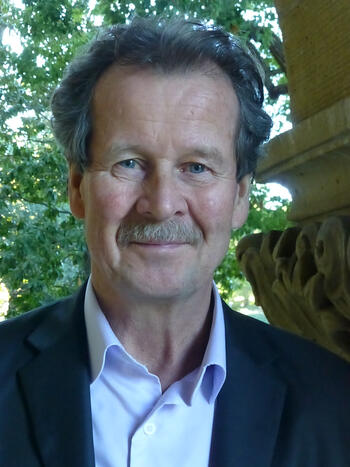
Image
Image of Manfred Nowak, Visiting Austrian Chair Professor 2013-2014, Stanford University
Manfred Nowak (LL.M., Columbia University, 1975) is Distinguished Visiting Austrian Chair Professor; Visiting Professor, Stanford Law School; and, Professor of Law, University of Vienna. One of the world’s most renowned human rights scholars and legal theorists, Nowak has published more than 400 books and articles on international, constitutional, administrative, and human rights law, including the standard commentary on the International Covenant on Civil and Political Rights. He was the Director of the Netherlands Institute of Human Rights at the University of Utrecht (1987-1989), and he founded the Austrian Ludwig Boltzmann Institute of Human Rights in 1989. From 1996-2003, Nowak was a judge at the Human Rights Chamber in Bosnia. He has also served as a U.N. legal expert on missing persons and enforced disappearances, and was appointed the U.N. Special Rapporteur on Torture and other Cruel, Inhuman or Degrading Treatment in 2004. 
 
Manfred Nowak was awarded the UNESCO Prize for the Teaching of Human Rights in 1994 and the Bruno Kreisky Prize for Human Rights in 2007.


Workshop Schedules  

 
The Europe Center invites you to attend the talks of speakers in the following workshop series: 
 

Europe and the Global Economy

 
February 20, 2014
Alan Deardorff, John W. Sweetland Professor of International Economics & Prof. of Economics and Public Policy, University of Michigan
RSVP by Feb 19, 2014
 
Mar 6, 2014
Sophie Meunier, Research Scholar, Woodrow Wilson School and Co-Director, EU Program at Princeton, Princeton University
RSVP by Mar 3, 2014
 
Mar 13, 2014
Randy Stone, Professor of Political Science, University of Rochester
RSVP by Mar 10, 2014
 
Apr 3, 2014
Kåre Vernby, Associate Professor, Department of Government, Uppsala University
RSVP by Mar 31, 2014
 
Apr 17, 2014
Mark Hallerberg, Professor of Public Management and Political Economy, Hertie School of Governance 
RSVP by Apr 4, 2014
 
May 15, 2014
Christina Davis, Prof. of Politics and International Affairs, Princeton University
RSVP by May 12, 2014
 

European Governance

 
May 22, 2014
Wolfgang Ischinger, Former German Ambassador to the U.S.; Chairman, Munich Security Conference
RSVP by May 19, 2014
 
May 29, 2014
Simon Hug, Professor of Political Science, University of Geneva
RSVP by May 26, 2014


The Europe Center Sponsored Events

 
We invite you to attend the following events sponsored or co-sponsored by The Europe Center:
 
March 6, 2014
“Promise and Critique of Capitalism: Changing Discourses Since the 18th Century”
Jürgen Kocka, Professor and Former President of the Social Science Research Center, Berlin
Location: Watt Room, Stanford Humanities Center
 
March 6 and 7, 2014
Indian Ocean Conference
“Connecting Continents: Setting an Agenda for a Historical Archaeology of the Indian Ocean World”
Location: Stanford Archaeology Center, Building 500, 488 Escondido Mall
 
March 31, 2014
Simon Hix, Professor of European and Comparative Politics, London School of Economics and Political Science
Political Science Comparative Politics Workshop
Location: Encina Hall West Room 400
 
April 15, 2014
Ulrich Wilhelm, Director General, Bavarian Broadcasting Corporation
“Assessing the Impact of the NSA Spy Scandal on American-European Relations” 
The Europe Center and FSI Stanford Special Event
Location: Oksenberg Conference Room, Encina Hall
RSVP by April 10, 2014


Other Events

 
The Europe Center also invites you to attend the following events of interest:
 
February 20, 2014
Gregory Shaffer, Melvin C. Steen Professor of Law, University of Minnesota Law School
“How the WTO Shapes Regulatory Governance”
Room 185, Stanford Law School
 
European Entrepreneurship & Innovation @Stanford Engineering
February 24, 2014
    “Switzerland and Turkey - Venture Capital and Product Design Firms”
    Giuseppe Zocco, Founding Partner, Index Ventures; Emrah Yalaz, CEO, Spring Ventures
March 3, 2014
    “Flanders and Sweden - Enterprise Software and VC Funds”
    Lieven Vermaele, CEO, SDNsquare; Martin Hauge, Founding Partner, Creandum
March 10, 2014
    “Hungary and Italy - Digital Infrastructure Startups and ‘Maker’ Movements”
    Gyula Feher, CTO & Co-Founder, Ustream
Location: Hewlett 201 Auditorium, Engineering School
 

We welcome you to visit our website for additional details.

All News button
1

Rapidly changing circumstances continue to shape relations on the Korean peninsula and in East Asia. North Korea has repeatedly engaged in provocative behavior, and the constant flux of political, social, and economic affairs in the region has also created challenges for long-standing alliances.

This research project seeks to examine the interests and policy environments of South Korea, North Korea, and their neighbors. Issues addressed will include the role of North Korea, nuclear proliferation, Japan’s economic future, the rise of China, and Korean reunification.

A special event with Josef Joffe who will talk about his latest book, The Myth of America's Decline: Politics, Economics, and a Half Century of False Prophecies (Liveright, November 4, 2013)

Oksenberg Conference Room

Josef Joffe Hoover Institution Research Fellow, and publisher/editor of the German weekly Die Zeit Speaker

CDDRL
Stanford University
Encina Hall
Stanford, CA 94305-6055

(650) 723-0676 (650) 724-2996
0
Senior Fellow at the Freeman Spogli Institute for International Studies, Emeritus
Graham H. Stuart Professor of International Relations
Senior Fellow at the Hoover Institution, Emeritus
krasner.jpg MA, PhD

Stephen Krasner is the Graham H. Stuart Professor of International Relations. A former director of CDDRL, Krasner is also an FSI senior fellow, and a fellow of the Hoover Institution.

From February 2005 to April 2007 he served as the Director of Policy Planning at the US State Department. While at the State Department, Krasner was a driving force behind foreign assistance reform designed to more effectively target American foreign aid. He was also involved in activities related to the promotion of good governance and democratic institutions around the world.

At CDDRL, Krasner was the coordinator of the Program on Sovereignty. His work has dealt primarily with sovereignty, American foreign policy, and the political determinants of international economic relations. Before coming to Stanford in 1981 he taught at Harvard University and UCLA. At Stanford, he was chair of the political science department from 1984 to 1991, and he served as the editor of International Organization from 1986 to 1992.

He has been a fellow at the Center for Advanced Studies in the Behavioral Sciences (1987-88) and at the Wissenschaftskolleg zu Berlin (2000-2001). In 2002 he served as director for governance and development at the National Security Council. He is a fellow of the American Academy of Arts and Sciences and a member of the Council on Foreign Relations.

His major publications include Defending the National Interest: Raw Materials Investment and American Foreign Policy (1978), Structural Conflict: The Third World Against Global Liberalism (1985), Sovereignty: Organized Hypocrisy (1999), and How to Make Love to a Despot (2020). Publications he has edited include International Regimes (1983), Exploration and Contestation in the Study of World Politics (co-editor, 1999),  Problematic Sovereignty: Contested Rules and Political Possibilities (2001), and Power, the State, and Sovereignty: Essays on International Relations (2009). He received a BA in history from Cornell University, an MA in international affairs from Columbia University and a PhD in political science from Harvard.

CV
Stephen D. Krasner Speaker

FSI
Stanford University
Encina Hall C140
Stanford, CA 94305-6055

(650) 736-1820 (650) 724-2996
0
Satre Family Senior Fellow, Freeman Spogli Institute for International Studies
kathryn_stoner_1_2022_v2.jpg MA, PhD

Kathryn Stoner is the Mosbacher Director of the Center on Democracy, Development and the Rule of Law (CDDRL) and the Satre Family Senior Fellow at the Freeman Spogli Institute for International Studies (FSI). From 2017 to 2021, she served as FSI's Deputy Director. She is Professor of Political Science (by courtesy) at Stanford and teaches in the Department of Political Science, the Program on International Relations, and the Ford Dorsey Master's in International Policy Program. She is also a Senior Fellow (by courtesy) at the Hoover Institution.

Prior to coming to Stanford in 2004, she was on the faculty at Princeton University for nine years, jointly appointed to the Department of Politics and the Princeton School for International and Public Affairs (formerly the Woodrow Wilson School). At Princeton, she received the Ralph O. Glendinning Preceptorship, awarded to outstanding junior faculty. She also served as a Visiting Associate Professor of Political Science at Columbia University and an Assistant Professor of Political Science at McGill University. She has held fellowships at Harvard University as well as the Woodrow Wilson Center in Washington, D.C. 

In addition to many articles and book chapters on contemporary Russia, she is the author or co-editor of six books: Transitions to Democracy: A Comparative Perspective, written and edited with Michael A. McFaul (Johns Hopkins 2013);  Autocracy and Democracy in the Post-Communist World, co-edited with Valerie Bunce and Michael A. McFaul (Cambridge, 2010);  Resisting the State: Reform and Retrenchment in Post-Soviet Russia (Cambridge, 2006); After the Collapse of Communism: Comparative Lessons of Transitions (Cambridge, 2004), coedited with Michael McFaul; and Local Heroes: The Political Economy of Russian Regional Governance (Princeton, 1997); and Russia Resurrected: Its Power and Purpose in a New Global Order (Oxford University Press, 2021).

She received a BA (1988) and MA (1989) in Political Science from the University of Toronto, and a PhD in Government from Harvard University (1995). In 2016, she was awarded an honorary doctorate from Ilia State University in Tbilisi, the Republic of Georgia.

Download full-resolution headshot; photo credit: Rod Searcey.

Mosbacher Director, Center on Democracy, Development and the Rule of Law
Professor of Political Science (by courtesy), Stanford University
Senior Fellow (by courtesy), Hoover Institution
CV
Date Label
Kathryn Stoner Speaker
Conferences
Date
Paragraphs
CDDRL Director Larry Diamond addresses concerns of an intensifying democratic recession in a piece in The Atlantic. Despite recent turmoil in Ukraine and democratic breakdowns in Thailand and Turkey, among others, Diamond emphasizes the critical role economic development, globalization and the growth of civil society will play in the long-run inducement of democratic change worldwide.
Hero Image
democracy Logo
Protesters carry a large banner reading: ''Democracy'' as they participate in an anti-government protests organized by Bahrain's leading opposition Al Wefaq. Sept. 14, 2012. | Hamad I Mohammed / Reuters
All News button
1
0
Payne Distinguished Lecturer, Shorenstein Asia-Pacific Research Center, Freeman Spogli Institute for International Studies
BosworthLOGO1.jpg

Stephen W. Bosworth was a Payne Distinguished Lecturer at the Walter H. Shorenstein Asia-Pacific Research Center in Freeman Spogli Institute for International Studies. He was a Senior Fellow at The Belfer Center for Science and International Affairs at the John F. Kennedy School of Government, Harvard University. He was also the Chairman of the U.S.-Korea Institute at the Johns Hopkins University Paul H. Nitze School of Advanced International Studies (SAIS). From 2001-2013, he served as Dean of The Fletcher School of Law and Diplomacy at Tufts University, where he then served as Dean Emeritus. He also served as the United States Ambassador to the Republic of Korea from 1997-2001.

From 1995-1997, Bosworth was the Executive Director of the Korean Peninsula Energy Development Organization [KEDO], an inter-governmental organization established by the United States, the Republic of Korea, and Japan to deal with North Korea. Before joining KEDO, he served seven years as President of the United States Japan Foundation, a private American grant-making institution. He also taught International Relations at Columbia University’s School of International and Public Affairs from 1990 to 1994. In 1993, he was the Sol Linowitz Visiting Professor at Hamilton College. He co-authored several studies on public policy issues for the Carnegie Endowment and the Century Fund, and, in 2006, he co-authored a book entitled Chasing the Sun, Rethinking East Asian Policy. 

Ambassador Bosworth had an extensive career in the United States Foreign Service, including service as Ambassador to Tunisia from 1979-1981 and Ambassador to the Philippines from 1984-1987. He served in a number of senior positions in the Department of State, including Director of Policy Planning, Principal Deputy Assistant Secretary of State for Inter-American Affairs, and Deputy Assistant Secretary for Economic Affairs. Most recently, from March 2009 through October 2011, he served as U.S. Special Representative for North Korea Policy for the Obama Administration. 

He was the recipient of many awards, including the American Academy of Diplomacy’s Diplomat of the Year Award in 1987, the Department of State’s Distinguished Service Award in 1976 and again in 1986, and the Department of Energy’s Distinguished Service Award in 1979. In 2005, the Government of Japan presented him with the Order of the Rising Sun, Gold and Silver Star. 

Bosworth was a graduate of Dartmouth College where he was a member of the Board of Trustees from 1992 to 2002 and served as Board Chair from 1996 to 2000. He was married to the former Christine Holmes; they have two daughters and two sons.

-

A year has passed since the Japanese government embarked on the new economic policy package called “Abenomics” with three “arrows”: aggressive monetary easing, flexible fiscal policy, and a growth strategy. The package is designed to bring the Japanese economy out of 20 years of stagnation and 15 years of deflation, and put it on a sustainable growth path. How effective has the policy package been during the first year of the Abe administration?  Will it succeed in bringing sustainable growth to Japan?  Professor Takatoshi Ito, a prominent expert on the Japanese economy, tackles these questions.

Takatoshi Ito, Professor at Faculty of Economics and Dean of Graduate School of Public
Policy, University of Tokyo, has taught extensively both in the United States and Japan,
including at University of Minnesota, Hitotsubashi University, and Harvard University.
He held visiting professor positions at Harvard University (1986-87 and 1992-94), Stanford
University (as National Fellow; 1984-85); Columbia Business School (fall semester, 2009),
and Tun Ismail Ali Chair Professor at University of Malaya (summer semester, 2008). His
public sector experiences include Senior Advisor in the Research Department, IMF
(1994-97); Deputy Vice Minister for International Affaires at Ministry of Finance
(1999-2001); and a member of the Prime Minister’s Council of Economic and Fiscal
Policy (2006-08). He is an author of many books including The Japanese Economy (MIT
Press), The Political Economy of the Japanese Monetary Policy (MIT Press), and
Financial Policy and Central Banking in Japan (MIT Press), and more than 50
refereed academic journal articles on international finance and the Japanese economy,
including ones in American Economic Review and Econometrica. He has distinguished
academic and research appointments such as President of the Japanese Economic
Association in 2004; Fellow of Econometric Society, since 1992; Research Associate at
National Bureau of Economic Research since 1985; and Faculty Fellow, Centre for
Economic Policy Research, since 2006. His research interest includes capital flows and
currency crises, microstructures of the foreign exchange rates, and inflation targeting. He
contributes frequently op-ed columns and articles to Financial Times, Nihon Keizai Shinbun,
Mainichi Shinbun, and Toyo Keizai Weekly.

Philippines Conference Room

Takatoshi Ito Speaker University of Tokyo
Seminars
Subscribe to Economic Affairs